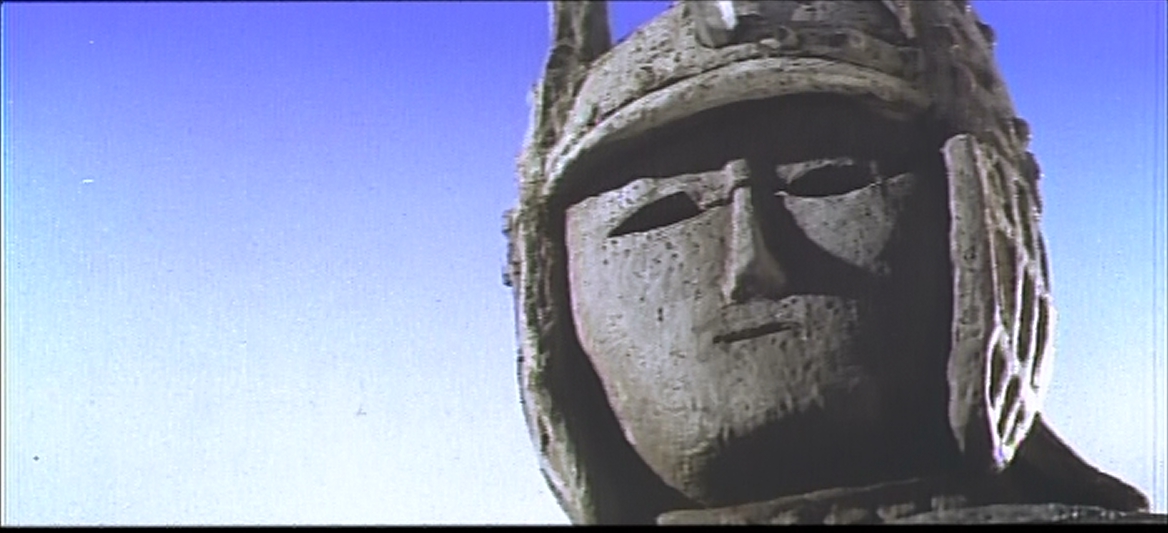
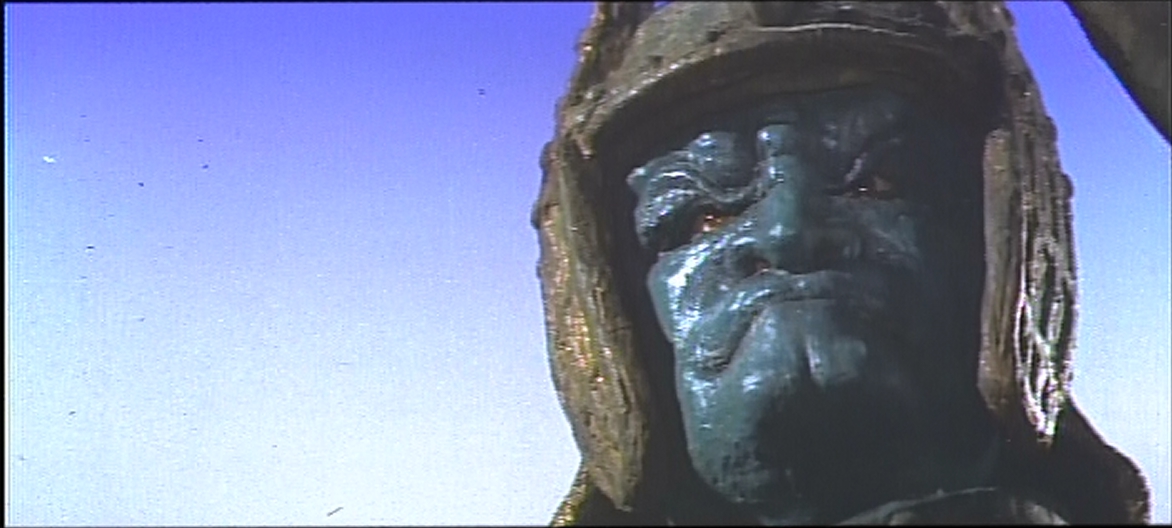
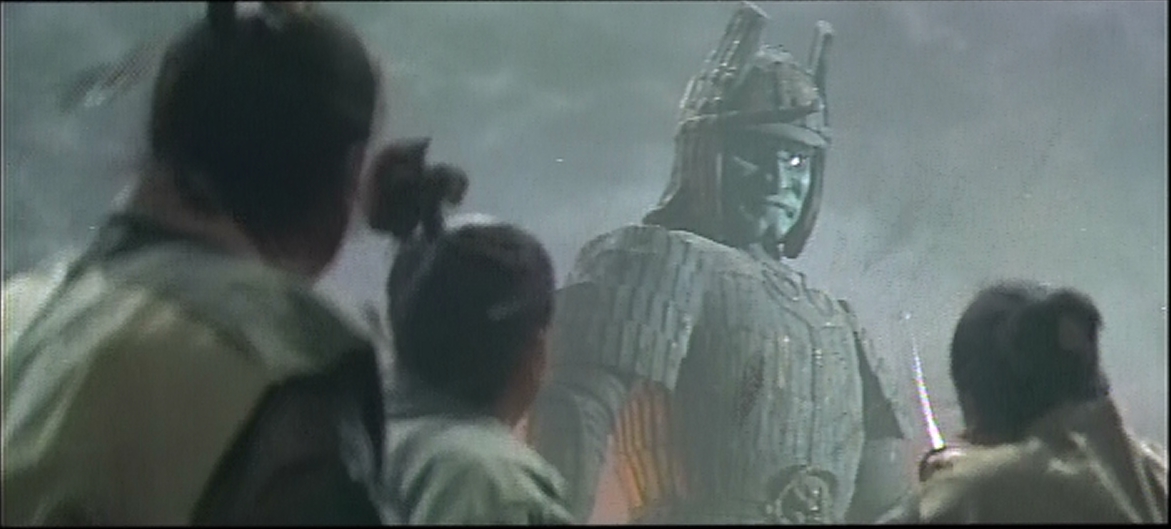
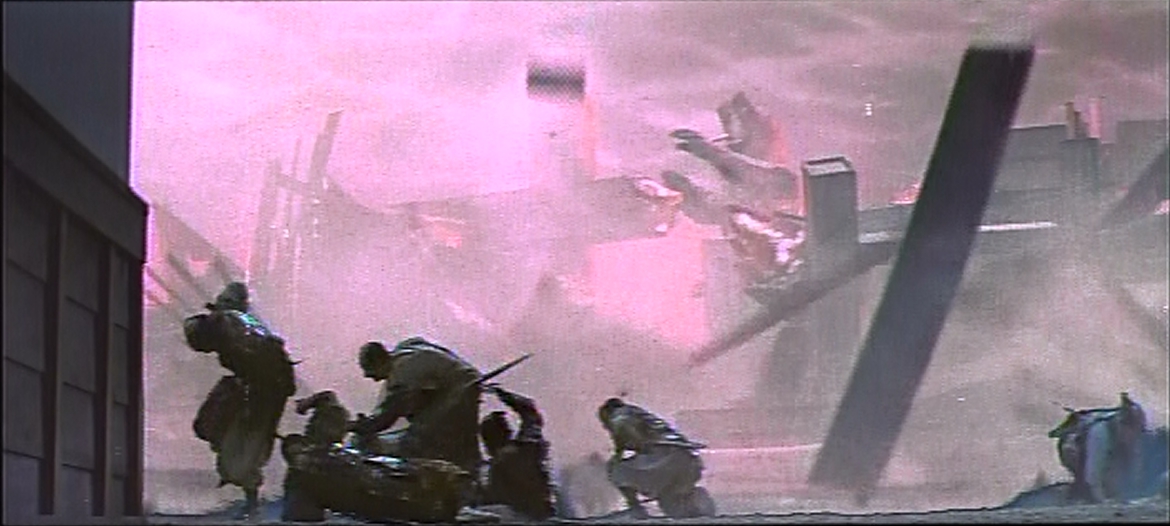
Showing posts with label Daimajin. Show all posts

Thursday, October 31, 2013

Return of the Wrath of Daimajin (I think)

By film 3, Wrath of Daimajin, the Daimajin formula was pretty well established. Evil Lord oppresses the good people, someone appeals to the god, and then Daimajin establishes some brutal social justice. But as with all monster series, he get a f ew new powers as the series goes on.

In the first five minutes of Wrath of Daimajin, Daimajin is shown to be a god of weather, causing terrible cold, flood, drought, and avalanches. The miniatures work is excellent. In each film, he has become further removed from humanity. Apparently seeking peace, he has now retreated to a mountain, and the villagers know that Daimajin's Mountain is a dangerous place.
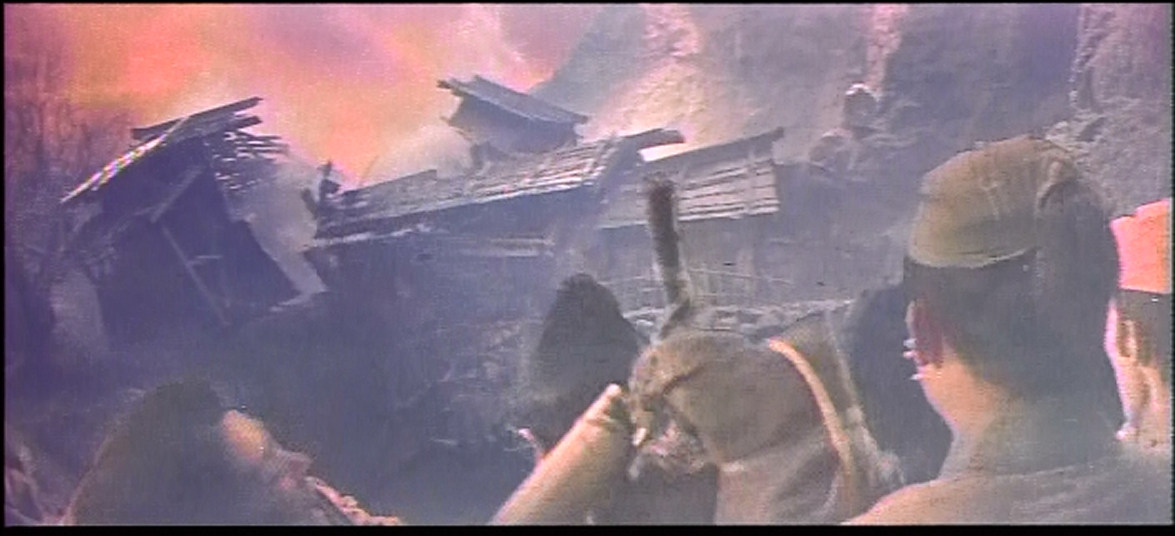
Daimajin Brings Down the House!

After demonstrations of Daimajin's power, the film introduces us to a village, and the protagonists. They are children. I was wary at first, since the child actors in Daiei's Gamera franchise are annoying at best. Luckily, these are not the obnioxious, laboriously mischievous kids who share the screen with Gamera. This is a fairly serious journey film, as the children walk over Maijin's Mountain in order to help rescue ther fathers, who have been kidnapped by the Evil Lord who is making them build a fortress.
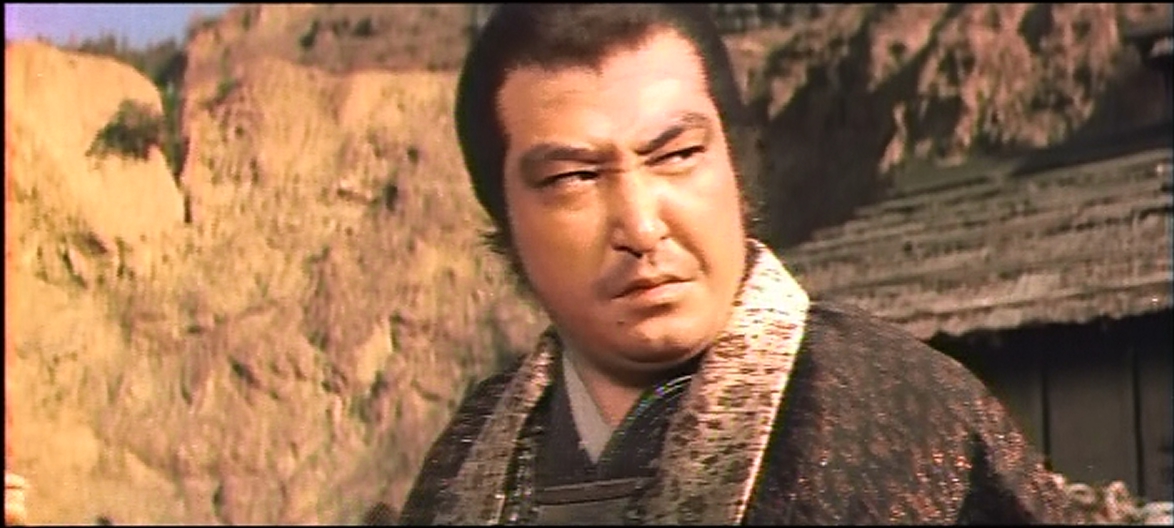
Do I even need to SAY evil lord?

The journey takes them across all sorts of landscape. Thickly forested slopes, a rocky defile with a waterfall, and a rocky mountain top. It's a rather attractive travelogue, frought with the usual attendant dangers that keep the tension up. Daimajin has a touch more agency in this film; a hawk is said to be Maijin's messenger. When the children are confronted with the statue of Daimajin, they pay it proper respect, and the god does not become angry.
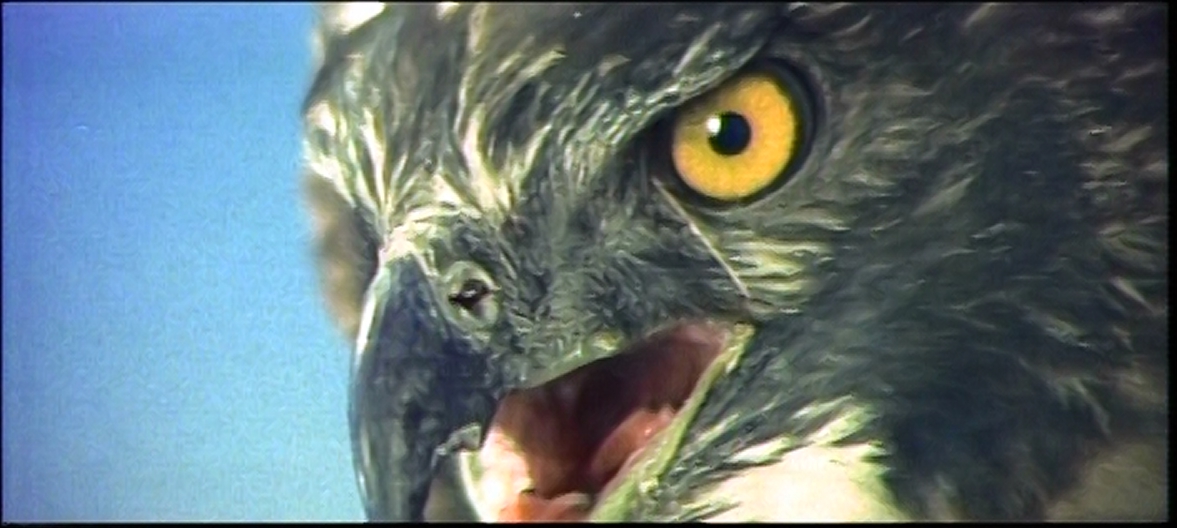
Daimajin is watching you.

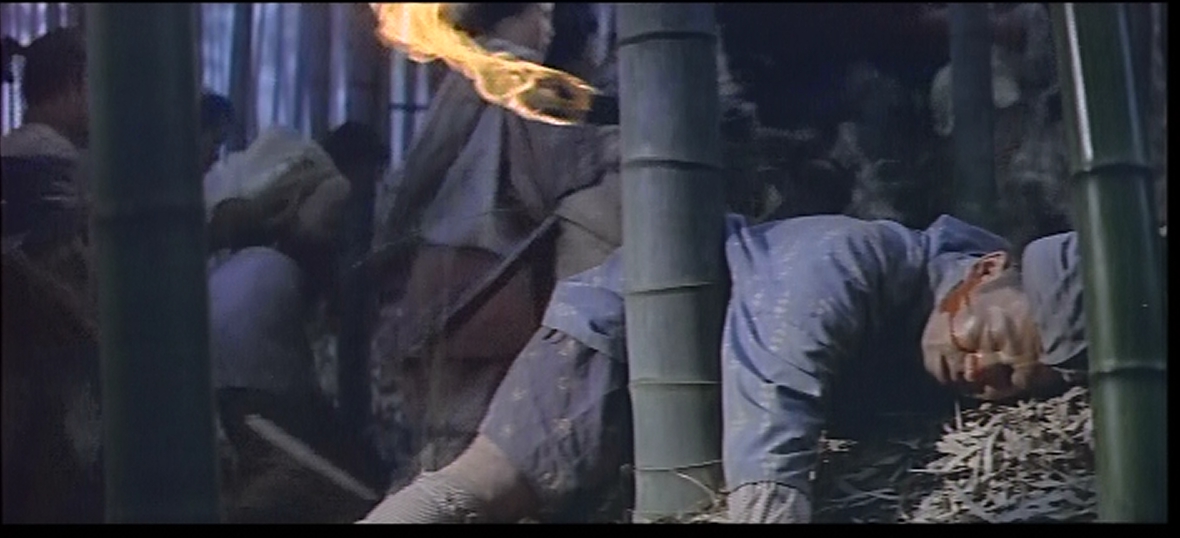
While the film has some lovely scenery, it is a bit devoid of emotional resonance. Kinta, one of the four kids who set out on the journey, drowns after their raft is wrecked in the rapids. He is never mentioned again.
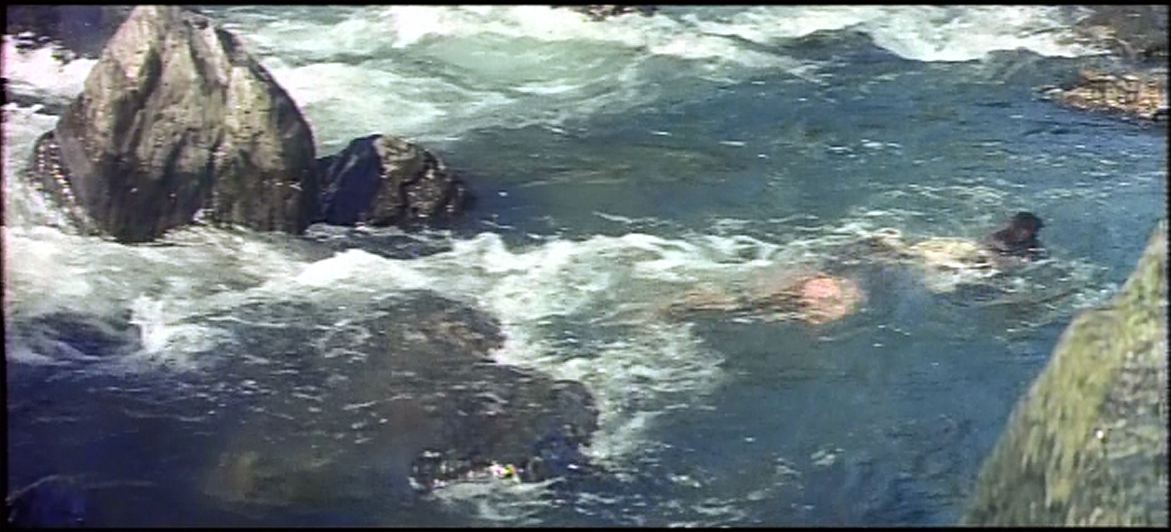
What's-his-name, face down in the river.

Daimajin rouses himself when the leader of the kids party throws himself off a cliff, as a sacrifice to the god. Once again, the fortress comes down around the Evil Lord's ears, but this time, it's in the snow. The scenes of Daimajin smashing the fortress of the evil lord are great. There's surprisingly little human resistance, which makes sense from a filmic perspective. Layering human actors in front of the miniatures work is expensive.
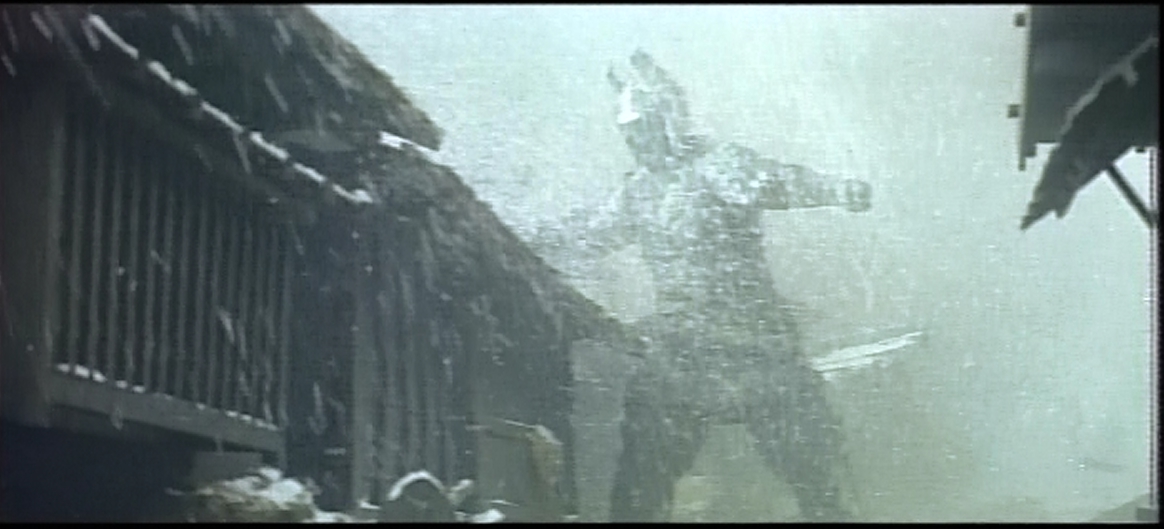
Daimajin SMASH!

There are a few innovations. For the first time, we see Daimajin unsheath his sword. He's had this sword for all three films, and this is the first time we see it come into play. He throws it to create an avalanche that destroys a pile of samurai. In addition, earlier in the film, a worker names Shiohachi tries to escape, and as punishment, is thrown into the boiling sulfur spring. When Daimajin puts out the stone boot of justice, he once again deploys the sword, stabbing the lord, who then tumbles into the very same boiling sulfur spring.
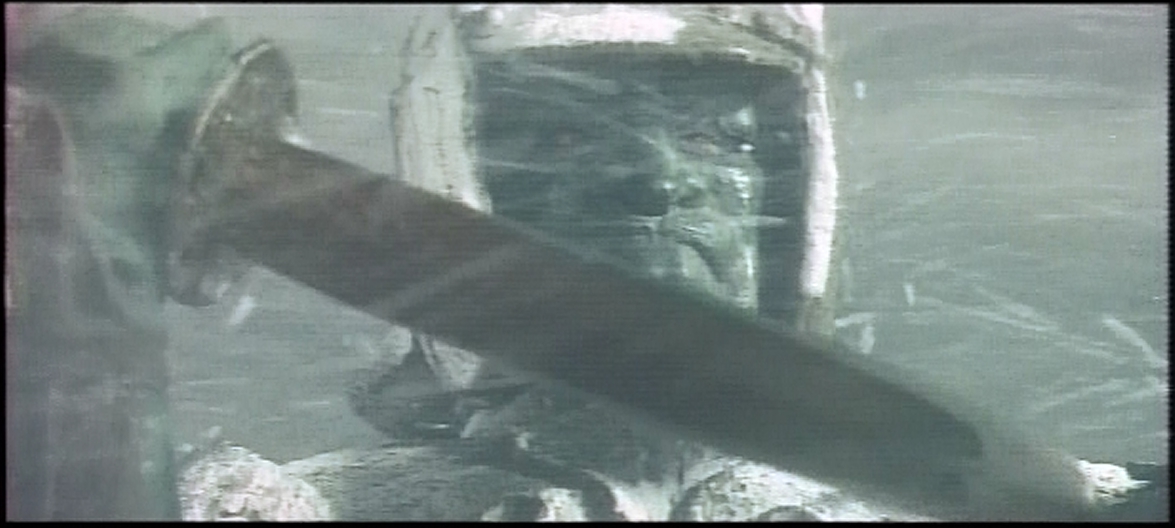
Giant Killer Statue With a SWORD.

But there is a further dimension to Daimajin in his third iteration. He towers over the evil lord and his henchmen in the same way that an adult towers over the children. So there is a parallel of Daimajin schooling the adults from the same position of power that the adults would school the children. And when Daimajin's vengeans is slaked, the snow stops, the he dissolves into snow. He is no longer the threat to the villagers, as he was in the first film. Daimajin is more like a bloodthirsty Santa Claus, determining who is naughty and who is nice. The good get left alone. The naughty get the sword.
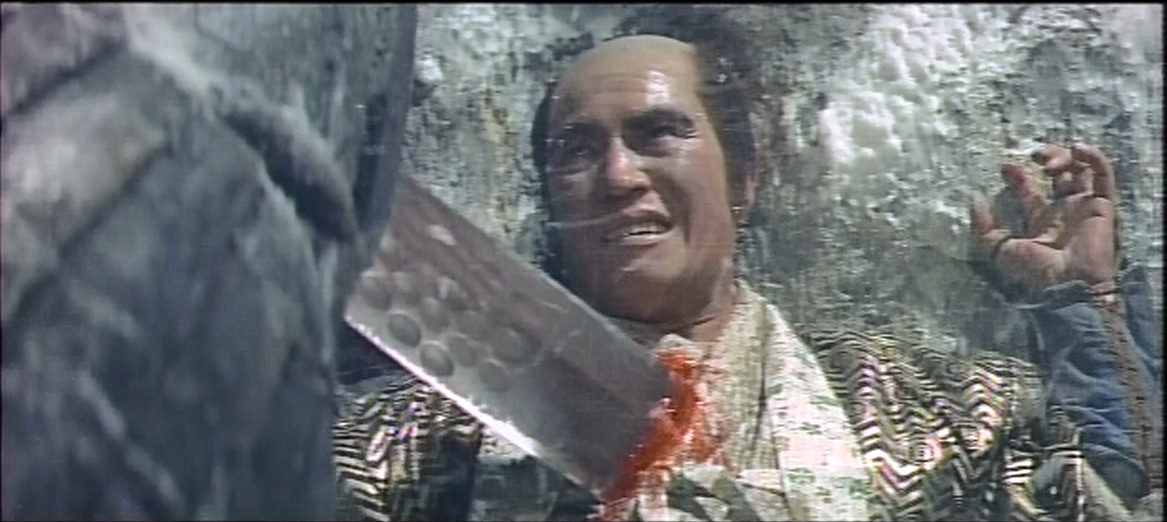
NAUGHTY!

As I said in my review of the first Daimajin film, these films straddle an uncomfortable line. There's not enough samurai action for samurai films, and there's reallty not enough giant statue smashing action for us giant monster film buffs. In addition, I would say it would be best not to watch them too closely together. They recycle a lot of elements; there is always an evil lord who is being mean to the people who venerate the Daimajin, and Daimajin kills him in the same way he killed, or attempted to kill, someone.

Next week, a film I haven't seen. A lost giant monster film from an unusual production location.

Thursday, October 24, 2013

Repetition is the Soul of Wit: The Return of Daimajin

The Return of Daimajin is the sequel to Daimajin, the second of three films released by Daiei in 1966. In keeping with the middle film always being the darkest, The Return of Daimajin starts with a peasant massacre. Serfs attempting to leave the land of Lord Mikoshiba are caught and cut down. This sets the tone for the rest of the film. Lord Mikoshiba is an evil lord, oppressing his serfs, plotting to conquer the other prosperous, happier kingdoms surrounding his.

Maybe the root cause of their production problems is destruction of the means of production.

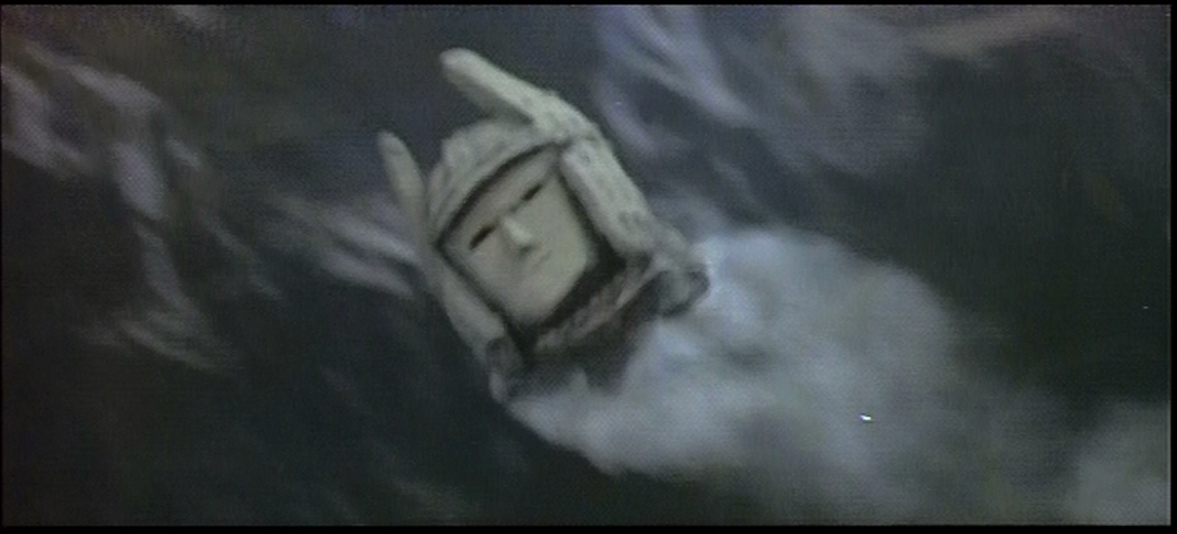
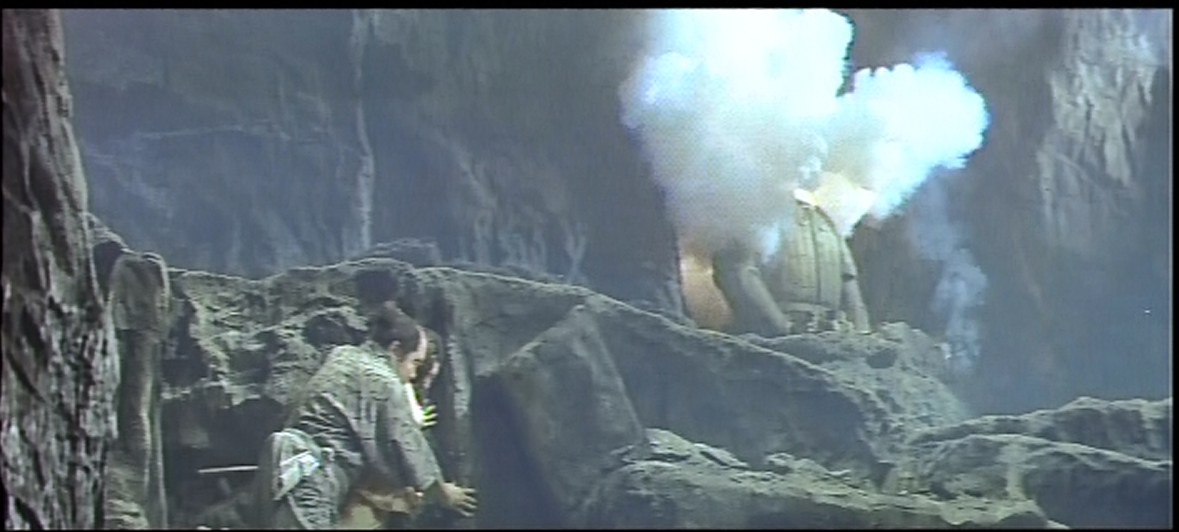
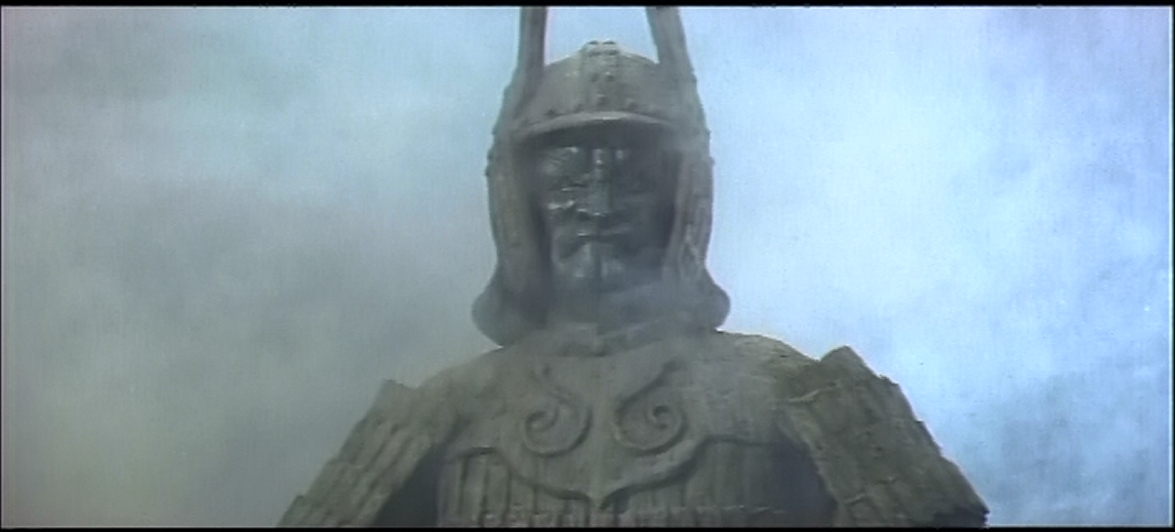
Daimajin is no longer at the top of a waterfall, but now in in an island. I can't tell if this is supposed to tbe the same statue/spirit. It looks the same, but it has been on the island long enough that there is a legend concerning it. If the statue's face ever turns red, the kingdom will fall. Of course, early in the film, his face turns red. Lord Mikoshiba is a scoundrel with an evil laugh in the same way that Lord Odate from the original Daimajin was. He takes over the surrounding locations with little difficulty, because he is ruthless. And while the peaceful lord warns of the vengeance of Daimajin, Daimajin is slow to fury. A lot of unpleasant things happen before he rouses himself. He doesn't even get angry when the evil lord sets black powder at his feet, tumbling the statue's head into the ocean.

Daimajin's statue head flies through the air.

I understand that this makes the evil lord more evil, but Daimajin's long delay before getting to work makes him look either apathetic or weak. After the statue is destroyed, lightning strikes and the water boils red, but the show stops short of doing harm. In the last film, the beginning of Daimajin's rage was when they they drove a spike into his statue. This time, they destroy him, and he still doesn't take much action.

And BOOM goes the statue!

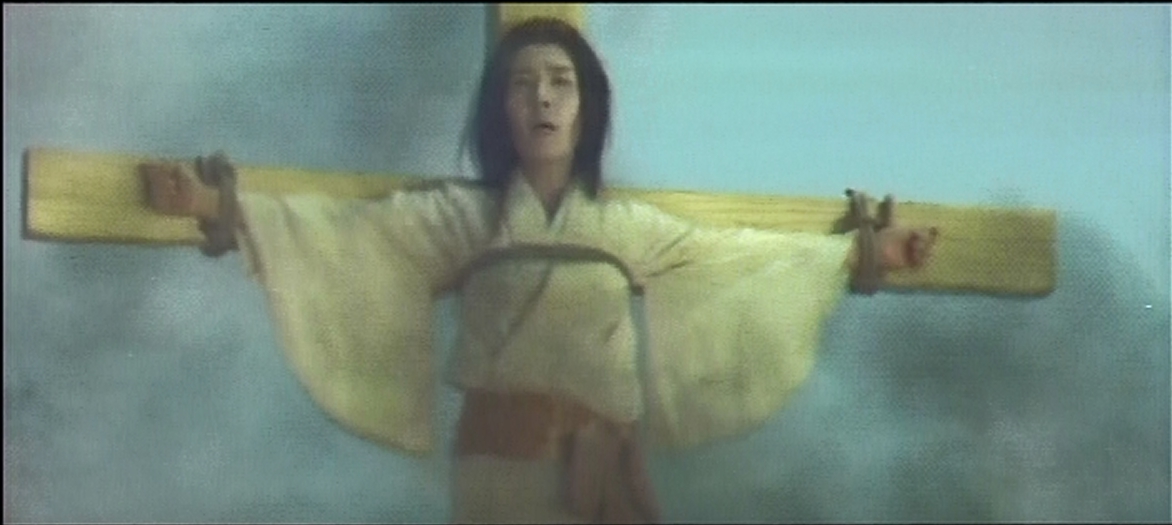
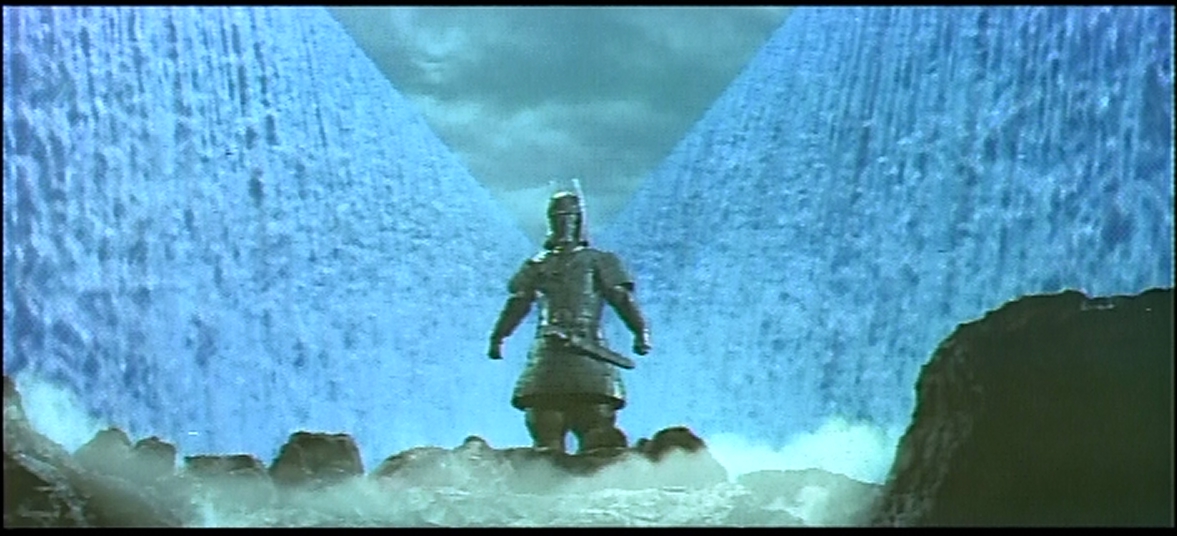
Moer than in the previous film, we are rpesented with Christian imagery. Lady Sayuri is crucified and the straw below her lit in fire because one way of dying just isn't enough for evil Lord Mikoshiba. Only when her tears fall does Daimajin rouse himself, with eighteen minutes left in the film. He parts the waters of the lake, again harking back to The Ten Commandments.

Lady Sayuri as the offering to God, Daimajin

Suck on THAT, Heston!

There's a little more complexity to the plot, compared to the previous Daimajin, and it's riddled with samurai film melodrama and cliche. In one innovation, Lord Mikoshiba, after watchng bullets bounce off the stone statue, threatens one of his prisoners. Daimajin solves this by commanding the wind, which knocks the evil lord off his feet. Mikoshiba also tries laying boxes of black powder before the advancing statue and blowing them up. It doesn't work, either.

Still going to kick your ass with my giant stone boot.

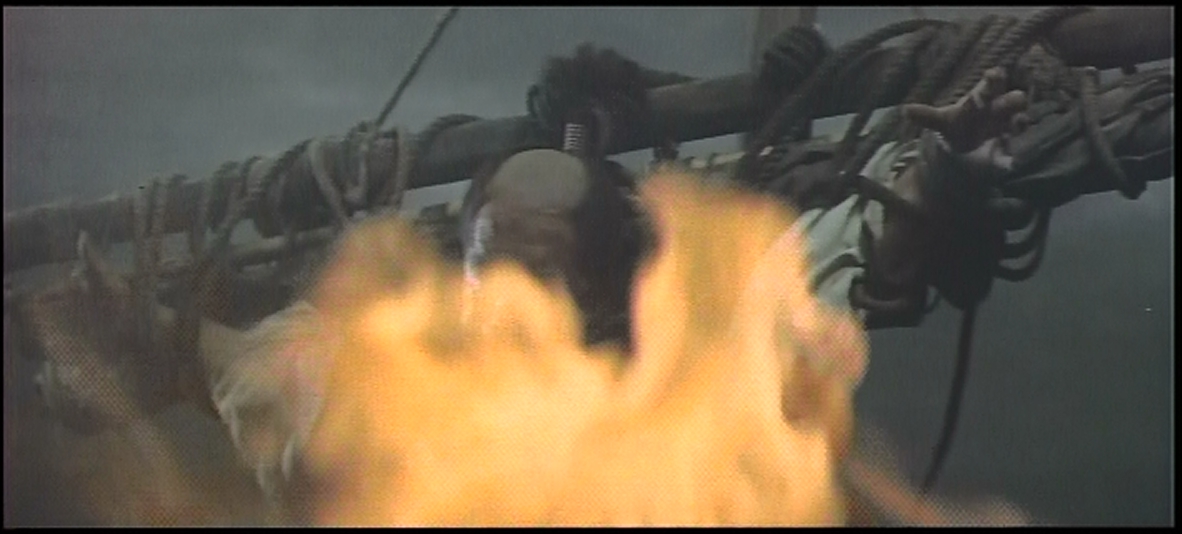
Daimajin diplays more of his poetic irony. Evil Lord Mikoshiba tries to get away in a boat, but Daimajin sets it on fire. Mikoshiba ends up tangled cruciform in the rigging, of a burning boat, echoing the burning crucifiction he tried to inflict on Lady Sayuri. Once this is done, Daimajin is satisfied. The Lady weeps another tear, and Daimajin returns to his statue form, then dissolves into water.

Oh the ironicalness of being rope-crucified to a boat when you were doing that to the nice lady who is the white-robed Christ figure!

The Return of Daimajin breaks little new ground. The script has the same outline as the previous film. Evil lord takes over the land of the good people who propriated Daimajin. the people are abused, and the tear of a pure woman awakens the statue to wreak vengeance on the bad people. The first Damiajin, directed by Kimiyoshi Yasuda, was more interested in the creature. Daimajin was dynamic, nowhere more so than when he shifted his attention. The turn of the suit actor's head indicated that the devastating statue was moving in a different direction, and that a new group of samurai was about to be wrecked. In Return of Daimajin, Daimajin just marches toward the camera. So I find it less satisfying, especially since the god allows the abuse and cruelty to go on so much longer.

Next week, the last of the Daimajin trilogy.

Thursday, October 10, 2013

The Gods of the Valley are Not the Gods of the Hills: Daimajin

"The gods of the valley are not the gods of the hills, and you shall understand it." Vermonter Ethan Allen

I am a little surprised that the Daimajin trilogy was a product of Daiei rather than Toho. The trilogy, all released in 1966, combine Japan's two great film exports: period samurai films, and giant monsters. Daimajin is not as well known as other giant monster films, perhaps because the films sit uncomfortably between those two genres. Since samurai films tend to be historical dramas, so the supernatural does not sit well with the usual audience. And Daimajin's rampage is only in the last fifteen minutes of the film, leaving the monster-film aficionado cold while the costume drama unfolds.

This year, give the present of Checkov's bells

Daimajin was sealed away by a local god. The spirit is blamed for earthquakes. When a quake is felt, the locals propiate it deity to strengthen the bonds keeping Daimajin . This is, of course, the practice of the good, local people, who are reasonably happy under their good, local Lord Hanabasa, lord of Castle Yamanaka. Social order comes crashing down when the messenger throws a coup. Evil, as usual, manages to get the upper hand, even though he's clearly an honorless dog. I cannot tell if this is a social critique, since the bad people, especially ones with a deep evil laugh, always seem to have legions of suborinate samurai. This is usually to give the good guys a lot of people to carve through, and also makes Lord Odate's coup look credible.

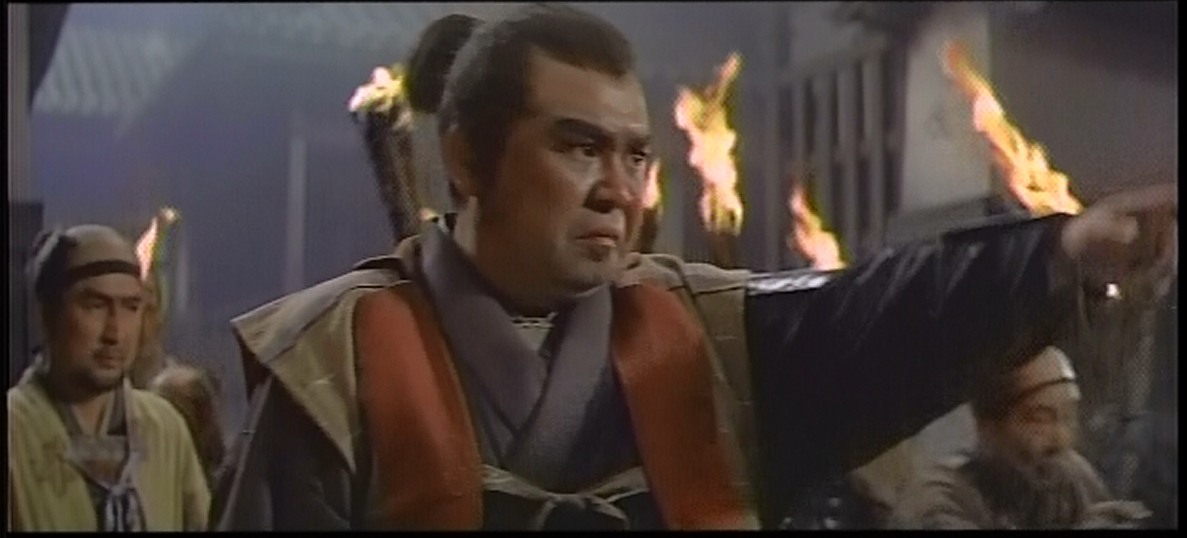
Why yes, I am both Evil and Commanding. Wait till you hear my evil laugh.

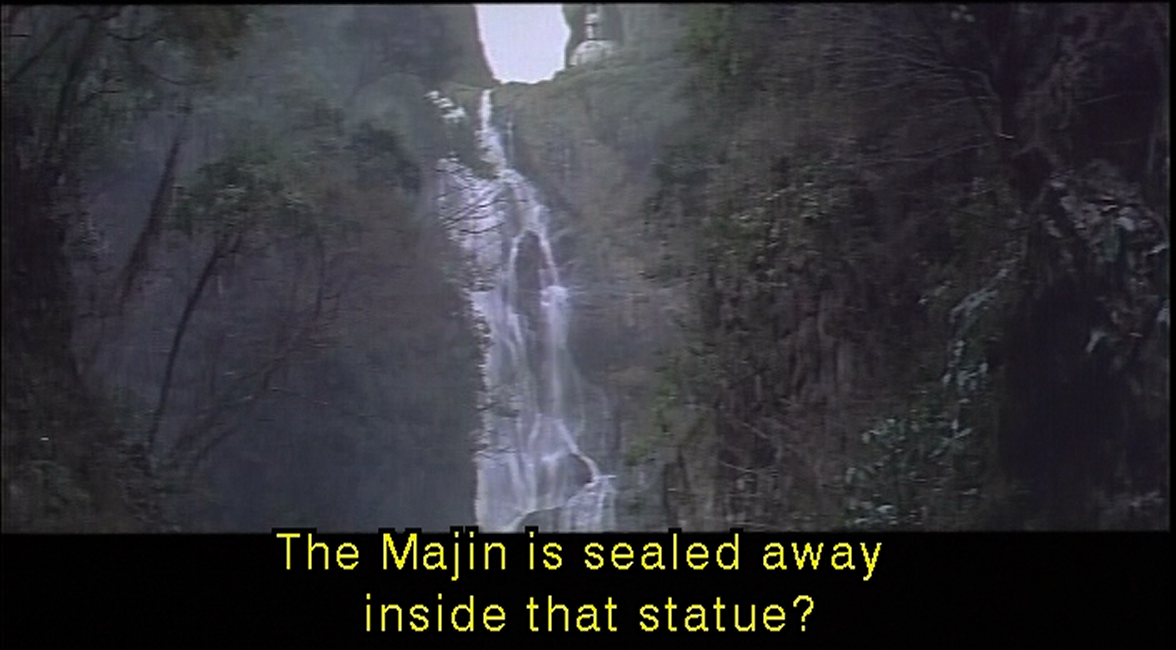
Hanabasa's son and daughter survive, aided by the local priestess's nephew. They are taken to Maijin's mountain, near the god's statue, to live. The imprisoning statue of Daimajin stands at the top of a beautiful waterfall.

Top right is Daimajin's prison.

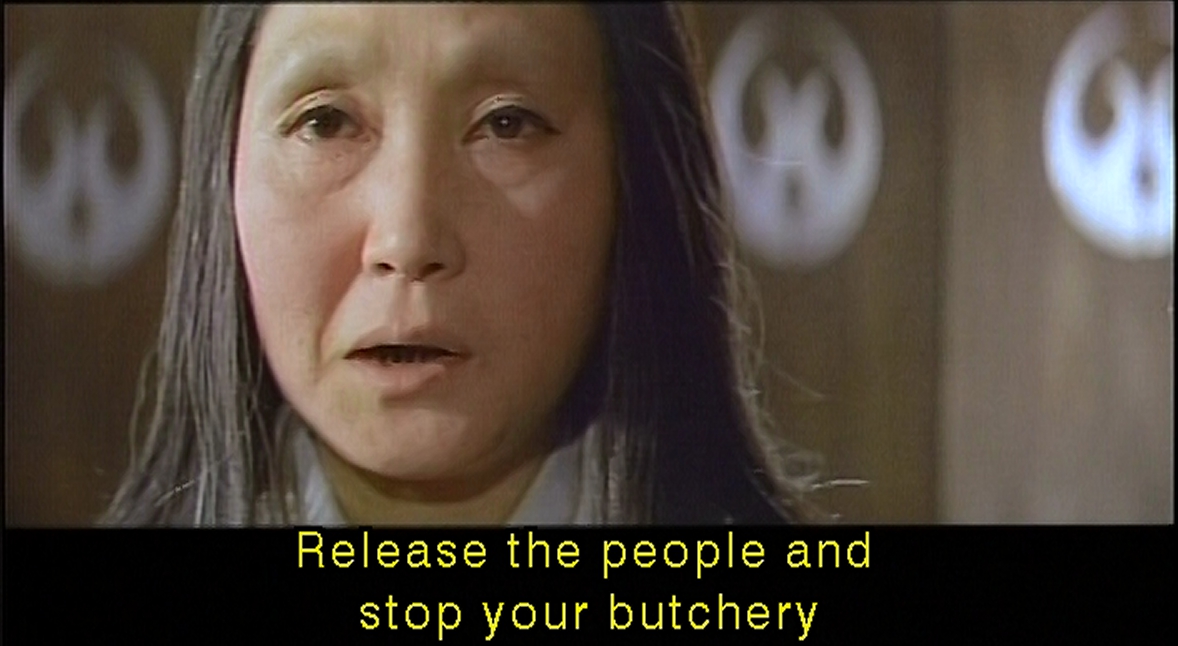
Ten years pass before we pick up the plot again. The children are grown, and Lord Odate is abusing the populace to create massive fortifications around Castle Yamanaka. The building and abuse is reminiscent of the Ten Commandments. This is reinforced when the priestess confronts Lord Odate and tells him to release the people, an echo of Moses' demand that Pharaoh let his people go. The priestess, despite her powerful performance, doesn't come off as well as Moses. Lord Odate, delcaring that he is not superstitious, cuts her down.

LET MY PEOPLE GO!

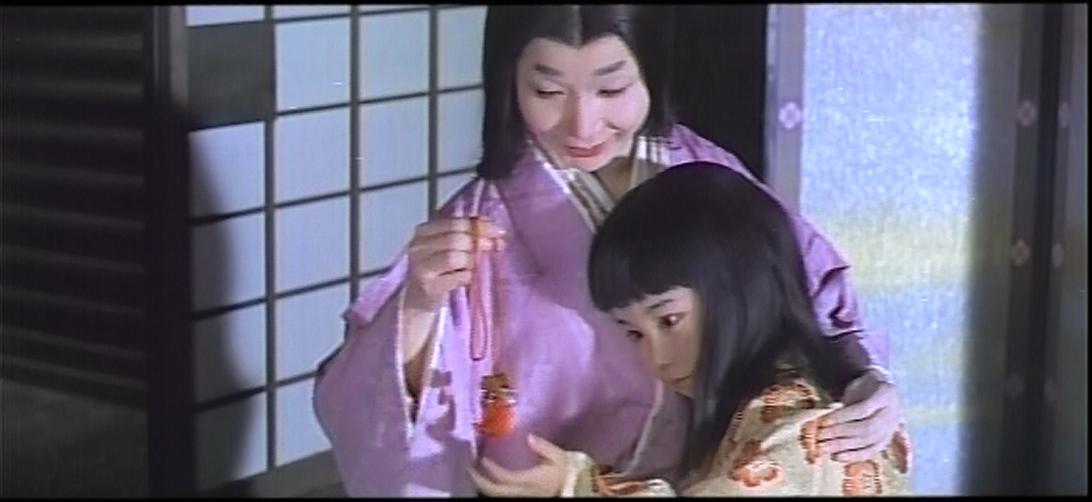
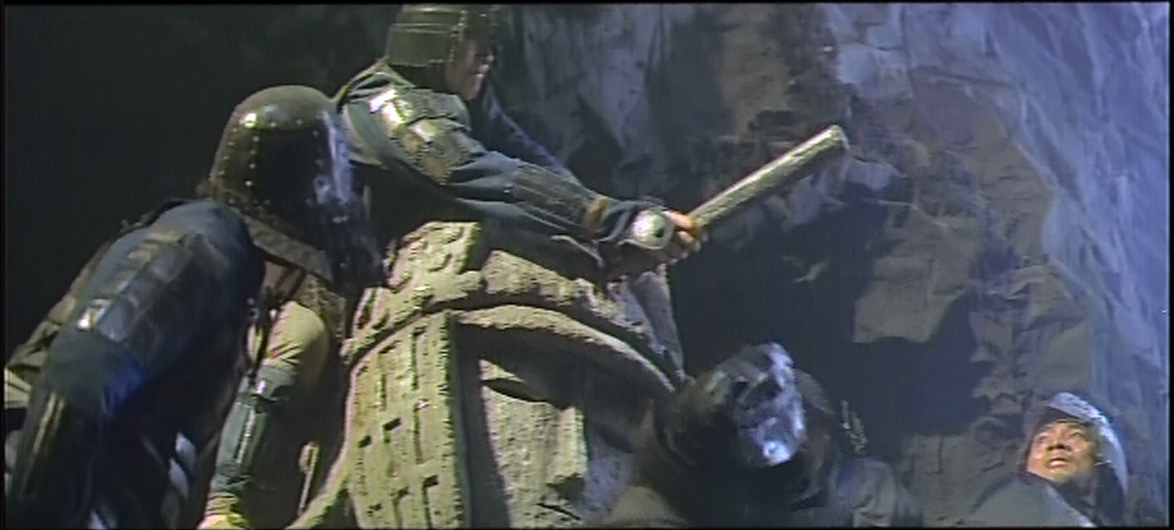
One of the first scenes in the film involves Lady Hanabasa giving her daughter a hair ornament with some bells on it. Later in the film, she loses it, one more sign that the wrath of Daimajin will be visited on the evil Lord Odate. And we are, in extremes of despair. All the loyal retainers of the old lord have been captured. The men are crucficied (luckily tied, rather than nailed to their crosses), and the bad guys are breaking the statue. The turning point comes when the servants of the new lord drive a chisel into the statue's head. It begins to bleed. And then very bad things finally start happening to the evil usurpers.

Just drive this chisel into the statue's head.

After disposing of the men who are trying to destroy the statue, Daimajin once again goes quiescent. Only when a tear from Odate's daughter touches him does Daimajin animate. And then the mayhem begins.

In what becomes a characteristic gesture of the film series, Daimajin passes his forearm in front of his face, transforming it from the blank, stone face of the statue to a demonic face with human eyes. The effect is simply achieved, but effective. Once Daimajin transforms, that new face tells us he's we know that he is not screwing around.

Lemon face Ooooh!

Tiger Face RAWR!

What separates Daimajin from other movie monsters is his intent. It is a thirty-foot tall stone statue, given movement, essentially invulnerable to anything the humans can throw at it. But Daimajin intends to wreck stuff. Unlike Godzilla, who wrecks cities because he's just passing through, Daimajin is on a quest to kill Lord Odate, and he does so in a deliberate fashion. So his rampage is a bit more calculated that that of other monsters. When he steps on someone, it's because he wants that person dead. The moments when Daimajin changes focus from an old objective, often because that old objective is no longer screaming, to a new one, are effective and chilling.

You wanted my attention, now you got it.

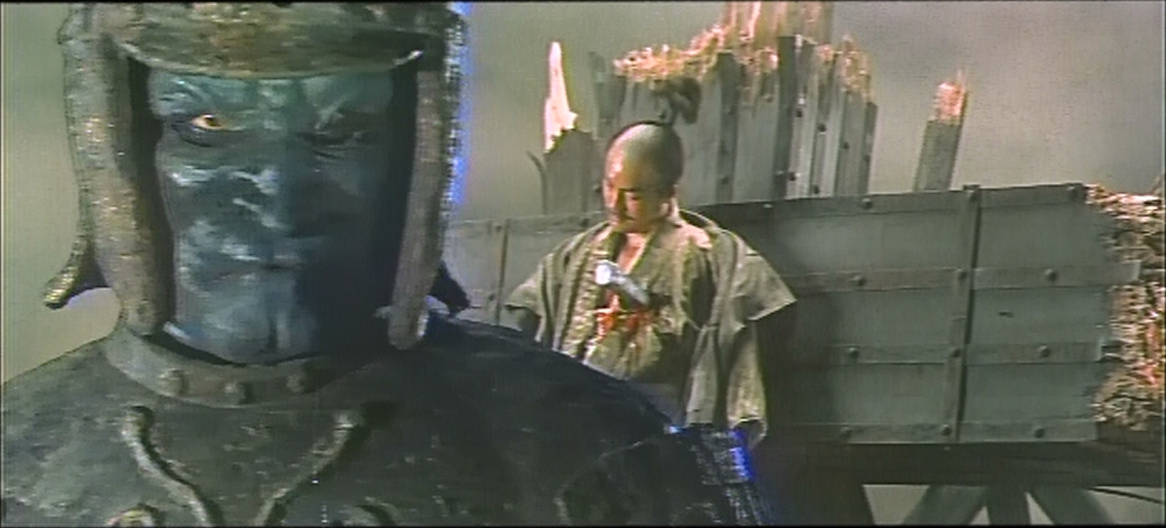
Daimajin's rampage through the newly-fortified Castle Yamanaka is impressive. He wrecks everything. When the defenders try to stop him with chains, he pulls out the beams they're using to anchor those chains. He smashes gates, buildings, burying men under the rubble, then crushing them with his heavy stone feet. Bullets and catapult-driven rocks do not even faze him. When he is blocked by carts full of burning twigs, he summons his magic and snuffs out the flame. Against Daimajin, there is no defence. All the castle's defenses prove futile.

DAIMAJIN SMASH!!

Daimajin seems to be be a more adult-oriented film than the Gamera series. Although there is a child character, he is not the protagonist. We see some scenes of torture, and the death of Lord Odate, impaled by the same spike that was driven into the statue's forehead, is explicit, if not gory. DAIMAJIN SMASH!!

What keeps the story from being a simple morality tale is that when Daimajin is done trashing the new castle, it turns on the village in a continuation of its rampage. Daimajin prioritizes the reprehensible over the innocent, but the innocent will suffer as surely as the evil. Only the intervention of Odate's daughter, in the forms of tears, calms him.

Daimajin is a good film. The direction is good, the Akira Ifikube music is up to his usual high standard, and this contributes a lot to the film. The plot is a fairly standard revenge film, with justice coming in the end from the supernatural, rather than human agency. The bad guys are bad, with little depth. But the whole makes for an enjoyable and satisfying film. The bad are punished, stuff is wrecked, and the good get to clean up after Daimajin.

Next week will not be Return of Daimajin, but an analysis of Pacific Rim. Because I can't wait to see it again.