Showing posts with label Mechagodzilla. Show all posts

Thursday, December 18, 2014

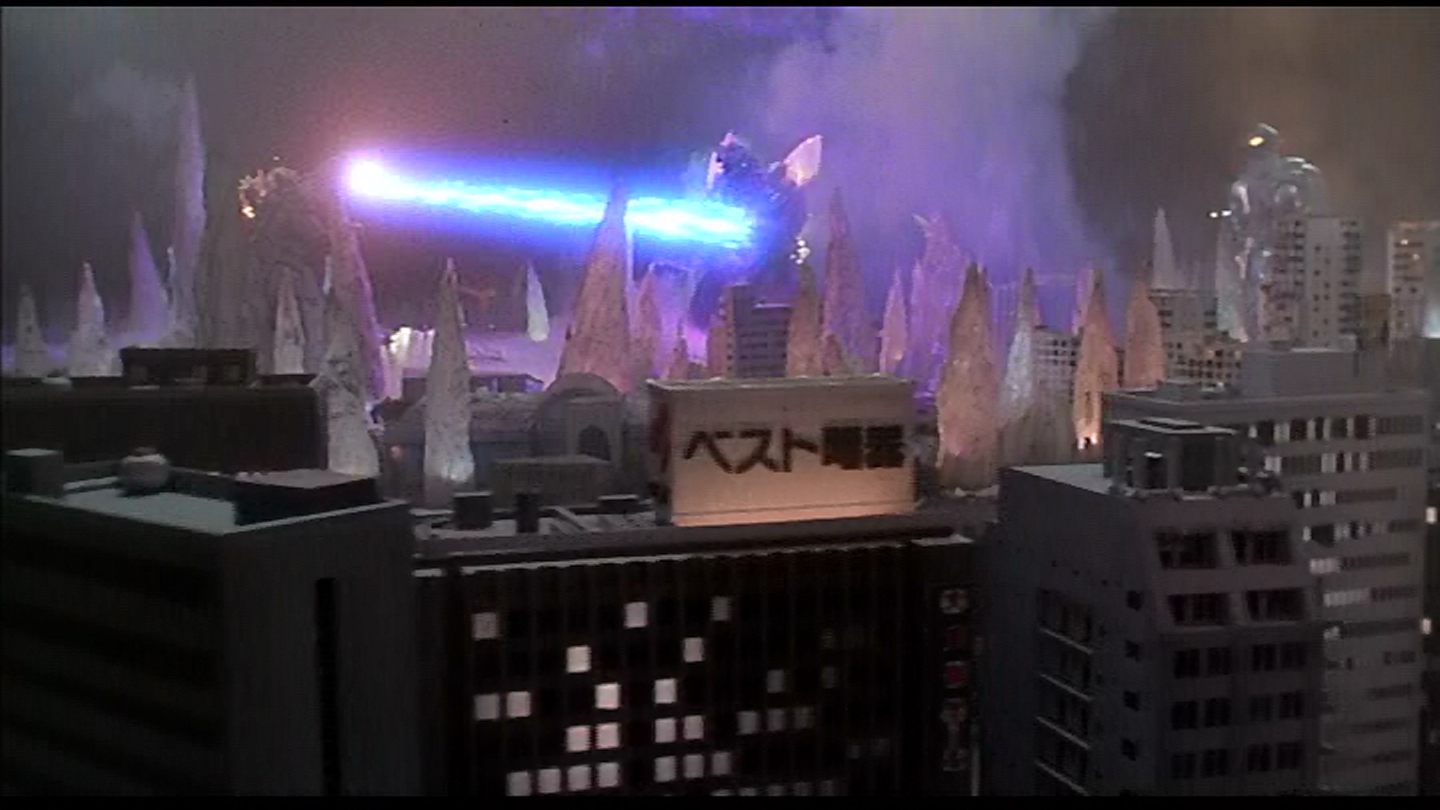
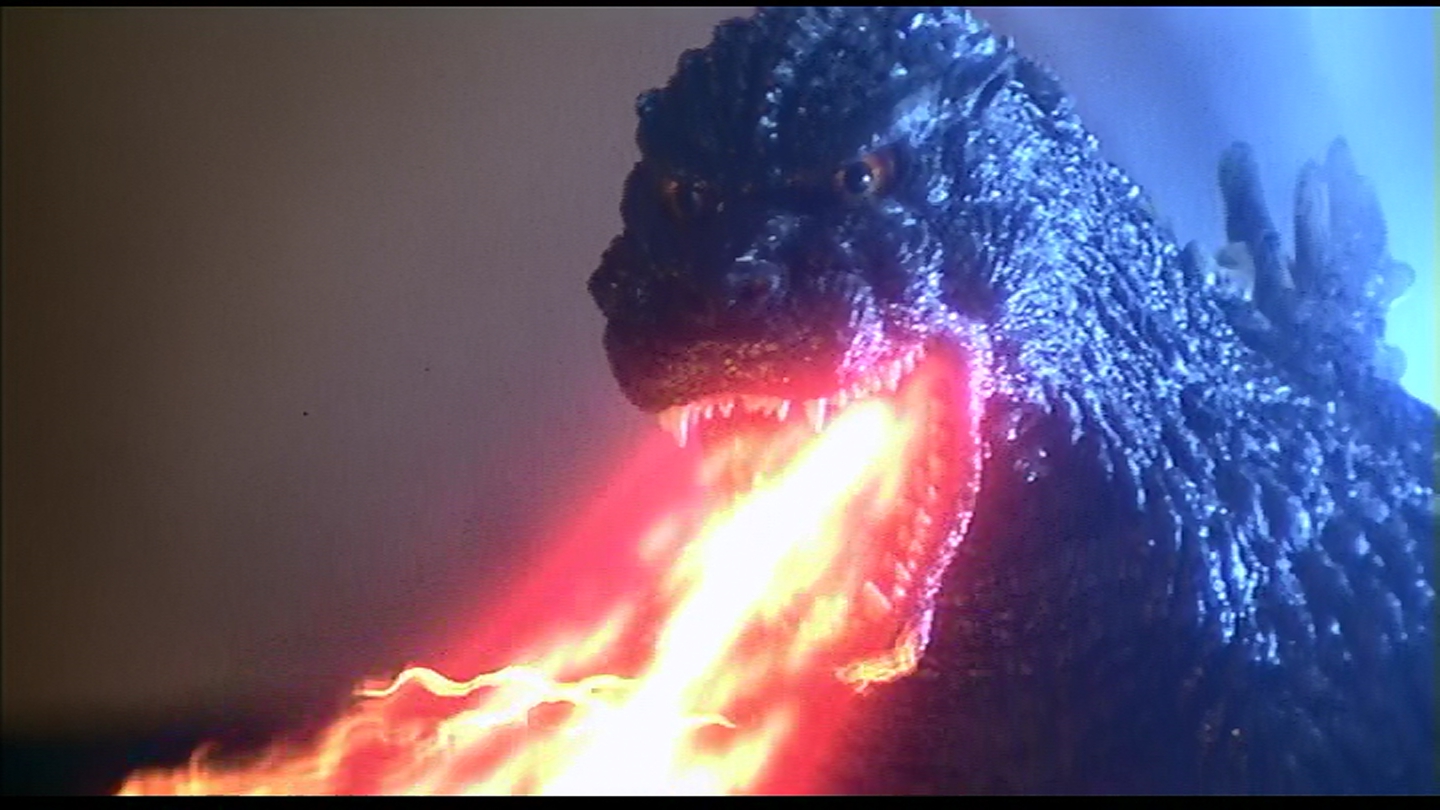
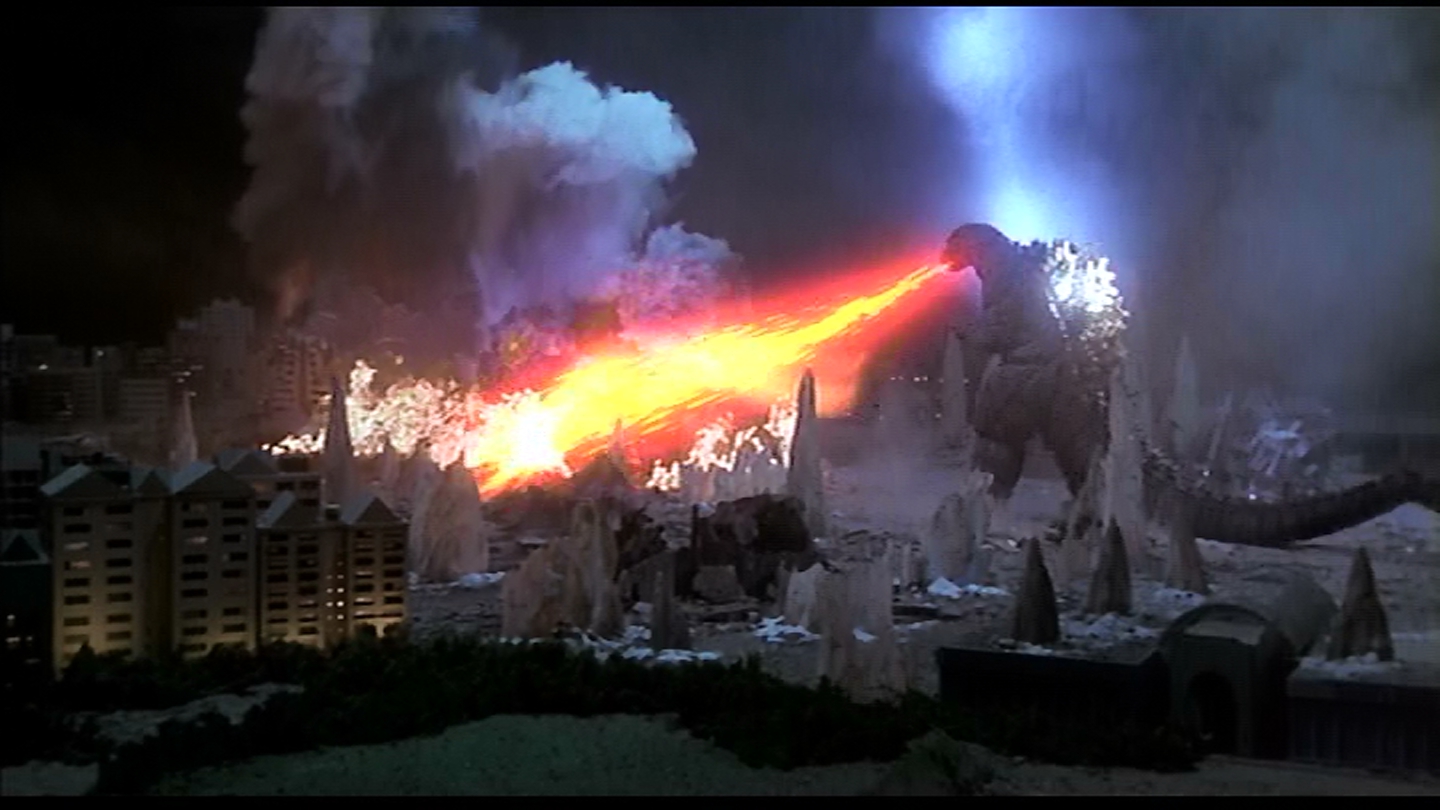
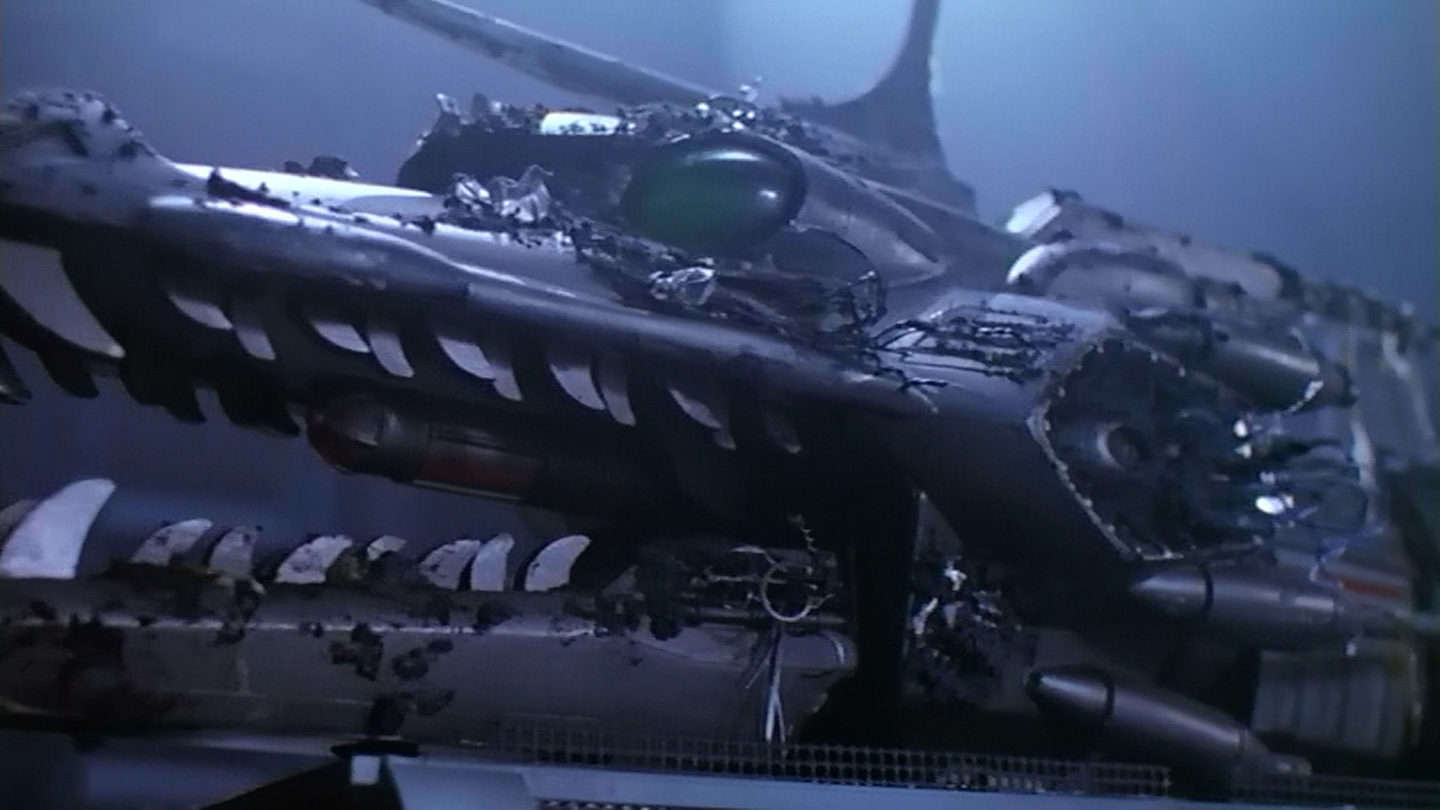
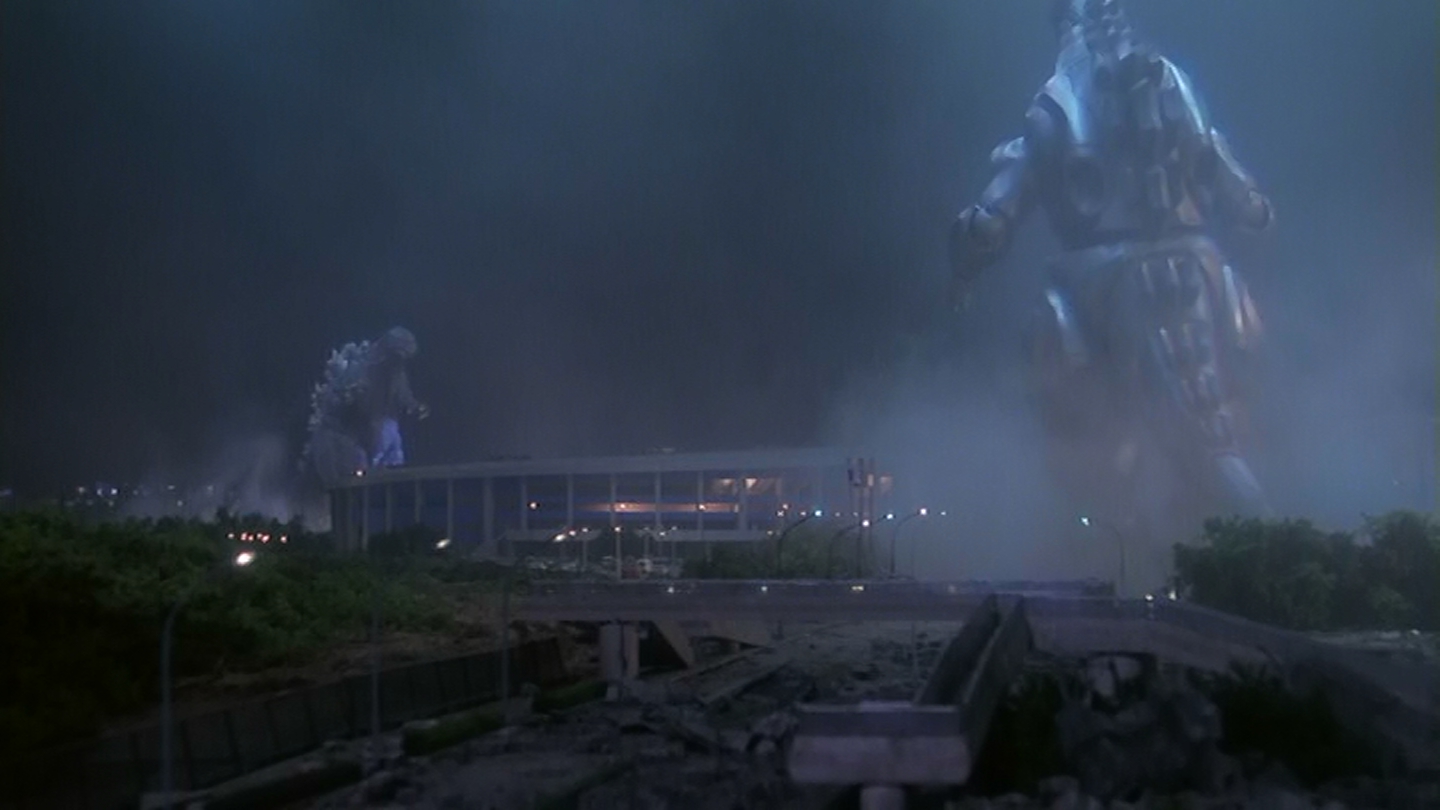
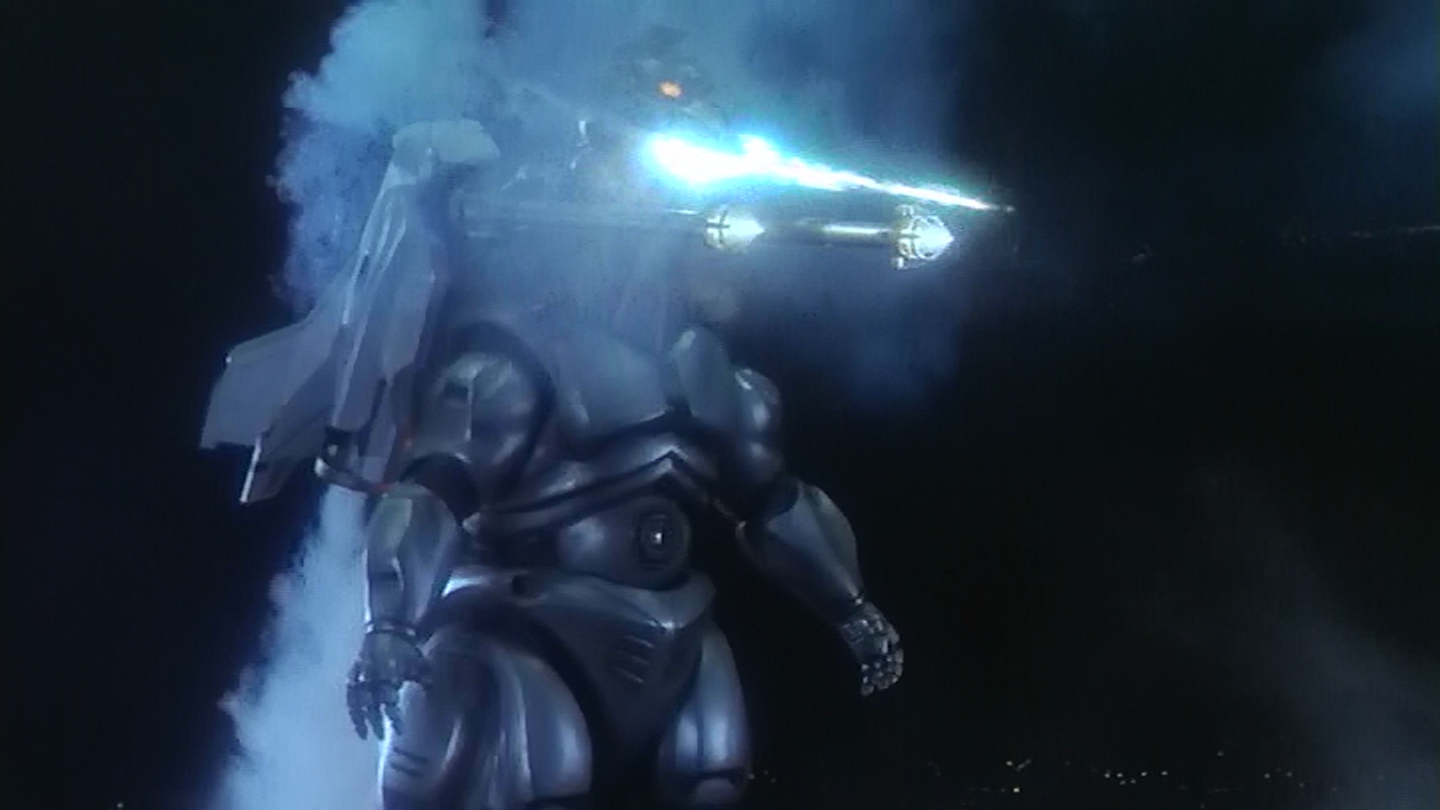
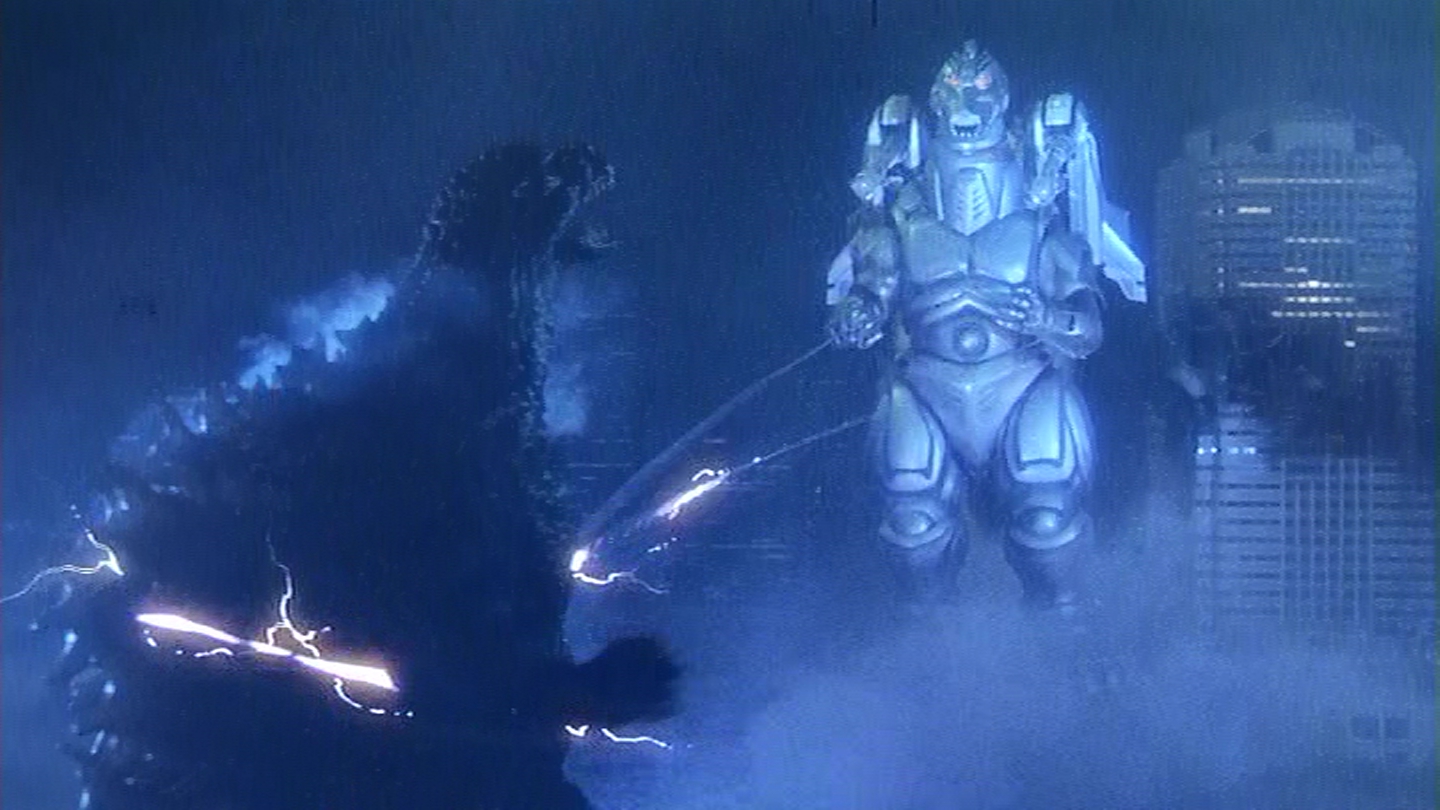
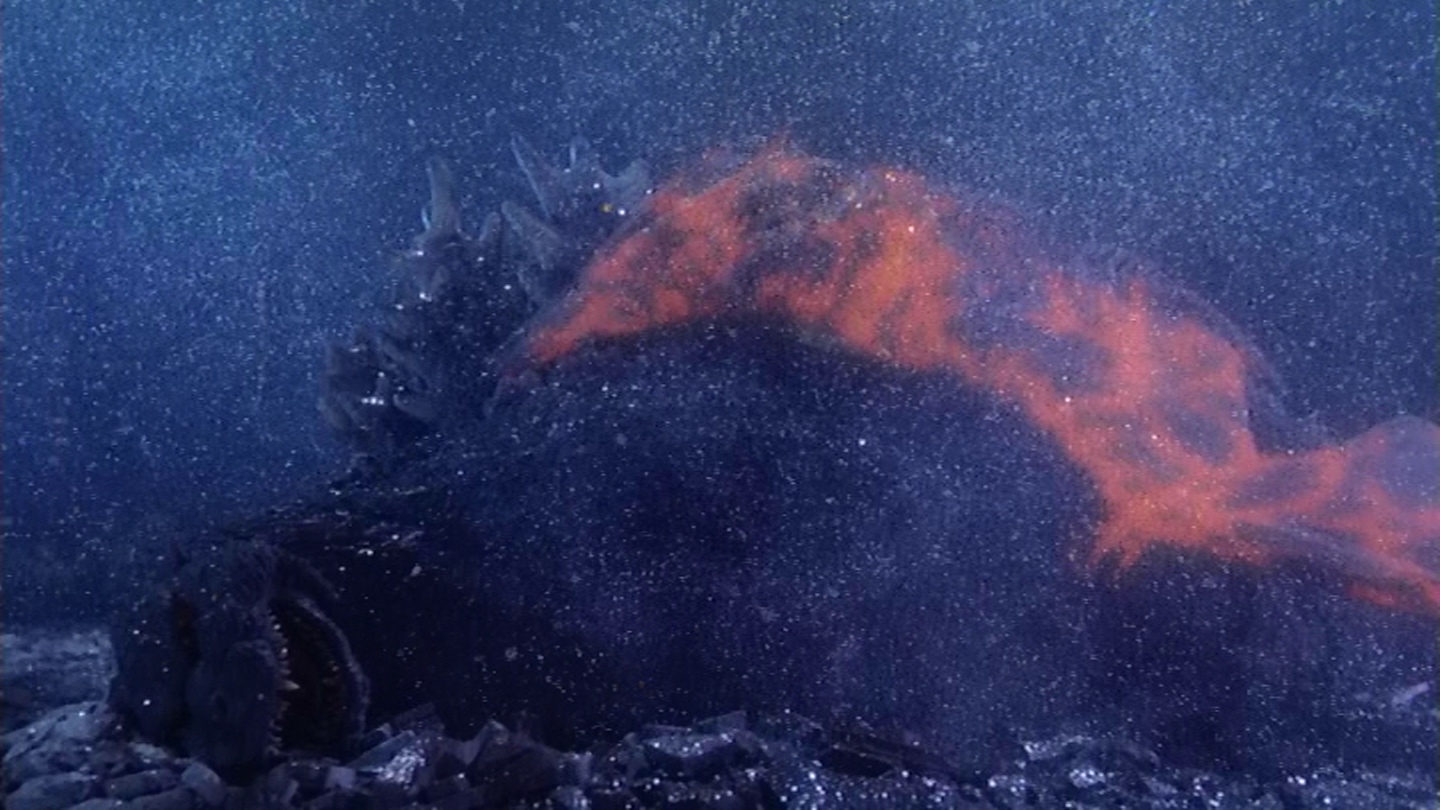
Look At Them Monsters Go: Godzilla: Tokyo SOS

Godzilla Against MechGodzilla wasn't as successful as GMK, but it wasn't a failure, either. So Toho decided to plot along with the same director, and essentially, the same plot. This is also the only film of the Millennium series to be a direct sequel to another film of the same series.

Ok, he's back. Now let's procees to wreck some stuff

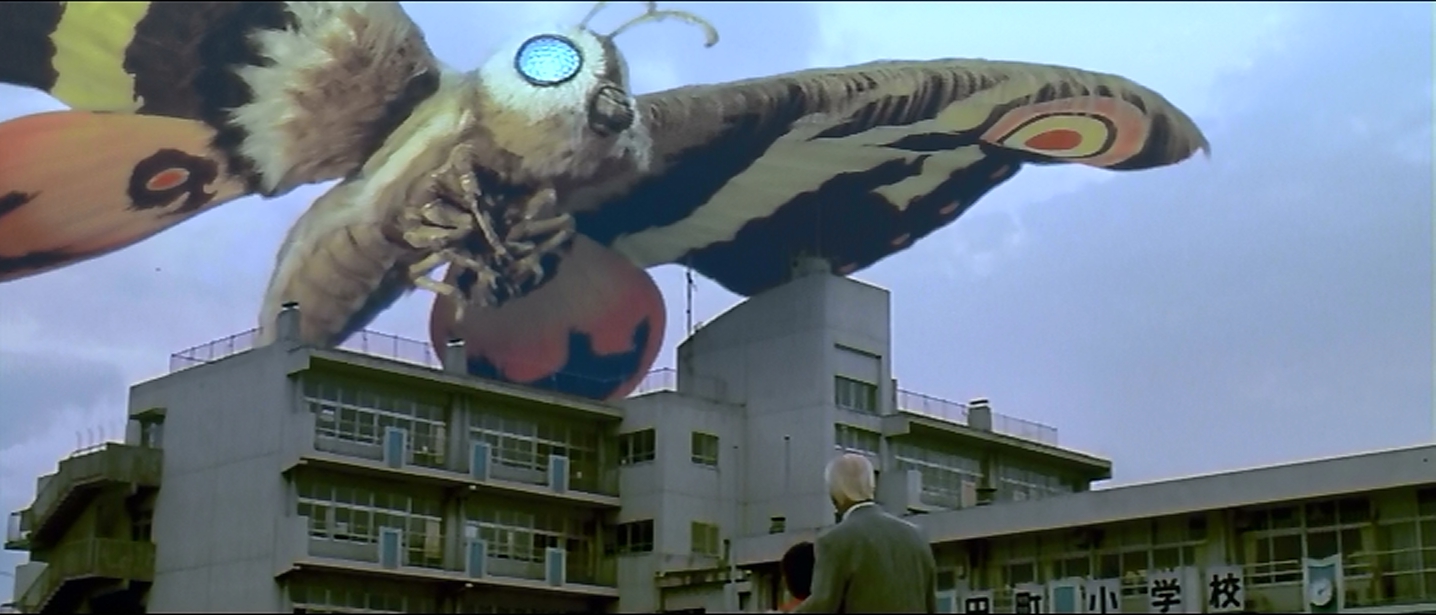
Our first monster on-screen is Mothra. Again ignoring the Rebirth of Mothra series, Mothra looks much like it did for Godzilla vs Mothra, although it can apparently fly as trans mach speeds. Mothra is no longer sleek and combat-oriented, but again hairy, as she was in her original film. If this is to make her sympathetic, I'm not sure. With her are the shobijin, who shows no signs of having a wicked triplet. The shobijin contact Dr. Shin'ichi Chûjô, played by Hiroshi Koizumi forty years after he first performed the role in Mothra in 1961. They want Godzilla's bones to be returned to the sea.
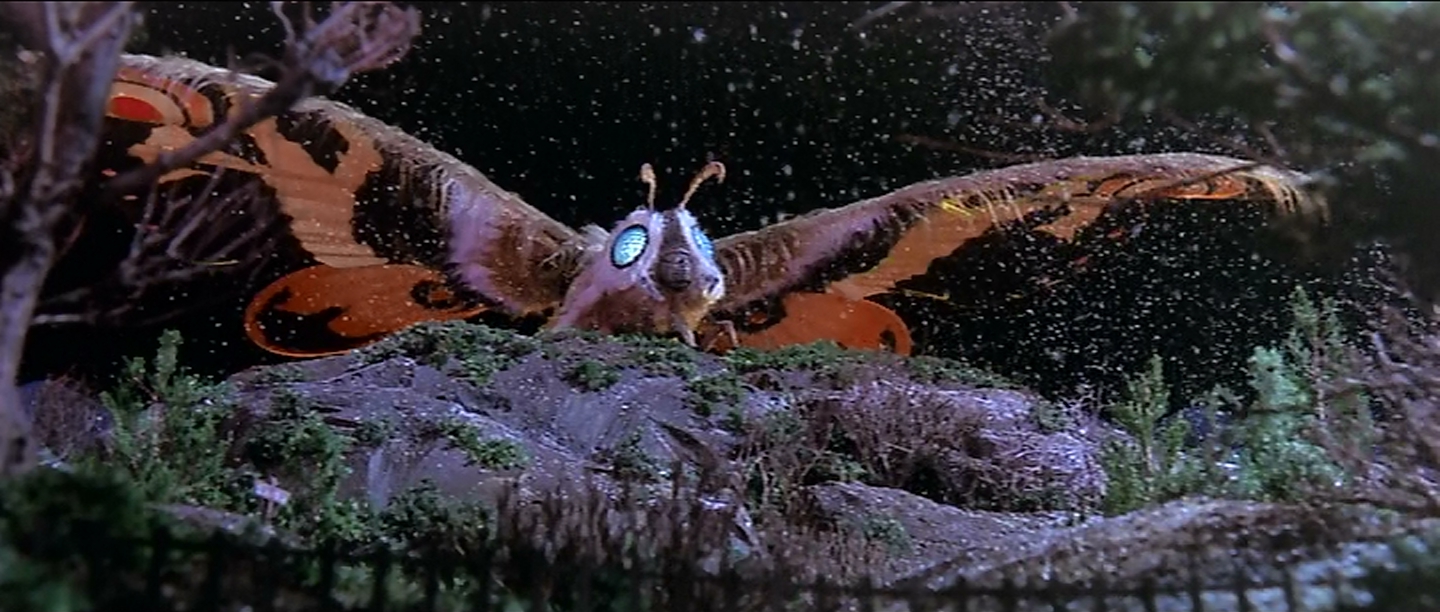
BIG FLUFFY MOTH!

Less than ten minutes after the film begins, so do the plot problems. The shobijin want Japan to decomission Michagodzilla. When Kaneko's nephew reples that it is their only defence againat Godzilla, the tiny fairies promise Mothra will protect Japan from Godzilla. So where was she the whole last film? Worse, if the humans do not do this, Mothra will declare war on them. But this ultimatum is forgotten as soon as it is spoken.
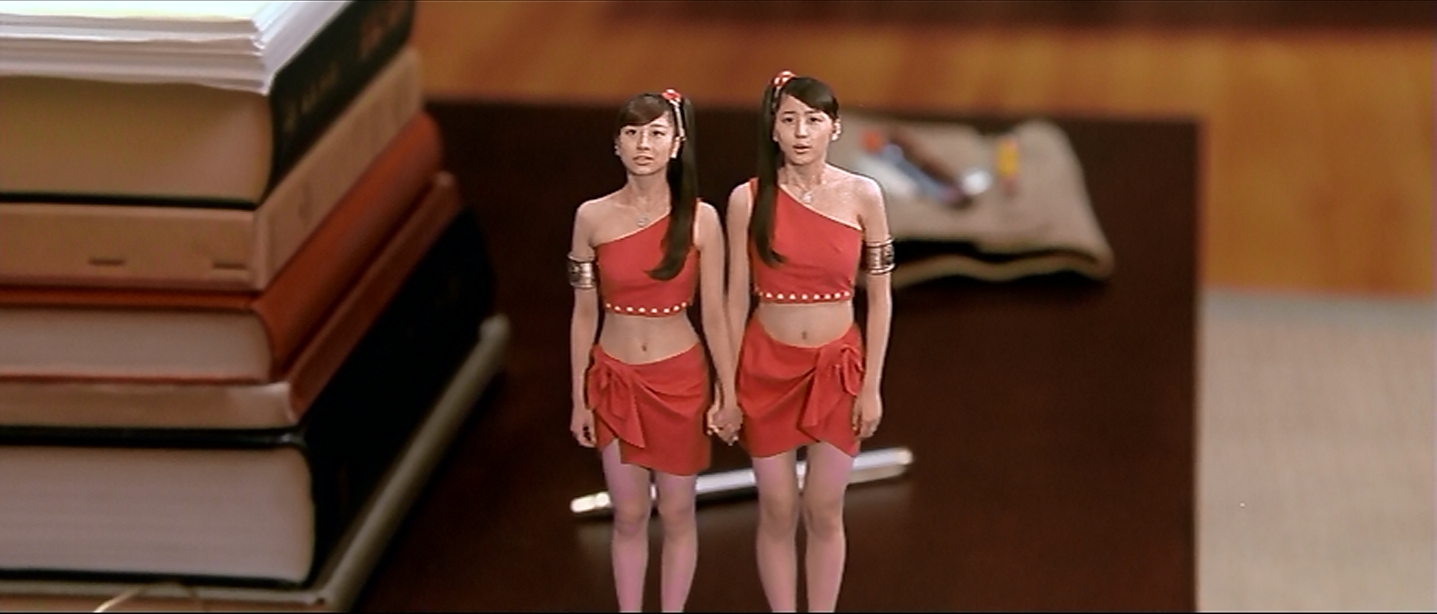
With memories as short as their tiny bodies

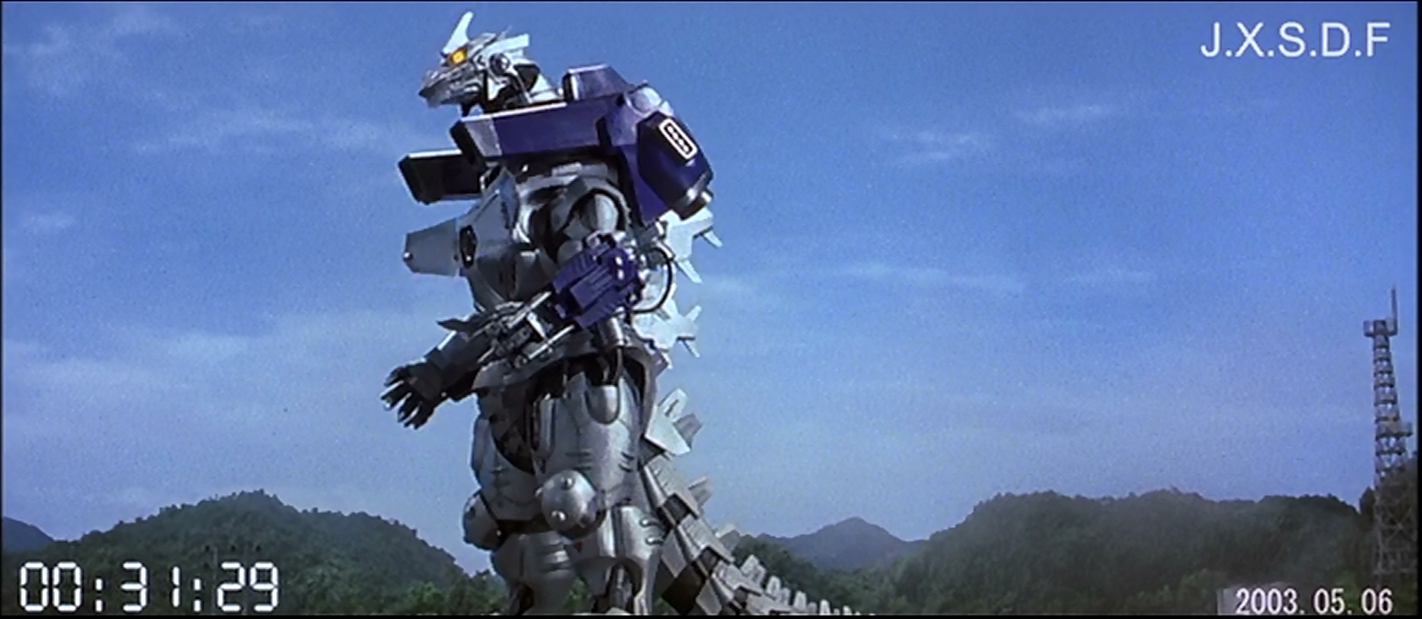
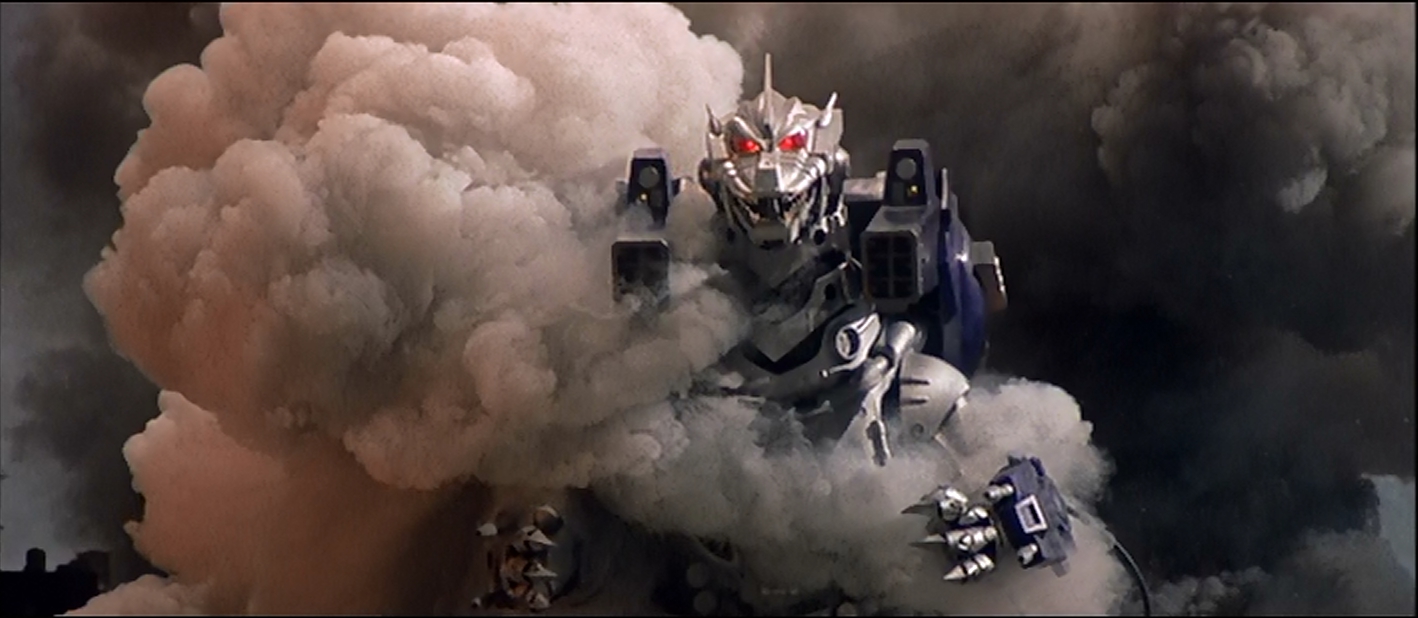
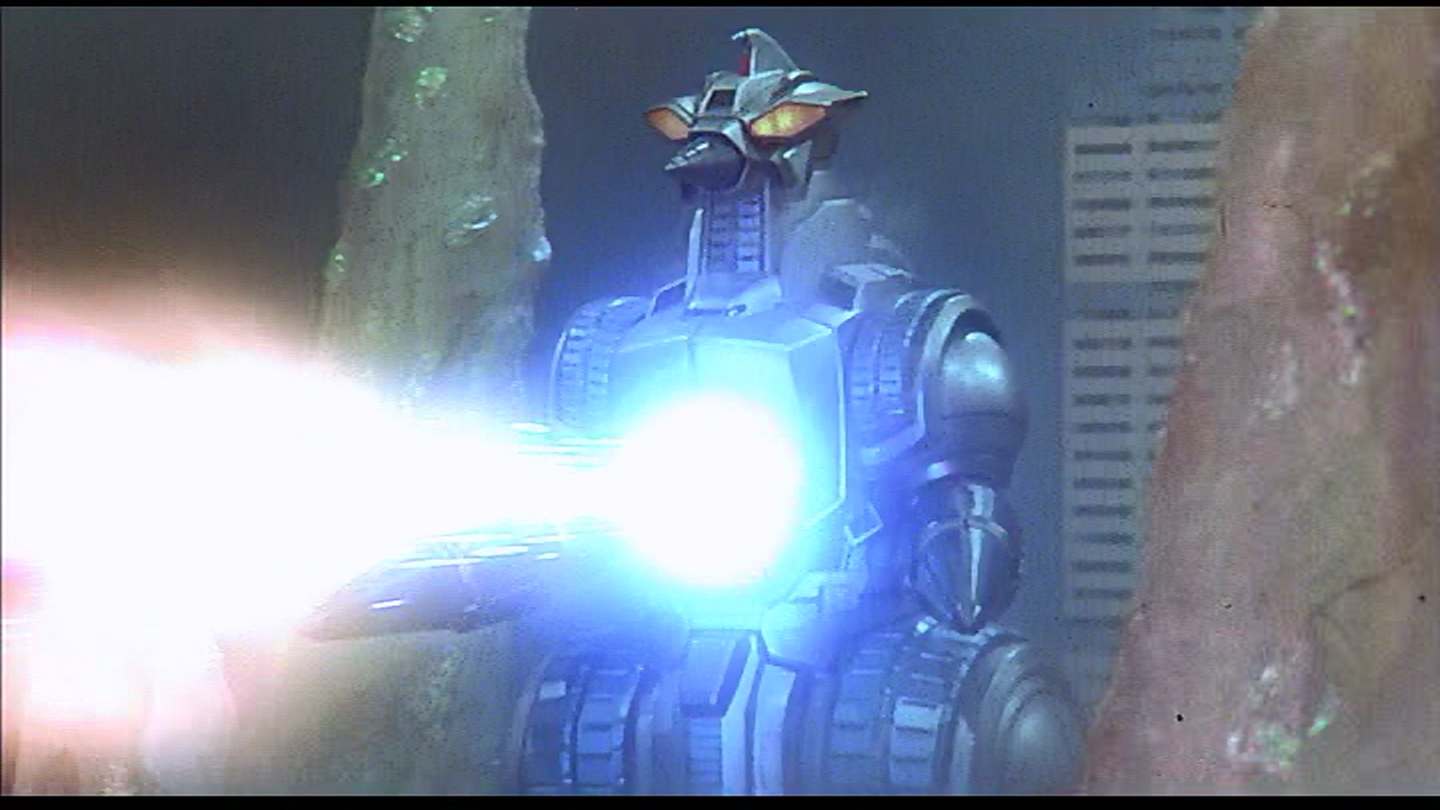
Mechagodzilla has been nerfed a bit, and is still under repairs from the damage taken in the previous film. The absolute Zero chest cannon has been replaced with a more run of the mill triple hyper maser. But here it also serves as a bone of contention. It is made from Godzilla's remains, the Shobijin want returned to the sea.
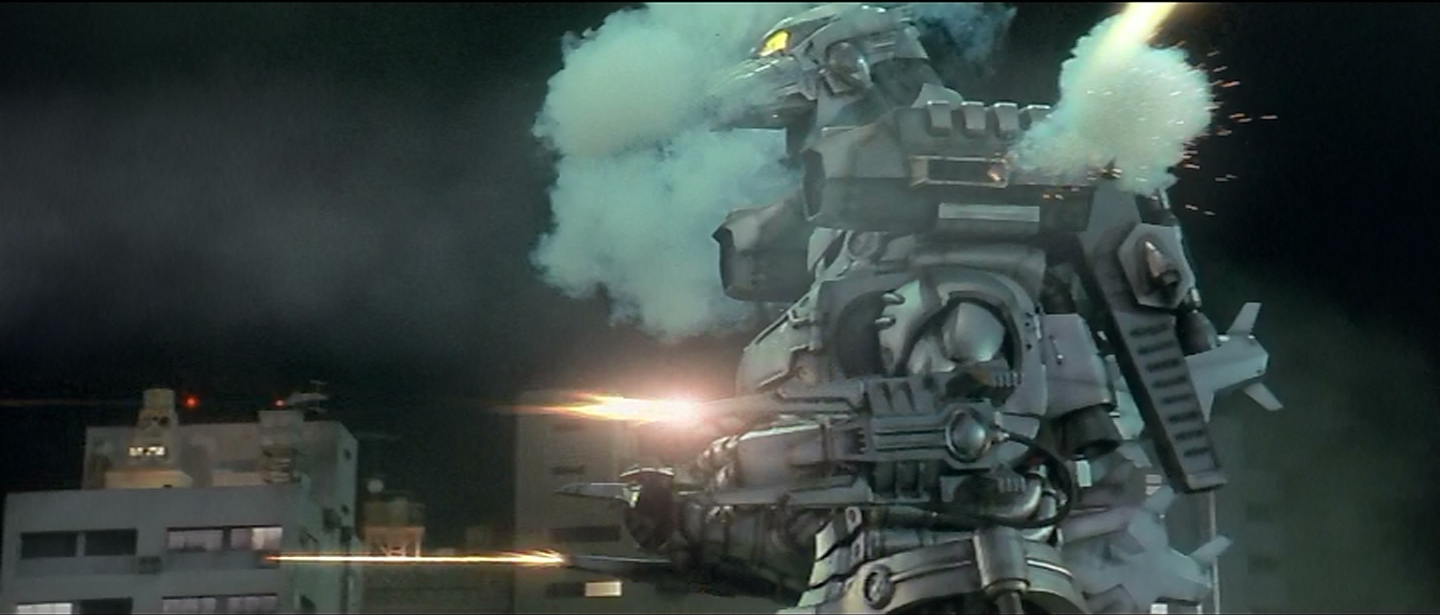
I will not go berserk, I will not go berserk, I will not go berserk.

Giant turtle Kamoeba, from the obscure Space Amoeba washes ashore, letting everyone know that Godzilla is on the prowl again. Apparently, writer/director Masaaki Tezuka originally wanted this to be Anguirus, but Toho said no. It would have been oddly appropriate, since the cranky old dinosaur's last appearance was the first Godzilla vs Mechagodzilla, back in 1974. Apparently, Toho worried about the audience's reaction to Godzilla killing one of Godzilla's oldest friends. Which is odd, because not two films ago, Godzilla disintigrated Mothra, who is now back.
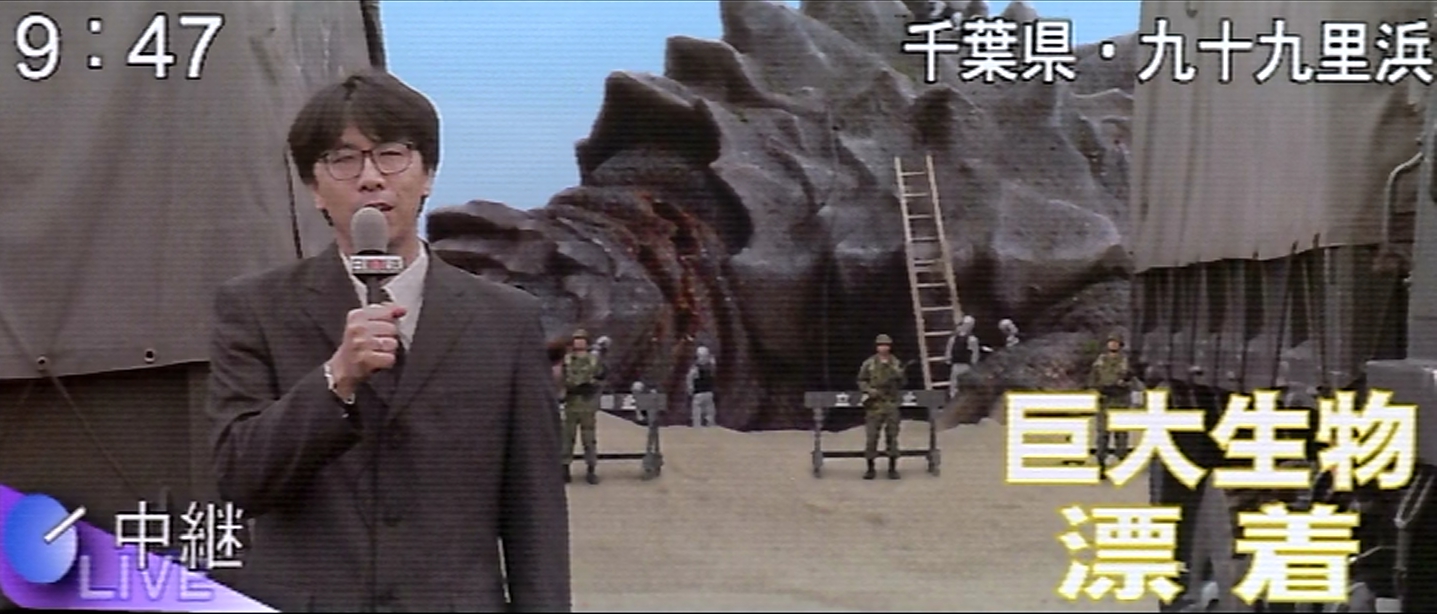
Kamoeba, light nibbled.

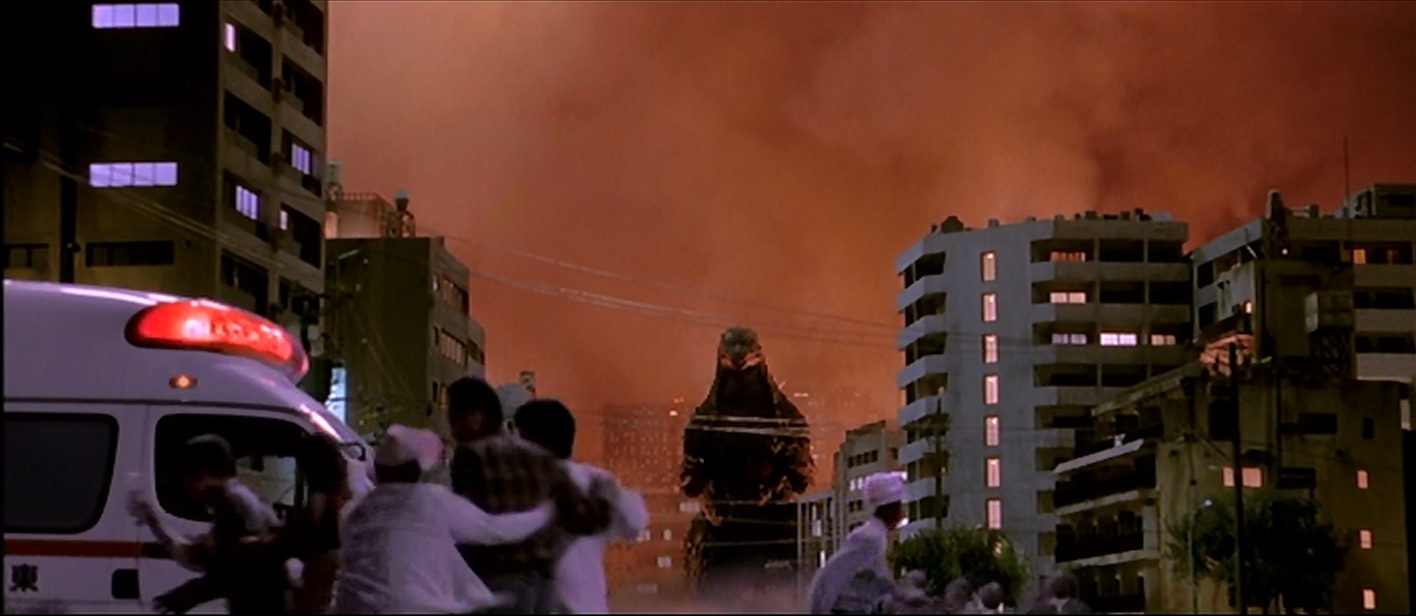
Where the military has been primarly lionized in the previous Masaaki films, here the vibe is avery different. Are the bones of Godzilla attracting Godzilla? Is military build-up inviting military attack? Godzilla appears for the first time attacking an American nuclear sub, as in Godzilla vs King Ghidorah and The Return of Godzilla. But is the submarine an innocent victim, or should have it not been there in the first place?

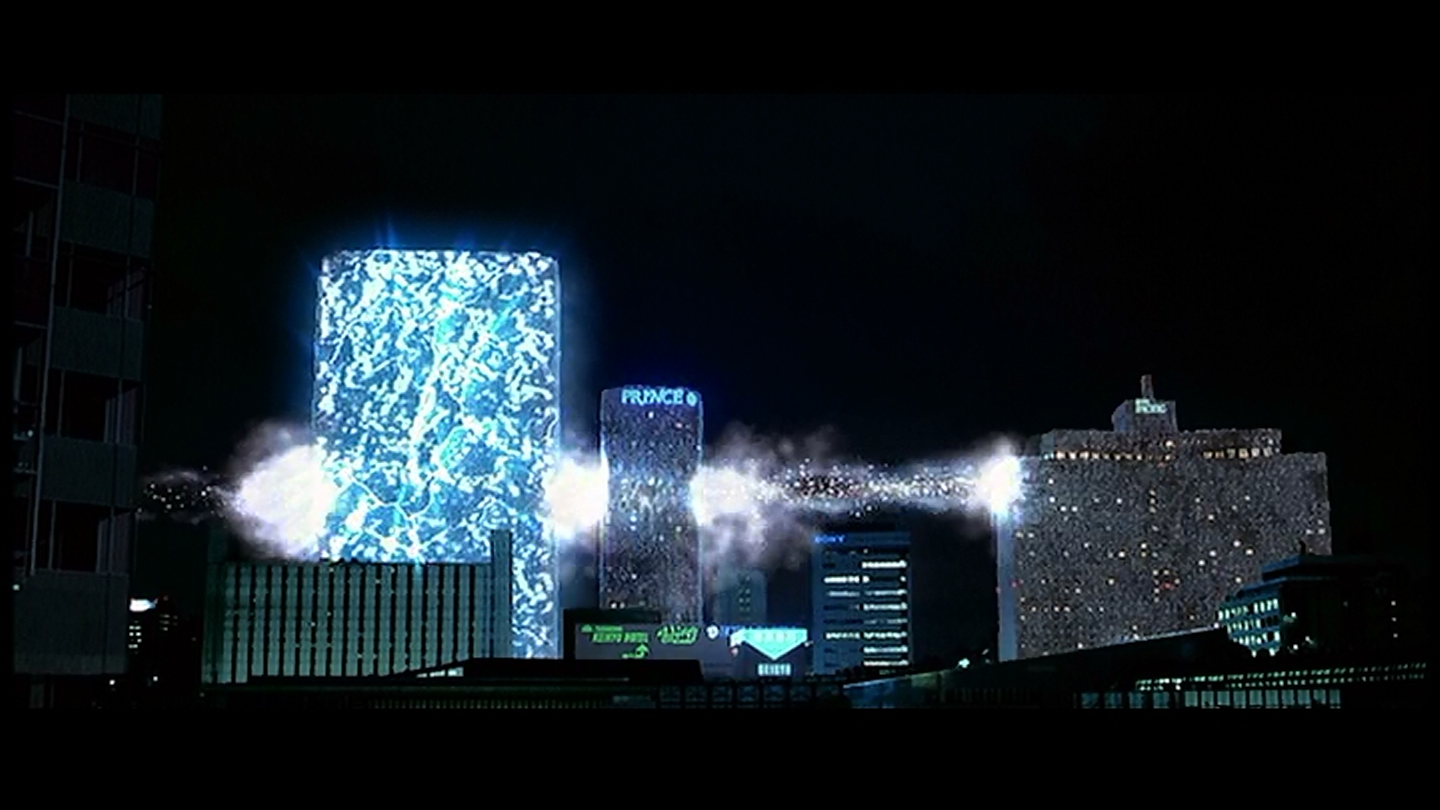
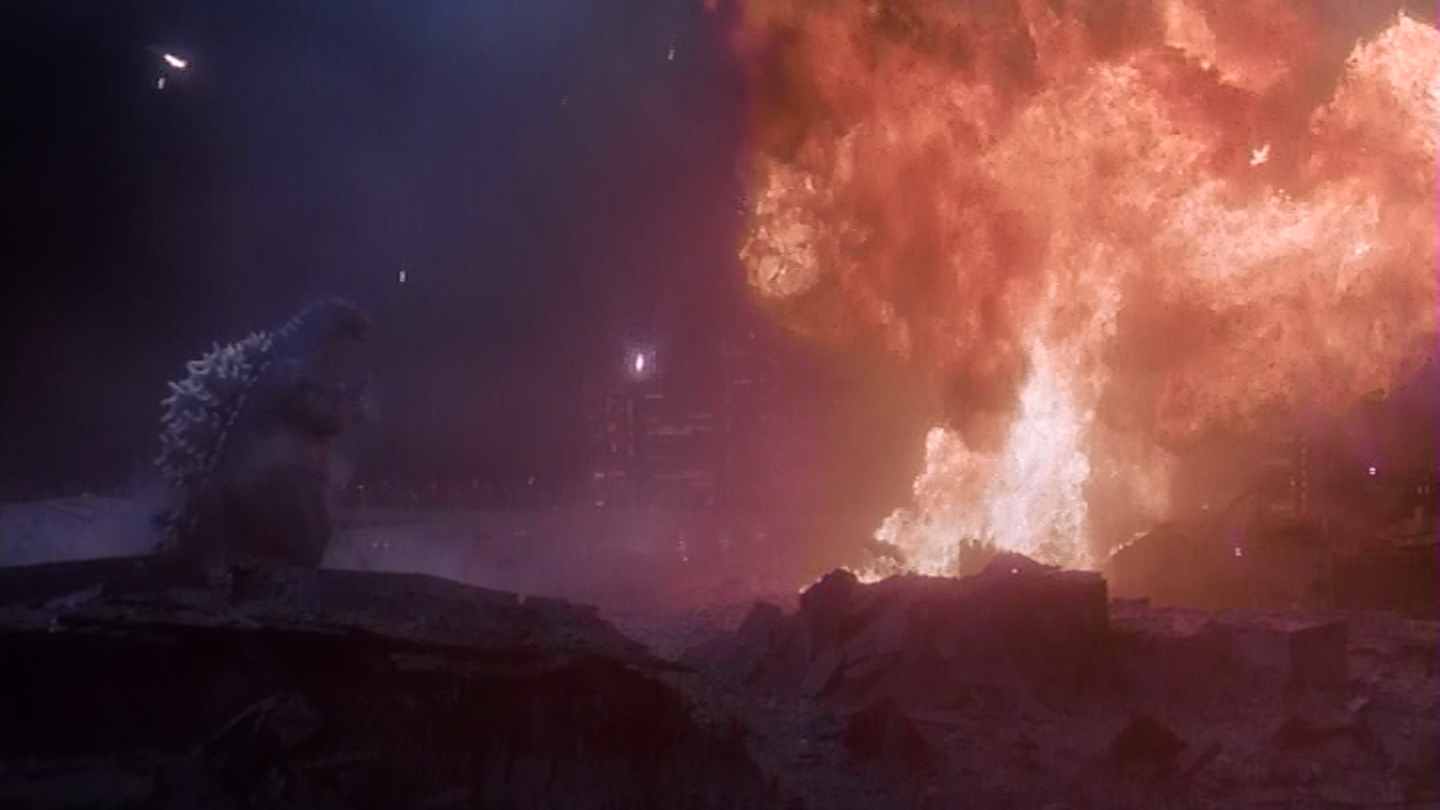
The film moves back to Ishiro Honda's attitude, that the military is there for show, but it almost completely ineffectiver against Godzilla. There are some very striking shots of missiles streaking across the Tokyo skyline, and the Hyper Maser is cool-looking, but none of these weapons do much more than inconvenence Godzilla. He sweeps away a phalanx of tanks with a single jet of his atomic heat ray.
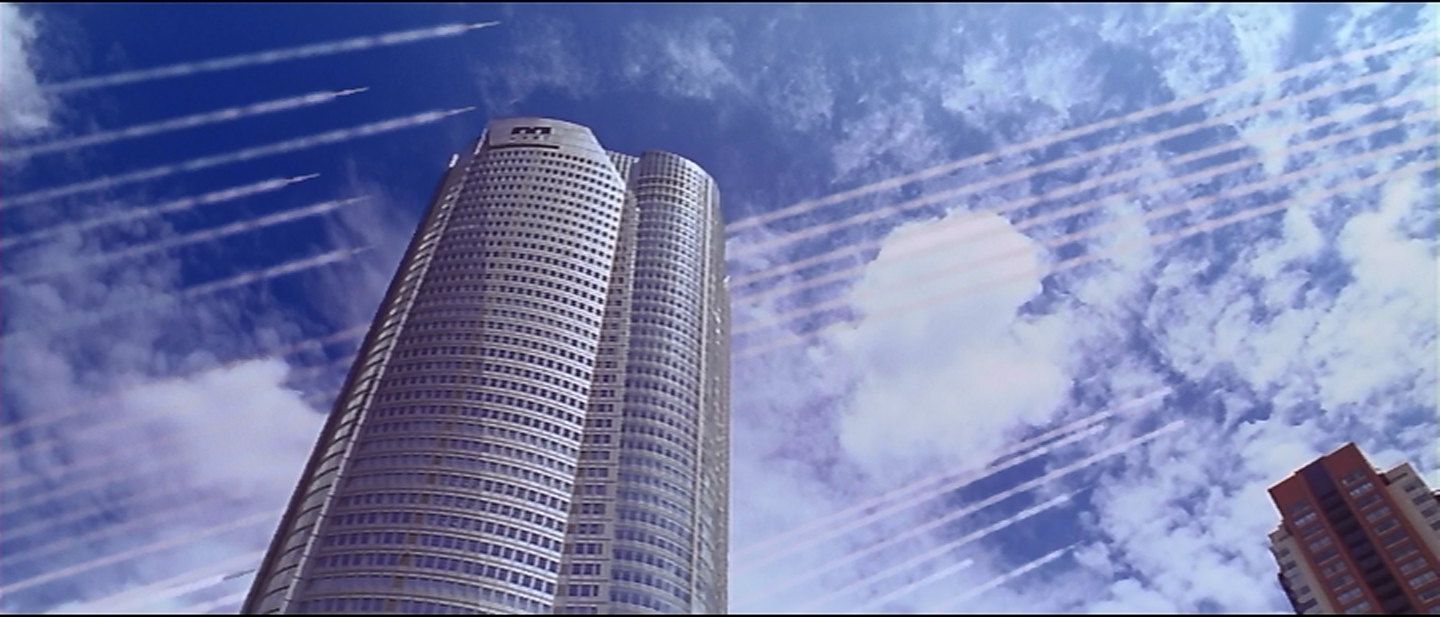
That's a lot of missiles.

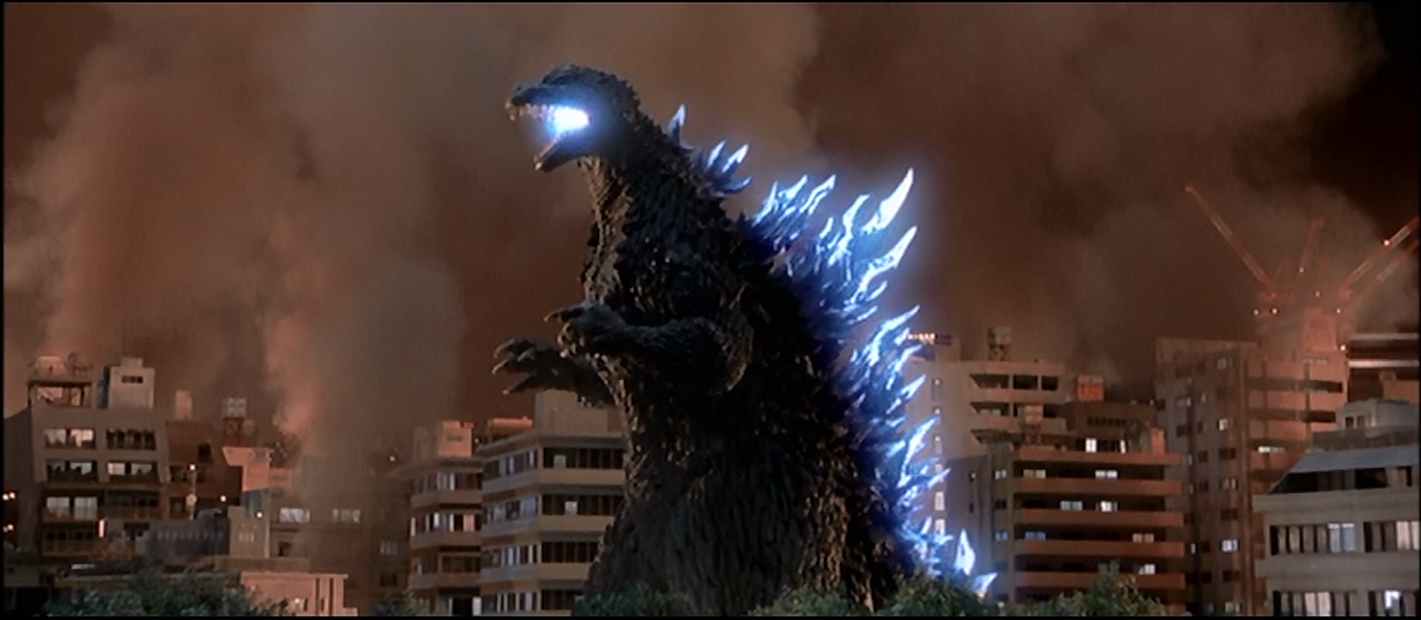
Godzilla looks much the same as he did in Godzilla Against Mechagodzilla, bvut he has a large scar on his chest. So Godzilla is not invulnerable. But Kiryu no longer has the Absolute Zero gun, which caused the injury.
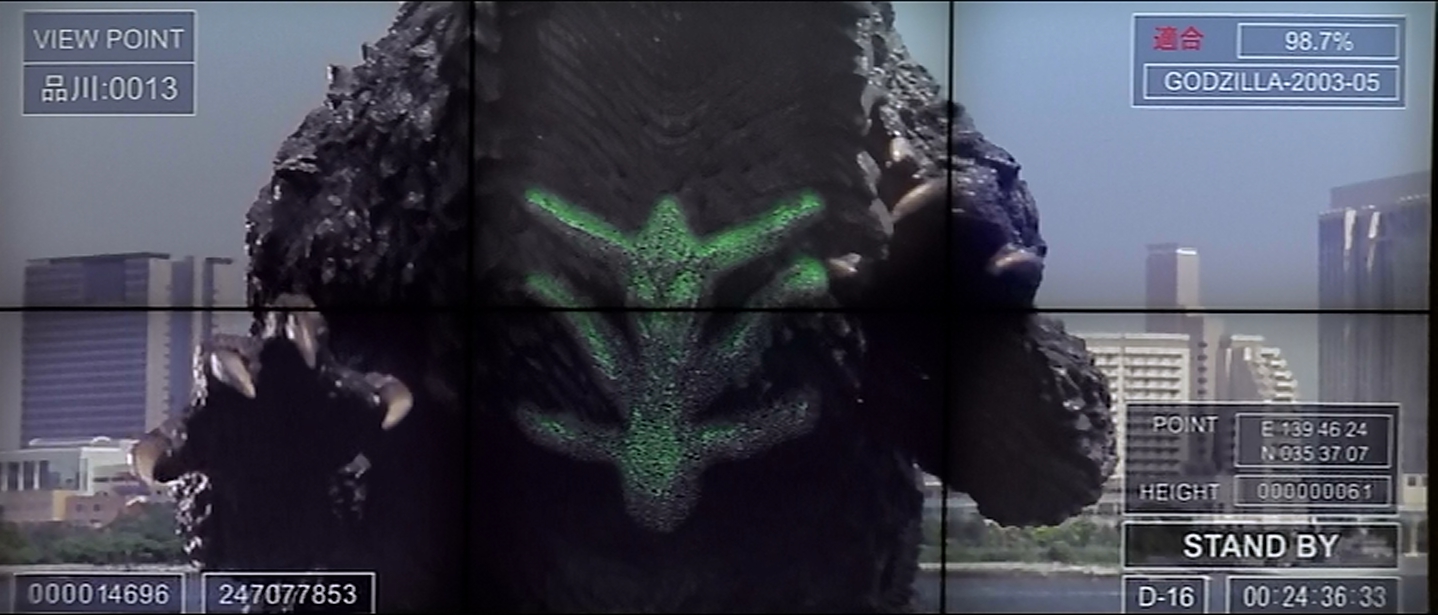
Godzilla's vulnerability--his front.

A lot of story beats and plot points are taken directly from Ishiro Honda's Godzilla vs Mothra, which is a little weird since that film doesn't exist in this continuity. In the initial confrontation, Mothra uses its poison scaled on Godzilla, which haven't been used since that 1964 film. But Chûjô was not involved in that, Lahtough actor Hiroshi Koizumi played the part of Dr. Miura) so I wonder how he knows about the scales. Again, for the first time since Honda's 1964 film, The Mothra larvae are twins. Godzilla's defeat is the same. Although Mothra can't take Godzilla down, the two larvae are able to, coating Godzilla in silk. This flies in the face of the shobijin's promise. Mothra can't handle Godzilla on her own.
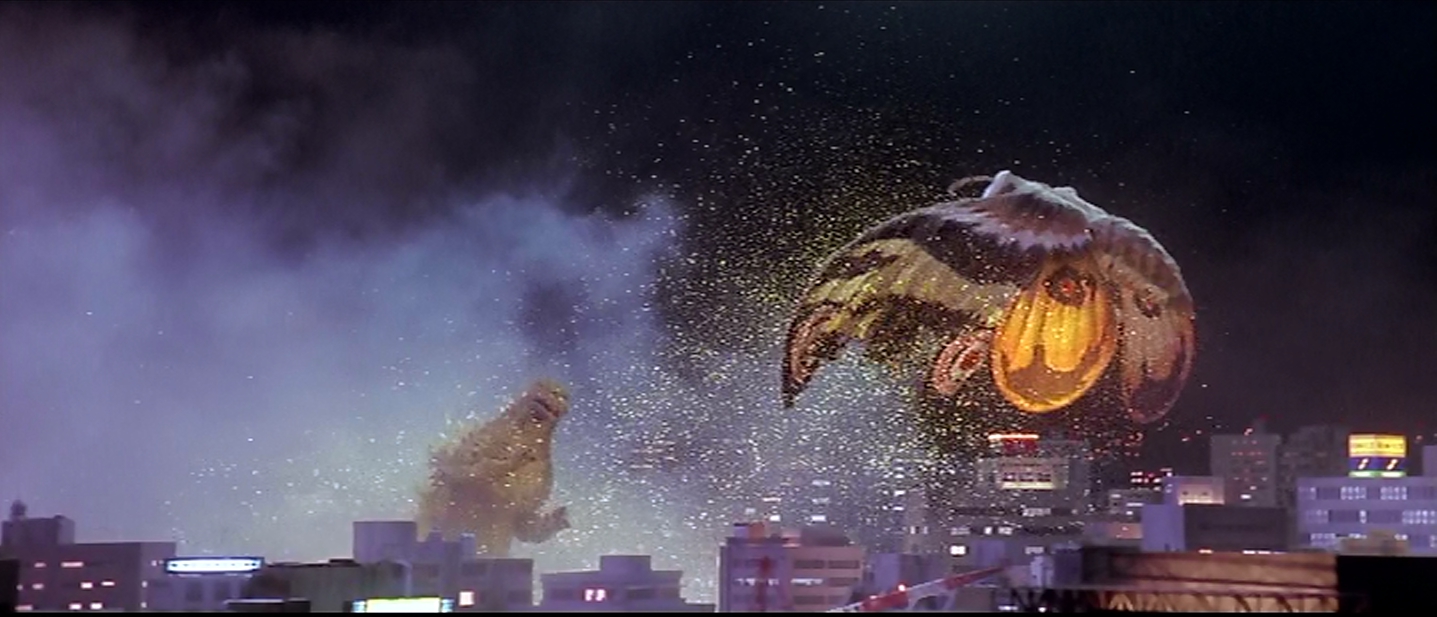
Mothra, using her poisonous scales.

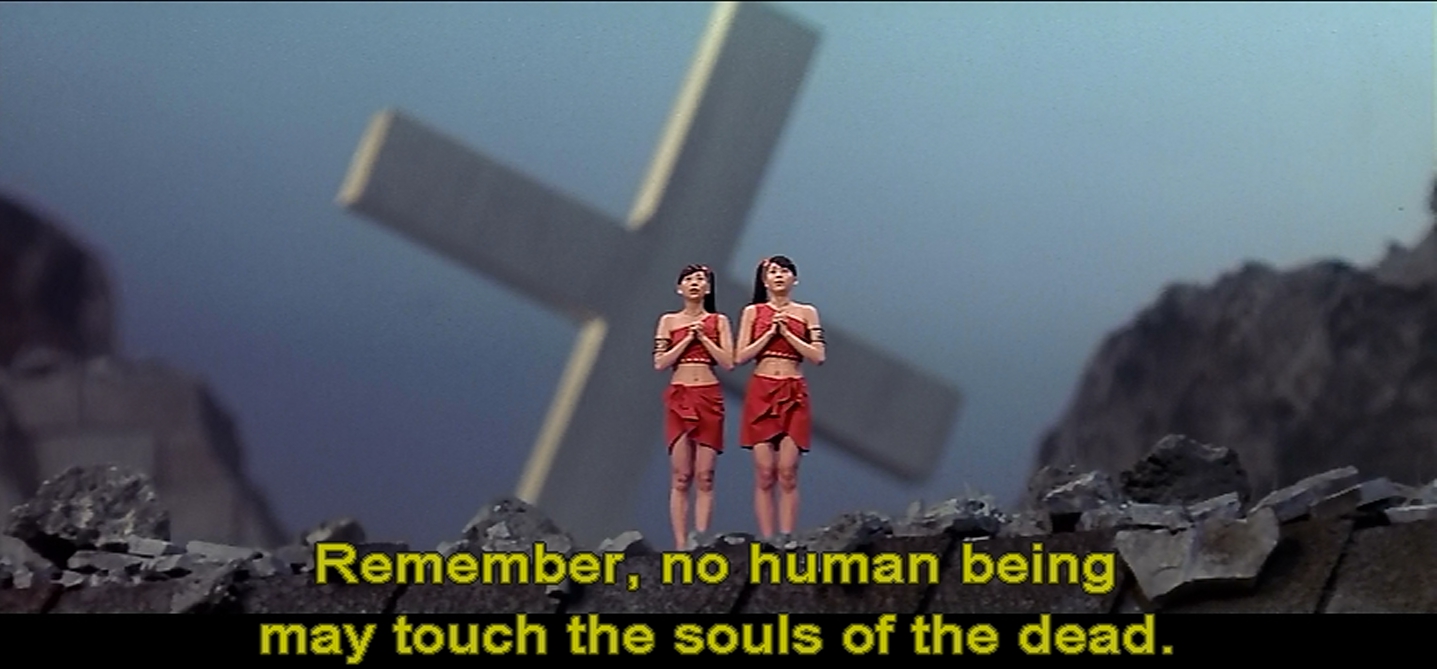
Mothra, who really hasn't had much religious symbolism since her debut, is at least willing to sacrifice herself for her children, taking a direct blast of Godzilla's atomic ray protecting her children. It plays out rather like her sacrifice in Godzilla, Mothra and King Ghidorah. The shobijin get a moment in front of a fallen cross, saying that the living should not touch the dead.
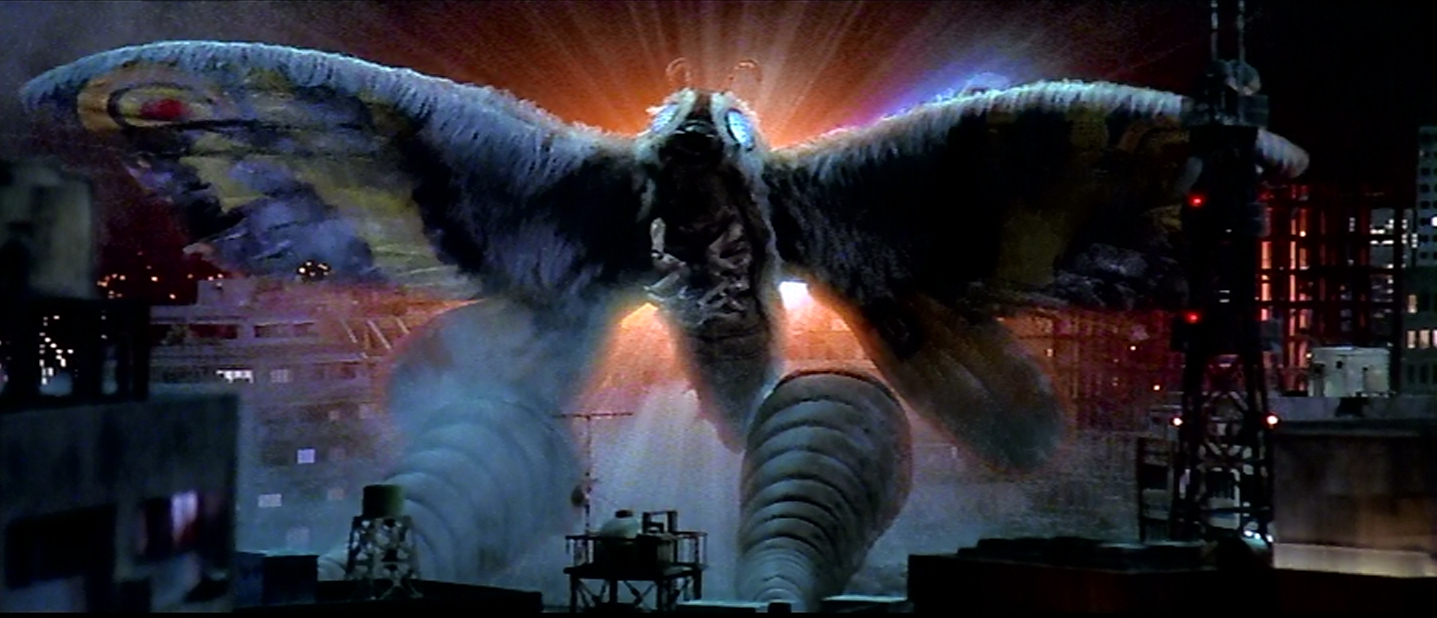
Mothra takes one for the team.

Morally instructive.

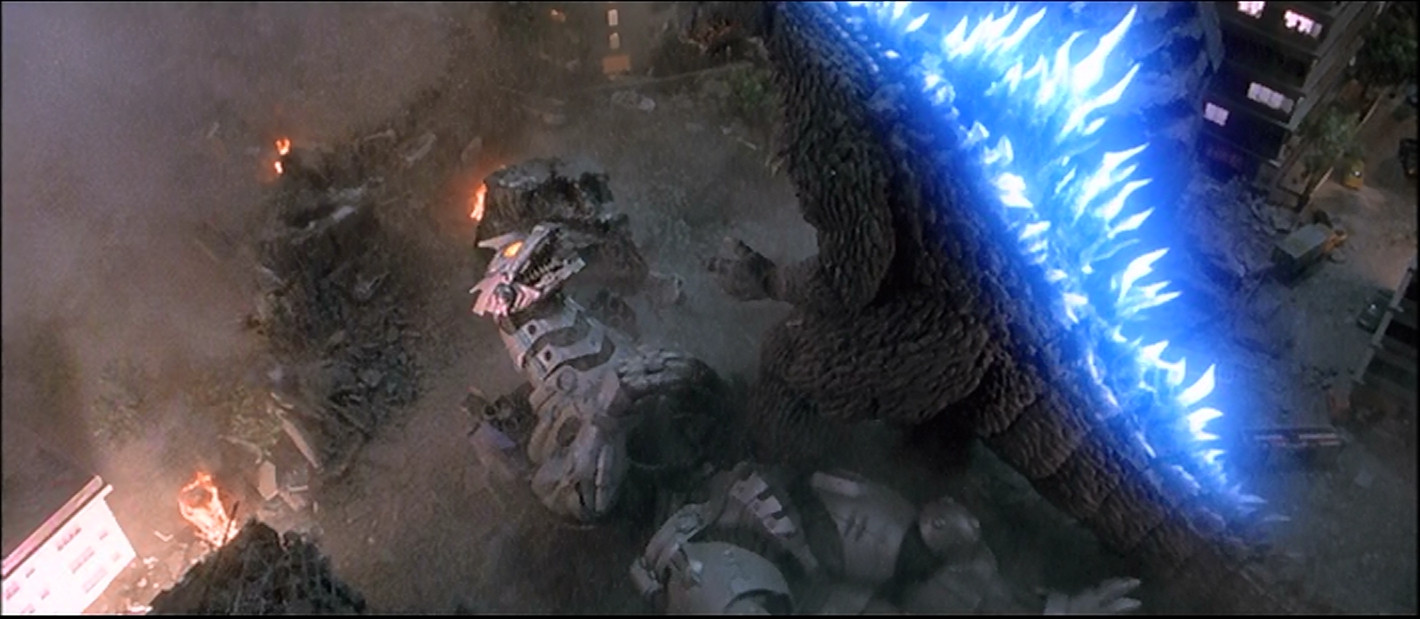
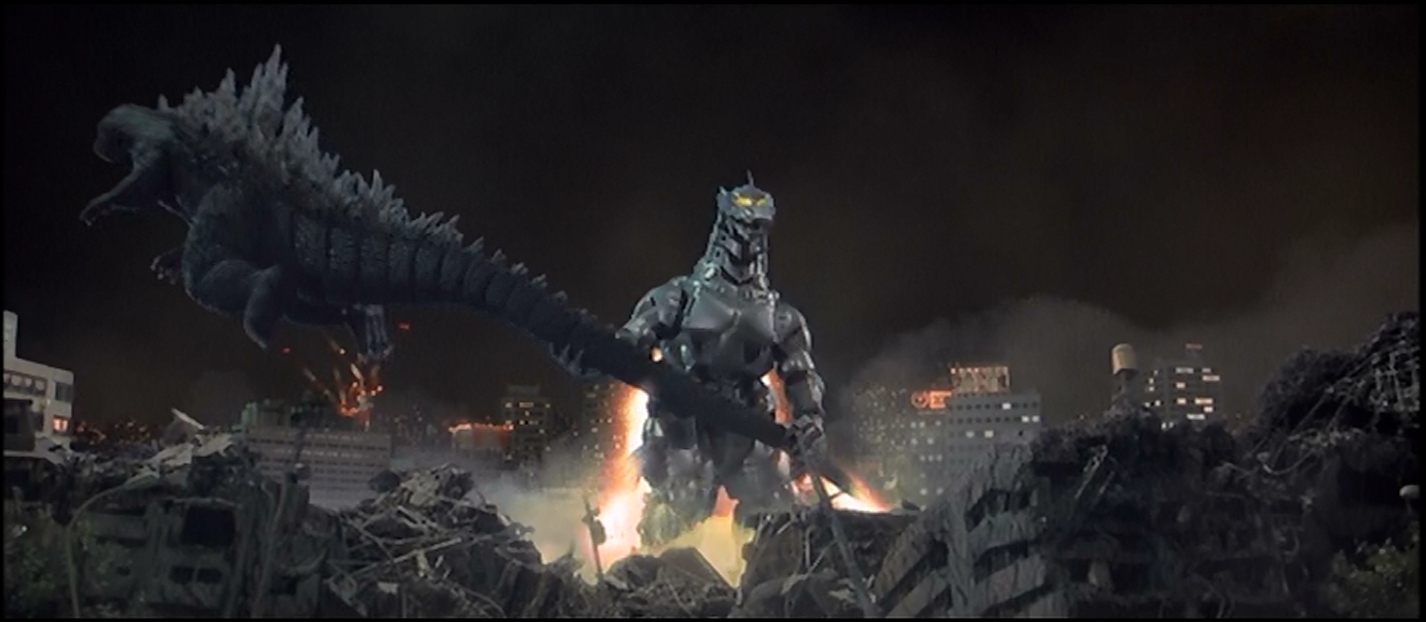
Godzilla: Tokyo SOS is fairly remakable in that there is only one monster showdown. The fight is on-going, and the human action is intercut with it. Again, Mechagodzilla proves to be Godzilla's greatest for, battering him around, knocking him down once. It's not as harsh as the job done by Mechagodzilla II, which temporarily cripples Godzilla. And ultimately, it's very inconclusive. The Mothra Laevae do the heavy lifting.
pew pew pew!.

Ultimately, I struggle to remain interested in the film. The human drama isn't all that compelling. While it was nice to engage someone who wasn't (initially) a pilot, focussing instead on a technician. But he doesn't have much to work with. When Mechagodzilla goes down, he goes ouyt to fix it. Not a lot of character depth there. The Godzilla problem is ultimately solved as Kiryu takes it upon itself to fly Godzilla's silk-enshrouded form to the ocean. The humans do not prodice a solution. It's all done by the Mothra larvae and Kiryu. The protagonists are really just spectators.
An excellent Mothra shot.

In two weeks, the Kaiju Blender, love it or hate it.

Thursday, December 11, 2014

Let's Watch the Robot Go Crazy: Godzilla Against Mechagodzilla

Godzilla, Mothra, King Ghidorah, Giant Monsters All-Outr Attack made the most out of any of the Milennium films, but director Shûsuke Kaneko was not a long-term Toho player. So for the next film, Toho reinstated Masaaki Tezuka, whose Godzilla vs Megaguirus was underwhelming, but he'd shown willing by demoting himself to visual effects director under Kaneko. Clearly, he learned a thing or two. Godzilla Against Mechagodzilla is more family-friendly than GMK, but it lacks the dullness of Godzilla vs Megaguirus, even as it uses a nmber of the same story elements.

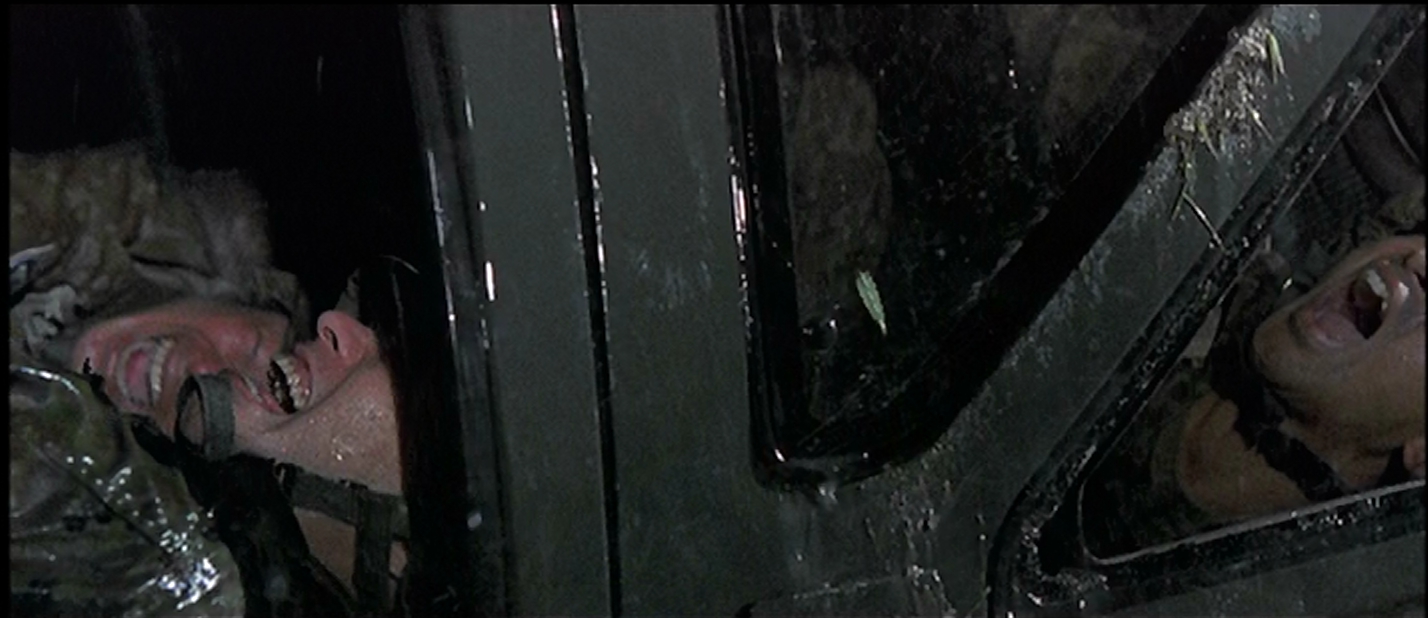
Godzilla Against MechaGodzilla opens in the Godzilla-significant year of 1999. The impossible future of Destroy All Monsters, the return of Godzilla in Godzilla 2000 (1999 in Japan), the date of the MUTO attack in 2014 Godzilla. In this 1999 backstory, Godzilla attackes Japan, and our military heroine is blamed for the deaths of her superior officers. And we see them die as Godzilla plants a gigantic foot on them. This "Godzilla kills people" attitude is lighter than it was in GMK, but it's still effective in making Godzilla a menace. Also, showing the audience a refugee center where people whose lives have been broken by Godzilla's rampage is a nice reminder that smashing buildings isn't just fun, although it's softened a bit by a soldier's polite response to a little boy's kind offering.

About to get crushed by Godzilla. Sorry, guys.

As with Godzilla vs Megaguirus, the military is again valorized. They undertake the rescue missions, and they ate the ones who will stand against Godzilla. The Anti-Godzilla force is the Anti-Megalsaurus Force, so not specifically about Godzilla, but various monsters that have attacked Japan.

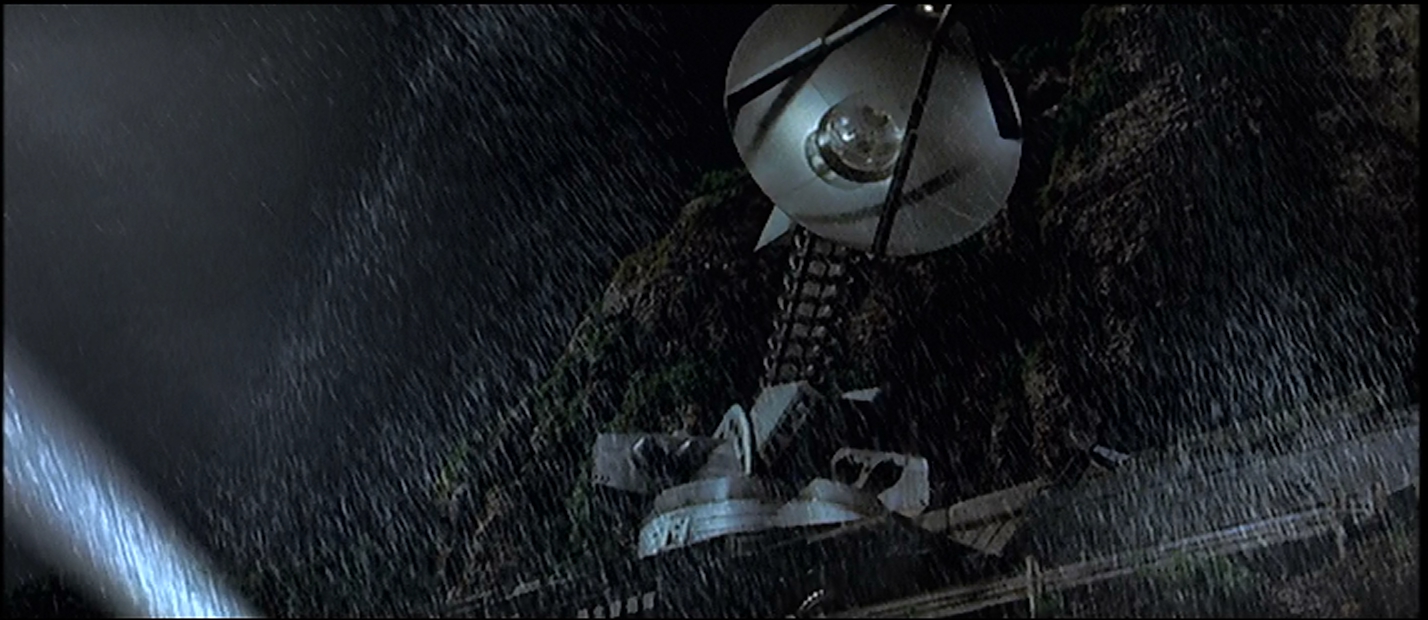
DEPLOY THE MASER!

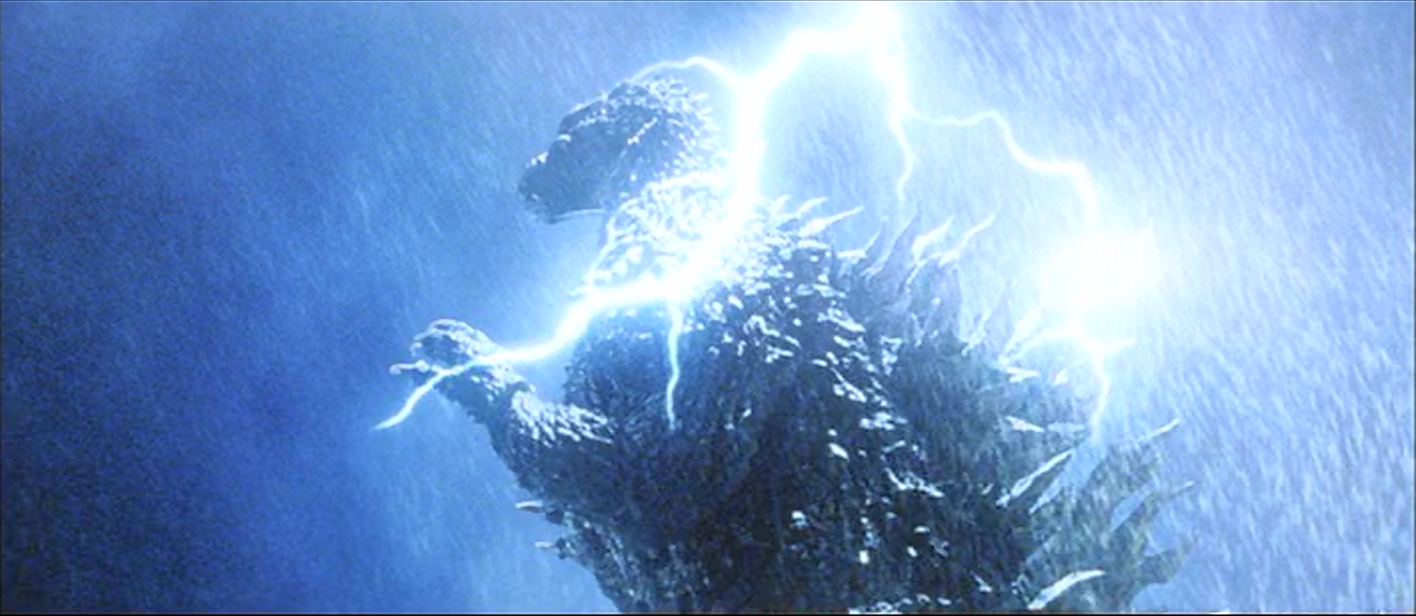
Somewhat in keeping with Godzilla's metaphor as force of nature, Godzilla comes ashore during a typhoon. The flashback takes place entirely durng a heavy rainstorm, and it looks good, grounding the encoutner in the real world. With foreground and middleground, the battle looks a lot less like it takes place on a small soundstage. Pacific Rim also set a major encounter in the rain during the Battle of Hong Kong. In a very nice homage to War of the Gargantuas, the maser cuts the top off several trees before connecting with Godzilla.

Brother to the storm.

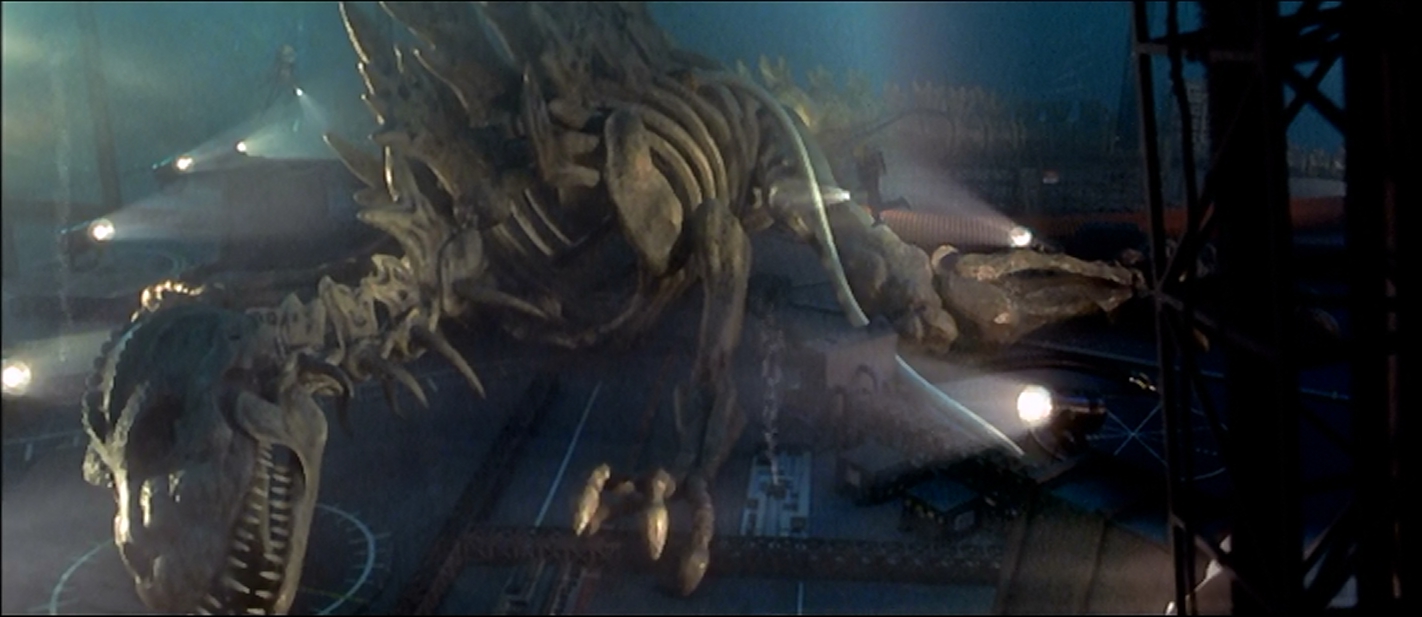
After the attack is over the (female!) prime minister of Japan tells us where we are, discussing the variou8s monstersd that have attacked Japan in the past. The film picks and chooses which of Toho's films it wants to include in its past. Footage from 1954 Godzilla, the original Mothra, and War of the Gargantuas (all Ishiro Honda classics) shows us why Japan has heat rays and maser weapons. In a clever subversion of the original Godzilla, the bones of Godzilla are shown after it is dissolved by the Oxygen Destroyer. This was not in the original film, but Dr. Serizawa's fish were reduced to bones when subjected to the Destroyer.

We built this weapon on... the bones of our greatest enemy.

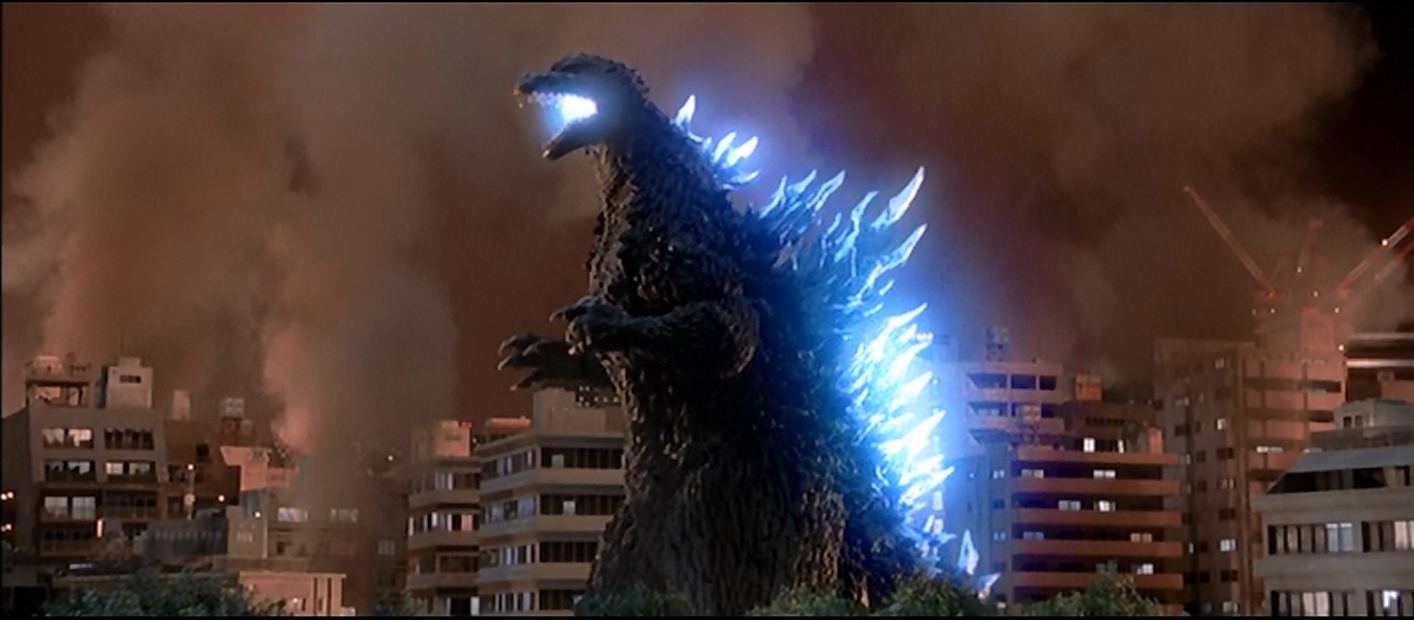
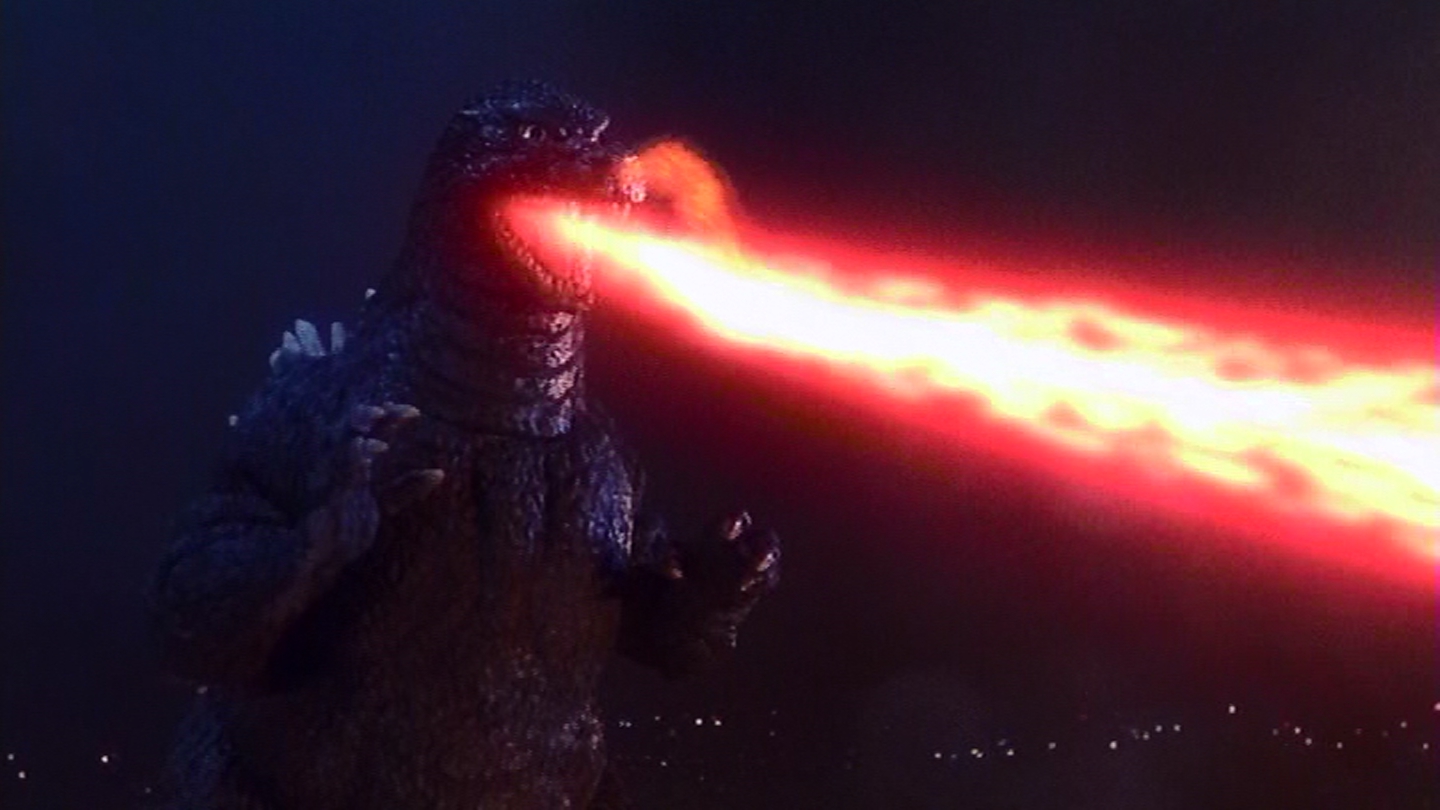
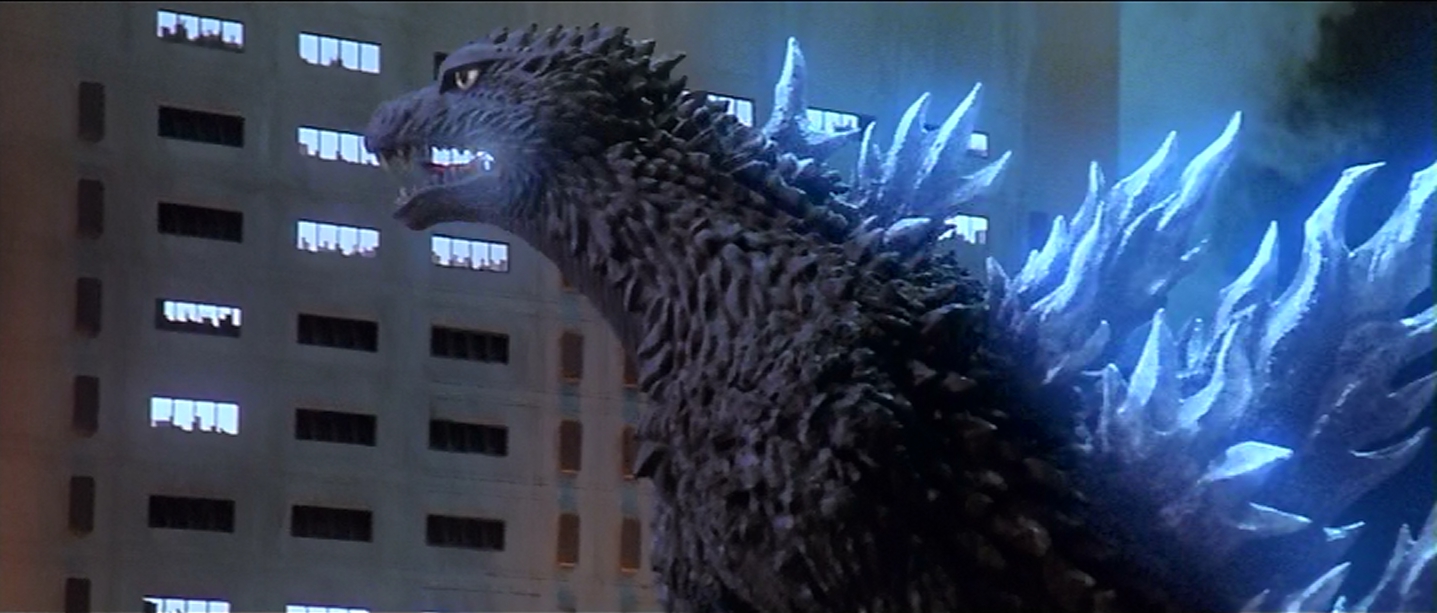
Godzilla itself has returned to the long-spined creature from Godzilla 2000, rather than keeping the dead-eyed GMK version. The major change seems to be that Godzilla's jaw is more slender, birdlike. I don't know why, but this trend continues until Godzilla: Final Wars. This also introduces a new concept with Godzilla's spines. Previously, they just glowed when Godzilla breathed his heat ray, and in the Milennium series, they did so before, demonstrating a sort of power up. Now they make a popping sound, as if a connection were arcing, as they light up fitfully, almost like a cold incandescent light. It's wonderful, creating anticipation for the powerful atomic heat ray. And there's a light touch of the atomic bomb metaphor, also. The Prime Minster tells the press that Godzilla has attacked Japan twice, a parallel to the two nuclear bombs that were dropped on Japan.

Godzilla about to wreck something.

Godzilla's foe is sort of himself. MechaGodzilla this time is based on Godzilla's bones and DNA. The appearance is refined from the previous outing with Mechagodzilla, (leaving aside MOGERA). While this Mechagodzilla is not the meshing of two separate vehicles, it still has the two guns that project over its shoulders. It also has the Absolute Zero Gun, a nod to another Honda film, Atragon. Like many ultimate weapons, it has a long warm-up time, allowing the target to dodge. Gypsy Danger's Plasma Gun had this problem in Pacific Rim. Kiryu is a drone, like the Super X-2, remote-controlled from the White Heron craft, large vector-thrust planes rather like the Griffon from Godzilla vs Megaguirus.

Human-built Mechagodzilla Mk 3, Kiryu.

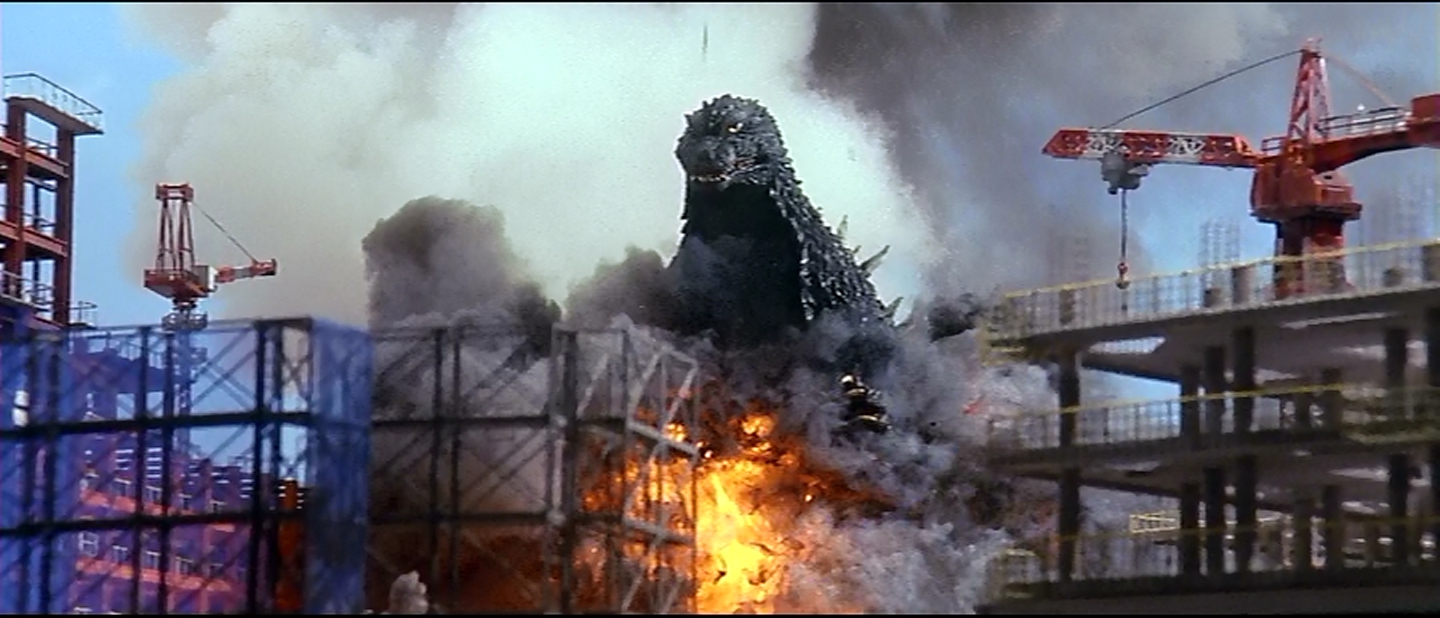
Clearly, director Masaaki learned something from working on Godzilla, Mothra, and King Ghidorah, Giant Monsters All-Out Attack, because the fights carry a great deal more weight and plot importance. Godzilla is more often shot from a low angle, giving him the sense of size and power he had in GMK. the integration of the miniatures with the regular shots is much improved, also.

Godzilla about to wreck something.

The first confrontation between Kiryu and Godzilla is pretty good. It's primarily a stand-off, with Kiryu firing a huge amount of missiles at Godzilla. About to use teh Absolute Zero Gun, Kiryu, which is run by a Godzilla-derived DNA computer, hears Godzilla's cry and begins to level the city it's standing in. Unfortunately, there's no off-switch, so the only thing the military can do is wait for its batteries to run out.

Our superweapon is doing what?.

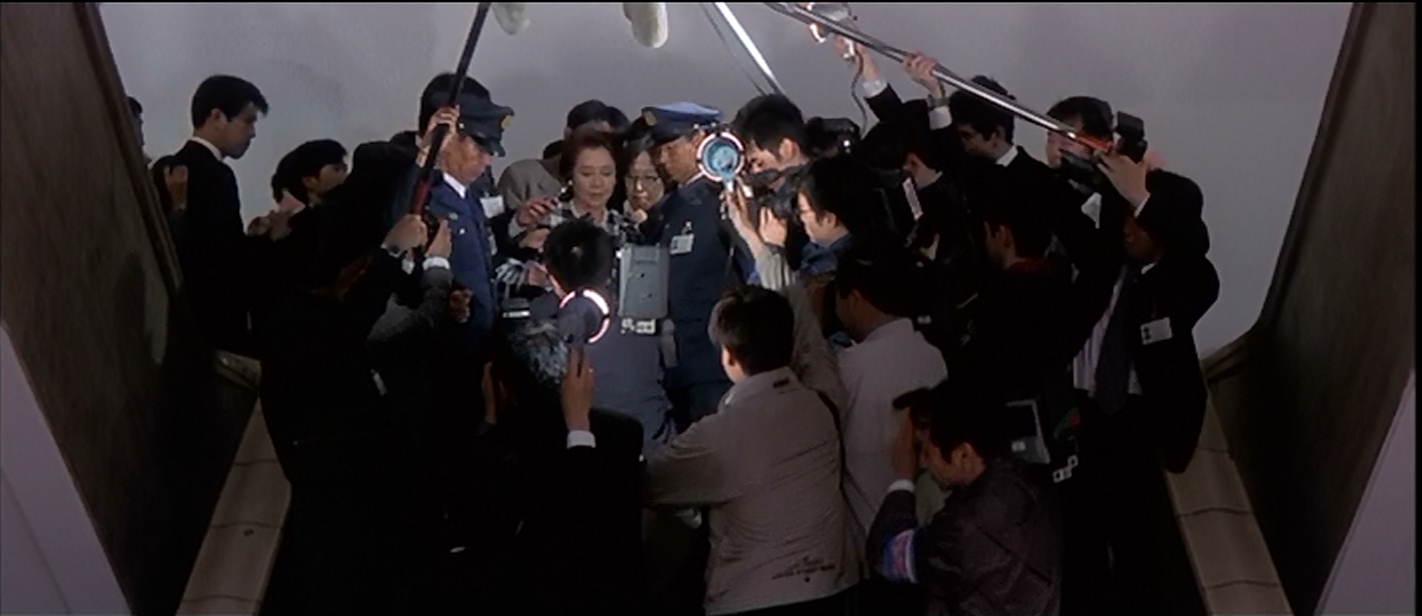
Godzilla Against MechaGodzilla recycles a lot of the same ideas as Godzilla vs Megaguirus. The military brings in a civilian with technical expertise, who has a flirty relationship with the damaged woman fighter pilot. Part of the plot invoplves repairing damaged code for the anto-Godzilla superweapon. But there are other elements that give this a more unique flavor. When Mechagodzilla is approved, reporters demand to know where the Prime Minister thinks she will get the money.

REPORTER SCRUM!

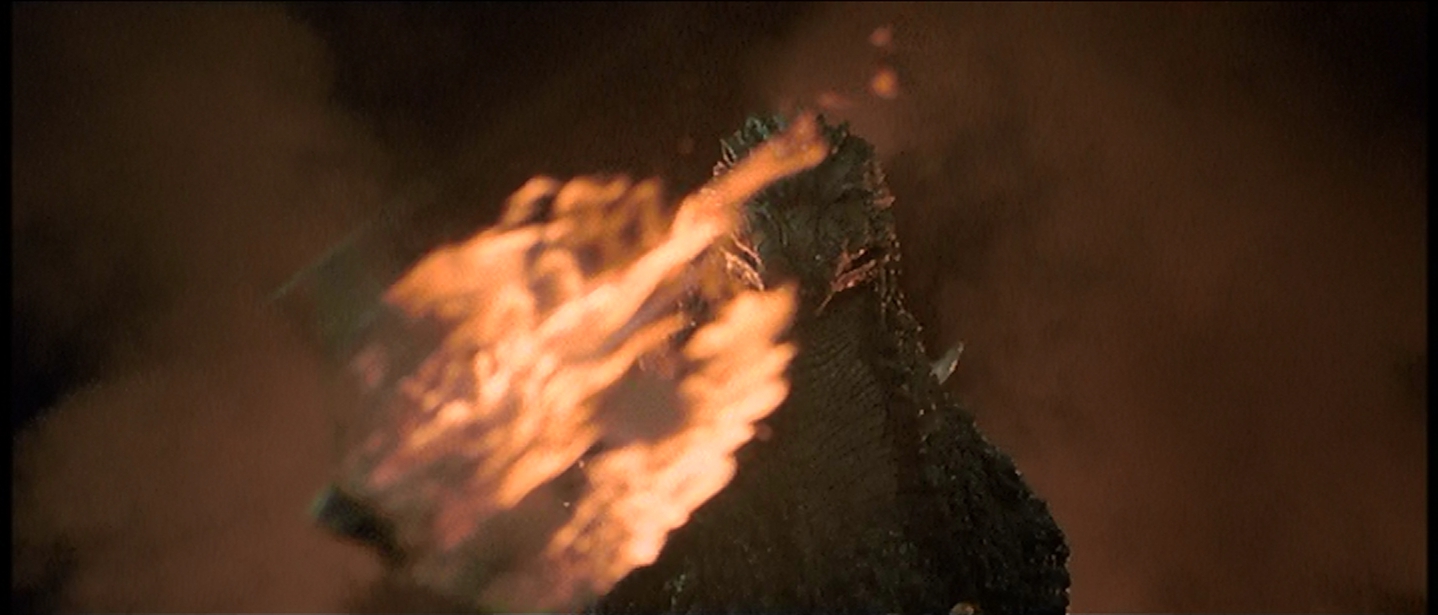
Godzilla has certainly become more threatening since Godzilla vs Megaguirus. In its third and final attack, it sweeps the sky of planes. A shot where Godzilla advances toward the camera, a burning plane falling out of the sky just in front of him is particularly effective.

Who did that? I did, bitches!

Godzilla is unstoppable, the risk is so great that Kiryu must again be deployed. The resulting fight is a winner. Every fight should be a story with a beginning, a middleand an end. Otherwise, it's just action without putpose. Godzilla is a known quality, and Kiryu must do everything it can to keep away from Godzilla's heat ray.

Get ready to melt

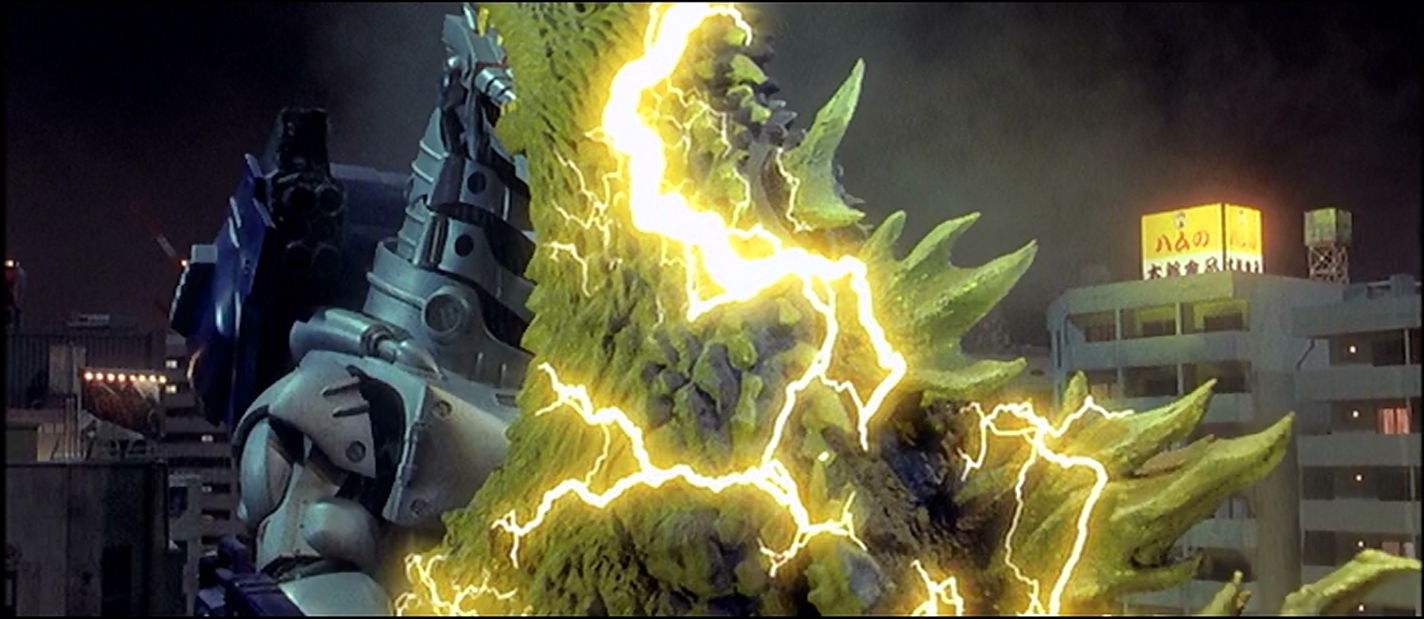
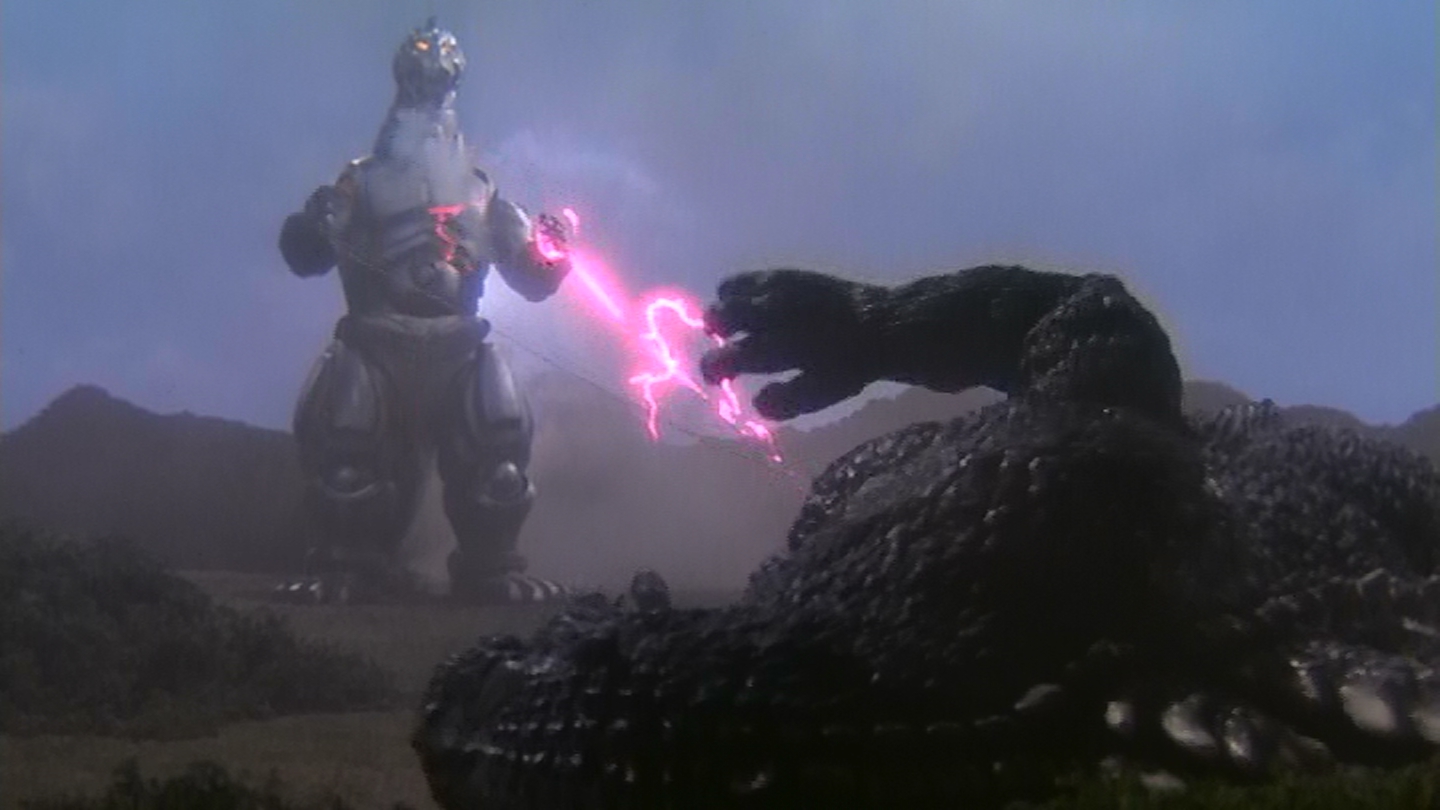
Kiryu, however, has a lot of surprises. It has a blade that it uses to stab and then electrocute Godzilla. This works until Godzilla uses its heat ray to destroy the blade and knock Kiryo down.

Our superweapon is doing what?.

Mechagodzilla would have gotten a faceful of atomic ray if one of the White Heron aircraft hadn't intervened. The reversals convey a sense of tension, we don't know who is going to be the winner, but it's fun to watch them go at it.
Here comes the HEAT RAY!

It gets a little goofy with Kiryu swinging Godzilla by the tail, but this is intended as a kids film, a double feature with Hamtaro.

Let's just pretend we don't remember this, OK?

Mechagodzilla finally gets the Absolute Zero Gun off, but misses, desttoying three buildings instead. Oops. So the film does not universally valorize the military. Military mistakes are shown to be costly.

That's about a hundred million or so in damages.

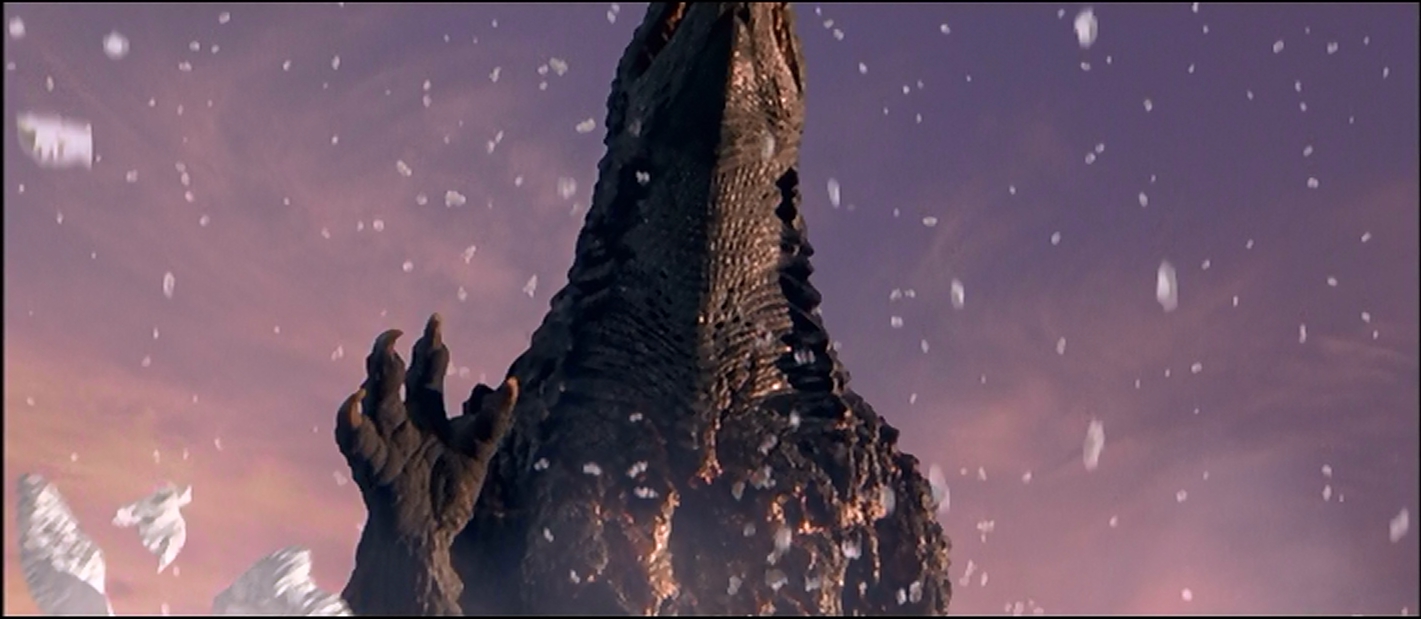
In the end, Kiryu is flown out over the ocean, holding Godzilla's mouth closed, charging the Absolute Zero Gun. They dive into the sea, and the Gun goes off, turning the sea to ice. Godzilla rears back, still alive, but with a large wound on his chest (this will become a plot point in the next film). Deciding he's had enough, Godzilla turns his back on Japan and returns to the sea.

Godzilla's got quite the owie!

Michiru Ôshima apparently felt her score was drowned out by the monstrous sound effects in Godzilla vs Megaguirus, but no problems here. Her score is one of the best, rich, threatening, and thrilling.

Godzilla Against Mechagodzilla is a step down from GMK, but it's also a big step up from Godzilla vs Megaguirus. The Godzilla sequences are rewarding and entertaining. Even if the human interaction is flat and facile, it's not insulting or idiotic. It's a good entry into the franchise, entertaining.

Next up, the MechaGodzilla and Mothra gang up on poor Godzilla.

Thursday, July 31, 2014

Through the Dark Cosmic Mirror: Godzilla vs Space Godzilla

Another year, and Toho put out another Godzilla film. At this point, Toho was only creating Godzilla films, and distributing the films of Studio Ghibli. They were clawing their way back from the disastrous eighties, but weren't in good shape just yet. Godzilla vs Space Godzilla was written and directed by a new team, and feels different from the previous films, even as it pays homage to Godzilla all the way back to the Showa era, and maintains a continuity from previous Heisei-era films.

Old Mechagodzilla has been scrapped for a new version, MOGERA, a call back to the 1957 Mysterians, which features a more subtle alien invasion. Like the previous Mechagodzilla, MOGERA can separate into two parts, a jet and a drilling machine. And it can reassemble itself into godzilla-like form. It also has a torso-based weapon, but it isn't a superweapon, unlike the last version. Nor does it have a mechanical jaw or cry, so it resembles Godzilla less. Still, I consider it part of the Mechagodzilla line.

MOGERA, aka Mechagodzilla Mk. 4

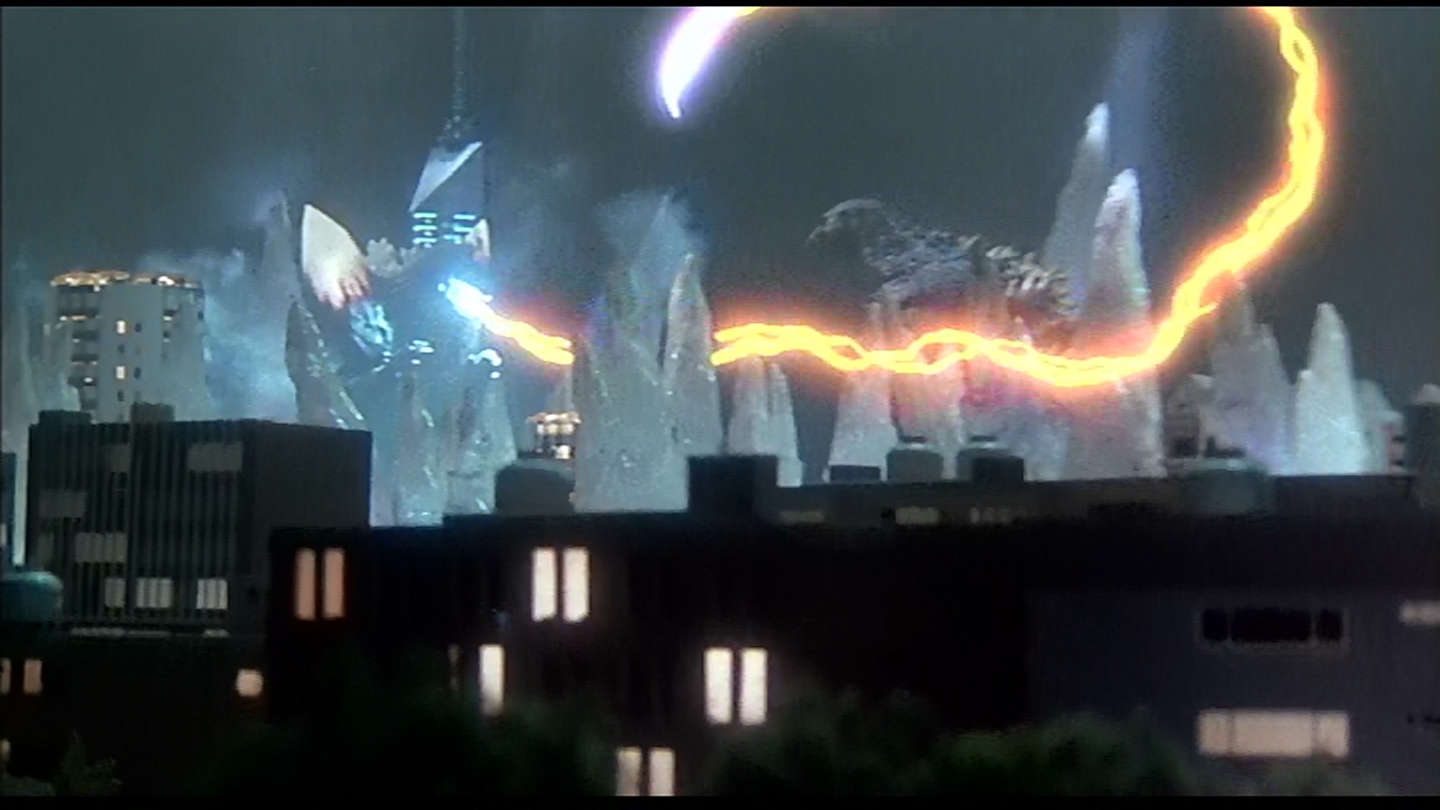
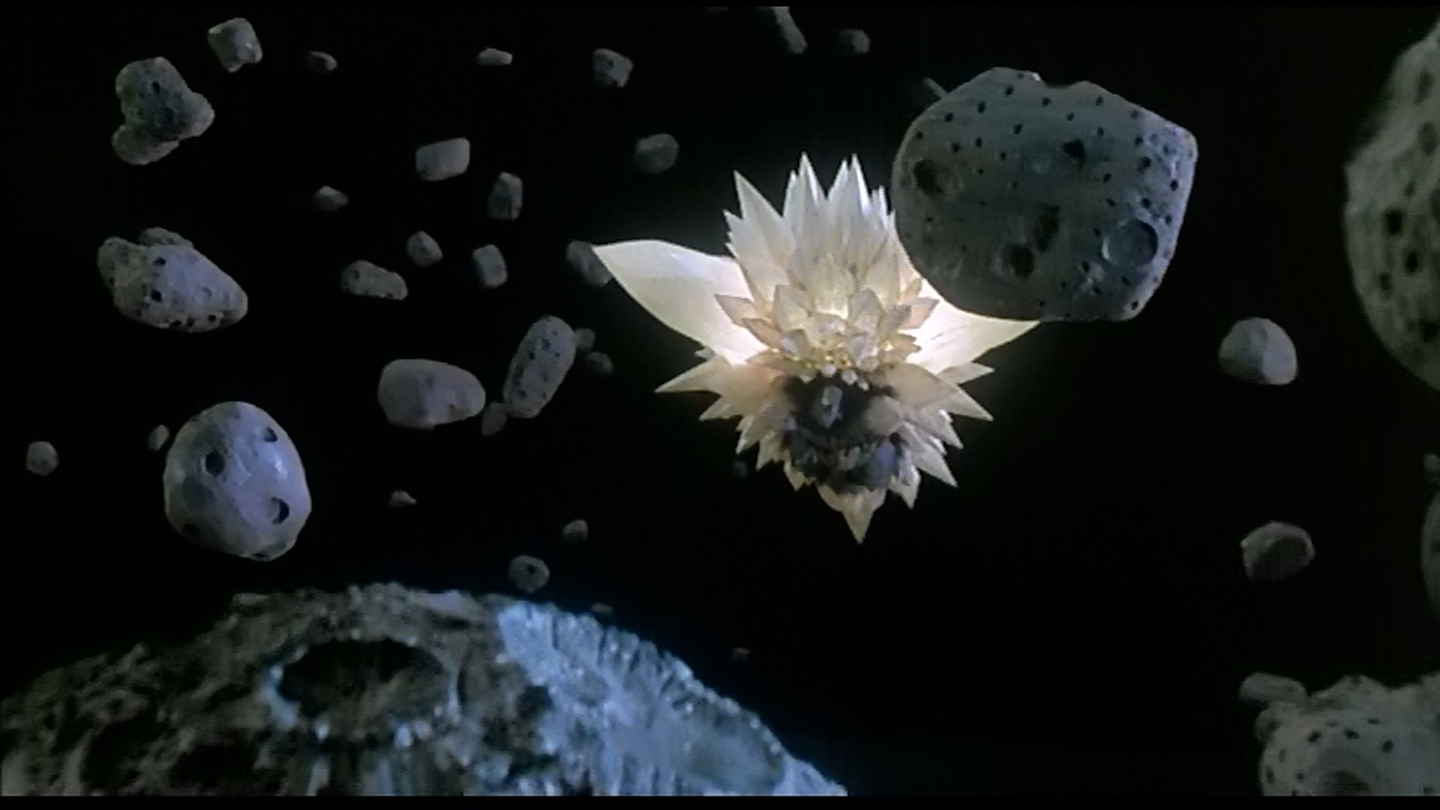
Space Godzilla is essentially the end result of the reasoning that nothing but Godzilla can stand up to Godzilla. So a powerful Godzilla comes from space. Space Godzilla is badass. Godzilla's basic upright lizard design with chunks of crystal erupting from the skin, and a couple of side-tusks similar to Biollante. It also has psychic abilities; levitation, and telekeisis and control over the crystals is has travelled through space with. It draws power from these crystals. Whatever it has instead of an atomic heat ray has a seeking function, even curling in on itself before striking its target. It can also use these powers to block Godzilla's heat ray. Nose to nose, it has enough power to perhaps destroy Godzilla. But Godzilla outsmarts it, attacking its weak point.

Target-seeking space atmoic heat ray. Cool trick.

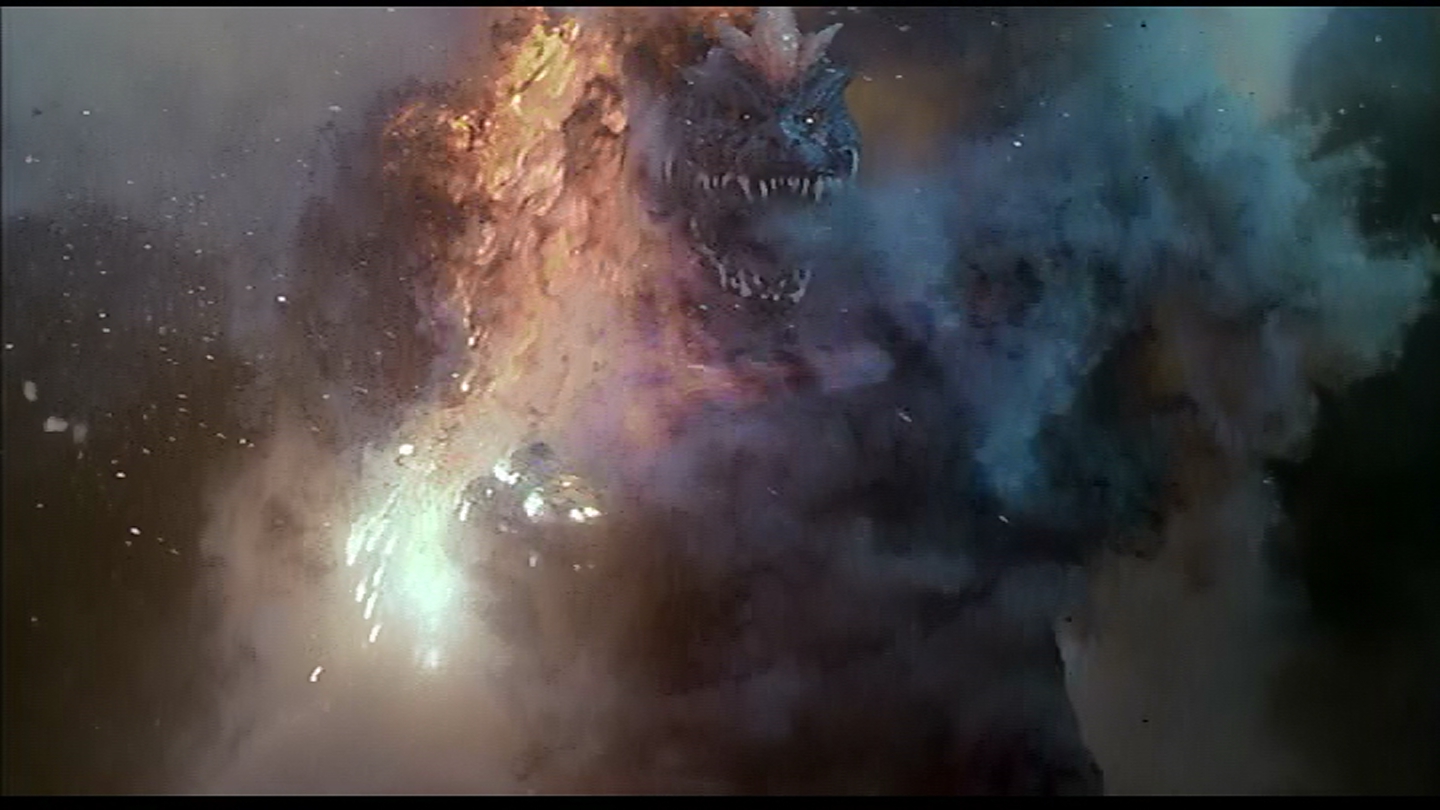
Space Godzilla Takes Some Fire.

After languishing in the last three films, Miki Sagusa finally returns to the important role she had in Godzilla vs Biollante. Directing the psychic institute, she doubts that human psychics will ever be able to control Godzilla. However, it's a better alternative than attempting to kill him. Miki retains her softened position towards Godzilla from Godzilla vs Mechagodzilla II. It's something of a relief to see some growth in a character who has been neglected for so long. Using the amplifier, she exerts a certain amount if influence over Godzilla's behavior. What's surprising, given the continuity between the previous film and this one, is that Mikki is not on Mechagodzilla errrr MOGERA's crew.

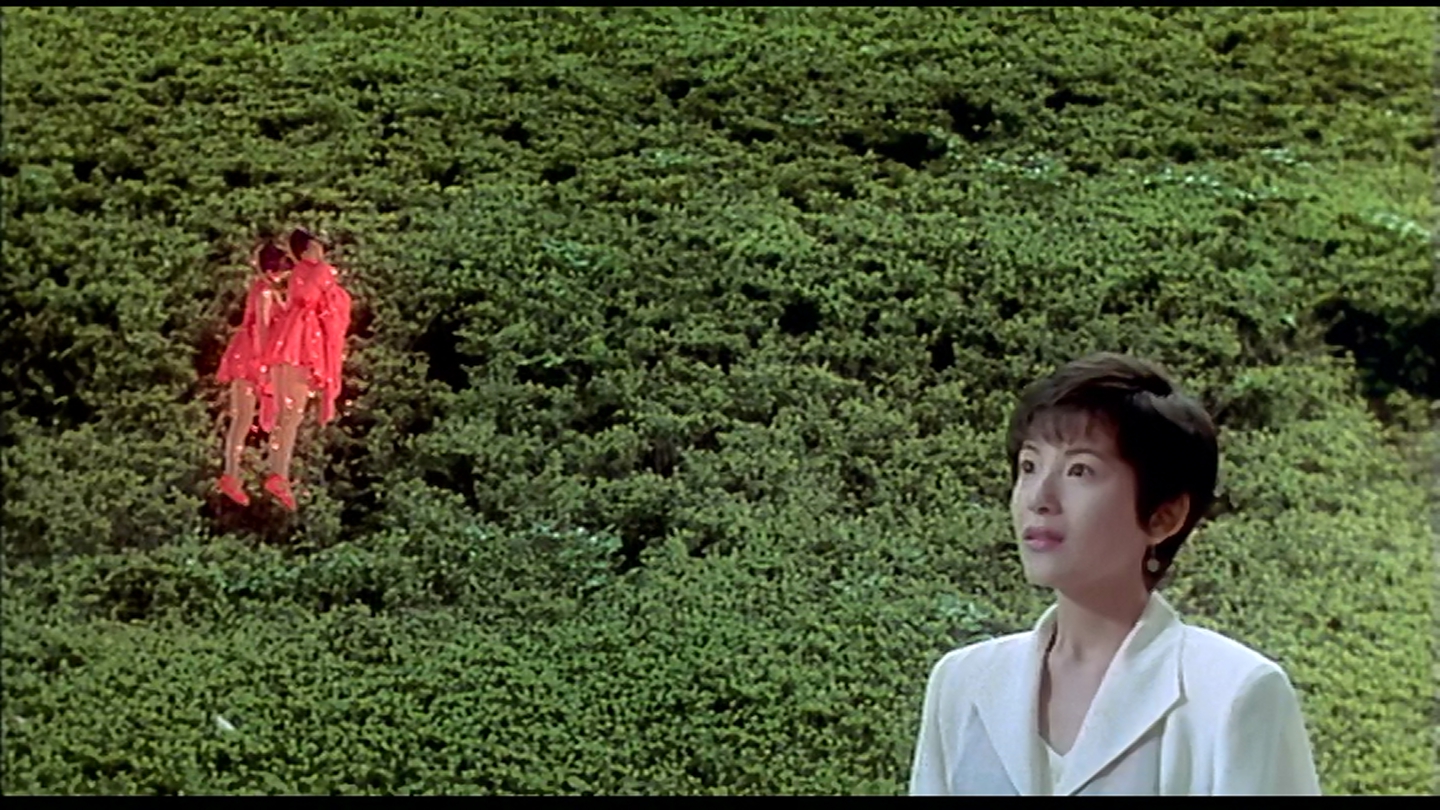
Miki Sagusa and a wee, tiny Mothra.

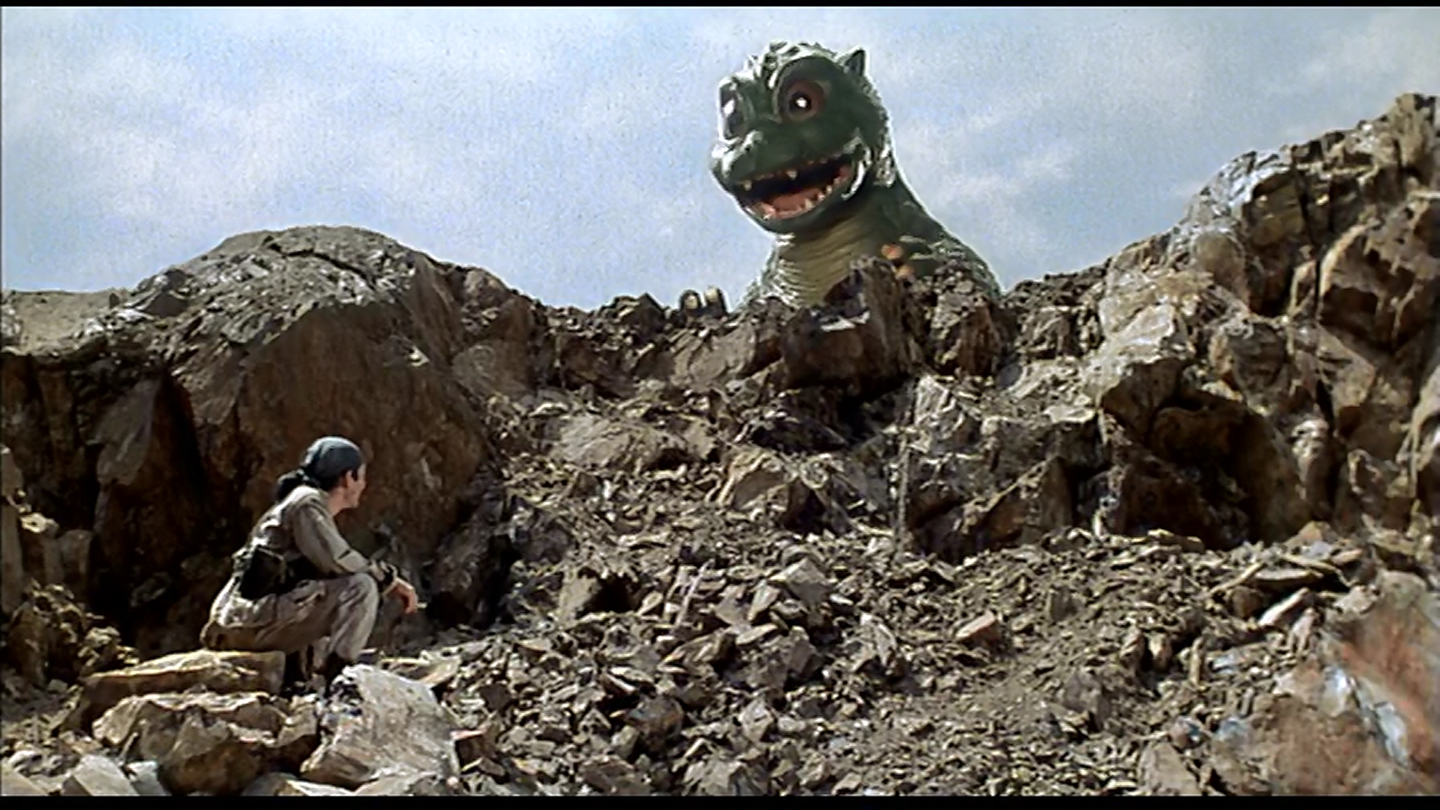
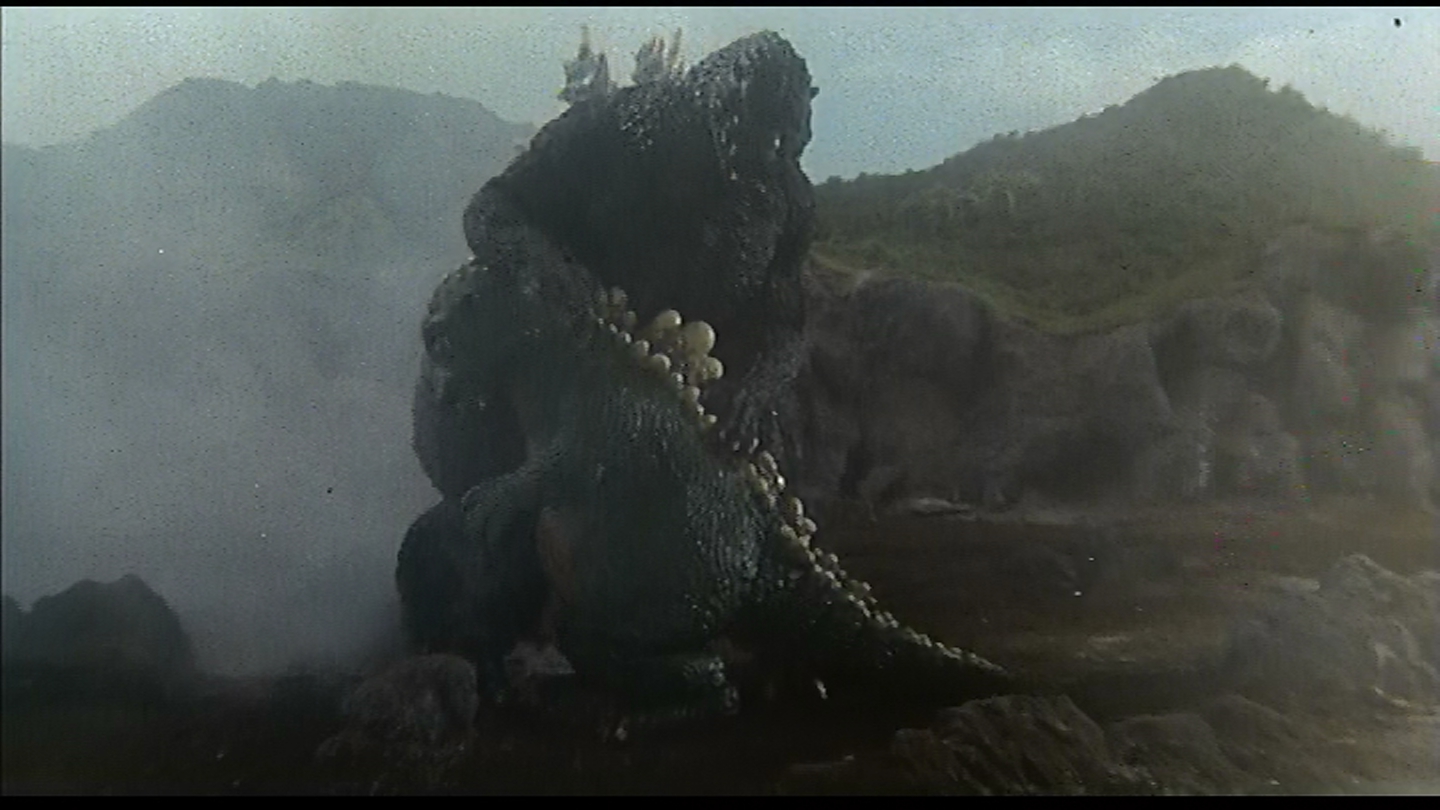
Godzilla Junior is back, and remains cute. Its first appearance, over a small ridge of rocks, echoes Godzilla's first appearance in the 1954 film. Juinior is essentially helpless, used as a hostage to get Godzilla to act. Still better than Minilla, though.

Junior. Still cute. Last time, though.

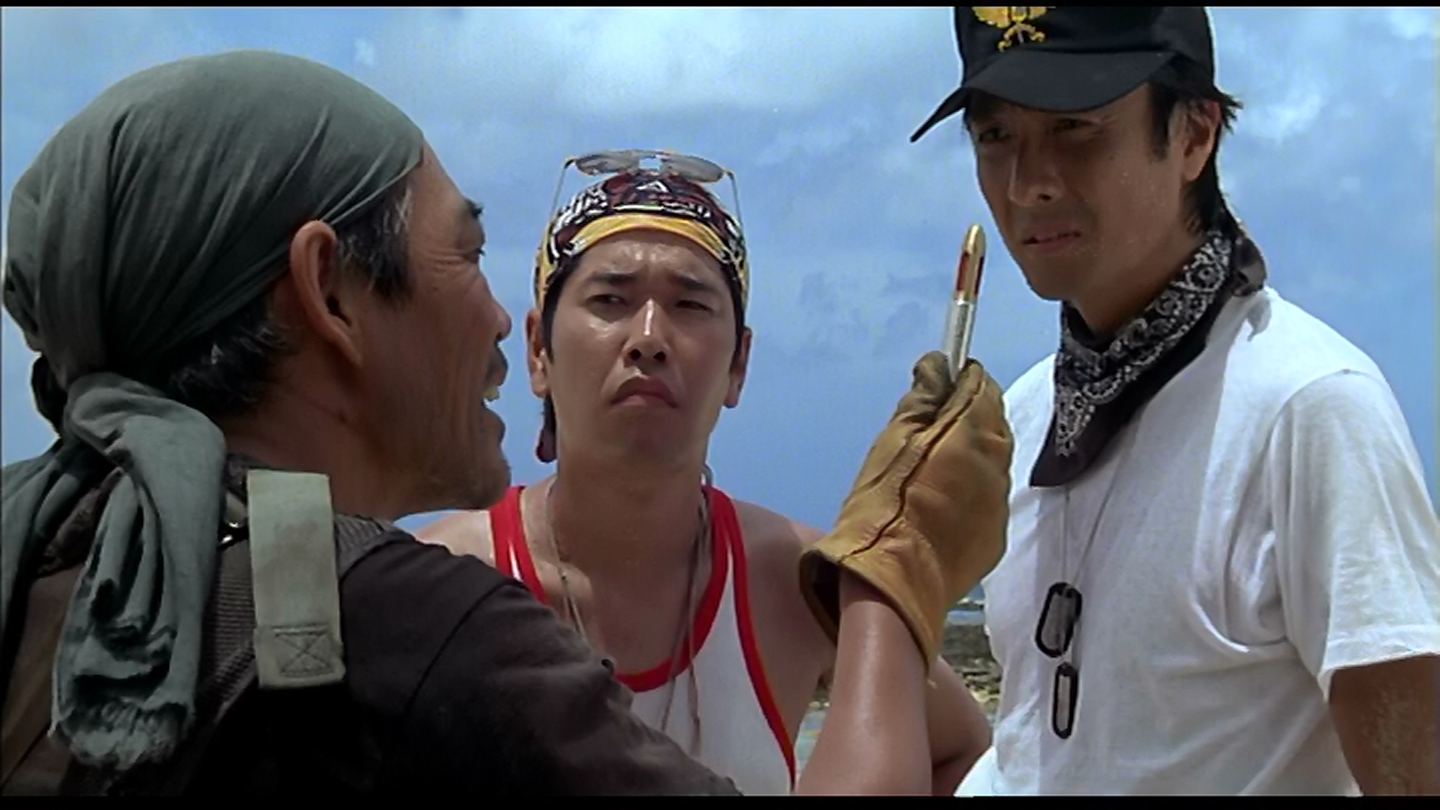
Godzilla Junior lives on a small island, similar to Monster Island from Son of Godzilla. But where the Son of Godzilla scientists had all the equipment they needed, the party here has a tent, a motorcycle, and not much else. The team, ostensibly military, stands in opposition to the scientists as to what to do about Godzilla. It's a nice continuation of the conflict from Godzilla vs Mechagodzilla II, which brought the two conflicting attitudes about Godzilla to the fore. In a call back to the military of the Showa era, the scientists tend to favor contol, rather than destruction, and paint the military as linear thinkers. Opposites attract, however, and romance brings the two sides together.

This is also a return to monster control, something that hasn't been brought up since . It was a much more common theme on the Showa era. Ghidorah is almost always controlled by someone, either Futurans, the M-Space Hunter Nebula Aliens, Kilaaks of the Kilaaks. Titanosaurus, Gigan, and Ebirah were all under control to some extent.

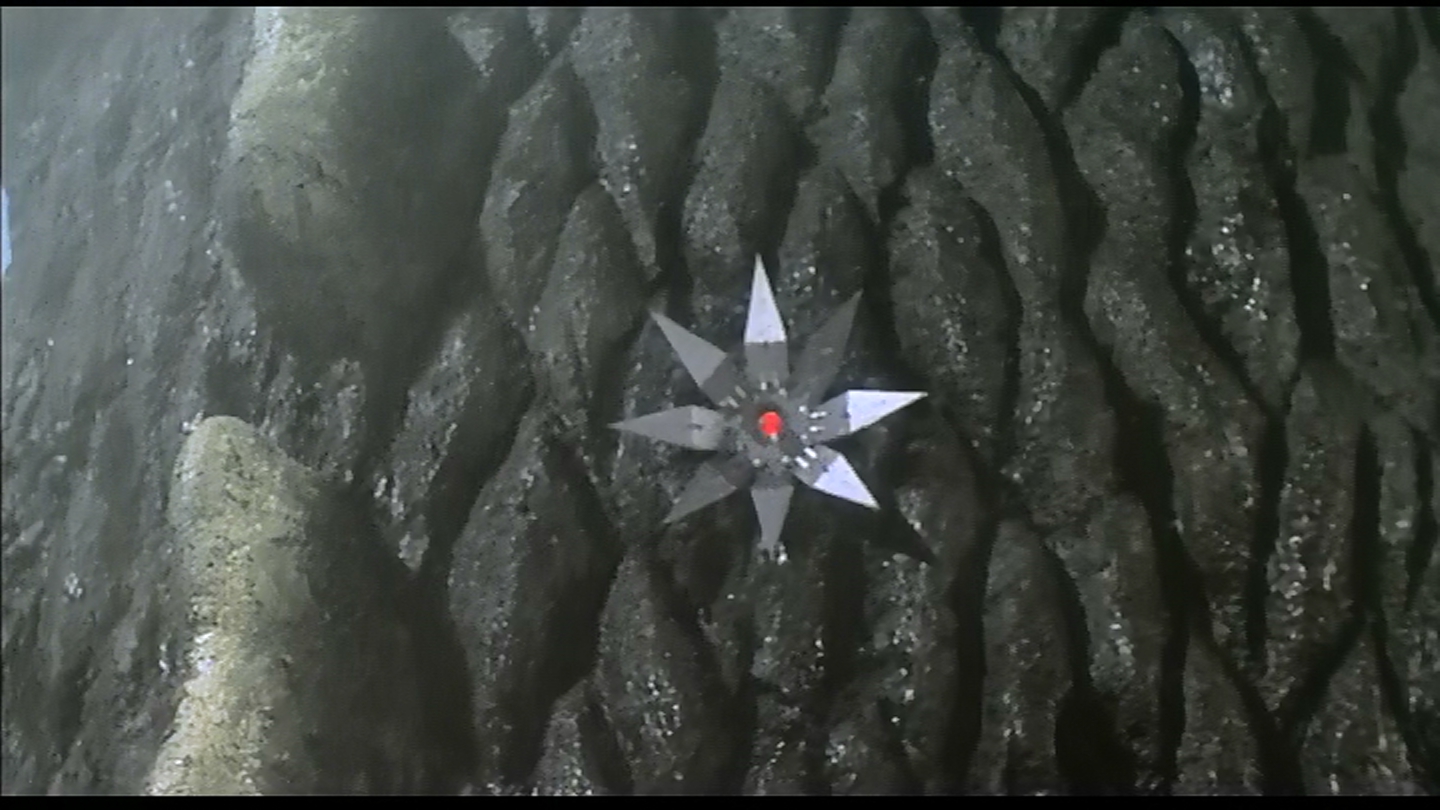
The light lets you know it's working.

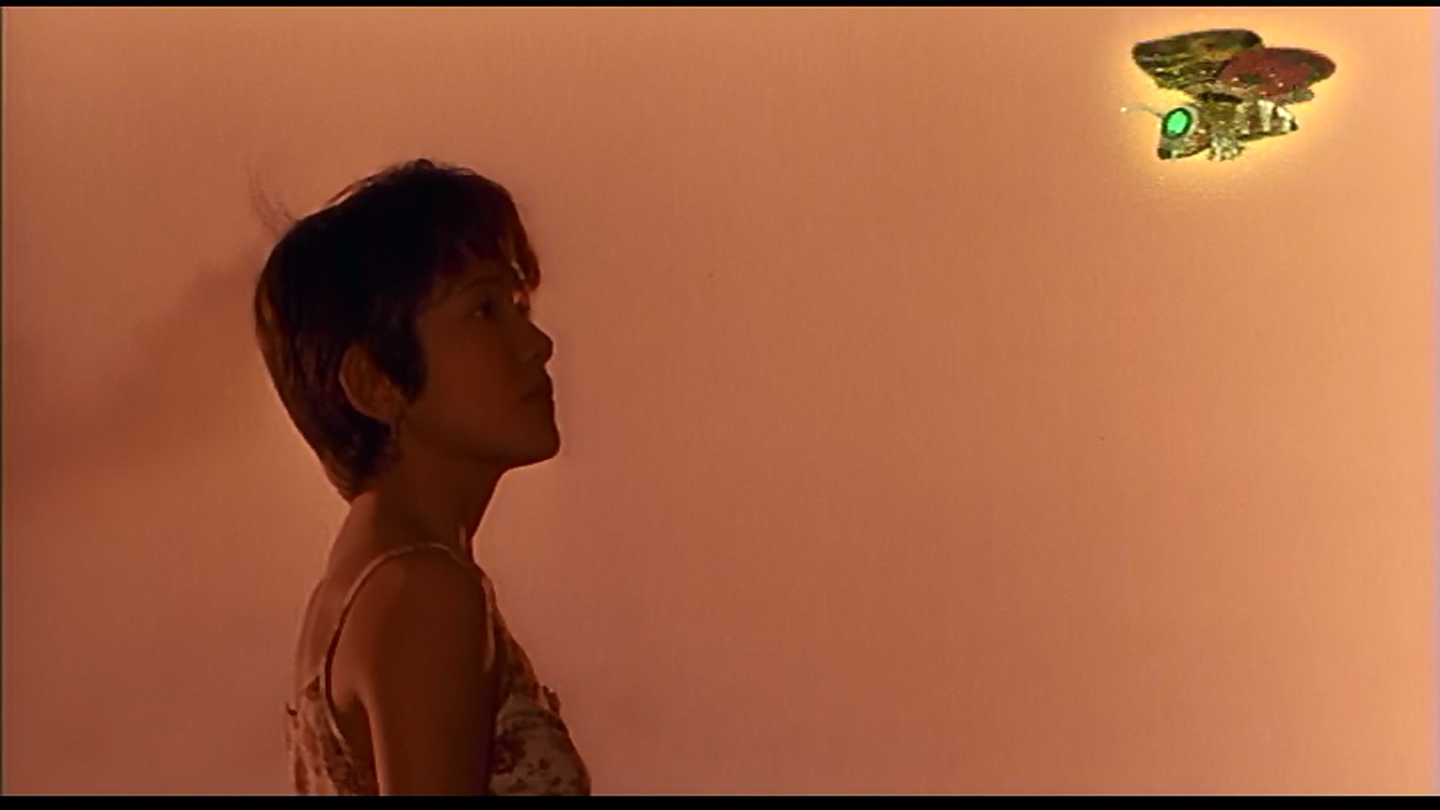
The film also features a rare appearance by the Cosmos (formerly the Shobijin) without Mothra being an active participant in the story. Unlike previous appearances, a tiny version of Mothra is shown, which in some ways ties into the Rebirth of Mothra trilogy, which would start in just two years. The Cosmos appear, deliver a warning that Earth is about to be invaded, and then fade away.

Junior. Still cute. Last time, though.

Tear Gas, as it turns out, works well against Godzilla Junior. This is a rare call back to King Kong, where Kong is knocked out by gas. In addition, anti-Godzilla Yuki has a bullet of blood coagulant. This magic bullet calls back to the isotope grenade fired into the Beast's neck in Beast from 20,000 Fathoms. One bullet to take down a massive creature.

This till take down Godzilla.

Godzilla's red atomic breath has been regraded to the blue version, until the very end. Perhaps the power-up from Rodan was only temporary, or optional. And as the times have changed, so has Godzilla's parenting style. In cotnrast to Son of Godzilla, and Godzilla's Revenge, Godzilla now protects Junior from the attacks, shielding him with his body. In some moments, it's quite touching as Godzilla hunches over Junior, shielding him Space Godzilla's onslaught.

Junior. Still cute. Last time, though.

Part of the reason this film gets a terrible reputation is due to the laughably bad encoutner between MOGERA and Space Godzilla in the first half hour. MOGERA intercepts Space Godzilla in what appears to be an asteroid zone, because of course the anti-Godzilla weapon is space worthy. The fight looks awful.

Junior. Still cute. Last time, though.

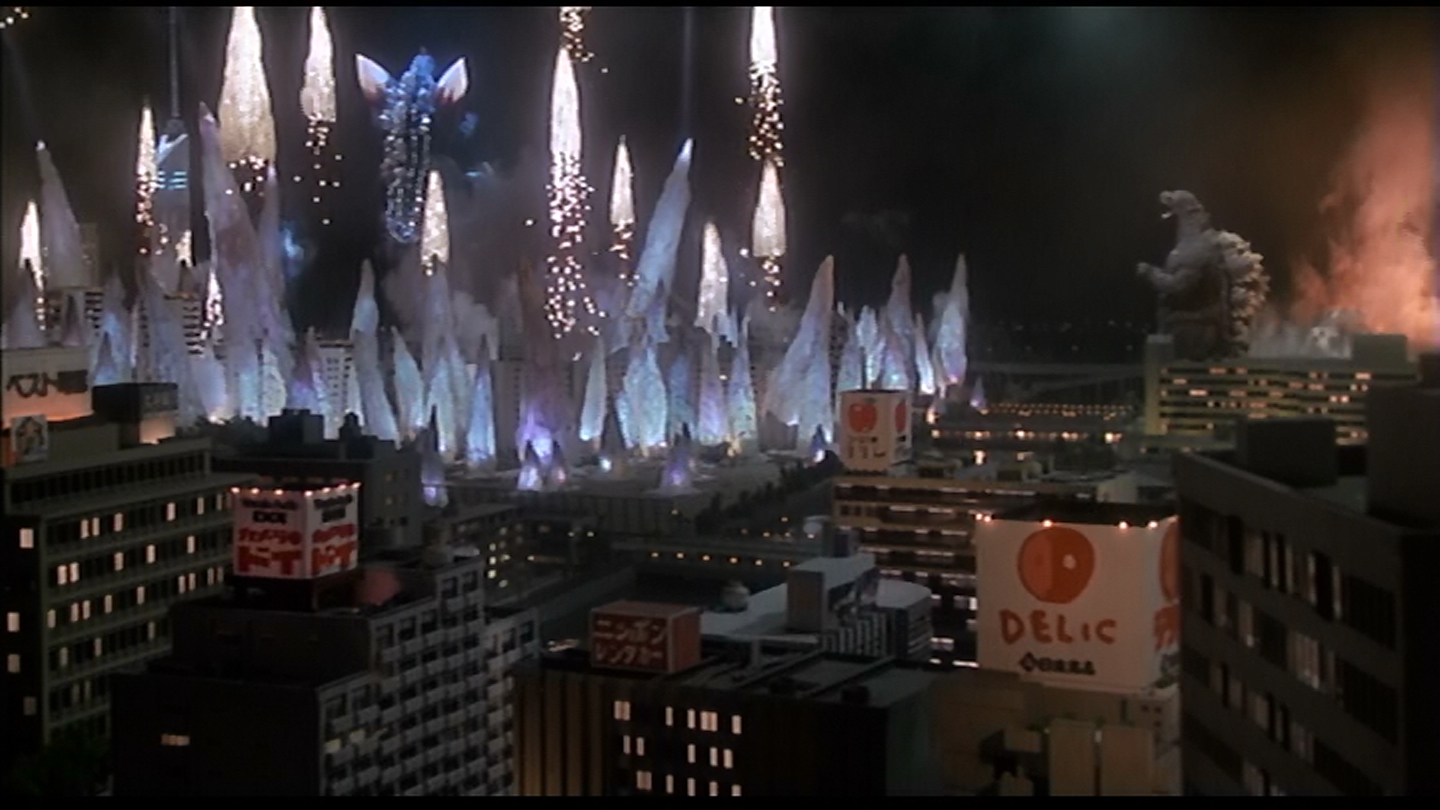
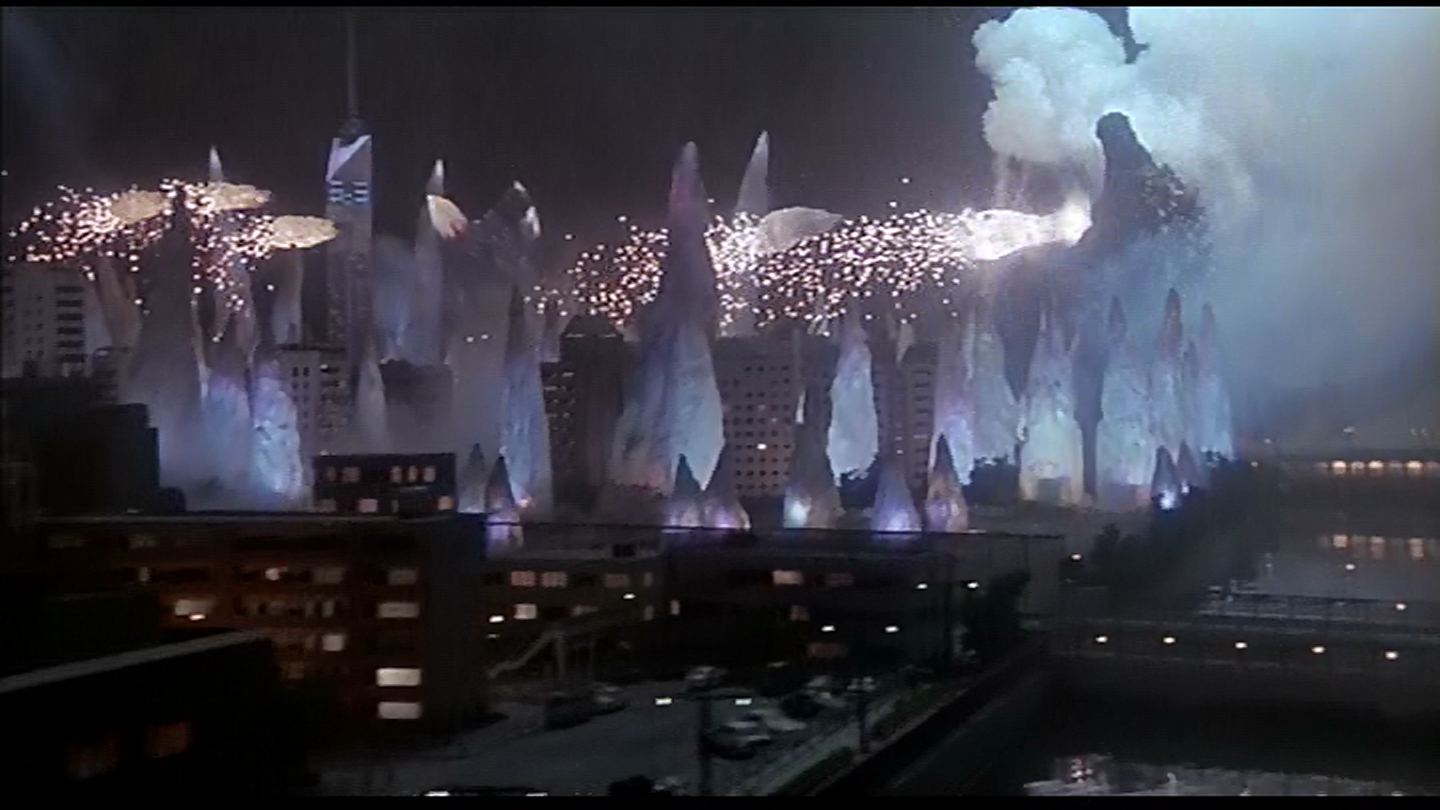
The final battle, however, is strangely beautiful. Godzilla and Space Godzilla face off in a field of giant crystals. MOGERA gets to the battle first, but the real show starts when Godzilla shows up. In addition to using its breath attack, Space Godzilla also uses telekenesis to throw Godzilla into a building. And it levitates, like some sort of enlightened Buddhazilla.

Enlightened Godzilla, levitating above the city.

It also uses the crystals as projectiles, throwing them at Godzilla.

Glowing evil crystal projectiles.

But its vulnarability is the crystals embedded in its shoulders. MOGERA smashes these, and Space Godzilla's power decreases markedly. And then Godzilla does what he does best.

Red vs Blue.

Once both of its opponents are down, Godzilla unleashes the red atomic heat ray, incinerating both MOGERA and the remains of Space Godzilla.

Like a boss.

DISCO INFENO!.

The final confrontation between Space Godzilla, MOGERA, and Godzilla is excellent. Unfortunately, there's some stuff to wade through before the reward. I haven't mentioned the completely extraneous plot to kidnap Miki, because it doesn't affect the rest of the plot at all. So I can see the dislike of the film, but it's certainly not the worst Godzilla film, or even the worst of the Heisei films.

Next up, the return of old fiends, and enemies.

Thursday, July 24, 2014

Powering up Through Song: Godzilla vs Mechagodzilla II

With the success of Godzilla vs Mothra, and the further impetus of a pending deal with Tri-star, Toho resurrected not one but two old enemies for Godzilla. The next truly new monster in the series This would be Destroyah, but even that had its origins in the 1954 Godzilla film. Given the popularity of giant mecha in Japanese culture, it's no surprise that Godzilla vs Mechagodzilla II was made. As a small aside, the title is really just Godzilla vs Mechagodzilla, but the II makes it weasier to distinguish from the 1974 film with ape-like aliens and King Seesar.

Buoyed by the success of the Super X series, of flying tanks, and salvaging the futuristic technology of Mecha King Ghidorah, the Counter G Bureau will create their own Godzilla to fight the original. This is in line with the increased militarism of the Heisei era, and a huge difference from the original mechagodzilla, which was created and run by aliens. But the similarities are striking. Mechagodzilla has an astonishing amuount of firepower that it can out downrange; a wide variety of beam weapons, as well as missiles.

Using future technolgy to get ahead.

Before the construction of Mechagodzilla, G-Force's main machine was Garuda, another iteration of the Super X flying tank concept. But Mechagodzilla rules the roost now. It's kind of interesting to see the training of the Mechagodzilla pilots. It's a bit like the combat training in Pacific Rim, specifically with martial arts and information lectures, and time in a simulated cockpit.
Sooooo, drift compatible?

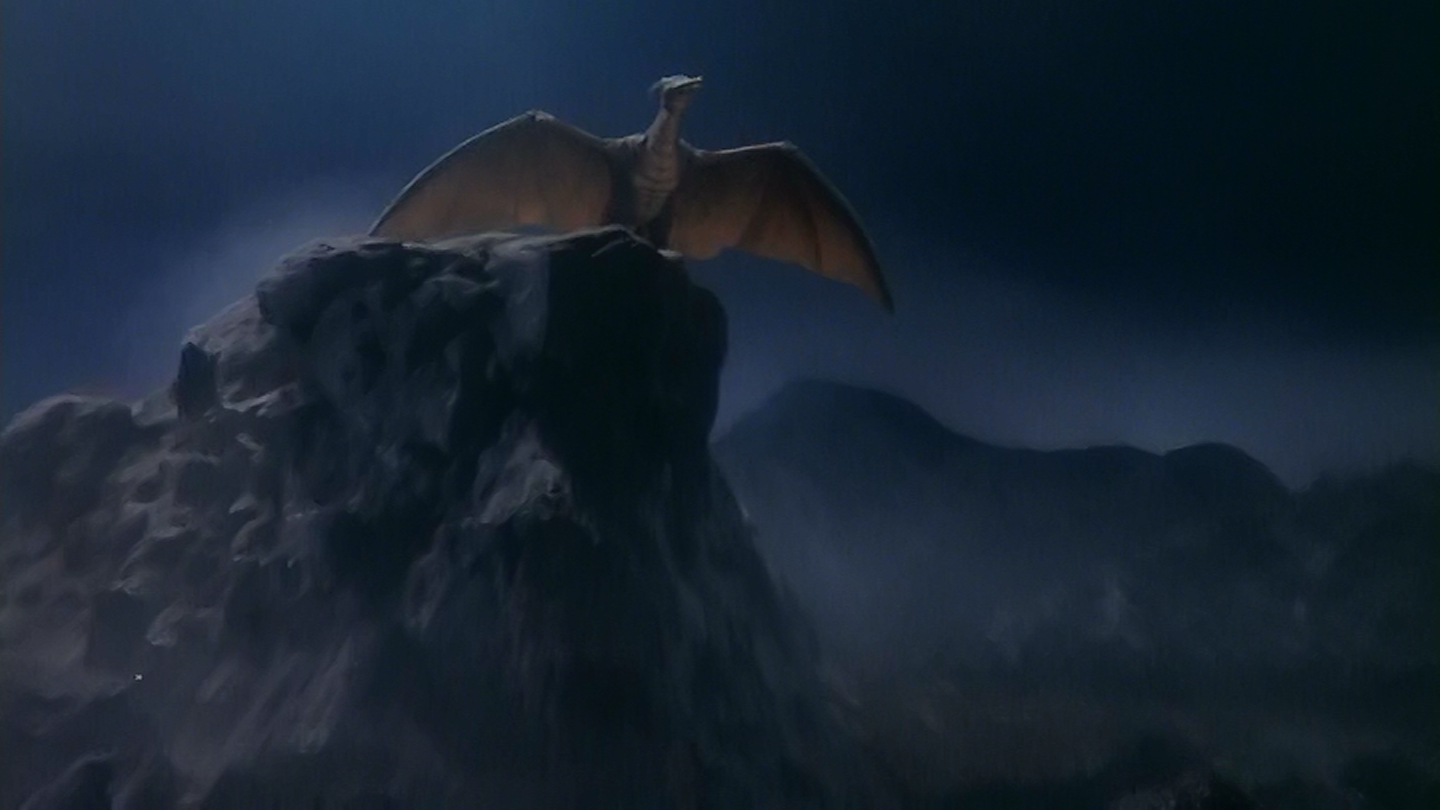
Meanwhile, a group of geologists have discovered an egg on a volcanic island inhabited only by Rodan. TRhe egg was discovered near the broken shell of another egg, which the professor is certain hatched Rodan. And, of course, it's been radiated. How he knows this... well, some questions don't lead anywhere productive.

RODAN!

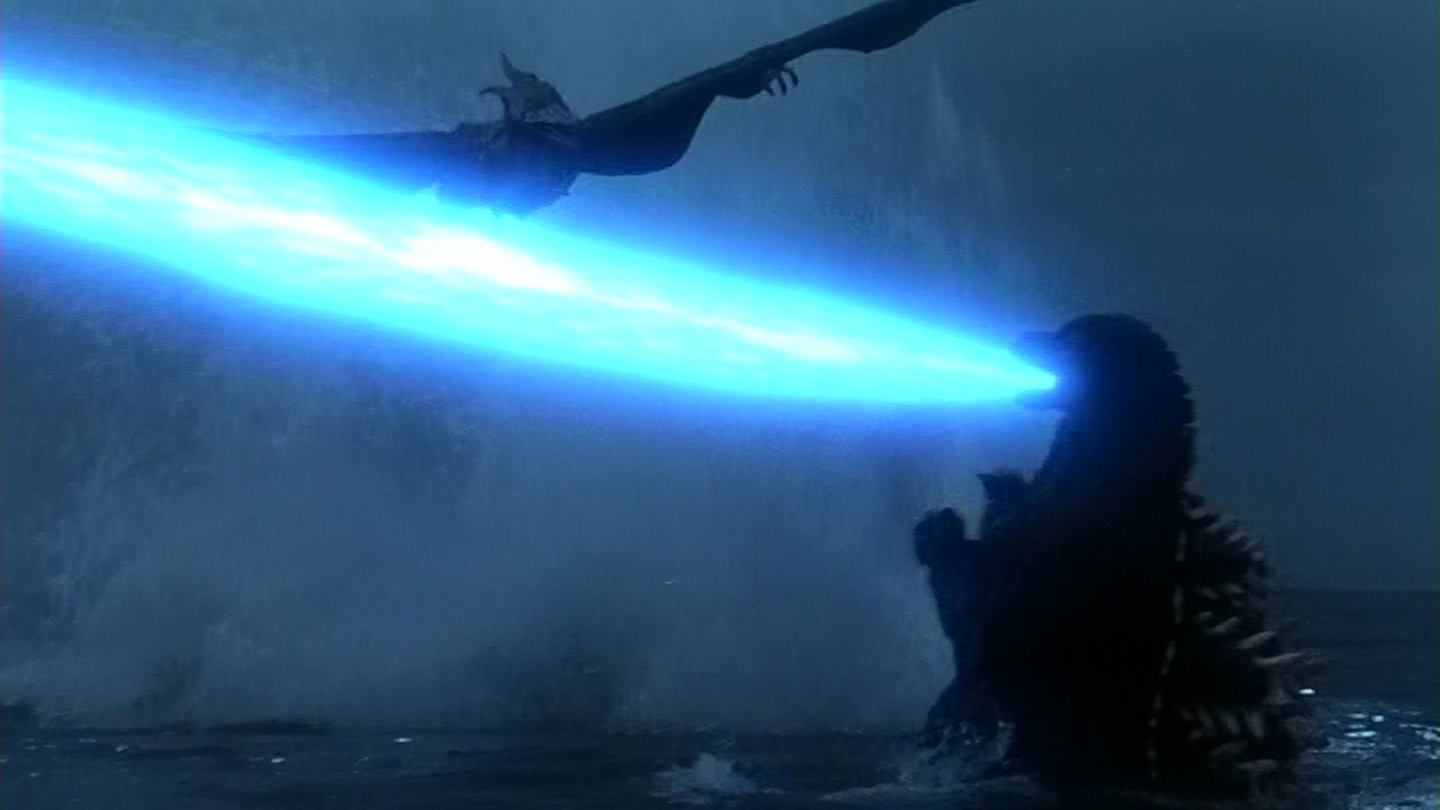
But where there's one giant mionster, there's likely to be another. Godzilla shows up a little after Rodan does, and the two have a quick fight. Rodan shows a breath weapon similar to Godzilla's, but he never uses it against Godzilla. Instead, there's a lot of body-slamming, which was very absent from the previous film. The physicality of the fight makes it much more satisfying that the director's previous effort. As the titans fight, the scientists make off with the egg.
Note the blue heat ray.

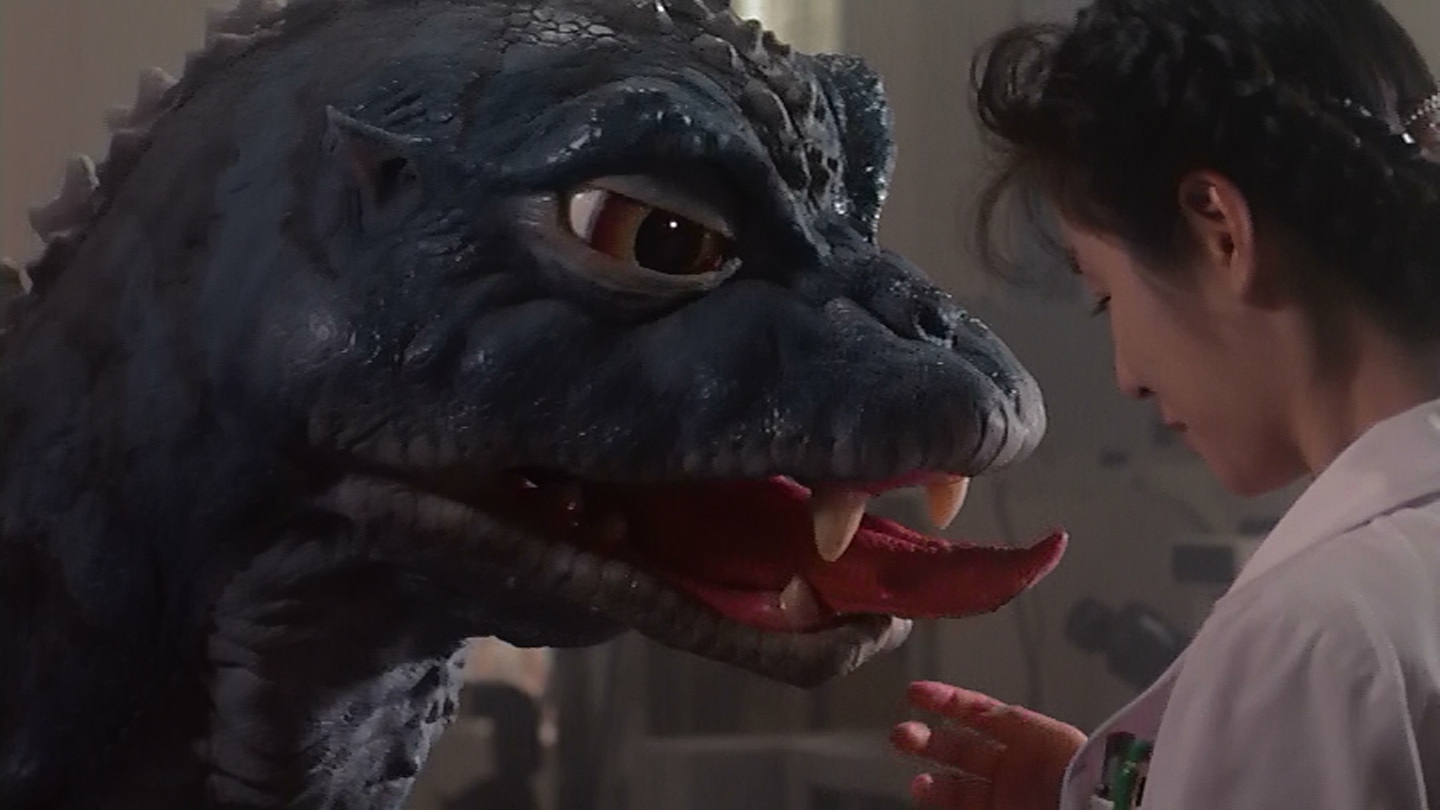
Any egg introduced in the first act must hatch in the second act. This introduces us to Godzilla Junior, a much more palatable scion of Godzilla whan Minilla was. The plot involving Junior is quite similar to Gorgo and Gappa. The child of the monsters is taken by humans, and the parents wants to get it back. But Junior seems to be the product of a mixed marriage, unlike the baby Gappa. Godzilla and Rodan stop fighting only to take on threats to the young monster. Junior will appear in the next two Godzilla films

Wee cuddly Godzilla. Still not as annoying as Minilla

Pursuing his child, Godzilla makes landfall in Japan and Mechagodzilla is deployaed. Like all future Mrechagodzillas, this one can fly, allowing it to be rapidly deployed. It has a hovering action that is very similar to Space Godzilla's in the next film. The big weapon, the one deployed from its belly which suspiciously a telephoto lens, is called the plasma grenade. I have no idea why. It's an energy blast, just like all the other weapons. It is, however, powerful enough to knock Godzilla on his ass.

Behold the power of this fully operational Mechagodzilla!

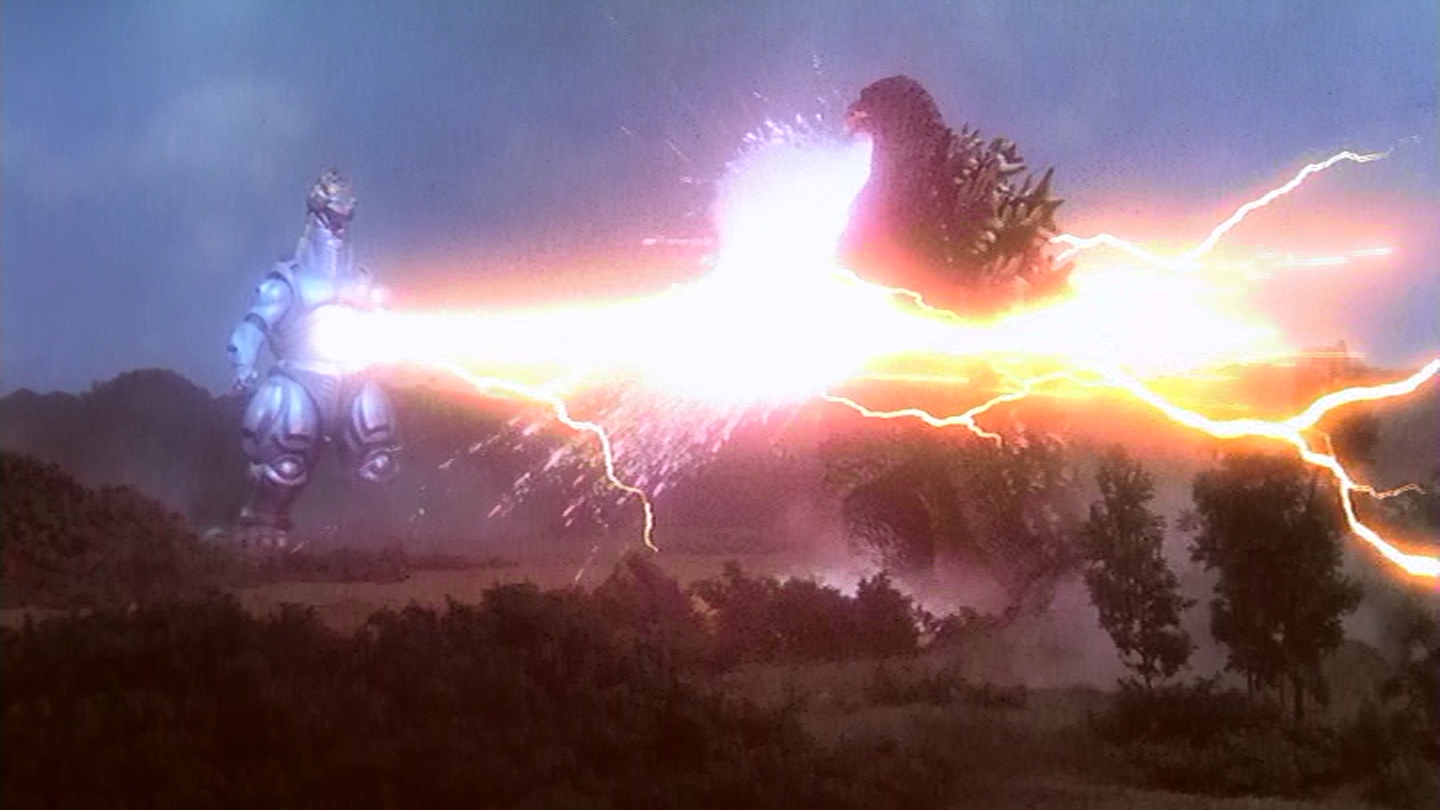
It also has a taser-like weapon, again, likely inspired by Mecha King Ghidorah. And the first fight against Godzilla goes well until Godzilla uses the nuclear pulse to send energy back up the shock cables. Mechagodzilla is thus disabled.

Power runs two ways, Mechagodzilla!

With Mechagodzilla out of the way, the standard military tried to engage. It works out about as well as it always does.

Again, Pacific Rim seems to have drawn heavily from this film, since this is the only film to target Godzilla's 'second brain.' In this case, the G-Crusher plan is to paralyze Godzilla.

Rodan, who has been absent since the slug-out with Godzilla, is awakened and powered up, somehow, by a song which reaches it through Godzilla Junior. It's at this point that he gains his atomic breath. I guess part of the point is thast everyone powers up during the movie?

Rodan with atomic heat ray

Unexpectedly, some complex emotions are evoked in the film. Miki Sagusa objects to the military using Godzilla Junior as a lure to get Godzilla clear of Japan. They're putting Junior's life in danger, yet at the same time, this action may save the lives of others. Miki suffers a similar moment of doubt as she is the one who activates the G-Crusher and paralyzes Godzilla. How can the audience's sympathies be divided beween the humans and the gigantic monster bent on destroying all humans? Yet this film understand that Godzilla is a sympathetic character, even if it's destructive, and this film captires that contradiction.

The fights, especially the final one, is immensely satisfying. It begins with Rodan, who manages to take out Garuda, the flying anti-Godzilla weapon. It takes out one of Mechagodzilla's eyes before being hammered with the Plasma Grenade. Godzilla can't deal with Mechagodzilla's ordinance, Rodan doesn't stand a chance.

Rodan isn't feeling so good

The battle between Godzilla and Mechagodzilla takes place on a larger stage than any of the previoud Heisei films. There's a lot of room for the camera to pan, to catch the monsters in longer shots.

A large stage makes for more satisfying wide shots

Godzilla gains the upper hand almost immediately, as Mechagodzilla overheats after and shuts down. But Garuda is able to distract Godzilla, and the two merge into Super Mechagodzilla confguration.

Together at last, Super Mecha Godzilla

This is too much for Godzilla. The combined and sustained firepower knockes Godzilla down and keeps him down. It's then up to objector Miki Sagusa to deploy the G-Crusher, which will cripple Godzilla.

Let's really hurt Godzilla

Godzilla screams in pain as the energy from the wires lashes at him. Miki pulls the trigger, and the nerve bundle that's been targeted explodes. It's a hard scene to watch.

Fortunately, Rodan isn't as dead as we thought he was. Awakened by Godzilla Junior, it lands on Godzilla, and gifts it the rest of Rodan's life. This repairs the nerve bundle, and Godzilla is back in action. This raises an interesting chain of events. Rodan was first reawakened by song. It therefore follows that Godzilla has just absorbed the power of song. Which is kind of weird.

Rodan gives Godzilla his power up

Godzilla is more powerful than he was. He crackles with electricity, his heat ray has gone from blue to red. As Akira Ifukube's familiar Godzilla march plays in the background, Godzilla gets back to his feet and destroys Mechagodzilla. His power, already increased in the last film, is even greater now. It doesn't just blast Mechagodzilla, it turnes the supposedly heat-proof robot into a blazing inferno. Once again, by interfering, humanity has just made their Godzilla problem worse.

Powered-up Godzilla is WORSE Godzilla!

BOOM!

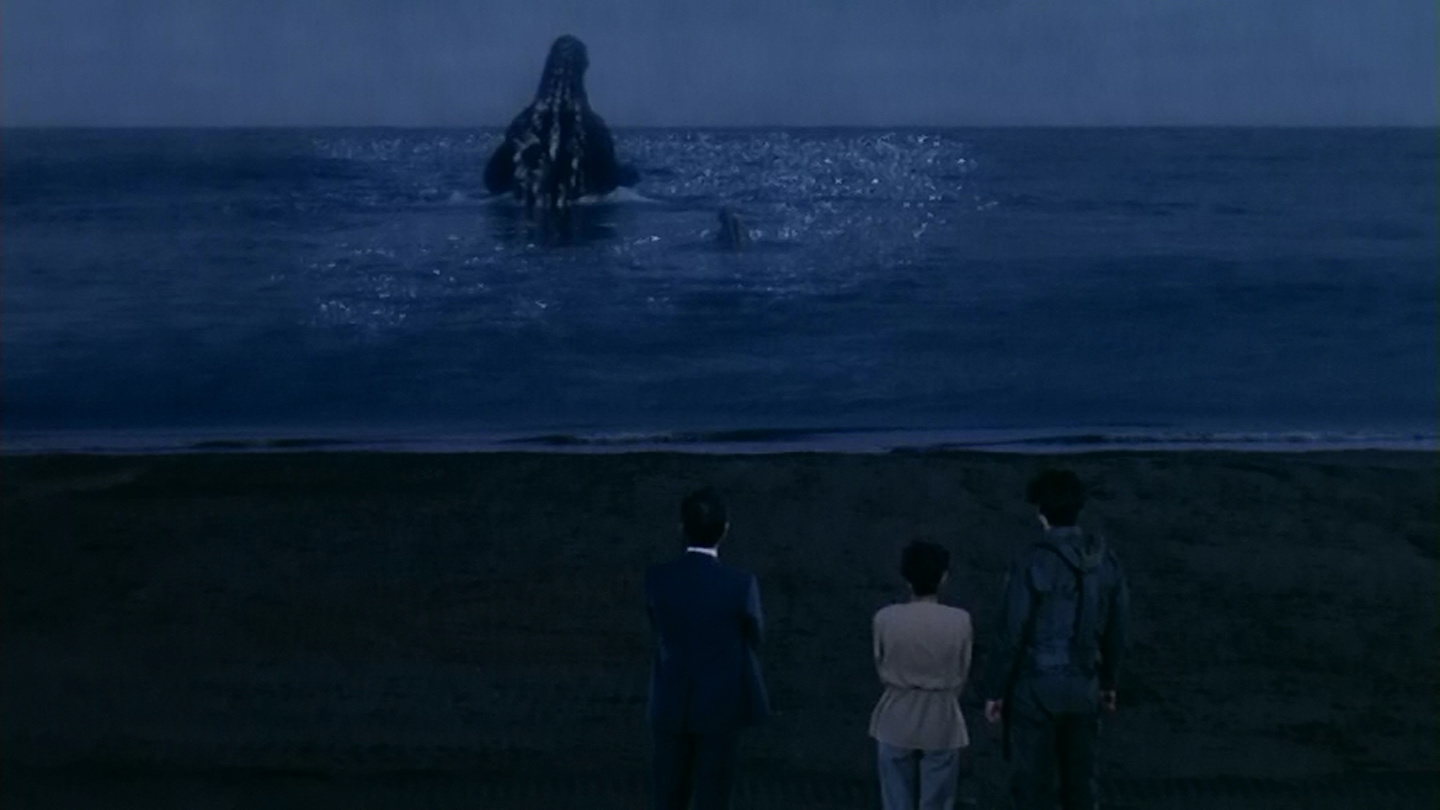
As with Gorgo, the solution is to send Godzilla Junior back to its parent, and the two walk out into the sea. Miki says farewell to both Godzilla and Godzilla Junior. While she may not like what Godzilla does, she no longer wants him destroyed. Bye bye you scamps!

This is one of the better Heisei Godzilla films. The monster action is pretty constant, and there's a little more heart to it than in most other Heisei films. There is no obvious homage to other films, and despite cute, young Godzilla's appearance, it's not nearly as irritating as the previous version of Junior Godzilla.

Godzilla + Space. Should be awesome, right?