Showing posts with label Minilla. Show all posts

Thursday, January 1, 2015

Kaiju Blender: Godzilla: Final Wars

With the reduced revenues from Godzilla Against Mechagodzilla and Tokyo SOS, Toho decided it was once again to retire the franchise. But they would celebrate Godzilla's fiftieth birthday with a big bang, a more expensive Godzilla film than they had ever before produced, directed by maverick film maker Ryûhei Kitamura. The approach had worked with the excellent and well-regarded Godzilla, Mothra, King Ghidorah, Giant Monsters All-Out Attack. But it should be pointed out that director Shûsuke Kaneko had directed three well-received Gamera films before being asked to work on Godzilla. Kitamura had no such experience.

You really want to do this?

The first sequence is Godzilla being attacked by a flying submarine of the Atragon style. Godzilla falls into a crack in the Antarctic ice, freezing him, in a nod to Godzilla Raids Again. The gunner screams as he unleashes missiles to bring tons of ice down on Godzilla and in that moment, I knew exactly what kind of movie this is going to be.
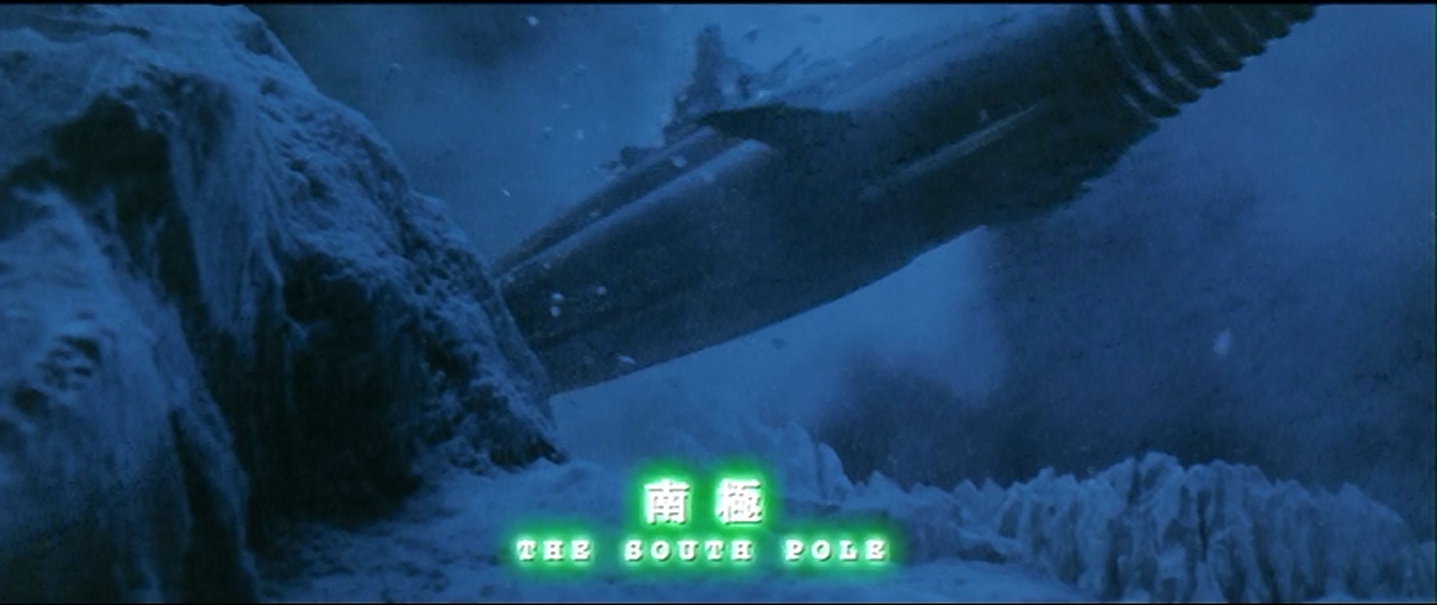
The Original Gotengo

In the narrative flashback, the audience is shown Varan, the squid from Space Amoeba, Titanosaurus, Gaira, Baragon, and Megaguirus. These kaiju do not appear in anything but stock footage, but it sets the tone. We are going to see a lot of monsters in this film.
Guest appearance by Varan

We are also introduced to the mutants that protect us from the kaiju. A new race of superman and women have emerged from humanity, better, stronger, faster, and more psychically powerful. They, along with superb purely human specimens such as Captain Gordon, form the Earth Defence Force. After the title sequence, one of the supersubs defeats Manda. Gordon is emblemic of the film itself, big, physically powerful, and only speaking English, while everyone around hinm speaks Japanese, but somehow they understand each other anyway. As with Atragon, the sub fires its Absolute Zero gun, freezing and then destroying Manda. This introductory sequence lets us know how the Earth Defence Forces work.
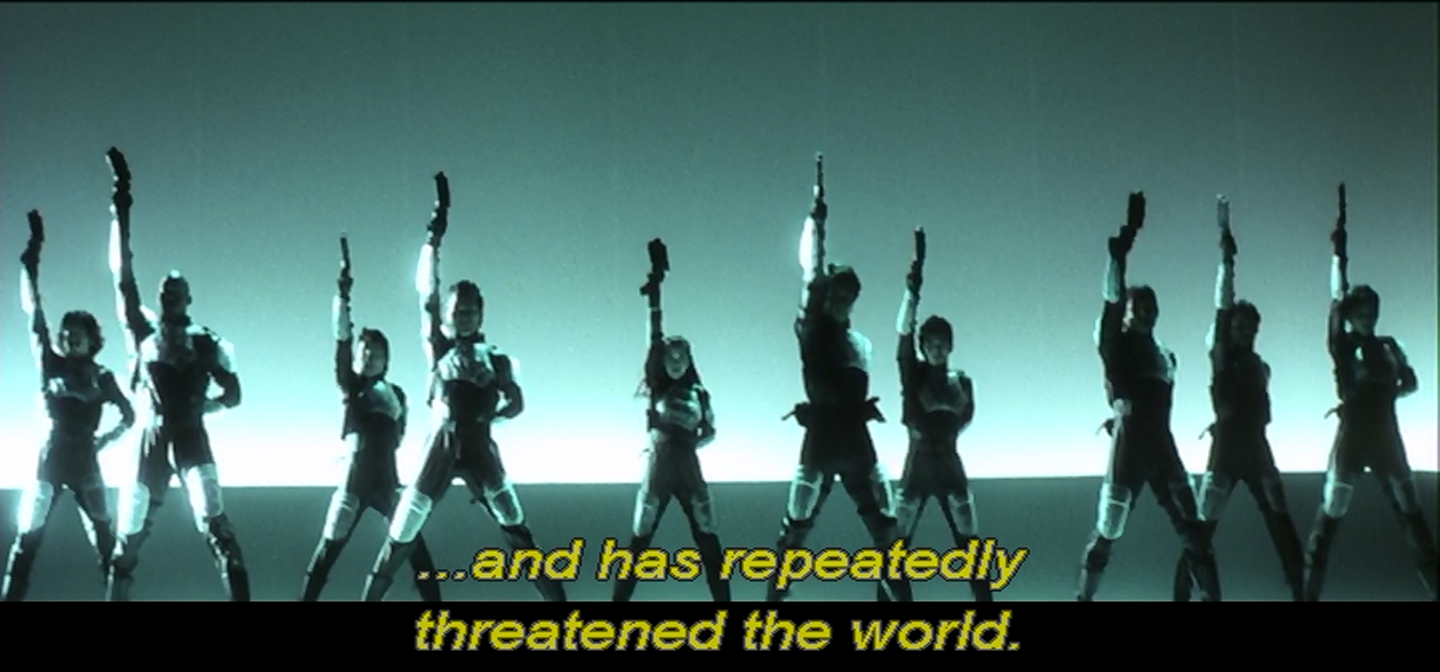
But not us. We've got guns but we're totally not a threat.

The Earth Defence Force higher-ups, for reasons that will become clear, have rather Nazi-esque unforms; a grey overcoat with a belt with a black arm band. The Mutants, a scientist tells us, share a certain biological link with the kaiju. The best way to defeat monsters, it seems, is to use them against themselves. The Shobijin, Mothra's fairy communicators show up, and give us a bit of back story. They also tell out Mutant protagonist that he has some kaiju in him (now confirmed by science and mysticism), but that he has a choice, which is very Matrix: Revolutions, and badly presented in that film, as well.
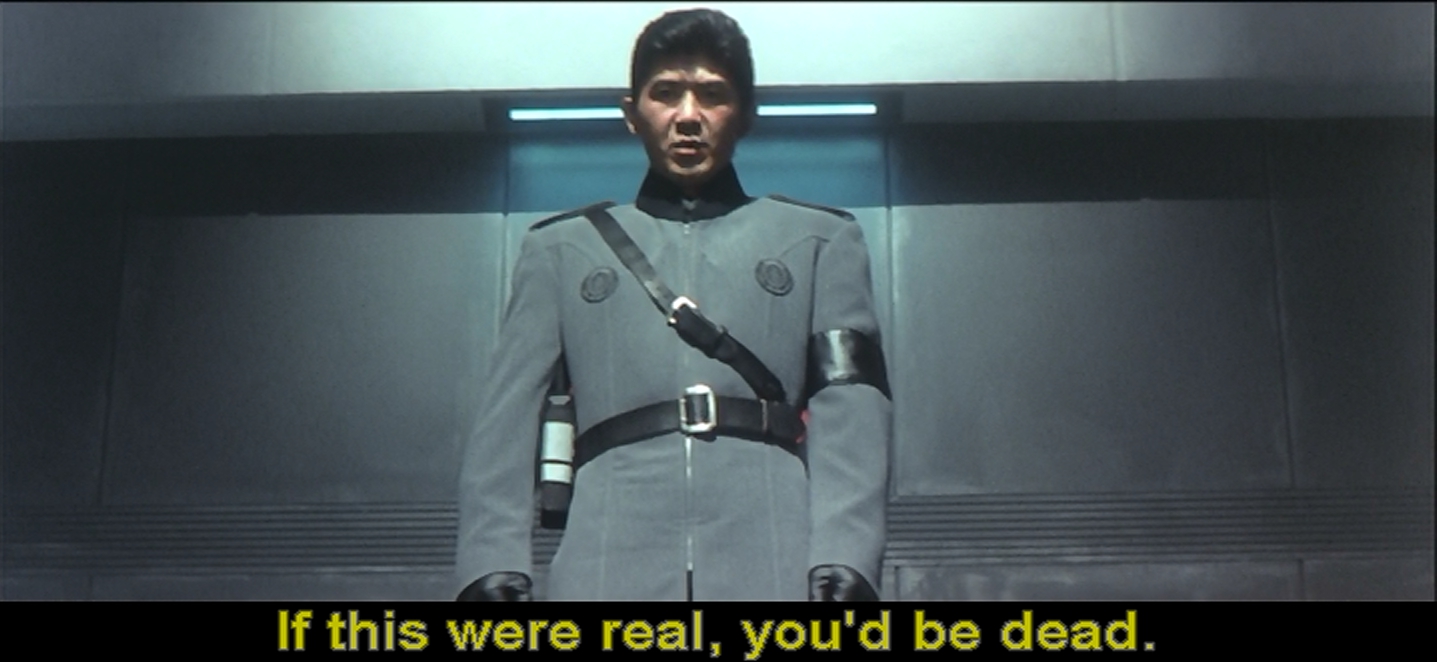
Yeah, so not a Nazi

Kaiju begin to wreck cities across the globe, with a similarity to the Kilaak invasion Destroy All Monsters. Anguirus, Rodan, King Caesar, Kamacuras, Kumonga, and even American Godzilla stomp on cities. Zilla, American Godzilla, is a weird sort of nod to the much-reviled 1998 film. Creature designer Patrick Tautopolis was gratified to be included in the Toho Godzilla canon, even though his creation was treated with a certain amount of contempt. Kitamura was determined to embrace as many films in the Toho library as possible, leaving out only Megalon, Destroyah, and King Kong.
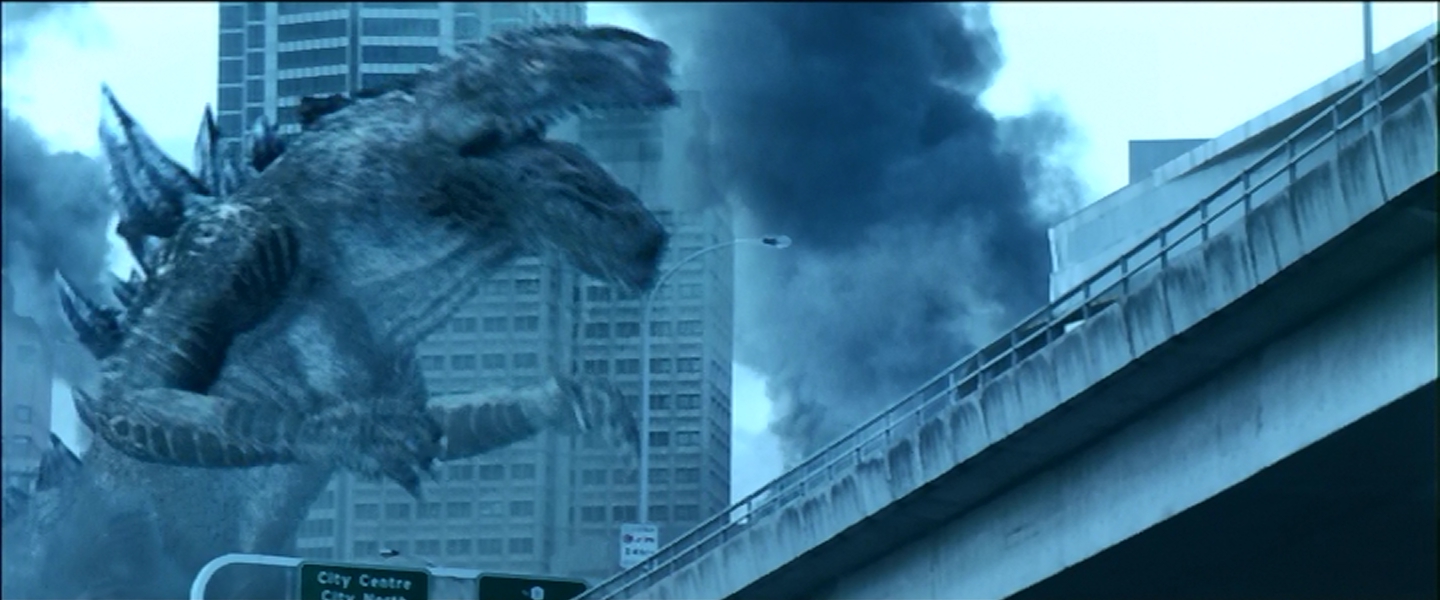
OK, a lower-grade Zilla

Kitamura goes so far as to have an obnoxious, chocolate-mouthed American child call his turtle toy (which looks suspiciously like a Tirtouga Pokemon) a loser, attempting to compare itself favorably to the Gamera franchise. We've seen this behavior before: in 1999 Yonggary, Kraa the Sea Monster, and Gamera, Super-Monster. All these films have the same thing in common: they aren't particularly good, and they only demonstrate their own insecurity by calling other films and franchises names.
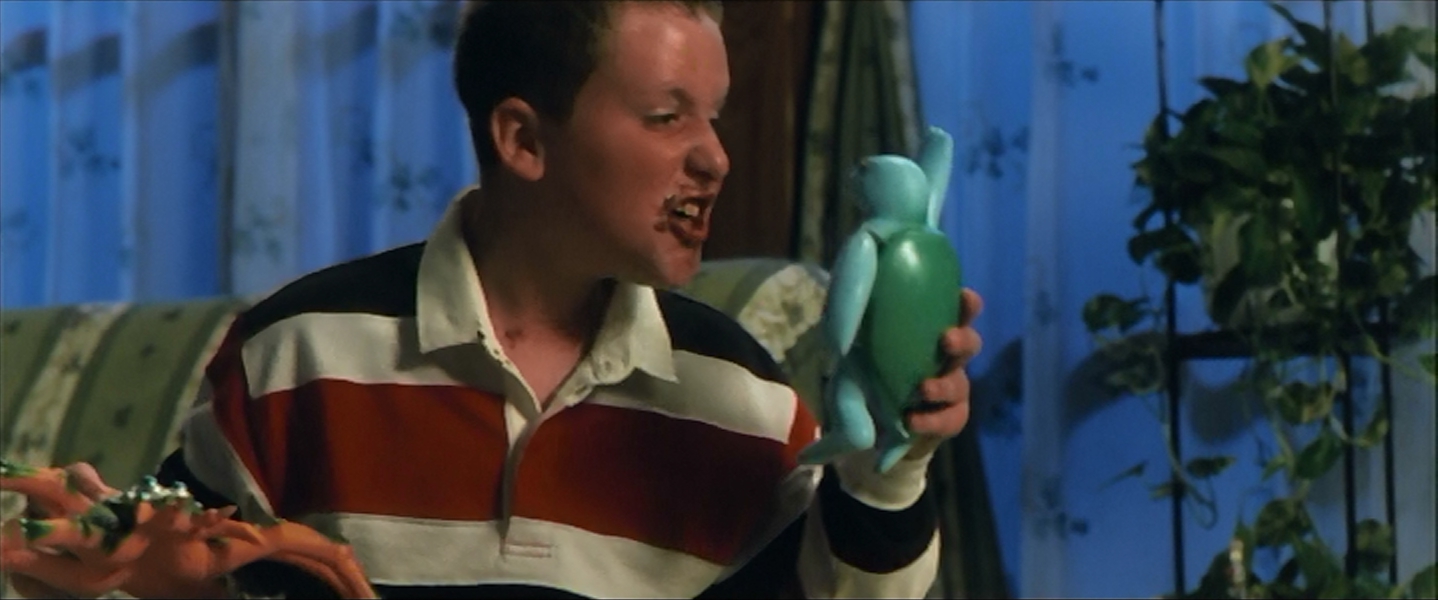
Really? You didn't have enough time for longer kaiju fights, but you had time to leave this in?

The M-Squad is deployed to take down Ebirah, the giant lobster we haven't seen since stock footage in the 1969 All Monsters Attack. Six mutants are deployed with shoulder weapons. There are a lot of pointless explosions, when the team are running, or standing still, or firing theit weapons. It's like each one is a John McClain, and their passing just causes things to explode in their wake. There's a lot of wirework which is well integrated into the miniature work, but it just feels like the director is trying too hard to be exciting, confusing motion with progress. There's a lot going on on-screen, but it doesn't engage me. A cinematic fight should be a story in itself, with a beginning, a middle, and an end. There is no progression here, nothing learned. Just weapons deployed, running, firing, and then it's all over except for the quip.
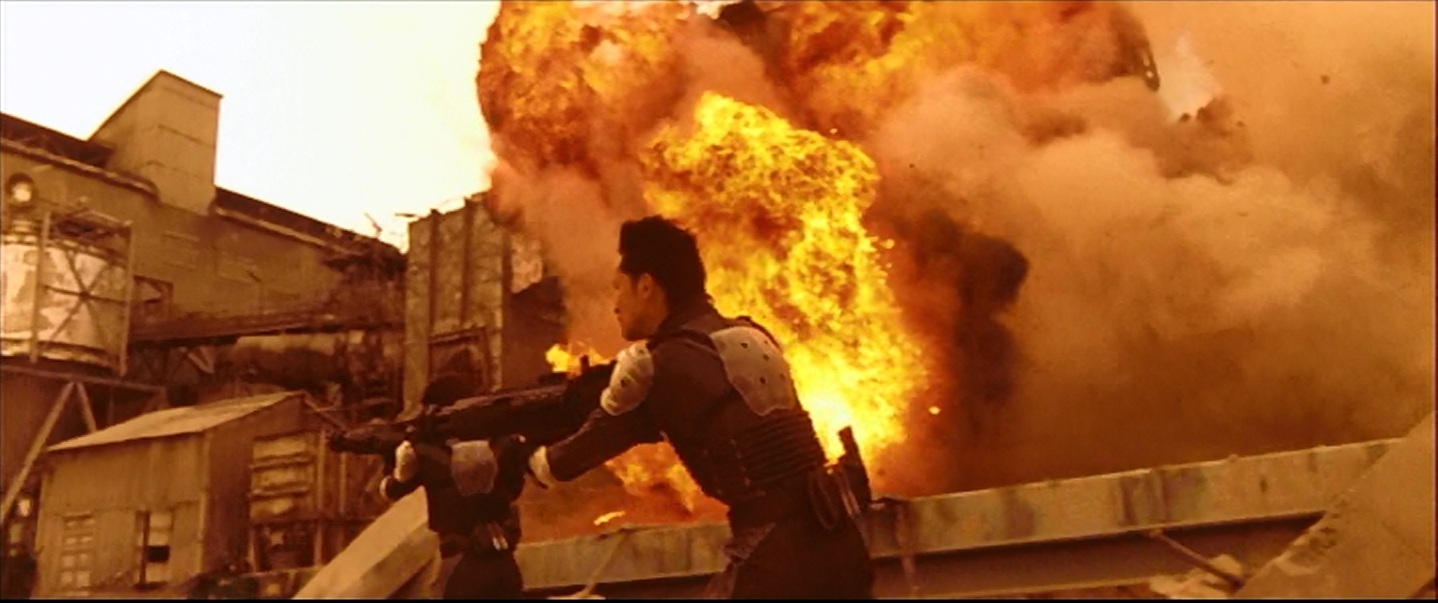
Explosions! Running!

The monsters, it turns out, are being controlled by aliens, the Xilians from Invasion of Astro-Monster to be precise. They tried to be subtle, in the Japanese alien invasion thing, trying to be friendly, returning the UN secretary to humans. When he doesn't recognize his own dog, the jig is up. Subcommander X shoots the mission commander, promoting himself. The aliens, he announces, are there to make humanity their supply of mitochondria.
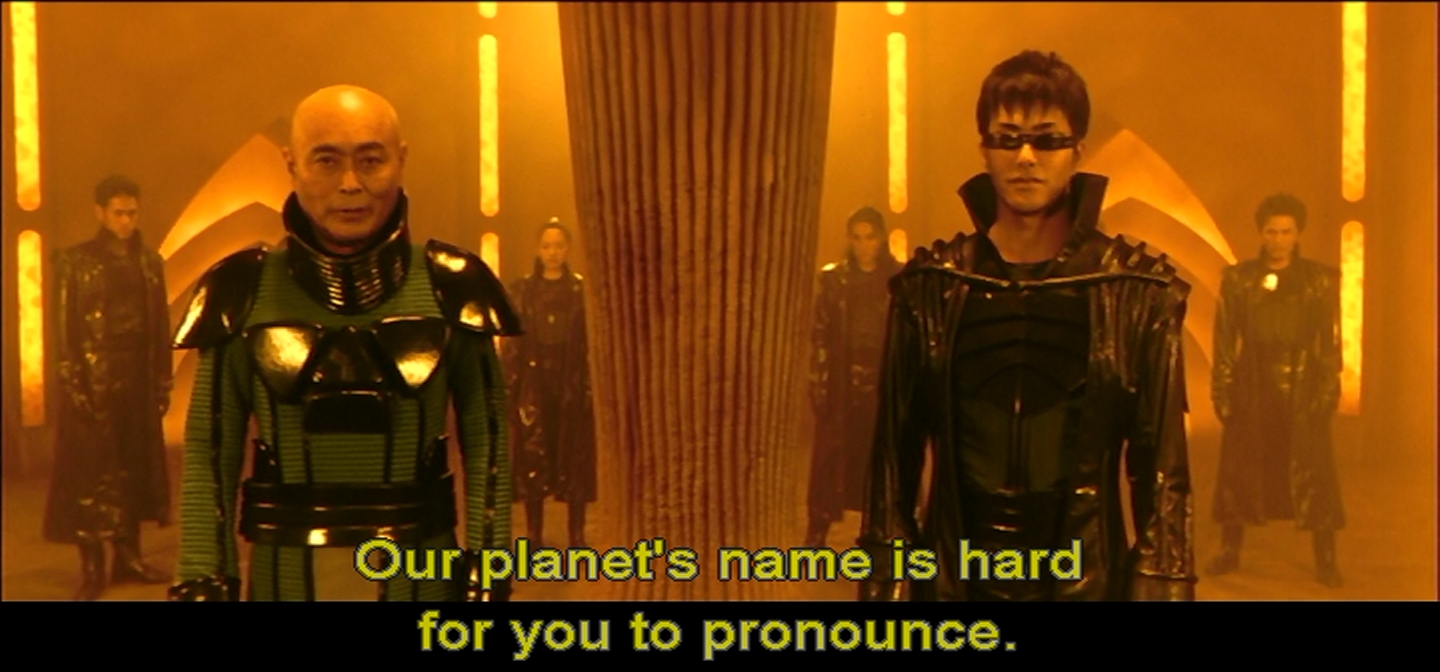
Alien commander on the left, future alien commander on the right.

X is best described as a tantrum-throwing child, who will literally spazz out every time one of his monsters is defeated. He's an angry, drama-addicted, short attention-span sort of guy, exactly the sort to blow all his advantages and screw up an invasion.
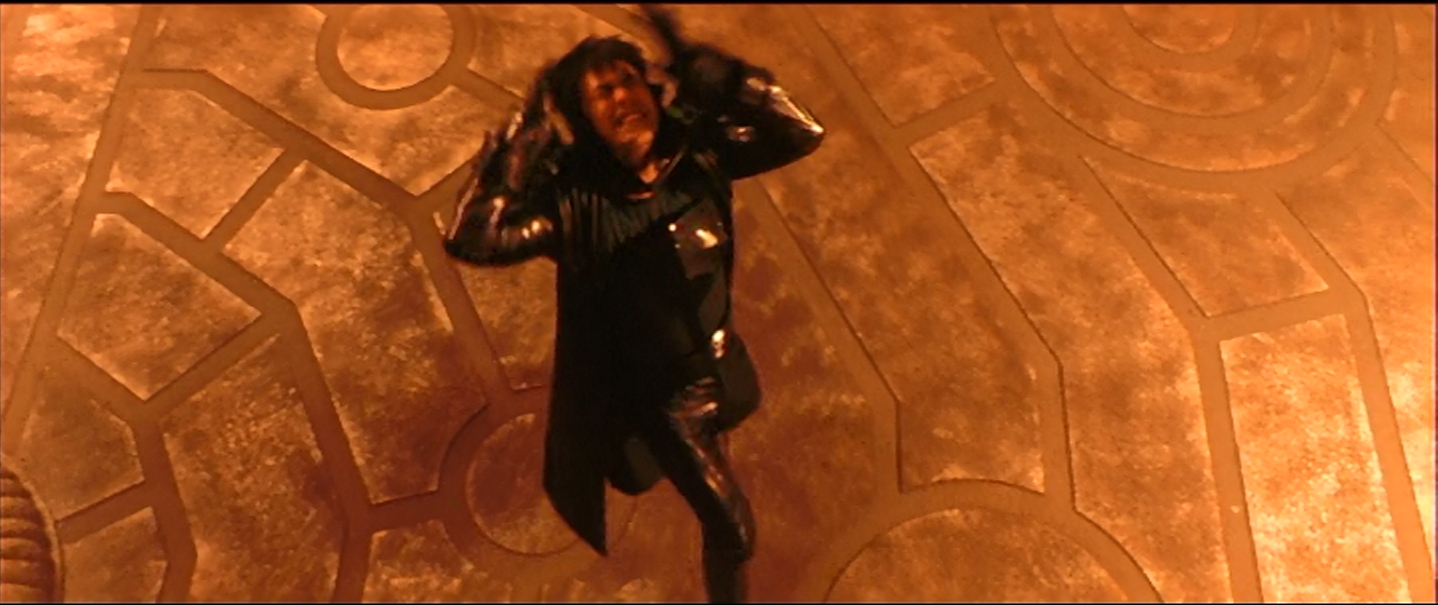
Mission Commander has a spaz fit.

The remains of humanity's defense rests with Captain Gordon and the Gotengo. Gordon decided the situation is desperate enough that he's going to unleash Godzilla, giving the TV Trope of the Godzilla Threshold its name. Godzilla then spends the last half of the film having very brief fights with all the world's monsters. Which is a pity. The technology was available to make these much more engaging and interesting fights, but because Godzilla had to get through so many opponents, each one is truncated.
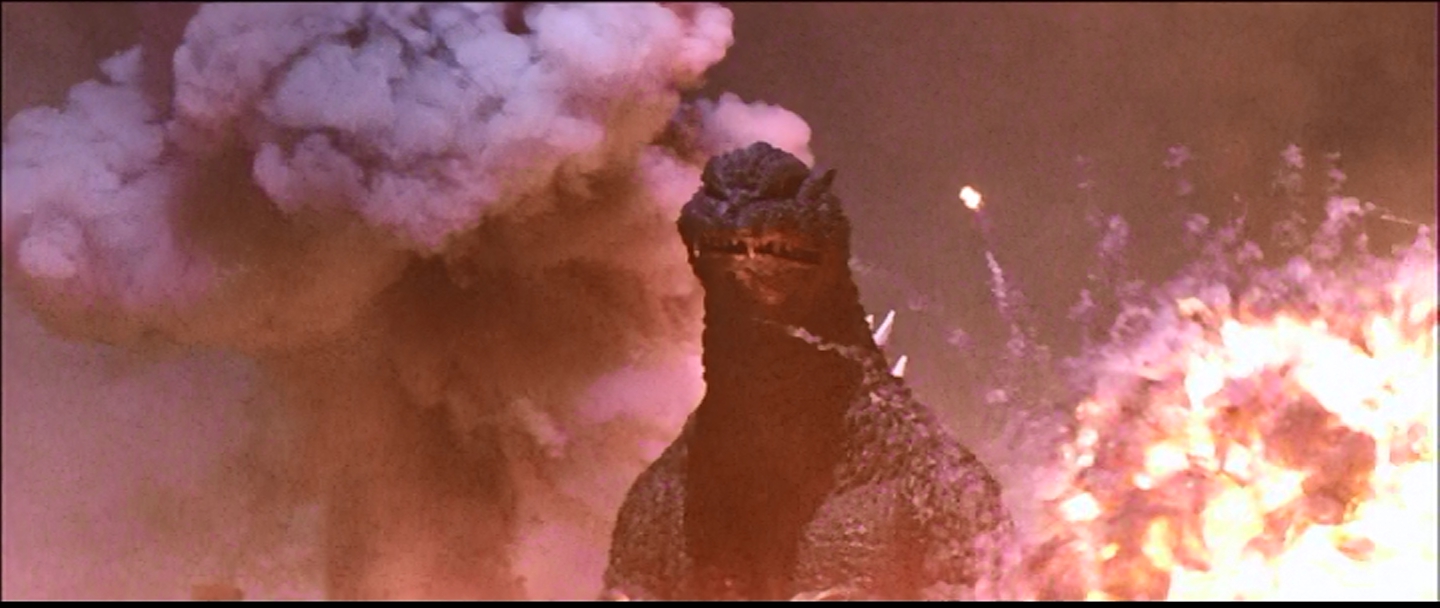
Godzilla, walking through explosions

Only the final fight has any sort of length. Godzilla, having knocked down six different kaiju, now comes up against Monster X. Monster X is an odd creature we haven't seen before, humanoid, with a head beam that also comes out of its shoulders. Now where have we seen a kaiju that has three breath weapons before? After he initial clash, each gets reinforcements, and Mothra faces down an upgraded Gigan.
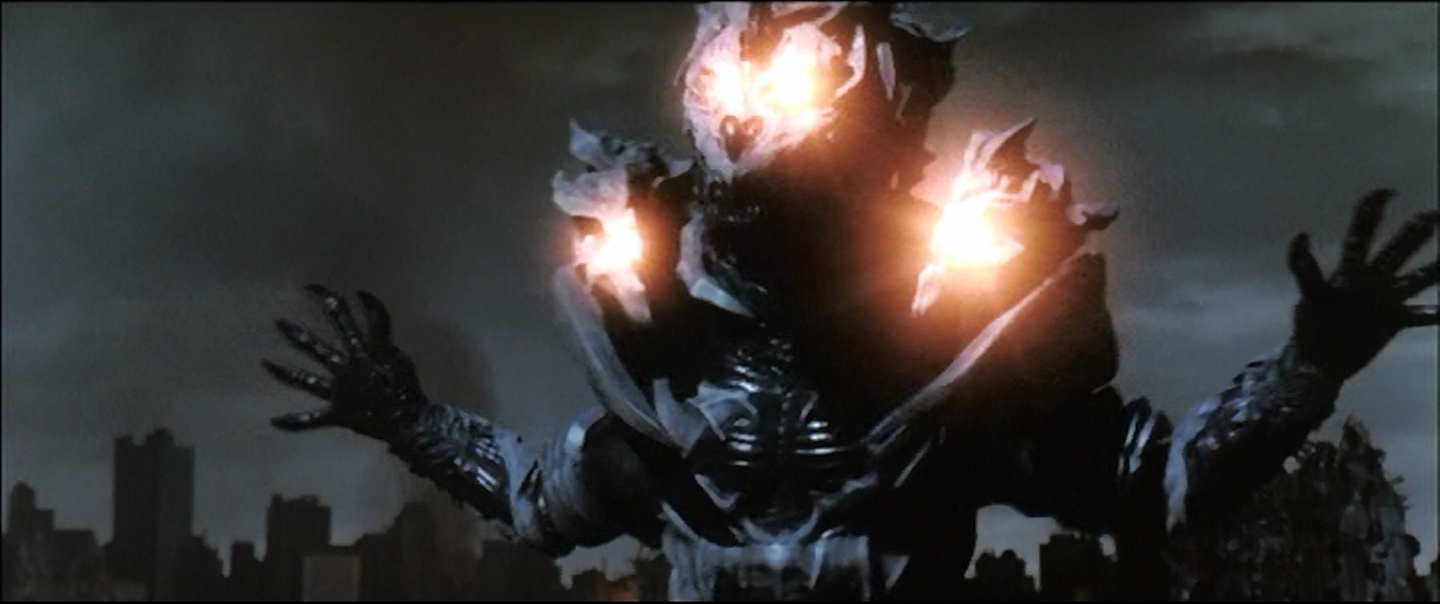
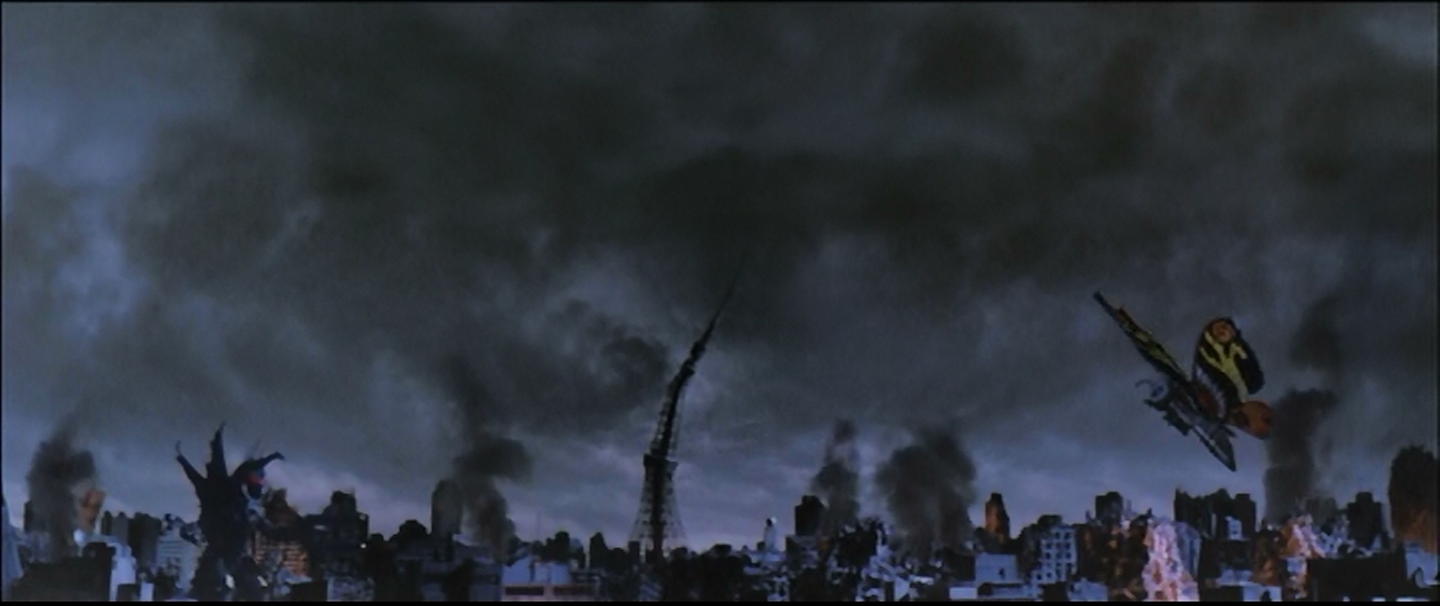
Monster X

Mothra and Gigan face off

Meanwhile, X monologues about Keisers, a mutation that happens to one in a million mutants, making them the most powerful creatures like ever. X is one, and so is our mutant protagonist. What a coincidence! Once awakened, he finds his inner Neo, stopping yellow bolts of light, burning with power, and declaiming about choice.
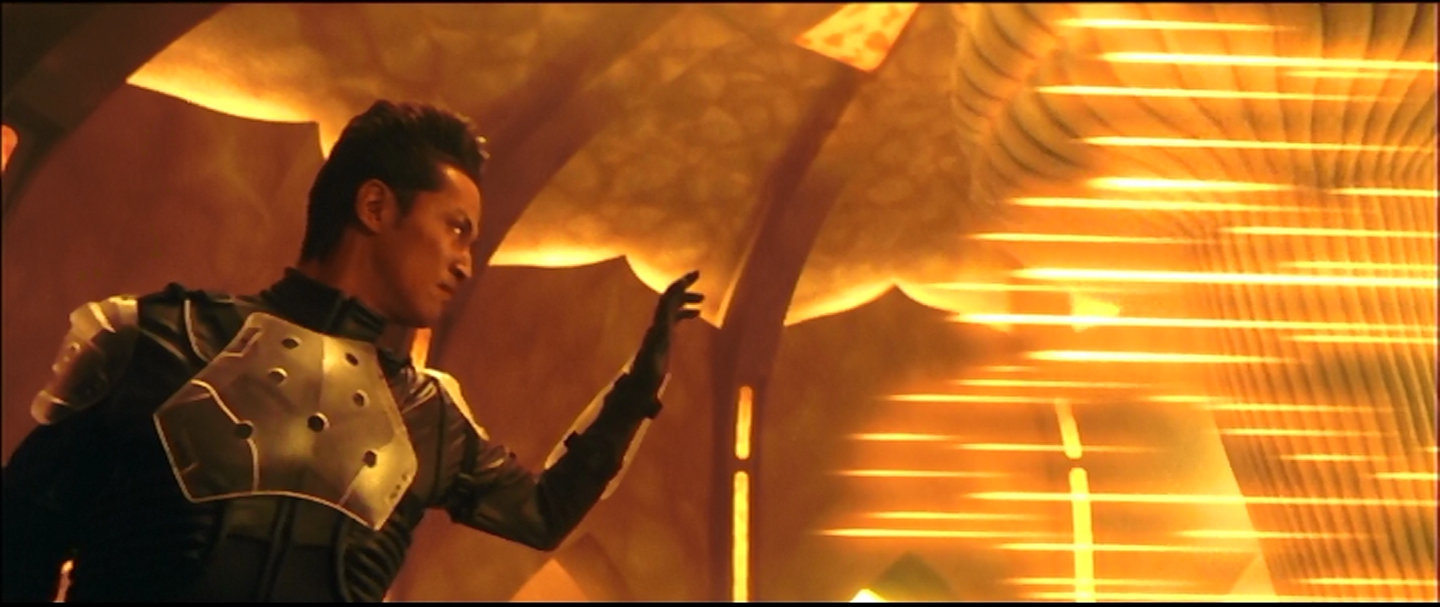
OK, a lower-grade Zilla

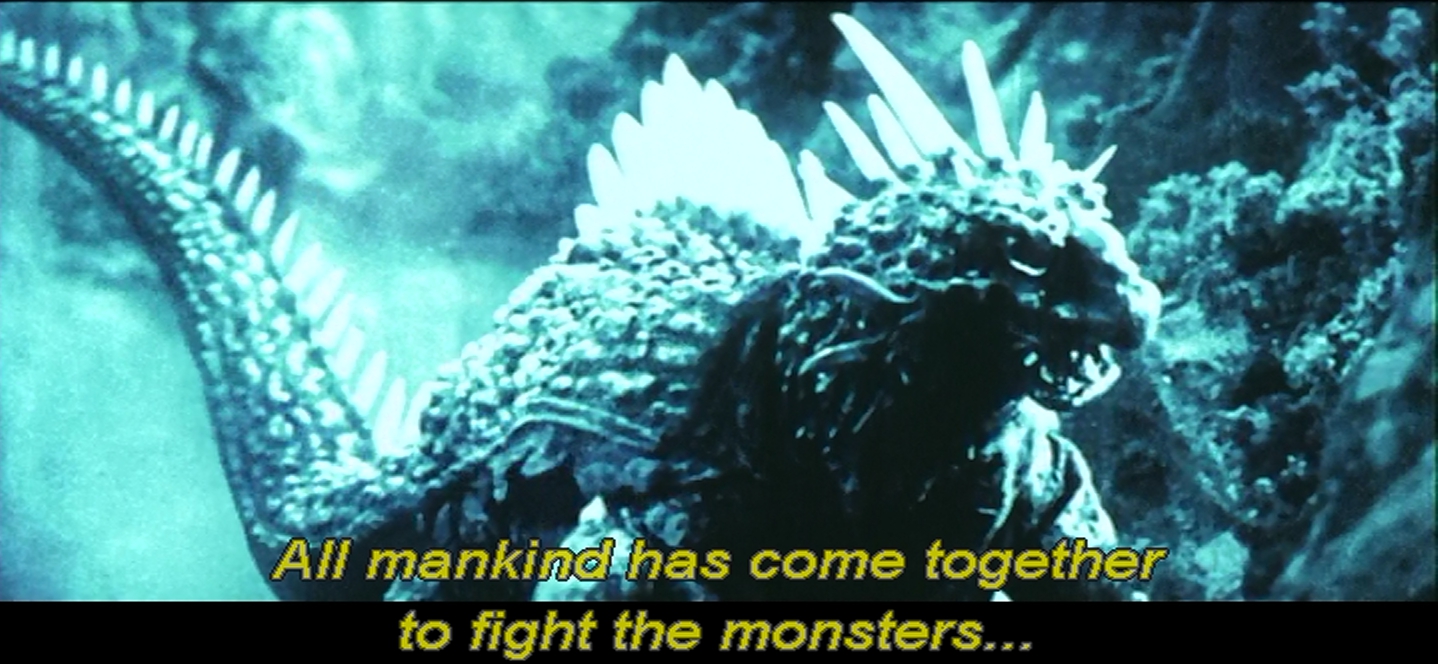
He defeats X, and this causes the alien ship to self-destruct. Monster X grows two new heads, and is revealed to be Keiser Ghidorah, with some very delicate blue among the golden scales. For the first time since the first Rebirth of Mothra Ghidorah has four feet. It no longer has any of the previous Ghidorah cries, and instead, some sort of strangled scream similar to Destroyah's. Other than that, the creature design is likely the best in the film.
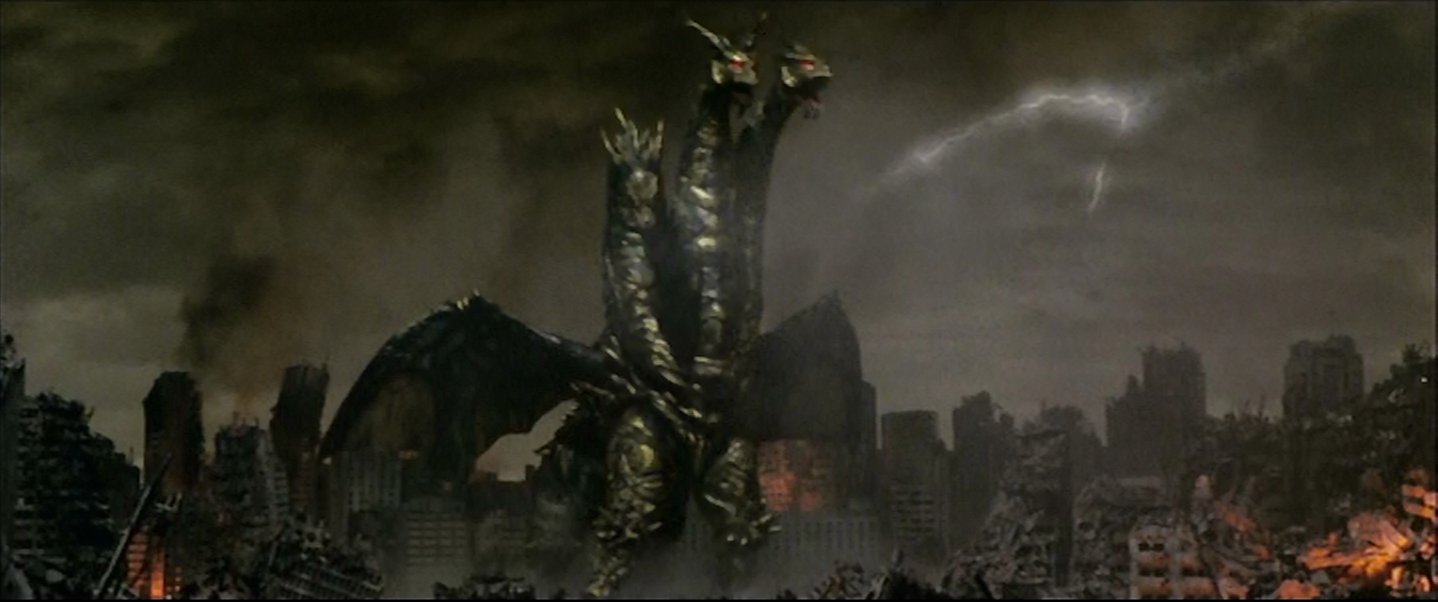
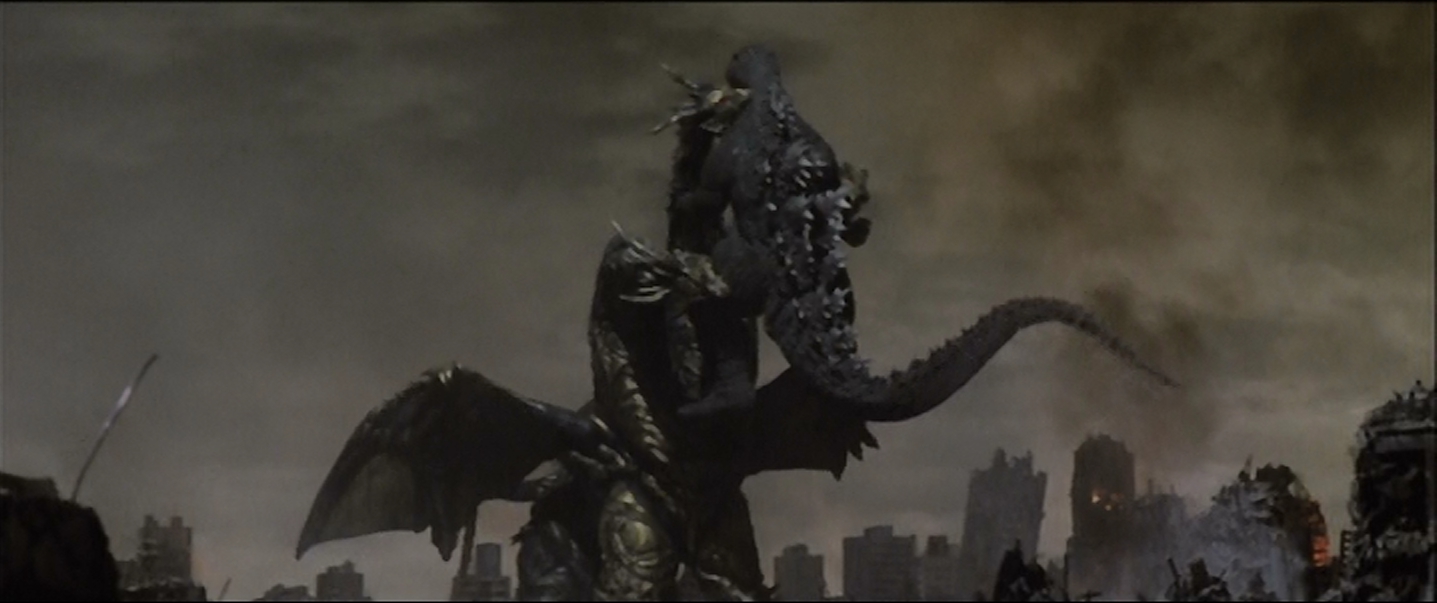
New Keiser Ghidorah

That's going to leave a mark

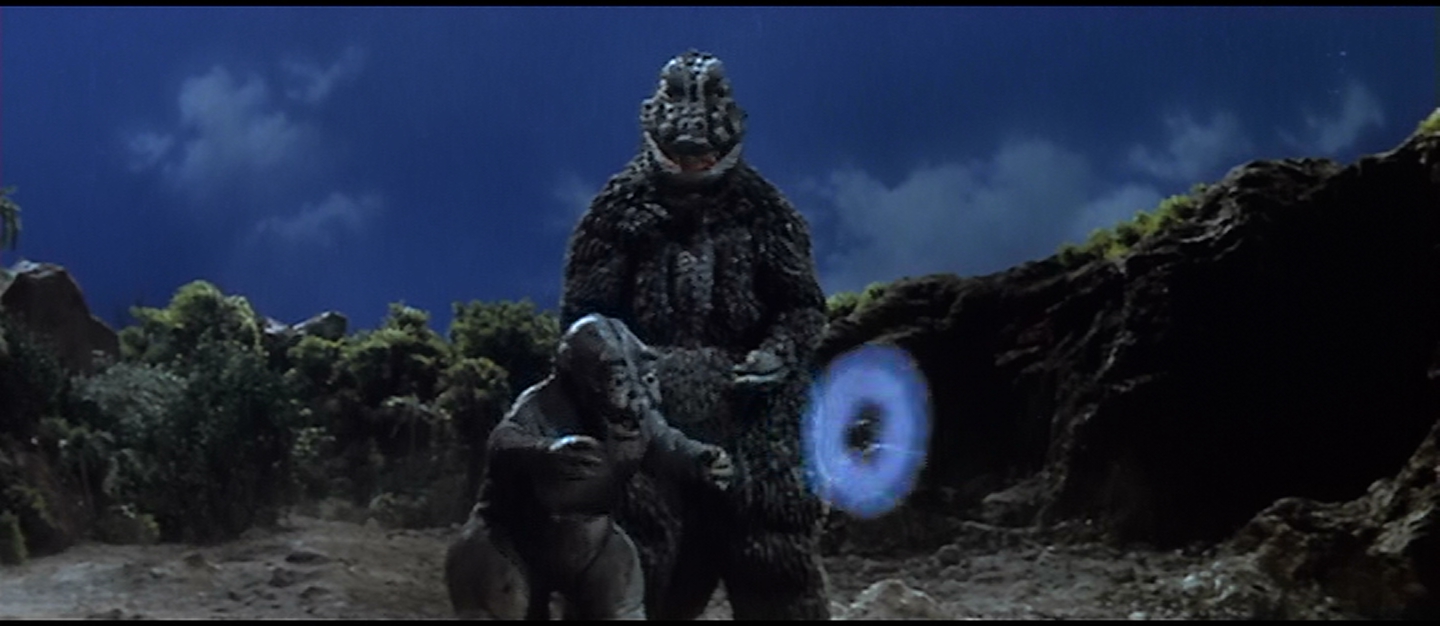
It is immensely powerful, stronger than its last form, and Godzilla isn't doing so well until out mutant buddy focusses his psychic energy through the Gotengo, Godzilla receiving it through his spines. With the extra power, Godzilla smashes Ghidorah. He is not a grateful victor, however, and immediately uses his atomic ray on Gotengo. The upcoming massacre is forestalled by Minilla's arrival. Only children can stop the cycle of violence. Godzilla walks away through the devastation that was Tokyo, his offspring following.
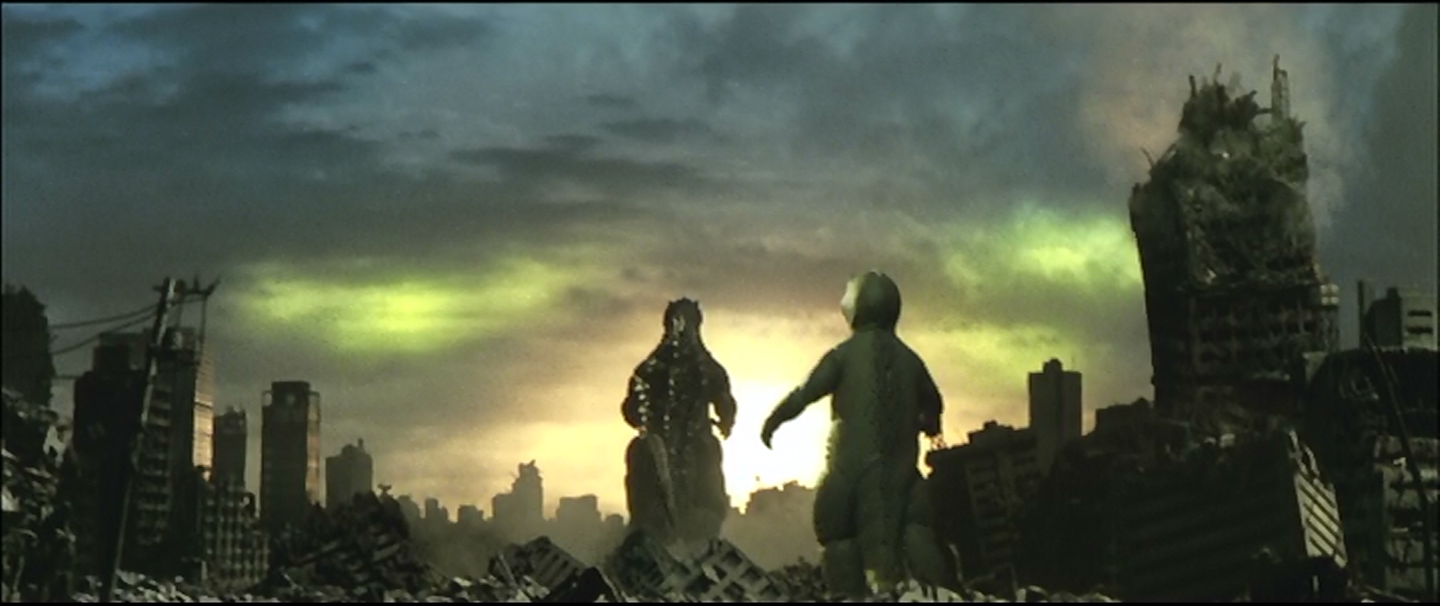
Well that was a thing that happened

The military is treated very differently from other Godzilla films. They are not incompetent, or lionized, but actually working against humanity. The Mutants who make up the Defence Force are actively working against mankind, and only those who choose to do so, mavericks and rogues, stand with humanity. The flying sub commanders who stabnd against the alien invasion are outlandish types, with dreadlocks, long blonde hair, or Captain Gordon.

Eschewing the traditional orchestral soundtrack, the rock sondtrack feels out of place and occasionally intrusive. It does not do the film any favors.

The experience of Godzilla Final Wars is something akin to watching Destroy All Monsters while watching The Matrix on the same screen. Gone is the traditional mystery story structure, in which the humans investigate and uncover and eventually solve the plot problem (in this case, an alien invasion). Instead, we have a group of superhumans who defend the Earth against the kaiju fighting. Drawing from a lot of anime, Kitamura manages to jam a lot of anime cliches into a number of overblown kaiju cliches and nods to previous films. The result feels like he jammed a bunch of movies in a blender, then reassembled it from whatever pieces he could salvage.
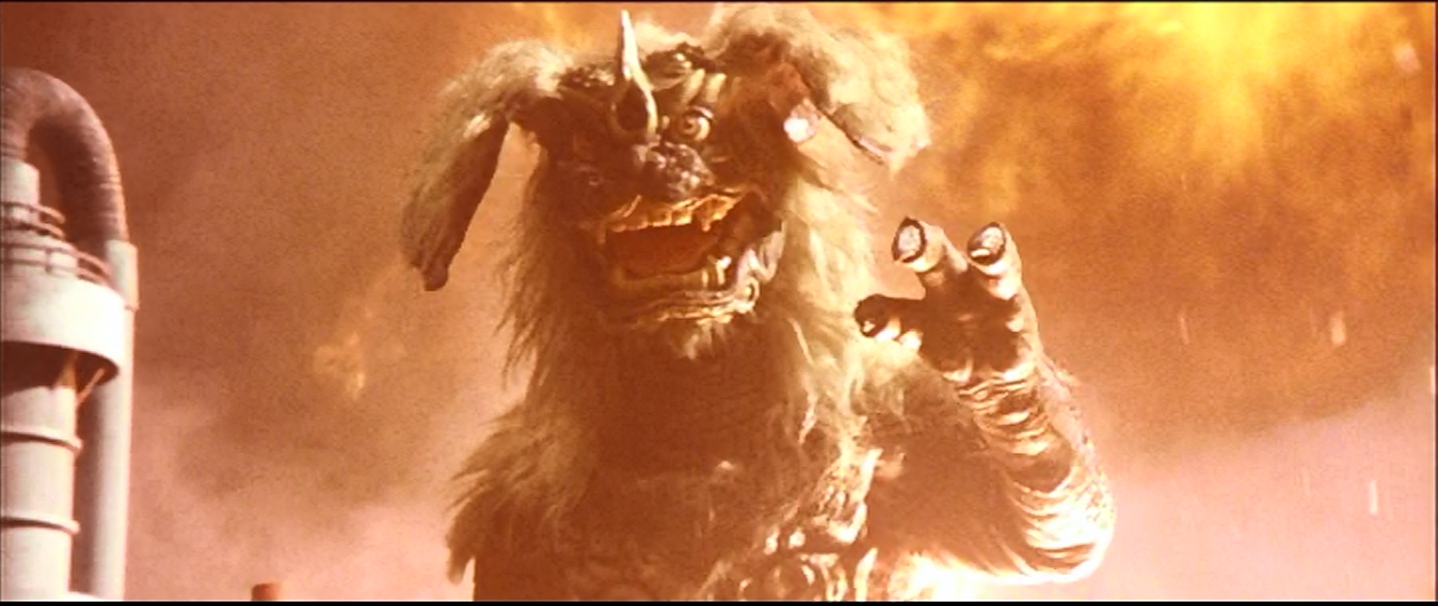
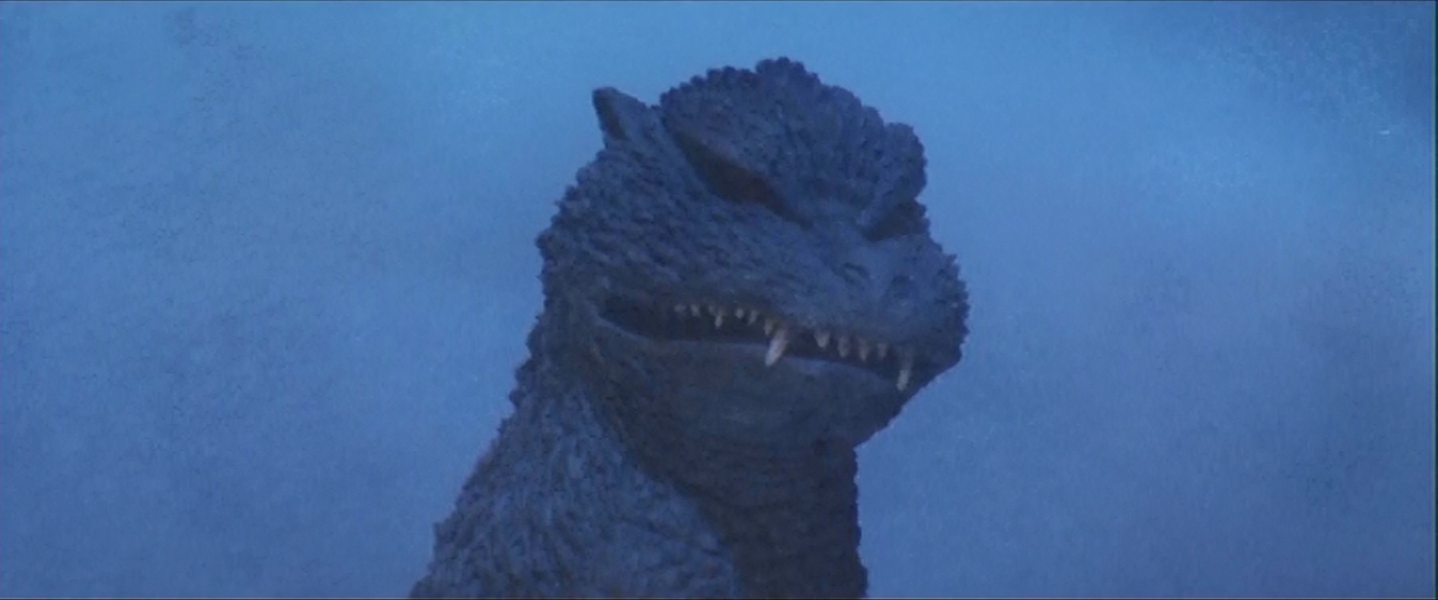
A good look at King Caesar

Next up, Peter Jackson's take on the Big Ape. All two hundred minutes of it.

Thursday, January 9, 2014

Imagine Monsters: All Monsters Attack

The irony of 1969's All Monsters Attack, renamed in the States as Godzilla's Revenge is that it's considered by many to be the worst Godzilla film made, yet it was directed by the revered Ishiro Honda. Immediately notable is the really annoying acid-rock style intro song. If nothing else indicates that recreational amphetamines had finally reached Japan, this song is it. Akira Ifukube did not contribute to this film, and his presence is sorely missed.

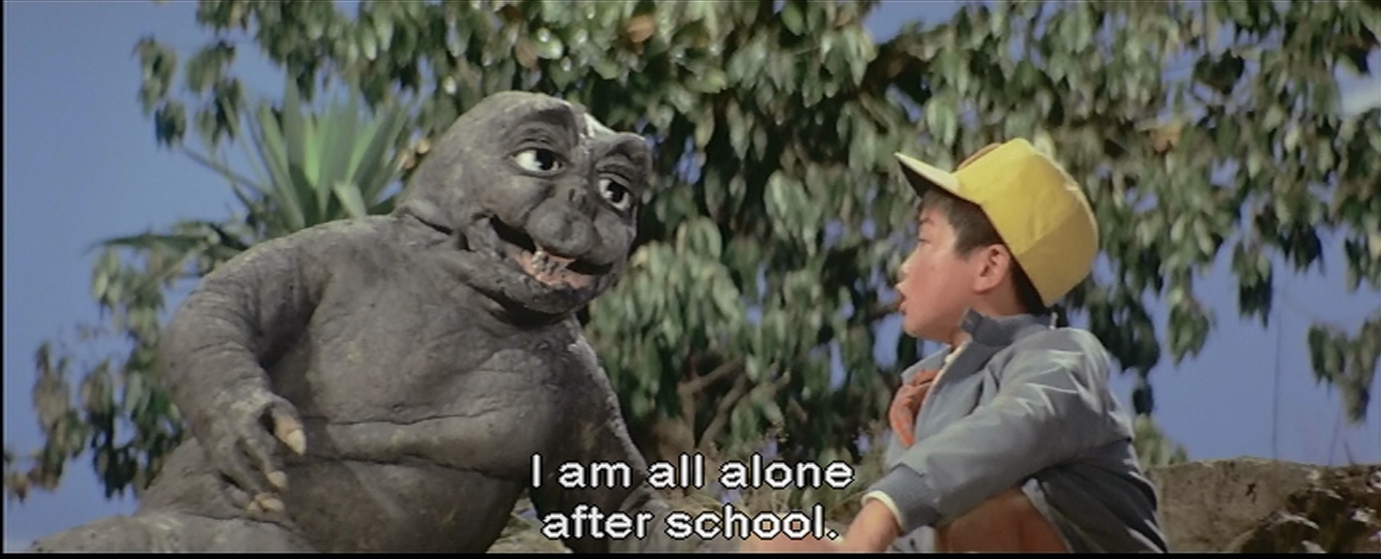
David Kalat is kinder to this film than I have been in previous viewings. He raises the excellent point that this is a kids' film which addresses, however inept this might appear to me in America nearly fifty years later, the plight of the latchkey kid, something that was a serious social concern in Japan when this film was made. Our child protagonist, Ichiro, wears the same shorts as do most kid protagonists of the era. The main difference is that Ichiro's parents aren't around because they work, which is made explicit with an early film encounter between Ichiro and his father, who tells his son that he has to work late, and that Ichiro should take care of the house until his mother comes home.

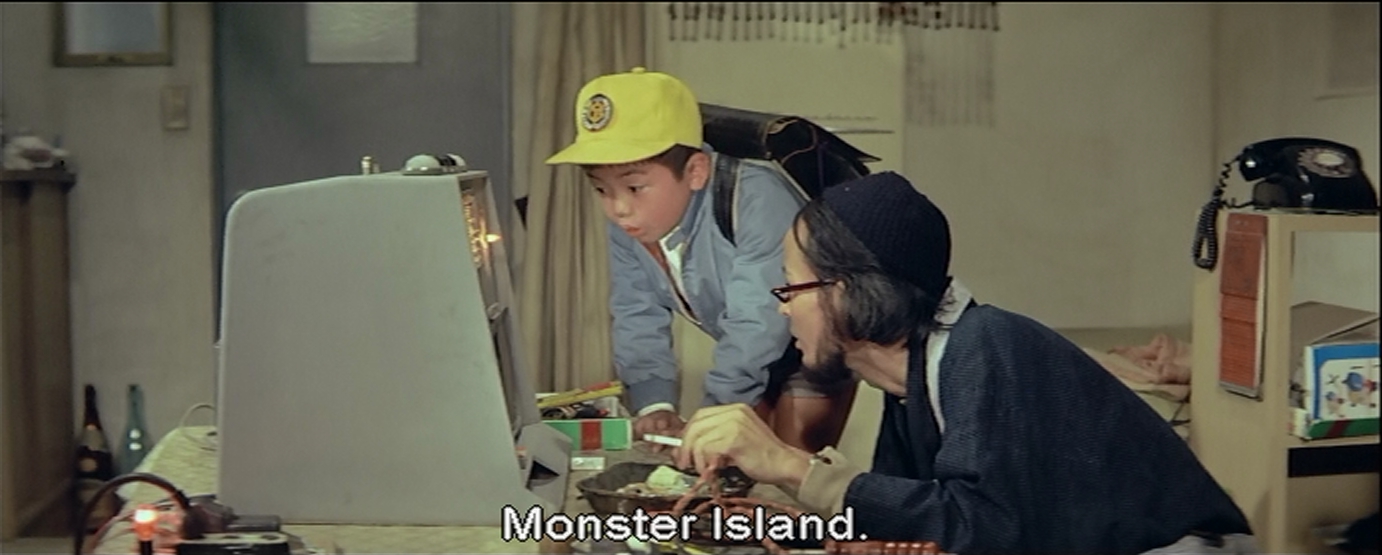
Ichiro is at odds with children his own age, they bully him, and he seems to have no resource to adults to protect him. The inventor who lives in Ichiro's building is more his speed. As an artist/scientist, Shinpei can relate to the imaginative Ichiro in a way that kids his age cannot. And Ichiro is polite to him. When his parents both cannot come home, Shinpei feeds Ichiro. But Ichiro won't touch the beef until he is assured his host can afford it. That's pretty polite.

Kids and computers? They'll never mix.

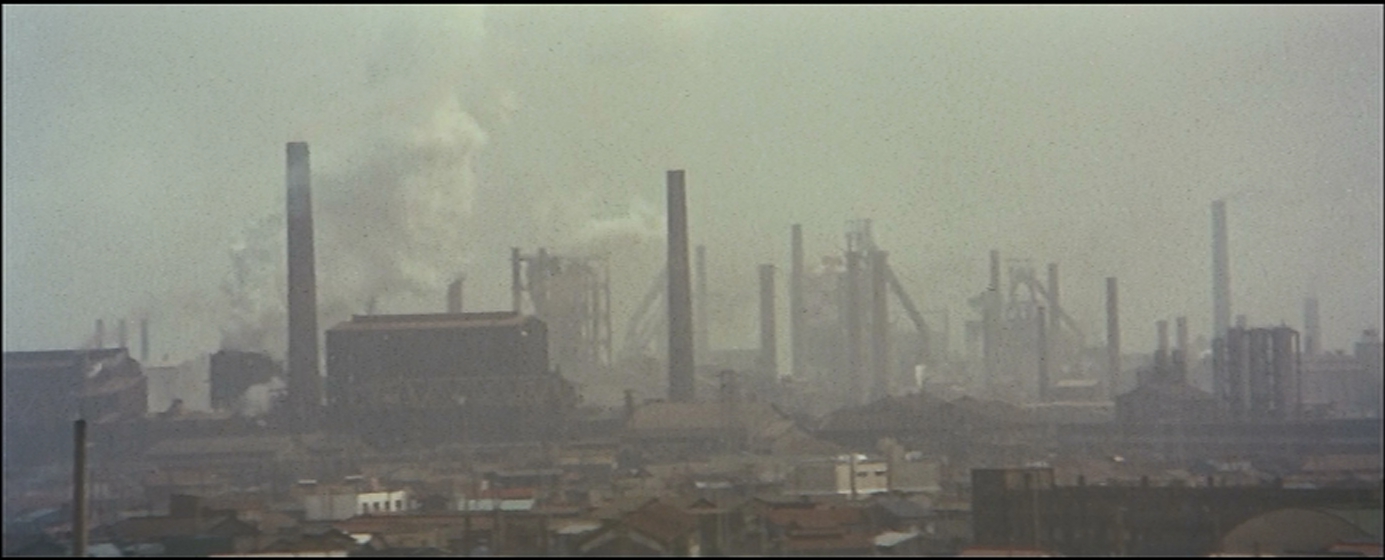
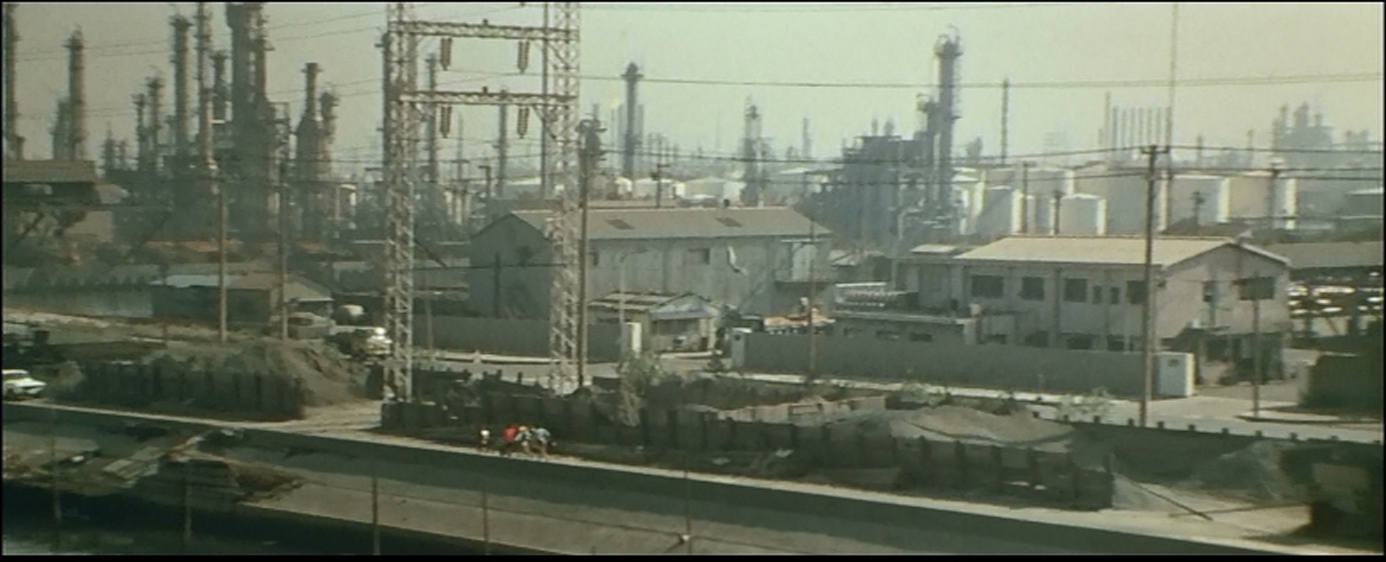
The film establishes itself in a busy, industrial landscape of rusting metal, brown smoke, rushing cars, and clouded, polluted skies. Honda's bleak urban landscape has a depressing start to a kids' film, but it emphasizes the richness of Ichiro's imaginative escape to the lush Monster Island.

As desolate an urban landscape as you please.

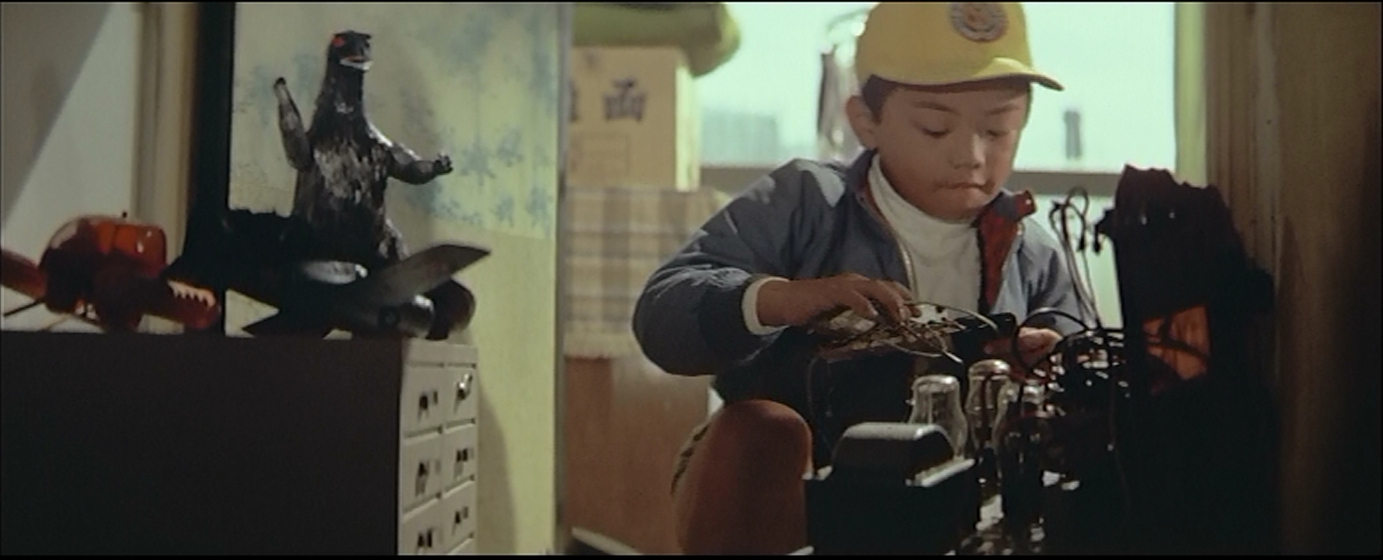
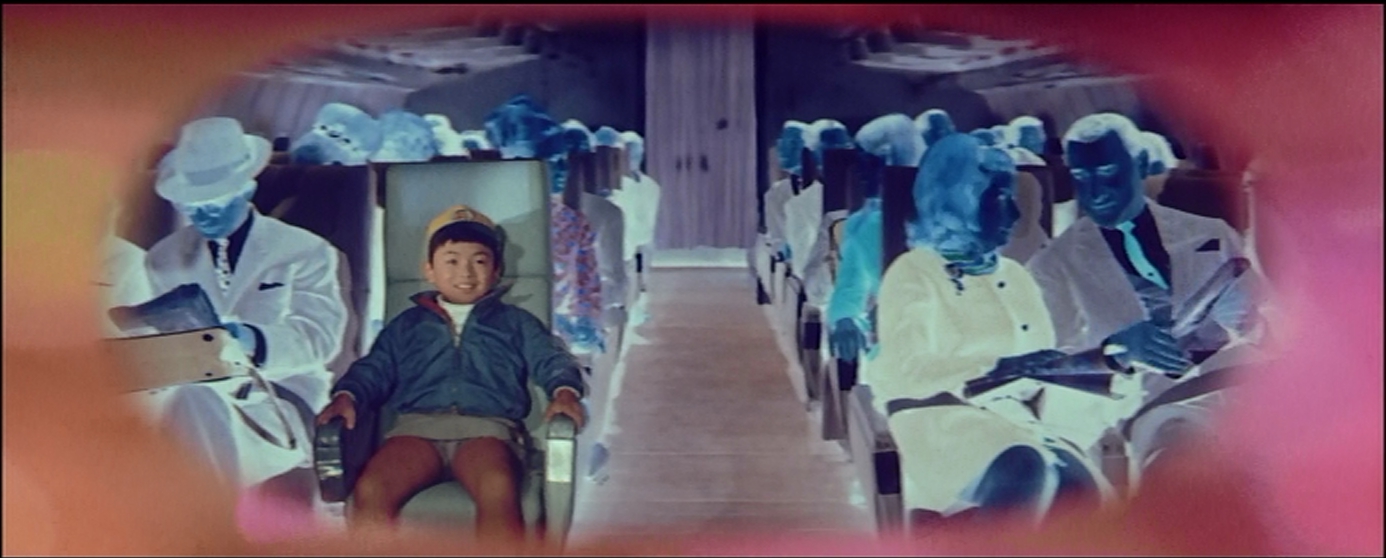
It's worth pointing out that the film's monster sequences are in Ichiro's imagination. He has a monster toy in his closet, and his initial flight to Monster Island is made with the assistance of a 'computer' with crayon-drawn dials. Once he is on the flgiht to Monster Island, he imagines the rest of the passengers away. This could also explain the repetition of monster fights from the previous films, Ichiro is replaying them in his mind. He begins to repeating the sequences he has seen, and then moves on to creating his own, with Godzilla taking on Gabara, the kaiju incarnation of Ichiro's bully, at the end of the film.

Ichiro, with his toy computer and monster.

And now, we get rid of the rest of the passengers.

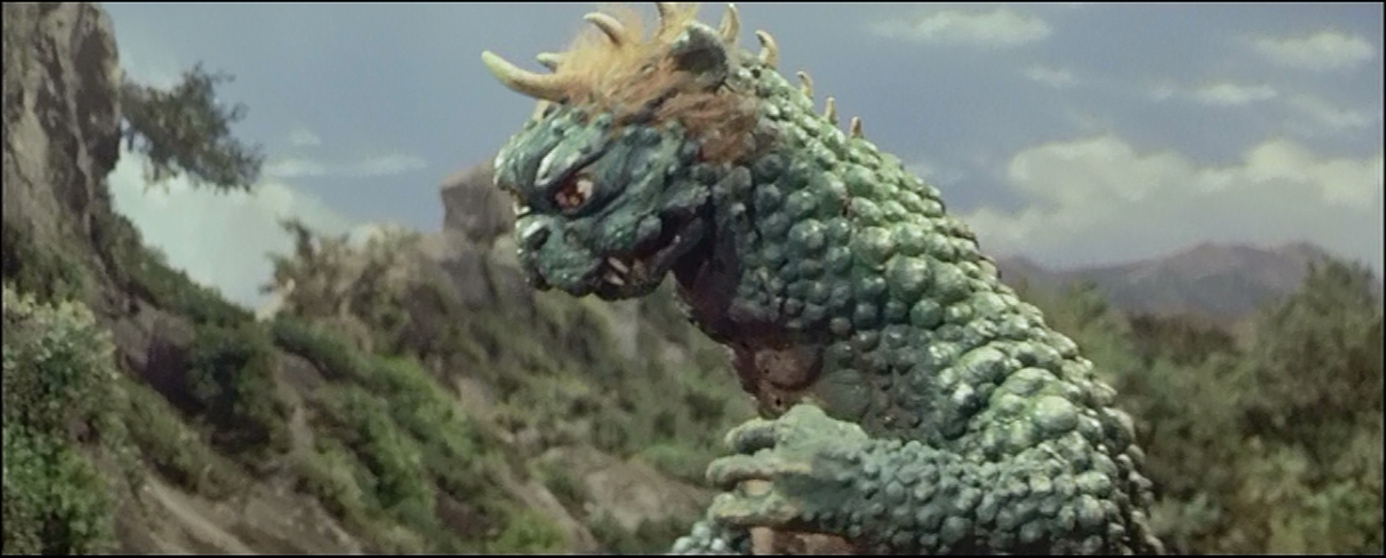
Gabara is sort of a standard monster. He's got some red hair, bumpy skin, no tail, and a mocking cry that sounds like nasty laughter. He's perfect for what he is--a monster invented to personify bullies. He has no berath or distance weapon. He can send what are apparently surges of electricity through his hands, giving him a killer grip. This is true to his metaphor--you run from a bully.

Gabara, the bully monster.

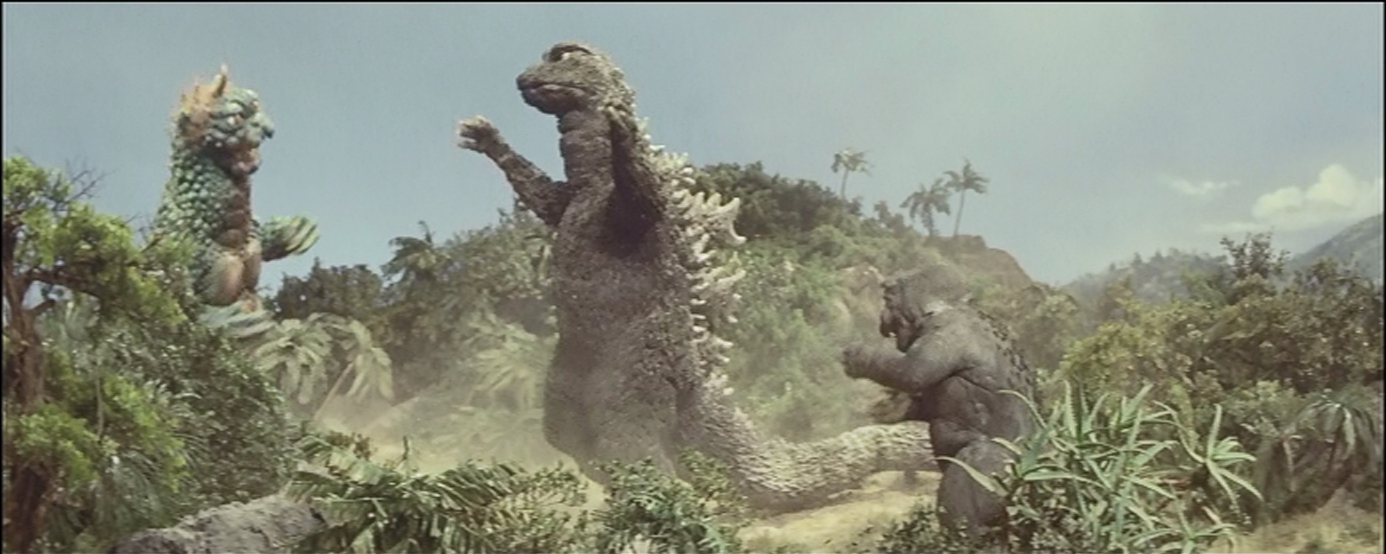
Godzilla, as father-figure to Minilla, forces him to fight Gabara, despite the bully-kaiju being twice his mass. Seeing that Minilla is overmatched, Godzilla steps in, and finally, Gabra gets the thrashing that we have all been waiting for. And while this is what we as the audience want, Godzilla in a fight we haven't seen yet, it undermines the film's message (which comes home when Ichiro tricks some bank robbers) of self-reliance.

A Godzilla film with as little Godzilla as possible.

This was a film aimed at children, and as I have said before, Godzilla films that aim at children as the audience tend to fail. All Monsters Attack was the first Godzilla film to sell less than two million tickets. While this was not intended to compete with the extraviganza that was Destroy All Monsters, the drop off is notable. The next film in the series, Godzilla vs Hedorah, controversial and strange as it is, sold a quarter of a million more tickets.

When your buddy is a doughy monster with terrible teeth, you may want to reconsider your imagination.

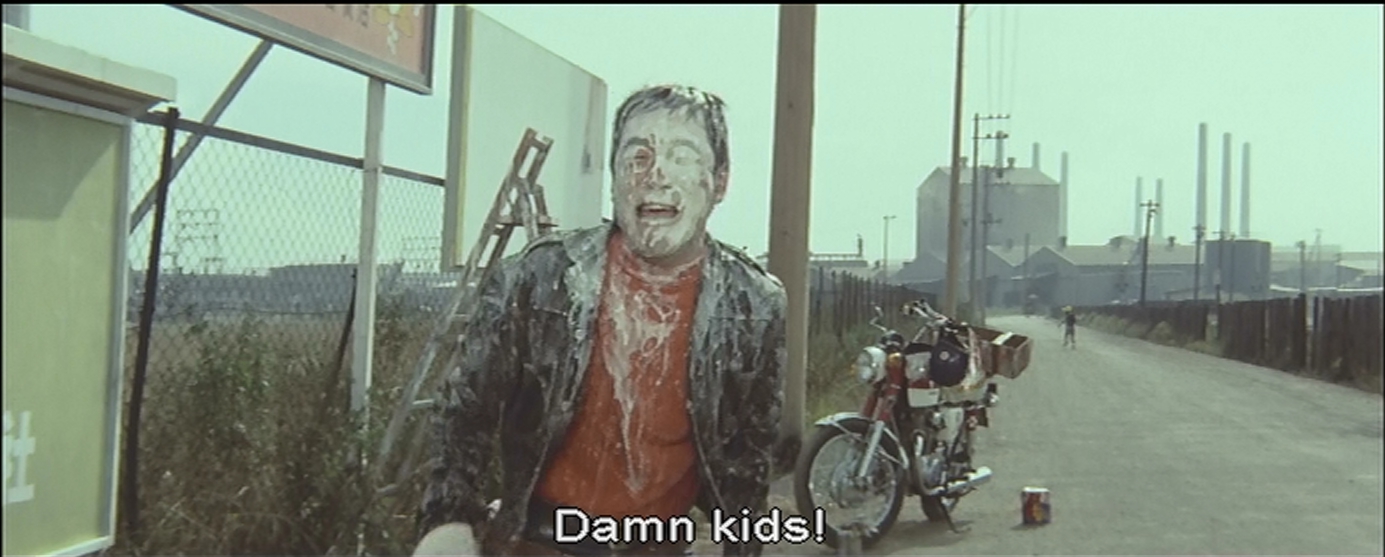
Having learned from his imaginary monster friends, Ichiro turns the end of the film into Home Alone, defeating the thieves we have heard about. He then spends some time with his mother, who swears she will never spend a late night at her job again. Ichiro stands up to his bully, then goes on an explosive tear, dong what the bully's gang dared him to do earlier. Is this the freedom of someone who has been oppressed getting a little clean fun in, or the start of a psychotic little crime spree as the oppressed turns into the oppressor? Has Ichiro joined the bully's gang? Taken it over? The film is silent, ending before telling us the answer.

Bukakke accomplished. Ho ho ho.

The final shot is the kids, all together, still in the polluted industrial landscape. The smaller problem has been solved, but the society and conditions that created the problem still exist.

Well, there's a happy ending and no doubt!

All Monsters Attack is unsatisfactory for most Godzilla fans for two reasons. One, Godzilla isn't the focus of the story. It's really a story about Ichiro and how his imaginary friends, who could have been anyone, help him with his bully problem. And that probably would have been forgivable if the new Godzilla sequences had been longer, or more compelling. But the low budget is once again in evidence, and the fight is less than satisfying. I'm more forgiving of the film because I think I can see what the film was trying to say, but it's not a film I'm going to pull out for sheer enjoyment value.

Next week, Giant Turtle vs Knifehead.

Thursday, December 26, 2013

WHAM! POW! BASH! DESTROY ALL MONSTERS

Despite the massive number of kaiju films released in 1967, most of them aren't particularly memorable. Many were new entrants into the field by studios that had never endeavored to make a giant monster film before. Even Toho's franchise was running out of steam, with the disappointing performance of Son of Godzilla, as well as the flooded market. Godzilla just wasn't as special as he had been. To celebrate the 15th anniversary of the Godzilla franchise in 1968, Toho decided to get the band back together.

And with immaculate timing, my DVD player has decided it no longer likes my copy. Pictures will come later, sadly.

Destroy all Monsters is the last film with the five original artists from Godzilla; Ishiro Honda, Eiji Tsuburaya (although only in an honorary fashion, he was very ill as this time), Tomoyuki Tanaka as producer, Haruo Nakajima in the suit, and Akira Ifukube writing the music. Some call this the end of an era, but to my mind, it's a Hercluean effort before economic and social forces turned the kaiju film into a cheap and poorly thought-out spectacle.

The year is 1999, and as in several previous films, Japan (or, really UNSC) has a space program. They have also managed to confine all the monsters to a location, Monster Land. The space program trope fades a bit after the excitement of the space race cooled off, but the Monster Island idea is one that stuck with the franchise until the end of the Shōwa era. Moonlight SY-3 is a stylish, almost art deco spacecraft, combining attributes of a high-tech jet as well as a rocket.

Ogasawara Island, called Monster Land, is the culmination of several ideas previous films, such as Mothra vs Godzilla and Ebirah, Horror of the Deep. Although the monsters are not under human control, they are at least confined. If Godzilla and the other monsters are still seen as a metaphor for nuclear testing, this may coincide with the rise of nuclear power in Japan, with the Mihama Nuclear Power Plant beginning construction outside Tokyo in February of 1967. On the other hand, this is the ultimate expression of Dr. Serizawa's desire to study the monsters. Now that they are controlled, they can be understood.

The Kilaaks, the alien antagonists, can control the monsters. Japan can never do so, merely containing the monsters, but alien invaders and terrorist corporations such as the Red Bamboo seek to control the giant monsters for their own ends. Ghidorah is, again, the puppet of an alien intelligence just as he was for the Xiliens and the Futurans. They are all female, all Japanese-looking (despite the more international bent of the film) but this is a disguise. They really look like slugs, and are made of 'living metal.' It turns out that they can control humans just as easily as they can monsters. This creates a paranoia in the film similar to the 1956 film Invasion of the Body Snatchers. Anyone could be a Kilaak agent (until they discover the transmitters which allow the Kilaaks to control humans and monsters).

Strangely, Mothra has shed her unique status as protector of Infant Island, and has been confined in the same way that the other monsters have. Also gone from this film are her twins, the Shobijin, Mothra's interface with humanity. She's just another destructive monster. She's also back in larval form. It's possible (pardon me while I fan-theory) that this is the other larva that hatched in Godzilla vs Mothra and didn't become the Mothra we saw in Ebirah, Horror of the Deep, which I assume is the peacemaker from Ghidorah, the Three-Headed Monster.

The film is very much a retread of the tropes and ideas from Ghidorah. Alien invaders, all the monsters ultimately ganging up against Ghidorah, Godzilla pulling a turn from implacable enemy to unstoppable hero. But where Ghidorah has three monsters attacking the three-headed monster, some seven attack him here. More spectacular, sure, but not as challenging a fight. But more than any previous film, Destroy All Monsters takes a look at the international problem of monsters. Rodan attacks Moscow. Gorasaursus, unseen since King Kong Escapes stands in for Baragon, who was on loan to Tsubaraya's Ultraman. Which is why it is misidentified, as well as shows some rather unlikely tunneling abilities. We are told that Mothra attacks Beijing, and that Manda attacks London, but we don't see these. We do see Godzilla show up in New York harbor and blast the United Nations building with his radioactive breath. 1998 Godzilla is not the first time the big guy took a bite out of the Big Apple.

In the middle of the film (XXX minutes), we have a beautiful miniature of 1999 Tokyo. Small card move along her streets, an elevated train trundles along tracks. The set is large and took a lot of attention to detail. Ironic, really that the construction boom made Tokyo so much more impressive thirty years later. The destruction of Tokyo by Godzilla, Rodan, Manda, and Mothra is beautiful in its mayhem.

For the first time since Godzilla Raids Again, the camera pans over the charred and ruined city. This was one of the most effective shots of the original Godzilla film, and it's a reminder that these films aren't completely fun and games. But it's brief, and the devastation isn't as total as it was in 1954.

Part of the bigger budget for this film shows in the miniatures. The military vehicles are a bit more fanciful, including tanks with missiles on their turrets and strange-looking radar antennae. It's as ineffective as the military always is, but it's a pleasure to see some fantasy deigns come from Tsubaraya's studio. There is also the implication, and a prescient one, that the tanks are drones.

The last battle happens, again like Ghidorah, in front of Mount Fuji, where the Kilaak base is. This is our only glimpse of Baragon in the fight, mostly through a thicket. We get a better shot of him in the farewell section, however. But you have to wonder what the Kilaaks were thinking when they deployed Ghidorah. Godzilla, Rodan, and Mothra got rid of him last time, now Gorosaurus, Anguirus, Manda, Baragon, Varan and Kumonga (I'm not counting Minilla as a threat) are added to the team. It makes for a more impressive fight, but the outcome is pretty inevitable. Godzilla and Anguirus do most of the heavy lifting (the footage of Ghidorah flying with Anguirus firmly attached to one of its necks will be repeated a few times in later films) in the fight.

Once the fight is over, the Kilaaks deploy their Fire Dragon, a flying saucer burning with energy. Even though Godzilla puts an enormous foot through the Kilaak base, the Fire Dragon keeps coming. Ghidorah's inert body falls into the earth, similar to the way Frankenstein and Baragon ended. Only with more explosions, but it's up to the humans to solve the last problem. Which they do with Moonlight SY-3. This represents a major shift in attitude from Toho's previous films. Honda, who experienced WWII, had never allowed the military solution to be anything but show before this. And, although the conclusion is rooted in science fiction, Moonlight SY-3 fires missiles, causing the saucer to go down. The humans have taken the lead, controlling the monsters, no longer the ir helpless victims.

Destroy All Monsters was intended as a finale to the series, the end of monster films. However, it was so successful (admittedly selling only a hundred thousand tickets more than Son of Godzilla), but in a period of sharply declining attendance, this was seen as a major coup. And so the series continued, albeit with declining budgets.

Next up, Boy Scouts in trouble, and loaded with stock footage.

Thursday, November 14, 2013

In Gamera's Footsteps: Son of Godzilla

In Kaiju-fancying circles, 1966 and 1967 are referred to as the year of monther explosion. And with good reason. Six monster films were released in 1967, four from Japan, including two from companies that had never released a monster film previously, and two from Korea. While the quality of the results was mixed, to say the least, the Japanese movie-goer was spoiled for choice.

With Godzilla films on the wane, (sales plumetted nearly a million tickets between Ghidorah the Three-Dead Monster and Ebirah, Horror of the Deep) Toho decided to court the very same audience that the Gamera franchise was aimed toward: children. And what better way to target kids than to give Godzilla a son of his own? Ultimately, the strategy didn't work. If Toho thought the previous drop, a million ticket decline in two films was bad, Son of Godzilla sold a million less tickets than Ebirah.

In what could not possibly happen in an American film, we have a group of scientists conducting a secret experiment in order to better the world. Their aim is to make dry lands habitable, and at the same time realize that the technology could be abused by irresponsible or evil people. This is very different from the American view of scientists, whoch begins on a platform of mistrust. Even films or TV series that ostensibly favor brilliant scientists, such as Euraka, often show sceince as an inconsistent ally at best, and a barely-understood menace at worst. The Godzilla franchise, and Japan in general, has a more ambivalent view towards science and scientists. Even though the initial experiment goes rather awry, the island scientists continue their work.

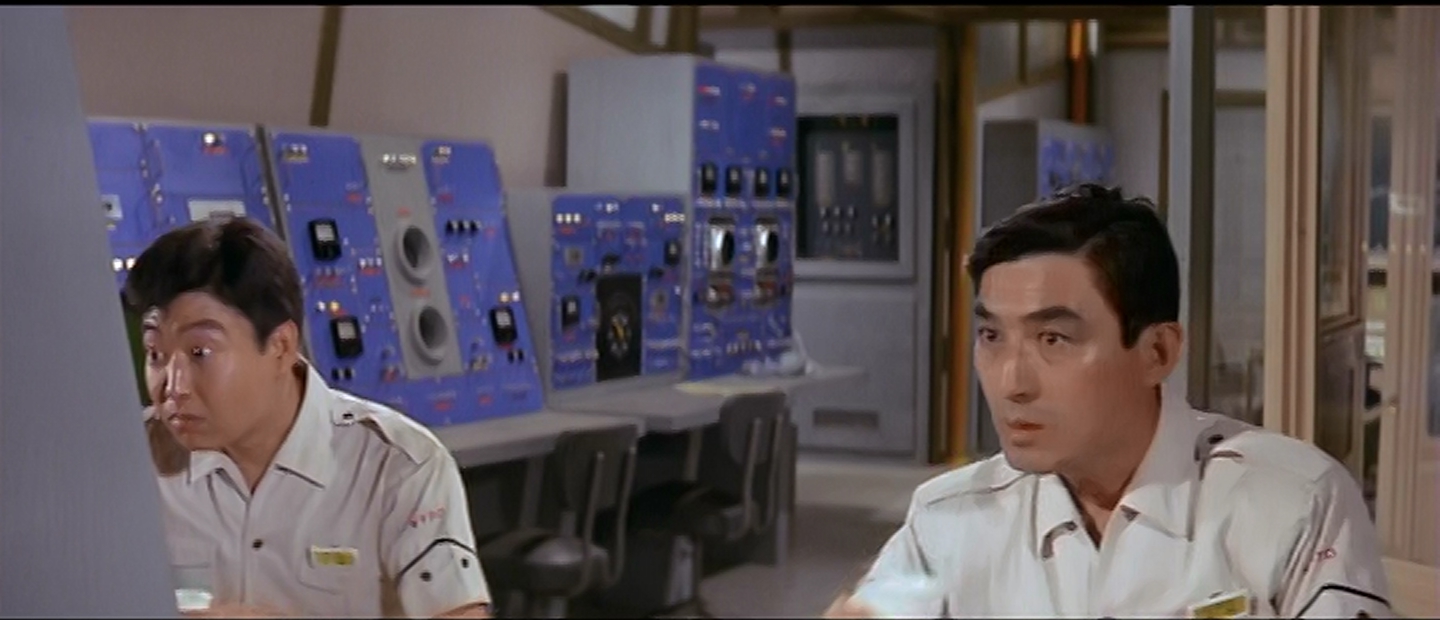
So we're working on Monster Island... anything strange on the scopes?

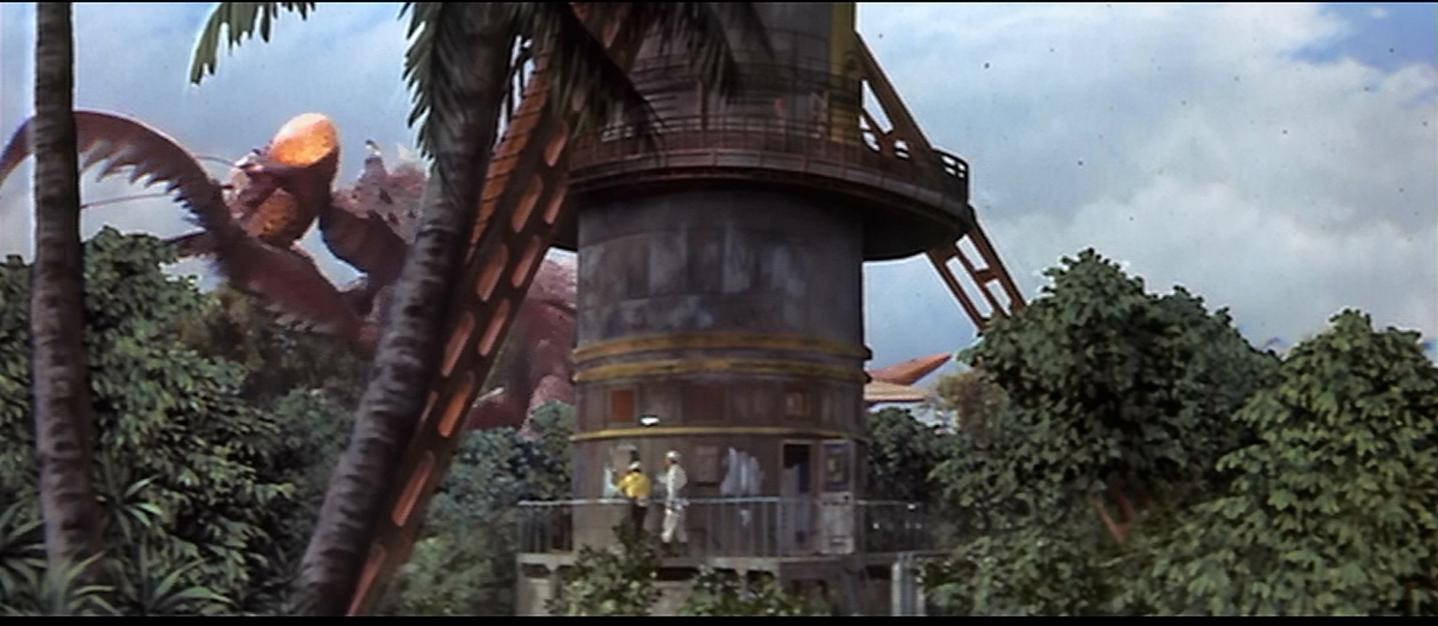
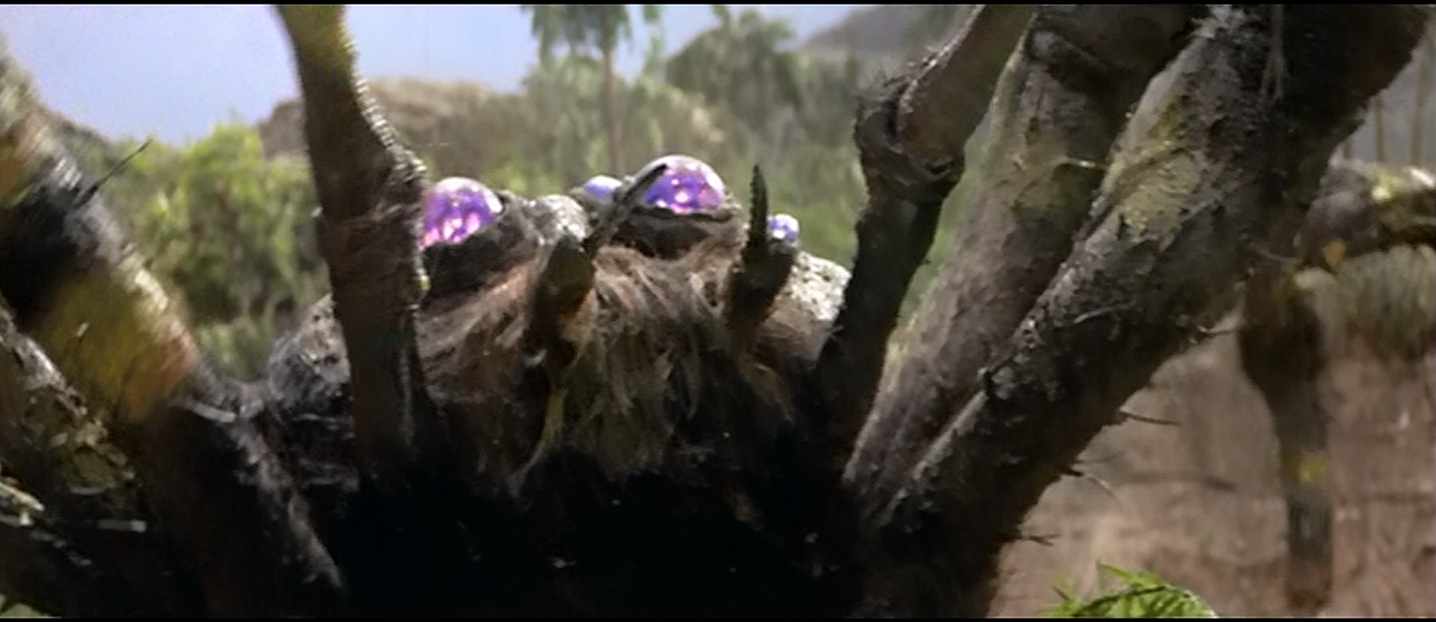
The monster work is fairly unique. Eiji Tsubaraya only 'oversaw' the effects in Son of Godzilla, with Sadamasa Arikawa doing the daily work of putting the monsters on screen. And the results, overall, are good. The island mantises, Kamacuras, are large, menacing marionettes, an interesting change from the usual guy in a suit monsters. Kumonga, a giant spider, is also a marionette, and looks excellent.

We need a can of RAID the size of the Empire State Building!

Don't look a gift spider in the mouth.

The same cannot be said for Godzilla Junior, Minilla.

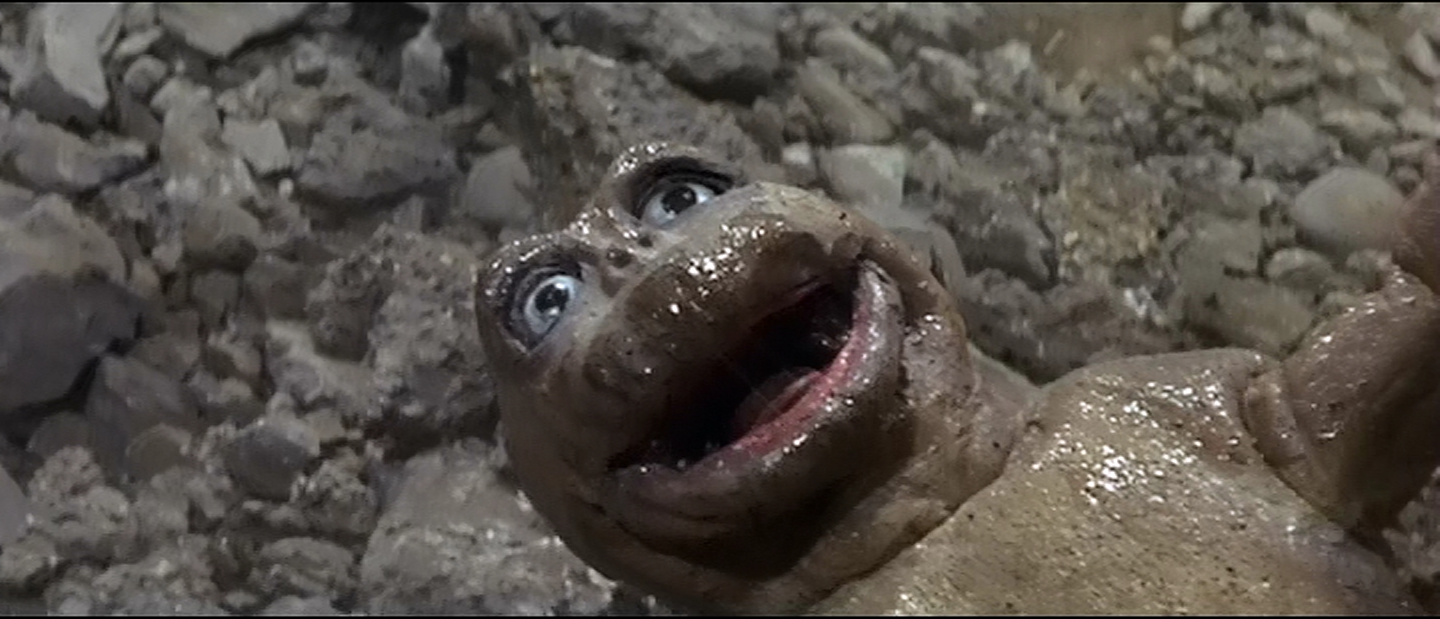
I'M SO CUTE! LOVE ME

The creation of a junior Godzilla is problematic at best. Although this film brought in much less than the previous film, and the more adult-oriented extravaganza Destroy All Monsters at least didn't lose ground, Toho continued their disastrous course of making Godzilla films that were more and more aimed toward children. The same continued to be true into the Milenneum series. The adult-oriented Godzilla, Mothra and King Ghidorah: Giant Monsters All-Out Attack grossed close to twenty million dollars, doubling the take from Godzilla vs Megaguirus, and bringing in four million more than the the next film, Godzilla vs Mechagodzilla. But Toho refuses to see the film as anything more the kids fare, to the detriment of the films, and to their own financial loss.

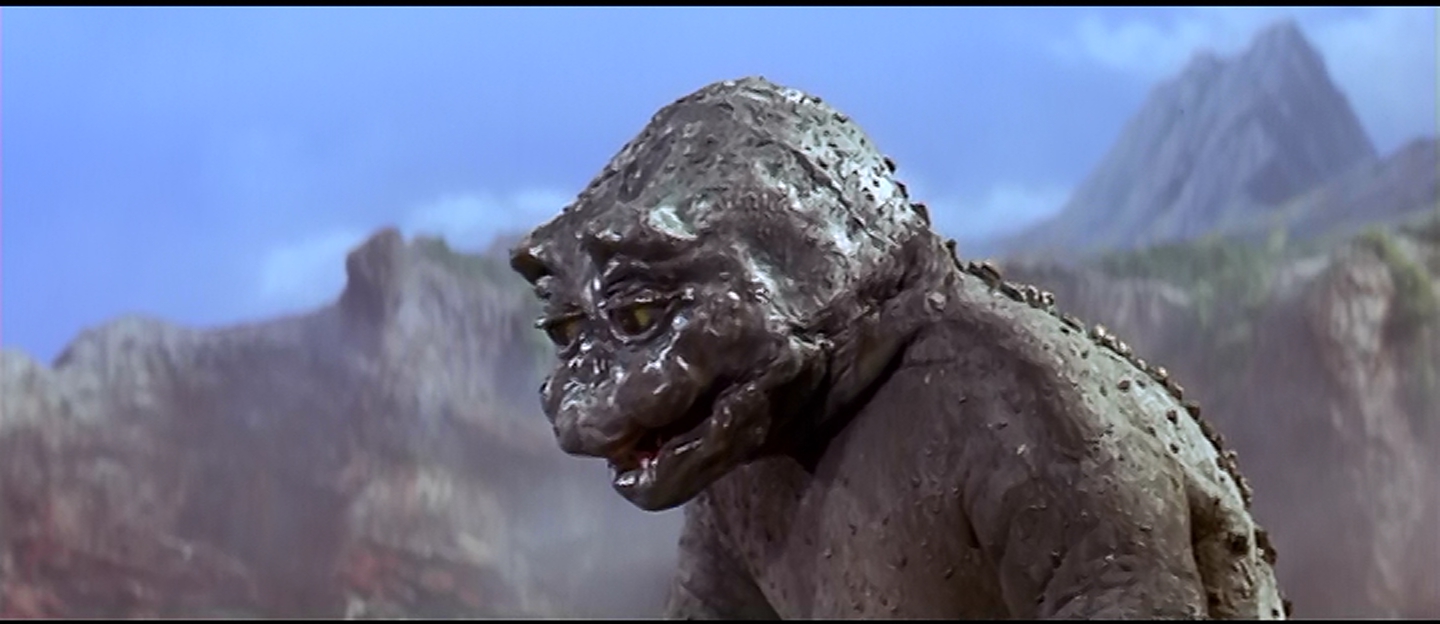
Minilla is an amalgamation of everything cute that the writer and director could think of. It coos like a baby, wags its tail like a dog, chases its parent's tail like a cat, has tantrums when it doesn't get its way. Minilla is everything that adults think kids want, and the result is overpoweringly saccarine in a film franchise that began as a metaphor for nuclear testing.

I'M SO CUTE! LOVE ME

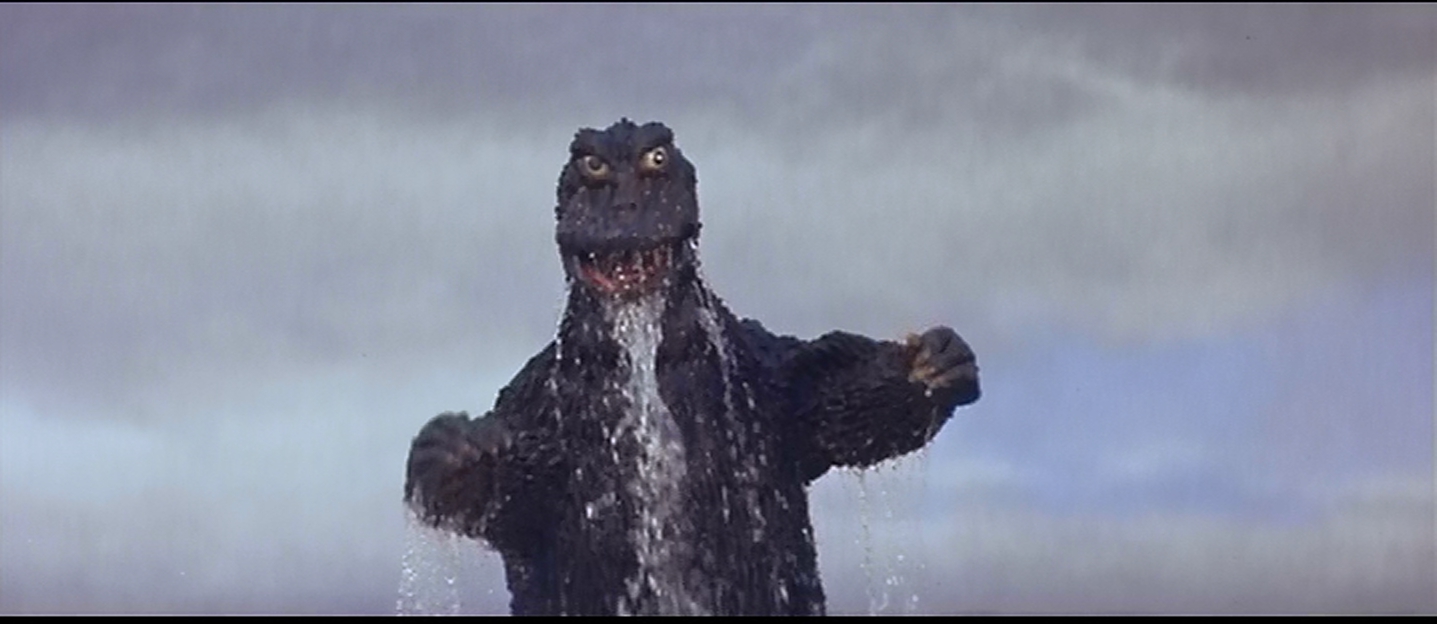
Godzilla doesn't look quite right, either. To make him look less threatening, he's got large eyes and a narrow head. The head of Haruo Nakajima looks like a goiter in Godzilla's throat.

Man, this erupting from the water thing is starting to hurt my back.

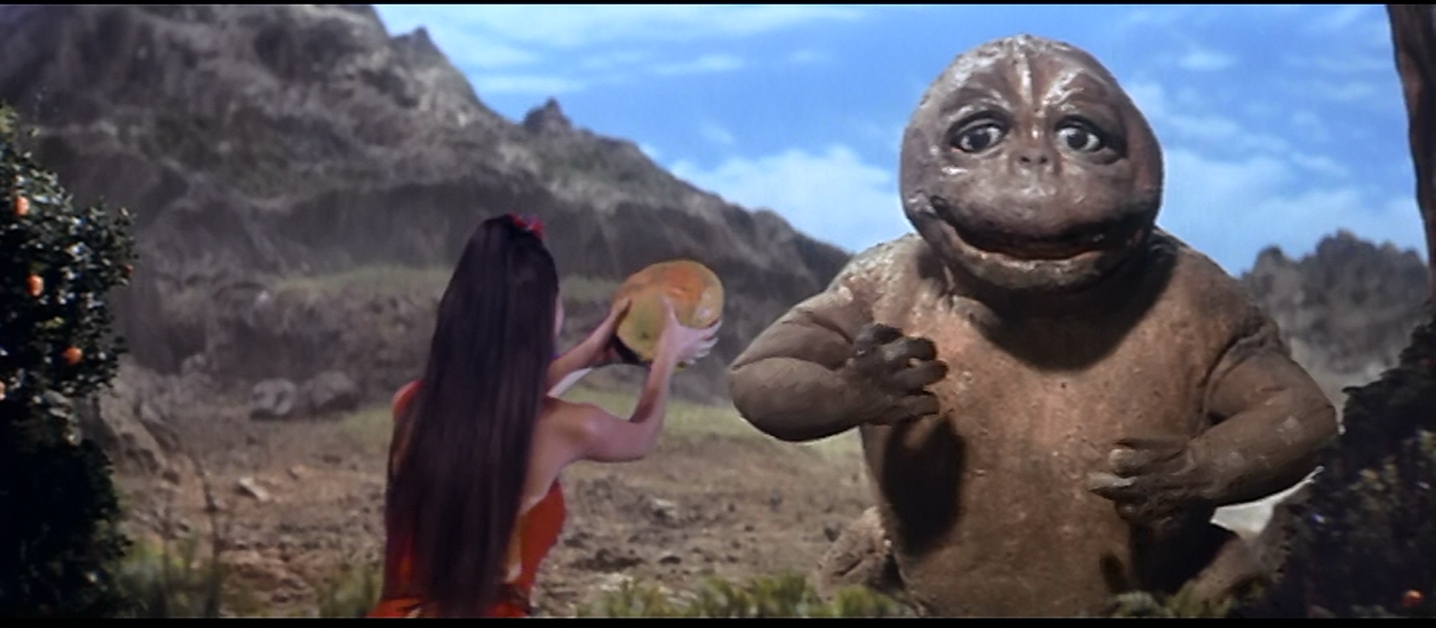
Several of Jun Fukuda's favorite tropes return here. As with Ebirah, this island has a competent, wild jungle woman as a love interest. She has some control over Minilla, as the Red Bamboo had over Ebirah. Monster-control would be more fully developed in Ishiro Honda's Destroy all Monsters. Once again, a gigantic monster is buried on an island, although this time, it's Kumonga, rather than Godzilla.

We'll have the sexy, wild woman feed fruit to Godzilla's son.  YEAH, GENIUS!

And the monster action, when there is action, is pretty good. Godzilla lays the atomic smackdown on the Kamacuras and the Kumonga. However, there are long period in which he interacts with Minilla, acting as a father figure. How did the gigantic avatar of destruction come to be a father standing over his son?

Nuclear metaphor or stern dad.

Son of Godzilla is close to the worst of the Godzilla franchise. The human action is inane, the monster action, although there is a lot of it, is generally ruined by Minilla mugging, cowering, and making "adorable" noises. Next week, Gamera hits just about the same note.