Showing posts with label Willis O'Brien. Show all posts

Thursday, September 5, 2013

Monster From Another Franchise: Frankenstein vs Baragon

Toho wasn't the only company making monster films in the sixties. England's Hammer films were successfully mining the classic Dracula, Frankenstein, mummy and werewolf franchises. Following on the classic Universal franchise, Hammer released The Curse of Frankenstein in 1957, Revenge of Franksenstein in 1958, and The Evil of Frankenstein in 1964. Toho, never one to let a good idea slip away, produced its own Frankenstein film in 1965. They hedged their bets by making it gigantic, and threw in a new monster of their own invention. True to the film versions that have gone before, this is the unspeaking creature, not the literate and eloquent creature from Shelley's book.

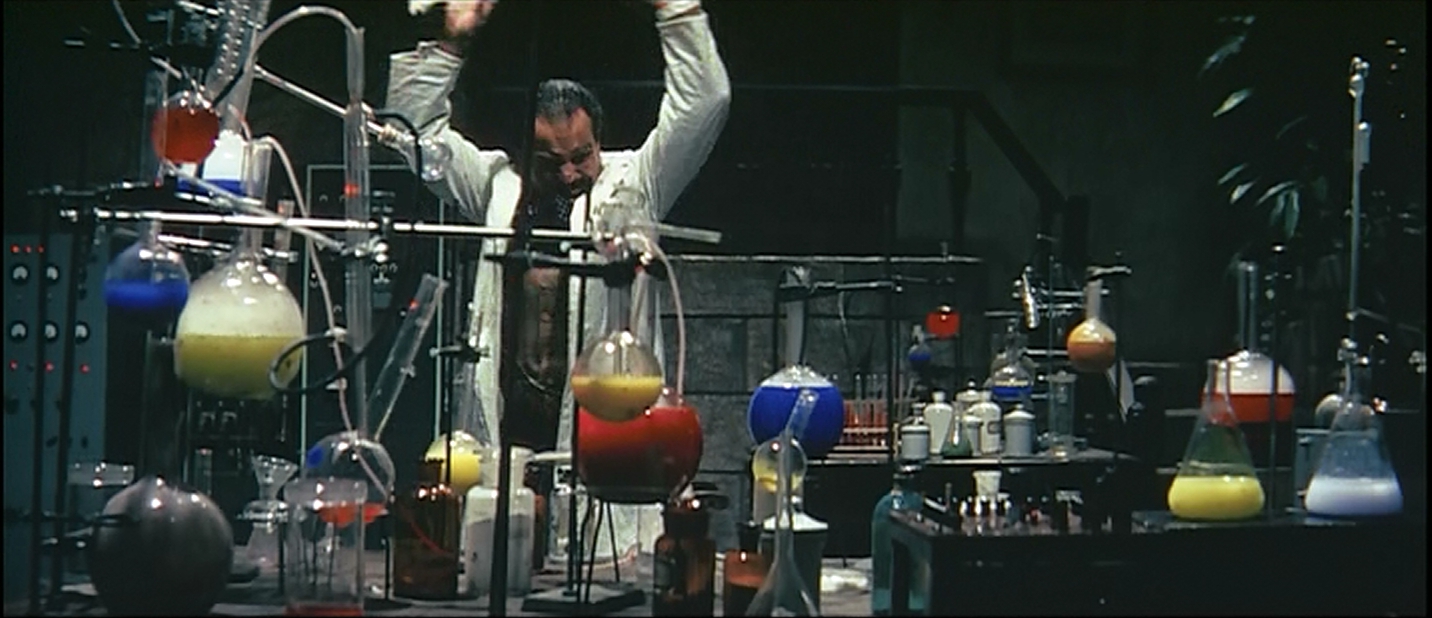
Chemistry will kill us all.

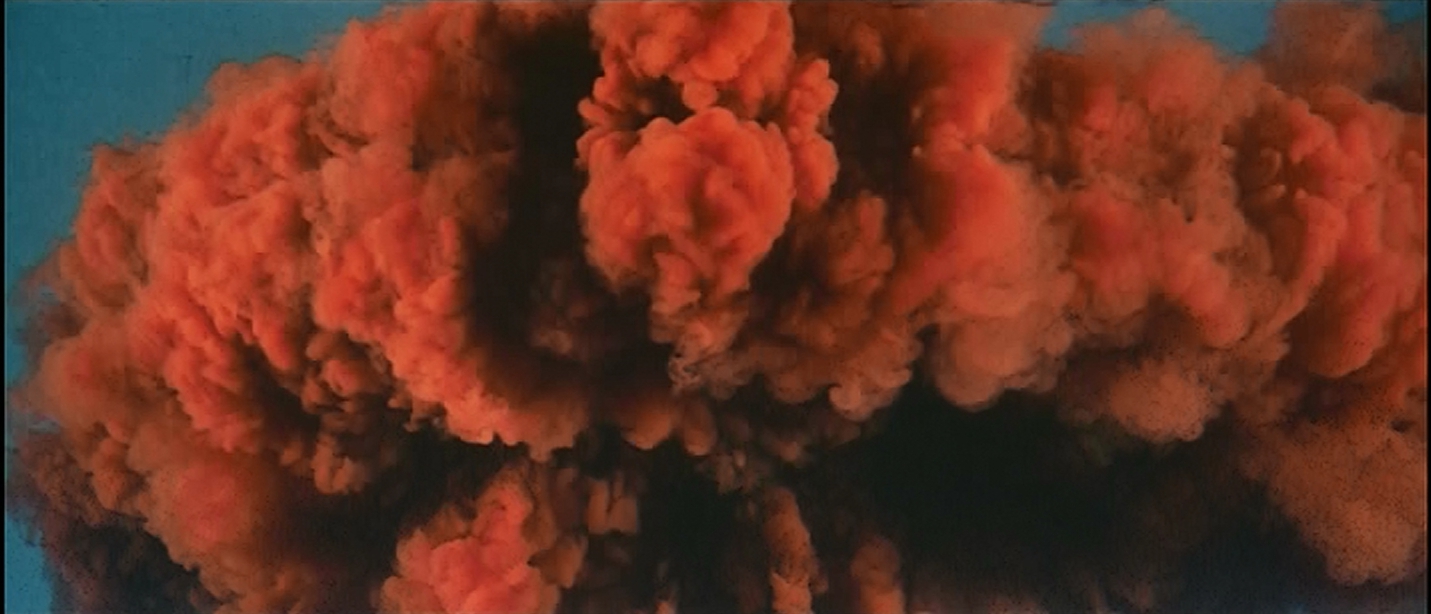
Our first section is a nearly wordless scequence in which Nazi soldiers take Dr. Frankenstein's work, the immortal, beating heart of the Frankenstein creature. The brightly-colored chemistry lab recalls both the Universal and Hammer Frankenstein films. Invaded by the Allies, they send it by sub to Japan, in the hopes of creating soldiers more resistant to bullets. They bring the heart to Hiroshima Army Hospital, which sits in the Hiroshima Prefectural Industrial Promotion Hall, known today as one of the few buildings left standing at the hypocenter of the Hiroshima nuclear detonation. With that small touch of foreshadowing, the atomc bomb does arrive in one of Eiji Tsubaraya's most firey sequences, one of the best atomic detonation sequences outside of the one in Terminator 2.
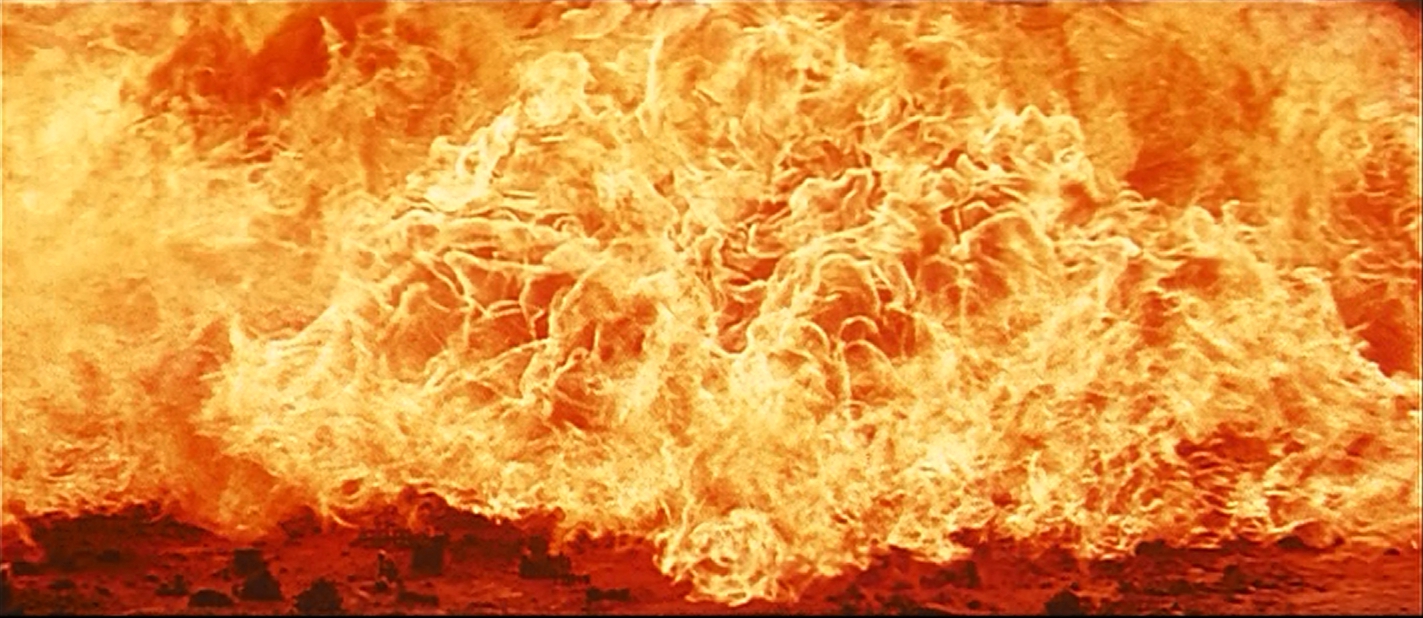
A rush of flames.

And an impressive approximation of a mushroom cloud.

With that dose of radiation, the Frankenstein Heart takes fifteen years to regenerate itself into a boy who continues to grow. The makeup designers clearly used the original Karloff as their model, with the vertical, square forehead, but as he regenerated without human intervention, there are no bolts in his neck.
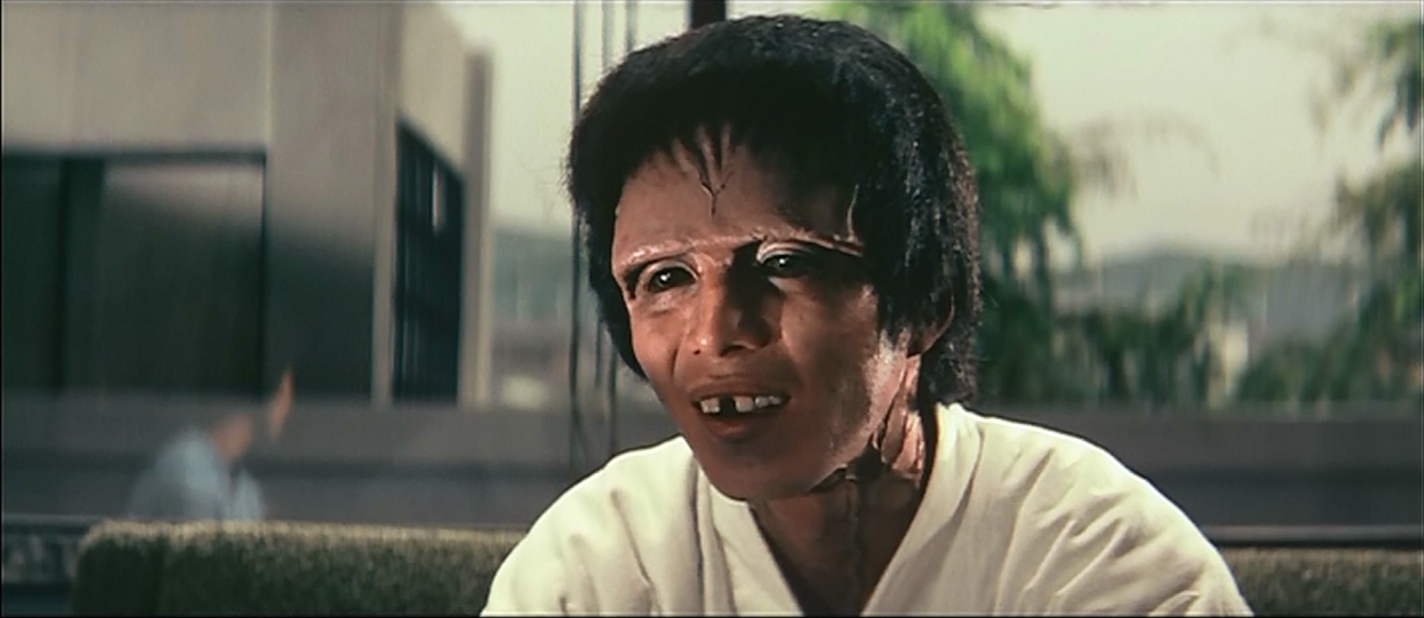
Flat head, big forehead.  Yep, it's him.

This is another film that features Nick Adams, as American scientist Dr. Bowen this time. The Frankenstein Creature grows and grows, implicitly because of the radiation he absorbed from the atomic bomb. The science boffins have trouble keeping him contained, partially out of fear from his enormous size. In an inversion of the usual Godzilla trope of reporters being seekers of truth, the Frankenstein creature is tormented by the lights of some reporters, like King Kong. This is not all that surprising, since the script is a derivation of the Willis O'Brien script King Kong vs Frankenstein. The Creature escapes the hospital by either pulling off or chewing through his right wrist, leaving a massive hand behind. This sets us up for the next film in the series, War of the Gargantuas, in 1966. Inserted for no reason that I can tell, we have a scene of young men and women dancing at a bar just before Baragon rolls over the town. I understand at this preiod, there was a lot of concern that the youth were wasting their time, doing nothing productive. These scenes will proliferate through the late sixties, in Yongarry, Godzilla vs Hedorah, and several others I haven't yet seen. The youth are always dancing their cares away just before the giant monster crashes in on the building.
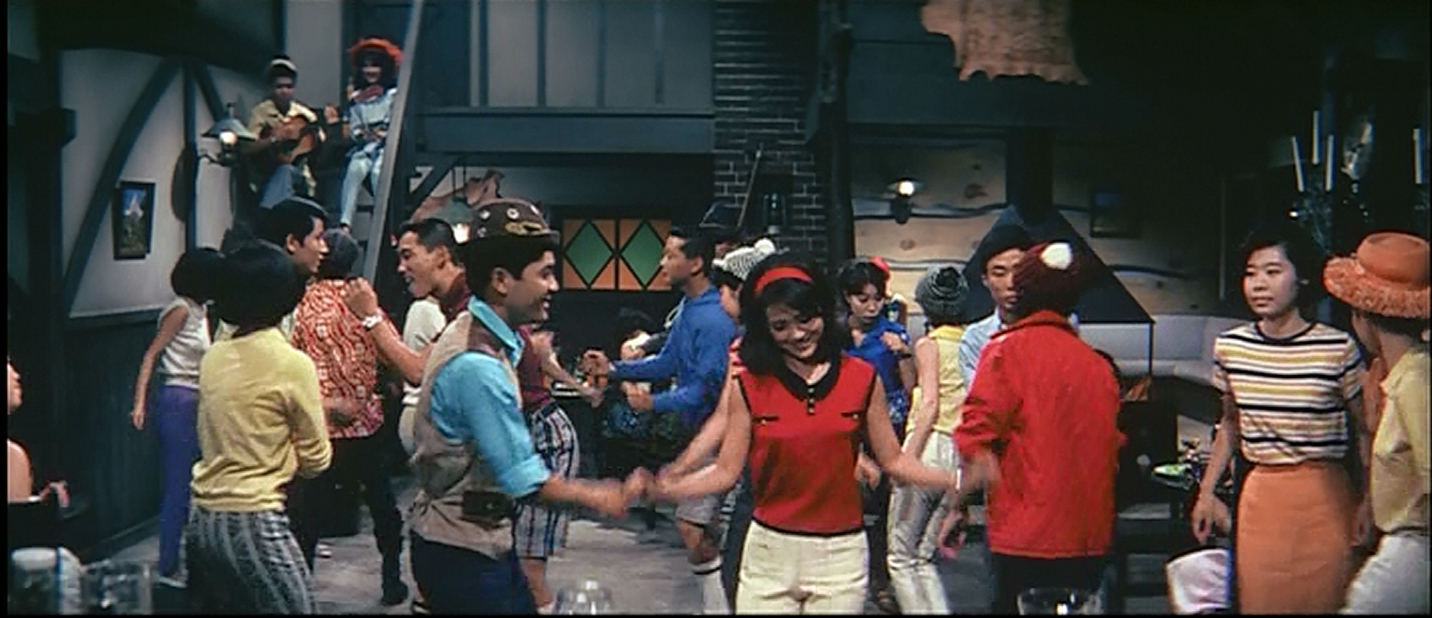
Dance, dance dance, HOLY CRAP MONSTERS!

Although even I have to wonder what's with the guy carrying the pick-axe.
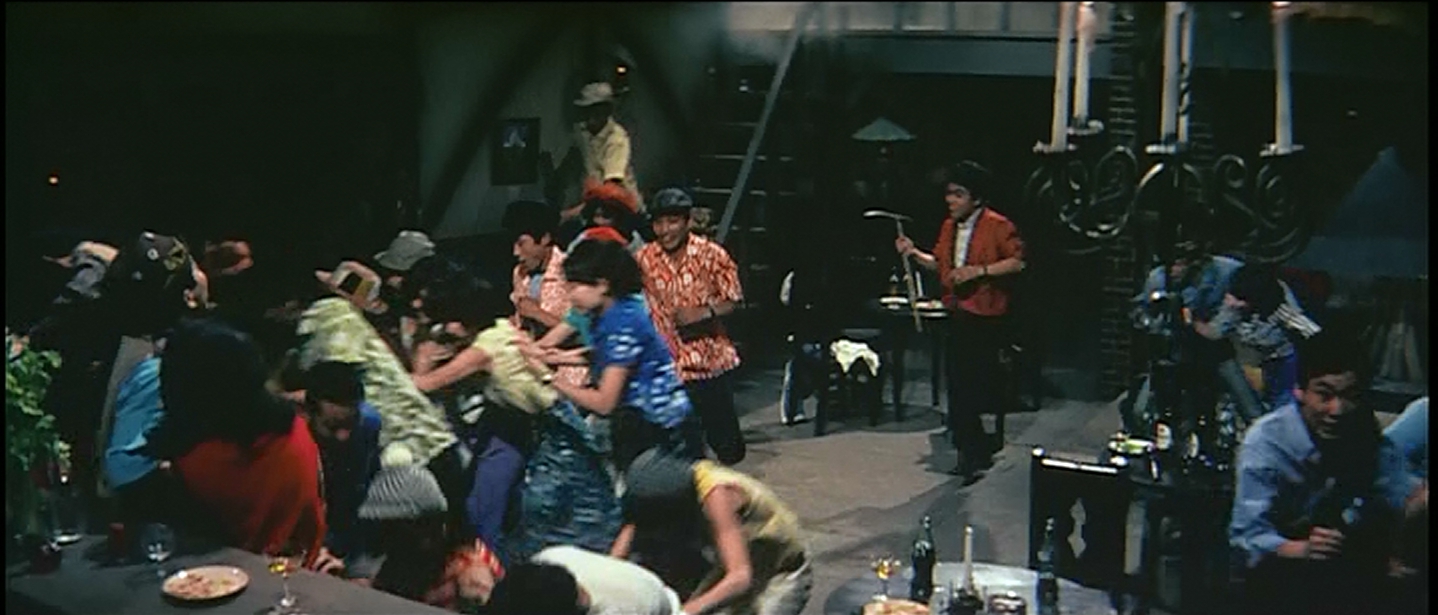
Pick axe.  At a dance party.

This is the first film in which the obscure but very popular Baragon appears. Its popularity is staggering considering that it has appeared in only three films, this one, Destroy All Monsters and Godzilla, Mothra, King Ghidorah, Giant Monsters All-Out Attack, although the suit would be used several times in Ultraman. But the design is one from the endlessly inventive mind of Tsuburaya and company, and even if it's a bit cute, I like the design.
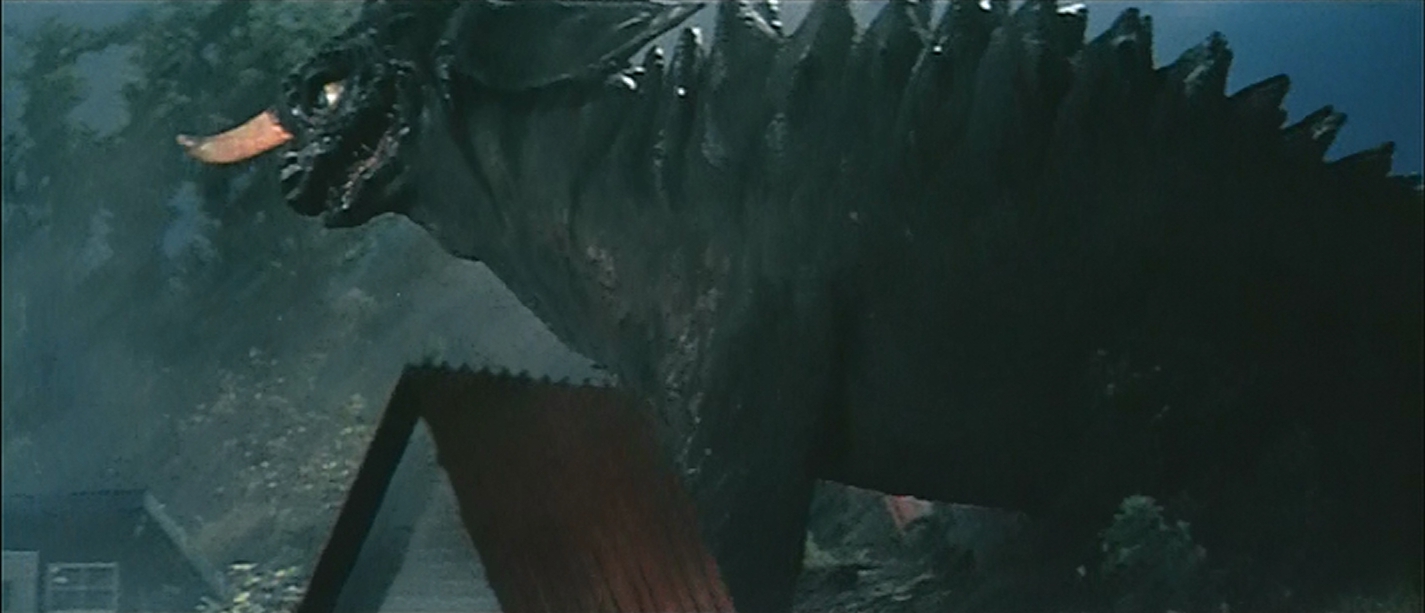
Barugon!

For a while, the film's military characters believe that the Frankenstein Creature is responsible for the destroction Baragon wreaks. This despite scenes of people watching Baragon tromp over their houses. But this also brings us to the more heroic Frankenstein Creature versus the Evil Baragon. This is the direction Godzilla is taking in his more heroic ascension for the rest of the Showa era.

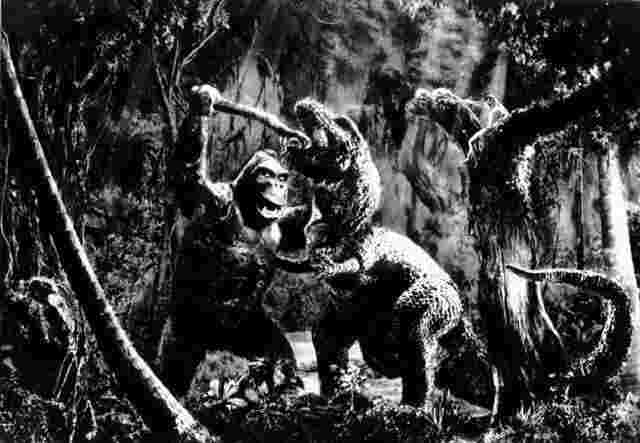
The confrontation between the Creature and Baragon has a very different feel than most giant monster fights. Because Frankenstein is applied makeup rather than a full suit, actor Kôji Furuhata could be very nimble, performing some tumbles that no suit actor has ever been able to. In addition, the fight portrays Frankenstein as much more intelligent than his opponent, something King Kong vs Godzilla attempted to do, but never truly succeeded at. Again like the original Kong, Frankenstein attempts to pry Baragon's jaws open, similar to Kong and the Tyrannosaur. It's not a successful tactic this time.
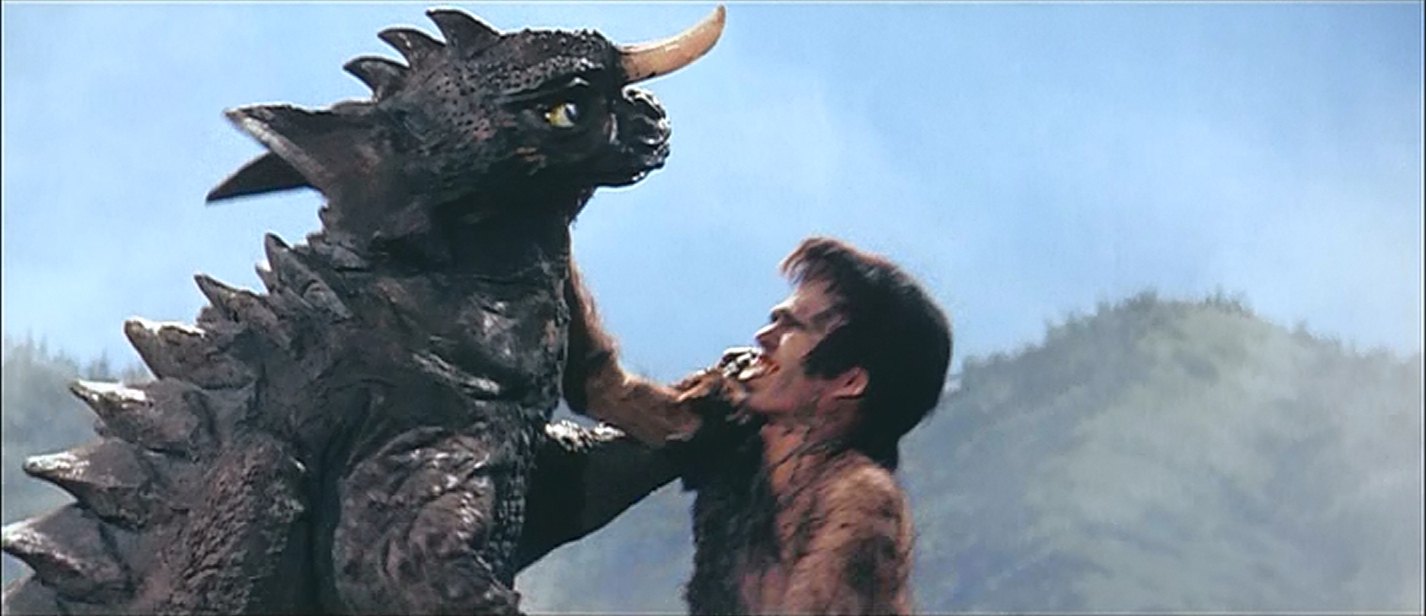
Frankenstein vs Barugon!  FIGHT!

Toward the end of the fight, everything is backdropped by a very impressive forest fire. Again, some brilliant effects work by Tsuburaya.
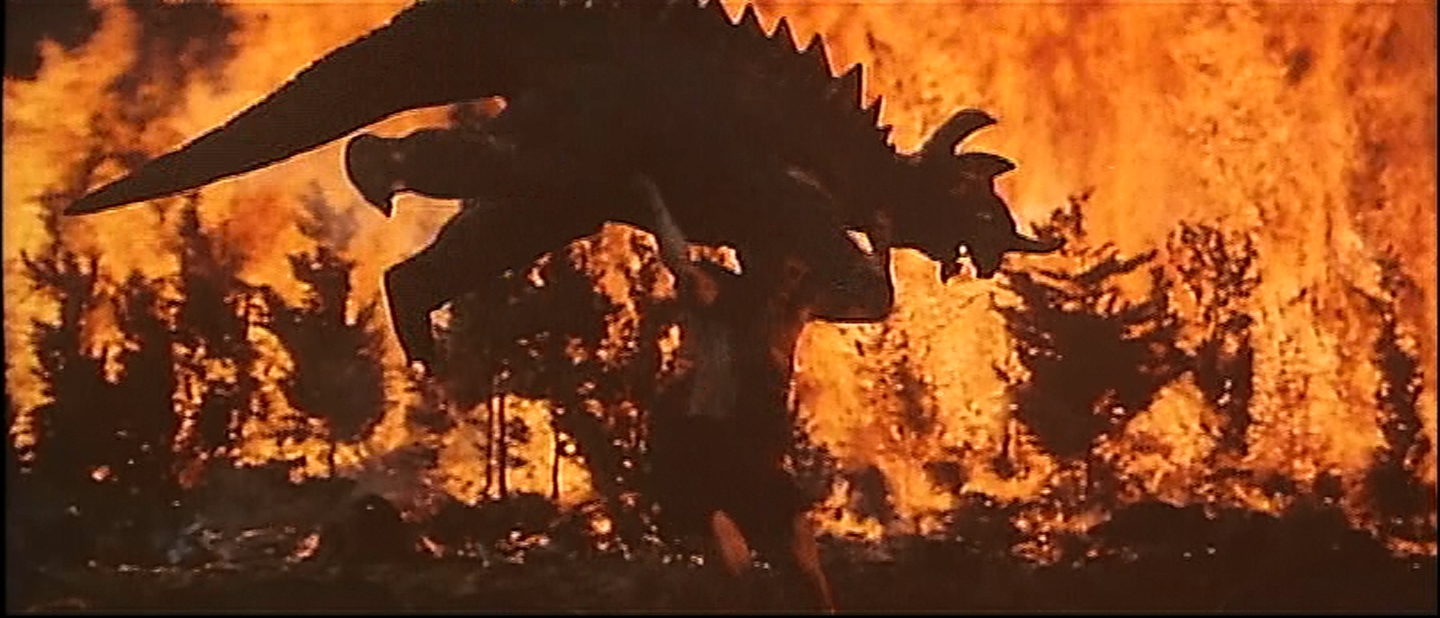
This Frankenstein is not afraid of fire.

Frankenstein, as the sympathetic monster, is victorious, but the ground crumbles beneath him after Baragon is defeated. He is swallowed by the earth at the moment of his triumph.
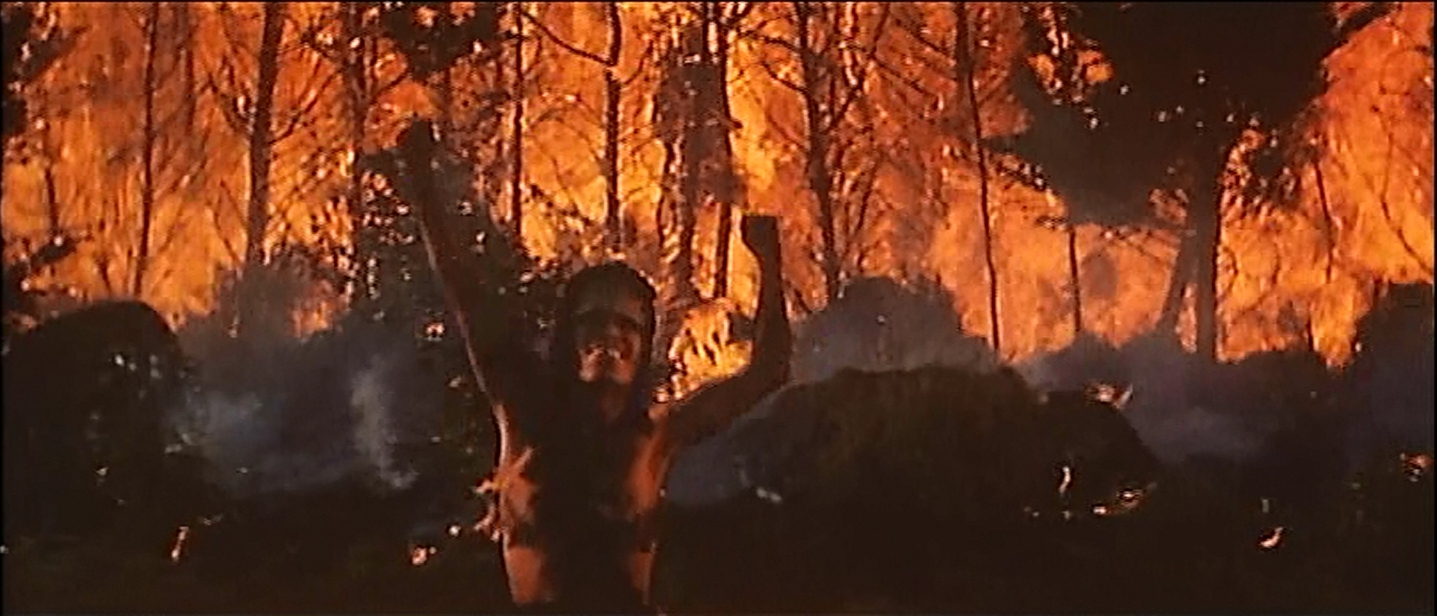
I just defeated my first monst---AW CRAP!

The ending is a bit different in the International version. In it, Frankenstein roars his triumph and raised Baragon over his head, throwing him down on the rocks below. At which point, he is confronted with a giant octopus that happened to be taking a stroll up the rocky cliff. They fight. According to Wikipedia, the American co-producers were so amazed by the octopus fight in King Kong vs Godzilla that they insisted that there be one in this film. Honda shot it, but without any of the live-action octopus footage that made the original so good. The puppet is much better than the one original, but it's not particularly convincing. The alternative ending was cut from the Japanese and American versions of the film, but is part of the International release. Yeah, there's a lot of rock-throwing on the part of Frankenstein. It ends with the traditional fall into the lake ending so common after Kong Kong vs Godzilla. In this case, it would almost certainly spell doom for Frankenstein. He could barely hold his own against the octopus on land. In it's home environment, he's pretty well screwed.
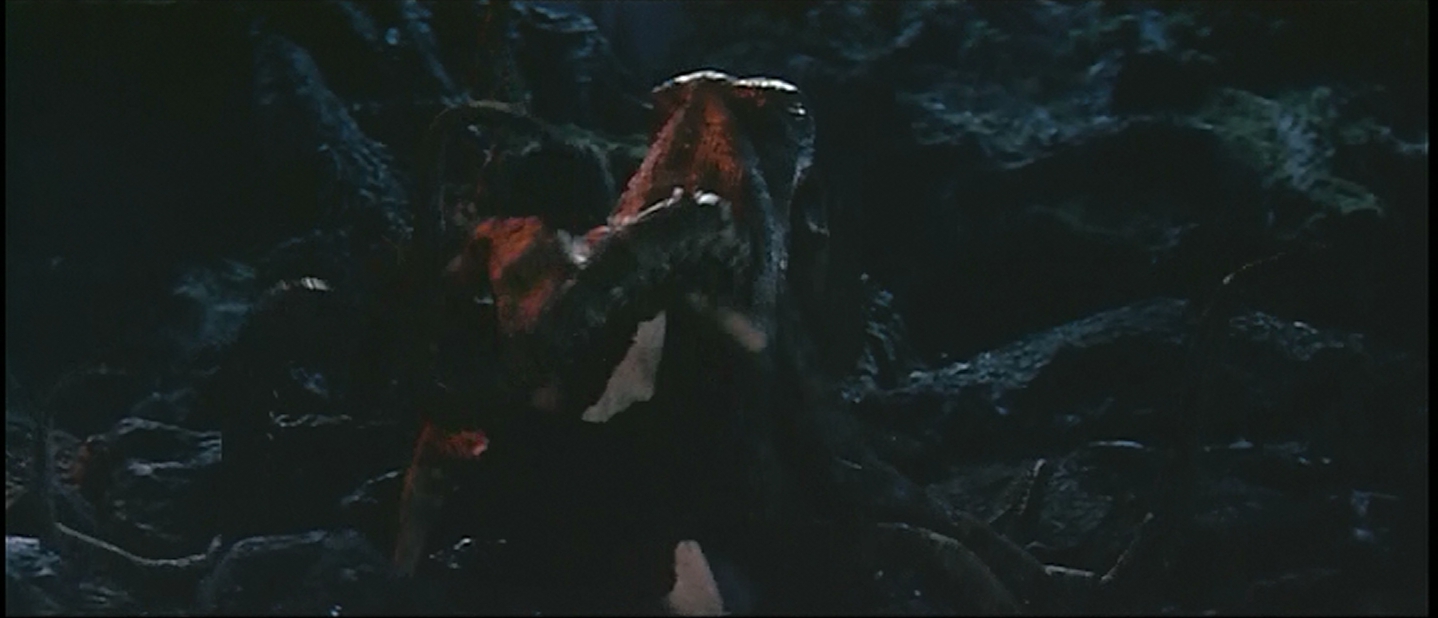
Frankenstein wraps some monster tentacles around himself.

Frankenstein vs Baragon is an enjoyable film, a little slow in the middle, when Dr. Bowen and his associated are puzzling out what Frankenstein is, and what do do with him. it includes a surprisingly humanist question, as to whether Frankenstein is more monster than human, even though he was made of human parts. The question is never answered, and left for the audience, which I felt was a more subtle touch that I have seen in kaiju film for a long time.

Next up, the second most successful kaiju franchise of all time.

Thursday, August 8, 2013

The Royal Rumble: King Kong vs Godzilla

King Kong vs Godzilla is, I think, the first Godzilla film I remember seeing. I remember catching both it and Godzilla vs the Smog Monster on the Chanel 30's 4 O'clock Movie, and I can't say which one I saw first, but King Kong vs Godzilla was definitely more memorable.

Sadly, the Royal Rumble is one of the most heavily adulterated films that is not available in its original Japanese version in America. The difference is notable: the American version opens with an irrelevant news report by some reporter opens the film, which clearly has blessed nothing to do with the rest of the fim. The special UN reporter continually pops in to tell us what we've seen, or occasionally what we're about to see. Akia Ifukube's beautiful score replaced with recycled American film music. Nevertheless, the film retains a lot of appeal.

See?  NOT GREEN!

King Kong vs Godzilla owes it's origin to Willis O'Brien, who was looking to make another King Kong film. After several iterations, he attempted to sell King Kong vs Promethius (another name for the Frankenstein creature) to Hollywood, and then abroad. In a delightful irony, Toho bought it. Kong's role went to Godzilla, and Kong was put in the role of Frankenstein's creature. Which is why Kong is strengthened by electricity. O'Brien's history of disappointing unproduced projects makes it difficult to tell whether the unscrupulous character of Mr. Tako comes from O'Brien's original idea, or the influence of Gorgo. Regardless, the jerk entreneneur becomes a stock character and MacGuffin for many kaiju films, from Gorgo's Joe Ryan to Mr. Tako to Pacific Rim's Hannibal Chau. Chau, as the product of a genre-savvy director, manages to be a better-rounded character than Tako or either of the selfish businessmen in Mothra vs Godzilla.

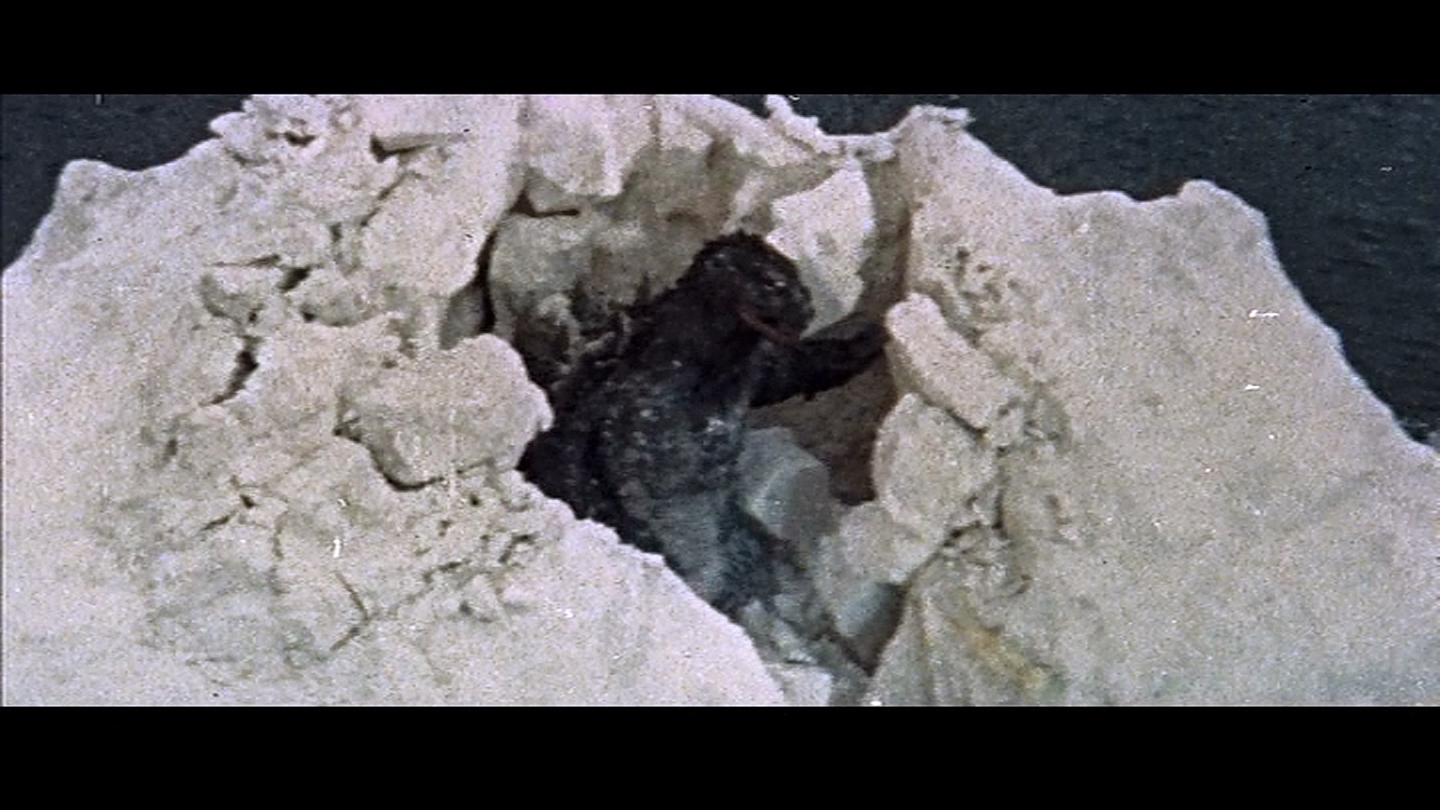
The rewrite is pretty competent. The film acknowledge Godzilla Raids Again. Godzilla is released from an iceberg, which makes sense since he was buried in ice at the end of the last film. The American insert, unwilling to assume the audience has seen either of the previous films, just claims the monster has been frozen for 65 million years, ignoring the fact that they already know it's name and express no surprise that it has atomic breath.

Out of ice and ready to RUMBLE!

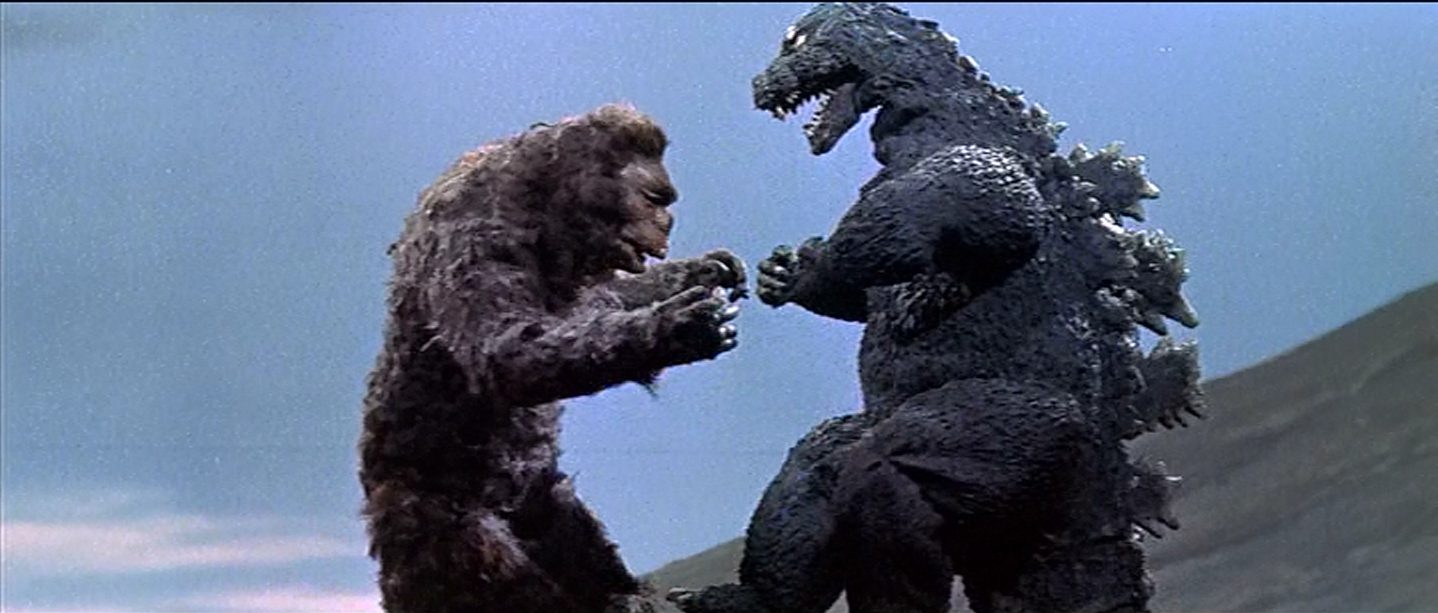
King Kong vs Godzilla sets the standard for “versus” monster films to come, in much the same way that King Kong set the template for the single-monster rampage. The two monsters appear, and the humans are caught in the middle. The small human dramas play themselves out, as each makes a small contribution that either benefits humanity or makes life difficult. In the last half hour of the film the two titans clash, giving the audience what they've come for, and resolving all plotlines, occasionally by fiat of monster stomp.

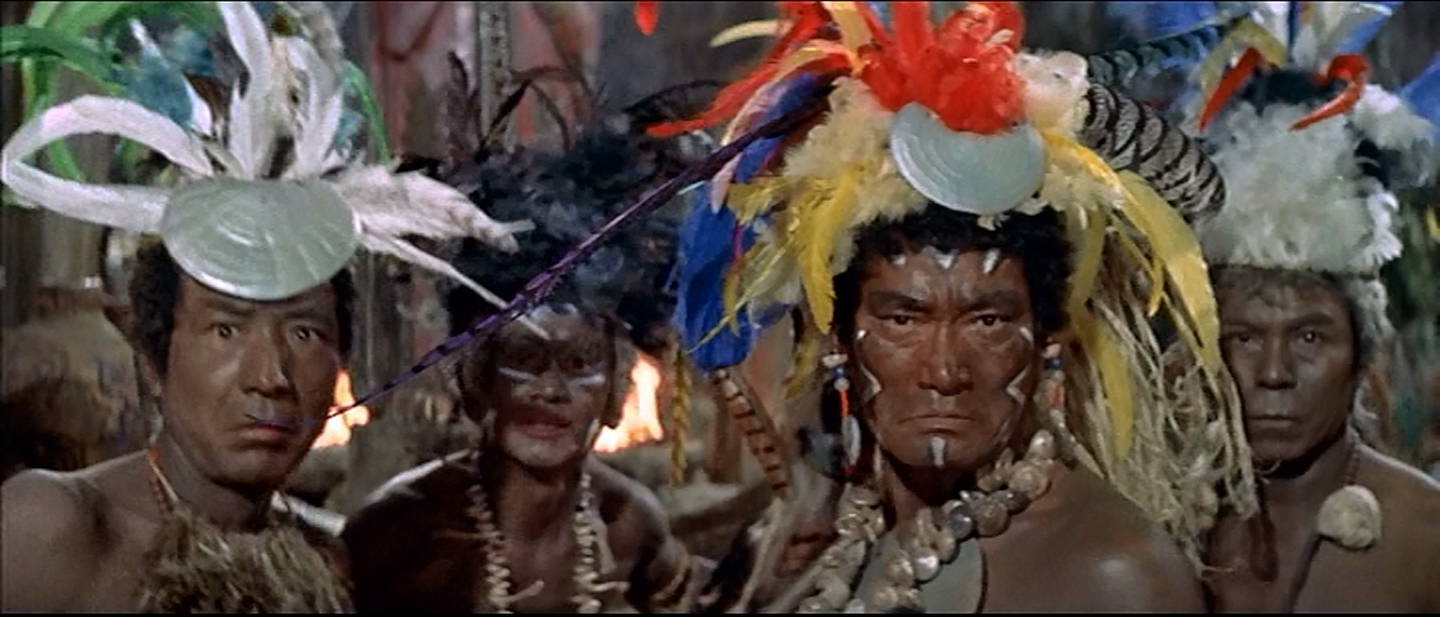
After Godzilla awakens, Kong must be brought into the picture. The scenes from Faro Island scenes are careful studies of the original King Kong ones. I cringe at the portrayal of the 'primitive' people, dressed like Hollywood Africans, leaping and yelling like Hollywood Indians. They are astounded and won over by Western technology and cigarettes. According to David Kalat, the Japanese version is more of a satire than American version. Still, these stereotypes were only just beginning to fade from American films. However, if the Japanese film is more satiricial in tone than the American one, this may be intentional. It's difficult to say.

I'm neither a stereotype, nor do I look silly.  Or maybe I do.

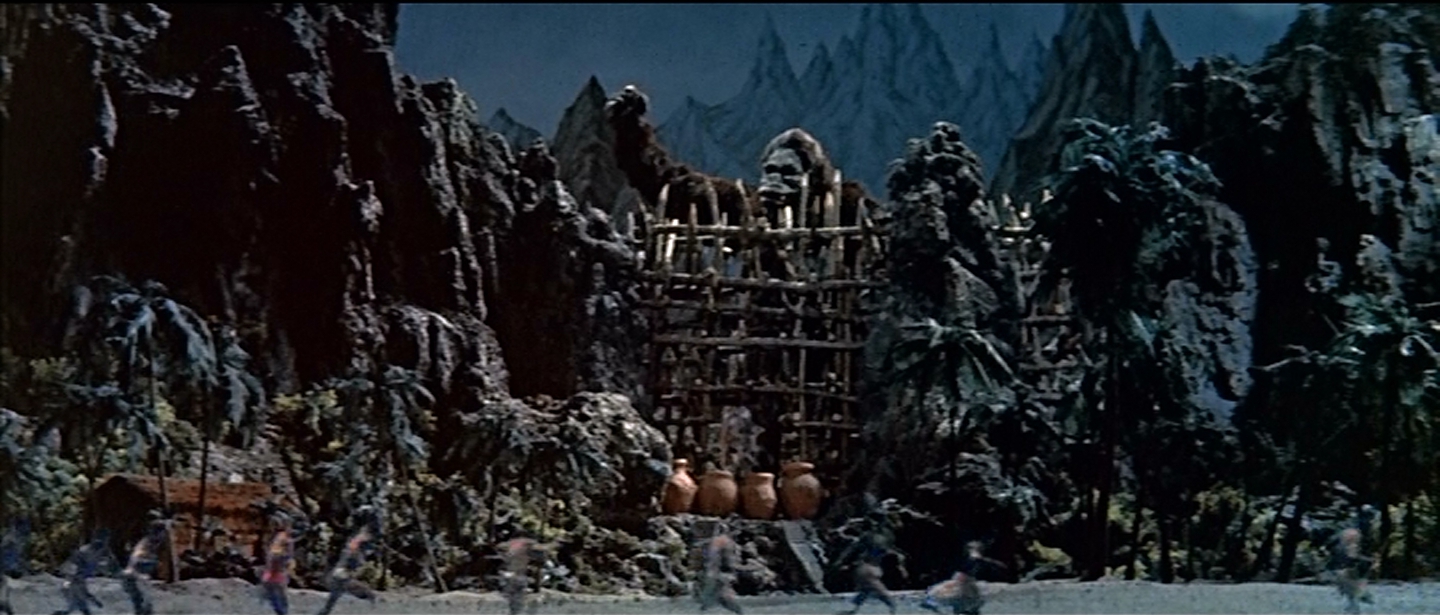
Kong's setup is very similar to that of the original film. He lives on an isolated island, is restrained from the human-inhabited part of the island by a great fence (much more flimsy than the orignal). Ultimately, he is hauled off the island after being drugged (in original Kong, Denham has gas grenades. Here, he drinks local berry juice, and listens to the drumming of the locals).

Of course, it doesn't matter how big the fence is.  Kong will get through it

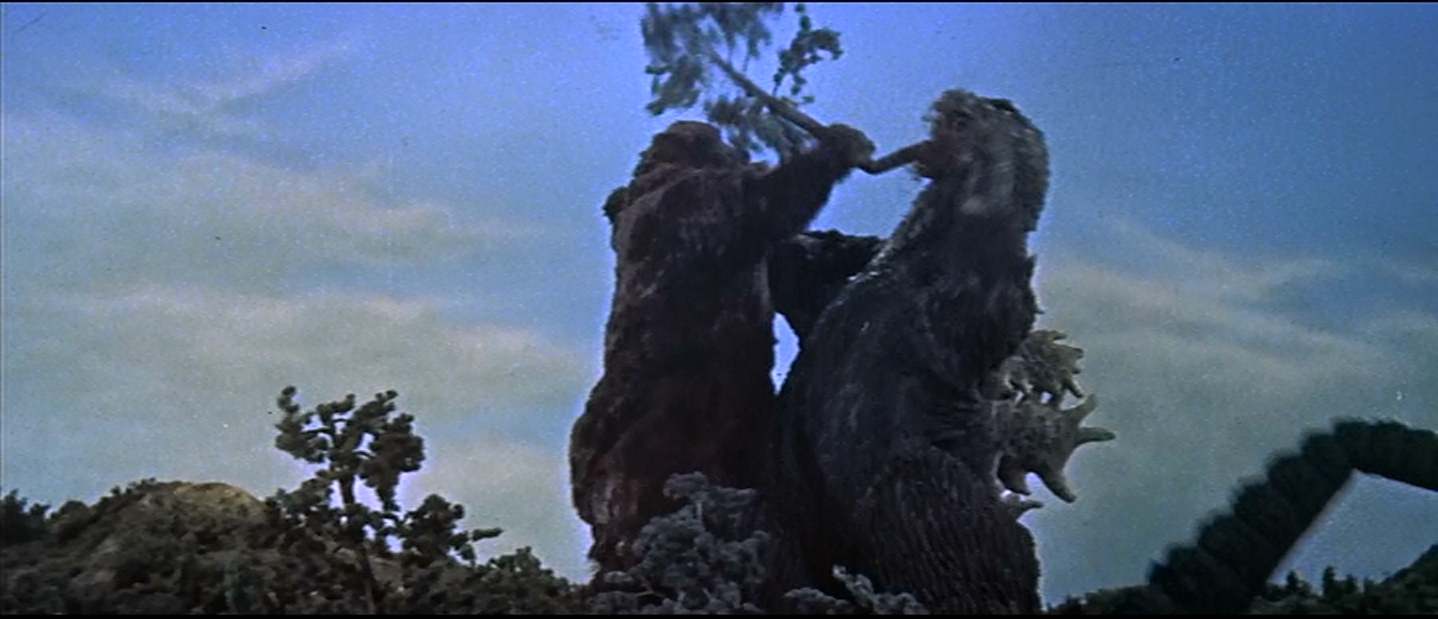
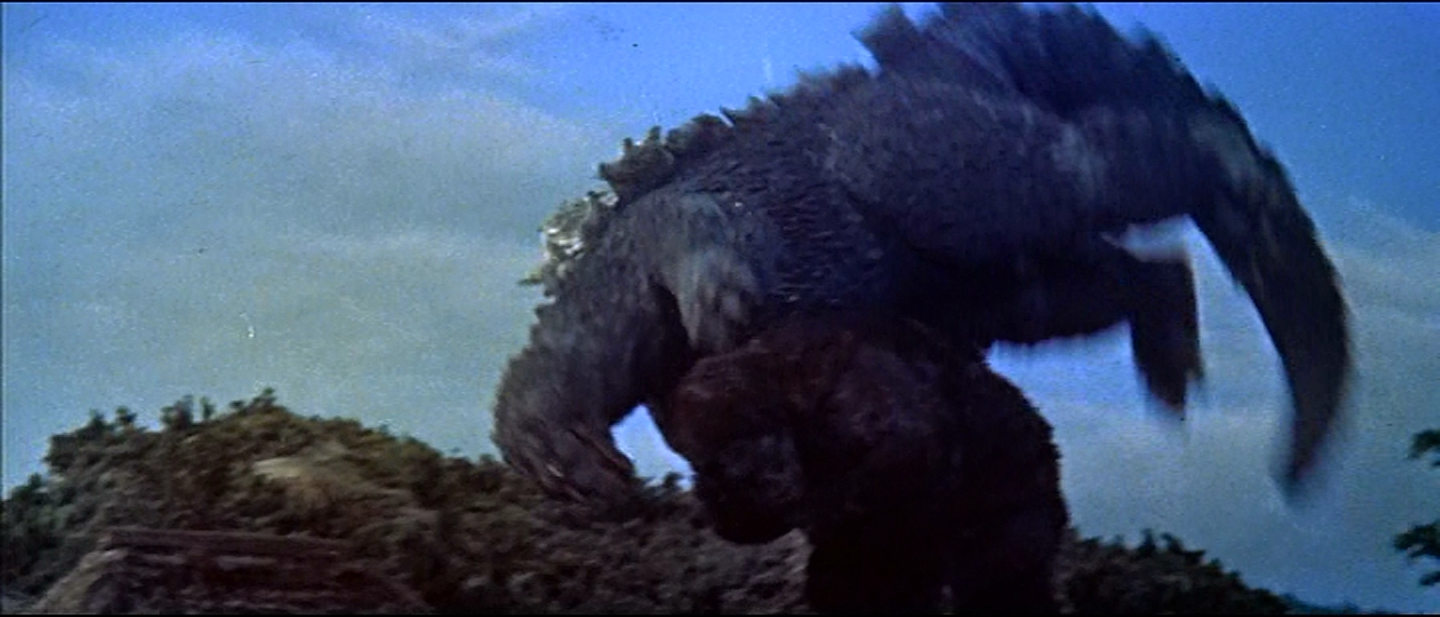
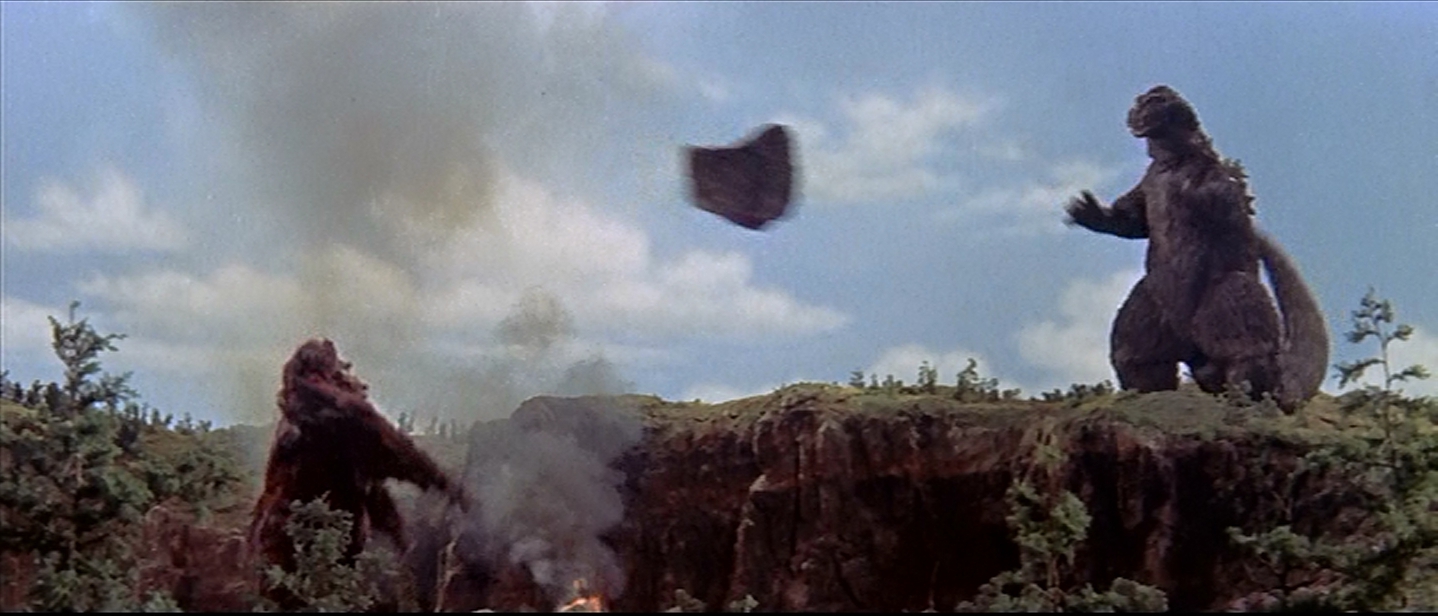
A fair amount of the film is homage to the original Kong. Tokyo, for example, lacked anything as tall as the Empire State Building, so Kong stands on the National Diet Building instead. It's about as tall as he is. But the military lights him up with spotlights, and he's got a girl in his hand. During the climactic battle, Kong shoves a tree into Godzilla's mouth, an homage to a promotional still that wasn't in the actual Kong vs tyrannosaur fight. Kong also throws Godzilla, something he did with the tyranosaurus, which Godzilla closely resembles. Legend has it that suit actor Shôichi Hirose threw the Godzilla suit with actor Haruo Nakajima inside, as a way of demonstrating his strength. If true, it's a hell of a throw.

Godzilla clears it in his inimitable way: he burns it out.

A *hell* of a throw.

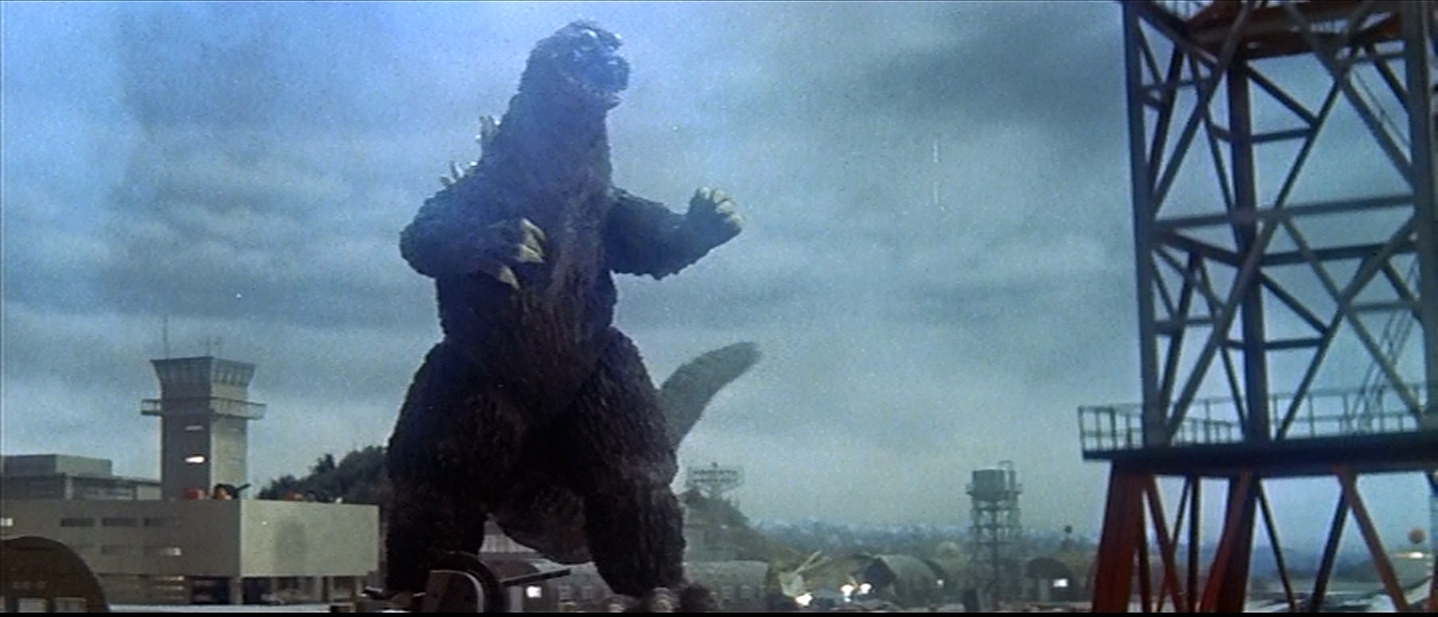
The Kong suit doesn't look good. His face is very immobile, and the costume looks sewn together. However, the Shôichi Hirose, the suit actor who showed up in a lot bit parts in Kurosawa's work, looks like he's having a wonderful time, and attacks the role with a lot of energy. Godzilla has also gotten new suit, with clawed hands and larger eyes to make him look more intelligent. The neck is more stocky, and the head set into it, rather than perched on top.

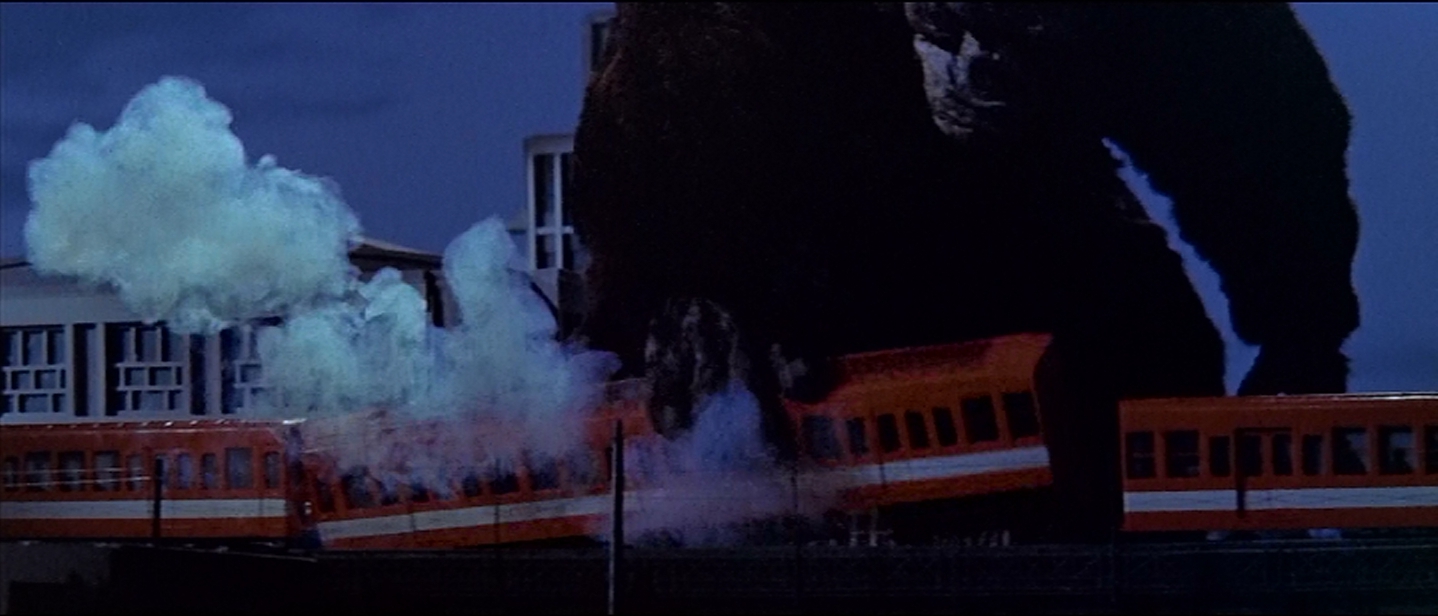
Director Ishiro Honda had not yet shifted the film's completely into fantasy. In keeping with the real world, rather than showing us the human cost of the devastation the monsters' rampage, we instead use the unique device of following Fumiko Sakurai, played by future Bond babe Mie Hama. As the love interest of Kenji Shara and desgnated princess-to-be-rescued, Fumiko has train encounters with both Godzilla and King Kong. The Godzilla encounter is similar to the one in the original Godzilla, and the Kong attack is rather different from the one from the original film, since Kong is so much larger. Still, Fumiko gets to play tiny Fay Wray to gigantic Kong. I imagine that after this experience, Fumiko will never take a train again.

Kong will never make peace with trains.  Let's accept this and move on.

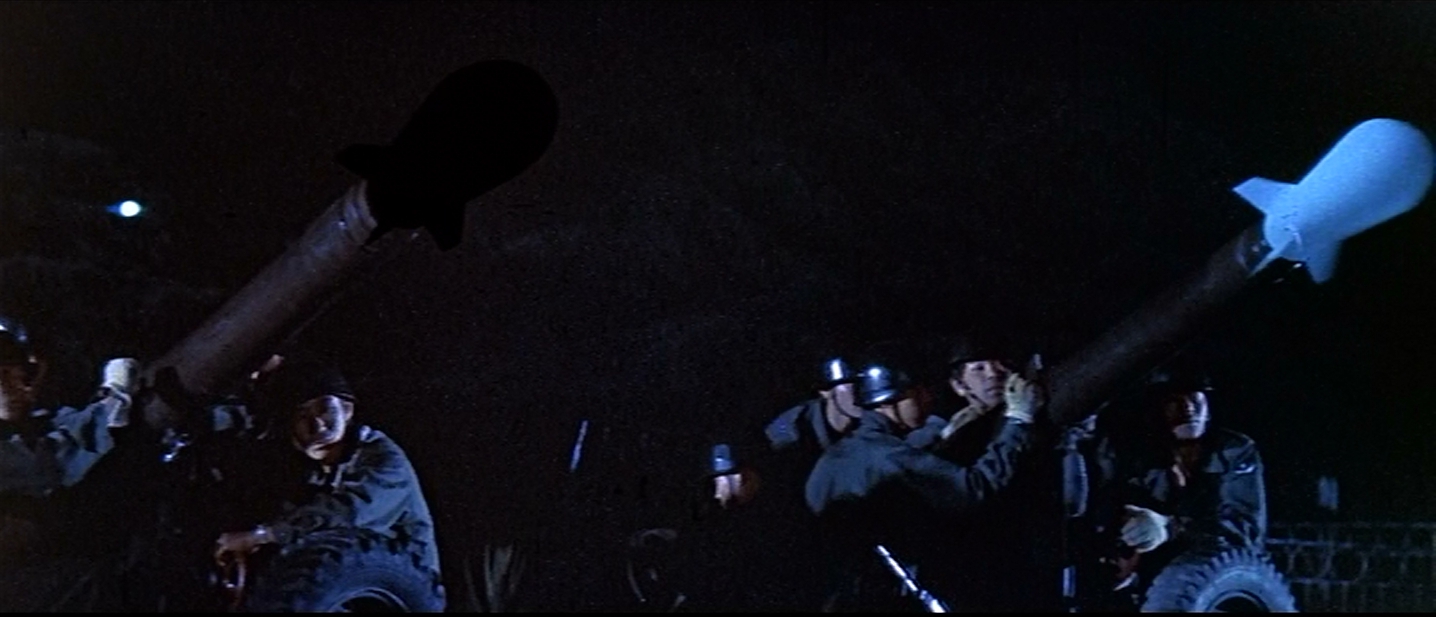
There's a strange technical effects goof when Kong stands on the Diet building. Rockets are being fired off artillery pieces. The rockets themselves are animated onto the artillery barrels, probably because they had no way to make the models launch convincingly. The first round goes off fine, but in the second shot each rocket leaves a black negative of itself on the film after it is launched. It's an odd error, and the shot is as quick as possible to prevent the viewer from noticing.

People will only notice if they have a pause button.  Ah, crap.

This is the beginning of the regrettable stone-throwing, which infests the franchise for the next five or six films. It's silly and I find it uninteresting time-filler.

Ugh.

The military has a different trick up its sleeve. this time, rather than running the usual ineffective wires, they dig a trench and fill it with gasoline. Godzilla falls in, and explosives are detonated. This, predictably, does not stop him. However, the high-tension wires do. We aren't given an explanation for this, given that high tension wires didn't stop him in the original Godzilla. Perhaps these carry a higher voltage, what with Japan's surging industrial capacity and power production.

The climactic scene, unlike that of later versus films, is surprisingly short. But if you look for screenshots of the film, or remember it for yourself, those are hugely memorable eleven minutes. The fight is fast and furious, filled with building-stomping action, gigantic fires, and several reversals. Initially, Kong doesn't come off too well. He's knocked unconscious, or at least unresponsive twice in four minutes.

The fight also includes the only bit of stop-motion Godzilla footage ever filmed, in a jump kick that sends Kong sprawling. This could not have been done by suitimation, and I wonder if Honda created the scene to keep Tsuburaya in practice? There had been a single scene of stop-motion in the original Godzilla, also. Perhaps it was included as an homage to O'Brien. It's good quality, I might add. I wonder what might have happened if Toho had had enough money to pursue a fully animated Godzilla film. There are a few scenes with puppets, also. While unconvincing, they are quick enough that it's difficult to tell.

Kong looks better in stop-motion than he does in suitmation.

Only after Kong is struck by lightning (since he's the Frankenstein of the fight) does he gain enough strength to deal with Godzilla on a more even footing. And he seems to be able to channel the electricity through his hands, which hurts Godzilla. This will be an important part of Godzilla vs Mothra, the next film in the series, and later contradicted by Ebirah, Horror of the Deep and Godzilla vs Mechagodzilla. In these films, Godzilla gains strength from lightning.

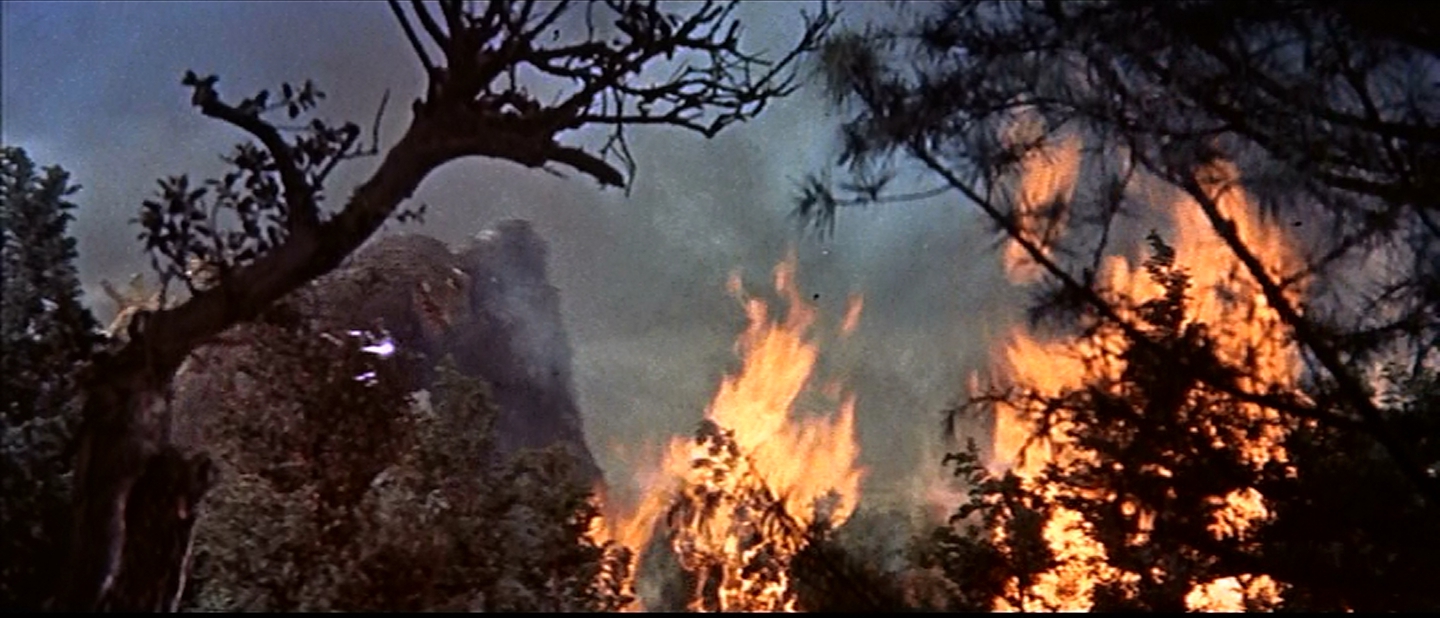
Fire!  Electricity!  Giant Monsters!.

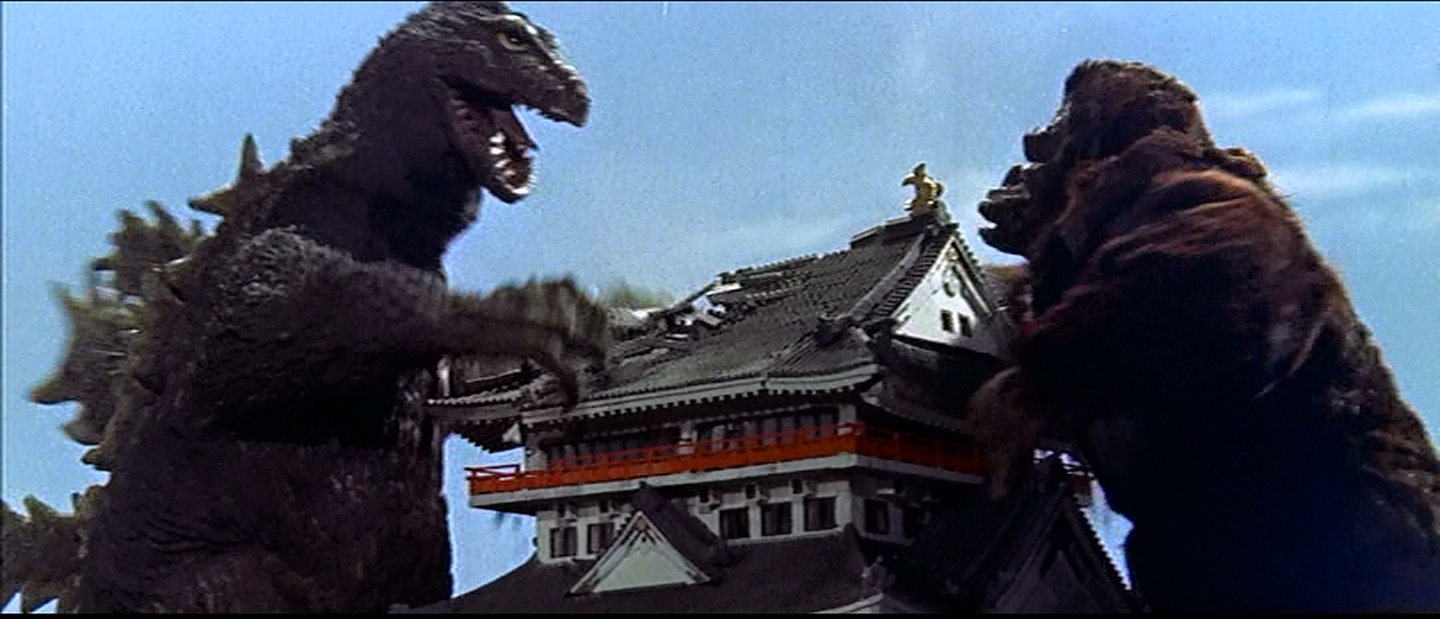
As with Godzilla Raids Again, the end comes as the two monsters destroy a castle, Atami this time, and plunge into the ocean. The fight up till this point has been furious, once of the most intense seen in the series.

Kong looks better in stop-motion than he does in suitmation.

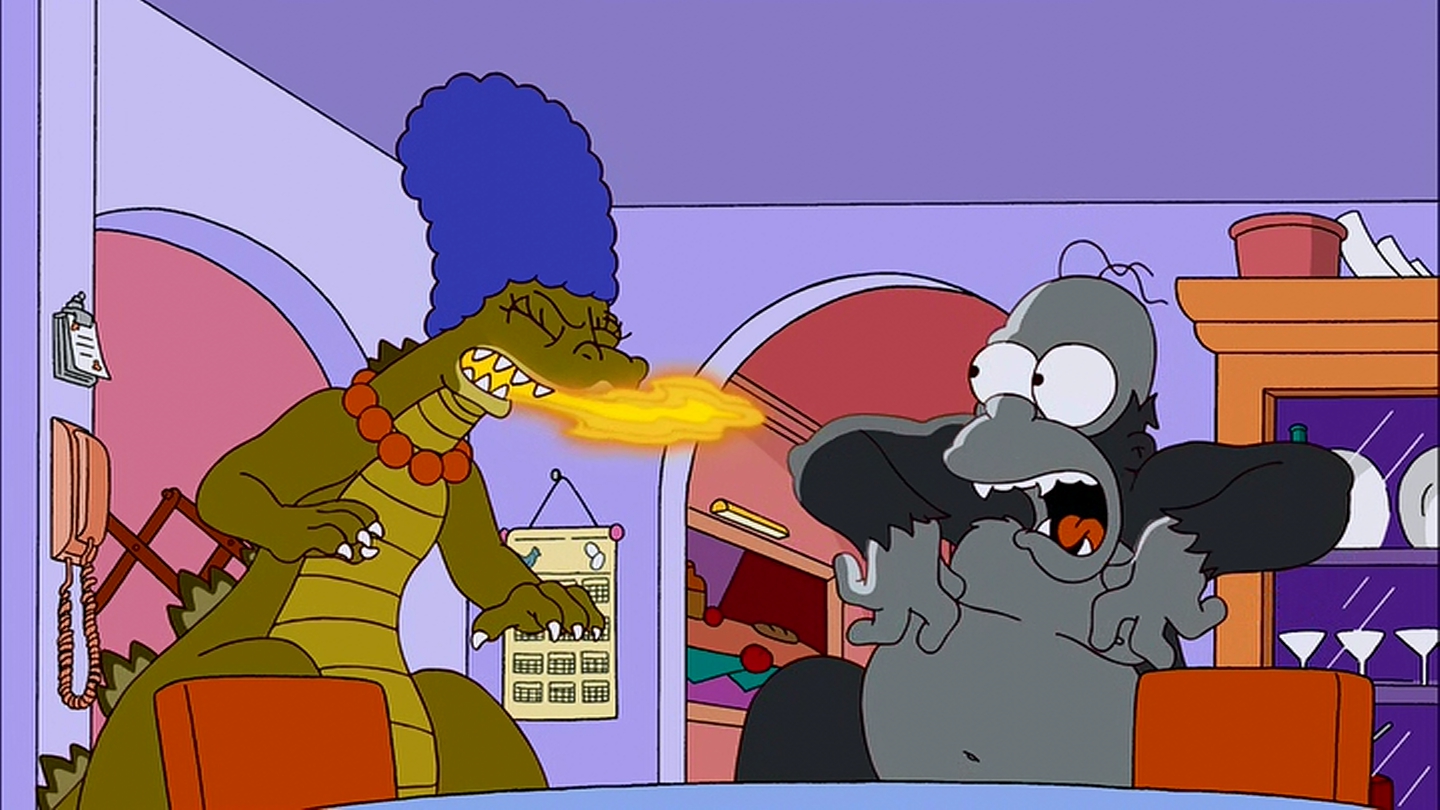
Despite being flawed in several critical ways, King Kong vs Godzilla remains a touchstone for many of us who stumbled on it flipping channels. Although Godzilla vs Megalon is said to be the most seen Godzilla film by American audiences, King Kong vs Godzilla seems to be the one that is most remembered. Megalon was never referenced in The Simpsons, for example. This is a clear reference in the episode “Wedding For Disaster”

Kong looks better in stop-motion than he does in suitmation.

Let's hope that Toho and Sony will release the Japanese version of the film, as they have with every other Showa-era Godzilla film. Perhaps in the lead-up to the release of the 2014 Godzilla

Next up, Godzilla faces his weirdest opponent with a exceptionally strong script.

Thursday, July 18, 2013

Eugène Lourié Takes Up the Torch: the Giant Behemoth

While Godzilla was hibernating under ice, Eugène Lourié was pressed into service to carry giant monster movies forward. He directed three in the span of eight years, after which he felt he was being typecast. He left directing after Gorgo and made a successful name for himself as an art director.

Sadly, this is sadly the last time we will see the marvellous work of Willis O'Brien on screen. And it's not even close to his best work. In fact, this little film is nobody's best work. The British film industry was struggling at the time; budgets were tight, special effects were expensive. Behemoth is nowhere near as detailed and believable as the Beast from 20,000 Fathoms. The film has been strung together cheaply and the viewer, especially the video viewer who can pause, can see where the corners have been cut.

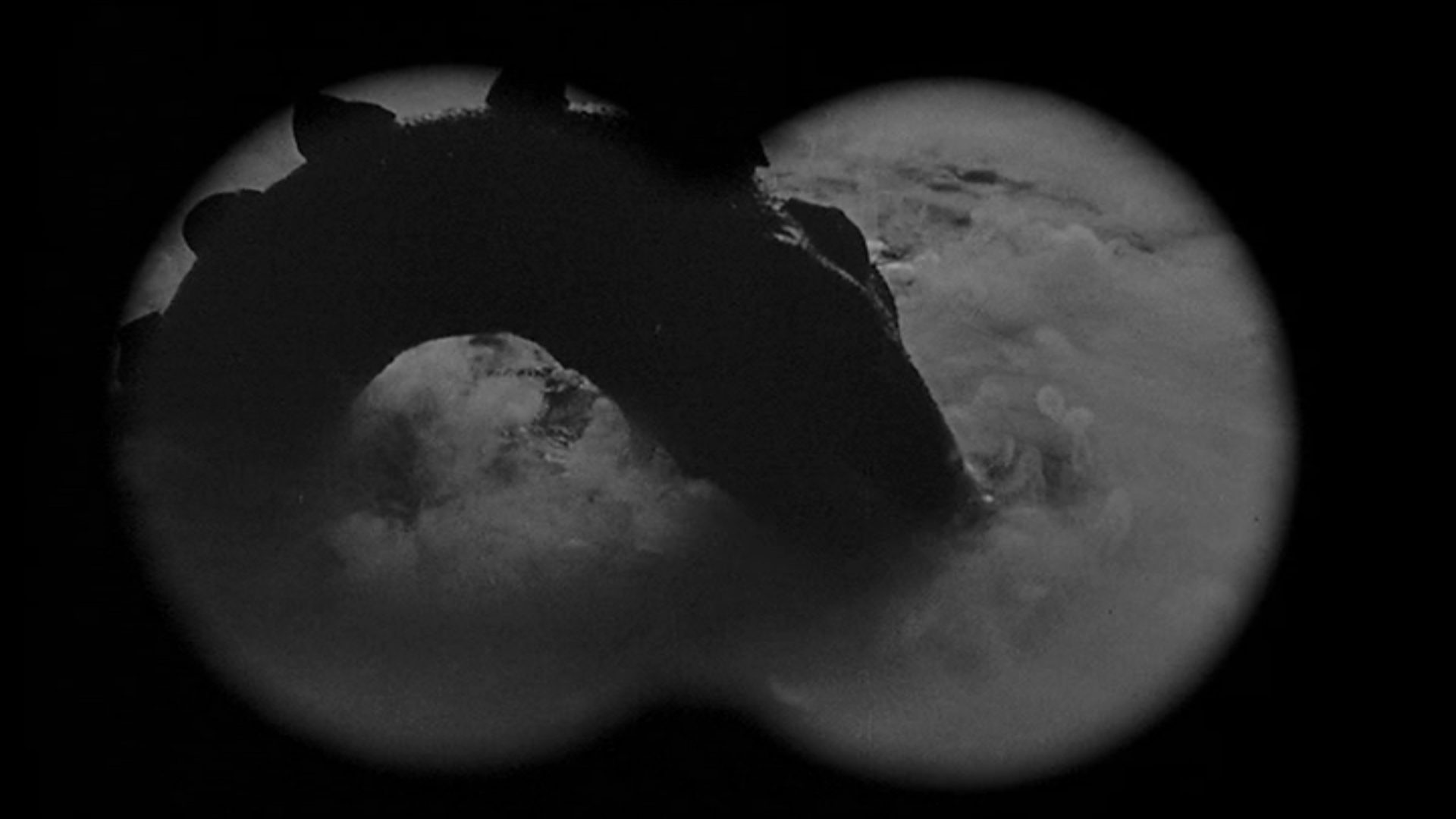
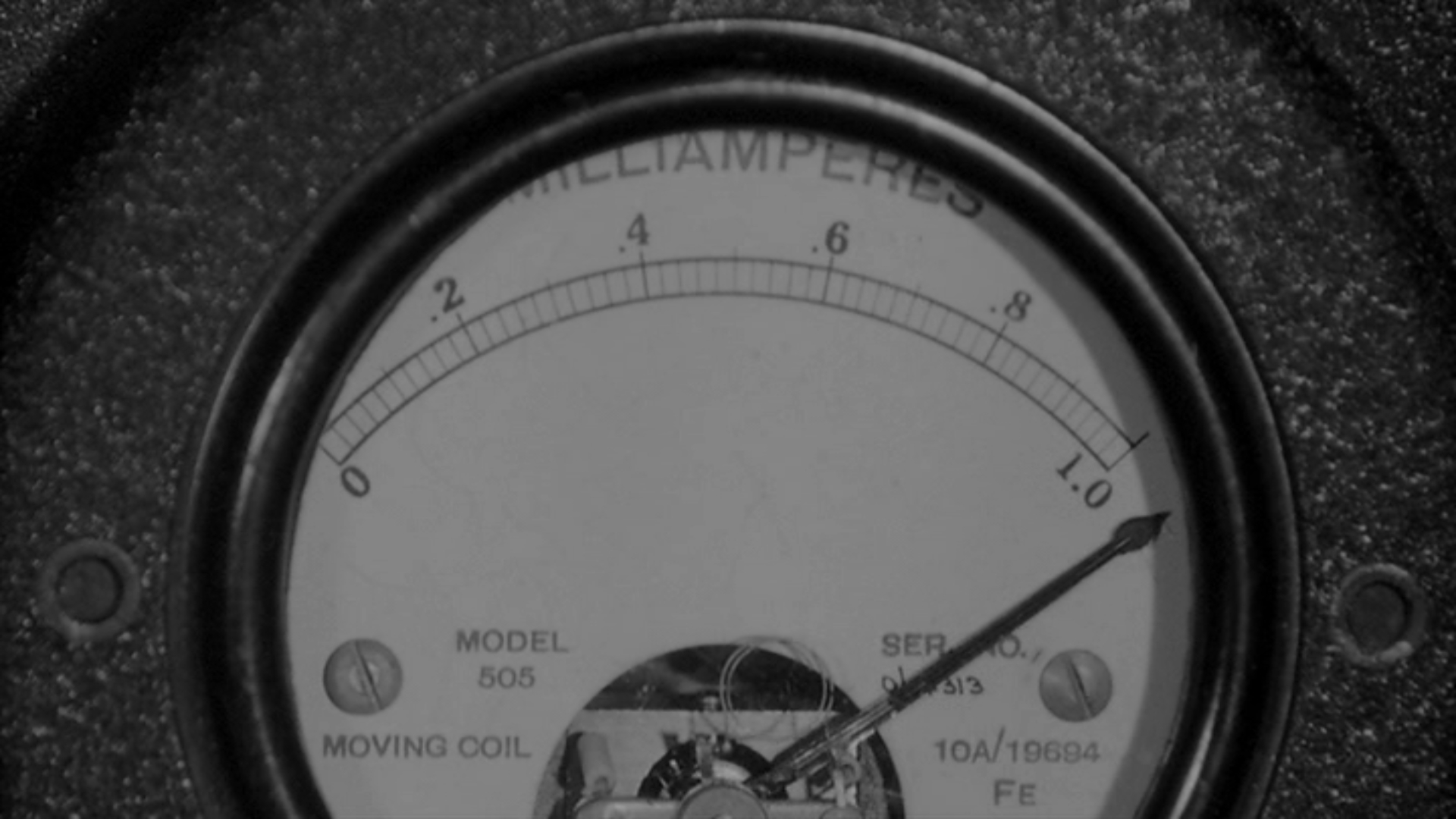
The first glimpse of the monster shows that it has been influenced by Godzilla. It has a string of fins down its back, and while its breath isn't radioactive, it has a radioactive pulse that it can activate at will. Like original Godzilla, Behemoth is radioactive. The initial attempt to track it is conducted with a scintillation counter.

Our first glimpse of the Behemoth.

Radiation detector says there's a giant behemoth somewhere nearby.

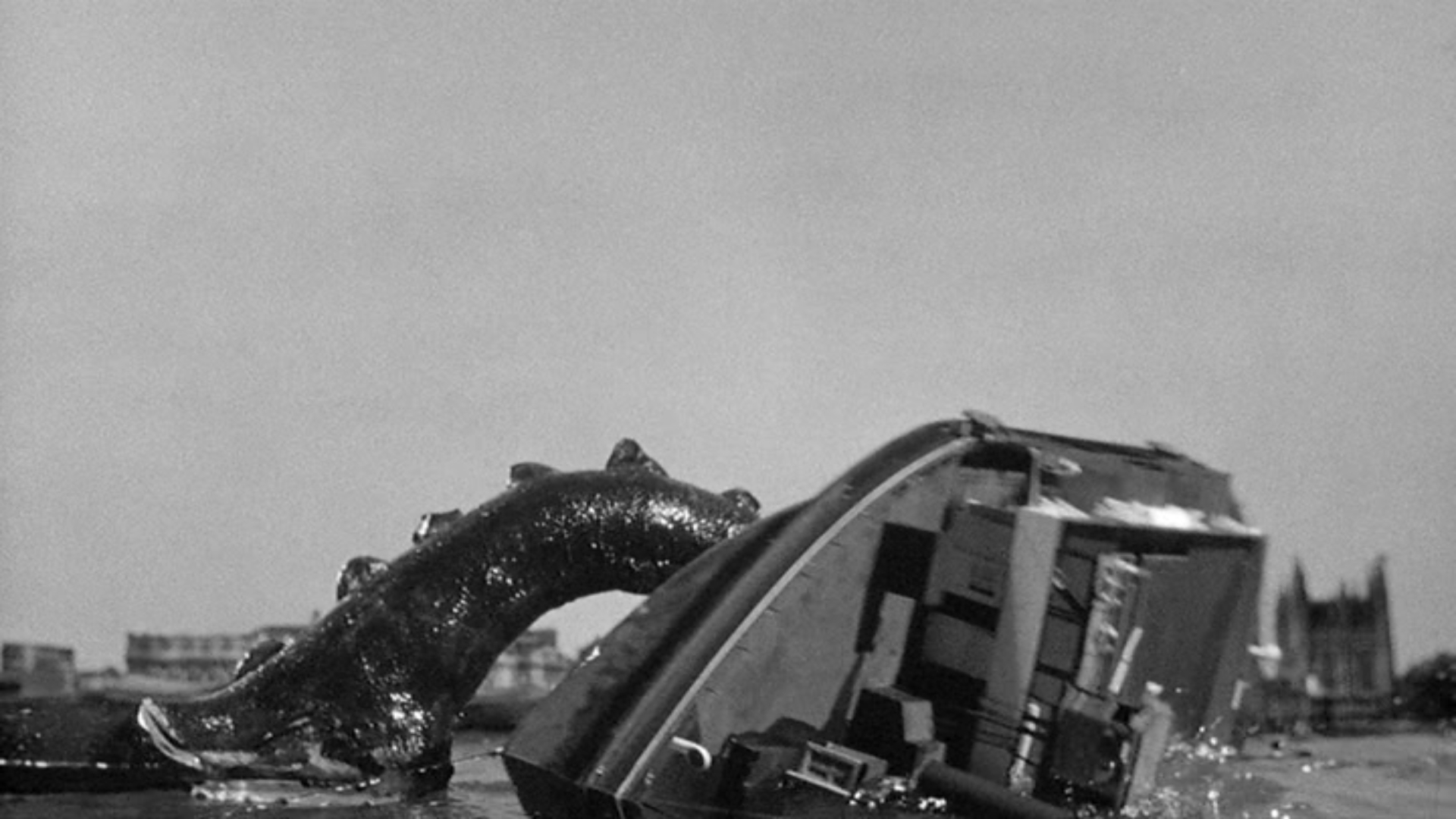
Giant Behemoth works a little more on the Roger Corman “Don't show the monster” than previous giant monster films. In part, I suspect because of the limited funds available for the production. Our first good look at the monster is fifty minutes in, as it capsizes a ferry. But this is an immobile puppet which can't even move it's mouth. And that's all we see of the monster until an hour in. The stop-moton Behemoth is much more impressive than the puppet, because of the expressiveness of the O'Brien and Pete Peterson model. The rampage is also on a budget, and so only lasts some ten minutes. This makes me realize that part of the genius of Godzilla is that the rampage falls in the middle of the film, which allows Ishiro Honda to show us the aftermath.

And there goes a ferry!.

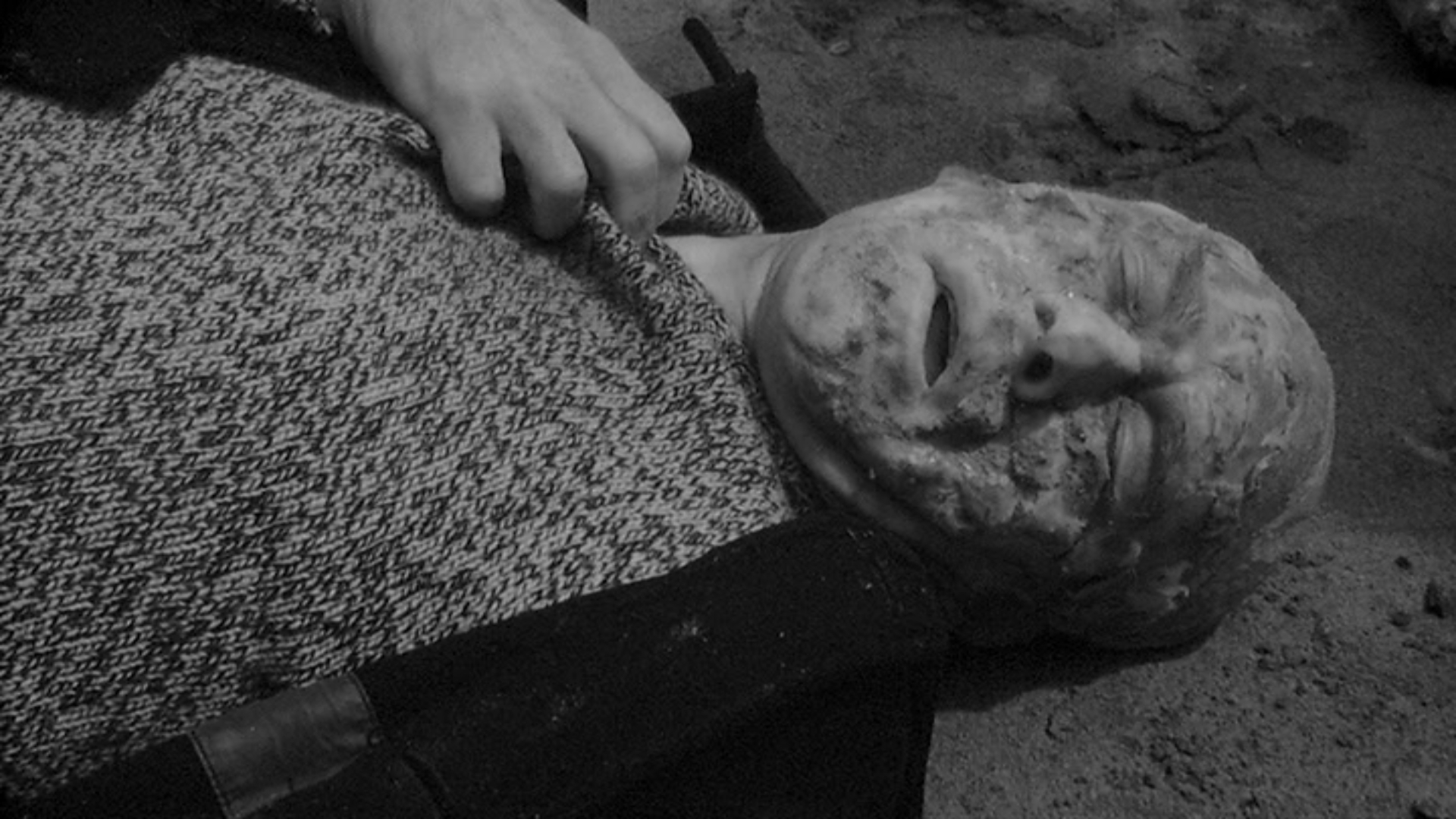
Which is not to say Giant Behemoth is a light film. Lourié takes several opportunities to show people dying, something that becomes increasingly rare in kaiju films. The fisherman is shown with horrific radiation burns. The ferry goes down, and people are shown waving their hands and going beneath the water. The last shot is a man floating face-up, radiation burns clearly showing. During its rampage, the Behemoth uses its radiation to kill fleeing civilians as well as destroying a machine gun crew. These moments of horror remind us that this is not just a fantasy film, but has roots in horror. Scenes like this become more rare as kaiju films become more and more child oriented.

Another radiation victim.

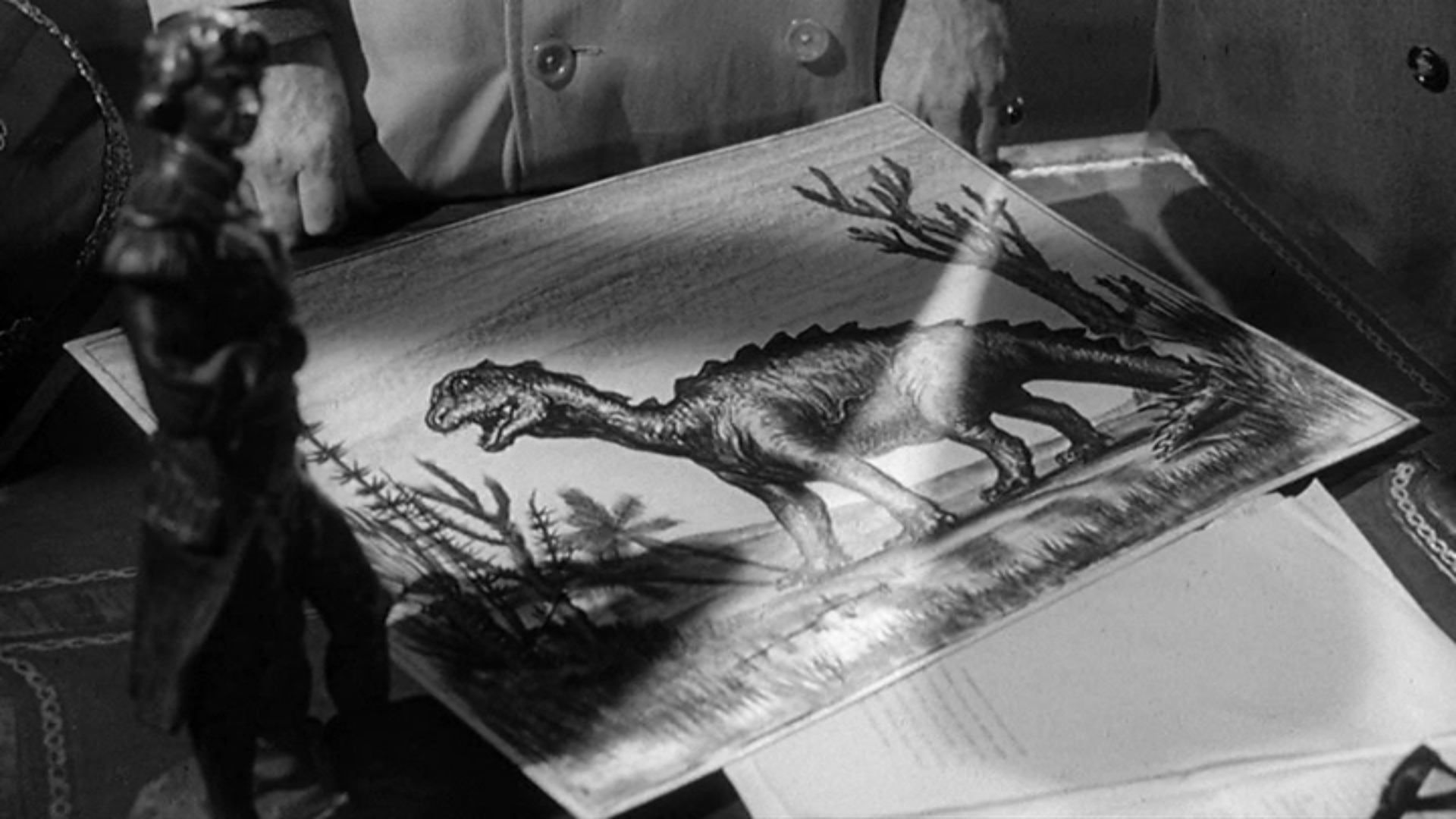
Similarities to Beast from 20,000 Fathoms are frequent, and if Internet rumors are true, intentional. Behemoth, the Sea Monster (the original title) starts with stock footage of a nuclear detonation. The expert immediately assumed the giant monster is from the Pacific, and then says that "they" always make for freshwater rivers to die, a gentle reference to the Beast. And it's quite clear that the frst person to run into kaiju are the fishermen. We've seen this in Beast From 20,000 Fathoms, Godzilla and Pacific Rim; the fishermen serve as the canaries for the terrors that come from the sea. Lourié also plays with the sketches of the Behemoth, as he did in Beast. The 'best guess' of the illustrator is very much like the Beast. Also similar to the previous film, the Behemoth is to be destroyed by an injection of radioactive material, in this case Radium delivered by torpedo. Like Godzilla, it breaks the surface one last time before sinking back into the depths.

New York got attacked by one of these.  Could it be one of them?

Giant Behemoth is not a strict remake. For example, Jack MacGowan as Professor Samson is about as far as you could get from tweedy Professor Elson in Beast from 20,000 Fathoms. Samson is young, nerdy and somewhat manic, excited by the possibility of a living dinosaur. He plays the Dr. Yamane role well, disappointed when it's clear the monster must be killed. He shares Dr. Elson's fate, destroyed by the monster he searches for.

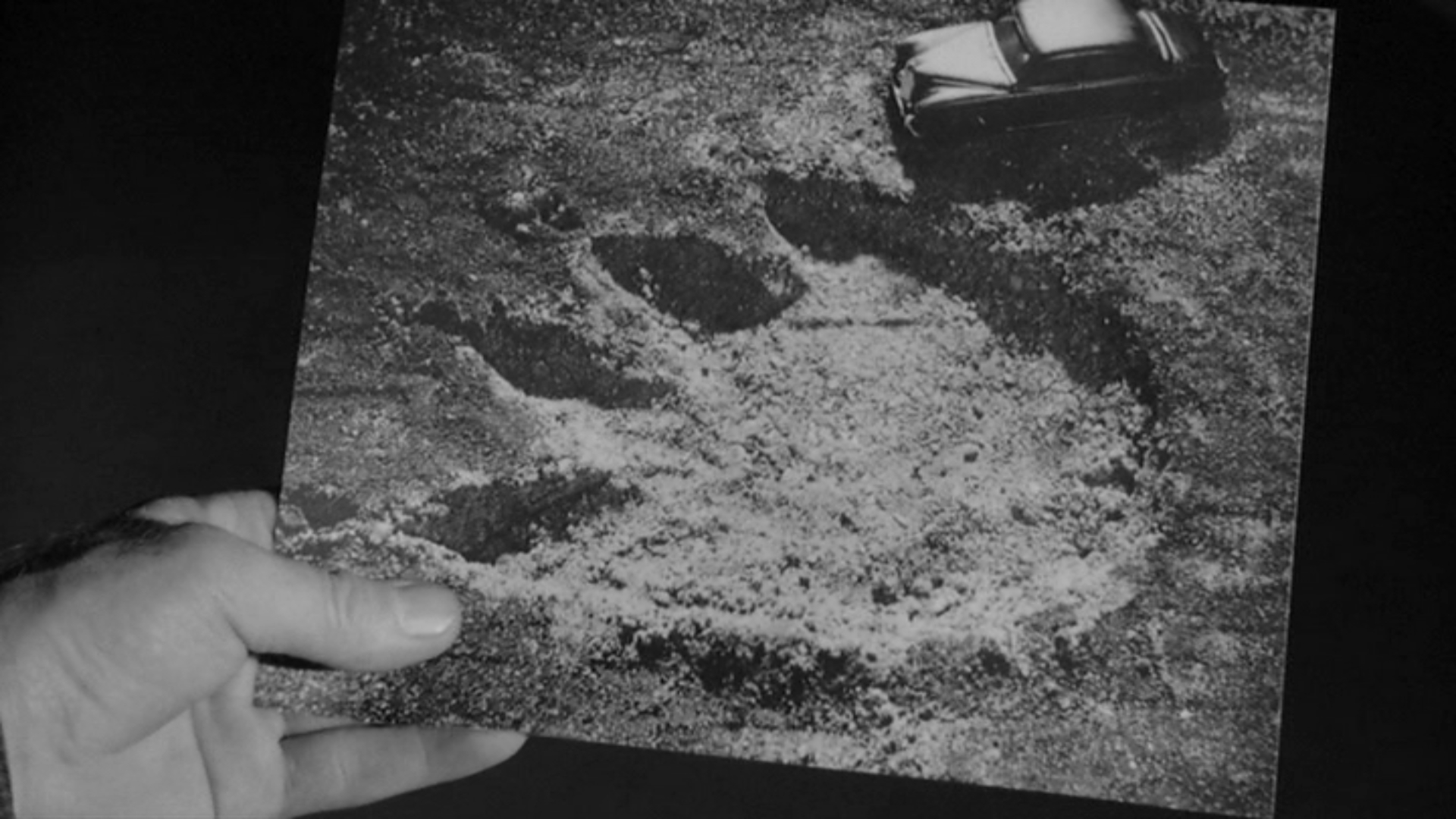
There are nods to other films. We get the footprint trope, and the Behemoth crashes through a bridge, although not Tower Bridge, as the brontosaur does in The Lost World. Gorgo, next in Lourié's trilogy, would demolish Tower Bridge.

This footprint.  Was Godzilla here?

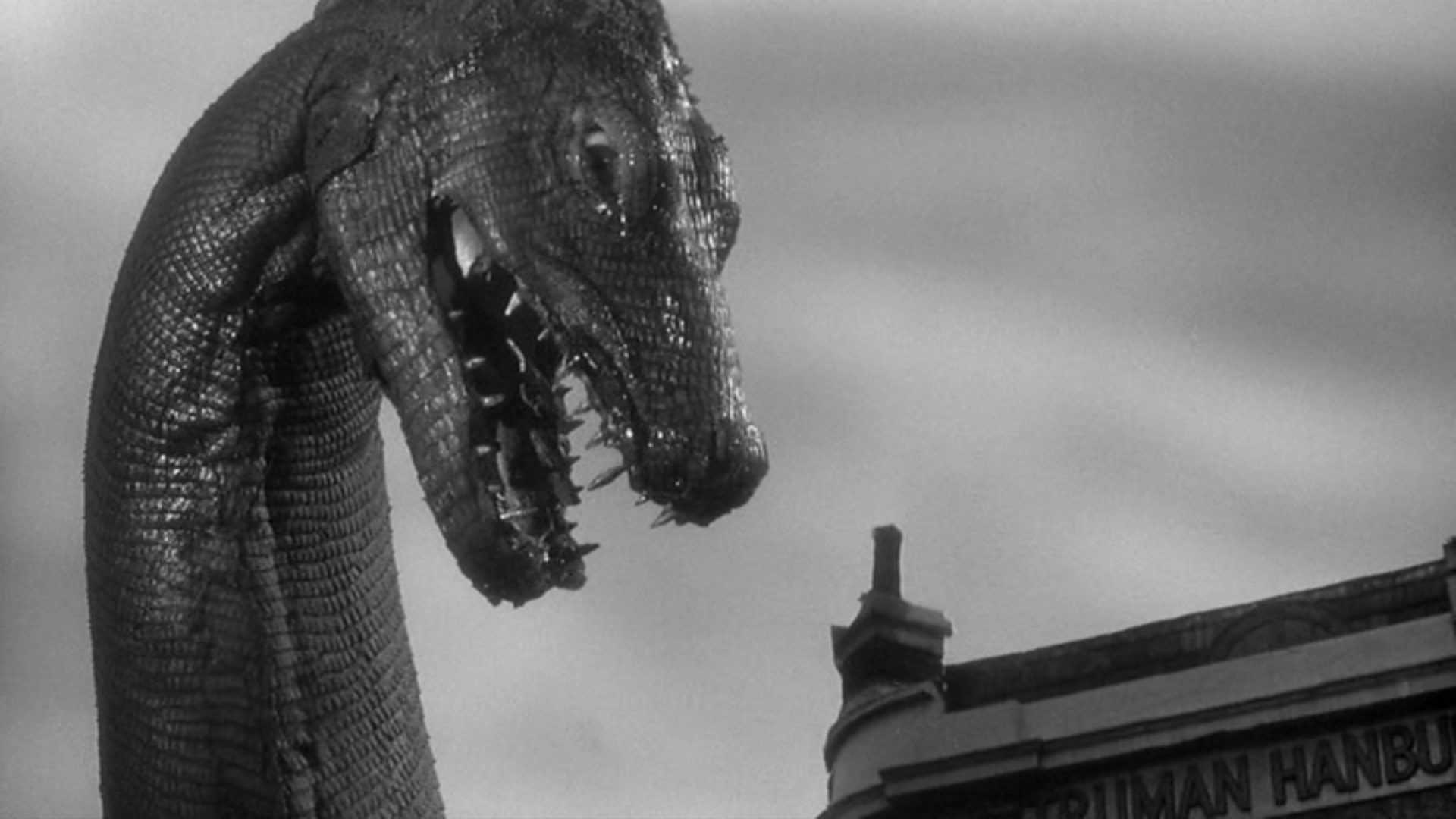
This film is the last that will use stop-motion animatiopn to portray its monster. For whatever reason, stop motion fell out of favor for monster films, perhaps because of the perceived cost, or the time involved. Virtually every film after this will be suitimation, and there is a brief, unsuccessful flirtation with marionettes. With the exception of the Gamera franchise, this will be the last quadruped monster to thunders across the screen until the era of CG. Ironic, since stop-motion's greatest triumph was the human-like Kong.

A close-up of the model.

Ultimatly, Giant Behemoth isn't all that fascinating. It suffers in comparison, both in action and in the presentation of the titular beast, to Beast from 20,000 Fathoms. Behemoth is in essence a remake with less money and attention to detail. The model is less convincing, and we are much less sympathetic because Behemoth's character is less well-defined than either the Beast ro Godzilla.

Possibly the best shot of the Giant Behemoth?

Our next film is Lourié's final film as director, but the pinnacle of his giant monster trilogy. And our very first color film.

Thursday, July 4, 2013

Why Kong is King: King Kong 1933

Of all the giant monster films, King Kong is the one held in highest regard by people who do not ordinarily watch monster films. It was so successful that after it was released in 1933, it was re-released in 1938, 1942, 1946, and 1952 before being sold into television syndication. That's practically unprecidented. The brilliance of the film stands not with the screenwriter or the director. Before Kong appears on screen, the film is ordinary. When Kong is on-screen, the film is brilliant.

There's a party, and we're going to invite a huge ape.

The visual effects that created Kong were the work of one man's workshop. Willis O'Brien was the Industrial Light and Magic of his time, creating believable dinosaurs for The Lost World and his crowning achievement, King Kong. He contributed a staggering amount to special effects, utilizing them beautifully in very complex shots that appear natural on the screen. Unfortunately, O'Brien was not as appreciated as he should have been, partialy because the producers of Kong didn't want to let the secret of Kong's special effects out.

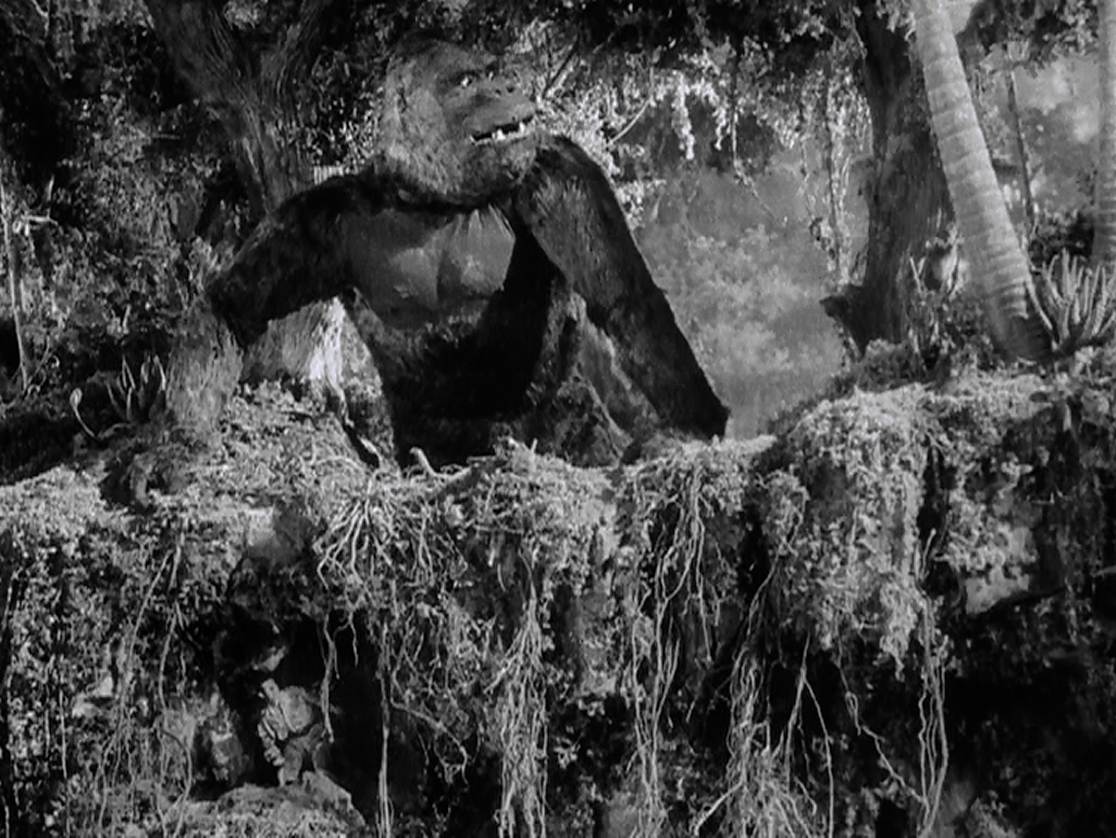
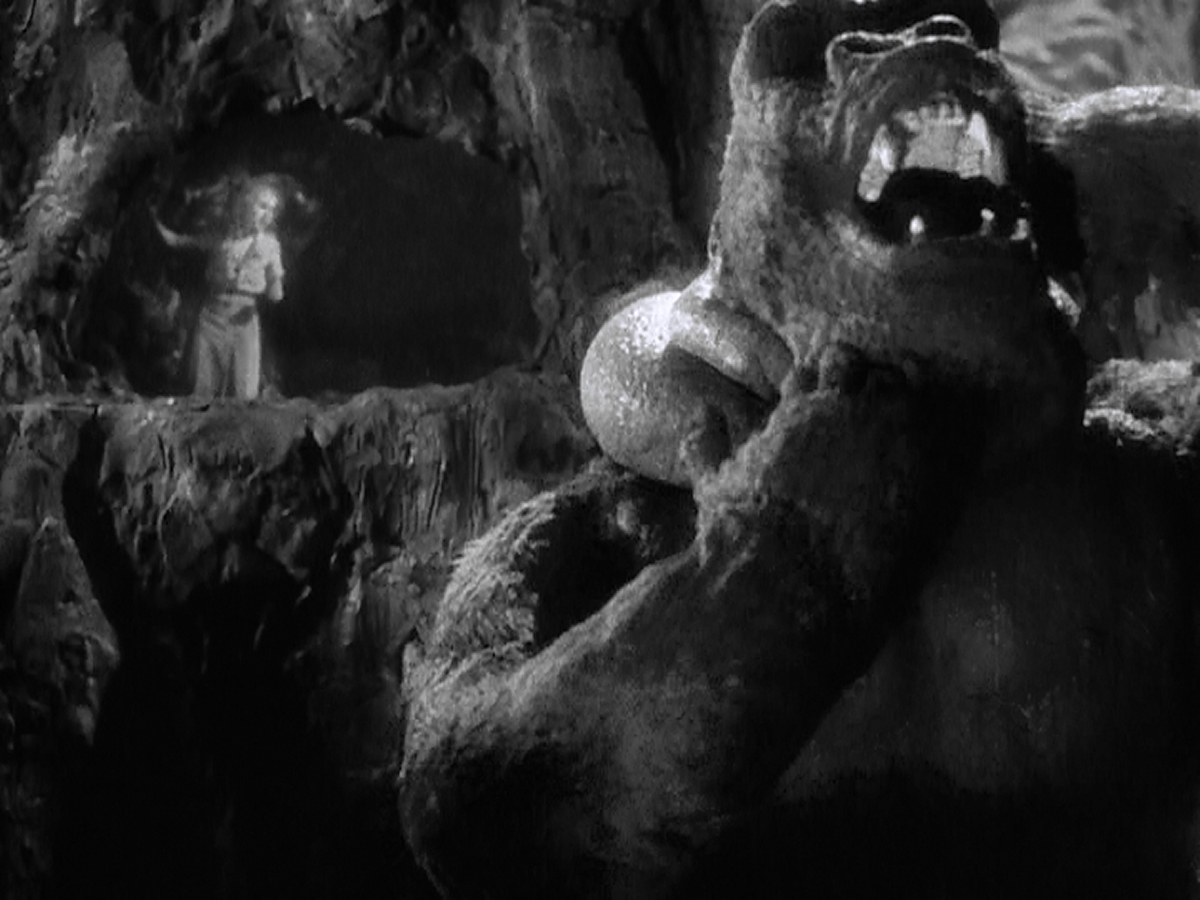
O'Brien utilized a lot of tricks that appeared to cross the boundaries of the miniatures effects and the live actors. While fighting a Tyrannosaur, Kong backs into the tree that his pet human Ann Darrow is in, knocking it over. This is something few other Pre-CG monster films achieve, since the monster cannot touch the actors. The many dodges he uses help create the illusion of interaction, giving the big ape credibility. His greatest contribution to film is making a nonexistant giant ape into a sympathetic character.

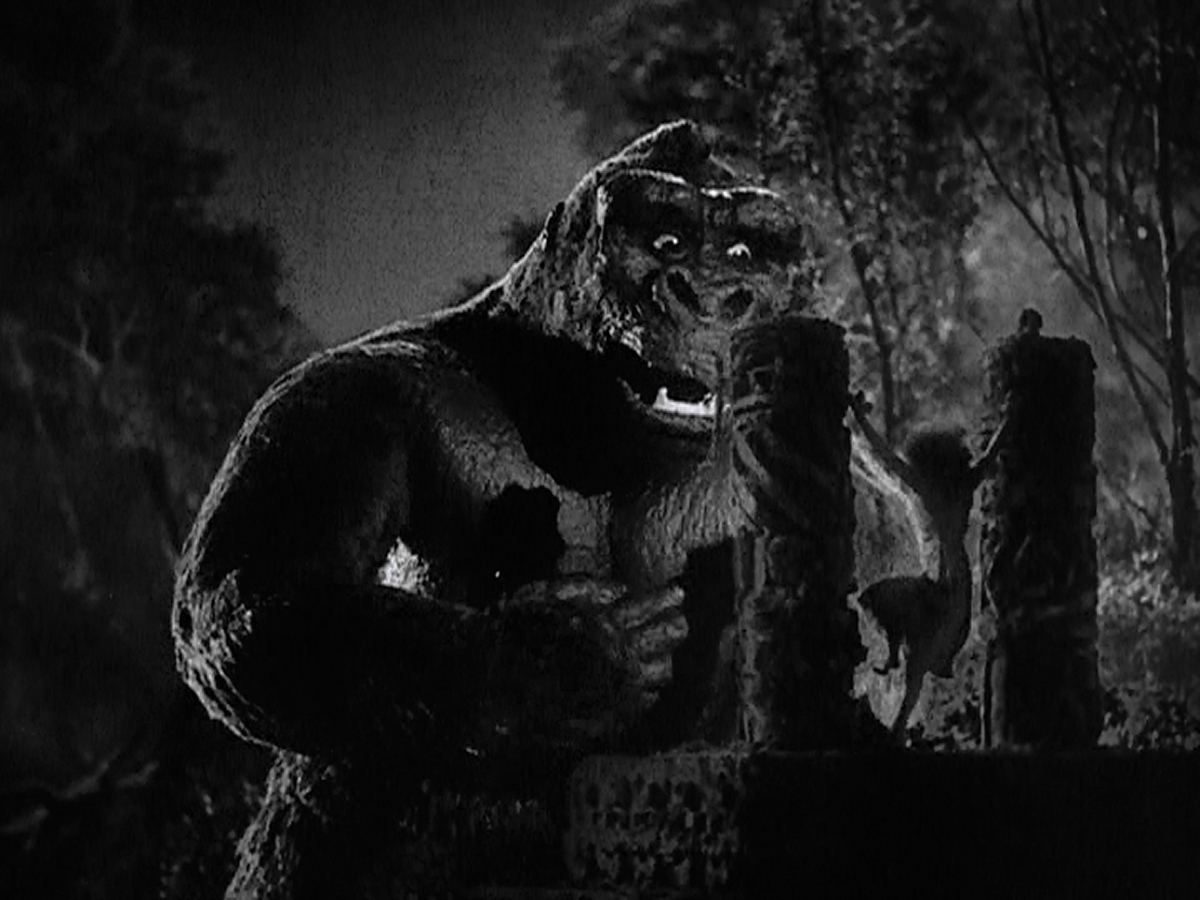
Kong it torn between grabbing Jack Driscoll and saving Ann Darrow.

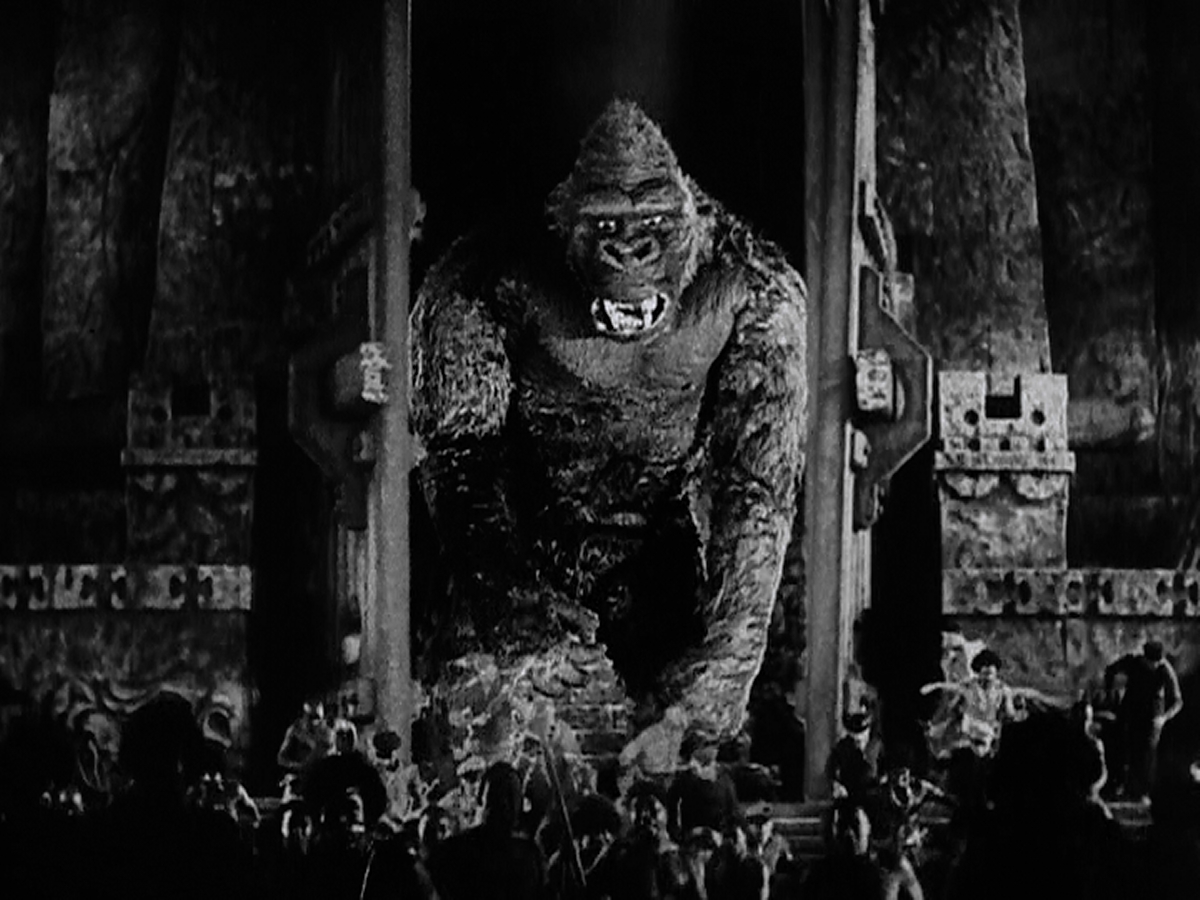
Kong starts off as a fearful brute, pounding his chest and terrifying Ann Darrow. However, his unexpected gentleness with her is touching, and we begin to realize Kong is not a thing of horror, but a character who grows, has joys, and learns. He lives in a jungle where everything is trying to kill him and the humans, and he protects Ann from them, often getting hurt in the process. We watch him make decisions, as when he is trying to grab Jack Driscoll, and Ann screams because of an approaching dinosaur. This is the quality of a thinking creature, not an animal. Even when he is chained up on the Broadway stage, Kong's head and eyes follow the action of the humans below hime. When climbing the Empire State Building, he stops and looks around.

Kong is torn between grabbing Jack Driscoll and saving Ann Darrow.

Kong can be described as a character because he changes as his environment does. In his own land, he is but one gigantic creature among many, able to survive and even thrive. In the land of men, he is a titanic misfit. Ishiro Honda's quote is most applicable here. “Monsters are tragic beings. They are born too tall, too strong, too heavy. They are not evil by choice. That is their tragedy. They do not attack people because they want to, but because of their size and strength, mankind has no other choice but to defend himself. After several stories such as this, people end up having a kind of affection for the monsters. They end up caring about them.” Kong is ultimately the victim of Carl Denham's desire to make money.

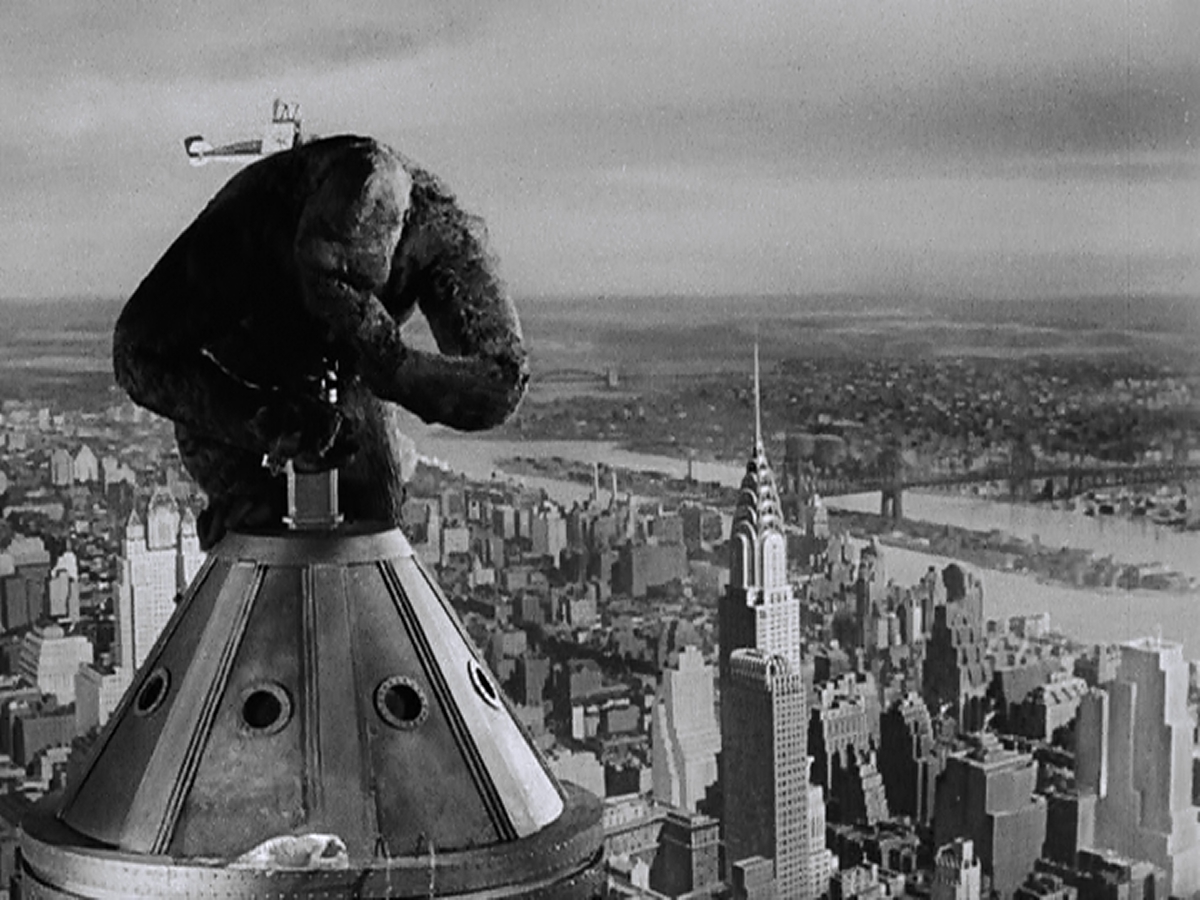
In the iconic climax, Kong squares off again against the technology of a modern city. Having succumbed to the gas bombs, but destroyed the chrome steel manacles, Kong comes up against airplanes. The expression of bewilderment and anger on Kong's face as he realizes he has been wounded humanize him even more. No matter which side the audience is rooting for, the climax provides plenty of dramatic tension. Kong manages to down a plane, but eventually, he is too wounded to keep his precarious footing. He wipes at his eyes, makes a gesture to Anne. He knows he is going to die, and so does the audience. This is the brilliance of O'Brien's work, making the giant monster into a sympathetic creature, turning what could have been a disaster film into a tragedy.

Kong becomes aware of his mortality in a beautiful gesture animated by Willis O'Brien.

A racist text can be easily seen in the film. Aside from the uncomfortably inappropriate Skull Islanders, Kong himself can be seen as a metaphor for racist fear. The gorilla, a stand-in for supposed black male aggression, is fine where he is, but infatuated with the blonde and brought to the big city, he goes on a destructive rampage. It it left up to the viewer to decide if it's the photographer's flashes that enrage Kong, or Jack Driscoll embracing Ann Darrow. Fortunately, this is not an aspect that carries over into later films that do not feature giant apes, but it is a reason I'm not interested in subsequent ape films.

How influential was Kong on Godzilla? Tremendously. Many moments are echoed, especially in the first Godzilla. Like Godzilla, at first we get a short glimpse of the giant monster, but later we get a longer view, and the monster is not diminished by the audience's long look. Kong looks good. Godzilla looks good. There is a time to hide the monster (although 2006's The Host shows us that even this is unnecessary, given the right plot structure), and there is a time to show that the monster's actions are what make it monstrous, rather than it's appearance. Both monsters wreck with a train. Kong destroys the elevated train, while Godzilla merely steps in front of one, emphasizing their differences. After an initial sighting, humans discover the footprints of the giant creature.

Kong must be big as a house!

Which is not to say that the later film is a copy of King Kong. Godzilla dispenses with King Kong's middle act, going straight from the discovery of the giant monster to the rampage in the city. This is partially because Godzilla has no place on this earth. He is not a natural creature. Kong's time on New York City is less then twenty minutes, his rampage only fifteen. Godzilla's Tokyo rampage takes about the same amount of time, but the film shows us the human consequences of that rampage, after which a way must be found to destroy him. The nature of Godzilla is that nothing as simple as planes and bullets will do. Further, Honda takes the mother and child moment, seen in both The Lost World and King Kong, where the child or mother and child are directly in the path of the rampaging monster, and turns it into a heart-wrenching moment. Godzilla's version of this scene has her say that they will reunited their father, and is vastly more effective because the mother is humanized with dialog. None of O'Brien's mothers in peril have depth.

Poor kid.

Once Godzilla was a working franchise, it was perhaps inevitable, given Kong's fight with a Tyrannosaur, that King Kong and Godzilla would fight. The combat between Kong and the Tyrannosaur is one of the most memorable moments in the film. Again, moments were repeated from King Kong, such as when Kong throws Godzilla the same way he throws the Tyrannosaur. There is also a moment where Kong shoves a tree into Godzilla's mouth; a moment not actually in King Kong, but in a promotional photograph. Interestingly, the film was based on a Willis O'Brien idea.

Kong flips a tyrannosaur.

Stuff that in your pipe!

King Kong is a magnificent film that no lover of monster film can ignore. So many tropes were created with this film that it is the complete break-out of the genre. There have been dozens, if not hudreds, of references to the film and character in film since then.

Kong likey!

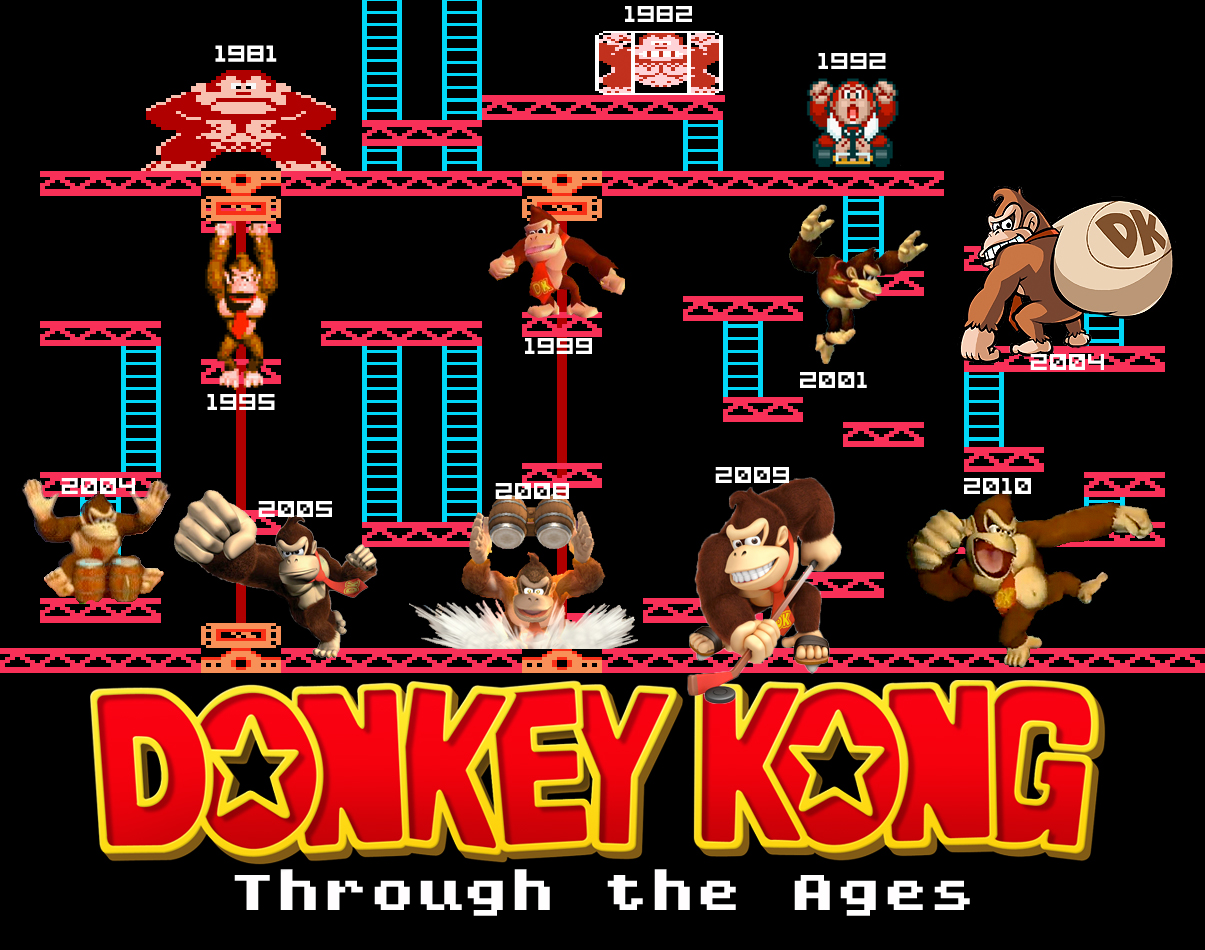
I also want to take a moment to acknowledge Kong's most successful descendent, Donkey Kong. In the 1981 game Donkey Kong, a large gorilla kidnaps Pauline and stands at the top of a series of girders, as if the Empire State Building were a constructon site. Mario climbs the building and attmepts to rescue Pauline. While the initial game is similar to the King Kong scenario, later versions are not.

As with Godzilla, the monster that is familiar becomes our friend. Donkey Kong is no exception. Like Son of Kong, a sequel to Donkey Kong was Donkey Kong, Junior, which made the giant ape more sympathetic, as the player was rescuing him from the mean carpenter. Kong and his son then go on to be popular characters starring in their own game series, and appearing in most interations of the Mario Brothers franchise. The monster becomes our friend.

Donkey Kong, from villain to fun guy!

Next up? Ray and Ray make the beast!

Thursday, June 27, 2013

Godzilla's Grandpaw: 1925's The Lost World

So, a bit of mission creep. I originally wanted to just discuss Godzilla and a few of his imitations, but I realized that I was also interested in where the idead behind Godzilla came from. Giant radioactive lizards do not spring from nowhere. Ideas, especially film ideas, have a traceable ancestry, as well as a list of descendents, and I want to delve into the origins of ideas and the way they combine to create something extraordnary. As a result, I'll be in black and white for a little whle. I hope you don't mind.

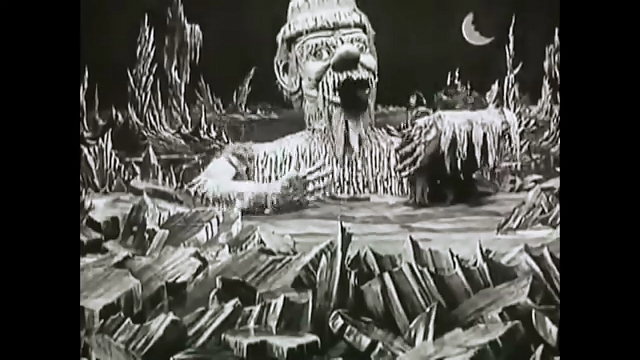
I would be remiss if I did not include what is considered the first appearance of a giant monster in film, George Melie's À la conquête du pôle (The Conquest of the Pole). In it, a frost giant attacks the party, consuming (and then regurgiating) one of its members.

A Frost Giant and a tasty, tasty scholar, from George Milie's 'Conquest of the Pole'

The anmation of the large puppet is pretty good; the eyes, brows, and ears wiggle, the mouth moves. The professors react in the same way as all humans confronted with gigantic monsters; they fire at it, to no effect. Only when a canon is brought to bear does the giant leave off snacking. It is not killed, however, but withdraws from the noise and smoke of the canon.

But The Frost Giant really didn't have much influence on Godzilla, or many other giant monsters. The construction technique is very different, it is not central to the film, and it has very little personality. The monster is in it's own territory, rather than trespassing on the the realm of mankind.

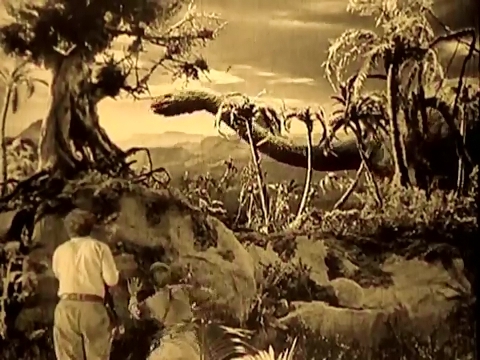
The oldest film that had the most lasting effect on Godzilla, and giant monster film in general, is the 1925 The Lost World, with dinosaurs animated by Willis O'Brien. This is, rather famously, a film greatly loved by Rays Harryhausen and Bradbury. Dinosaurs and humans share the screen effortlessly, thanks to O'Brien's pioneering use of split screen.

In the foreground, humans.  In the background, dinosaurs, from the 1925 Lost World.

The Lost World was the first very successful dinosaur film, and the first international success of Willis O'Brien. As I discuss Godzilla's ancestry, Willis O'Brien and Eugène Lourié will consistently crop up.

O'Brien's work in The Lost World is meticulous and fascinating. For this film, he incorporated bladders into several the models, allowing them to simulate breathing. His attention to detail and desire to make each model have its own personality serves him well here, but much more so in King Kong, since the big ape has a lot more screen time. The amount of time the film devotes to dinosaurs is impressive. They first appear 36 minutes into the film, and the model sequences are pretty consistent from then on. It's one of the most extensively special-effects films filmed up to that point.
In the foreground, actors.  In the background, dinosaurs, from the 1925 Lost World.

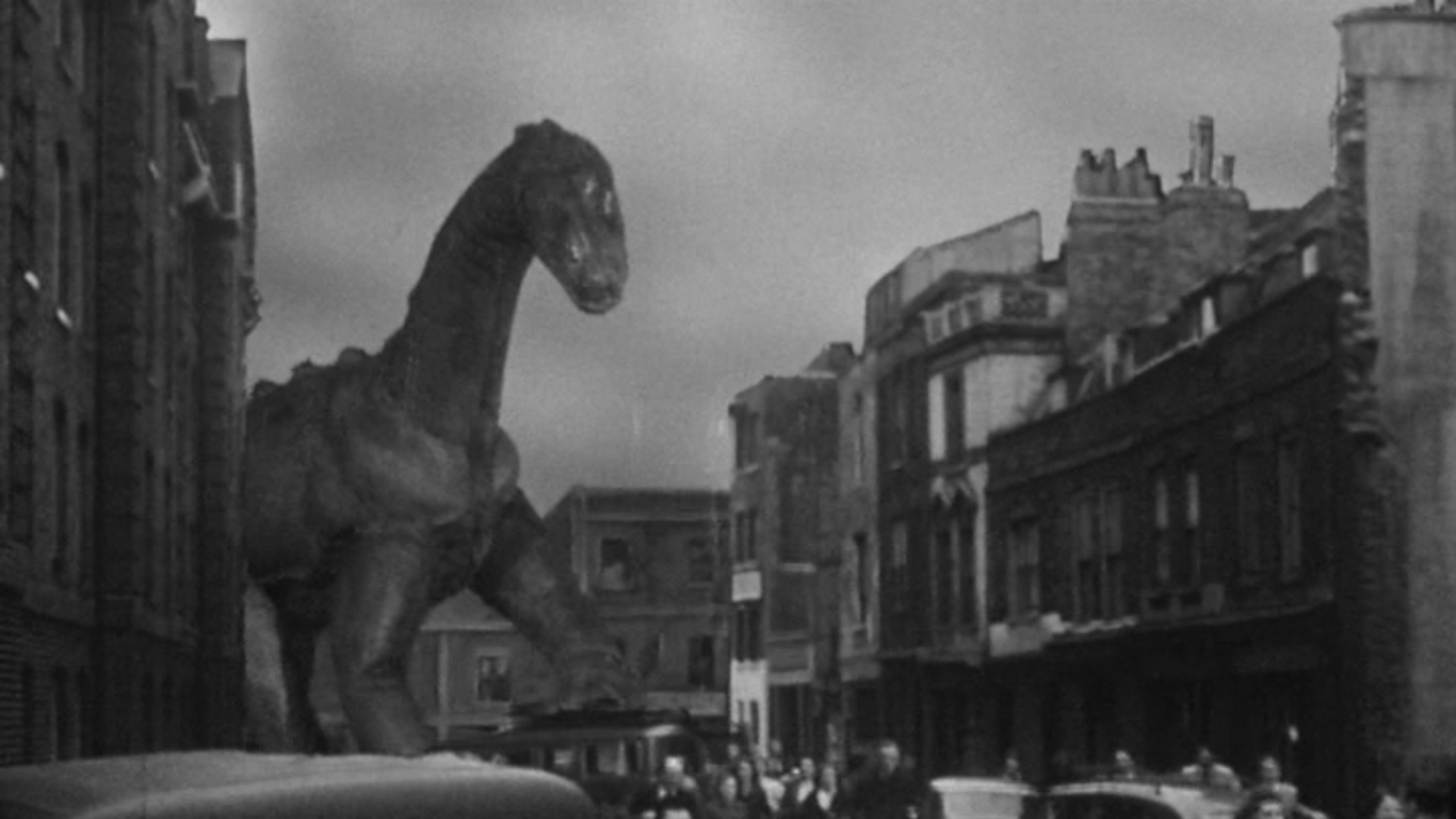
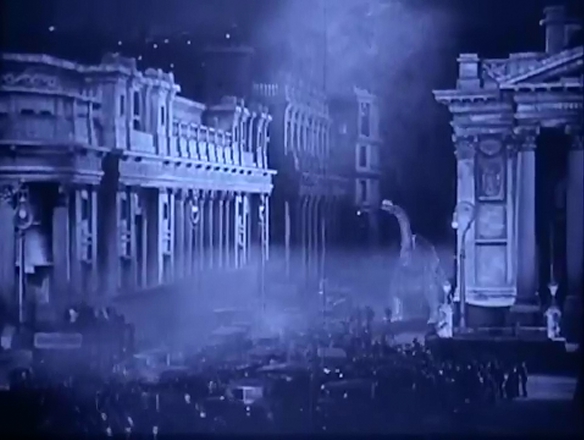
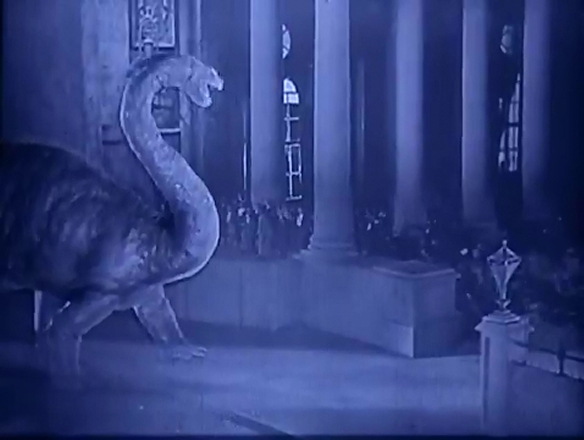
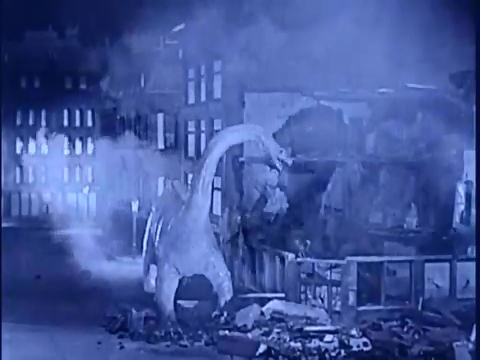
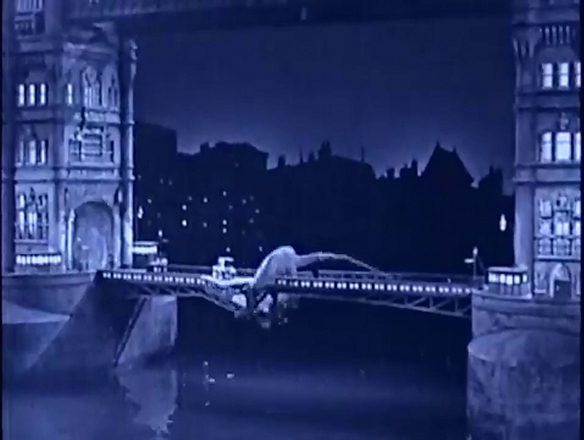
After an hour's worth of adventures on the Plateau of Dinosaurs, Professor Challenger manages to apprehand a sauropod and bring it back to London. In the book, his capture was a pterodactyl, but the brontosaur was a much better idea for on-the streets mayhem. In the Crichton/Speilberg film, it is escalated again to a T-Rex. Kong-style (but off-screen) it gets loose and rampages for five muinutes at the climax of the film. People panic, fences are stomped, a building smashed, all before it crashes through Tower Bridge and into the Thames. Back in its element, it swims off, one of the few giant monsters to survive its inital clash with mankind.

In the foreground, a dinosaur.  In the background, actors. From the 1925's The Lost World.

The sign says weight capacity 3/4 of a dinosaur.  From Willis O'Brien's 1925 Lost World.

This is an enormously influential sequence, and will be referred to by Willis and his protegee Harryhausen several times. Images and scenes that are repeated or imitated include mother and child in the path of the onrushing giant monster (later seen in King Kong). The dinosaur is intrigued by the street lamp, as the Rhedosaur is intrigued with the lighthouse and fog horn in Beast from 20,000 Fathoms. Tower Bridge is prominently featured, then damaged, as it would be in Gorgo. The brontosaur sticks its head in a window, the way Kong puts his hand into a window. Fleeing men and women turn to the underground for safety, as they do in Godzilla, Godzilla Raids Again and Gorgo, while monster's heavy tread causes debris to rain down.

How to maintain the illution; a life-sized model of the dinosaur head looking in the window.  From Willis O'Brien's 1925 Lost World.

In this five-minute sequence, the seeds are laid for the first generation of giant monster films. The beast runs amock, people flee in panic, and destruction ensues. Godzilla Raids Again changes the dynamic of the genre, adding the opponent for the monster to fight, but so many of the films I'll be discussing, from Beast from 20,000 Fathoms to Cloverfield take their inspiration, directly or indirectly, from this sequence.

Man, if I was a bigger dinosaur, I could trash this entire block!

Next week, the Big Ape. With a quick side digression about a plumber.