Showing posts with label Godzilla. Show all posts

Sunday, August 27, 2017

Bigger, Nastier, More Amazing: Shin Godzilla

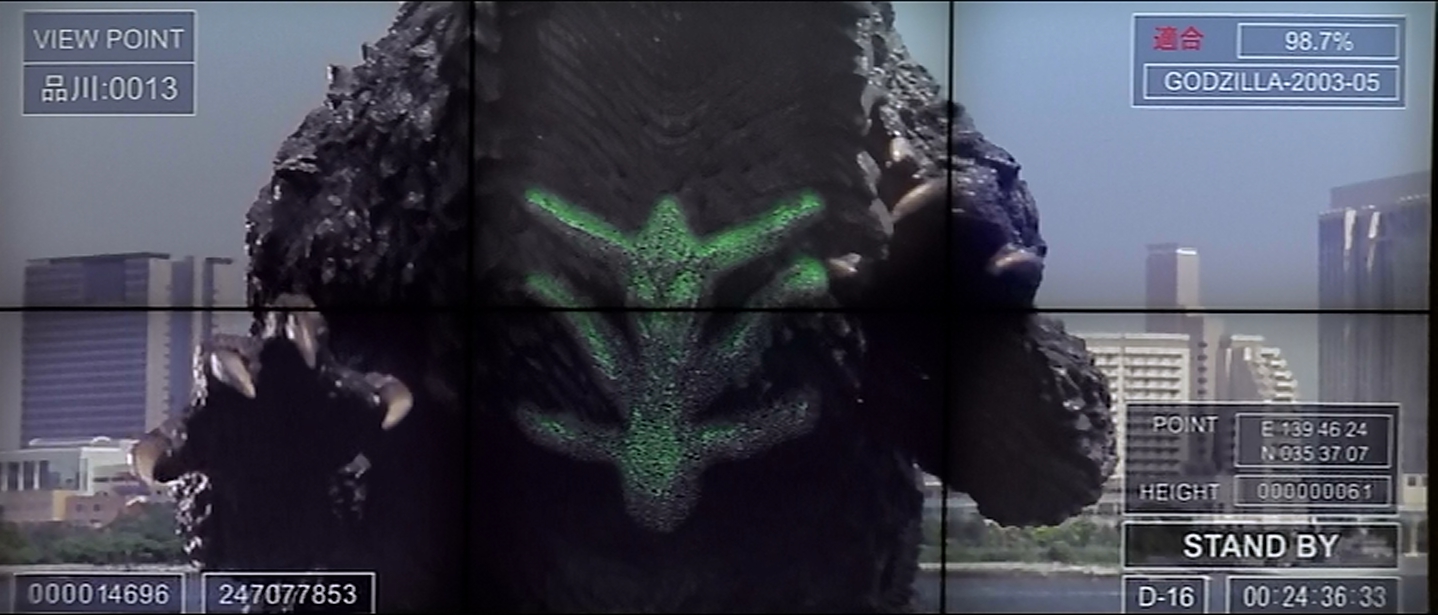
Shin Godzilla famously can mean 'True Godzilla' 'Pure Godzilla' or 'God Godzilla'. Personally, I find the Godzilla concept to be robust and flexible enough that Godzilla can be cast in a wide range of roles and still be satisfying entertainment. Godzilla has been a metaphor for nuclear destruction, protector of mankind, destroyer of hated industrialists, the living embodiment of Japan's war dead, a metaphor for natural disaster, and a walking method of world destruction. This new version, which draws heavily on imagery from the 2011 Tōhoku earthquake and tsunami, as well as the subsequent Fukushima nuclear disaster, presents the viewer with a lot of interesting things to think about.

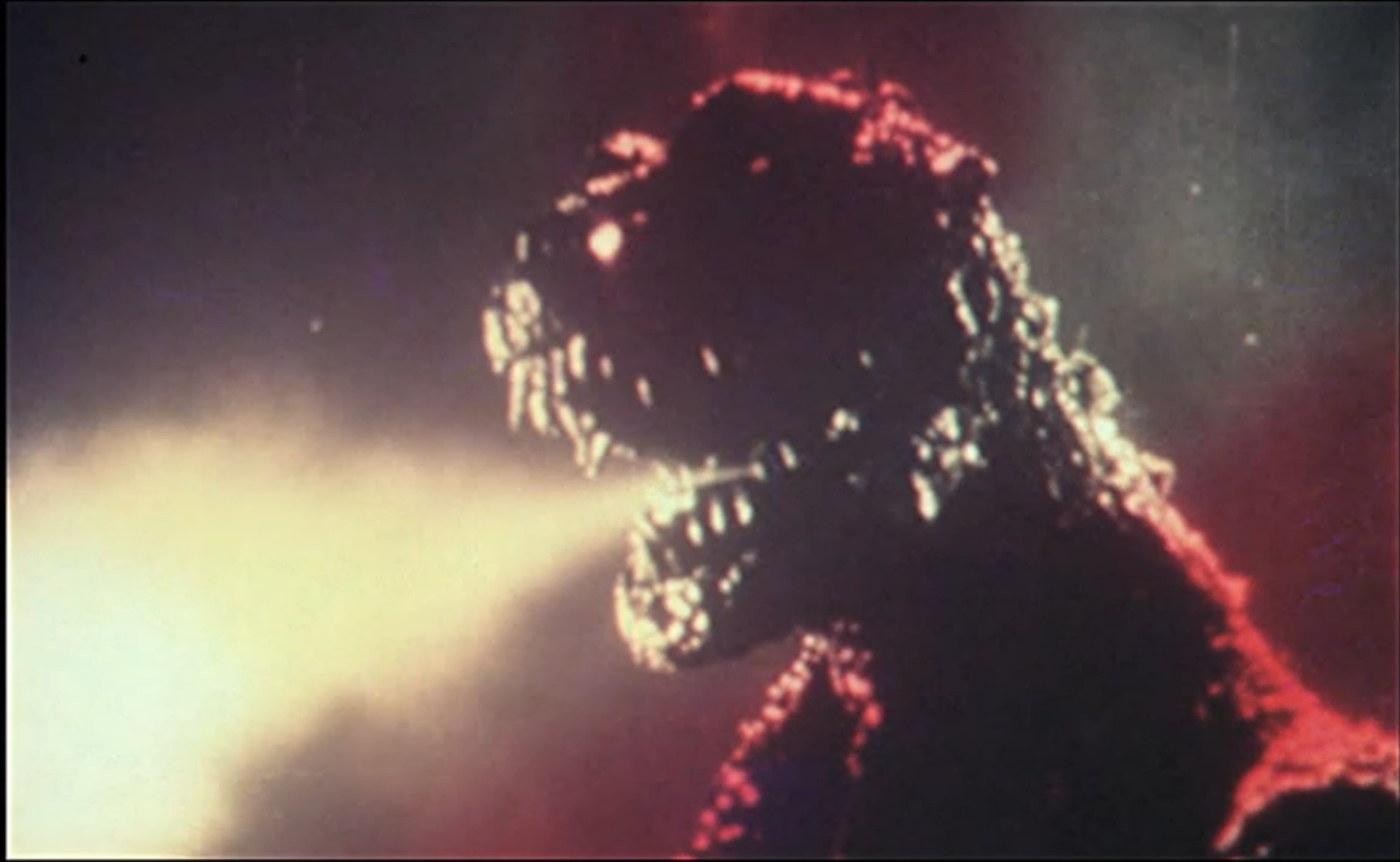
Shin Godzilla, lookin all kinds of unhappy

Structurally, it is closest to the 1954 Godzilla or The Return of Godzilla. But those two films do not have Godzilla fighting a monster. In Shin Godzilla Godzilla is pitted against the lumbering, inhuman monstrosity that is the Japanese government's bureaucracy. And in fact, this is exactly the sort of subtle humor that runs through the film. Despite being a grim depiction of a nation in crisis, there are tiny touches of humor that keep it from being an overwhelmingly dark experience.
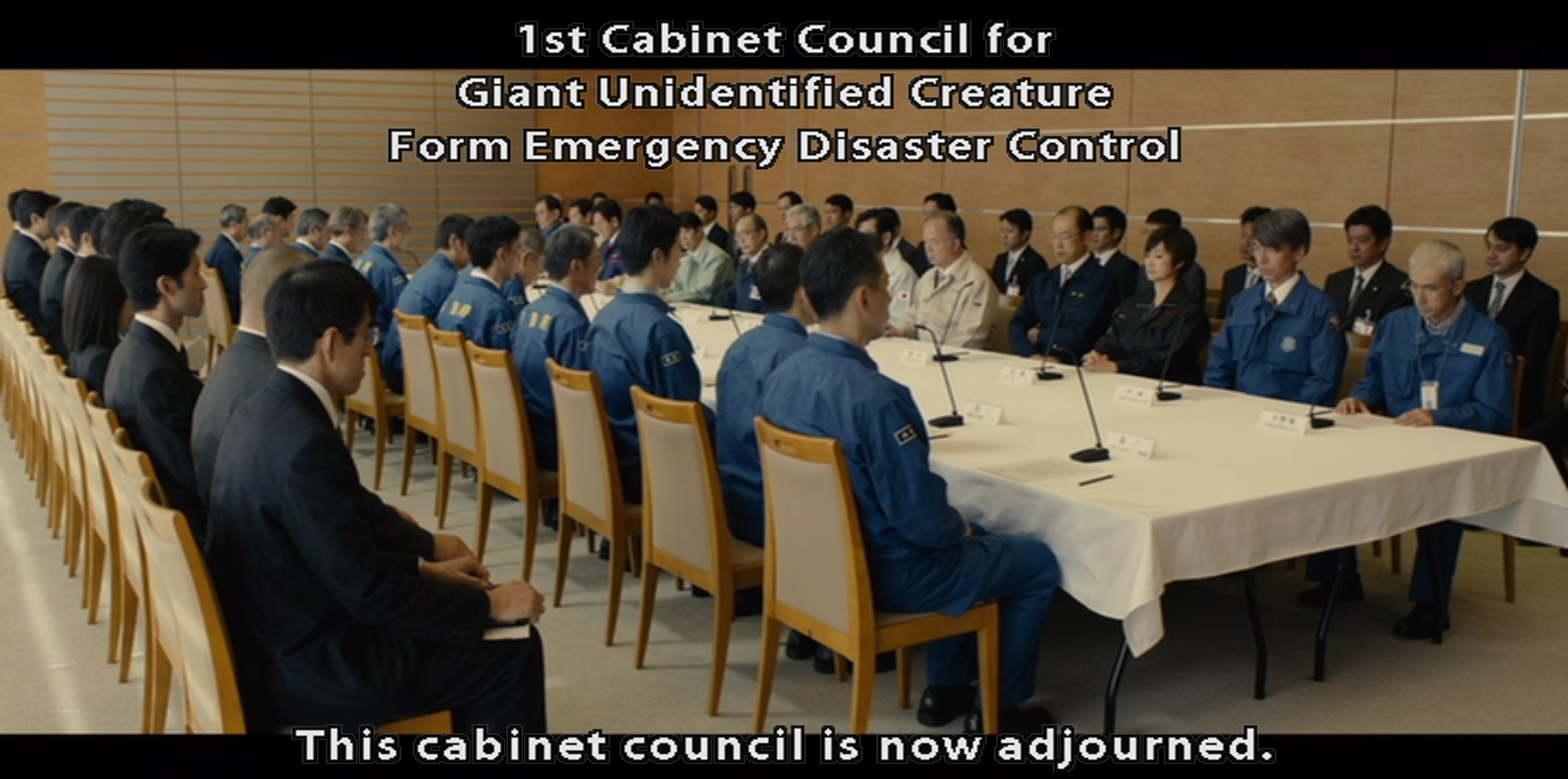
Shin Godzilla's primary opponent: bureaucracy

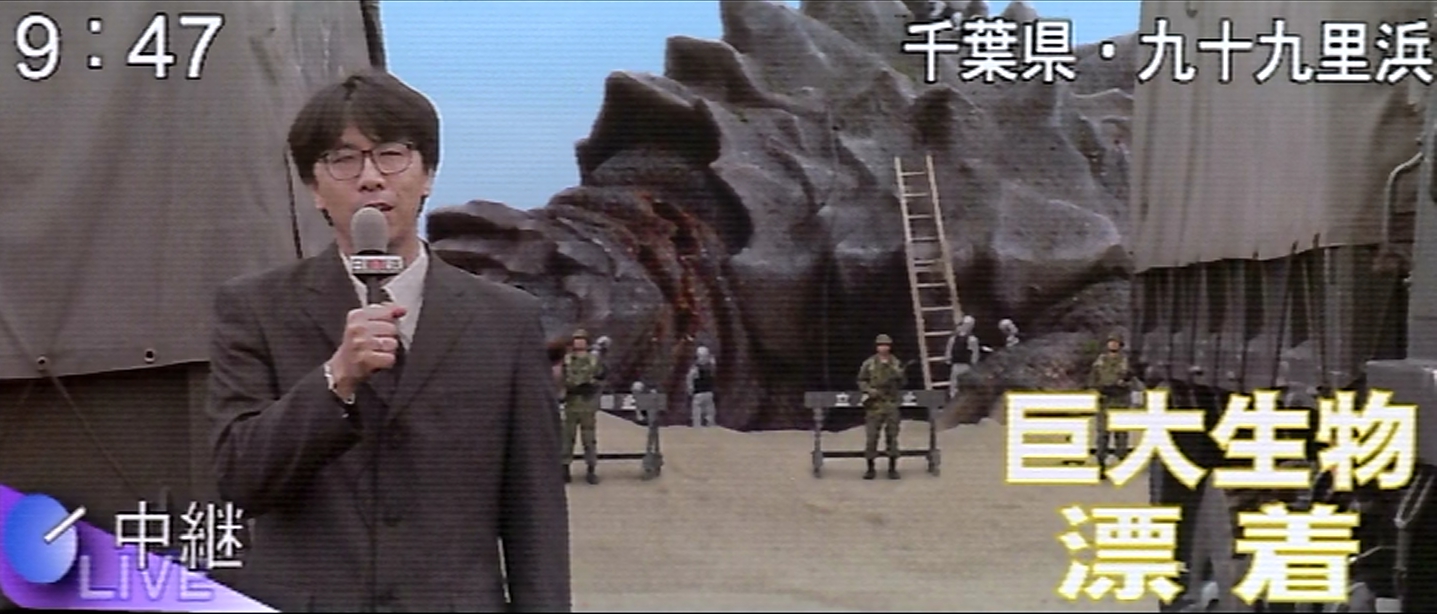
The film is firmly rooted in Godzilla's history, very specifically, the 1954 film. Godzilla attacks twice. First it comes ashore and destroys the Shinagawa district, and then returns to the sea. It attacks again, is met with much stiffer resistance, and only after being attacked does it return fire with its atomic breath. At the same time, directors Hideako Anno and Shinji Higuchi (who directed the special effects for the Shûsuke Kaneko's Gamera films) maintain a very delicate balancing act between the past and the present. There is a lot of homage in the film. It starts with a boat, as did so many Godzilla films, but this time, it's the abandoned boat of a biology professor. And there are little details as to what happened that the film doesn't address: the shoes neatly placed next to each other indicate Professor Goro Maki killed himself. Why or even if he has, is part of the plot that needs unraveling. Many of Ikira Ifukube's cues are used, as well as many of the sound effects, including Godzilla's unique Showa-era roar. There's even a shot of Godzilla destroying the theater it destroyed in the 1954 film. But it's not entirely about the past. The film is relentlessly modern, involving social media, a government that trips over itself addressing a disaster, endless committee meetings, and science that involves genes, complex biological processes, and chemical topology.

Our protagonist is Rando Yaguchi, a modern career politician who suffers a bit from being always right. As a junior member of the Cabinet, he is not listened to, but as someone young, he pays attention to social media. While the rest of the Cabinet discusses what has damaged the Aqua-Line, he proposes it is a giant creature, because of a video he saw on social media. When given the freedom to solve the problem as he wishes, he sets up a flat organization of “lone wolves, nerds, troublemakers, outcasts, academic heretics and general pains-in-the-bureaucracy” which does not stand on seniority. This team of mostly young mavericks gets results. Rando is fortunate enough not to take a ride on a doomed helicopter. He isn't insufferably all-knowing, and Hiroki Hasegawa is a good enough actor to make Rando interesting and magnetic. But he represents the wish for a newer, younger Japanese government that doesn't constantly have meetings, where talent is the means to ascent rather than bench time and party loyalty.
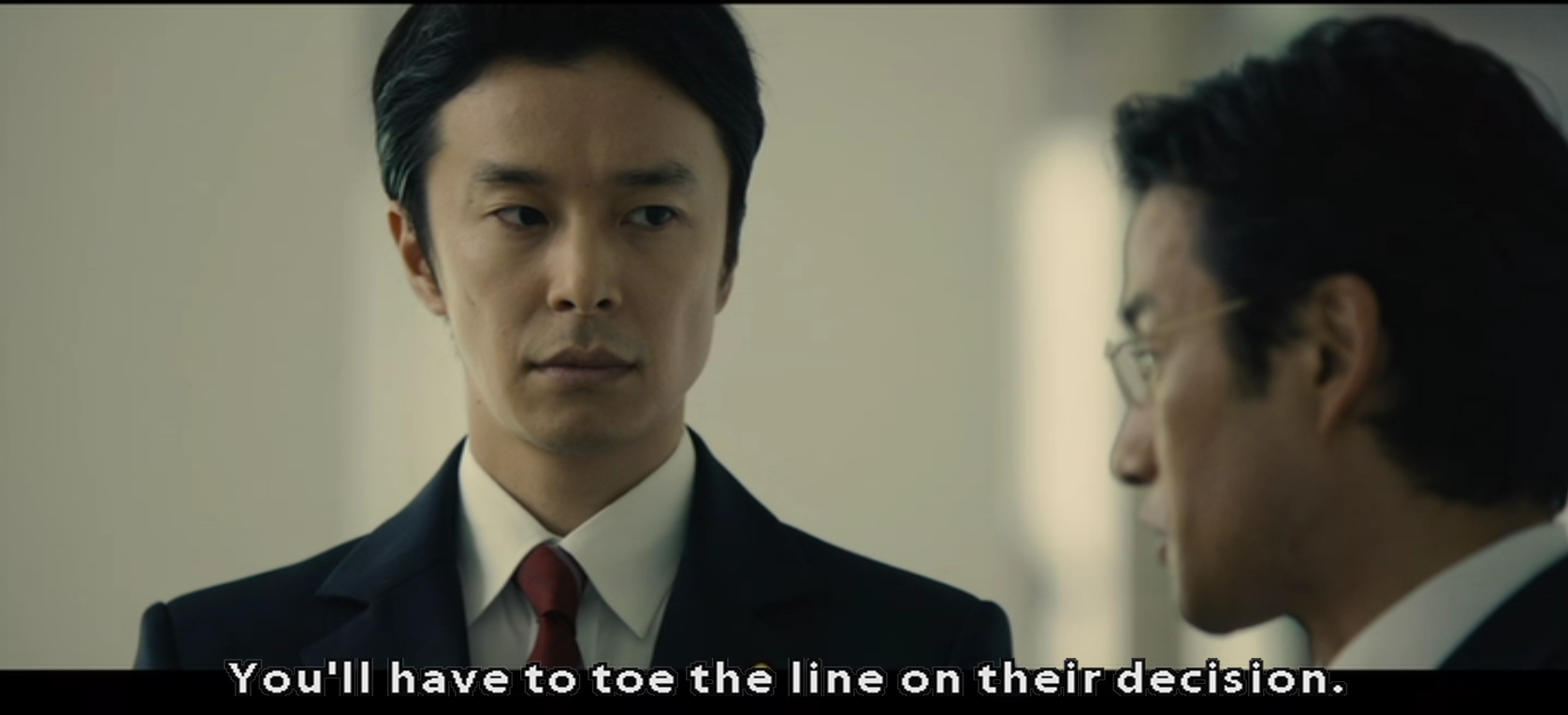
Rando Yaguchi, the man with the Script with him

He serves as a counterpoint to the government, which under the old guard, is always wrong. As Godzilla moves into the city, they wonder which governmental department's jurisdiction is comes under. The directors love smash cuts that underline the difference between governmental decree and reality. Literally just as the Prime Minister says that the creature won't be able to move about on land, we see the nascent Godzilla come ashore. As a self-evacuation plan is formulated, and every effort will me made to control traffic. As in 2014's Godzilla, there is another smash cut to utter deadlock on the roads.

The presence of the US is gradually felt more and more, like an oppressive hand bearing down. At first, the US is discussed in terms of backup to military action. Then we learn that they are claiming all the samples Godzilla has left behind. Then, following a telephone conversation with President Ross, the Prime Minister comments “A lot of unilateral requests. Typically Americans.rdquo; This is a more modern update of the political scenes in Return of Godzilla, in which the nuclear powers Russia and America both argue with the Japanese PM about nuking Godzilla. In 2016, we have a similar conflict, with the Russians and Chinese on one side, and the Americans on the other. Unfortunately, the UN agrees that if Japan cannot handle Godzilla, someone gets to drop a nuke on it. Fortunately, Japan has a lot more international swing that was presented in Return. In Shin Godzilla, Kayoko Patterson comes into the picture. Being both American and Japanese, she is more sympathetic to the Japanese government than the average American, and has the connections to release American information to the Rando. But Godzilla is not directly the fault of America, rather the creation of Goro Maki, who was employed by the American DOE, but acted on his own. America is not a fully trustworthy ally, but a large presence that cannot be ignored. However, it can be bargained with. Which is very different from the absolutist political climate in 984. Shin Godzilla feels more nuanced, more realistic, like there is a larger and more complex world outside what we are shown on screen.

In Legendary Godzilla, a Japanese professor working for Monarch (primarily an American organization) brings the name Godzilla from Japan, but doesn't refer to the name's origin. Goro Maki is apparently from Odho Island, the island Godzilla first landed on in the 1954 film, unreferenced in the franchise then. He adapted the name from Odho Island's obscure mythology.
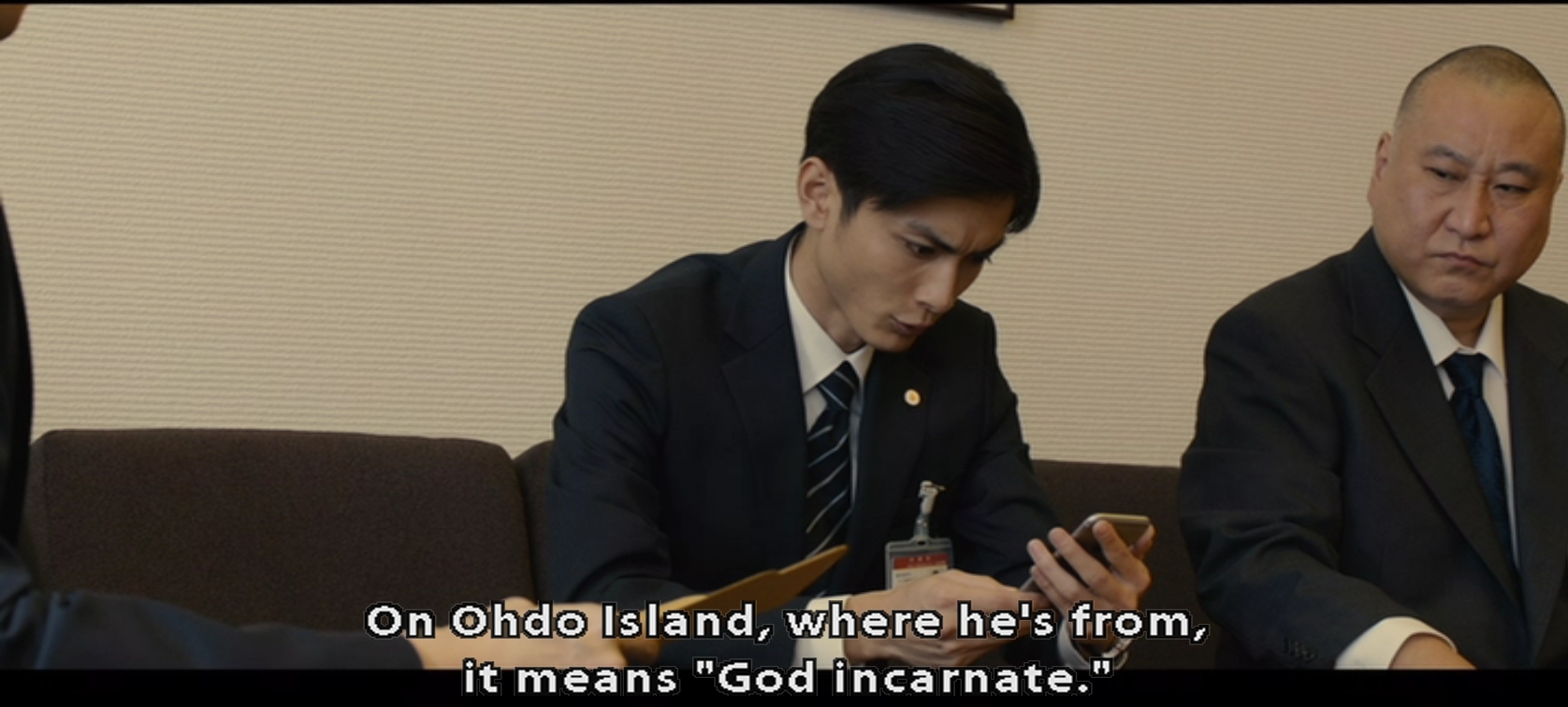
Odho Island. That rings a bell

Godzilla itself, as with the Skullcrawlers in Kong: Skull Island, takes a certain amount of inspiration from Pokémon. Which I suppose is fair, since the main concept of Pokémon is to have Godzilla style monster vs monster fights. Shin Godzilla is self-“evolving,” like a Pokémon. However, the changes are properly referred to as mutation, rather than evolution. This sort of changing creature is well-established in earlier films in the series. Mothra, which has larval and adult forms, Hedorah and Destoroyah all changed forms. It is an important implication that all three of these creatures end up with wings. One of Rando’s scientists hypothesizes that Godzilla could, if given enough time to mutate, develop flight. But Godzilla has always previously kept to a single form. And I like the fact that its initial forms, the lungfish, and its initial upright mutation, all look awkward. It doesn't look like it has fully adapted to the land until its last form, the familiar upright stance with the toothy, dinosaur-like head.
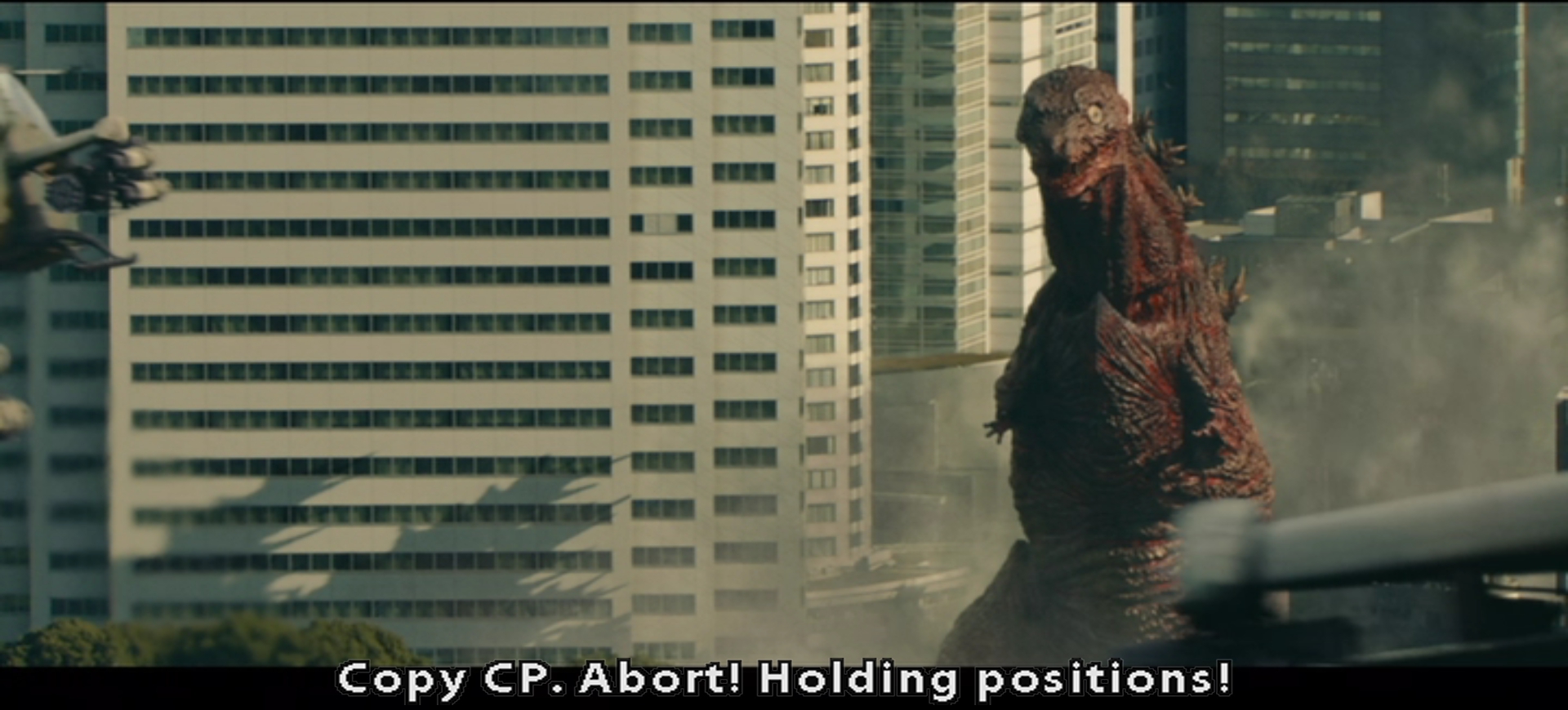
Big, awkward Godzilla

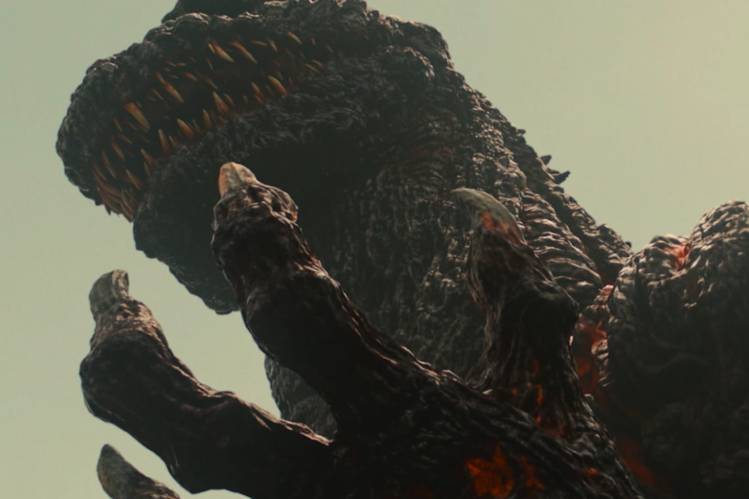
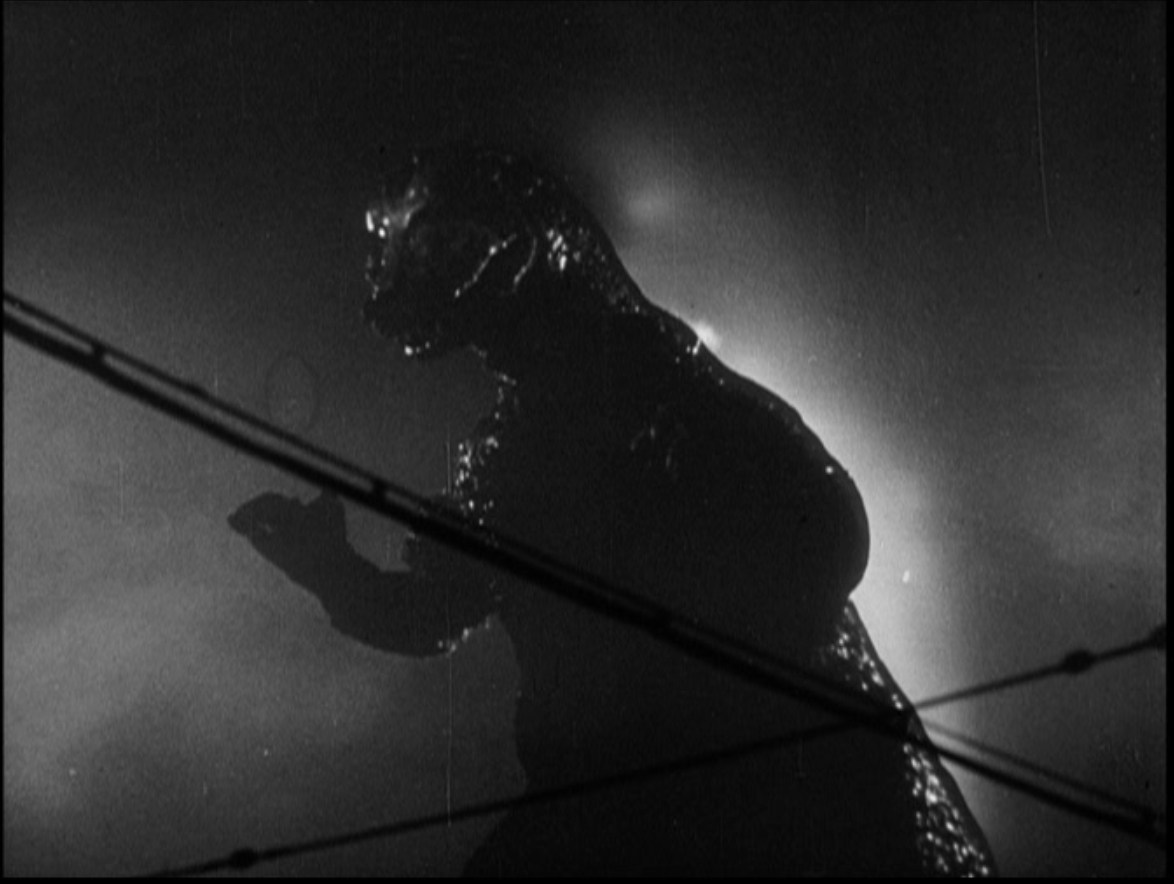
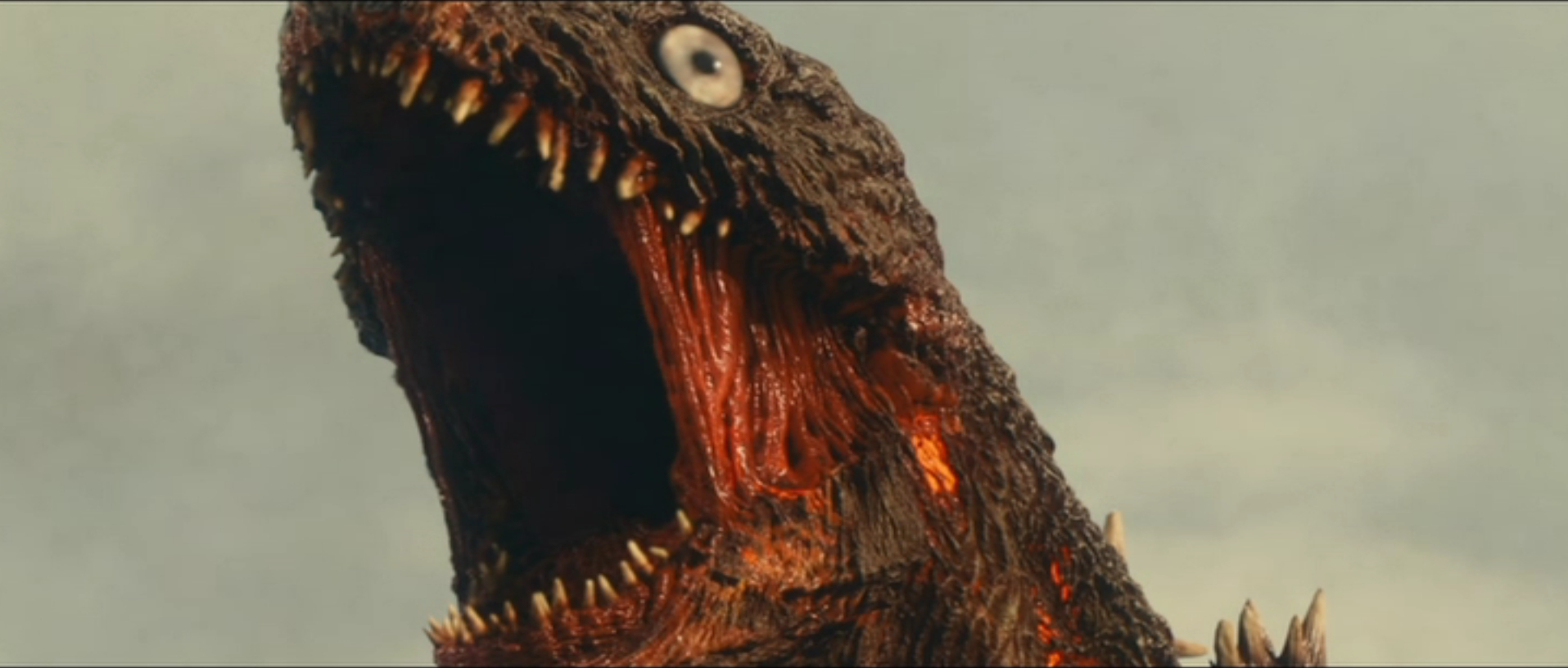
The directors do an excellent job of making their CG critter feel enormous. Mostly, Godzilla is seen in parts, often too large to be contained in the frame. When it is seen as a whole, it’s from far away. This is also the most tortured Godzilla yet put on screen. Godzilla radiates a red hot glow from its interior, as if it were a walking volcano or hot lava field. The skin of the walking form is knobbed, recalling the keloid-like skin of the 1954 original, and also the appearance the pillow lava. Its arms are smaller than ever, and don’t move. The teeth are huge and jagged. Overall, it’s a terrifying new look for the King of Monsters.
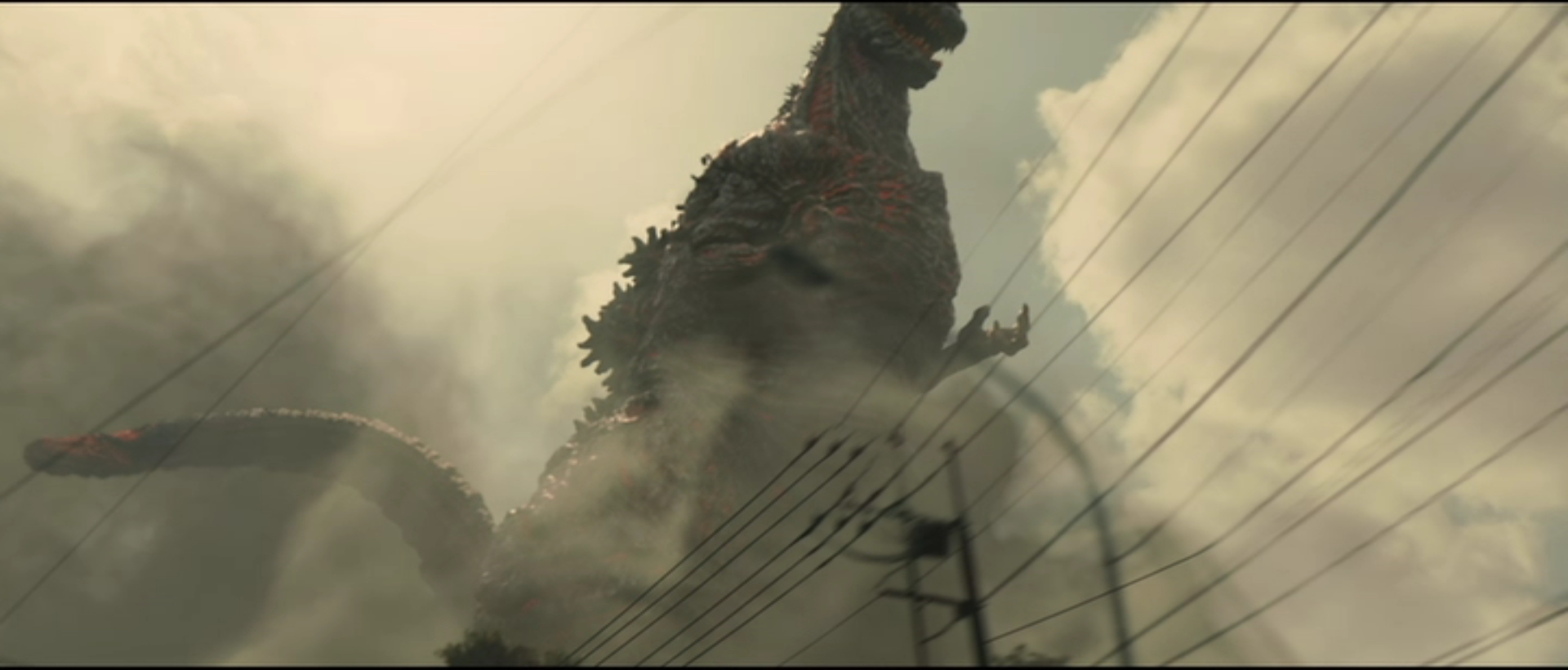
Big, bad Godzilla

Of particular note is its tail. It's enormously long. It’s also the first glimpse we see of Godzilla. But more than any other part of Godzilla, the tail changes. When Godzilla first comes ashore, it has a flat tail oddly like King Ghidorah's. It even seems like it's the right color.
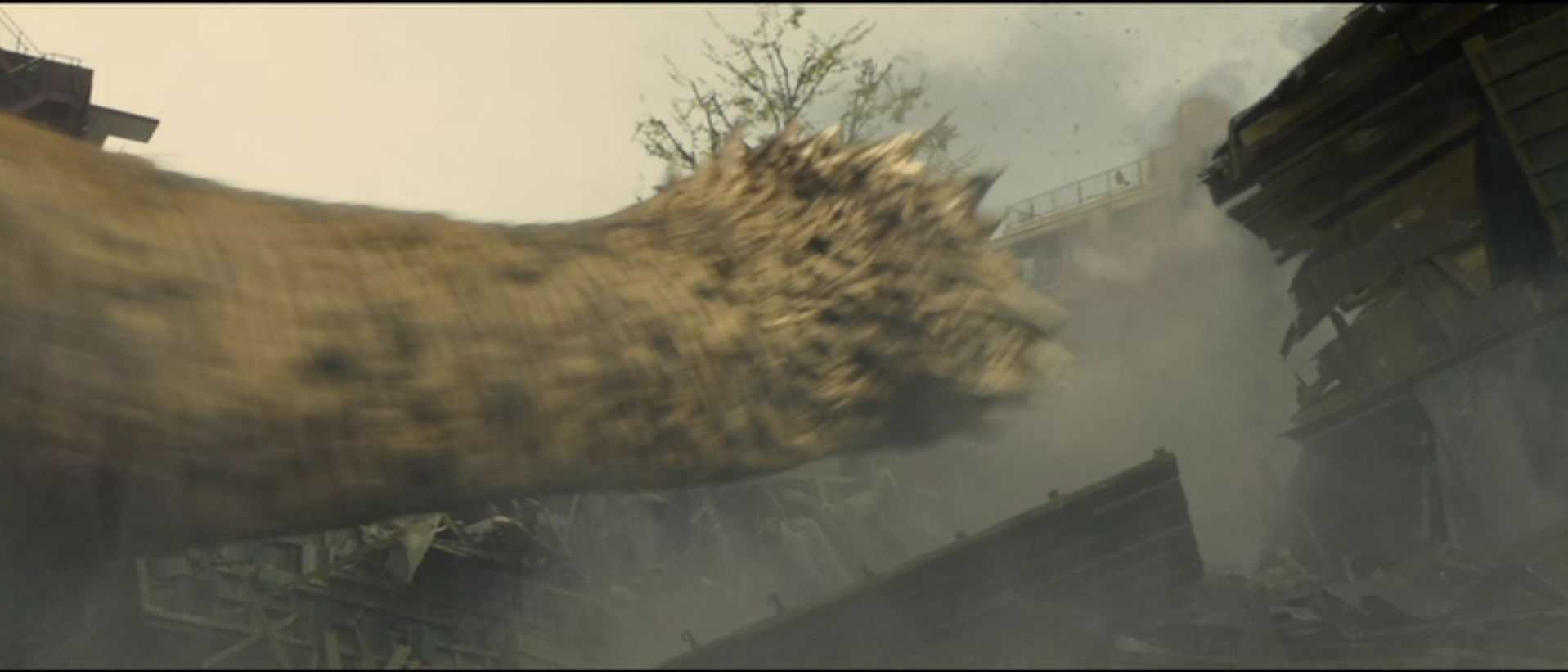
Godzilla's Ghidorah-like tail

Later, when Godzilla achieves its upright configuration, the tail looks very different. It’s been speculated that this is some sort of whale skull, but given everything, this seems to be the beginning of a second head. We later find out that even when Godzilla’s back lasers fail, it can use its tail to direct destructive energy to devastating effect.
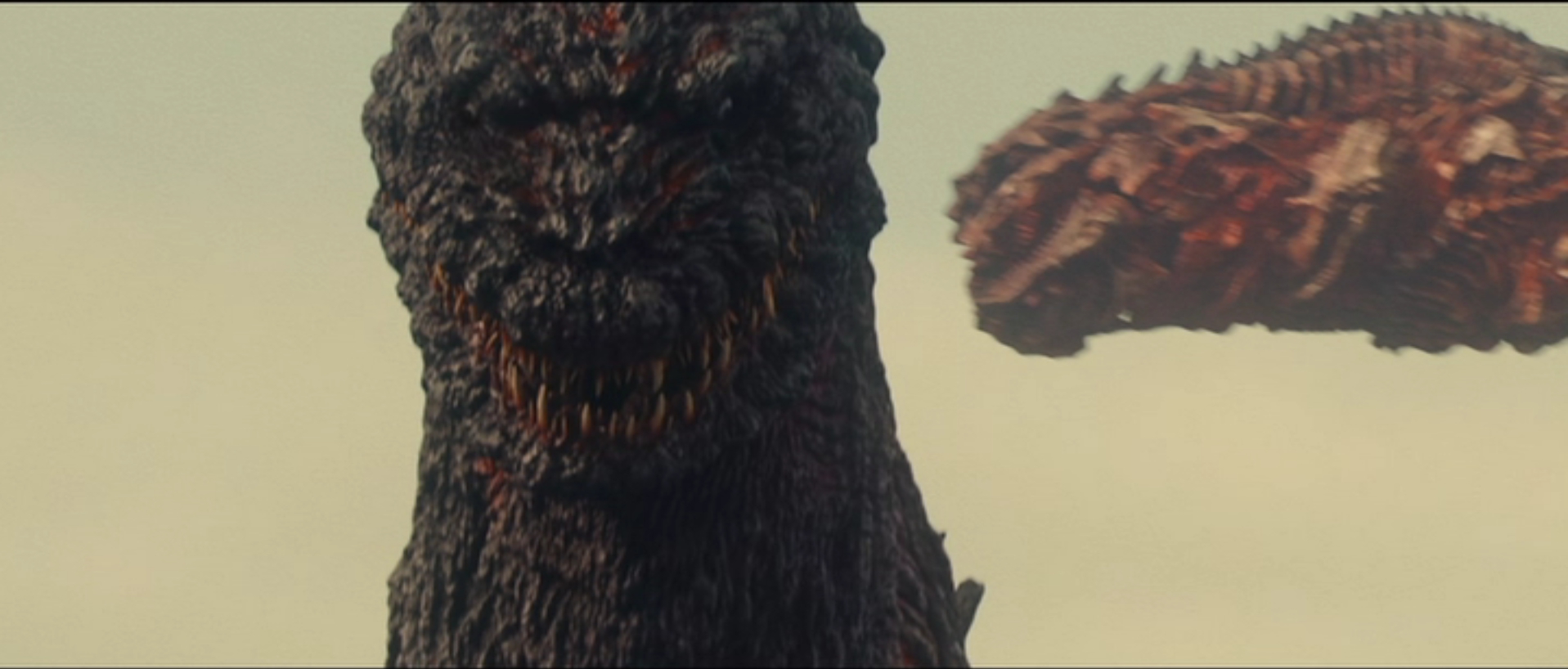
Tail #2

The final shot of the film is of the tail, which is now developing into smaller, independent, human-like Godzillas. They appear to be human-sized, mostly of human form, but with the maple-leaf spines to diffuse the nuclear fission in them. And they are darn creepy. Was Godzilla stopped in time? Could some of these horrible things have escaped in the confusion?
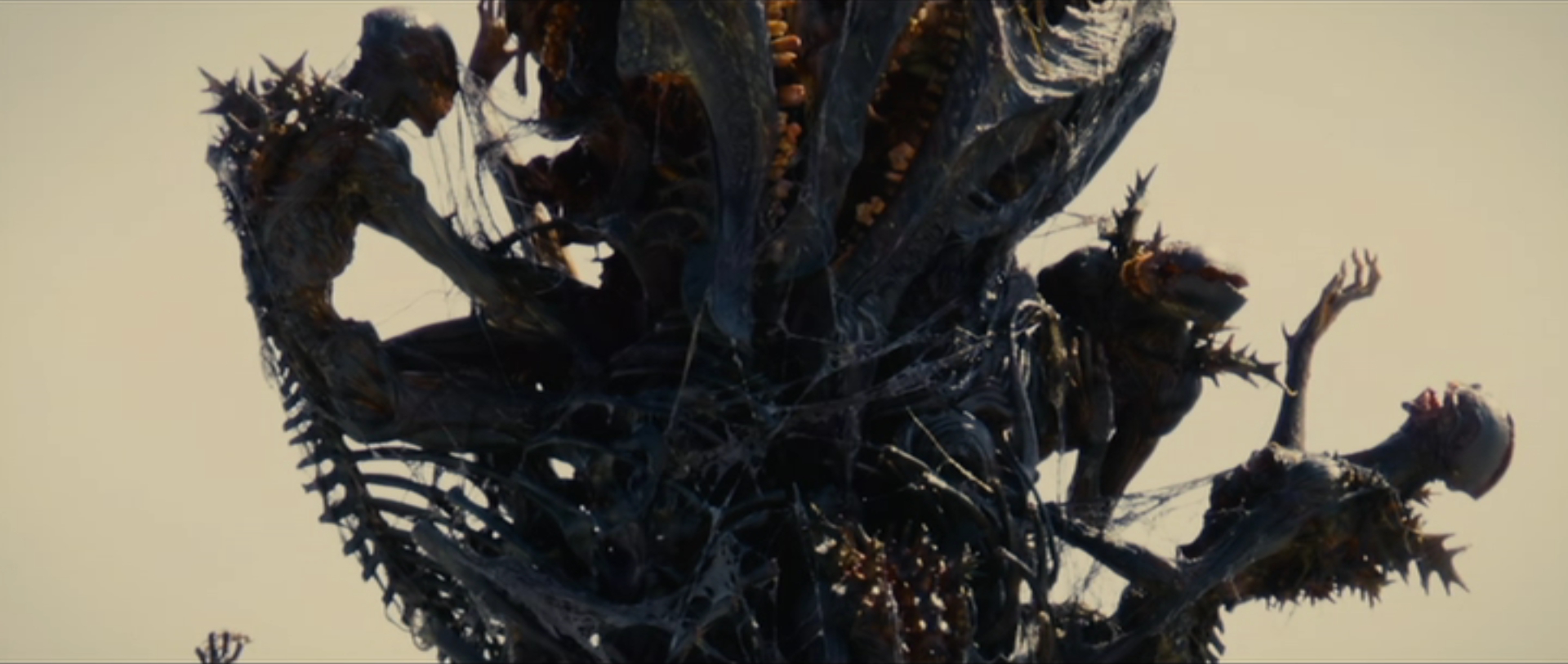
That terrifying last shot

Godzilla kills. It's a walking, evolving disaster, and anyone in its way is destroyed. This is made quite clear early in the film when Godzilla topples a building, with a couple still packing for their evacuation are in a building when it falls. I don't expect they survived. There’s nothing soft-pedaled about the destructiveness of incarnation.

The other real strength of the re-design is that Godzilla has surprises up its sleeve. Or down its throat. As previously stated, Godzilla’s initial rampage in lungfish and then first erect form are not met with effective military action. But then the Americans drop bombs on Godzilla. And, like he always does, Godzilla responds by unleashing unimaginable fury.
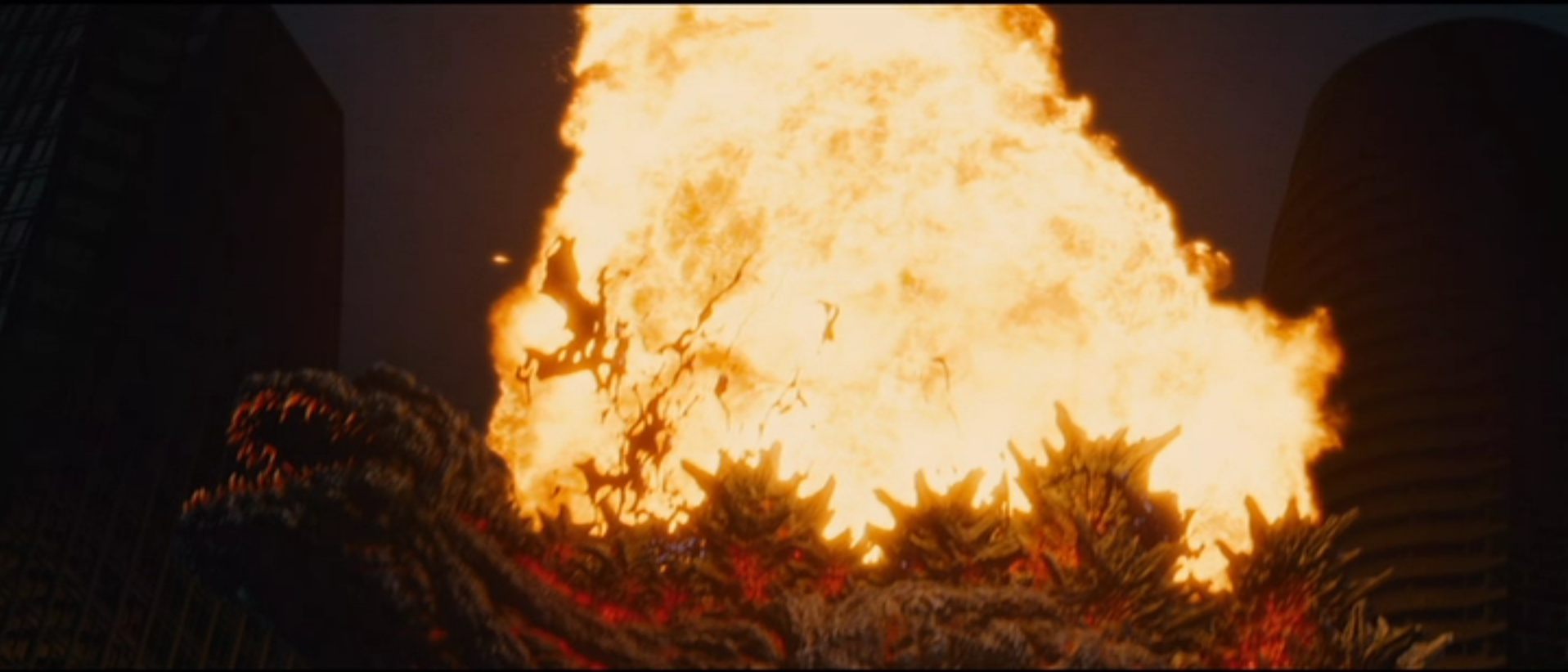
Hurting Godzilla, that's a good idea, right?

Godzilla films have always had the destruction of cities as their centerpiece. The destruction in Shin Godzilla is awe-inspiring, even by Godzilla standards. Godzilla's fiery output is astonishing vomiting forth a massive river of fire. The fiery breath comes hosing out of Godzilla’s mouth, engulfing much of the city. Then, separating its lower jaw, it focuses that torrent down into a laser-like needle of destruction, and proceeds to cut through every building in sight. The destruction is constant and nearly overwhelming. I had a visceral reaction to it when I first saw it in the theater, astonishment at so much destruction.
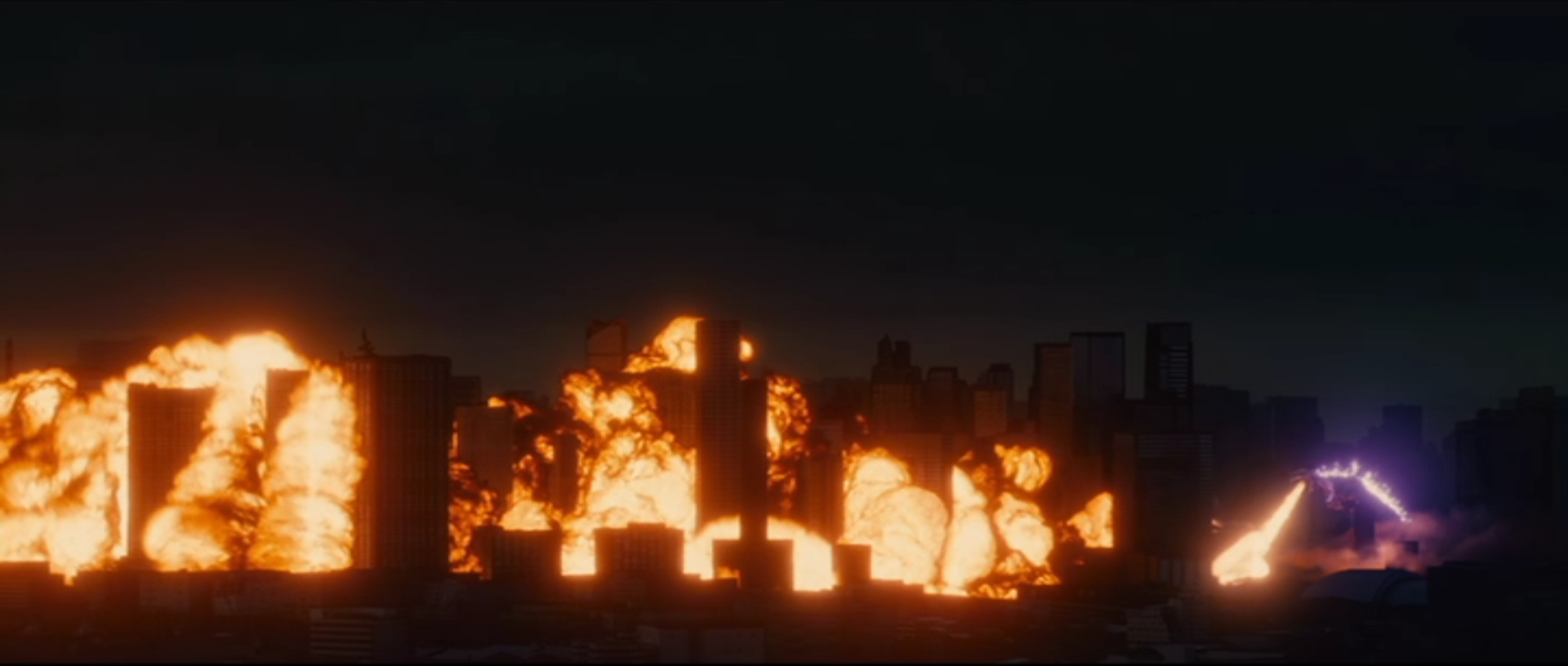
That terrifying last shot

Like the Legendary Godzilla, as well as Godzilla vs Mechagodzilla and Tokyo S.O.S., there is an anticipatory indication when Godzilla is going to unleash his atomic breath. Godzilla's glow turns purple, giving the audience that delicious ten seconds of anticipation. There are a few new tricks up Godzilla's sleeve. It can concentrate its nuclear fire into a massively destructive beam, cutting through buildings, extending out perhaps two or three kilometers. And, because the film makers know their stuff, they make sure that they destroy the same theater Godzilla did in 1954.
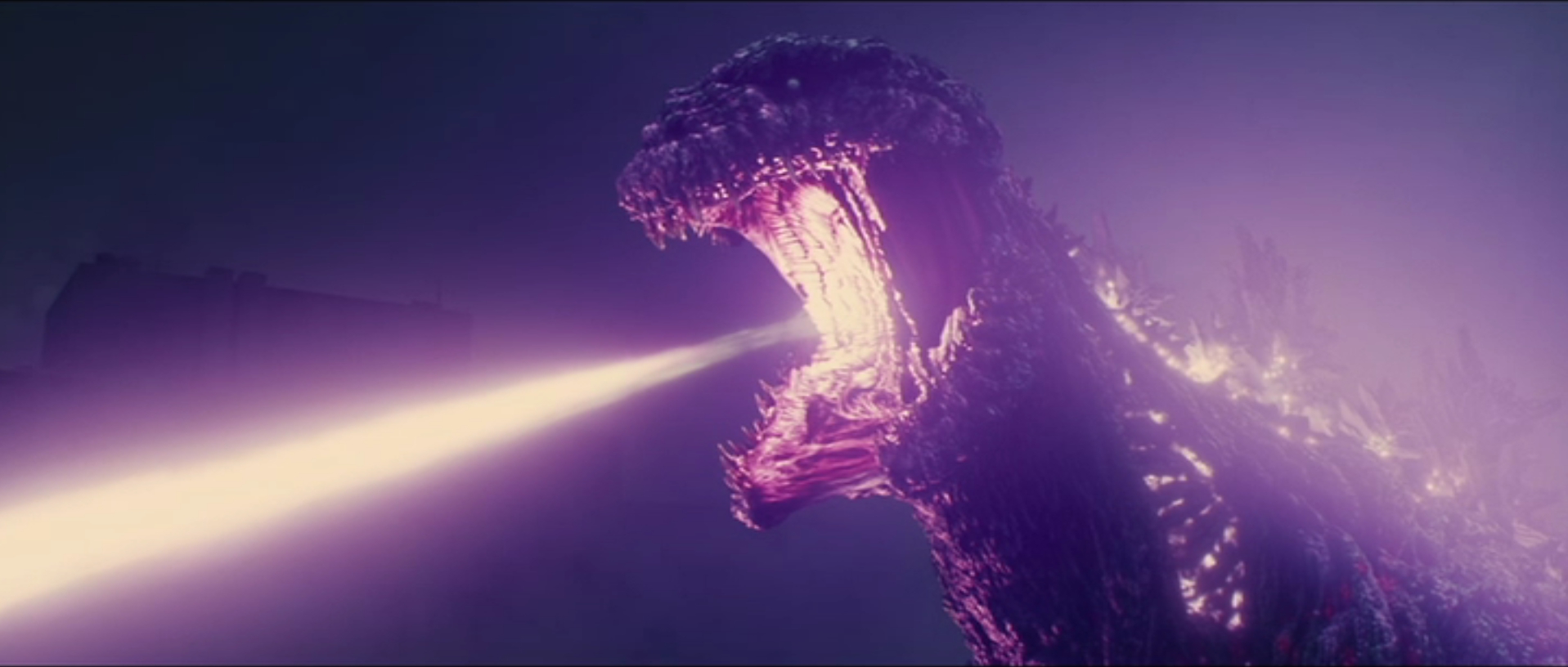
Different breath, lots of destruction

But that’s not all. Attacked from behind, Godzilla develops destructive rays from its back, knocking down the American B-2 Spirit bombers that unleashed the MOP bombs on it. It’s a new trick for Godzilla, surprising and frightening, making an assault on the creature all the more difficult. It can shoot down anything behind it, while its atomic breath is able to carve anything else out of the sky.
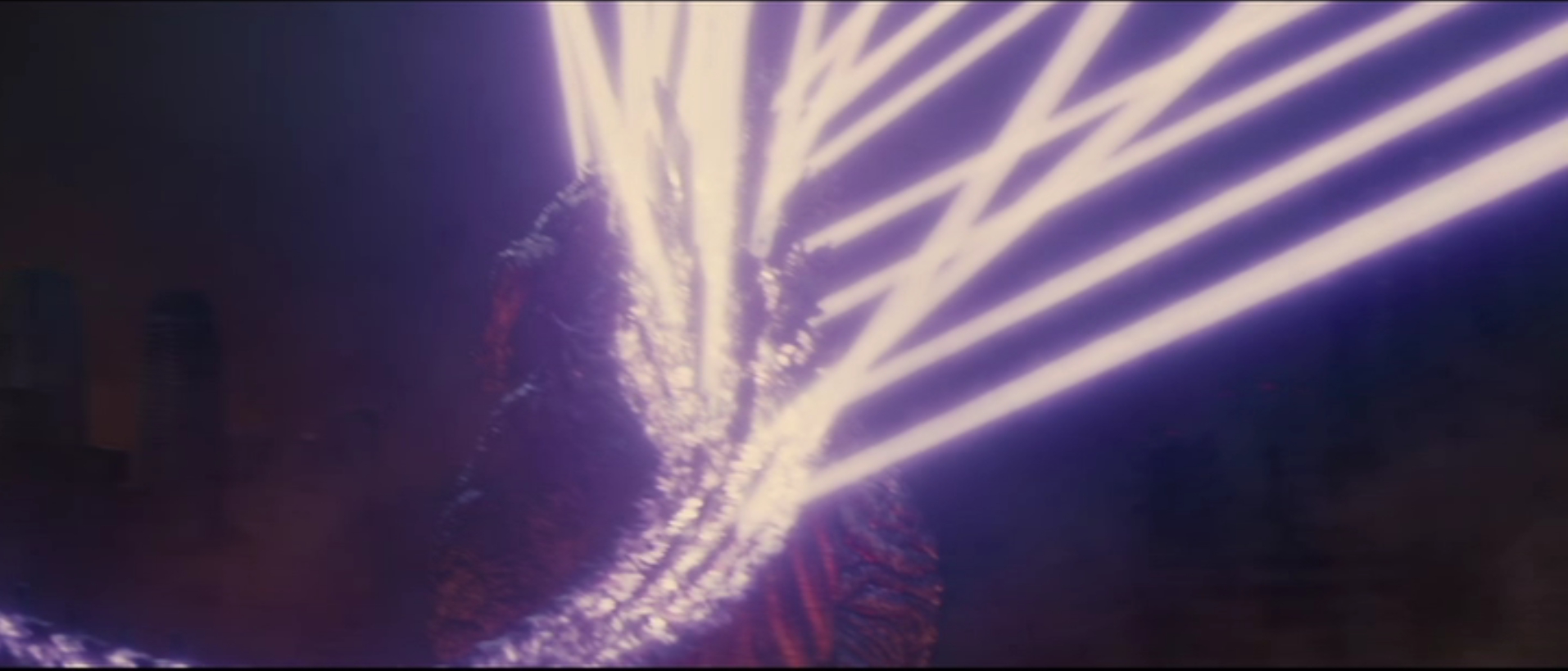
That terrifying last shot

Even though this Godzilla levels buildings like the hand of God itself, the film doesn’t spend much time on the dead or dying. No scenes of children who make the radiation detector go nuts, no mother holding her children to her during the fiery holocaust. But it is not shy about showing the distress of people who are displaced because of the attack. We see a lot of people with filter masks, spend time in a food line. Godzilla’s rampage does not happen to no one. It uproots families, destroys homes, and has consequences.

I'm going to step back from what I said in my earlier post. The military is, although more valorized than it was in Ishiro Honda's day, it’s still there for show. It doesn't do anything other than show the scientists how Godzilla works. Godzilla drops a bridge on a tank division, and he smokes two of the three bombers that attack him. It is only with sustained assaults with multiple missiles that we are able to exhaust Godzilla enough to start the process of overheating his internal reactor.

As I have said before: This is a Japanese Godzilla film that knows the history of the franchise. So it solves its plot problem in the Japanese fashion: by sciencing the shit out of it. Against an international coalition that wishes to drop a nuke on Godzilla if Japan cannot solve their problem. Which makes for a good, tense third act. The threat of a nuclear detonation, in no way guaranteed to destroy Godzilla, makes an excellent countdown.

Whoever wrote the subtitles seems to have a wrong impression about what actually happens to stop Godzilla. Godzilla gets pumped full of blood coagulant (an idea first introduced in ). As in Return go Godzilla, Godzilla is a living nuclear reactor. The film’s solution to this is to pump it full of blood coagulant which will force Godzilla to shut down its reactor because it cannot circulate its blood, which serves as a coolant. Thus the reactor will become too hot. The coagulant does not freeze Godzilla. It stops taking the heat away from the central core reactor. Once the internal nuclear reactor is shut off, Godzilla is no longer hot enough to remain mobile. Or maybe the script doesn’t understand nuclear power as well as I hope it would.

Godzilla is then pumped full of anticoagulant. I have a little bit of trouble with this, but only because everyone refers to it as 'freezing' Godzilla. It's an attempt to induce a reactor scram, or shut down. This means actually increasing Godzilla's heat by thickening its blood coolant system until it realizes it's in danger, and its internal reactor shuts down, and it no longer has the energy to supply its own metabolism. So freeze is an inadequate word to describe the process for me. Two, the film uses the imagery of the Fukishima 50, who worked to keep the nuclear disaster under control. The use of the boom pumps is especially striking. But the film doesn't praise the people who get the job done, the boots on the ground. The first wave of boom pumps, and I assume their operators, is annihilated, but the politicians press on. They get the glory, not those who risked themselves.
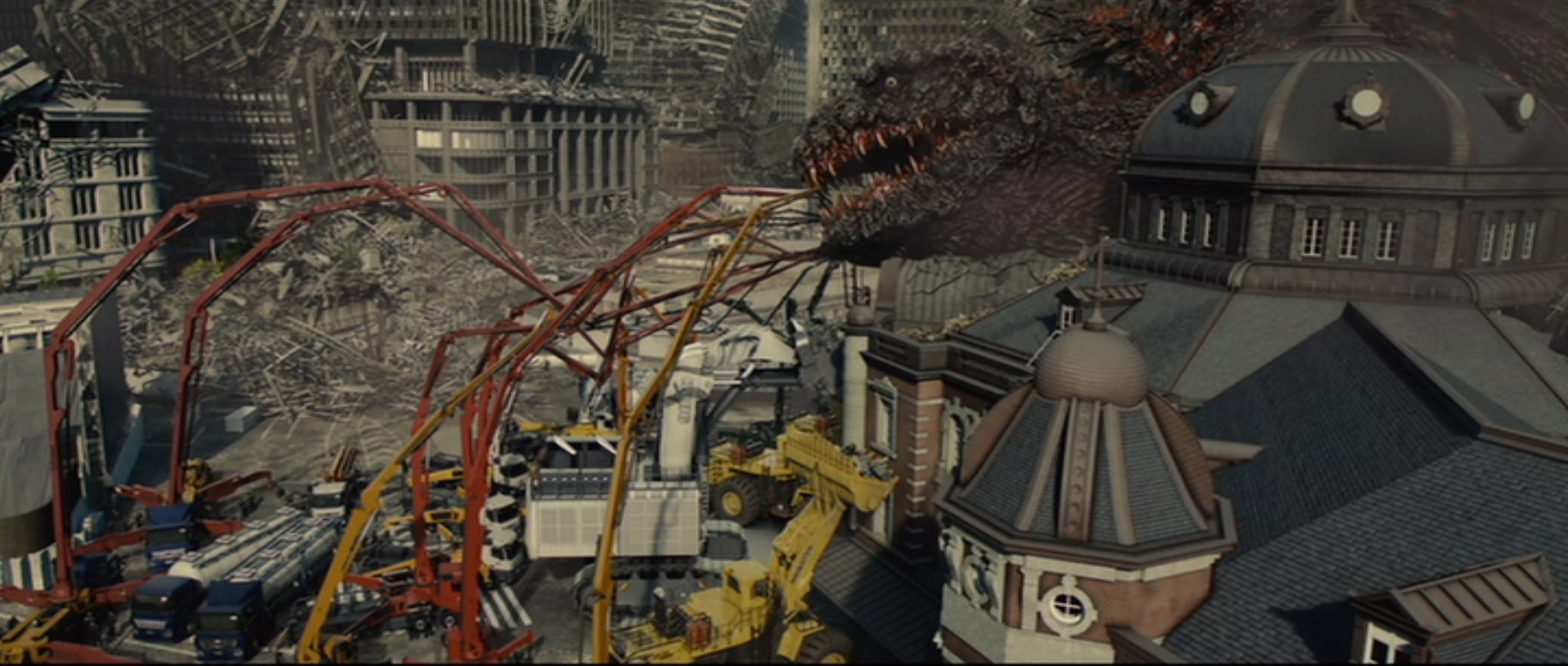
Sciencing the shit out of Godzilla

It’s interesting to see the difference between the two points of view concerning nuclear weapons so close to each other. After all, we don’t know how close 1954 Godzilla was when it was awakened by nuclear testing, and here, it seems accepted that a nuke will destroy Godzilla. But the Legendary took a nuke to the face and was only slowed down. Maybe it’s that Americans like their nukes more than the Japanese, and therefore American Godzilla needs to be immune to them because we’re likely to drop one on him anyway. Or maybe the Japanese don't think anything will survive a direct hit form a nuke, having a bit more experience with them.
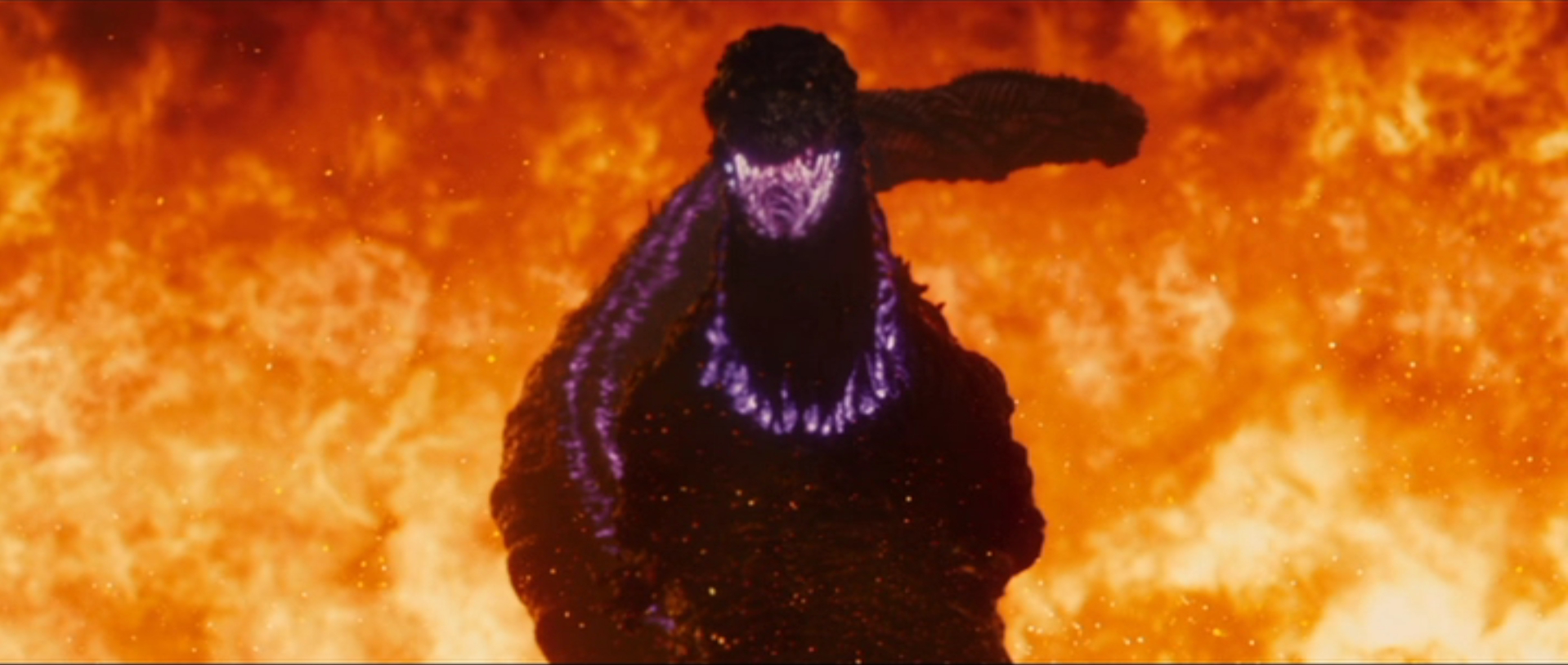
Holy crap that was a lot of buildings

A welcome change to the home video release is the elimination of the titles from the screen. Now everything and everyone that is identified is done so in smaller, discrete supertitles which do not block what’s going on, or crowd the subtitles. Thus, it’s much easier to get the joke that Rando is the “Cabinet Minister of State fort Special Missions Giant Unidentified Creature United Response Task Force HQ Bureau Chief & Deputy Director" as he’s talking about something else with the subtitles separated.

I enjoyed Shin Godzilla, both for its fresh take on Godzilla, and its demonstration that something new can be brought to the franchise. I'm very excited that we will have two Godzilla franchises, both the Legendary, as well as Toho's anime trilogy, beginning with Godzilla: Planet of the Monsters, released in November. Shin Godzilla stands as one of my favorite Godzilla films, both for the impressive monster action and the excellent performances from the human actors.

Wednesday, October 12, 2016

Triumphant Resurgence: Shin Godzilla

I saw Shin Godzilla last night. I enjoyed it a great deal.

Shin Godzilla!

I like my Godzilla grim, so the reversion to the 1954 film which treats Godzilla as a force of nature, a natural disaster, is a welcome point of view. There's a straight line from the original to The Return of Godzilla to this. Much as I enjoy watching monsters battling each other, I didn't miss it here. The drama is the conflict between Godzilla, the government response team, and the government trying to get out of its own way.

Like all disaster films, the nature of the situation has to unfold, grow deeper. And in this case, Godzilla changes, thus altering the situation. I'm not going to spoil much of the film, but this is a forward-looking Godzilla, one that has new tricks up its sleeve. Like the 1954 Godzilla, it isn't until the second encounter that Godzilla uses its atomic breath. Like the original film, it's a big reveal. And then things change, and continue to change. I liked that.

With these two paragraphs behind me, I will say that there isn't much new in the formula, but it's handled very well. There are a lot of people running around getting things done. Previous installments of the franchise often involved the government figuring out what to do, but this really steps it up. Like The Return of Godzilla, there is a lot of international attention given to the problem of Godzilla, and the government is put under considerable pressure to stop Godzilla or have another nuke dropped on Japan. However, where that film portrays a static government confident of its control of the forces at its command, Shin Godzilla shows us a government in chaos, overlapping priorities, wrong guesses, and This leaves us with a ticking time bomb against which the scientists must race, similar to Invasion of Astro-Monster. Also, the technology to stop Godzilla is a combination of Godzilla vs Space Godzilla and Godzilla vs Destroyah. So the film is well aware of its roots, drawing on the more successful and popular entries from the franchise.

The devastation of Godzilla's second rampage is astonishing. The tension is ratcheted up, the amount of damage Godzilla does seems to escalate exponentially. It's awesome. And I like the looks of the new Godzilla. It has staged growth, like Hedorah, although there's some unfortunate similarities to the evolution of a Pokemon. But this multi-stage development has been present in the franchise for longer than Pokemon have been around.

I and others before me have written about the increased militarization of Godzilla films. The Japanese military doesn't get a lot of play because of the restrictions placed on it by the US at teh end of World War II. So Godzilla films have traditionally been something for the Japanese audience to enjoy military display, since Japan is being invaded. Ishiro Honda almost always portrayed the military as for display only, it never solved the problem of the monster movie plot. Part of the difficulty with the 1998 American remake was the portrayal of the military was the solution to the problem, but they had to be incompetent because otherwise the film would last as long as it took to deploy the appropriate firepower. But the military shines here, and I don't think the directors were entirely honest about it. The Japanese Self-Defense Forces is very careful, not attacking Godzilla when there are even two civilians who might get hurt. The film graces them with near-perfect certainty as to the location of civilians. And then, when the military takes it in the chin, casualties are glossed over. The big G hammers the military with its atomic ray, but the losses are never mentioned, as they are in the more nuanced Godzilla, Mothra, King Ghidorah, Giant Monsters All-Out Attack. The boom pumps (called 'cranes' in the film) used on Godzilla are similar to those used to cool down the damaged reactors at the Fukushima Daiichi plant during the nuclear disaster. That said, the first wave of boom operators, don't walk away. They are not mentioned again, but the likely future Prime Minister Rando Yaguchi is praised. Not the people who did the actual work. This ties into my old post about strong leaders. Rando sacrifices his military men, who are not mourned for their sacrifice. The camera and script lionize him for his leadership. Which, given its invocation of the Fukushima 50, seems disingenuous at best, blindly deceptive at worst. This is exactly the sort of wishful thinking Monsters: Dark Continent addresses.

But that's pretty much all by implication, things the camera doesn't show. I found it a very good film, and seems likely to become one of my favorites in the Godzilla canon. Long live the franchise.

Friday, July 29, 2016

Giallo Meets Kaiju: Cozzilla

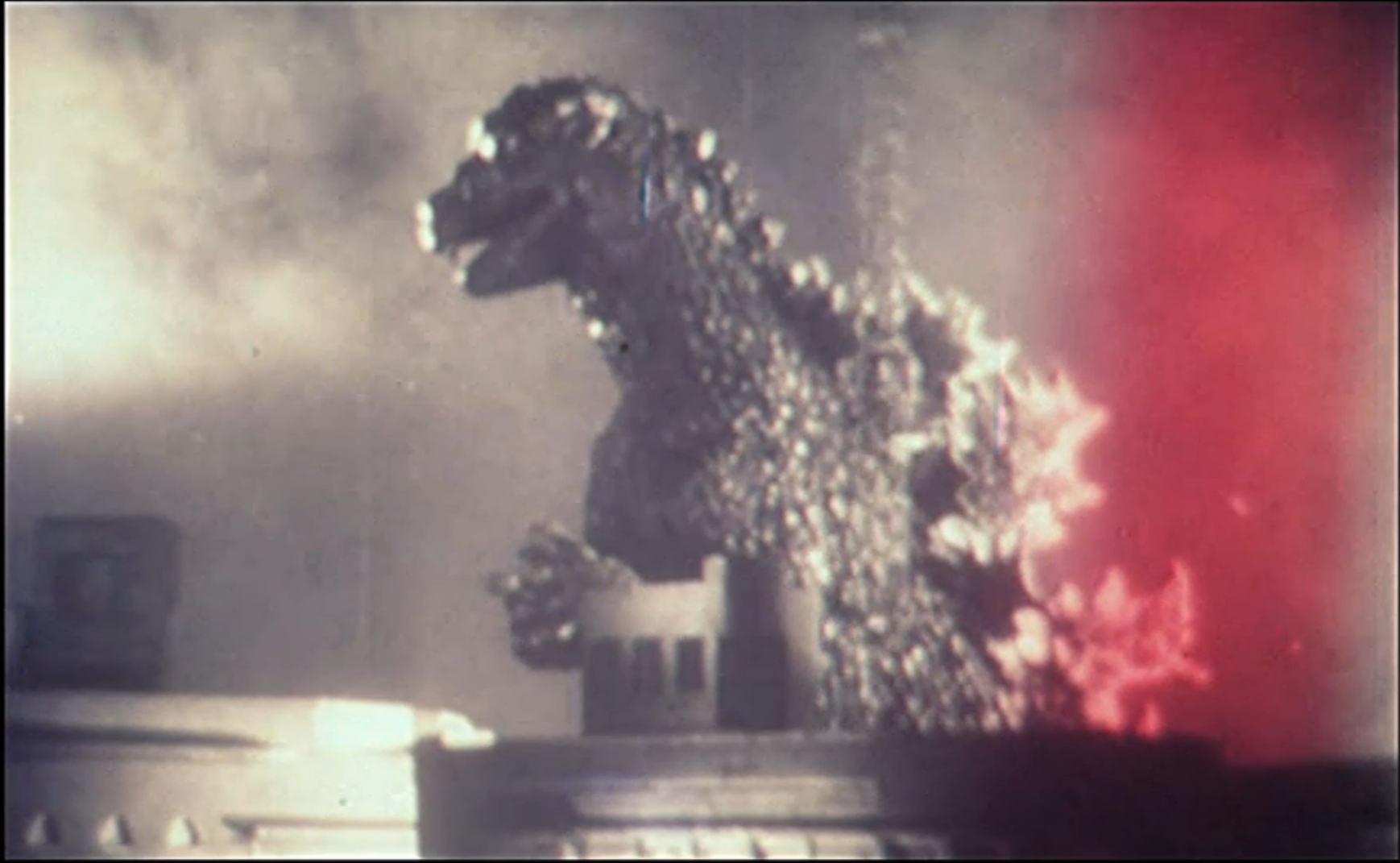
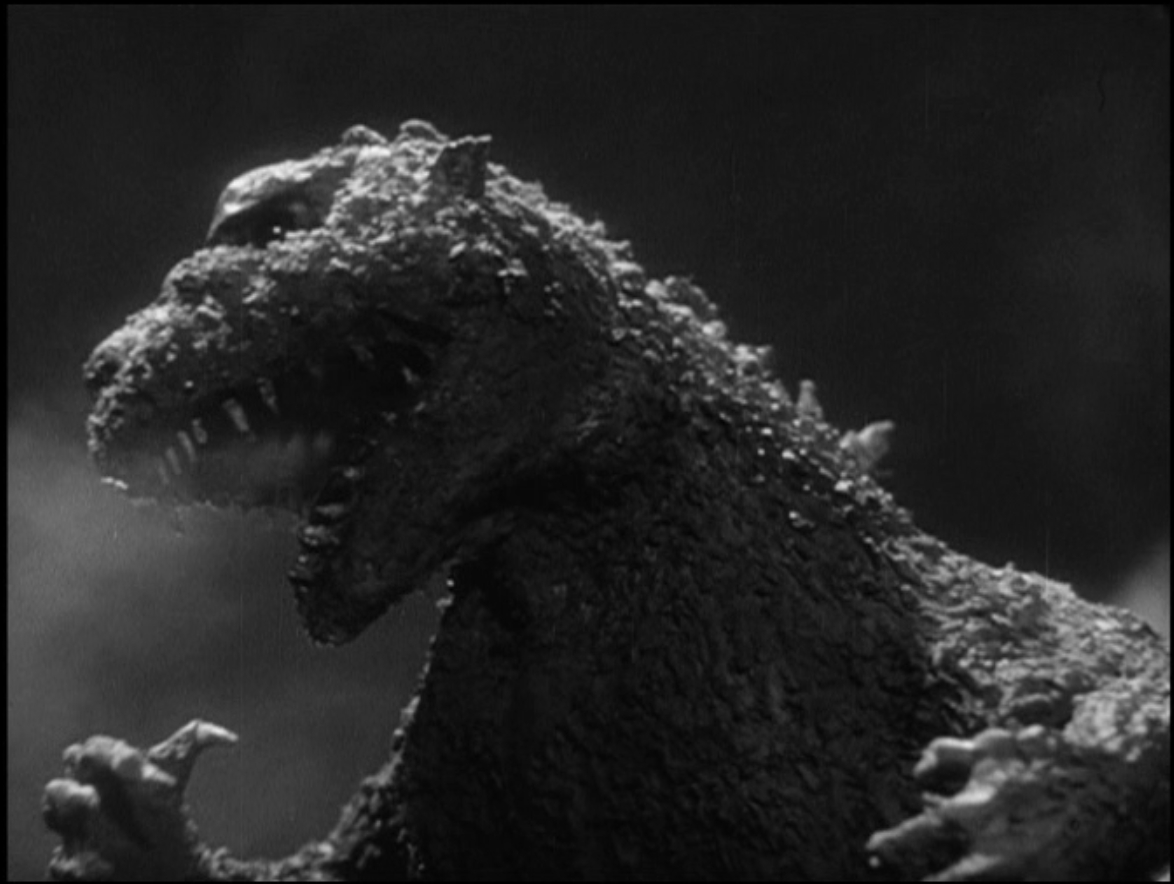
Luigi Cozzi, an Italian film maker, wanted to bring Godzilla to Italian theaters in 1977. Seeing the success of the 1976, version of King Kong, Cozzi pursued a re-release of Godzilla. Unable to secure the original Toho film, he did manage to get the rights to the American edit, Godzilla, King of the Monsters. Told that theaters would be wary of a black and white film, he hired Armando Valcauda to convert the film from black and white to color. In three weeks. He also added 70's era electronic music and stock footage increase the run time. The result is a a film based on the American edit of the original Japanese, with the English dubbing redubbed into Italian, and bearing the indelible stamp of Luigi Cozzi.

Luigi Cozzi's Godzilla in all its weird sherbet glory

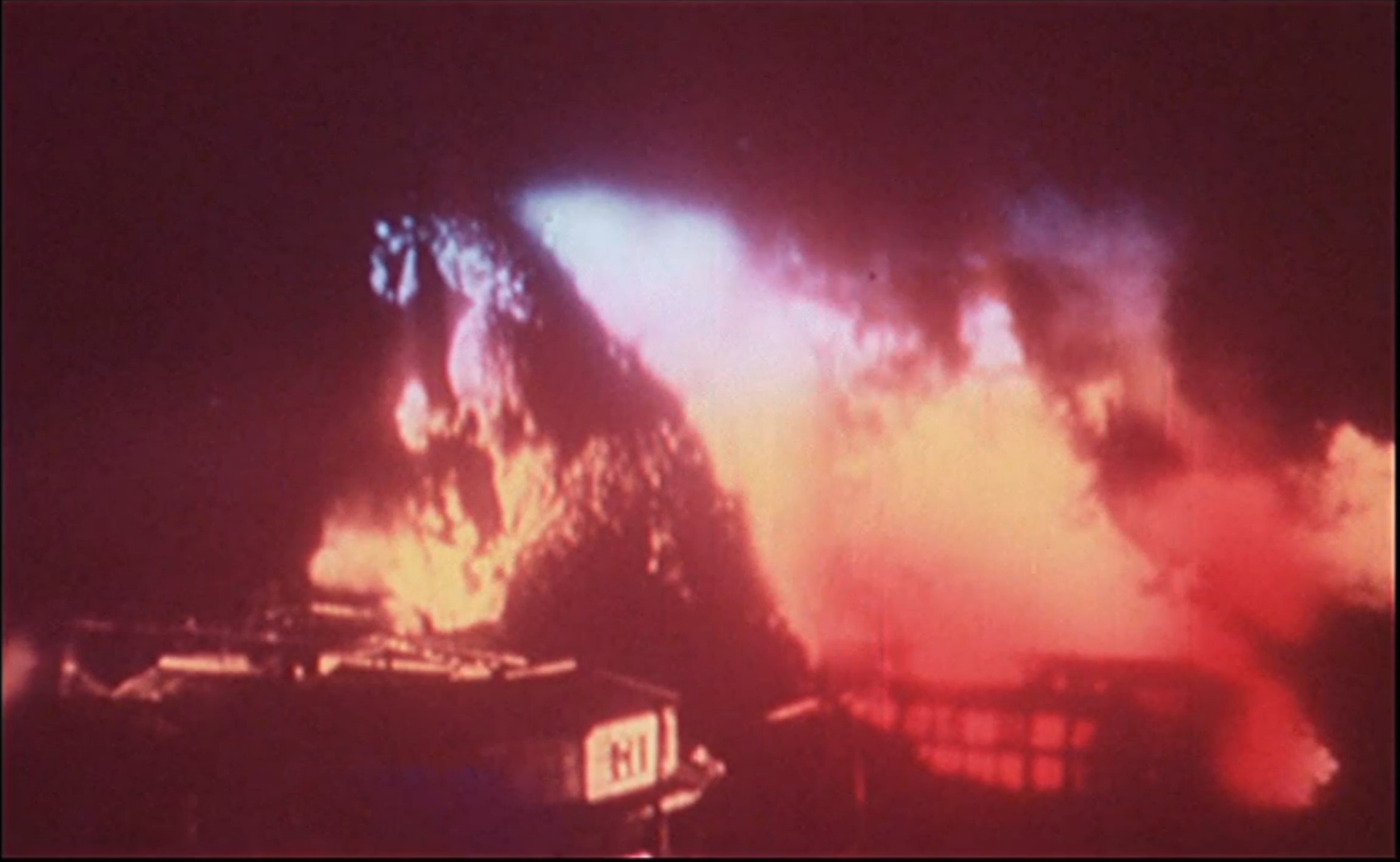
The shots of this film will be watery and grainy. Like Attack of the Giant Moussaka, it has never been released on home media in America. In fact, I don't believe it has been released on home media anywhere in the world. The copy I was able to find on Youtube is just ninety minutes, apparently because it was taped from a cut-down version broadcast on Italian television. Watching it brings back all those memories of the fragility of videotape. Of course the destruction of Tokyo is the most watched part, and therefore the part that cuts out the most. It's strange to me that this version is only available in such bad shape. Even Pulgasari is available in better condition.

Update: Geno Cuddy has restored the original elements of Cozilla, and if you look on the web, you should be able to find it. Cuddy has done an good job of cleaning the film up, the picture quality is much sharper than the watery Youtube version I originally took the screenshots from. Five years ago, I didn't think there would ever be a version of this film available, so hats off to Mr. Cuddy for doing an excellent job.

Man, I want some ice cream now.

Cozzilla opens with scenes of daily life in Tokyo. People walking, going about their daily lives. There's even some footage of people using a bridge that Godzilla will later destroy. And then there is footage of a nuclear detonation. The effect is quite shocking, especially afterwards when we are shown images of charred bodies from the nuclear attacks. Cozzi's film differs from the Raymond Burr version primarily in its use of stock footage. So there are inserts here and there, usually clustered around the action scenes. I believe, and it's difficult to be sure because of the quality of the reproduction, that there's at least one shot of a person being hit with a flamethrower during Godzilla's rampage in Tokyo. There's even a small bit taken from Godzilla Raids Again. The stock footage leads to the occasional absurdity, such as watching propellers rev up and then seeing jets on the attack. It also cuts directly across the anti-military stance of the Ishiro Honda's original film. When Godzilla is being killed by the Oxygen Destroyer, it surfaces. Then we are given stock images of battleships blasting their guns, implying that they are assisting with the death of Godzilla.

And we helped!.

The stock footage used in the aftermath of the attack is particularly jarring. As Ifukube's beautiful hymn of peace soars, we get stock footage of charred bodies, corpses floating in the tide. This strips away the fantasy aspect of the film. We are looking at images of the dead, who were not killed by the metaphorical and nonexistent Godzilla, but by wars, bombs, and fire. What's the point of Godzilla as metaphor if the film will break through that metaphor and shows us the ugly reality behind it? Especially as the film revels in virtually every other aspect of militarism, with added planes, more explosions, more gunfire. Some things, I feel, are best left suggested in film, and if these added scenes had been actors in makeup, I would be less creeped out. But all that was added was stock footage. These are real people. And that makes it very difficult for me to watch this part of the film.

OK, that's a bit much.

One thing that this version of the film does make very clear is how streamlined the original Godzilla is. There's little fat on the film, everything is there for a purpose, and serves it well. It is well paced. Terry Morse's re-edit of the film is a bit looser, making room for another character who is there to explain what happens on the screen. Cozzilla lacks Moore's more deft touch, partially because of the time and money constraints. But the footage added to Cozzilla often feels forced. Dr. Serizawa's descent to confront Godzilla at the end of the film is interrupted by a shark and an octopus fighting, the footage coming from Beast From 20,000 Fathoms. Which doesn't add anything but motion. It's not even action.

Cozzilla is a product of a specific time and place, and a reflection of its creator, Luigi Cozzi. The seventies were a time of experimentation, and even established franchises like Godzilla, underwent transformations. Overall, it reminds me of Godzilla vs Hedorah, as an radical departure from conventional film making. I find it rather busy, especially in the foley department. During the attacks on Godzilla especially, the sheer chaos of the added bombs, machine-gun fire, and swooping airplane noises. Cozzilla was popular in Italy, and was definitely influenced by the giallo school of film-making. It's a little too lurid for me, but I can see that I'm becoming conservative in my taste in kaiju film: gore practiced with restraint, orchestral score.

It's kind of psychadelic, man.

Ultimately, Cozzilla is a chore for me to watch. The narrative of the original film has been stretched and torn by two edits. There's an unfortunate amount of dramatic dead space, and the addition of authentic dead bodies gives me the creeps. It's a strange film, from a very different aesthetic than I'm used to in kaiju. Cozzilla is very much a product of its own time and space, as well as its creator, Luigi Cozzi. You can view the watery, multi-generation copy on on Youtube.

Tuesday, July 12, 2016

The Palimpsest: Godzilla King of the Monsters

Shin Godzilla will be coming out on the 29th. And I thought it was time to return to My Year of Monsters.

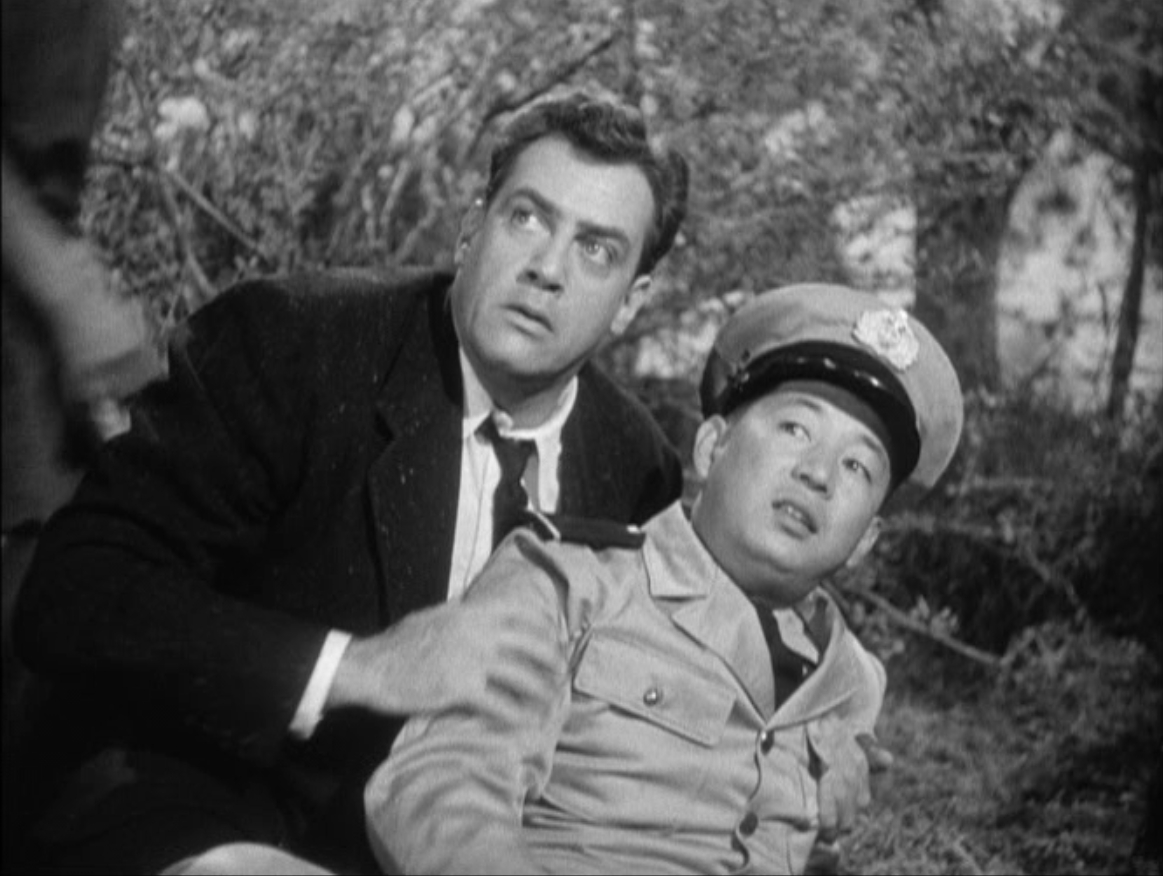
I didn't write up the Terry Morse edit of Godzilla because I had the feeling it was beneath my notice. Just a bastardization of a classic I love. Raymond Burr as Steve Martin inserted into the already-existing film. Many people refer to it as the insulting, butchered, heavy-handed attempt to dumb down a movie to the point where it's easily digestible for American audiences. As if someone let Michael Bay add sequences to an Akira Kurosawa film. But again, David Kalat provides some much-needed perspective. Dubbing was the only way that a Japanese film was going to get any sort of audience in America in 1956. The film industry hadn't been around that long, and American audiences weren't prepared for something as complex as reading words and listening to the the intonation of the delivery in a different language. It's a developed skill. So dubbing a foreign film into English was in fact a huge act of faith by the distributor, since few films had been dubbed from Japanese, a nation that only eleven years before the US had been at war with. Acquiring the film only cost $2,500. The redub and reshoot cost $200,000.

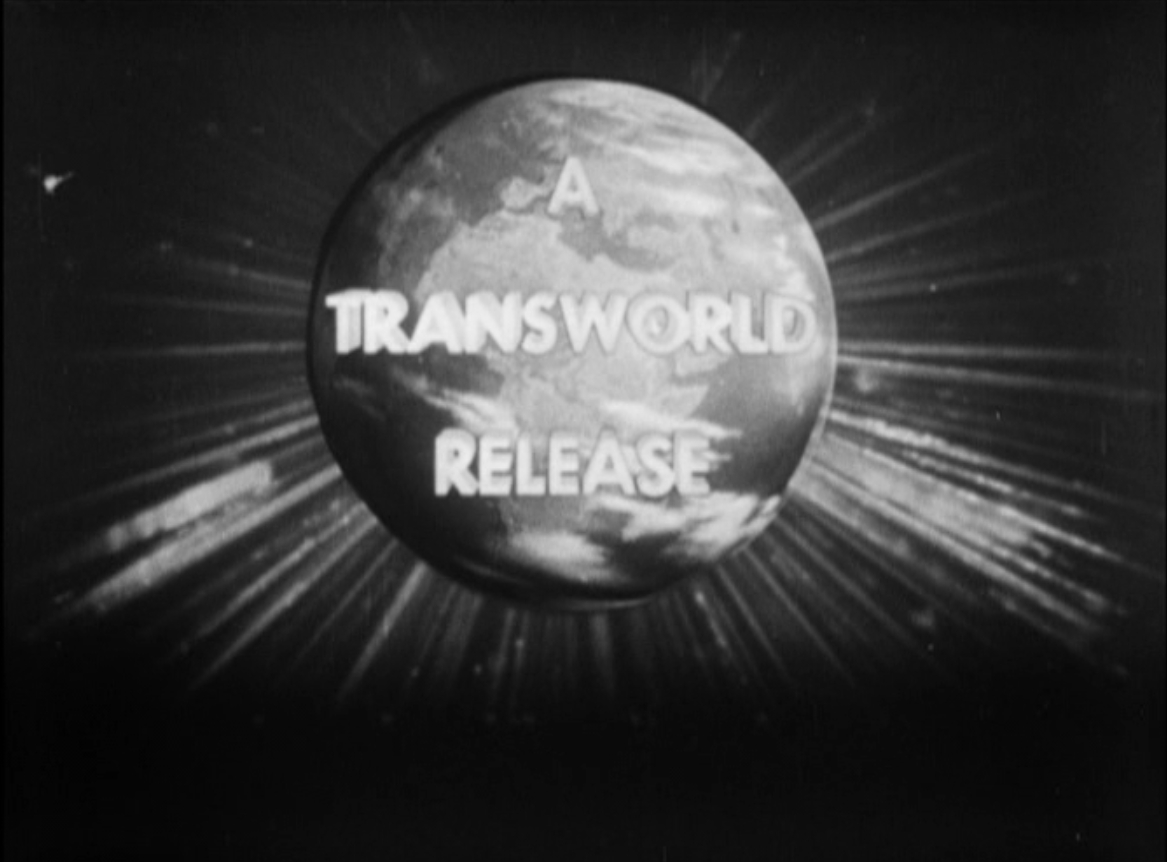
That said, there is nothing as indicative of what this film is as the Transworld Pictures logo places over the Toho starburst. the lower part of the screen is blacked out so the Japanese characters aren't visible.

Godzilla: King of the Monsters: A Palimpsest Of the Film By Ishiro Honda

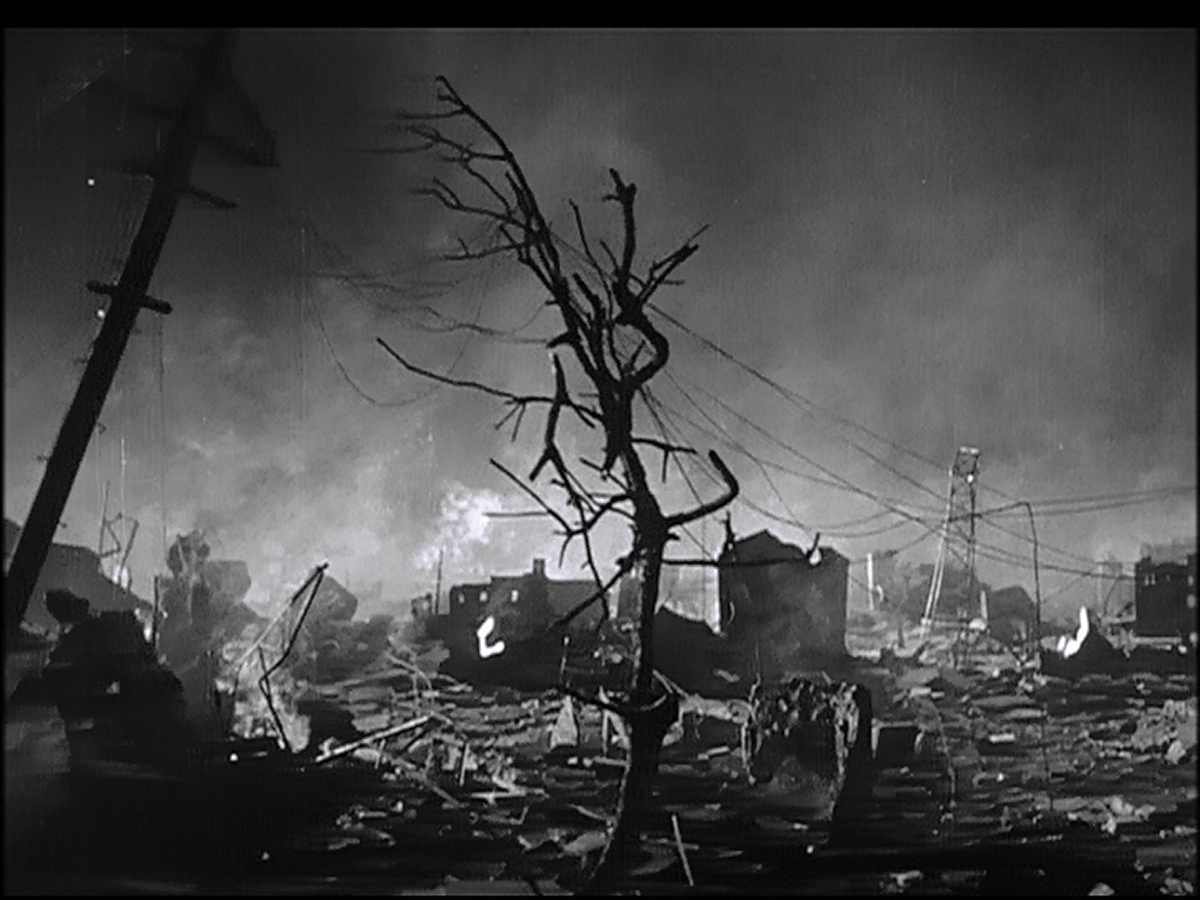
Very notable is the movement of the destruction of Tokyo to the very beginning of the film. Rather than build the tension in a documentary fashion, as the original did, King of the Monsters shows us the stakes right off. Tokyo has been devastated, and the majority of the film is flashback, narrated by Steve Martin (Burr). The new dub also makes a point of saying that the menace, not yet identified as Godzilla, is a global concern.

yes I'm cheating by using pictures I've already used before.

The impression that the anti-nuclear testing theme of the story has been completely removed is, under close scrutiny, incorrect. Dr. Yamane says "It is my belief that Godzilla was resurrected due to the repeated experiments of H-bombs." The shot of the little boy being scanned with a scintillation counter remains. The end doesn't bring up the dangers of nuclear testing again. So the topic is mentioned, but not emphasized.

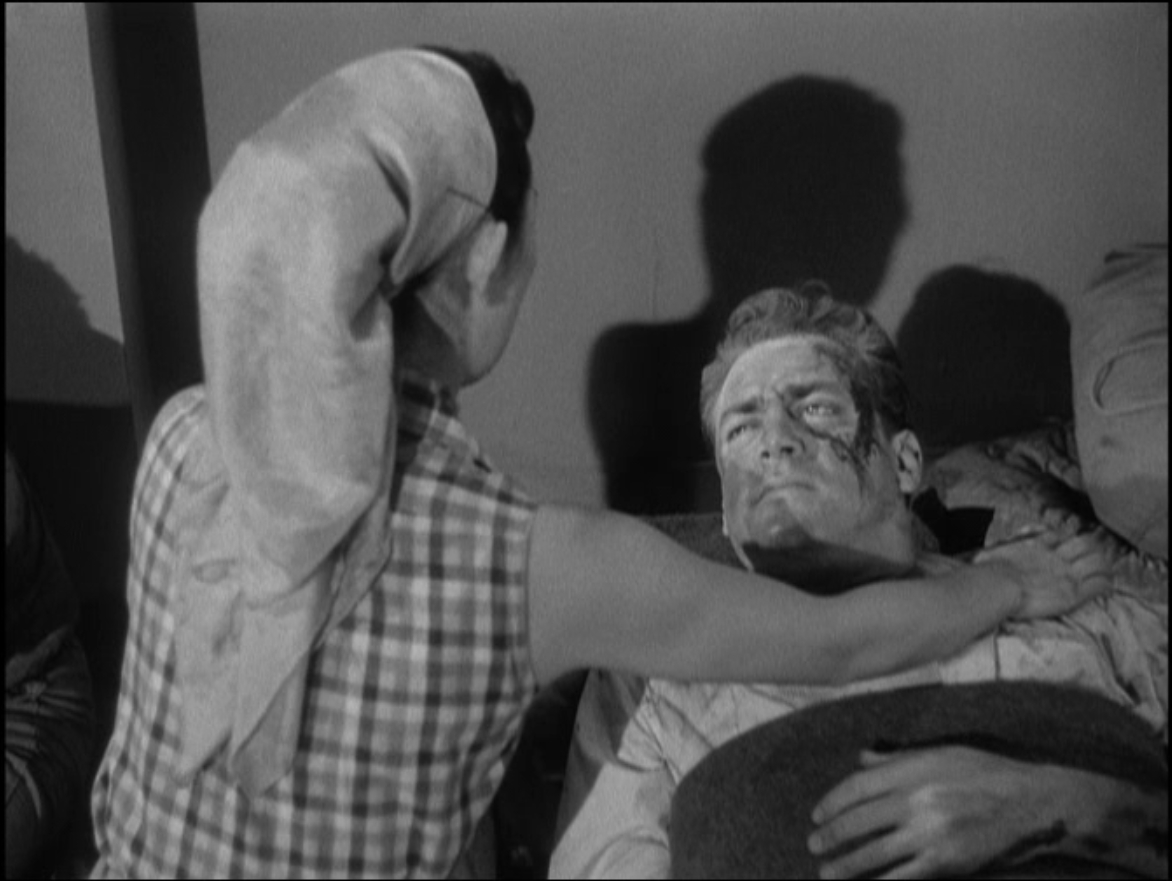
Morse's insert shots aren't bad. Anyone who has seen the original several times can tell where most of the new scenes are, but they are not glaringly obvious. Thanks to back shots and dubbing, it's possible for Martin to interact with Emiko Yamane, the protagonist of the Japanese film. Even Dr. Yamane, briefly. Several times, Morse uses the sound of the Japanese film to link the transition from original footage to new, which works well. Additionally, Ishiro Honda's documentary style was a good canvas on which to overlay Burr's explanatory voice over.

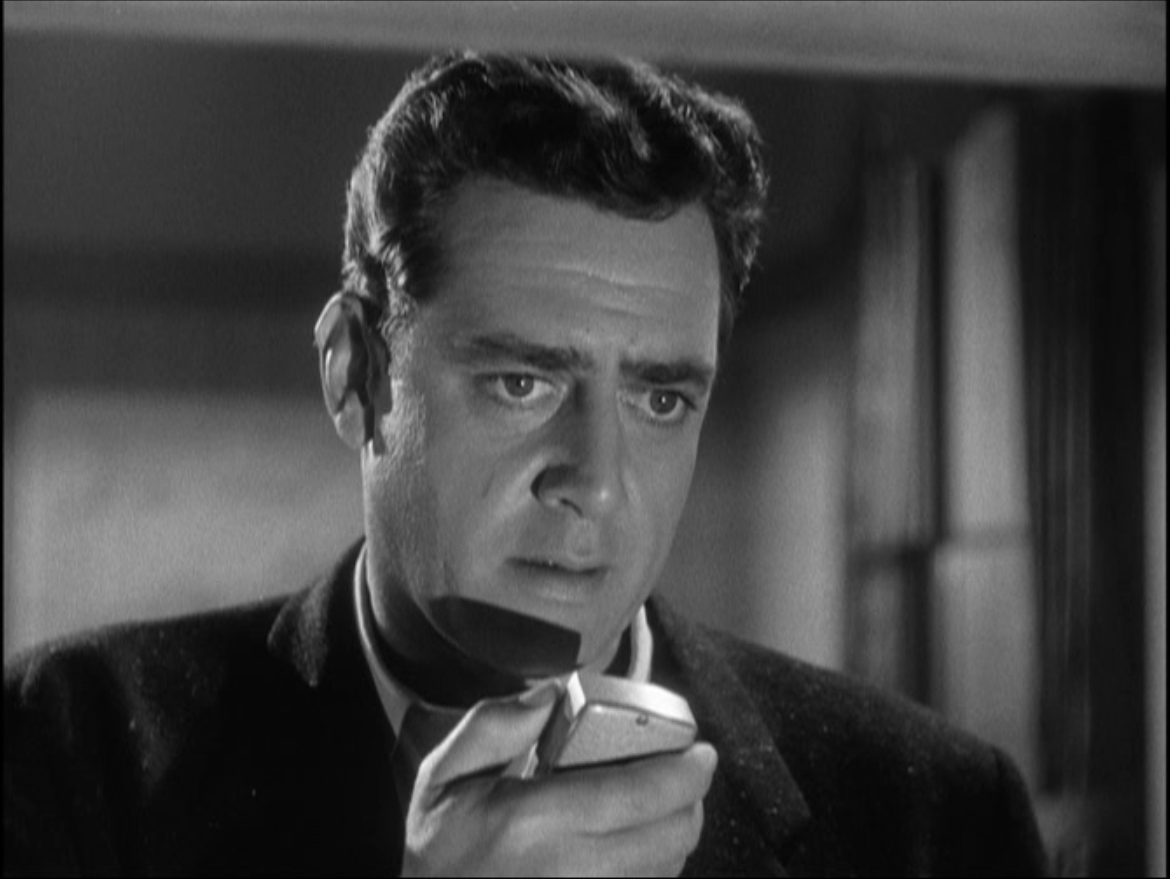
Steve Martin, our narrator.

In an interesting mix of dubbing and inserts. Only the main characters are dubbed, Emiko, Professor Yamane, Serizawa. Virtually everything else is untranslated. Other scenes of untranslated Japanese are used, and then Martin's Japanese translator, Tomo Iwanaga, who will sometimes translate an ongoing scene. Poor Tomo apparently dies in Godzilla's attack in Tokyo, and is not mentioned or mourned. Fortunately, the scenes of Godzilla destroying Tokyo are primarily wordless, so these need virtually no treatment or adaptation. Dubbing, as a process is complex and more removed from the original than subtitling, for example. The speech has to be in a language with different rules of grammar, and yet the length of the line must match the amount of time the actor's lips move. Godzilla: King of the Monsters has mediocre dubbing at best, and there are some egregious parts, such as when Professor Yamane's dub actor, Sammee Tong, apparently could not pronounce “phenomenon” properly.

Our Heroic Translator.

Martin plays a part that is later echoed in many Godzilla films, that of the reporter. Beginning with Goro in Mothra, the reporter, the professional seeking truth, becomes a standard character of Godzilla films and the genre generally.

Another change is the reputed height of Godzilla. Here, Martin reports that he is four hundred feet tall, a height not even achieved by the massive Legendary Godzilla, or even Shin Godzlla. Whether this was done to impress American audiences, or because everything in America is bigger, or just to sound cool for the trailer, I don't know. None of the footage has changed, so Godzilla doesn't look four hundred feet tall. Likewise, the electrical wires that are set up now carry three hundred thousand volts, rather than fifty thousand.

Big. Not 400 feet big, bit still sizeable.

David Kalat writes that Steve Martin's narrative during the destruction of Tokyo improves the tension of the scene, and this is one of the few times that I disagree with him. In horror, a select few writers who will only show what is happening without commenting on it. Many feel it necessary to tell us how terrible the thing the audience is being shown is. Honda's original scene is presented without commentary, without feeling the need to tell the audience how bad the destruction is. It trusts the viewer to make that conclusion. And we do. The sequence is filmed so well that it presents something of a platonic ideal of city-wide destruction. In later years this sequence would come to symbolize utter destruction. Martin's commentary is therefore gilding the lily, telling us how to feel about things that already sufficiently conveyed on screen.

Steve tells us all about it.

The part that probably inspired the character of Steve Martin, the radio reporter speaking as Godzilla approaches, is left intact. Further, Terry Morse left in one of the most powerful scenes, that of a woman hugging her children to her amid a shower of sparks. The impact is somewhat blunted, because we do not know what she is saying to them.

Will I get residuals for originating the character?

The film stops being a flashback sixty minutes into the eighty-two minute run time. To give Martin more plot significance, he is the one that convinces Emiko to tell Dr. Serizawa to use the Oxygen Destroyer to kill Godzilla. To do so requires a very on-the-nose back and forth between Emiko and Martin, in which Emmiko says she can stop the destruction, but she promised Dr. Serizawa she wouldn't tell. It's a clumsy piece of writing, glaring because the rest of the translation isn't bad.

There's another subtle difference in Serizawa's attitude that s also very telling. Here, he doesn't want the Oxygen Destroyer to fall into the wrong hands. In the Japanese version, any hands are in the wrong ones. This represents, among other things, the difference in the experience of Japan and America during World War II.

What's particularly strange about the ending is not that Dr. Yamane doesn't talk about the dangers of nuclear testing. But the rest of that removed speech conjured the possibility of a second Godzilla. Godzilla Raids Again had already been made when Godzilla: King of the Monsters appeared in the US. But film producers didn't often think of foreign franchises back then.

Big. Not 400 feet big, bit still sizeable.

Whatever I think of the modification of Godzilla, King of the Monsters, Raymond Burr was proud to have played the character, and returned to play the same character again in the American version of The Return of Godzilla. Ultimately, however, the film's greatest failing is the voice-over. Rather than trusting the audience to draw their own conclusion about what was happening on-screen, Martin spells everything out, at length, sometimes repeating himself. That said, without the dub, the markets would not have sprung up to watch Godzilla in subtitled form. We first caught dubbed versions of Godzilla films flipping through the move channels. Without Godzilla, King of the Monsters, Godzilla likely would not have caught on in America, as I think world culture would have been poorer for it. I likely won't watch it again for fun, since the unadulterated version is easily available to me, and I have no nostalgic memory of this version.

Why suddenly write this? Because next up is the 1977 Luigi Cozzi Godzilla, which is derived from Godzilla: King of the Monsters. And it'll be impossible to understand one without understanding the other.

Wednesday, April 13, 2016

The First Real Shin Godzilla Trailer


Big G's looking kind of rough, and this represents the most radical reimaginaing of the character since Godzilla, Mothra, King Ghidorah, Giant Monsters All-Out Attack . But there are familiar faces, and the soundtrack seems interesting. This appears to be more of a disaster film, as the original was, people working together against a terrible problem. There's also a large military presence, similar to the Shûsuke Kaneko Gamera films. Looking forward to this.

Wednesday, December 9, 2015

The New Godzilla Trailer...


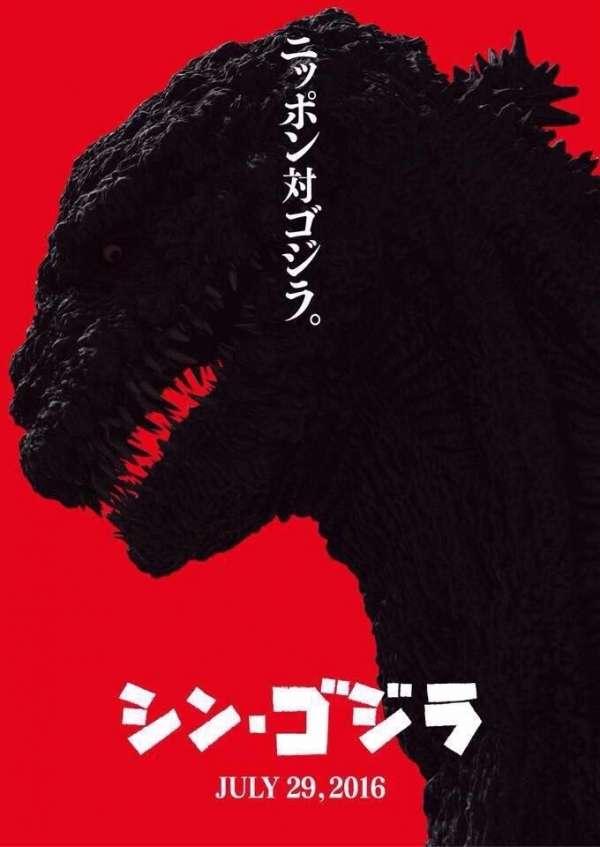
It doesn't show much, but there's a bit to be mined out of this trailer. The footsteps sound like the drumbeat footsteps from the original Godzilla. And the roar sounds like it was taken directly from the tape for the 1954 Godzilla. It's a great sound, and I miss the metallic grating of the early Godzilla roars. I'll get the new poster up as soon as I can find a good quality picture to pinch. (Update, done.) 2016 is looking good for kaiju fans.

Godzilla: Resurgence

Since this is the beginning of a new series, I wonder if Godzilla will be alone, or will he have something to fight. Either way, I hope it gets an American theatrical release.

Thursday, January 1, 2015

Kaiju Blender: Godzilla: Final Wars

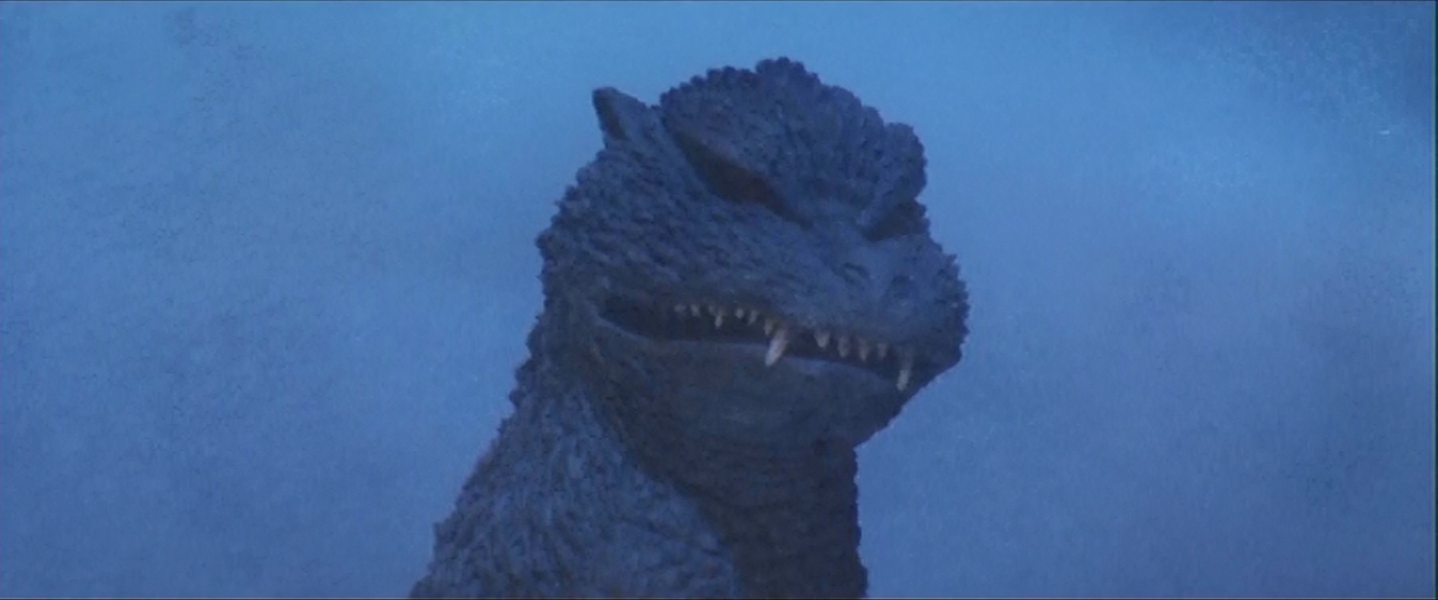
With the reduced revenues from Godzilla Against Mechagodzilla and Tokyo SOS, Toho decided it was once again to retire the franchise. But they would celebrate Godzilla's fiftieth birthday with a big bang, a more expensive Godzilla film than they had ever before produced, directed by maverick film maker Ryûhei Kitamura. The approach had worked with the excellent and well-regarded Godzilla, Mothra, King Ghidorah, Giant Monsters All-Out Attack. But it should be pointed out that director Shûsuke Kaneko had directed three well-received Gamera films before being asked to work on Godzilla. Kitamura had no such experience.

You really want to do this?

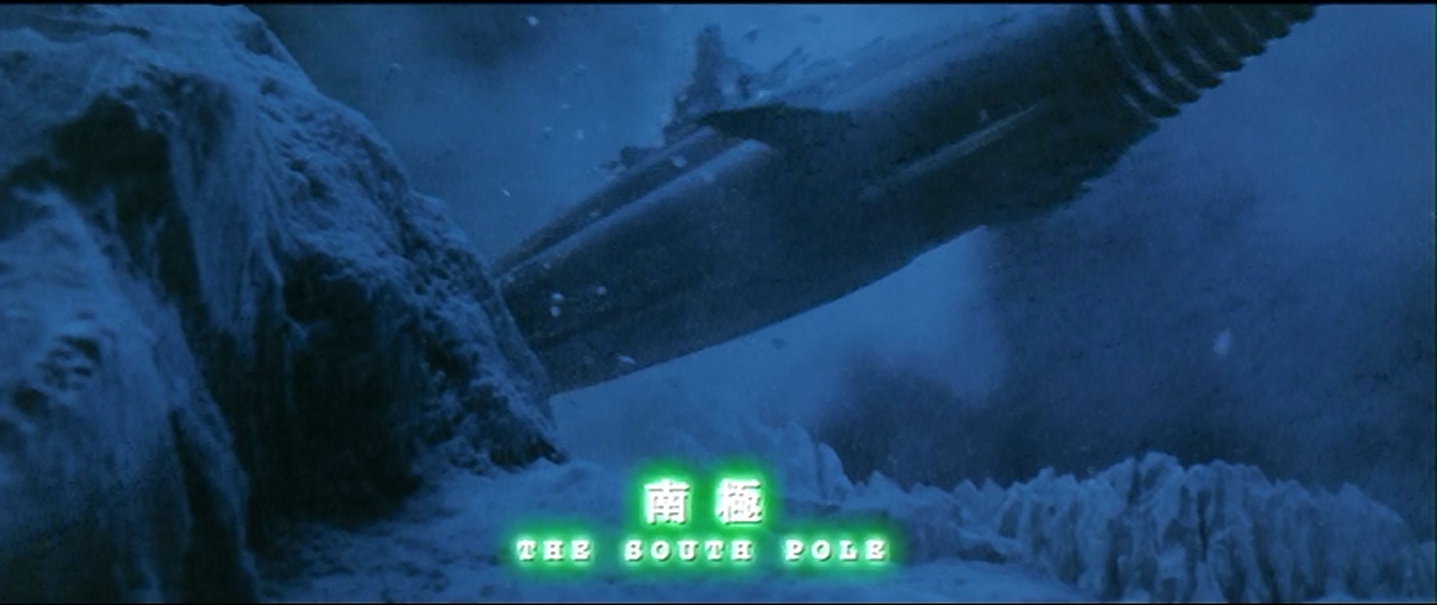
The first sequence is Godzilla being attacked by a flying submarine of the Atragon style. Godzilla falls into a crack in the Antarctic ice, freezing him, in a nod to Godzilla Raids Again. The gunner screams as he unleashes missiles to bring tons of ice down on Godzilla and in that moment, I knew exactly what kind of movie this is going to be.

The Original Gotengo

In the narrative flashback, the audience is shown Varan, the squid from Space Amoeba, Titanosaurus, Gaira, Baragon, and Megaguirus. These kaiju do not appear in anything but stock footage, but it sets the tone. We are going to see a lot of monsters in this film.

Guest appearance by Varan

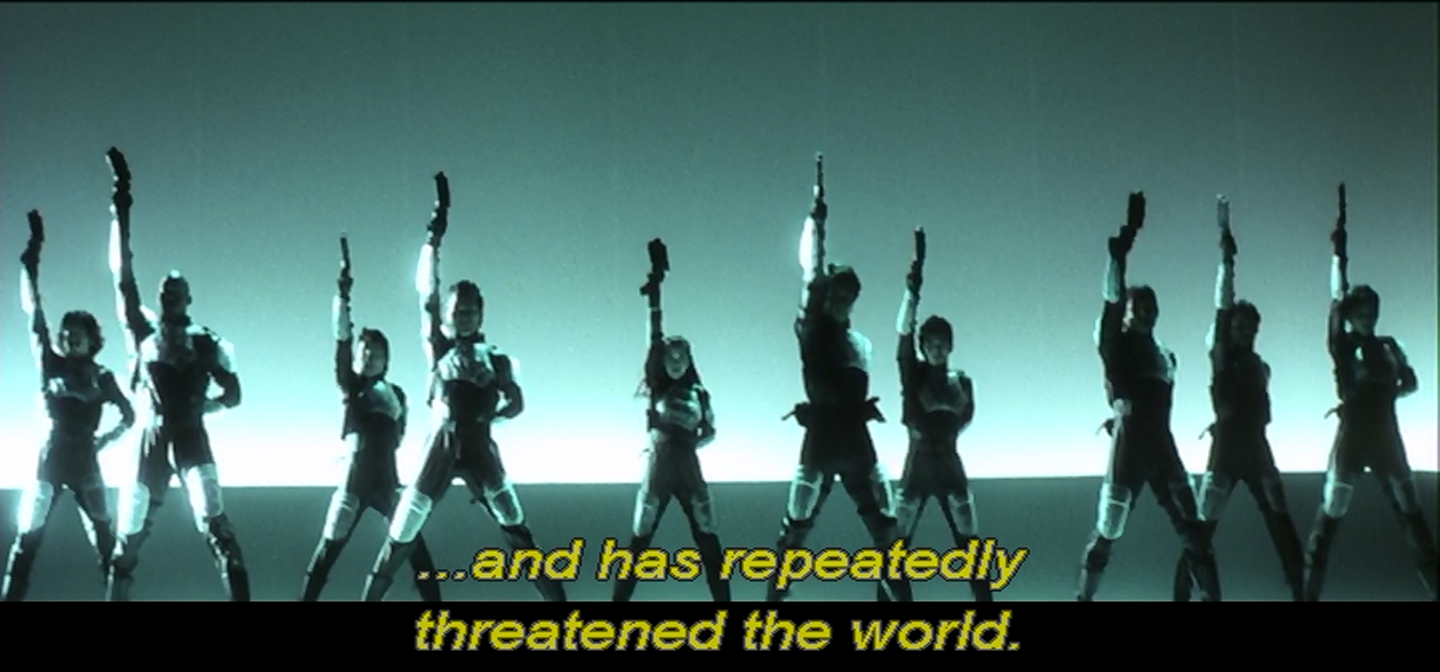
We are also introduced to the mutants that protect us from the kaiju. A new race of superman and women have emerged from humanity, better, stronger, faster, and more psychically powerful. They, along with superb purely human specimens such as Captain Gordon, form the Earth Defence Force. After the title sequence, one of the supersubs defeats Manda. Gordon is emblemic of the film itself, big, physically powerful, and only speaking English, while everyone around hinm speaks Japanese, but somehow they understand each other anyway. As with Atragon, the sub fires its Absolute Zero gun, freezing and then destroying Manda. This introductory sequence lets us know how the Earth Defence Forces work.

But not us. We've got guns but we're totally not a threat.

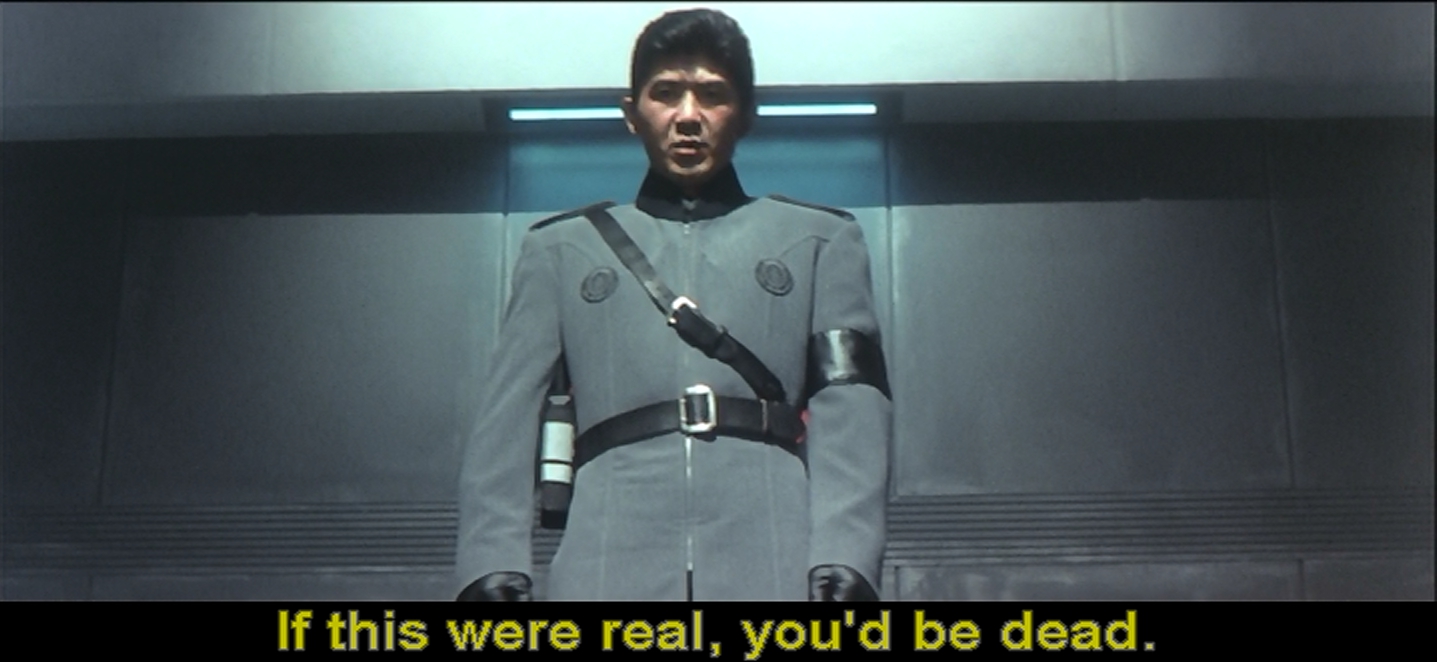
The Earth Defence Force higher-ups, for reasons that will become clear, have rather Nazi-esque unforms; a grey overcoat with a belt with a black arm band. The Mutants, a scientist tells us, share a certain biological link with the kaiju. The best way to defeat monsters, it seems, is to use them against themselves. The Shobijin, Mothra's fairy communicators show up, and give us a bit of back story. They also tell out Mutant protagonist that he has some kaiju in him (now confirmed by science and mysticism), but that he has a choice, which is very Matrix: Revolutions, and badly presented in that film, as well.

Yeah, so not a Nazi

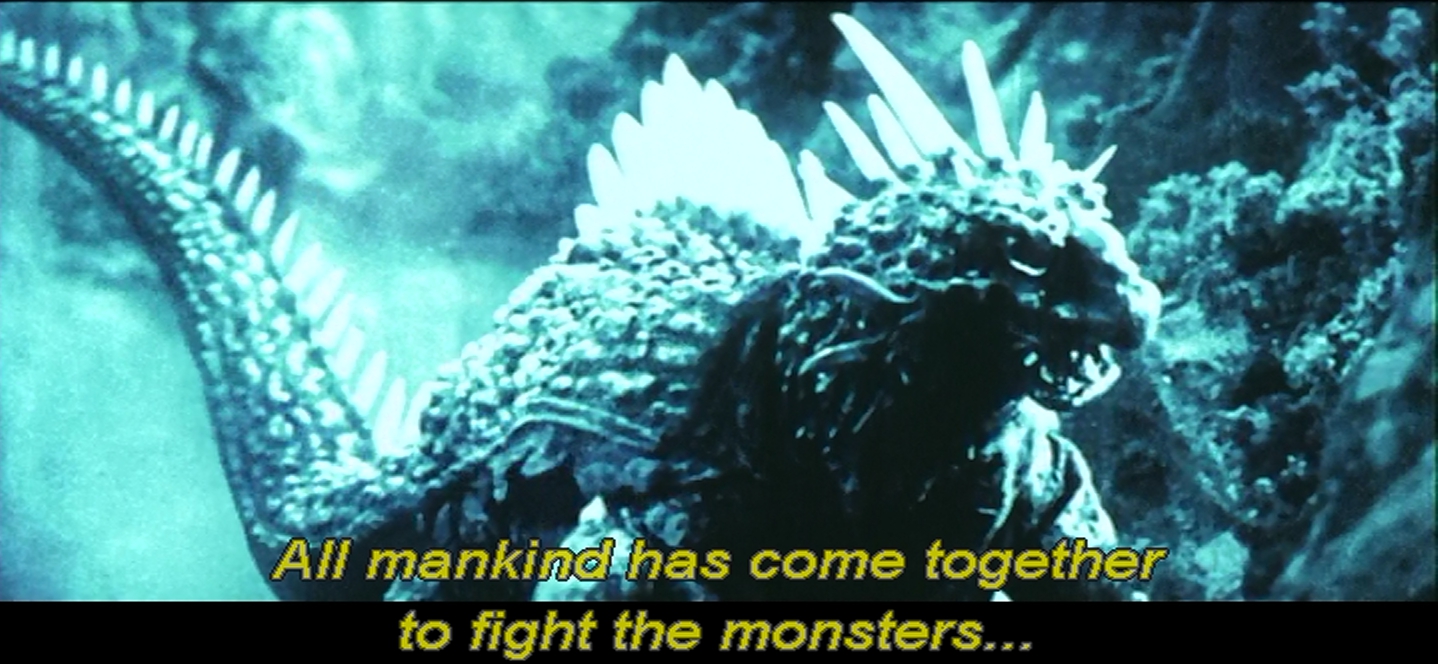
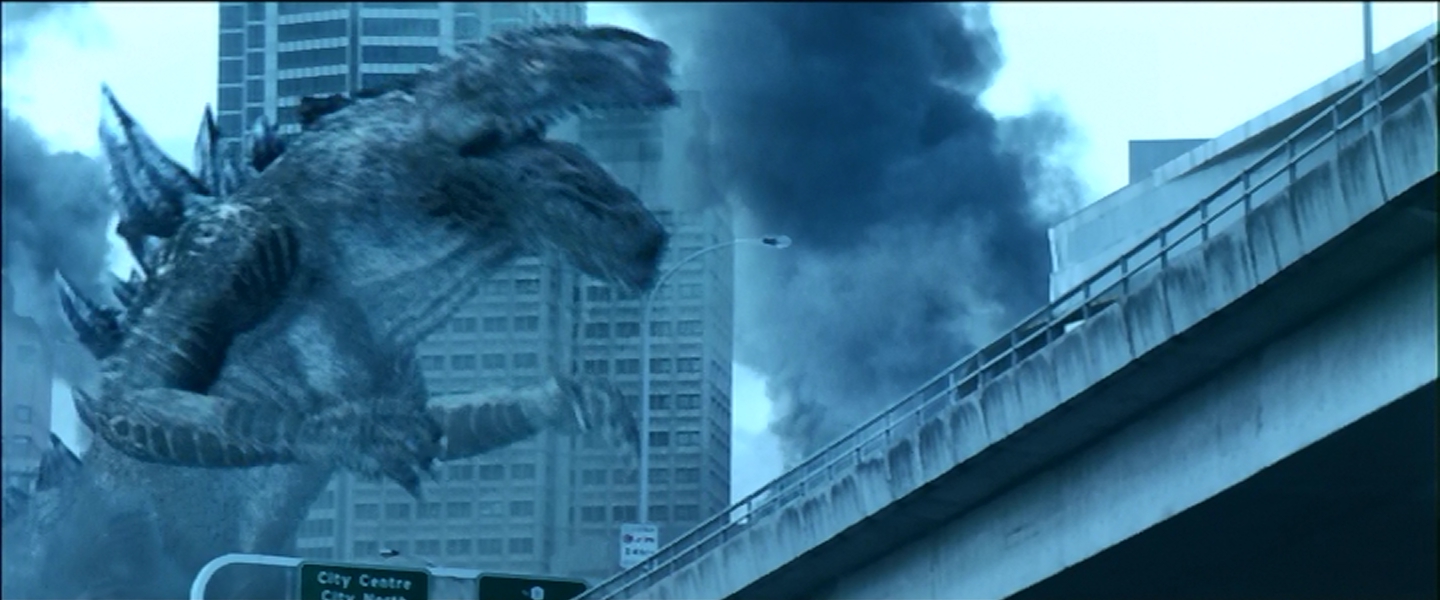
Kaiju begin to wreck cities across the globe, with a similarity to the Kilaak invasion Destroy All Monsters. Anguirus, Rodan, King Caesar, Kamacuras, Kumonga, and even American Godzilla stomp on cities. Zilla, American Godzilla, is a weird sort of nod to the much-reviled 1998 film. Creature designer Patrick Tautopolis was gratified to be included in the Toho Godzilla canon, even though his creation was treated with a certain amount of contempt. Kitamura was determined to embrace as many films in the Toho library as possible, leaving out only Megalon, Destroyah, and King Kong.

OK, a lower-grade Zilla

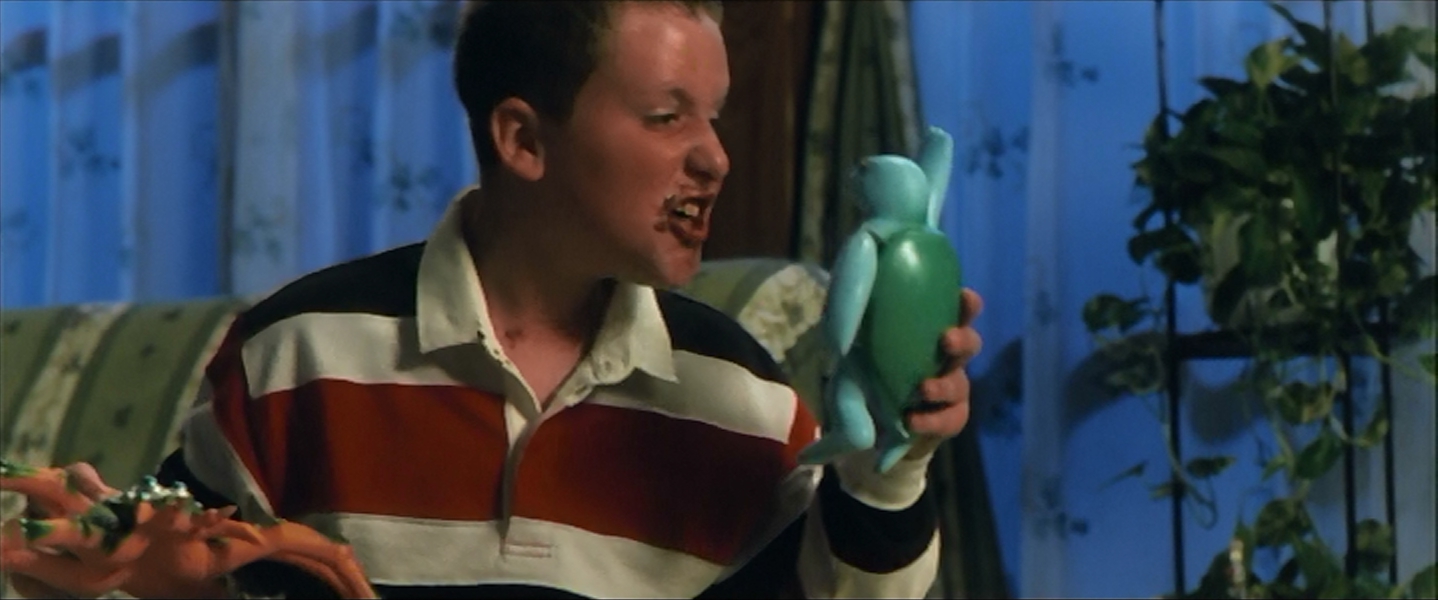
Kitamura goes so far as to have an obnoxious, chocolate-mouthed American child call his turtle toy (which looks suspiciously like a Tirtouga Pokemon) a loser, attempting to compare itself favorably to the Gamera franchise. We've seen this behavior before: in 1999 Yonggary, Kraa the Sea Monster, and Gamera, Super-Monster. All these films have the same thing in common: they aren't particularly good, and they only demonstrate their own insecurity by calling other films and franchises names.

Really? You didn't have enough time for longer kaiju fights, but you had time to leave this in?

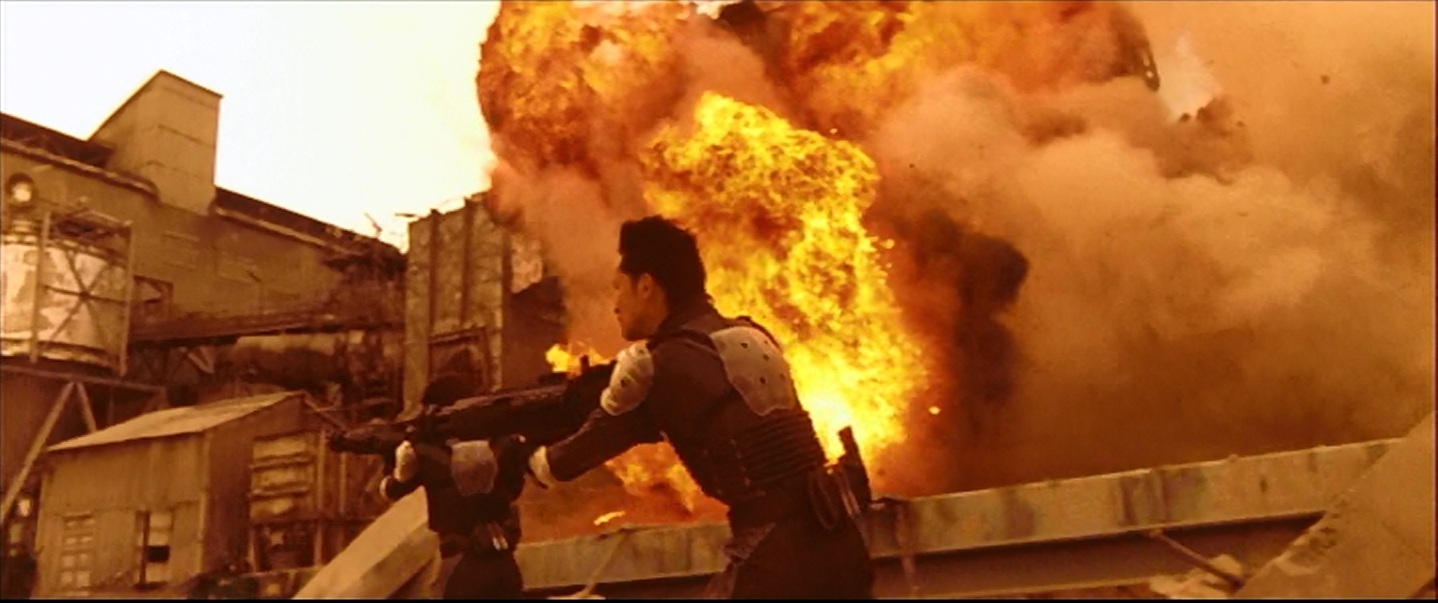
The M-Squad is deployed to take down Ebirah, the giant lobster we haven't seen since stock footage in the 1969 All Monsters Attack. Six mutants are deployed with shoulder weapons. There are a lot of pointless explosions, when the team are running, or standing still, or firing theit weapons. It's like each one is a John McClain, and their passing just causes things to explode in their wake. There's a lot of wirework which is well integrated into the miniature work, but it just feels like the director is trying too hard to be exciting, confusing motion with progress. There's a lot going on on-screen, but it doesn't engage me. A cinematic fight should be a story in itself, with a beginning, a middle, and an end. There is no progression here, nothing learned. Just weapons deployed, running, firing, and then it's all over except for the quip.

Explosions! Running!

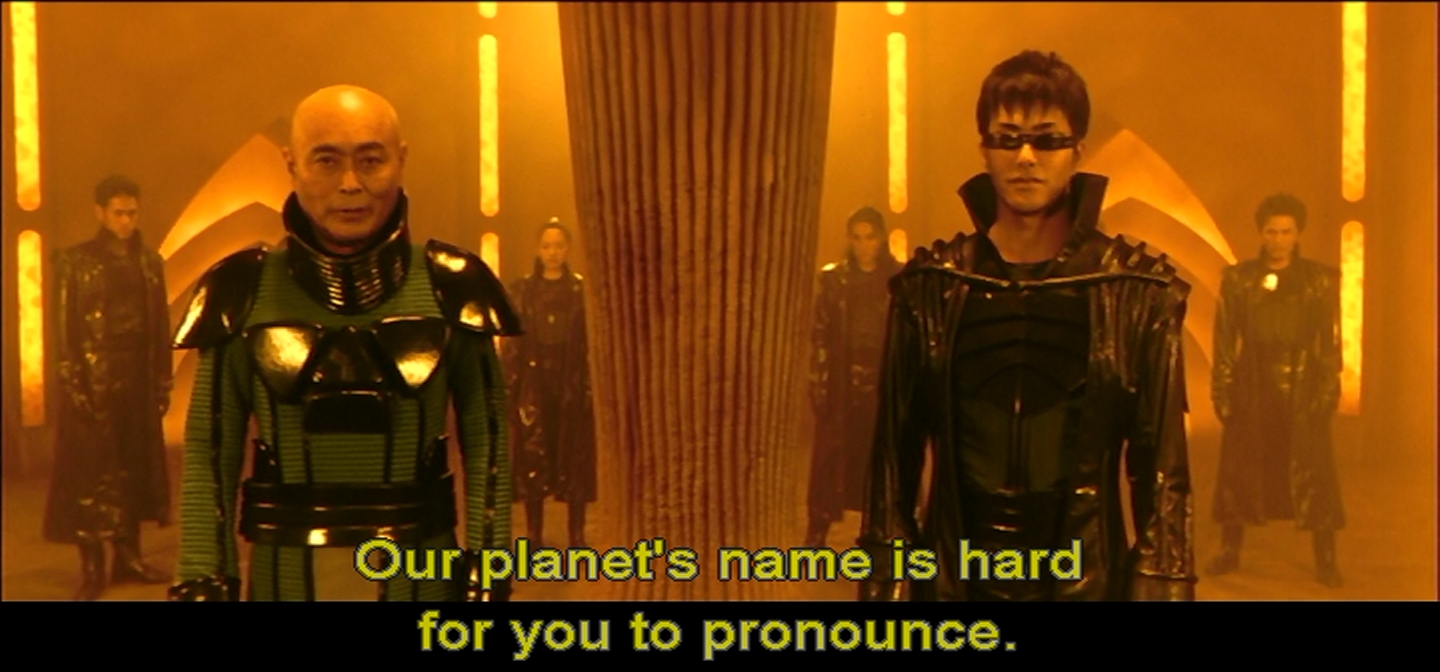
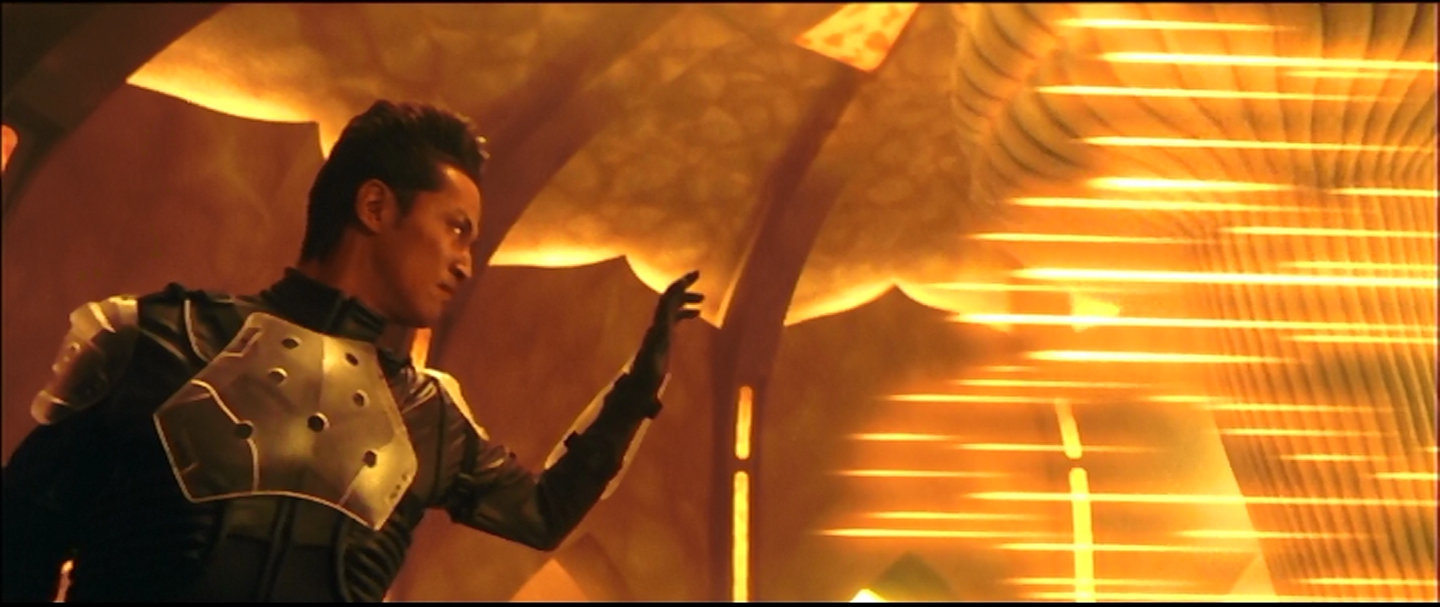
The monsters, it turns out, are being controlled by aliens, the Xilians from Invasion of Astro-Monster to be precise. They tried to be subtle, in the Japanese alien invasion thing, trying to be friendly, returning the UN secretary to humans. When he doesn't recognize his own dog, the jig is up. Subcommander X shoots the mission commander, promoting himself. The aliens, he announces, are there to make humanity their supply of mitochondria.

Alien commander on the left, future alien commander on the right.

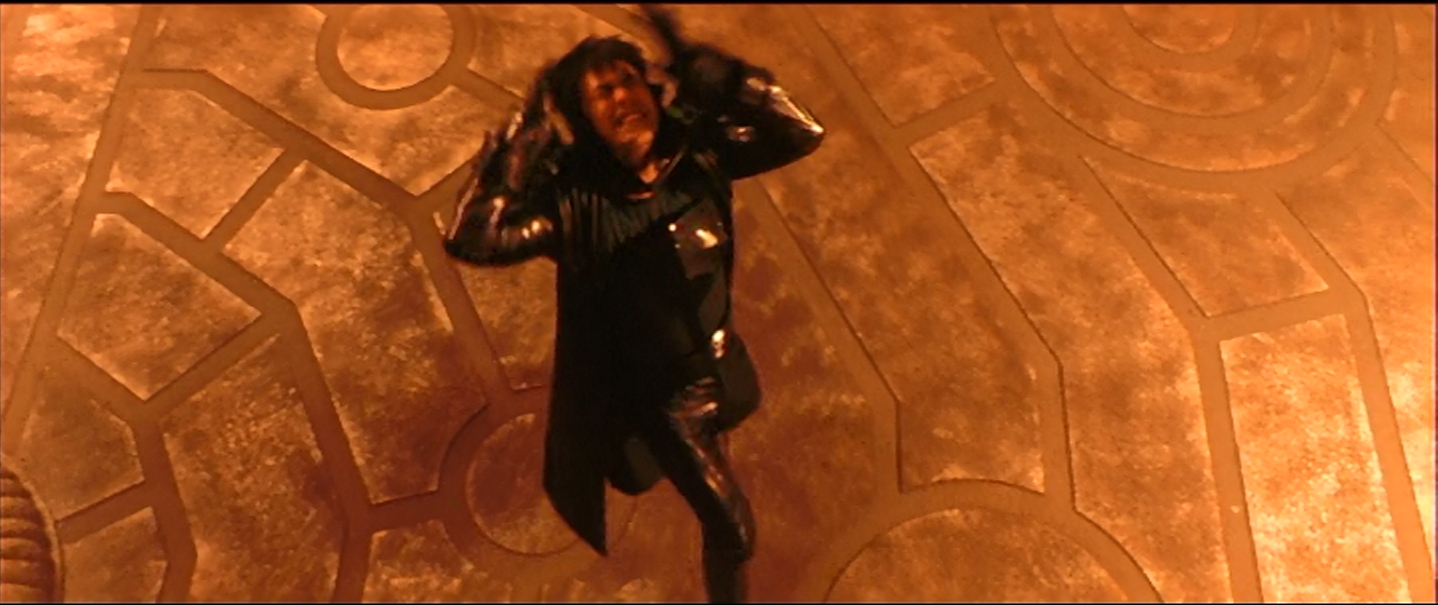
X is best described as a tantrum-throwing child, who will literally spazz out every time one of his monsters is defeated. He's an angry, drama-addicted, short attention-span sort of guy, exactly the sort to blow all his advantages and screw up an invasion.

Mission Commander has a spaz fit.

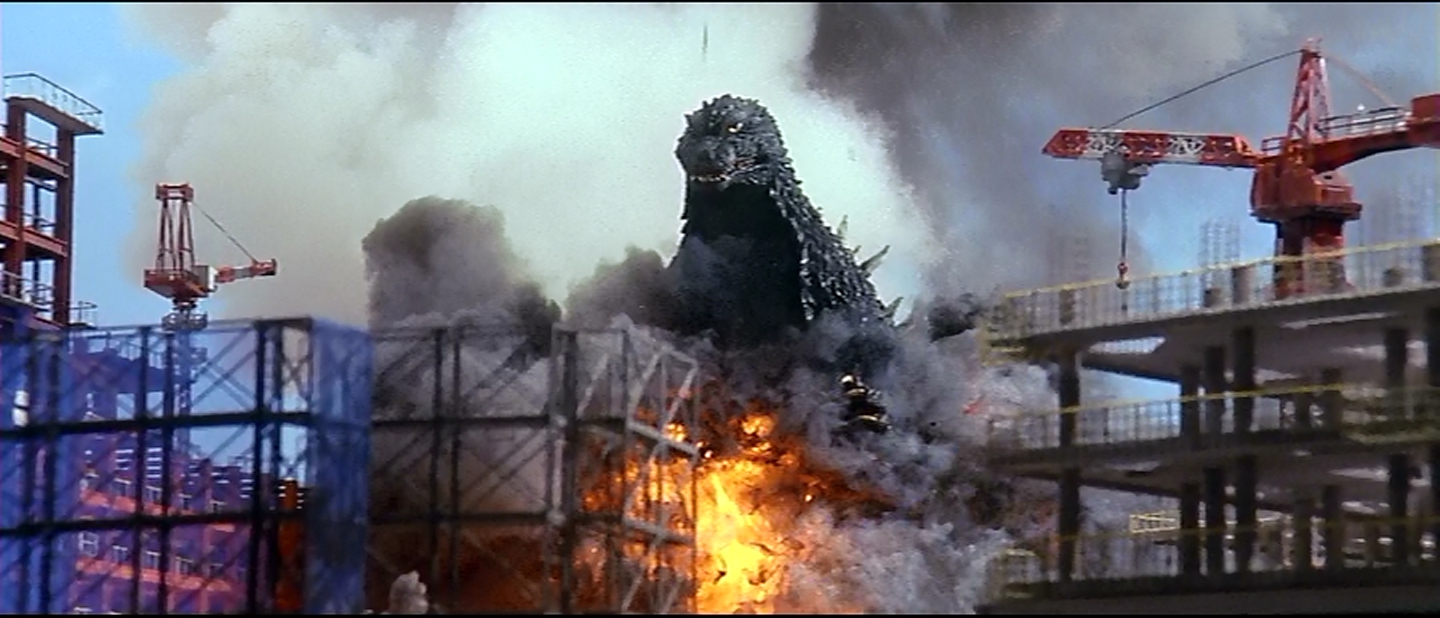
The remains of humanity's defense rests with Captain Gordon and the Gotengo. Gordon decided the situation is desperate enough that he's going to unleash Godzilla, giving the TV Trope of the Godzilla Threshold its name. Godzilla then spends the last half of the film having very brief fights with all the world's monsters. Which is a pity. The technology was available to make these much more engaging and interesting fights, but because Godzilla had to get through so many opponents, each one is truncated.

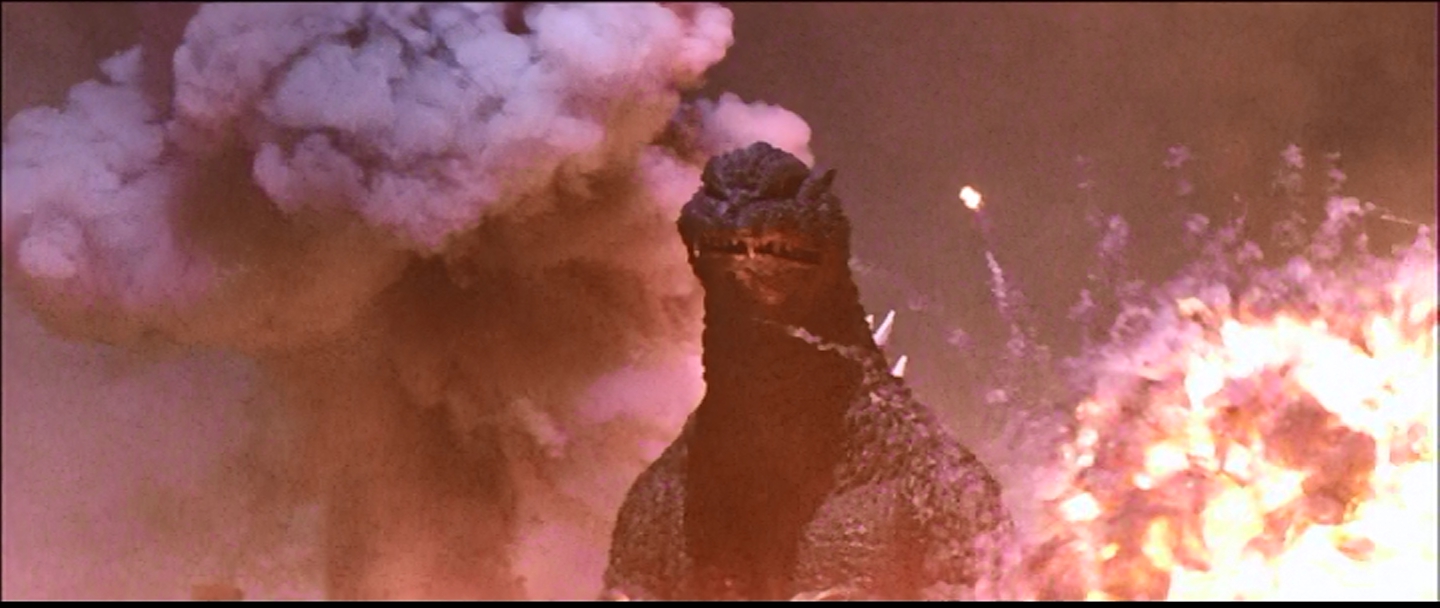
Godzilla, walking through explosions

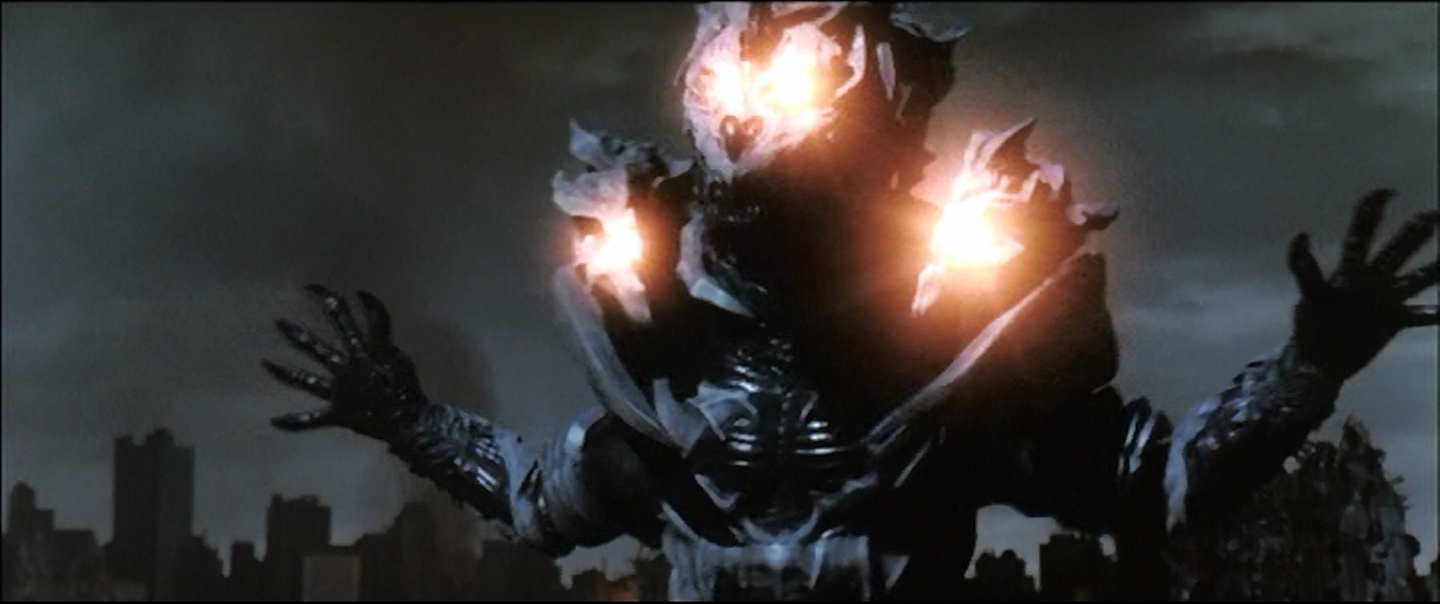
Only the final fight has any sort of length. Godzilla, having knocked down six different kaiju, now comes up against Monster X. Monster X is an odd creature we haven't seen before, humanoid, with a head beam that also comes out of its shoulders. Now where have we seen a kaiju that has three breath weapons before? After he initial clash, each gets reinforcements, and Mothra faces down an upgraded Gigan.

Monster X

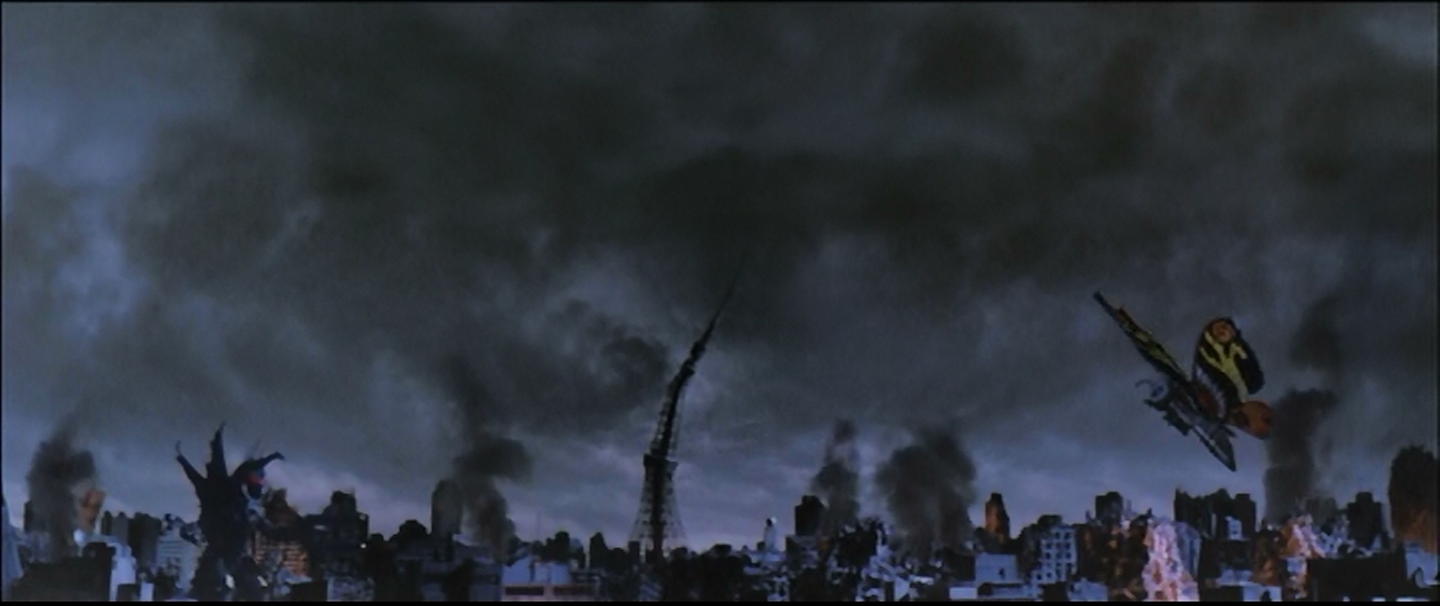
Mothra and Gigan face off

Meanwhile, X monologues about Keisers, a mutation that happens to one in a million mutants, making them the most powerful creatures like ever. X is one, and so is our mutant protagonist. What a coincidence! Once awakened, he finds his inner Neo, stopping yellow bolts of light, burning with power, and declaiming about choice.

OK, a lower-grade Zilla

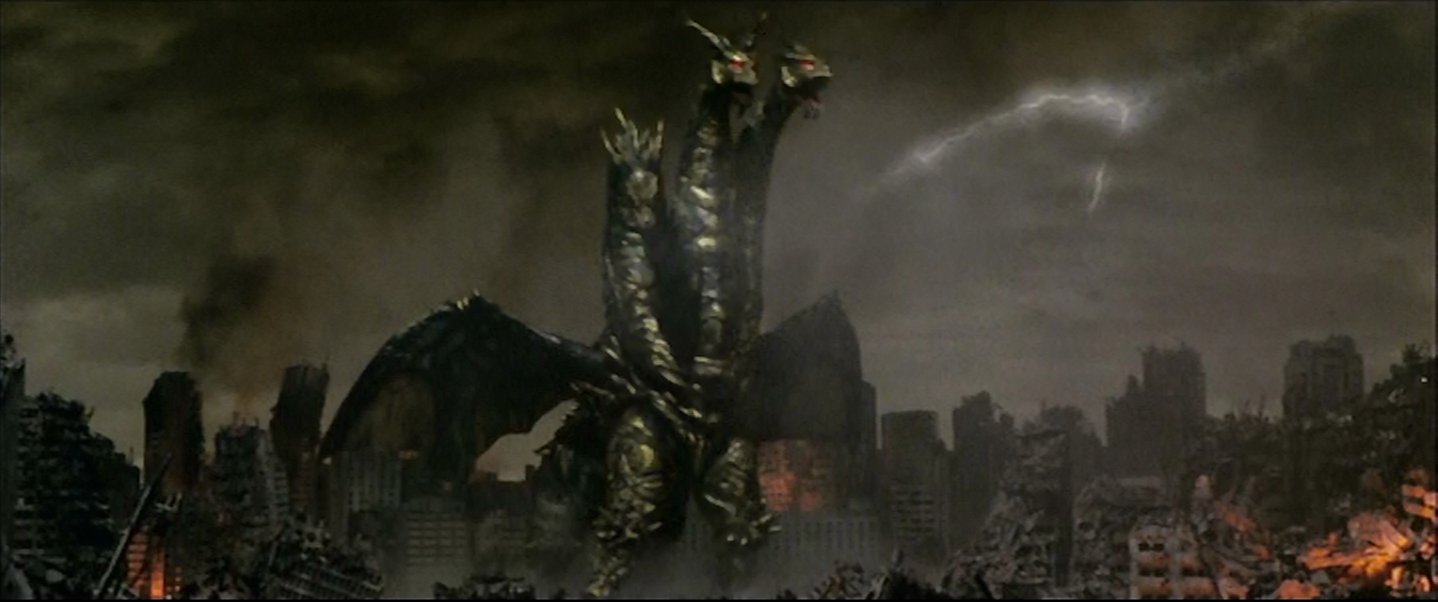
He defeats X, and this causes the alien ship to self-destruct. Monster X grows two new heads, and is revealed to be Keiser Ghidorah, with some very delicate blue among the golden scales. For the first time since the first Rebirth of Mothra Ghidorah has four feet. It no longer has any of the previous Ghidorah cries, and instead, some sort of strangled scream similar to Destroyah's. Other than that, the creature design is likely the best in the film.

New Keiser Ghidorah

That's going to leave a mark

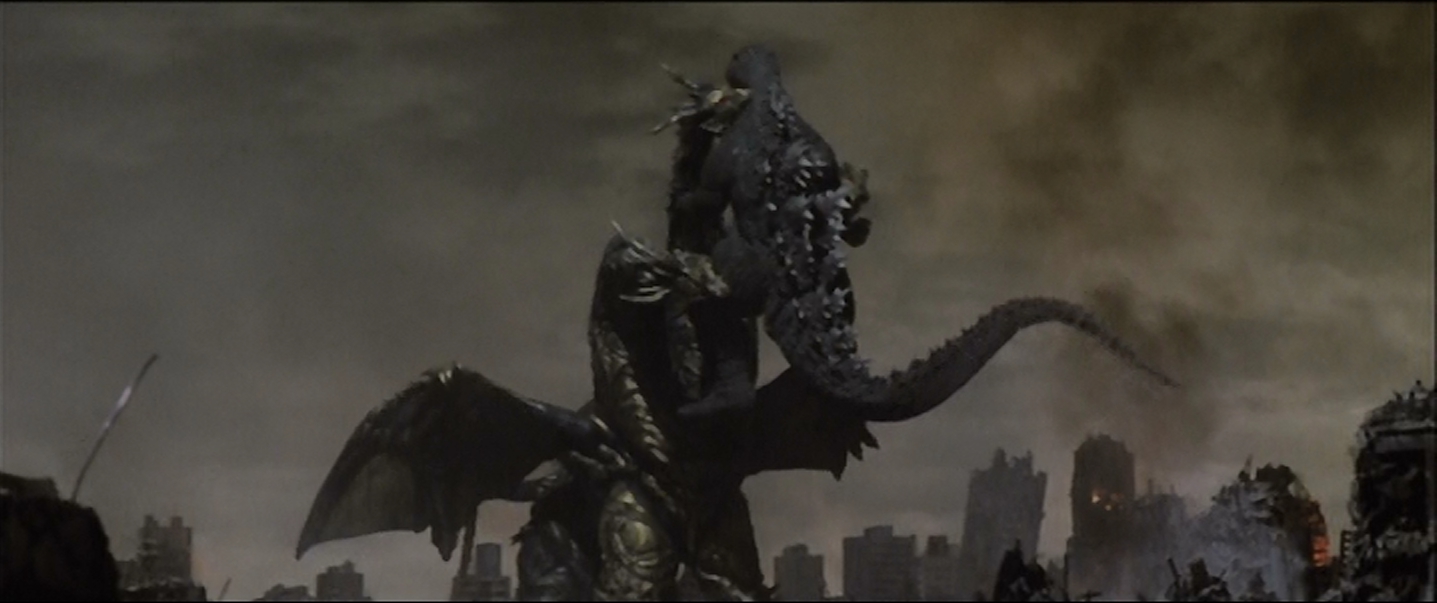
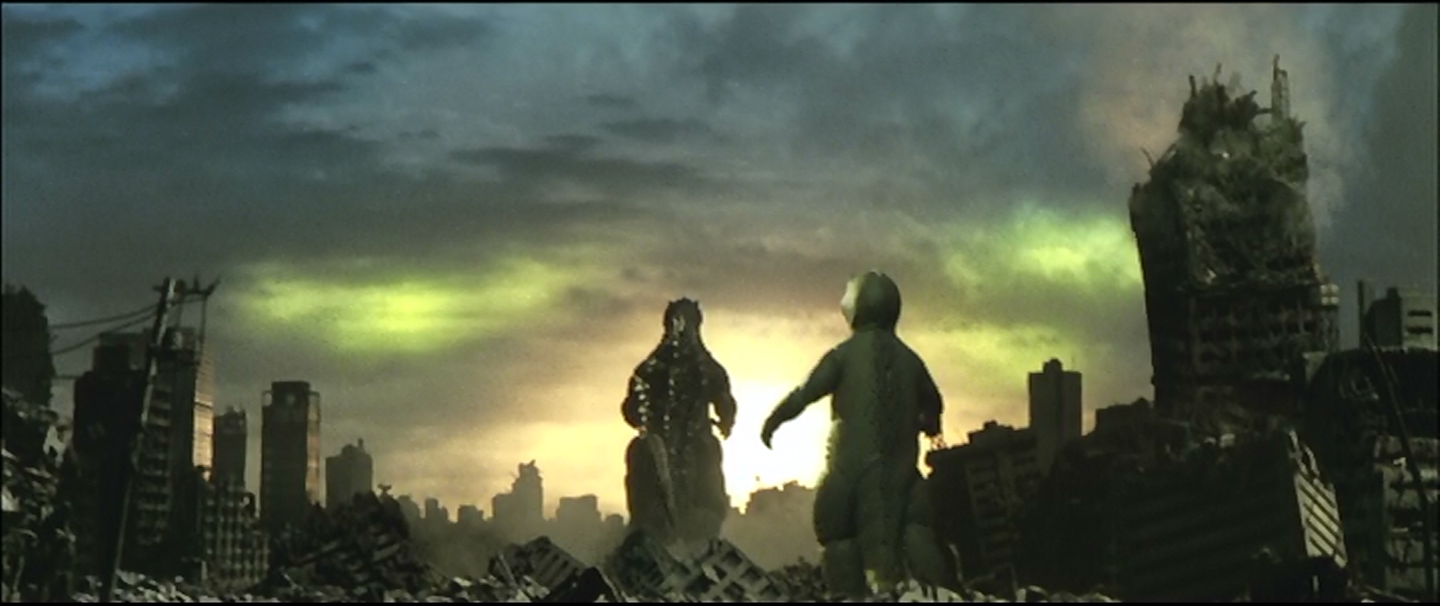
It is immensely powerful, stronger than its last form, and Godzilla isn't doing so well until out mutant buddy focusses his psychic energy through the Gotengo, Godzilla receiving it through his spines. With the extra power, Godzilla smashes Ghidorah. He is not a grateful victor, however, and immediately uses his atomic ray on Gotengo. The upcoming massacre is forestalled by Minilla's arrival. Only children can stop the cycle of violence. Godzilla walks away through the devastation that was Tokyo, his offspring following.

Well that was a thing that happened

The military is treated very differently from other Godzilla films. They are not incompetent, or lionized, but actually working against humanity. The Mutants who make up the Defence Force are actively working against mankind, and only those who choose to do so, mavericks and rogues, stand with humanity. The flying sub commanders who stabnd against the alien invasion are outlandish types, with dreadlocks, long blonde hair, or Captain Gordon.

Eschewing the traditional orchestral soundtrack, the rock sondtrack feels out of place and occasionally intrusive. It does not do the film any favors.

The experience of Godzilla Final Wars is something akin to watching Destroy All Monsters while watching The Matrix on the same screen. Gone is the traditional mystery story structure, in which the humans investigate and uncover and eventually solve the plot problem (in this case, an alien invasion). Instead, we have a group of superhumans who defend the Earth against the kaiju fighting. Drawing from a lot of anime, Kitamura manages to jam a lot of anime cliches into a number of overblown kaiju cliches and nods to previous films. The result feels like he jammed a bunch of movies in a blender, then reassembled it from whatever pieces he could salvage.

A good look at King Caesar

Next up, Peter Jackson's take on the Big Ape. All two hundred minutes of it.

Thursday, December 18, 2014

Look At Them Monsters Go: Godzilla: Tokyo SOS

Godzilla Against MechGodzilla wasn't as successful as GMK, but it wasn't a failure, either. So Toho decided to plot along with the same director, and essentially, the same plot. This is also the only film of the Millennium series to be a direct sequel to another film of the same series.

Ok, he's back. Now let's procees to wreck some stuff

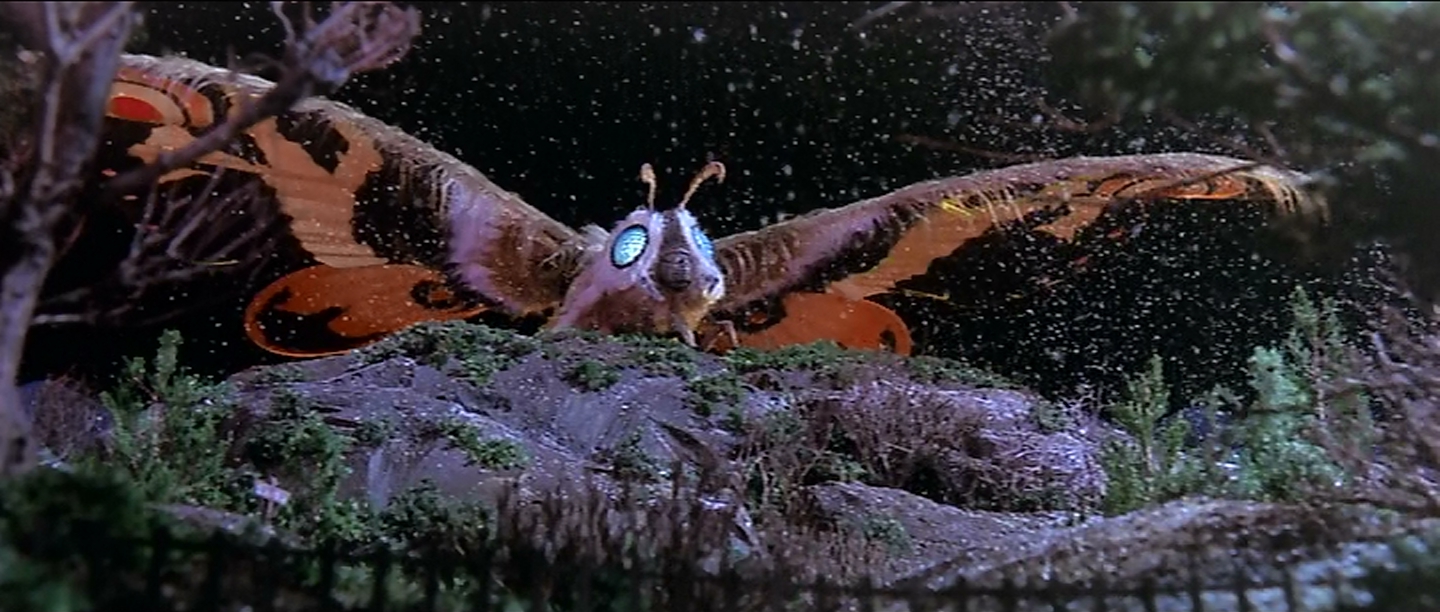
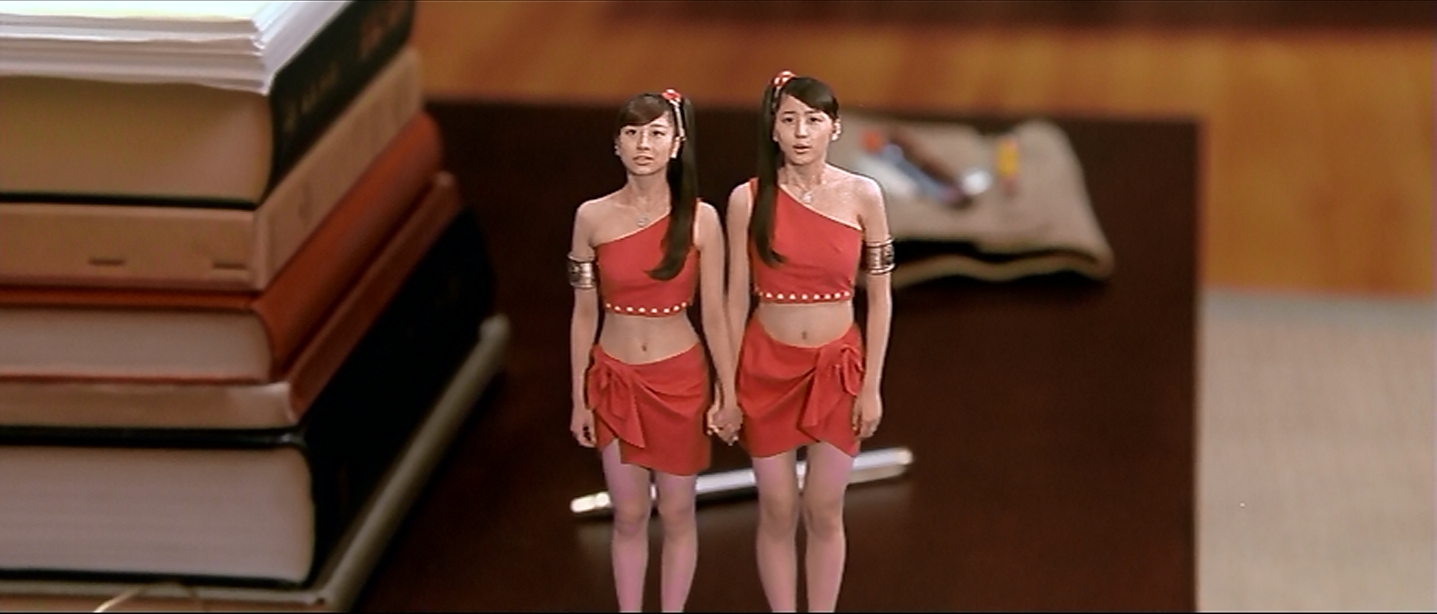
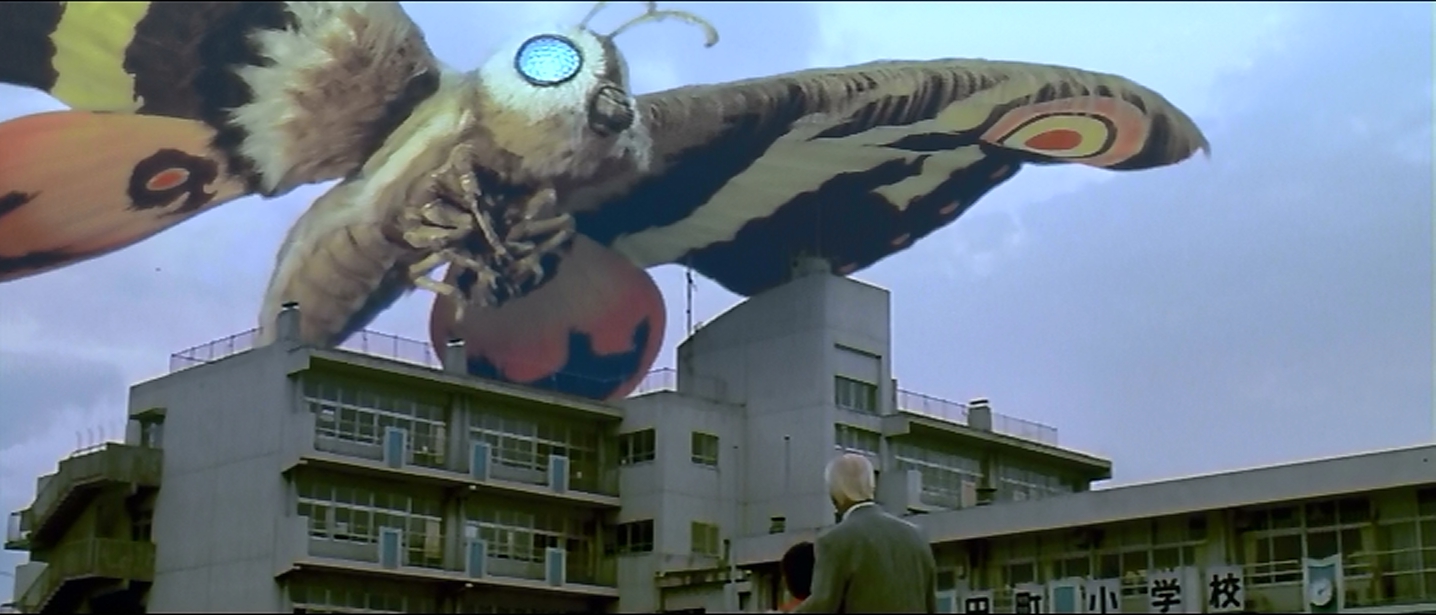
Our first monster on-screen is Mothra. Again ignoring the Rebirth of Mothra series, Mothra looks much like it did for Godzilla vs Mothra, although it can apparently fly as trans mach speeds. Mothra is no longer sleek and combat-oriented, but again hairy, as she was in her original film. If this is to make her sympathetic, I'm not sure. With her are the shobijin, who shows no signs of having a wicked triplet. The shobijin contact Dr. Shin'ichi Chûjô, played by Hiroshi Koizumi forty years after he first performed the role in Mothra in 1961. They want Godzilla's bones to be returned to the sea.

BIG FLUFFY MOTH!

Less than ten minutes after the film begins, so do the plot problems. The shobijin want Japan to decomission Michagodzilla. When Kaneko's nephew reples that it is their only defence againat Godzilla, the tiny fairies promise Mothra will protect Japan from Godzilla. So where was she the whole last film? Worse, if the humans do not do this, Mothra will declare war on them. But this ultimatum is forgotten as soon as it is spoken.

With memories as short as their tiny bodies

Mechagodzilla has been nerfed a bit, and is still under repairs from the damage taken in the previous film. The absolute Zero chest cannon has been replaced with a more run of the mill triple hyper maser. But here it also serves as a bone of contention. It is made from Godzilla's remains, the Shobijin want returned to the sea.

I will not go berserk, I will not go berserk, I will not go berserk.

Giant turtle Kamoeba, from the obscure Space Amoeba washes ashore, letting everyone know that Godzilla is on the prowl again. Apparently, writer/director Masaaki Tezuka originally wanted this to be Anguirus, but Toho said no. It would have been oddly appropriate, since the cranky old dinosaur's last appearance was the first Godzilla vs Mechagodzilla, back in 1974. Apparently, Toho worried about the audience's reaction to Godzilla killing one of Godzilla's oldest friends. Which is odd, because not two films ago, Godzilla disintigrated Mothra, who is now back.

Kamoeba, light nibbled.

Where the military has been primarly lionized in the previous Masaaki films, here the vibe is avery different. Are the bones of Godzilla attracting Godzilla? Is military build-up inviting military attack? Godzilla appears for the first time attacking an American nuclear sub, as in Godzilla vs King Ghidorah and The Return of Godzilla. But is the submarine an innocent victim, or should have it not been there in the first place?

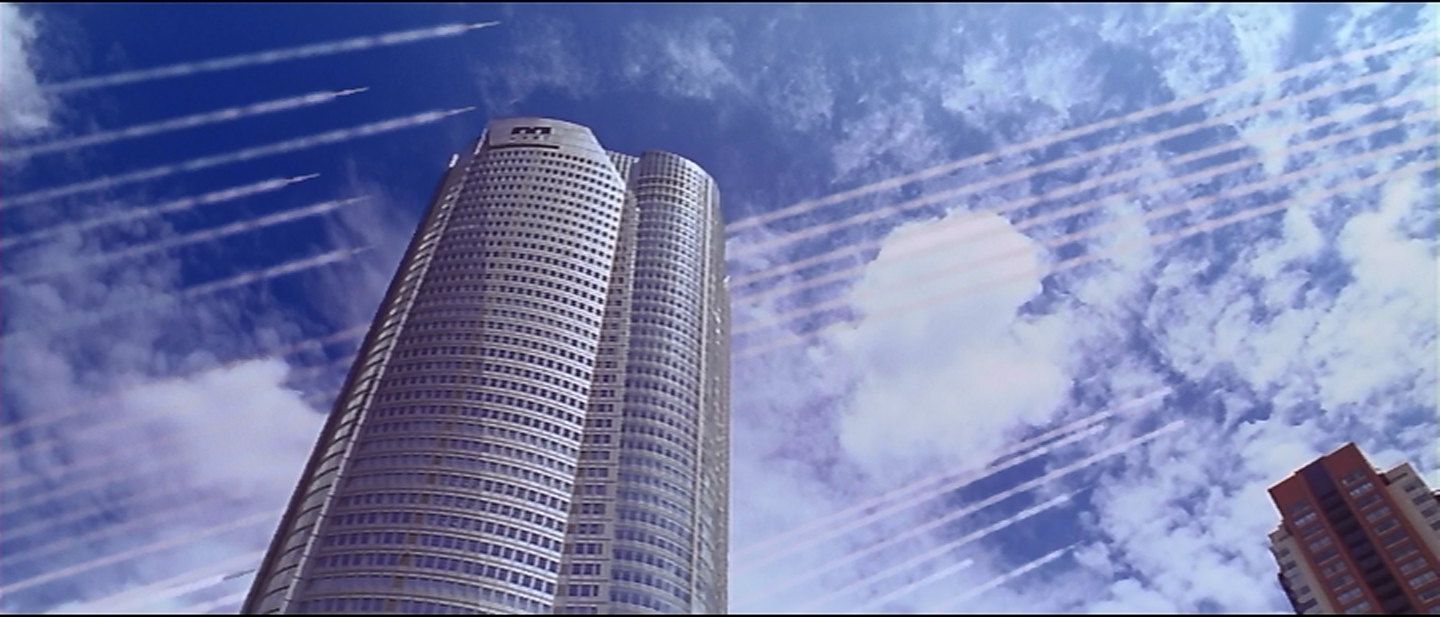
The film moves back to Ishiro Honda's attitude, that the military is there for show, but it almost completely ineffectiver against Godzilla. There are some very striking shots of missiles streaking across the Tokyo skyline, and the Hyper Maser is cool-looking, but none of these weapons do much more than inconvenence Godzilla. He sweeps away a phalanx of tanks with a single jet of his atomic heat ray.

That's a lot of missiles.

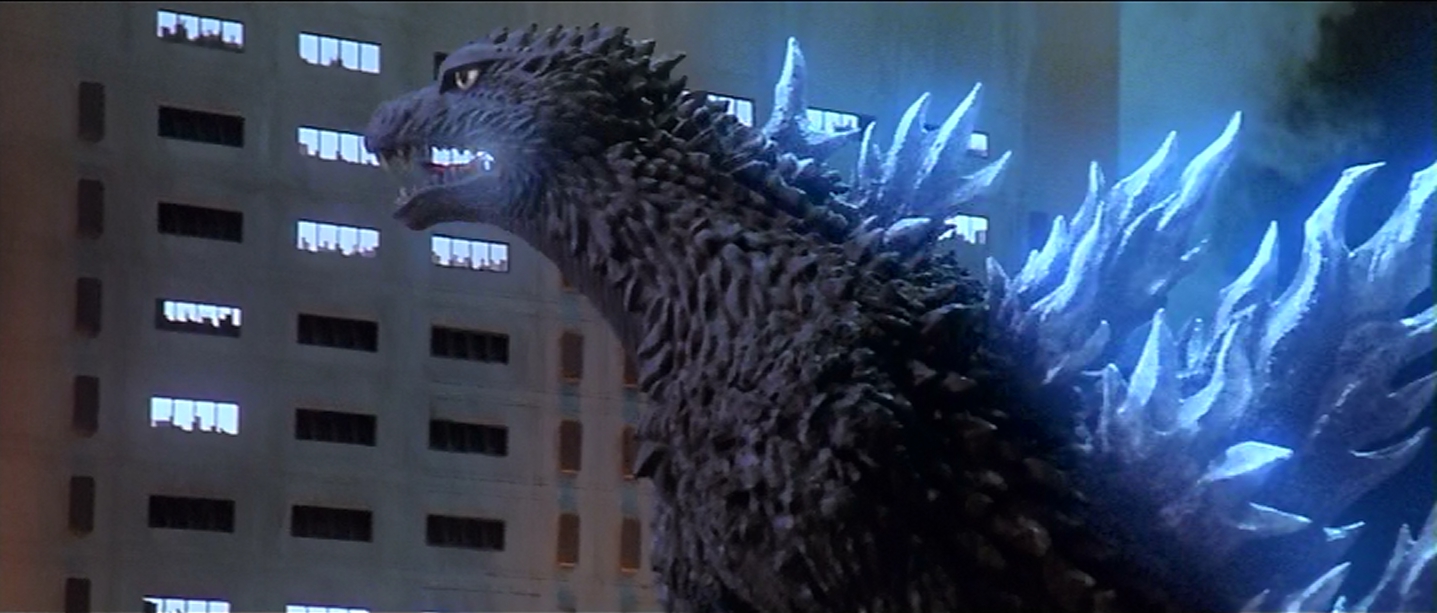
Godzilla looks much the same as he did in Godzilla Against Mechagodzilla, bvut he has a large scar on his chest. So Godzilla is not invulnerable. But Kiryu no longer has the Absolute Zero gun, which caused the injury.

Godzilla's vulnerability--his front.

A lot of story beats and plot points are taken directly from Ishiro Honda's Godzilla vs Mothra, which is a little weird since that film doesn't exist in this continuity. In the initial confrontation, Mothra uses its poison scaled on Godzilla, which haven't been used since that 1964 film. But Chûjô was not involved in that, Lahtough actor Hiroshi Koizumi played the part of Dr. Miura) so I wonder how he knows about the scales. Again, for the first time since Honda's 1964 film, The Mothra larvae are twins. Godzilla's defeat is the same. Although Mothra can't take Godzilla down, the two larvae are able to, coating Godzilla in silk. This flies in the face of the shobijin's promise. Mothra can't handle Godzilla on her own.

Mothra, using her poisonous scales.

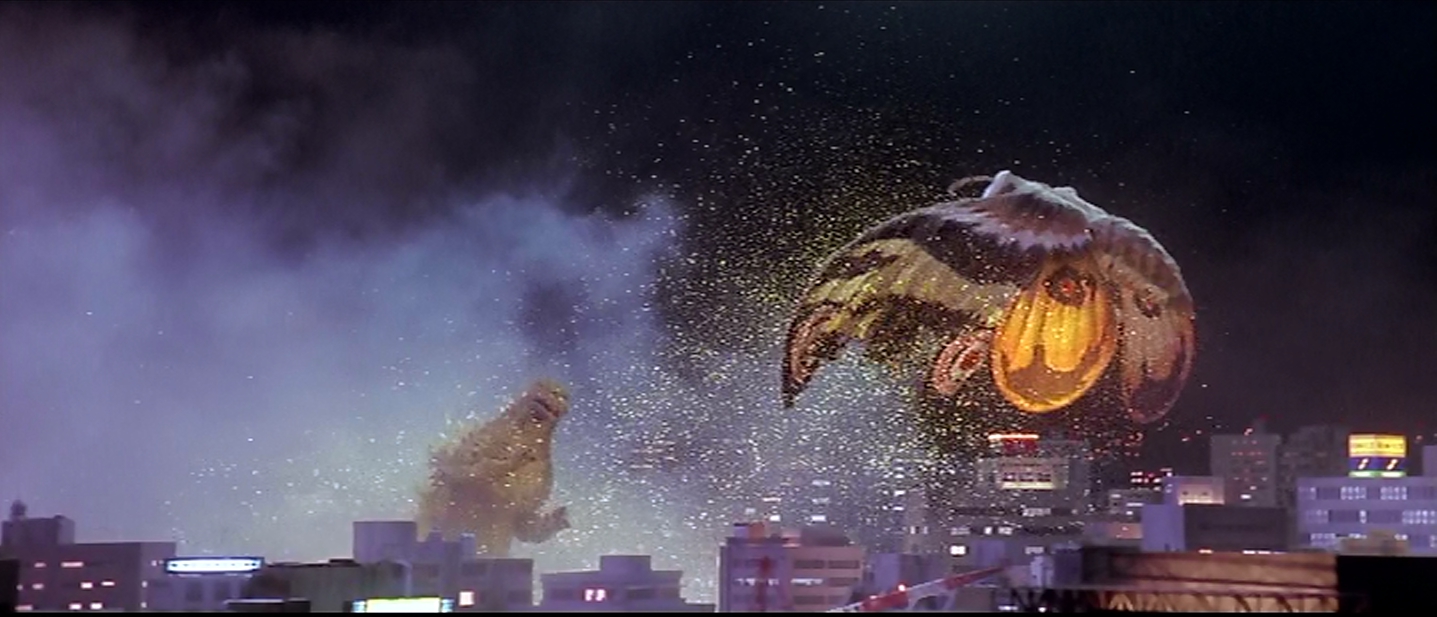
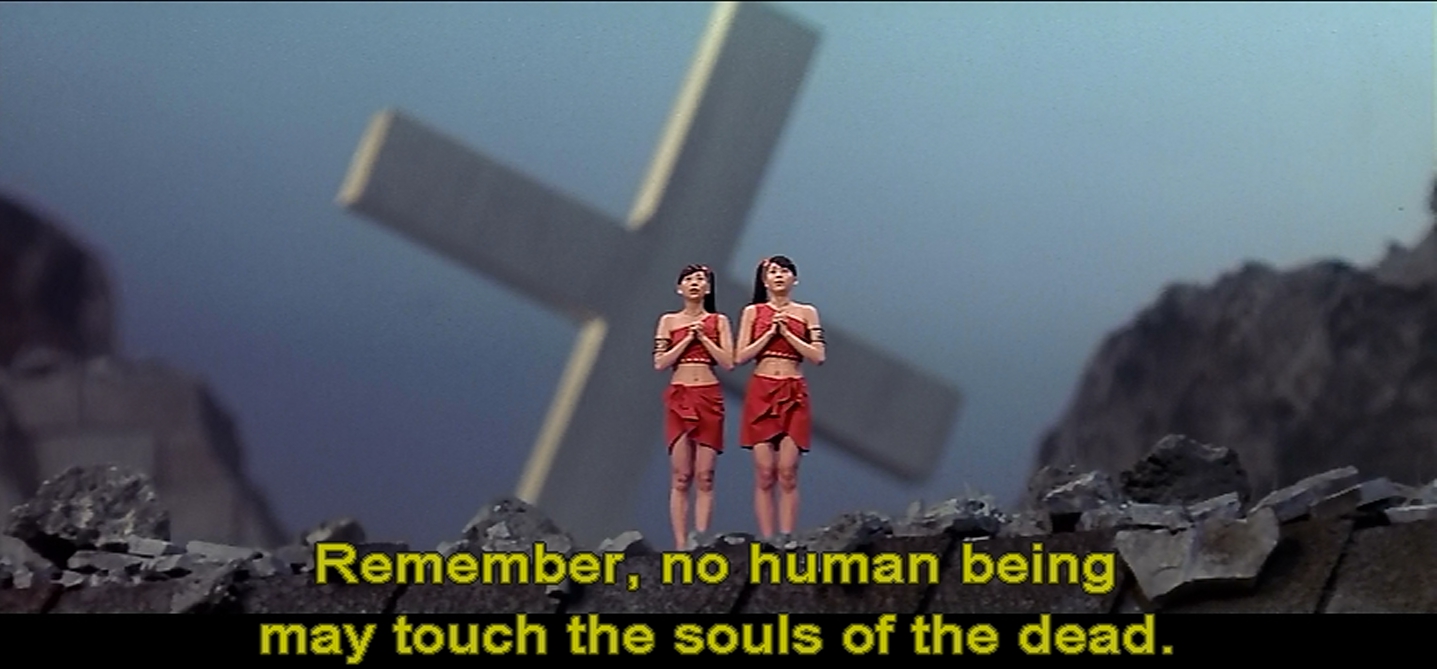
Mothra, who really hasn't had much religious symbolism since her debut, is at least willing to sacrifice herself for her children, taking a direct blast of Godzilla's atomic ray protecting her children. It plays out rather like her sacrifice in Godzilla, Mothra and King Ghidorah. The shobijin get a moment in front of a fallen cross, saying that the living should not touch the dead.

Mothra takes one for the team.

Morally instructive.

Godzilla: Tokyo SOS is fairly remakable in that there is only one monster showdown. The fight is on-going, and the human action is intercut with it. Again, Mechagodzilla proves to be Godzilla's greatest for, battering him around, knocking him down once. It's not as harsh as the job done by Mechagodzilla II, which temporarily cripples Godzilla. And ultimately, it's very inconclusive. The Mothra Laevae do the heavy lifting.

pew pew pew!.

Ultimately, I struggle to remain interested in the film. The human drama isn't all that compelling. While it was nice to engage someone who wasn't (initially) a pilot, focussing instead on a technician. But he doesn't have much to work with. When Mechagodzilla goes down, he goes ouyt to fix it. Not a lot of character depth there. The Godzilla problem is ultimately solved as Kiryu takes it upon itself to fly Godzilla's silk-enshrouded form to the ocean. The humans do not prodice a solution. It's all done by the Mothra larvae and Kiryu. The protagonists are really just spectators.
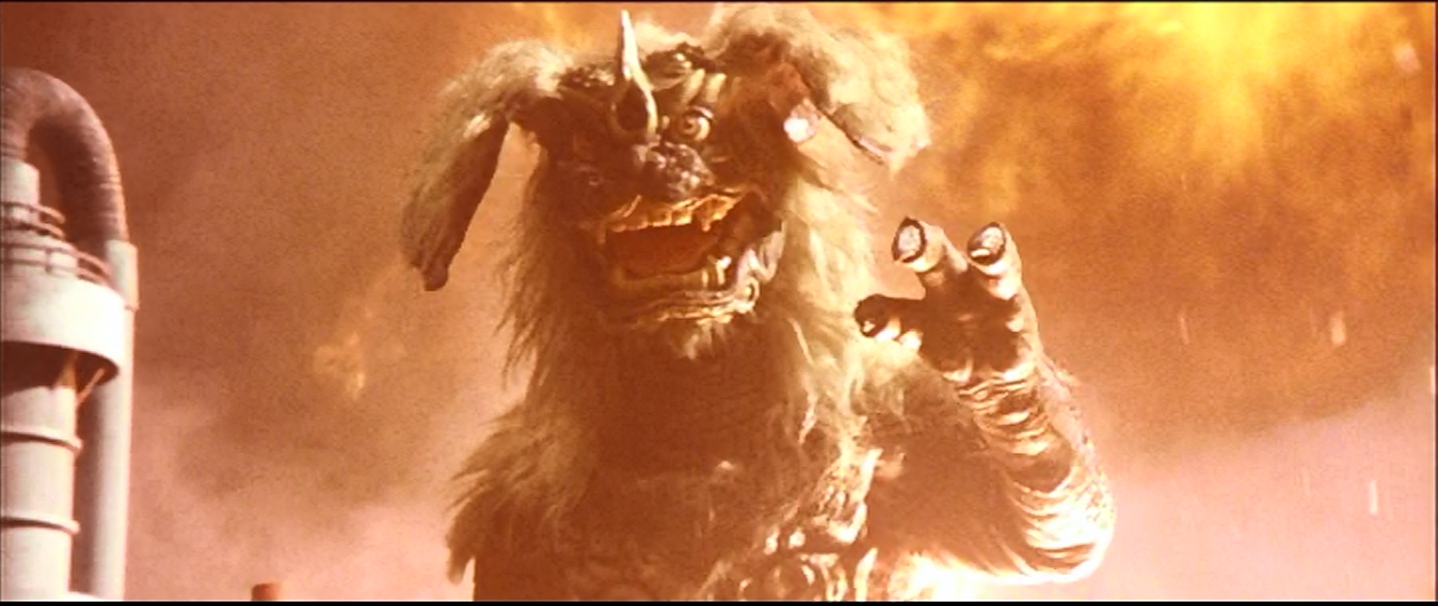
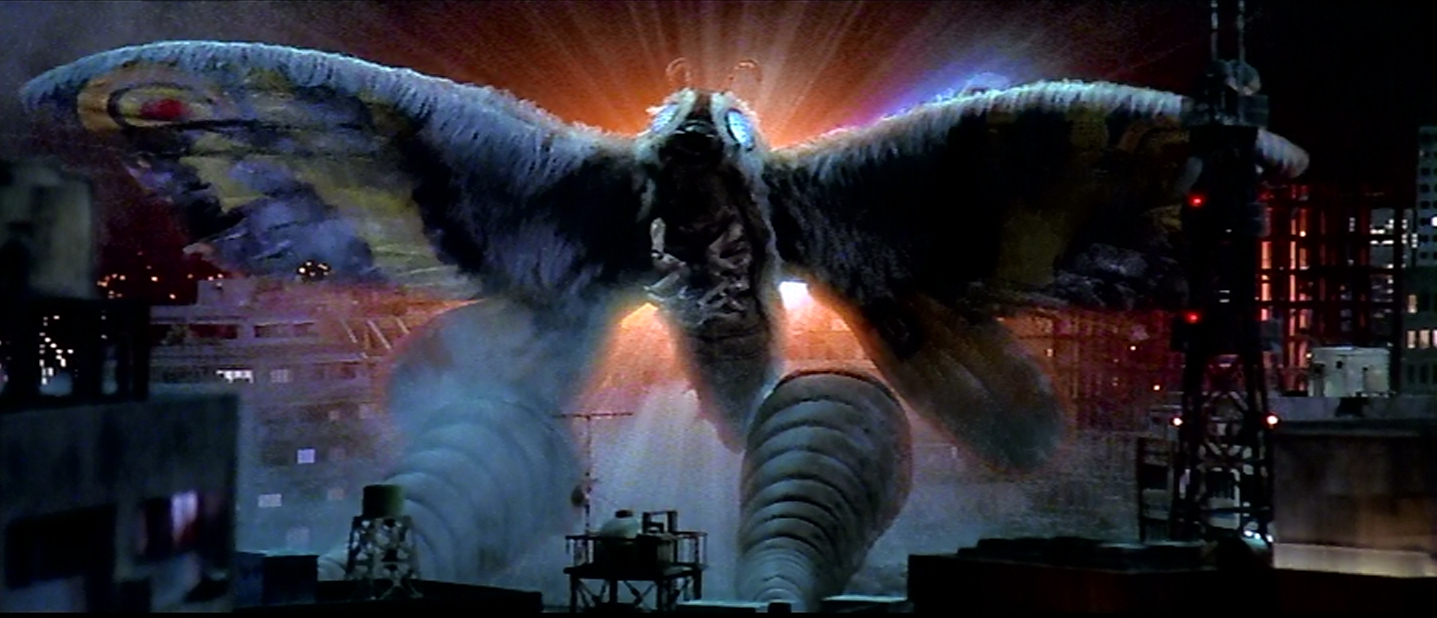
An excellent Mothra shot.
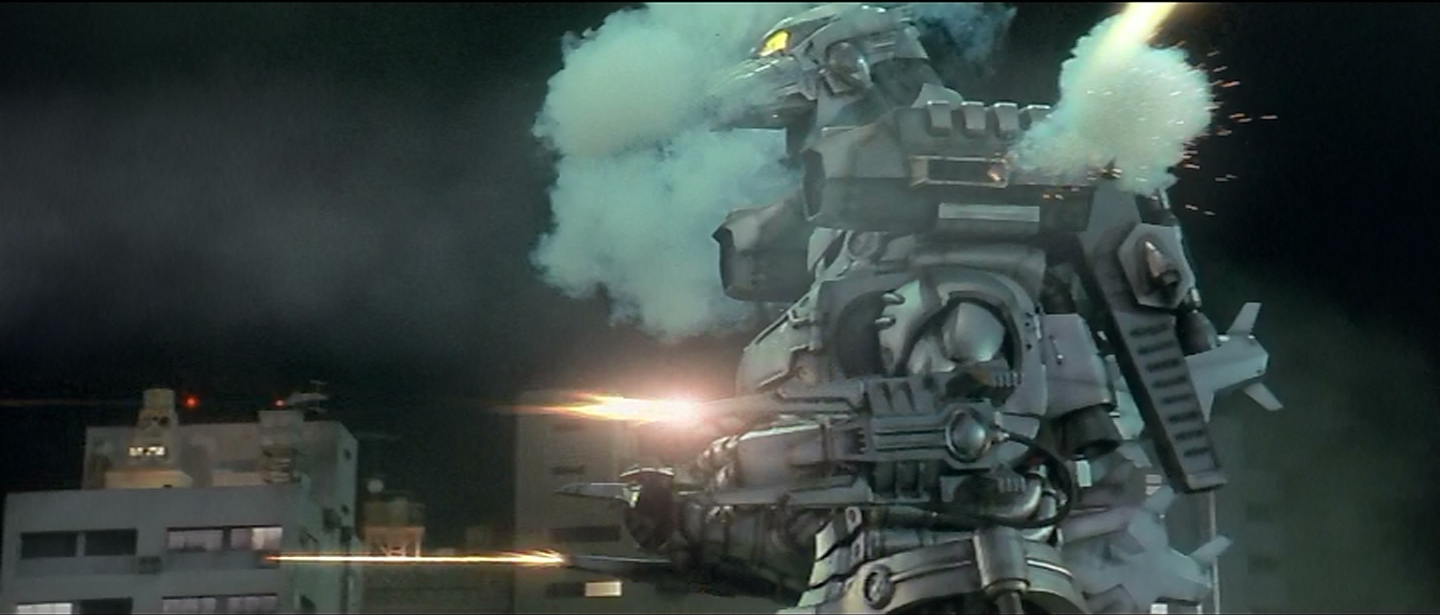
In two weeks, the Kaiju Blender, love it or hate it.