Showing posts with label Kaiju. Show all posts

Saturday, September 29, 2018

Galgameth: Pulgasari Minus the Murderous Dictator-Producer

A footnote to the weird production that was North Korea's 1985 Pulgasari is that the director, Shin Sang-ok, eventually escaped his captors and remade that kaiju film in 1996 as The Adventures of Galgameth. Until recently, I haven't been able to find a decent version of it, and then one popped up on Youtube. How could I resist?

The Adventures of Galgameth is what producers believe kids want in a film. It's mostly harmless pap, with virtually all the terrible things happening off-screen. It was also done on the cheap, for television. But so what? I've watched and discussed a lot of cheap kaiju films. The above connection to Pulgasari is enough to get me to write about the film, but the other impressive part of it is the cast. Among others, the film features Richard Horvitz,the voice of Invader Zim, Felix Silla, who played Cousin Itt in the Addams Family TV series, the body of Twikki in Buck Rodgers and many other sci-fil roles. Under the larger Galgameth suit is Doug Jones, memorable as the Gentlemen from Buffy the Vampire Slayer, Abe Sapien in the Hellboy films, and the Amphibian Man in Shape of Water.

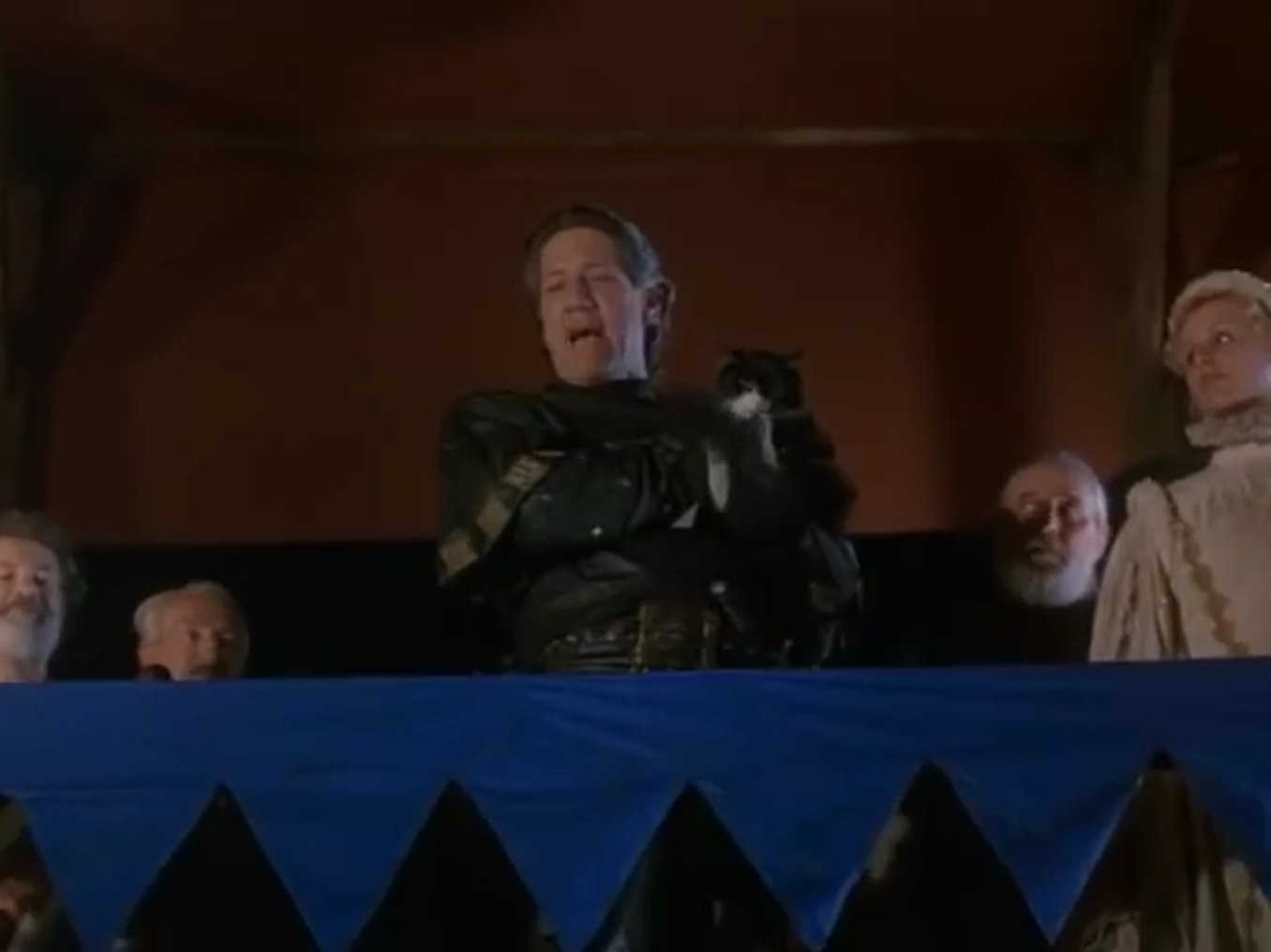
I'm so evil I brought my black cat to a joust!
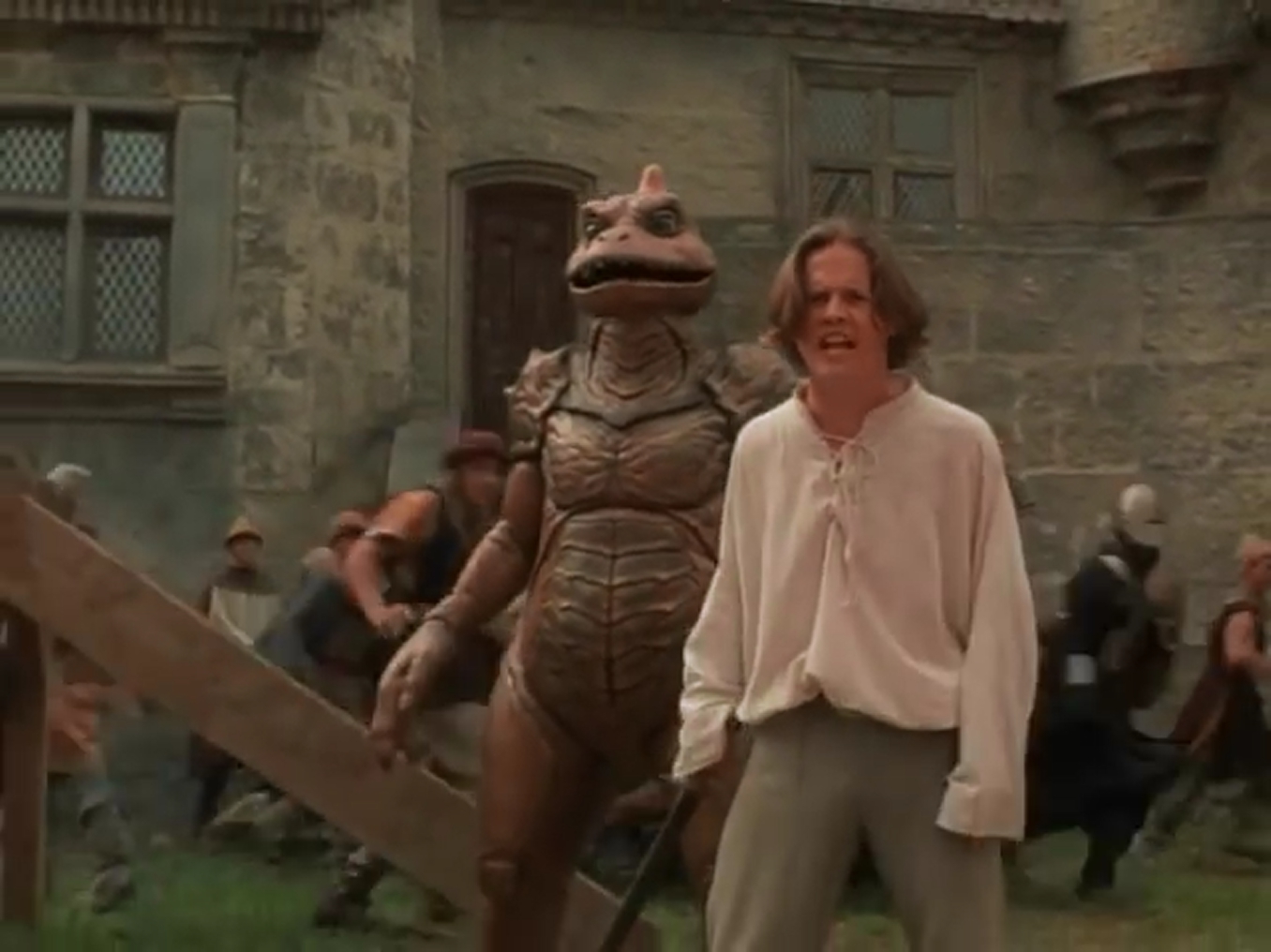
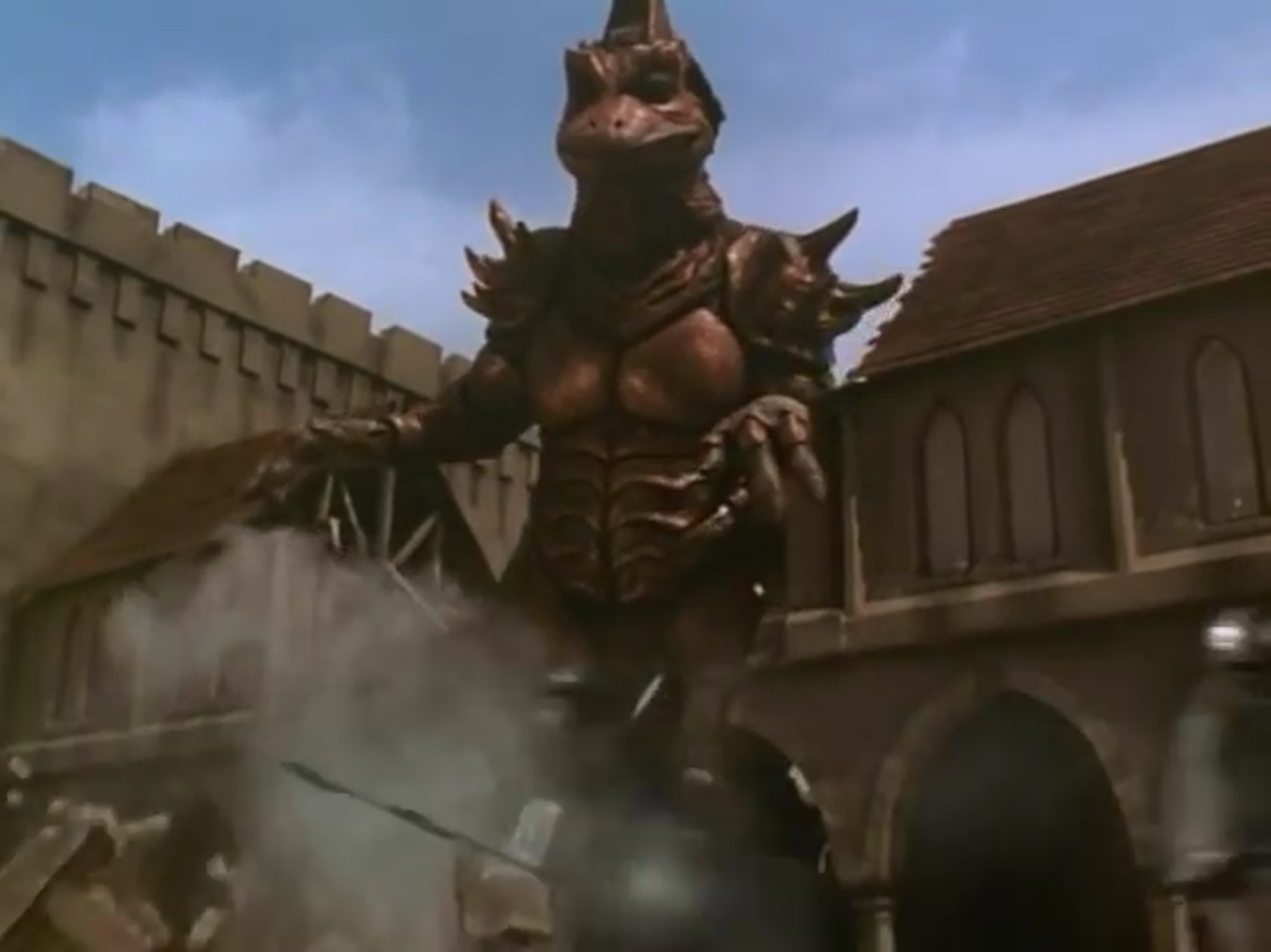
And it's kind of a good thing that cast is neat, because there really isn't much kaiju goodness to dig into with Galgameth. The plot is predictable. A hapless prince in medieval Donnigold Castle is learning to be a man. His enemy is El El, the king's best knight, who we know is evil because he dresses in black. The Good King shows his son a box with the true protector of the realm, a small idol. A few minutes later, on his deathbed, the dying king (poisoned by El El) begs the little statue to protect his son. El El, as regent, then begins his predictable reign of tyranny, raising taxes, conscripting everyone to be in the Royal Army, and burning books. And Galgameth, the guardian again is activated by tears. So it clearly is a loose adaption of Pulgasari

Fun-sized baby Galgameth
Seventeen minutes in, however, the film demonstrates its inability to hold am emotional note. Or at least shows it's willing to sacrifice its emotional tenor for amusing kids' stuff. The Prince, having not eaten for days, mourning his father, wakes up to discover Galgameth has been animated. The film immediately lauches into a cutesy sequence of wonder as the two interact. I mean, people were being tortured just a couple of minutes ago, but we don't want to remember that. Galgameth has big teeth and huge blue eyes. He can jump! He eats metal! He's not just a guardian of the kingdom, he'll also destroy the prince's sadness.

Doug Jones as Galgameth

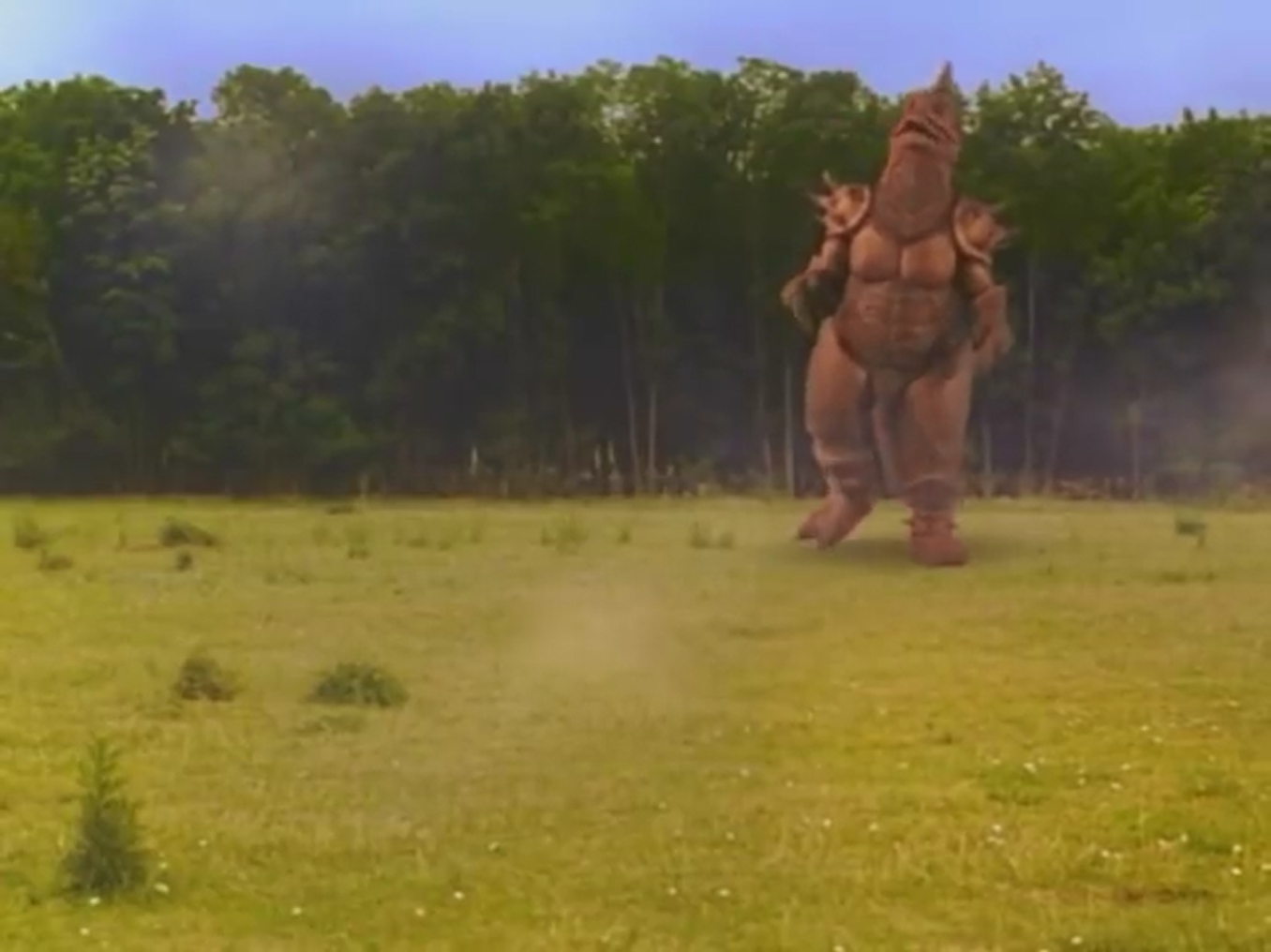
Galgameth and the prince join up with the local rebels. They feed the beast iron, and it grows. You can tell it's becoming a more serious monster because a horn begins to grow out of its head. It changes from Felix Silla in a suit to Doug Jones. As with Pulgasari, they trap it and try to burn it, only this time in a church rather than a cage. I am very pleased at this point that not all the news is delivered by weeping woman.

Much as I don't like the childish face of the initial, small Galgameth, I have to admit the expression is good. It grins seamlessly and charmingly. And it gets better as Galgameth turns into the more threatening, kaiju version of itself. The eyes blink, its brows and nose change and express mood.

During the initial assault on the castle, the defenders use some of the tactics seen in the first two Daimajin films. They dump carts of rocks, fire flaming catapults. But they also snare Galgameth, drag it to a pit, and then bury it. It didn't work in King Kong vs Godzillaand it doesn't work here, either. The assault on the castle resumes, and here we have some of both the best and the worst of Galgameth's miniature work.

What every bad CG kaiju looks like Suits and miniatures. Looks good
Galgameth's weakness is not actually tears, but salt water, which causes it to burn like it's made of magnesium. Evil El El drags the prince out in a boat, times him to the mast, and then sets fire to the boat. And it feels again like Return of Daimajin, with the prince playing the part of Lady Sayuri, El El standing in for Lord Mikoshiba.

And that's the end of the most interesting character in Galgameth
It would be a little complex for Galgameth to follow Pulgasari's ending, with the monster that was initiall;y so cute becoming becoming so large that it has to be destroyed. And admittedly, Galgameth doesn't have the burden of being a metaphor for capitalism. Galgameth, dying in the sea-water, is struck by lightning and conducts it to El El's ship, burning it. But Galgameth can't solve the human plotline, and the prince has to take care of business, killing El El, getting the pretty girl, and getting crowned.

It's not a horrible film. By the numbers certainly, but it doesn't loathe its audience the way the Atlantic Rim series does. If I had to scale it, I'd put closer to perfunctory film-making, more like Gargantua than Kraa or Zarkour. But the clumsy way in which some of the Kaiju action is handled does show that Shin Sang-ok, or possibly Kim Jong-il himself, did the right thing by hiring the Godzilla crew to do the miniatures work for Pulgasari. Galgameth's is pretty weak by comparison, even eleven years later. Galgameth has some good moments of Kaiju action, but it also has some really bad ones.

Saturday, August 25, 2018

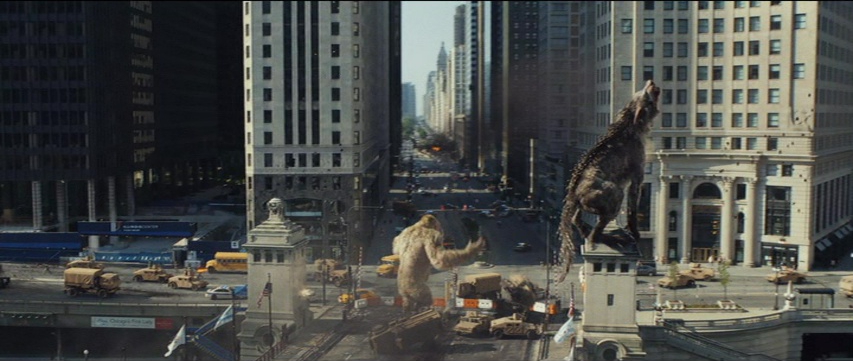
Rampage: American Kaiju

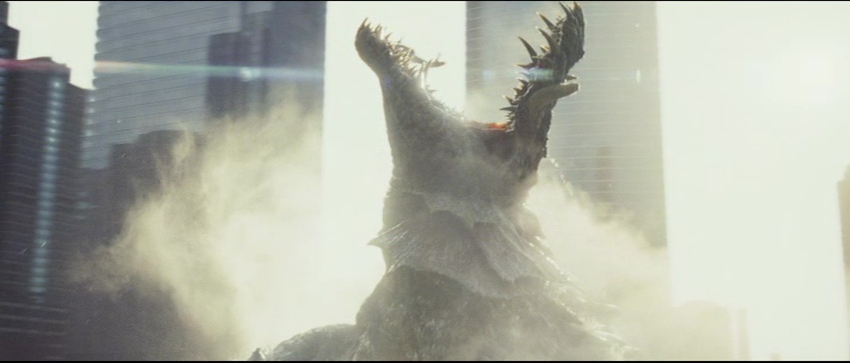
When I first saw the trailer for the Dwayne Johnson/Brad Oeyton Rampage, I wasn't sure it was going to be a Kaiju film. As I've said before, giant gorilla films don't automatically fall under the kaiju umbrella, and they often have problematic subtexts. Giant gorillas are just big animals. But when I saw this picture...

Lizzie, the only serious kaiju in 2018's Rampage

... I realized I'd been wrong. And I reluctantly contacted my good friend and we went to the IMAX show of Rampage. And I had an amazing time.

Rampage is truly an American kaiju film. It's really an action film that happens to include giant monsters. And that's not a criticism. The Host is a crime film that happens to involve a huge mutated fish. And it’s a magnificent film. Rampage has all the elements of a typical action film: a hypermasculine action protagonist who manages to shrug off a bullet, the destruction of a lot of property. Come to think of it, I’m surprised that this hasn’t been done before. The action protagonist and sensibility is what differentiatsd this film from, say, Cloverfield, in which the protagonists are simply there to watch what’s happening. Protagonist Davis Okoye is there to solve plot problems, rather than watch the plot unfold. He also has a convenient background that allows him to perform a a lot of actions what would baffle the average person. He’s a primatologist who was Special Forces, so he knows how to fly a helicopter, when it becomes useful. Quite the Action Hero guy.

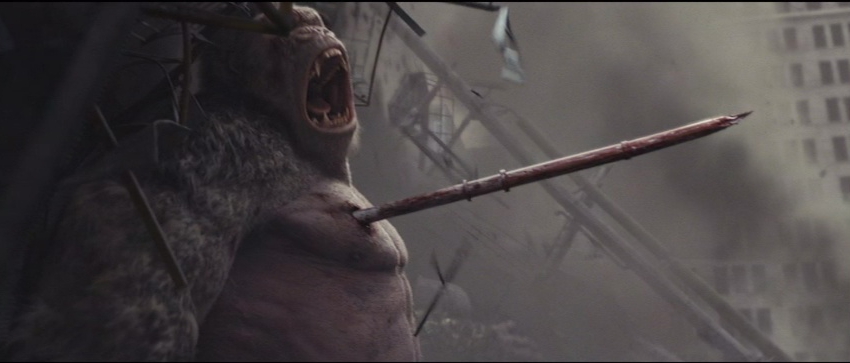
The other indicator of action film ethos is the large amount of gunfire. When the military shows up, they bring in s a lot of guns, including an A-10 Warthog. And unlike the standard kaiju film where the missiles and bullets just bounce off, the bullets that hit George, for example, make holes. By the end, despite his mutant healing factor, George is looking pretty rough.

George gets hurt.

Anyway, about the monsters. They are all exposed to a goofy MacGuffin, canisters with a genetic editing delivery system. It's been fascinating to watch genetic manipulation become the new way monsters are created. In the thirties, it was gland transplants, in the fifties and sixties, it became radiation, after that, pollution, and now genetic tampering. Anyway. George the gorilla, Ralph the wolf and Lizzie, who's either an alligator or a crocodile (I'm going to say croc for the rest of the post) are exposed and go on a… rampage. In Chicago.

There's no party like a Chicago party.

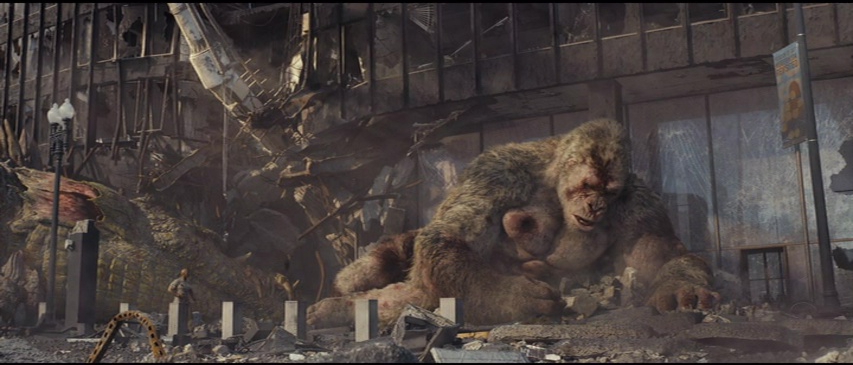
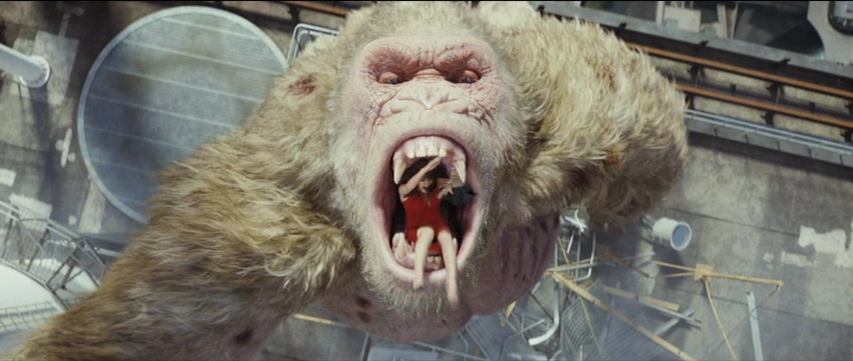
Our buy-in kaiju is George the gorilla. He’s Okoye’s best friend, the most human-like, and the least mutated by the MacGuffin. But like only the most recent Kong, Skull Island, this gorilla eats people. And he maintains sympathy, even though Kong: Skull Island cuts away from the giant gorilla actually eating the soldier, Rampage treats us to a long, beautiful shot of the woman in the red dress goes down George's gullet. In the original screenplay, George was to die at the end of the film, probably as penance for eating humans. More on this later.

George has a snack.

George is an albino, which was done because it's difficult to see bloody holes in dark brown or black fur. This differentiates him from Kong, but also lets the damage show. And that's the real thing about Rampage. Although the bullets and explosives aren't the plot solution, (I'm looking at you 1998 Godzilla) they do hurt the monsters. George, as the protagonist, gets shot, impaled, mauled, and really banged up. Unlike Japanese films, where the only thing that can really affect a giant monster is another giant monster, there’s a lot of things that can hurt George. It doesn’t actually slow him down, any more than being shot slows Davis down.

George feels oddly tired.

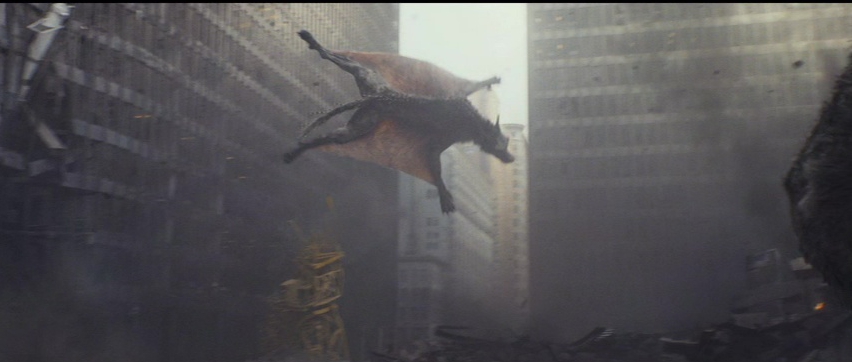
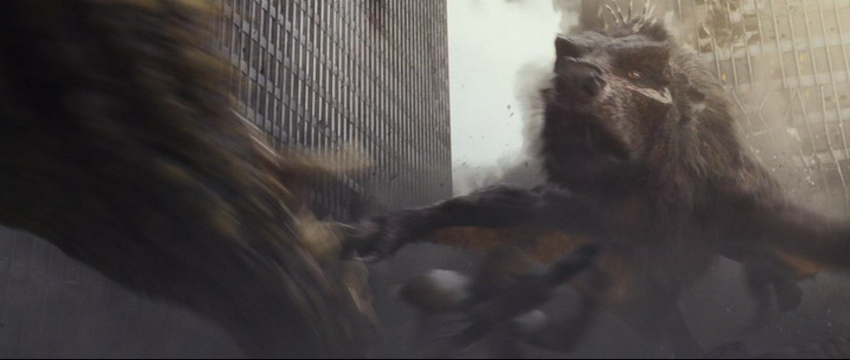
Ralph is the intermediate monster. He gets a fair amount of screen time early on, when a mercenary group is sent out to deal with this second giant monster. Ralph is at base a wolf, but in addition to mass, gains porcupine quills and membranes between his legs allowing him to glide like Varan the Unbelievable. Ralph also seems to instinctively know how these work, and controls himself well while in the air. But he’s ultimately the kaiju we spend the least time with. Although mammalian, he’s not humanoid, and doesn't present with a complex emotional life. Like George, we watch him eat people, but they're all bad people, mercenaries in the employ of ScumlabsEnergyne.

Ralph doing his Varan impression.

He also serves to show how monstrous Lizzie is, since she makes short, bloody work of him.

Ralph realizes he's made a mistake.

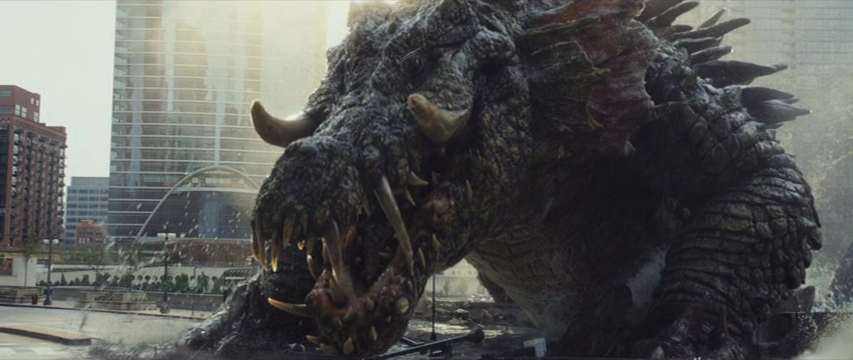
Lizzie, the mutated crocodile, is the real star, the real kaiju. Ralph the wolf is kind of near, but it doesn't have menace Lizzie does. Once she arrives, everything else is secondary. She has to be taken down. She is the most mutated of the trio, and nearly invulnerable. Where the gorilla and the wolf have soft, fleshy bodies, Lizzie is armored like a tank. She's developed gills, but these are not as vulnerable as is hoped, possibly as a nod to the 2014 Godzilla, where gunfire is ineffectively directed at Godzilla's gills. But they look pretty cool when frilled.

Lizzie, the serious kaiju of Rampage (2018).

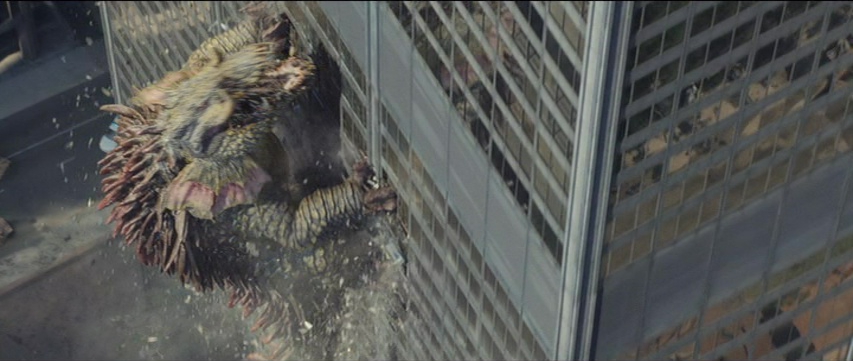
Lizzie is what makes the film a kaiju film. She’s an engine of destruction, and a strange beast. George has a personal connection to Davis, and Ralph sort of only takes out bad people. Lizzie is there to wreck shit. And she does. Whoever thought of giving a giant croc a gecko’s ability to scale walls was a either a madman or a genius, because Lizzie looks frightening and amazing as she is climbing the Sears Willis Tower. Rampage uses the 2014 Godzilla's idea of echolocation, originally used by the MUTOs and applies it here. How you get creatures attracted to a signal, and for that matter how you mutate animals to receive radio waves from a distance of a thousand miles. But hey, it got all the monsters into Chicago.

Lizzie climbs a building.

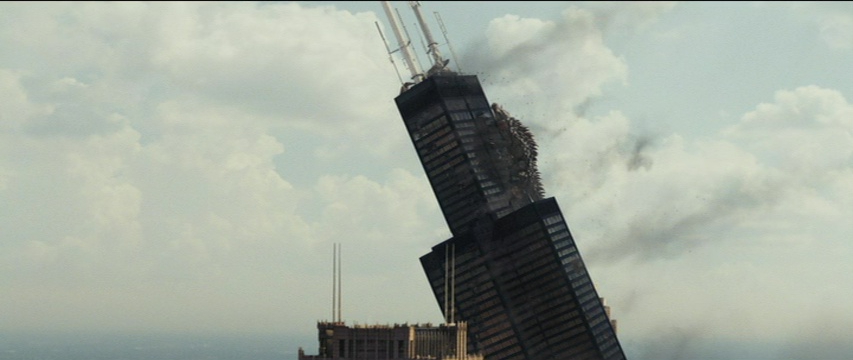
In a trope that goes all the way back to the 1925 The Lost World, we see George, Lizzie, and Ralph trashing the most distinctive building in Chicago, the Willis Tower. Because of course the big evil companies lie Energyne need a tall tower to be evil in. Still, Chicago is a nice break from Tokyo, San Francisco, and New York.

Goodbye Chicago skyline.

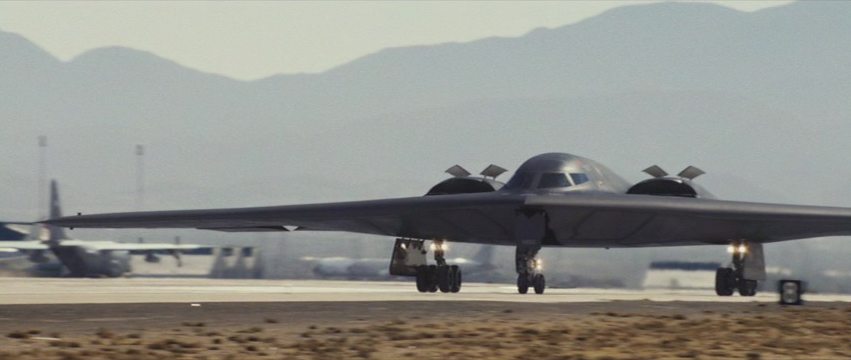
Of course the military is called out to deal with the creatures. And they are treated with respect (another lesson learned from 1998 Godzilla). In fact just about everyone who's got a name is a competent character. There's friction between the non-military government agent. But the military is not obsessed with destroying the animals, and responds to setbacks with calm, rather than going to pieces. And that was greatly appreciated. Despite this, the screenwriters didn't do as much research as I would have liked. Like Shin Godzilla, the B-2 Spirit bomber is deployed. But the Shin Godzilla team did their homework better. The MOAB deployed in Rampage is too large to fit into the Spirit's bomb bay. It's designed to be deployed out the back of a cargo plane. Interestingly, the B-2 survives Rampage where the new Godzilla cuts them out of the sky.

Well get got one, might as well use it.

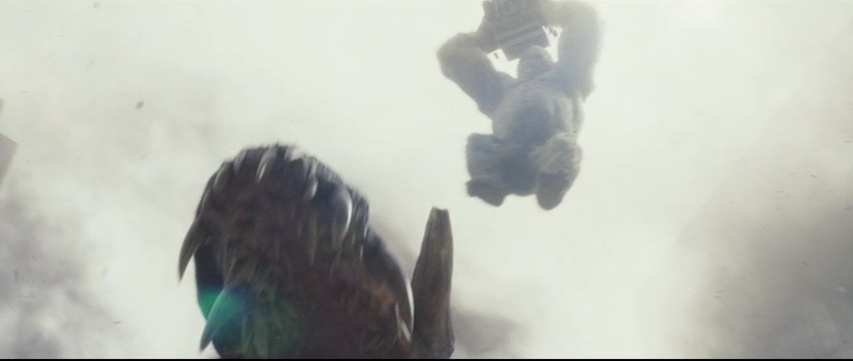
The end battle is brutal. While we don't get any shots of lines of people who have been hurt, the landscape is a dusty gray and filled with rubble. George and Davis really get knocked around, action hero style. It’s not quite too much, but a lot of the action had me wincing in sympathy. Also like Shin Godzilla, the Spirit Bomber provides us with a ticking clock. If Davis and George can't deal with the other two kaiju, the military is going to drop a bomb. Unlike Shin Godzilla, this time the bomb is non-nuclear. The fightthere fore is like watching a middleweight go a couple of rounds with a heavyweight in a fixed fight. George and Okoye lose and lose and lose until they win. And it should be said that similar to Kong: Skull Island this film loves

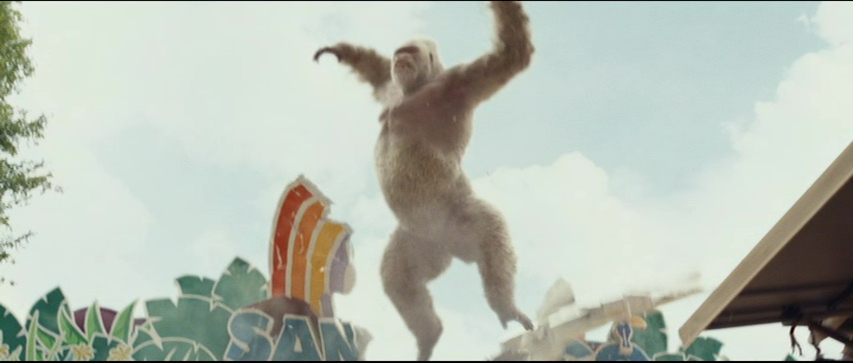
Incoming George!

the jumping

Incoming George!

gorilla.

Incoming George!

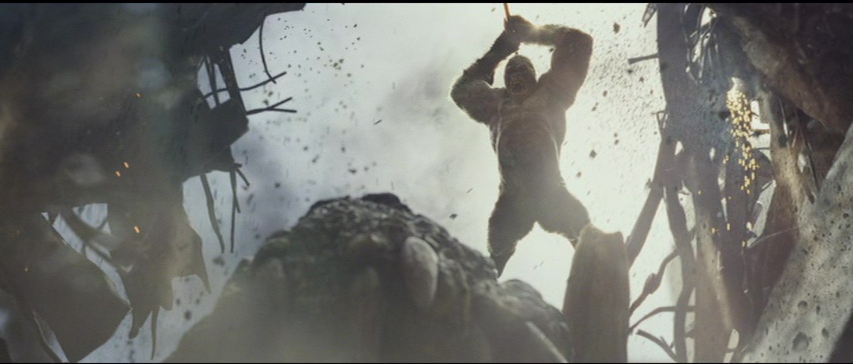
Jumping George solves the plot by putting a steel beam through the giant croc’s eye.

Apparently, the original script called for George to die, but Johnson himself campaigned for the giant gorilla to live. Which givesd the film a more upbeat ending, which it really needs, but at the same time doesn’t solve the plot’s giant monster problem. How much does George eat now? Will he get over his taste for human flesh? How the hell are they authorities going to dispose of two gigantic rotting corpses? Questions like these are part of why I like Pacific Rim so much. It looks at these questions, including kaiju excrement and body disposal, way beyond the usual kaiju film plot.

Incoming George!

Ultimately the film is engaging, although the violence is uncomfortably brutal. I suppose I'm used to the genteel 'weapons bounce off' feel of Japanese Kaiju films. Maybe it's more honest, but whatever. It's a movie in which people survive blatantly impossible things. But the human story is pretty good, the actors giving good performances in the human plot that interacts with the monster plot. It'sd not groundbreaking drama, but it's not supposed to be. It's an action film, like any of the Fast and the Furious or Transformers films, which happens to involve kaiju. the two go together surprisingly well.

Saturday, July 7, 2018

Atlantic Rim: Resurrection: Shit Sandwich

If I really had nerve, I would leave the review at just the title. If you’re about to be executed, or dying of a painful disease, and need a movie to make that last hour an a half a reason to embrace oblivion, Atlantic Rim: Resurrection is that film. It’s so lazily, stupidly conceived, executed, and then marketed that I would go so far as to call it a blight on moviemaking. You may remember that I loathed Atlantic Rim. Everything about the sequel is worse. Everything.

In the introductory voice over, we’re told that the monsters threatened all life on Earth. Two monsters failing to attack a Florida city and then going on to New York isn't even close. Likely this is a pull from the similarly histrionic 1999 Yonggary, histrionics that are completely not supported by the film. There’s a lot of this in the film, claims in the dialog that are utterly unsupported by the rest of the script.

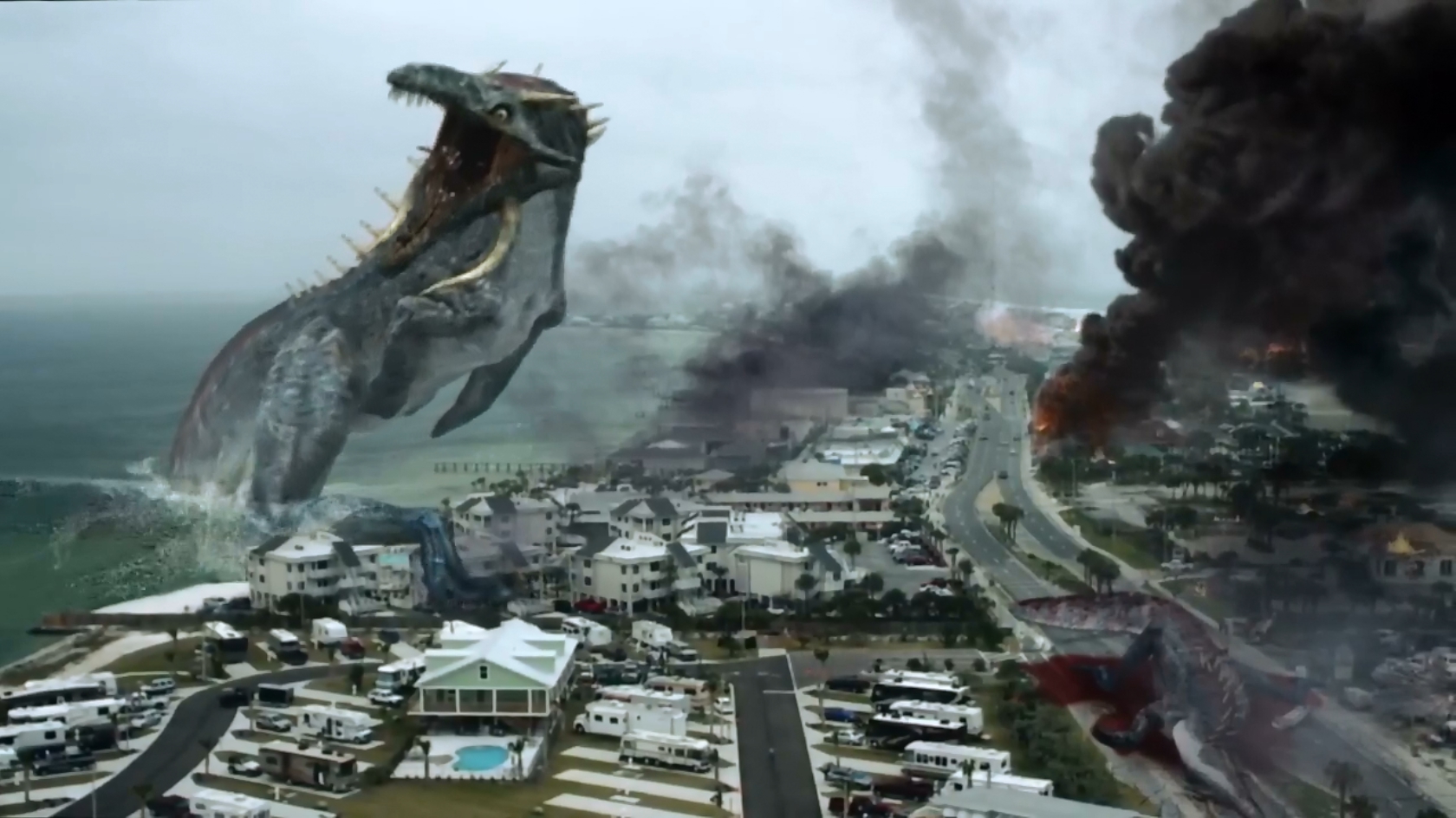
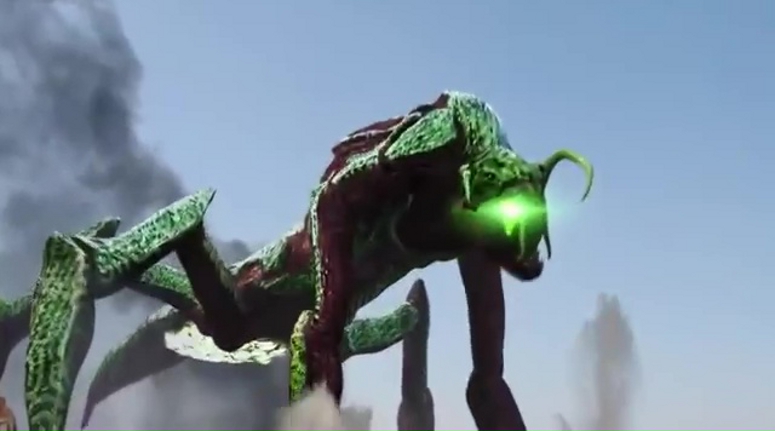
This image is a reminder of the monsters from the first film:

Remember these guys? The director doesn't either.

Much of the beginning of the film is a montage of stock military footage, a common way for a cheap production to stretch its run time. Hey, director Jared Cohn, if you’re pulling from Coleman Francis’ playbook, you may want to stop. Cohn’s direction is just about on the level of the Charles Band films, Kraa and Zarkor, only without the competently-directed sequences from SPFX director Michael Deak. I really would have preferred suitimation to the lazy and uninteresting CG we get. Because bad as Atlantic Rim was, they must have cut the budget or found people even less competent. Possibly both.

The old stretch out the film with stock military footage dodge.

I like dumb films. Pacific Rim and Rampage weren’t the most sophisticated scripts out there, but they drew me along because they had some interesting ideas and executed them with enthusiasm. But Atlantic Rim: Resurrection isn’t dumb. It aspires to be dumb, but it doesn’t have enough juice. If I were to call it anything, I’d say it was holoanencephalic. The entire film is a holding action until the end mercifully arrives.

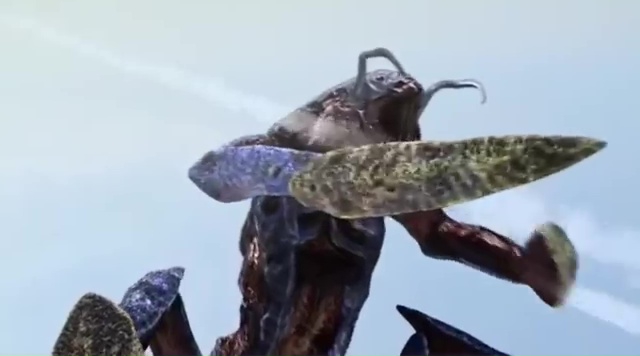
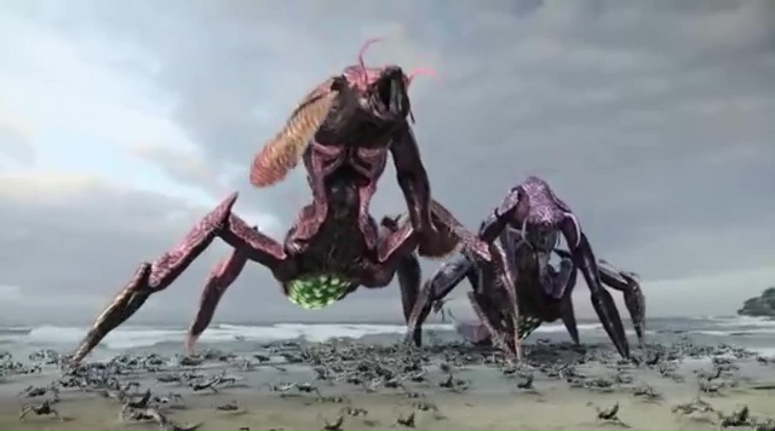
The film starts with footage from the first film in order to pad out the run time, and to refresh our memory of the goofy monster. But when the monsters show, they’re completely different. Not just a different skin, or a different color, but literally six-legged as opposed to four-legged. No explanation is given, and in fact the film goes so far as to completely ignore the differences between the monsters. The kaiju don’t even look like what’s on the promotional materials. It’s like Cohn is daring us to like the film, making it as difficult as possible.

Didn't you look different at the beginning of the movie?

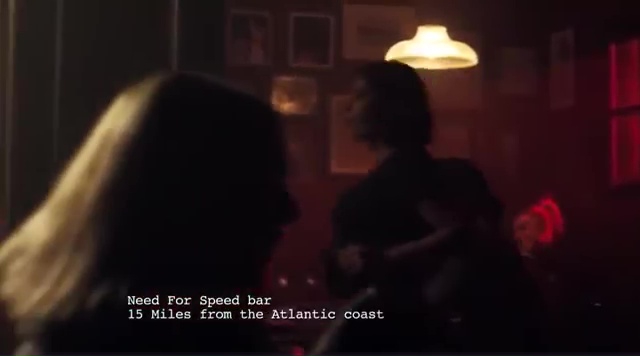
As befits such a basement-level production, the script is also garbage. Six minutes in, the monsters have appeared on a populated beach, but in some random-ass bar, nobody knows that the monsters have returned. Because there’s a lack of cameras, phones, and social media or something. Or because the script is utterly incompetent. Further, nothing seems to have a fixed location. It’s all X miles from the Atlantic Coast. Which isn’t some sort of two thousand mile stretch of America.

Didn't you look different at the beginning of the movie?

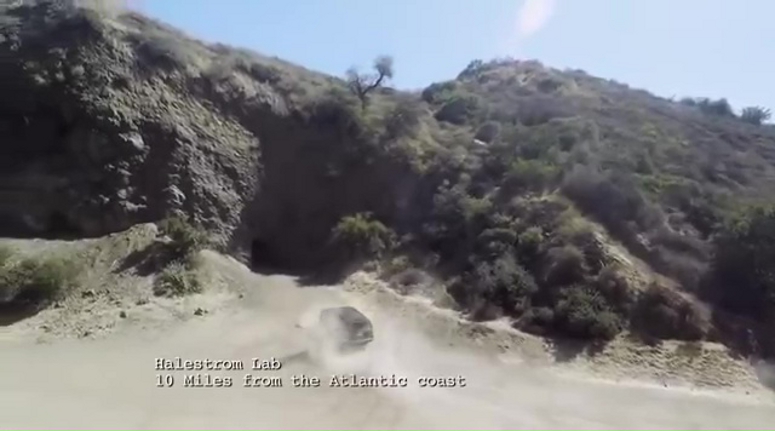
When the armed forces have to retreat from the sprawling city, they regroup at sandstone mountains of Florida. Which makes a certain amount of sense, because the promotional blurb says “Los Angeles is under attack by monsters. The mechs attempting to fight them off are better armed than their precursors, but so are the creatures.” Los Angeles is on the Atlantic, right? I mean, it clearly is the suburbs of Los Angeles, but could someone have actually paid attention enough to not list it as Los Angeles in the promotional material? Ha ha, no. Because everything about this production is cheap, incompetent, and performed without thought.

The sandy mountains of Florida Or LA. Who actually cares, right?

But hey if you wanted a kaiju movie about scientists complaining about competing computer formats, this is totally your film. Because that’s fascinating I mean, sure someone says “One wrong line of code, this whole place is going to blow.” Apparently, they’re writing their computer programs in C4+ or some other idiotic bullshit.

A lot of cues are taken from Pacific Rim. There’s the scientist who might sympathize too much with the kaiju. I don’t suspect Geoff Meed took his cues from the original Godzilla, the dialog is much closer to Pacific Rim. There’s a new neural link that’s used to control the robots. Which doesn’t work as well as the previous interface. Which is stupid. The new control scheme involves long joysticks, which the robot-jocks occasionally jerk around, making them look like they’re playing rock-em sock-em robots. What else did Meed watch? Probably Cloverfield. After the first monster is killed, its body swells and then explodes with smaller versions of the monster. Sort of a reverse Legion from Gamera 2: Attack of the Legion. Only stupid. When the two monsters combine into a single monster, it gains an acid spit, similar to Reptilicus.

Big big ones and the little ones and God I don't care *drinks tequila*

The film also has a certain amount in common with the 1998 Godzilla. The film’s plot solution is not actually a firepower, but a complete bullshit science thing. Half-way through the film, but the plot throws all sorts of mechanical glitches in the way so the technological McGuffin doesn’t get deployed until the film’s run time is running down. I don’t know if that’s a deliberate homage, or if two less-than-stellar scriptwriters had the same idea. I suppose it doesn’t matter, since the bungled results are the same.

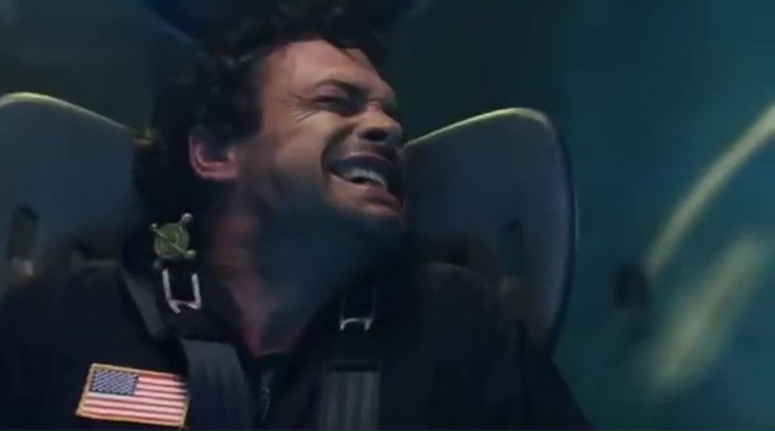
I AM THE SAVIOR OF MANKIND!

The incompetent script and direction aren’t just lazy and uninspired, though. They actively embrace the worst stereotypes in film-making. Does the black jaeger pilot buy it first? You betcha. Does the black guy who replaces him suicide ram the monster and die? You betcha. And just in case you had some hope because the initial jaeger pilots are two women in addition to the black guy, during the second jaeger fight, the experienced women pilots are locked into a room, and the white scientist, who also knows how to pilot the jaeger, gets to deliver the killer goo that he scienced up to destroy the monsters. White action science guy saves the day while everyone else is sidelined. How original

Big big ones and the little ones and God I don't care *drinks tequila*

The film raises some real questions about the nature of film making. Is it really dialog if it’s just there to waste time? It's certainly not exposition. There are times that the characters are standing next to each other, telling the audience what they might see if Asylum had a budget. There’s also a surprising amount of travel by car while we get two-second glimpses of the robot/kaiju fight. I mean, technically, this is a movie. It’s a series of still pictures run together to create the illusion of motion, there are people that recite lines they have memorized. But it’s all so incompetently done that it’s not actually entertaining. It’s a masterclass in what happens if you don’t pay attention, don’t care, or possibly have utter contempt for your audience. Monsters demonstrated that you don’t need a huge budget in order to make a decent monster film. However, some good ideas, appropriate dialog, and competent direction all help make a film worth watching. Even less than Atlantic Rim, Atlantic Rim: Resurrection is a desolate void of interest.

Sunday, October 15, 2017

Nature is Terrifying: Kong: Skull Island

Kong: Skull Island is the second installment in Legendary entertainment's Monsterverse franchise. If the films continue to be profitable. With a gross of $566 million, edging out 2014's Godzilla, and definitely trumping Pacific Rim, it seems likely that the franchise will continue. But it's interesting that both the Hollywood Godzilla and Pacific Rim franchises are all from the same production company: Legendary (recently purchased by the Wanda Group). Kong: Skull Island had a lot to carry, both as an introduction of Kong into the new monster universe, to distinguish itself from previous Kong remakes, and to whet the audience's appetite for the next Godzilla film.

This is not, thank the heavens, yet another reboot. This is en entirely new story. Kong never leaves Skull Island, doesn't rampage in New York, doesn't get killed. Which is what the franchise needed: a new human story. This is something that The Host demonstrated. A new human plotline, drawing from other genres. This is the culmination of Shin'ichi Sekizawa's idea that the human stories and the kaiju stories should interact. Before him, the humans simply reacted to the presence of the monster. Sekizawa tried, and succeeded, to the best of the technology available to the films he wrote, to have the stories touch and impact each other. Early examples of this include the extensive use of spy tropes and ideas in films such as Godzilla vs Mechagodzilla and Godzilla vs Biollante. With CG allowing the human characters to seem to touch the giant monsters, new stories and new interaction can be achieved. This even goes as far as the big battle in the end. Weaver lands a flare on the side of Ramarak’s (the big skullcrawler) head, distracting it. When Kong is chained and helpless, the humans fire their very large gun to keep Ramarak from killing him.
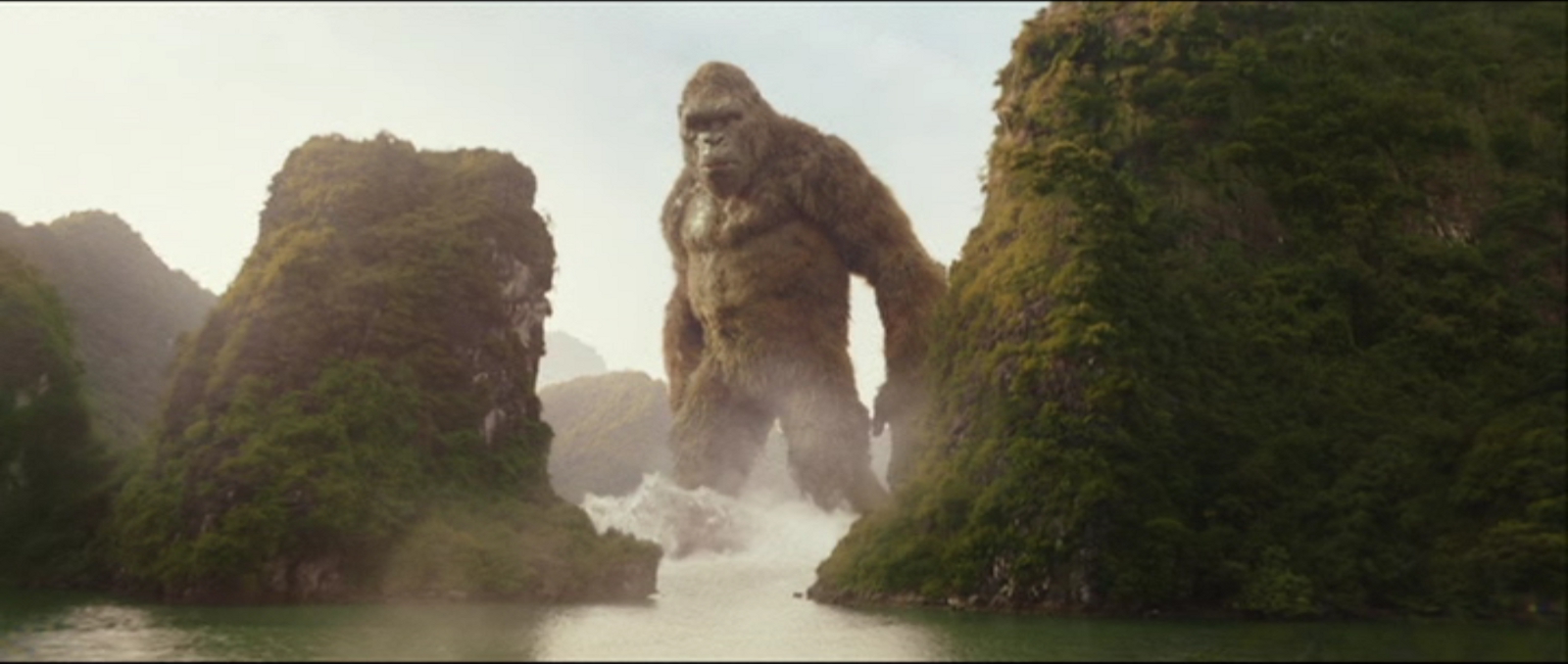
Kong, God-King of Skull Island

Kong: Skull Island pulls the majority of its human story from the Vietnam era and Vietnam films, specifically Apocalypse Now. This is, very specifically a war story. The emotional beats, the slow and difficult to predict elimination of the cast. The film rewards those who can think outside of their circumstances. Marlow and Japanese pilot Gunpei fight each other, only to stop when Kong arrives. In the tense confrontation between Colonel Packard and the civilians (Conrad, Weaver, and Marlow), soldier Slivko realizes Marlow is right, and switches sides. This saves him. Packard, Ahab-like in his thirst for vengeance infected by war, refuses to retreat, and is casually killed by Kong.
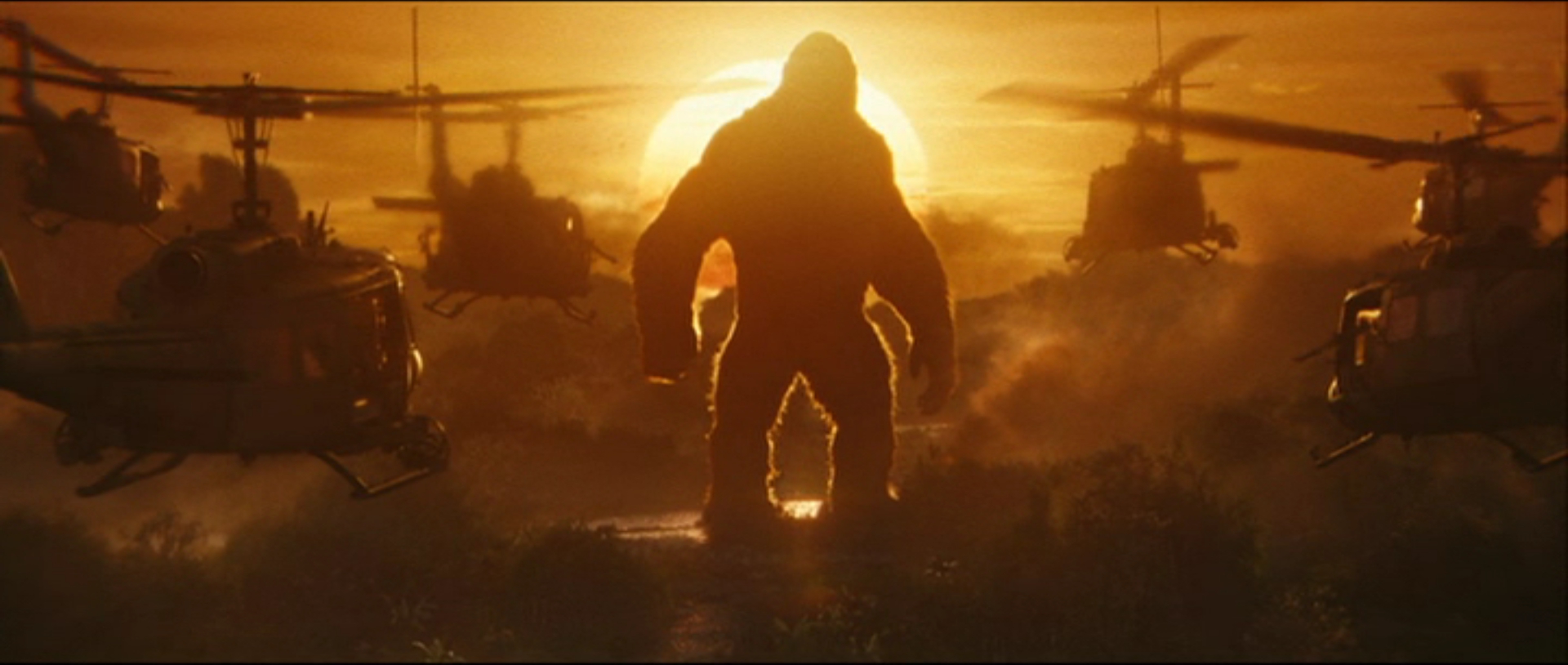
Director Jordan Vogt-Roberts borrows from a film I can't quite name...

The film is also a meditation of the effects of war on the individual. Gunpei and Marlow become good friends once they are isolated from the world. On Skull Island, the war of their societies no longer dictates their actions. The film's attitude towards war is best exemplified by the death of Cole. Tired of running from skullcrawlers, Cole decides to sacrifice himself to take down Ramarak, walking towards it with armed grenades. Instead of eating him, it smashes him with its tail, killing him when he impacts a cliff, when his grenades go off. His sacrifice, which he had hoped would save his comrades, is useless.
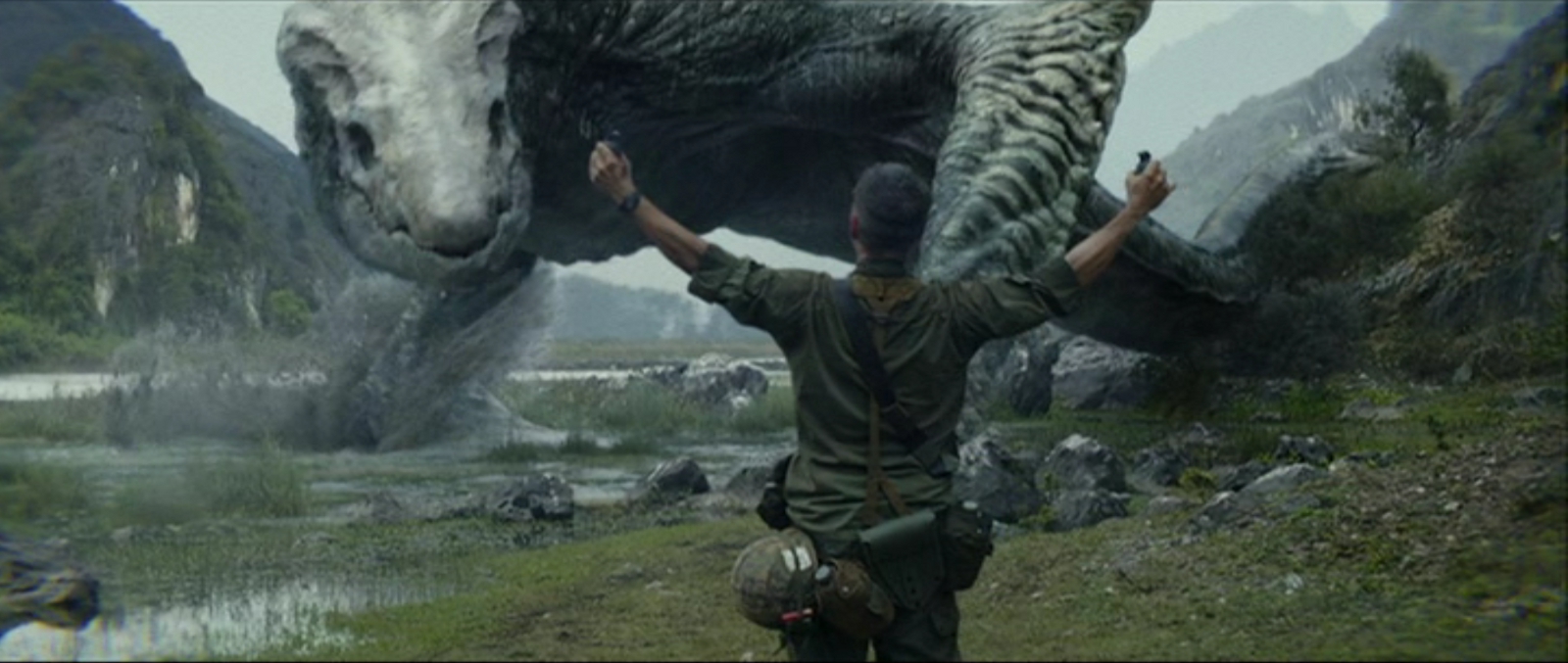
I'm going to sacrifice myse---oh crap

Kong is, literally a reflection of what people bring with them. He is seen as a god and protector by the people who live near him, the Iwi. Colonel Packard sees him as a threat that must be destroyed, even after Kong’s relative benevolence is explained. But Kong destroyed Packard’s helicopters, and he has to pay for that. The film moves us from being hostile to Kong to being sympathetic to him, and Packard goes from being sympathetic to the enemy. Director Jordan Vogt-Roberts hammers that point home with a repeated image: a figure standing against a bright light in the darkness, fists clenched. At the beginning of the film, the figure is Kong. Toward the end, it’s Packard.
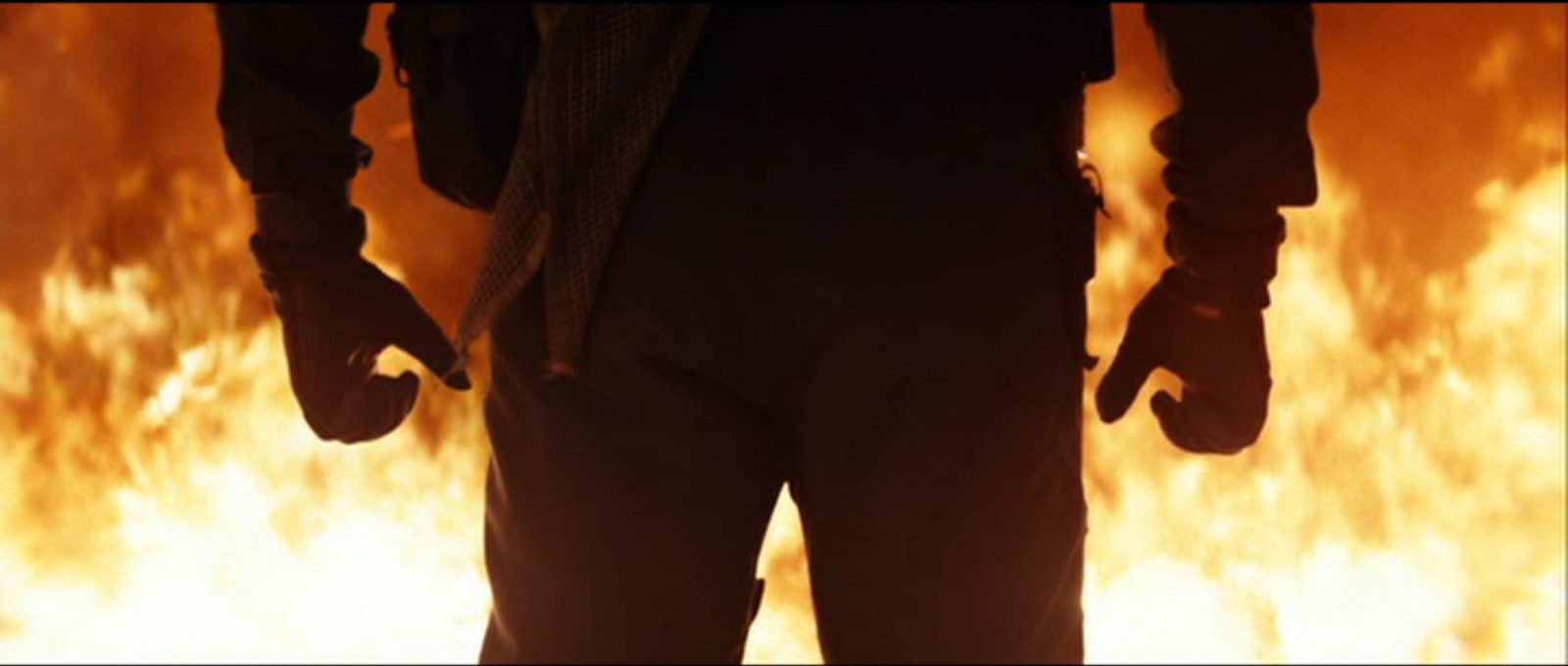
Packard reflects Kong's stance two pictures up

This also means that Kong: Skull Island has a very different approach to the military than other kaiju films. Very often, the powerful military commanders are front and center of a kaiju film, as they watch their plans unravel as the kaiju proves difficult to kill. But where Ishiro Honda played the military purely for show, and the 1998 Godzilla played them for expendable chumps, this film shows us the humanity of the soldiers. Chapman is writing letters to his son, and the other soldiers razz him for it. These are very human characters, and their lives are on the line when the kaiju attacks. Or is attacked. Kaiju film characters have previously been military men, for example Ford Brody in 2014 Godzilla, but he didn't spend much screen time with his unit. The relationships, in their complexity, are showcased here. Mills, Cole, Sivko, and Reles support each other, mock each other, and express doubts about Colonel Packard's orders, even as they carry them out. Edit: I had forgotten that this is literally the approach of Monsters: Dark Continent. However, I will say that the character development is significantly better in Kong: Skull Island. The unit in Monsters: Dark Continent are also significantly more on edge. But the cast in Kong: Skull Island us much more interesting.
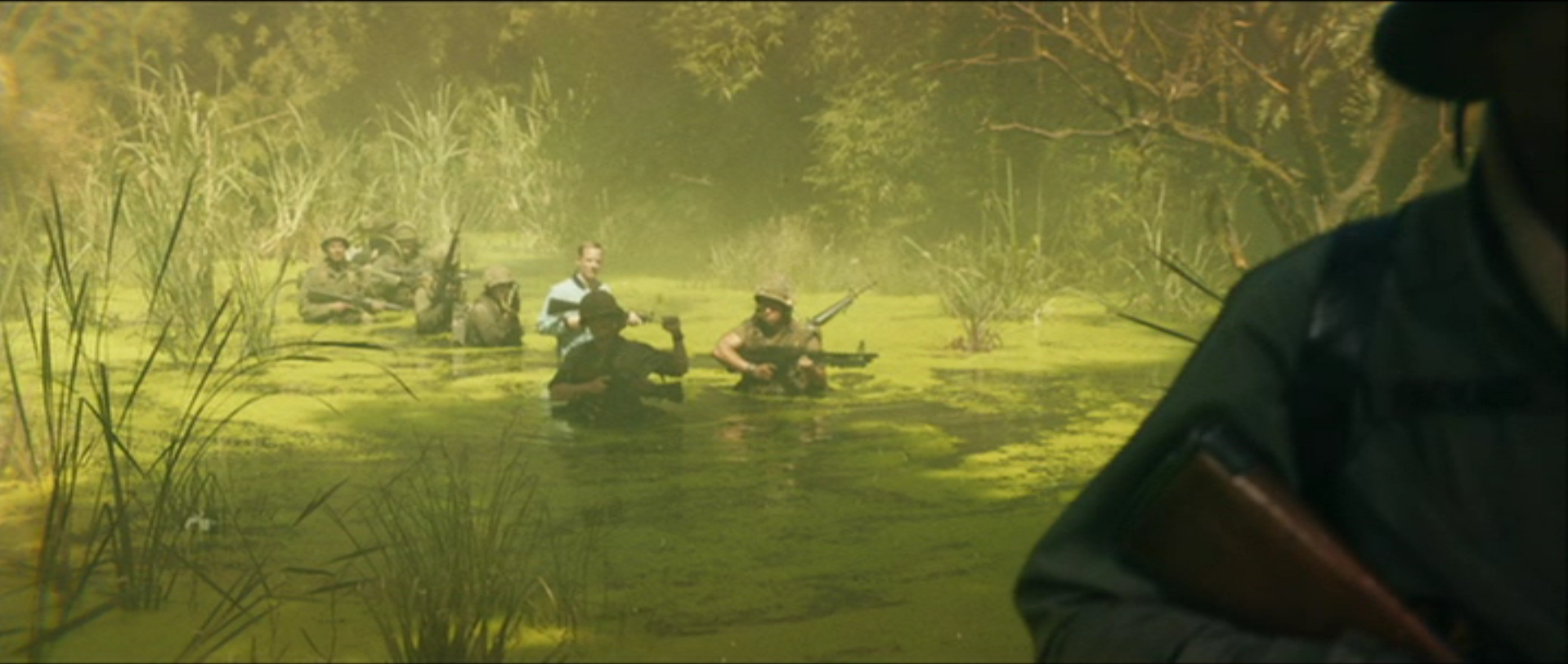


Kong initially attacks the expedition because the military is doing what they are told: deploying Monarch's seismic explosives, which were intended to bring whatever kaiju lived there to the surface. The helicopters are armed, so the mission is definitely to eliminate it. This is why Kong gets stirred up, and why lives are lost. The military is caught in the middle, obeying orders and taking the consequences and losses for those actions. So there's a fair amount of nuance in the film's approach to the military, which, again, stands in very stark contrast to the way they were treated in the 1998 Godzilla
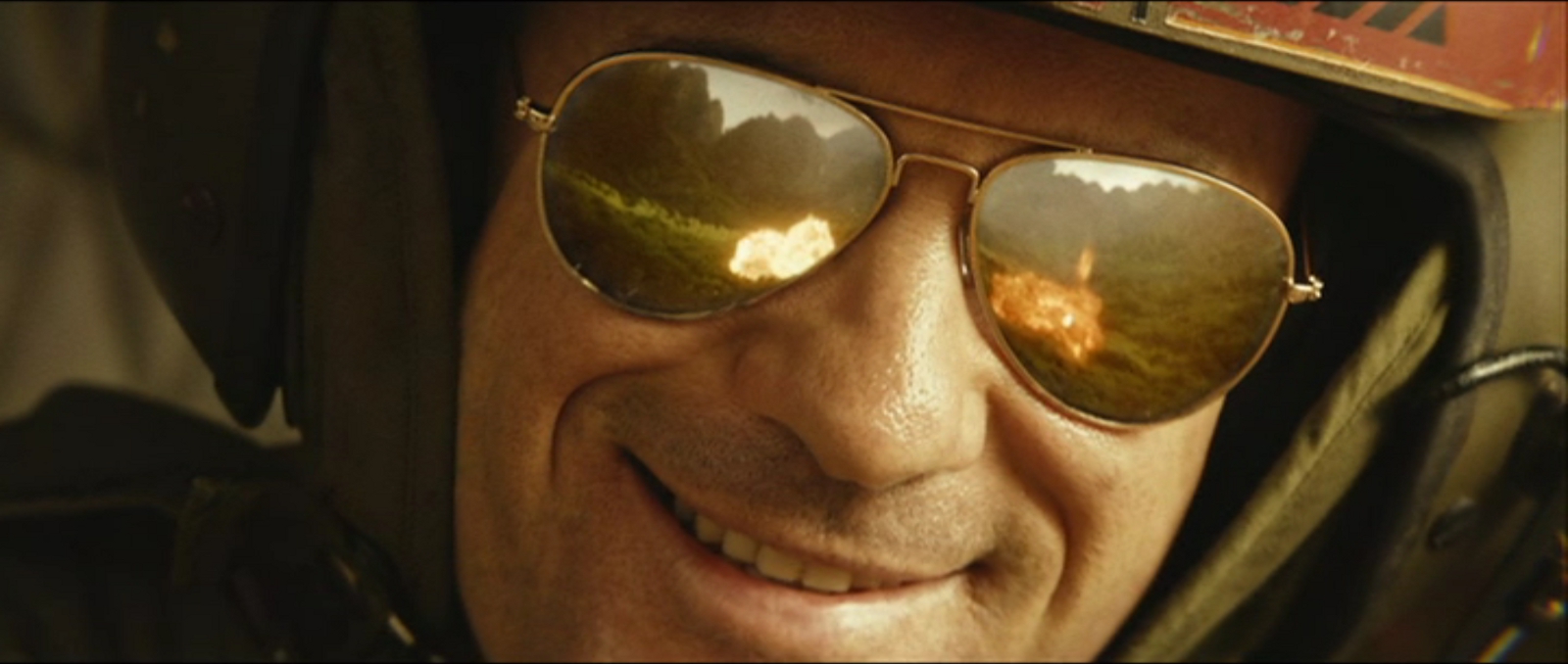
how to piss off Kong

Some of the baggage Kong: Skull Island rejects is the racist subtext of the previous Kong films, and this sets the film on a much more even keel. Kong is not captivated by a blonde. He is not captured and taken to New York, to be killed by the forces of the establishment. The Skull Island natives, the Iwi, aren't the degenerate troglodytes of the Jackson film, or the stereotypical Africans oddly inhabiting a South Pacific island as in the 1976 and 1933 versions. They are mysterious and complex. They appear peaceful, but have spears to defend themselves. The large wooden wall they have constructed has outward-facing stakes, and those stakes are bloodied. Hank Marlow, who has been living among them for more than twenty years, sort of understands them. But he neither an accepted part of their society, nor running it.
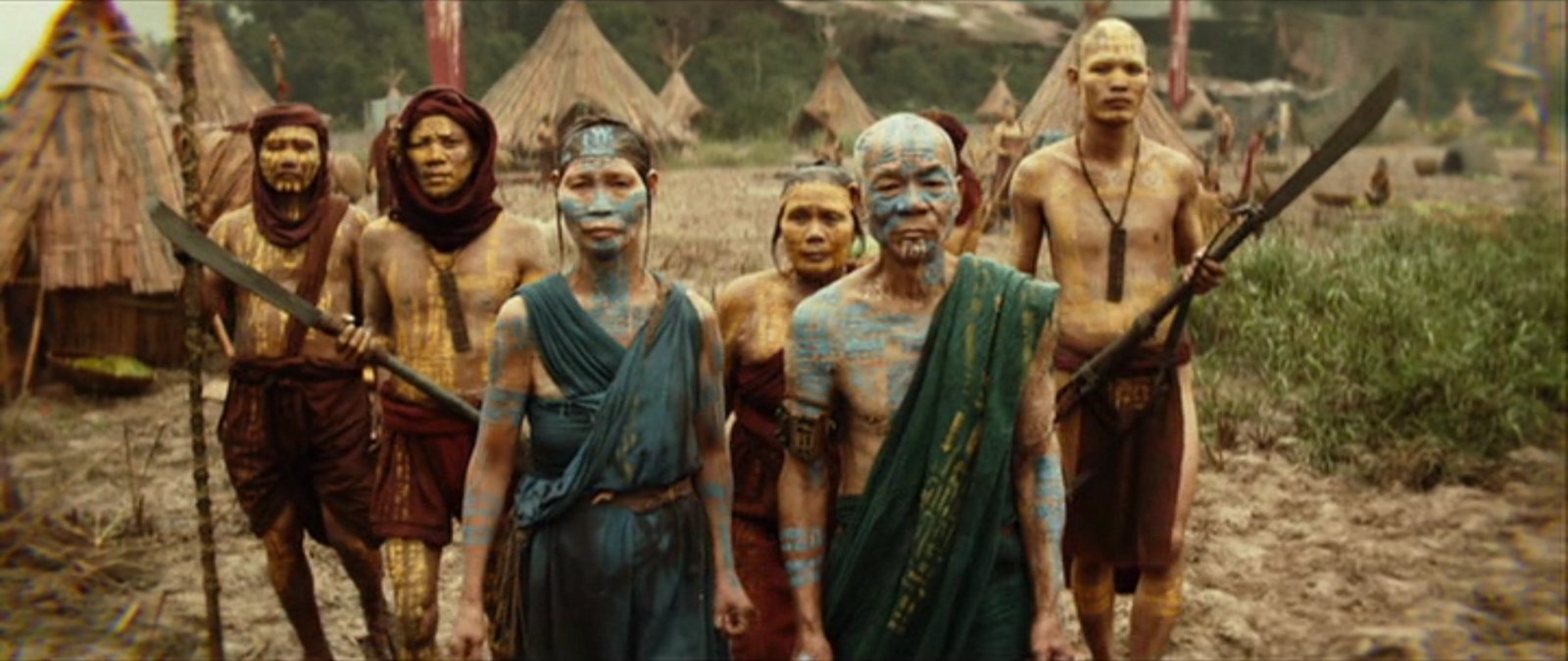
The Iwi

Further, for the first time, a Kong film gives me what I have always wanted: a beautiful Skull Island. Filmed in part in Vietnam's Ha Long Bay, the landscape is beautiful and feels fantastic and at the same time real. It also has a more developed ecosystem. Previous films have portrayed the island as relentlessly hostile, and nothing is introduced that isn't trying to kill the humans of Kong. This Skull Island isn't. There are huge yak-like creatures, deer, birds. Of course, there are hostile critters; the flying knives, the giant bugs, the skull-crawlers, and Kong himself.
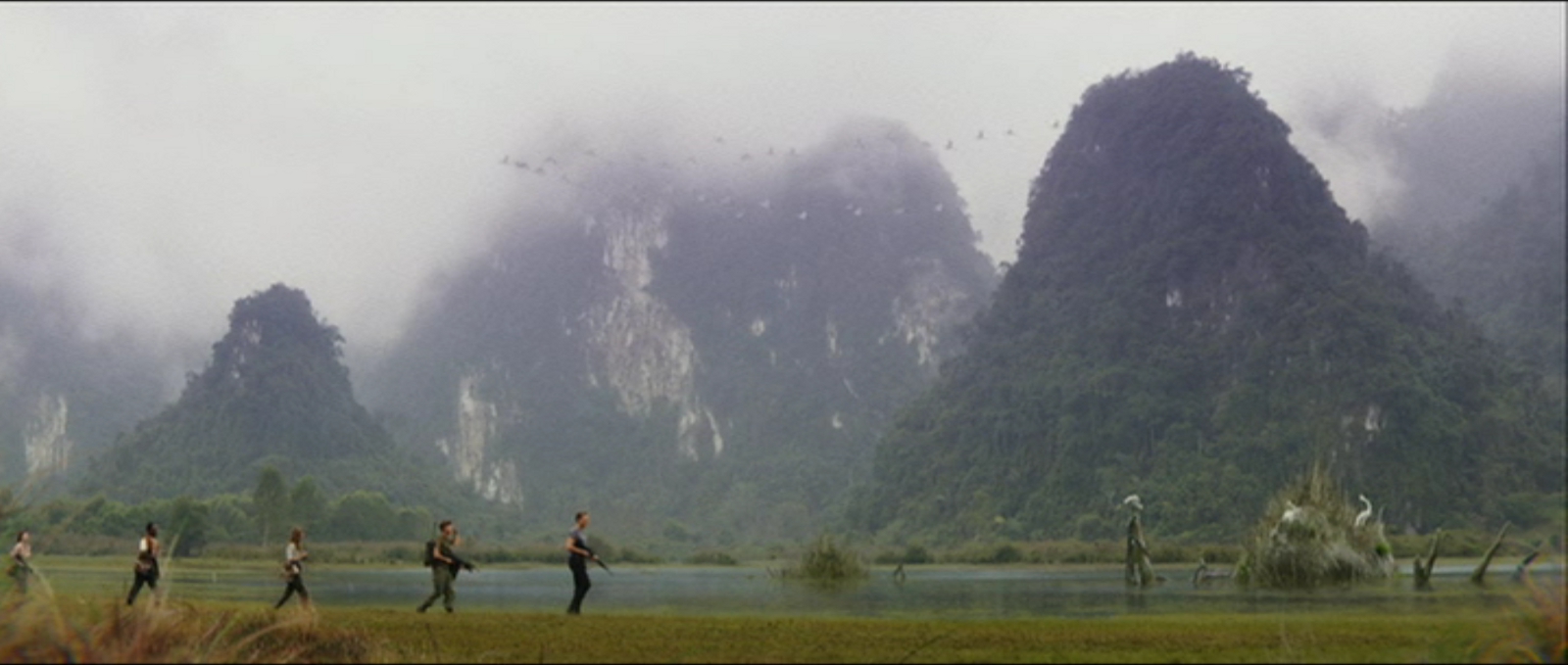
Visit lovely Skull Island

Monarch is very different from the branded helicopter-riding group we see in the 2014 Godzilla. They are literally down to two men, begging for funds from a senator who has put them off four times already. Bill Randa is the sole survivor of the USS Lawson which, we see in a picture, was clawed by a gigantic creature. But we don't know which kaiju it was. Perhaps the next film in the series will tell us: Rodan, Godzilla, or King Ghidorah. It seems unlikely to have been Mothra.
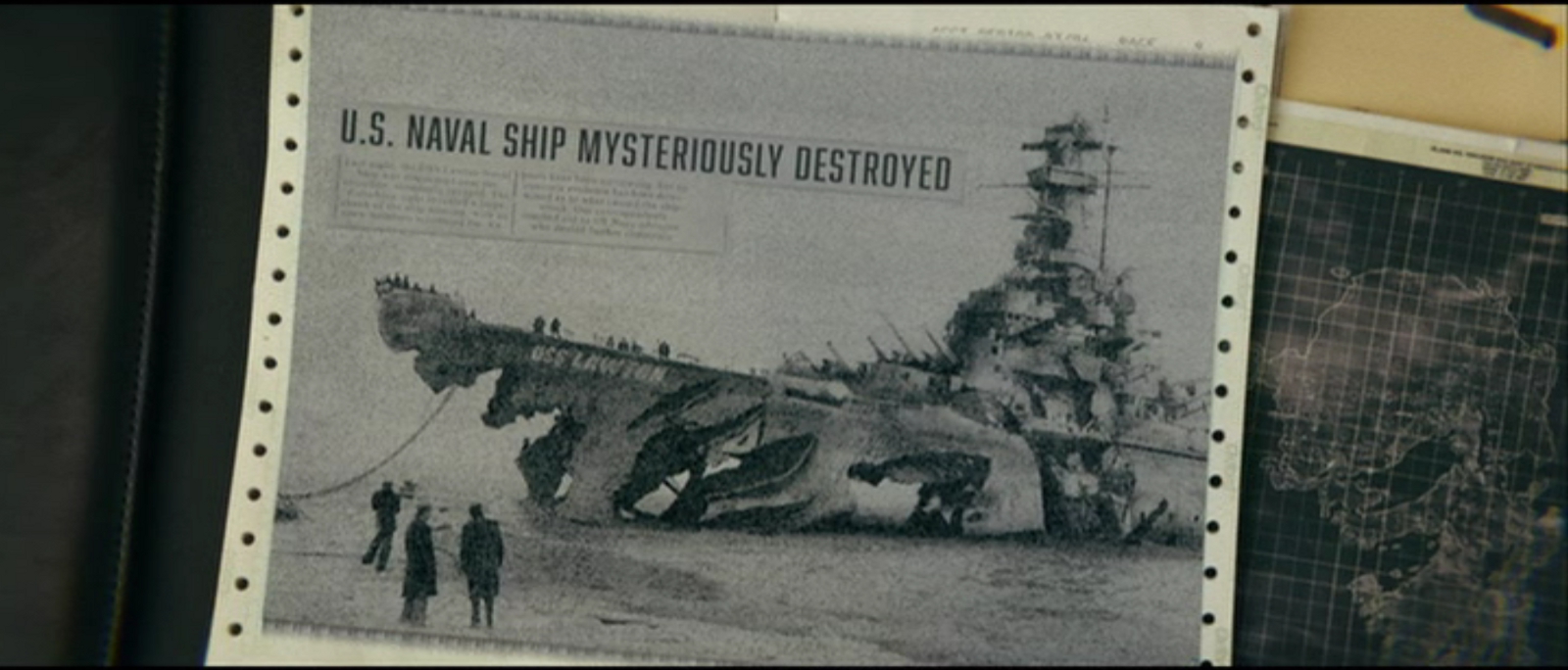
Photo of the USS Lawson

I love the design of the skullcrawlers, certainly more than I liked the MUTOs. Clearly taken from the two-legged lizard from the original King Kong, they move very smoothly, and their biology looks interesting. It occurs to me they look like a less-mutated version of gwoemul, which also had that two legs forward ambulation. Whoever decided on their weird-ass tongues should be particularly commended. They are like land-traveling kaiju-scale crocodiles, lizard-like, threatening, and credibly swift. Although the fights with the small ones are easy wins for Kong, they also serve to get the audience familiar with their abilities. This way, we can anticipate the moves in the big fight at the end. Interestingly, none of the kaiju present with supernatural abilities, such as atomic breath or lasers from its back. Flying, fire-breathing turtle Gamera would feel very out of place on Skull Island.
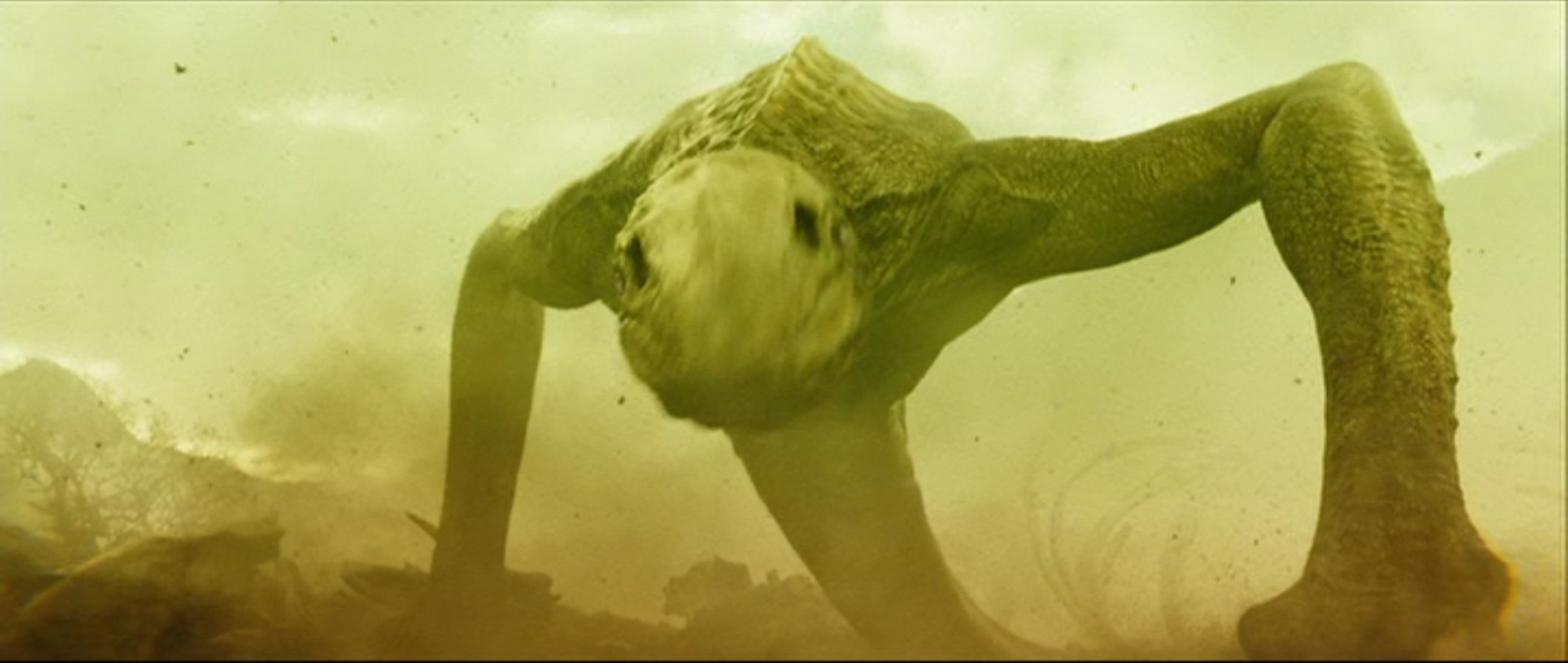
Skullcrawler. Bad news all around

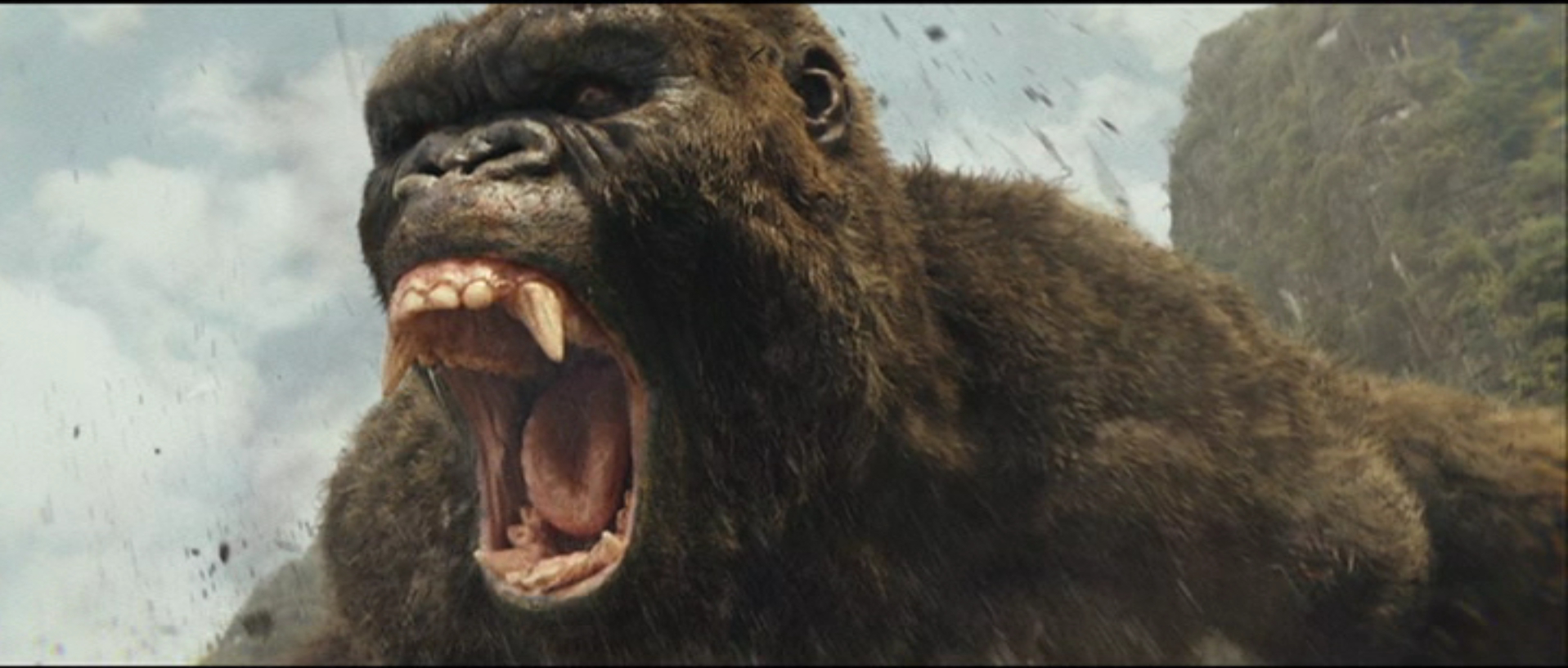
Kong's design is also well thought-out. He looks like a modern, clearer vision of the 1933 Kong. With short legs, long arms, and upright posture, he looks a bit more like a missing link than a gorilla. As a result, he is unpredictable. We know gorillas. But how certain are we about Kong? Even our previous movie experience, which the film Jordan is well aware of, does not tell us everything we need to know about this Kong. He's god of the island, according to Marlow. And the films gives us ample opportunity to see why.
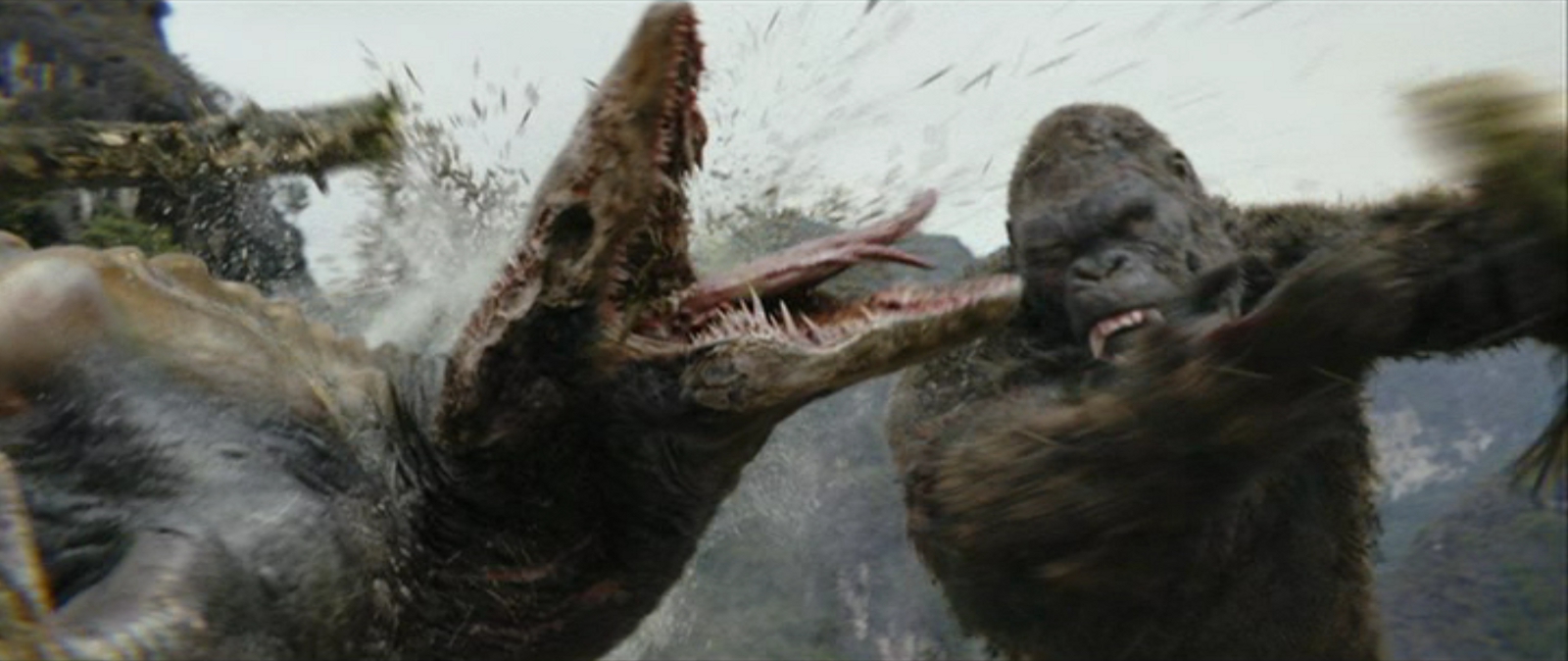
Skullcrawler. Bad news all around

Kong demonstrates Cloverfield-level sneaking, which is to say being quiet by not being in frame, only once, when a gigantic oxen is trapped under a broken helicopter. Kong, to our surprise, lifts the helicopter, freeing the trapped creature. So there is room for compassion in him. Also, he's shown to be smart, and a significant portion of the Kong-Ramarak fight at the end is him learning. He uses tools: a tree stripped of branches, a rock, and the propeller from a wrecked ship. Among other things, this is better movie-making than having scientists tell us how smart Kong is, as in the American version of King Kong vs Godzilla. Kong is also described in a similar fashion to Godzilla in the 2014 film and Shin Godzilla: Not just a king, but a god.
Open-eyed roar

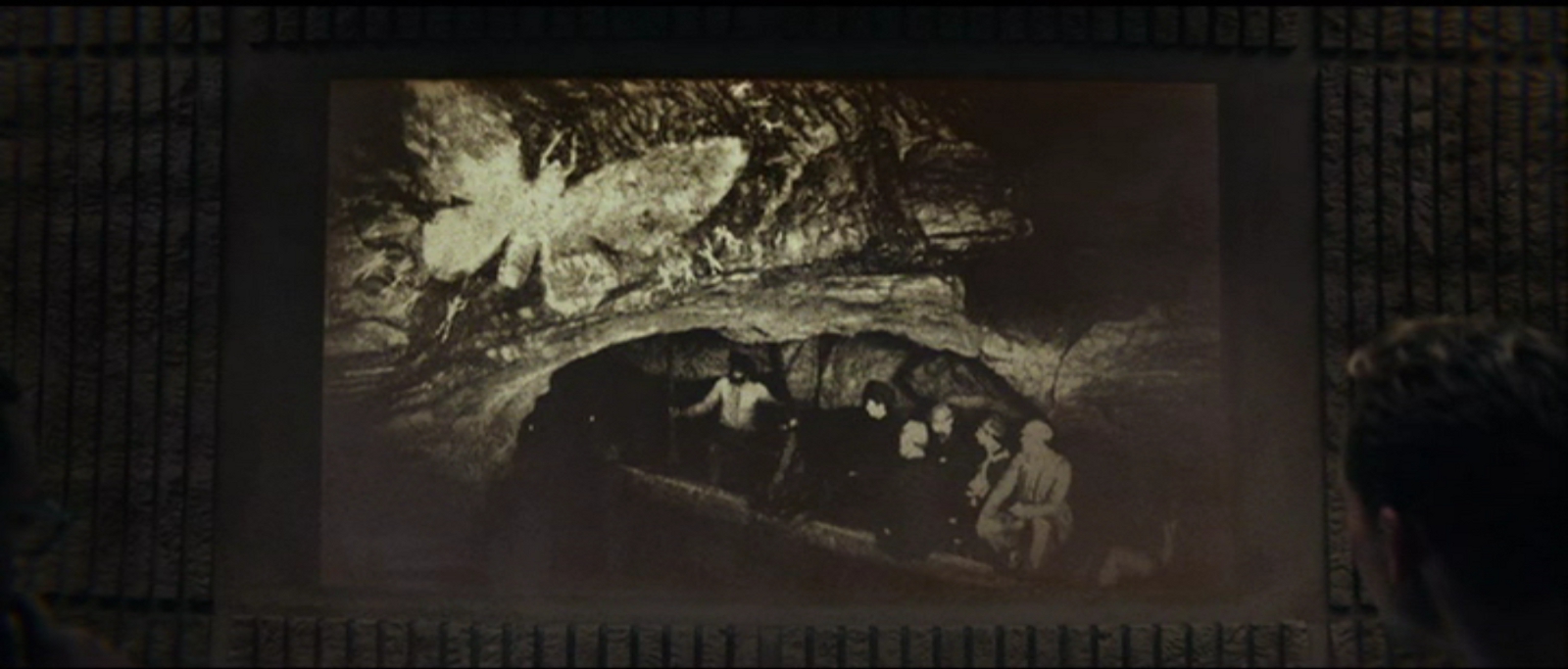
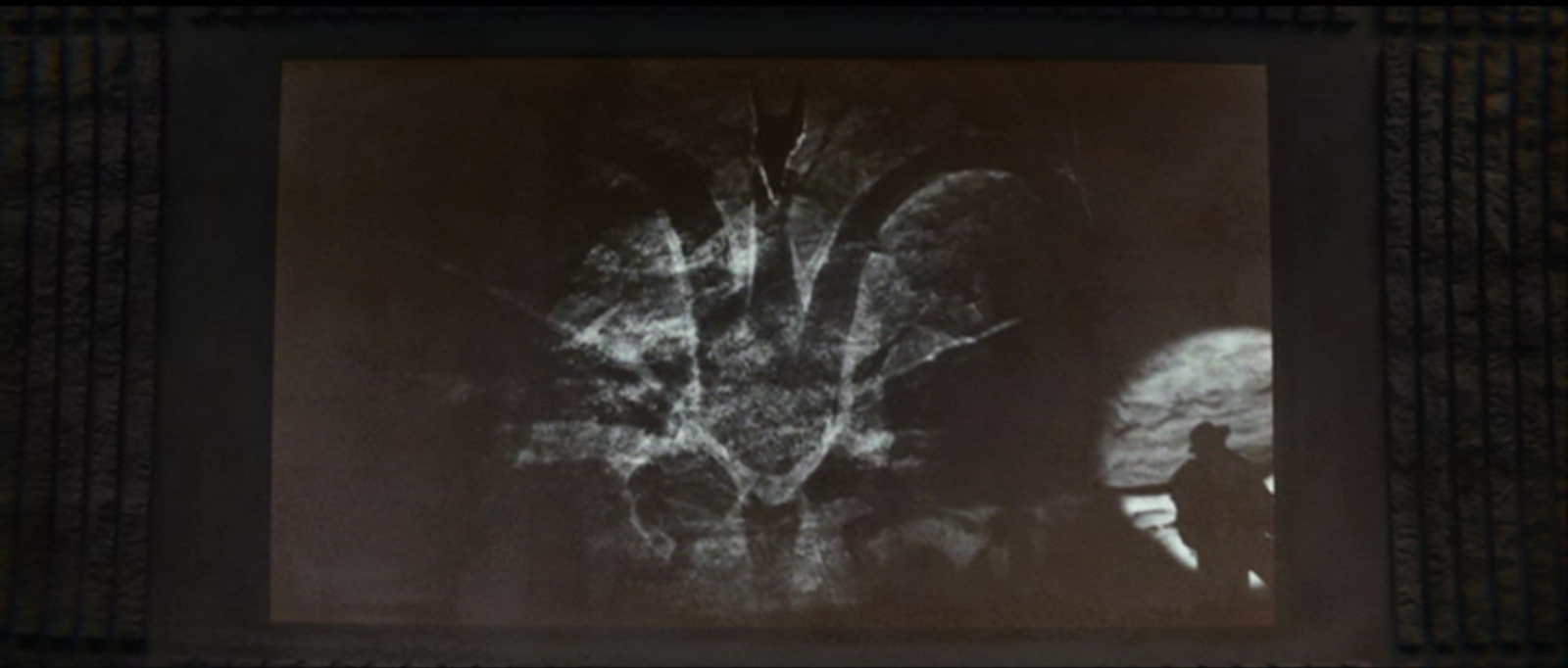
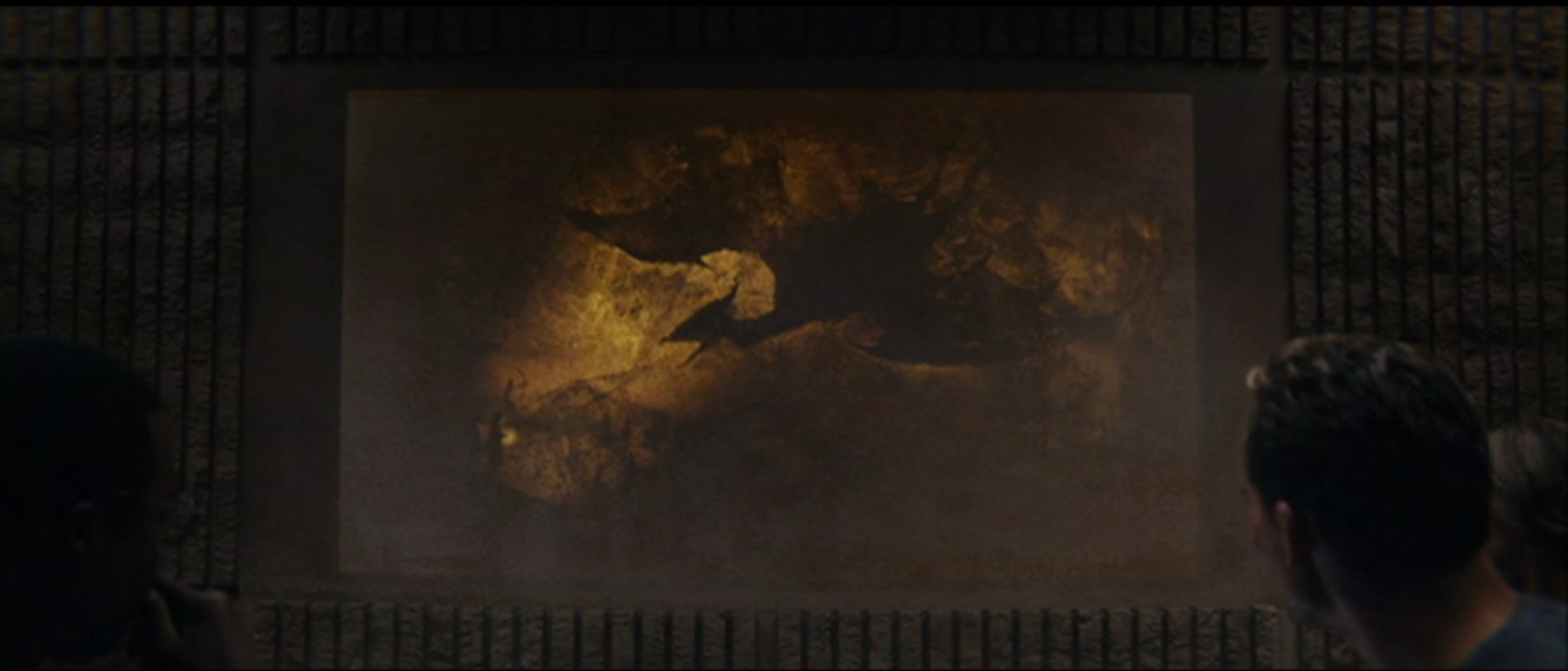
The cherry on top of all this kaiju goodness is the end post-credits scene, in which Conrad and Weaver are inducted into Monarch. Drawing on the Godzilla opening credits, we are shown cave paintings of three opponents from the next Godzilla film:

Rodan
Open-eyed roar

Mothra

Open-eyed roar

King Ghodirah

Open-eyed roar

Which means Godzilla: King of Monsters will have at least three kings in it: Godzilla, King of the Monsters, King Ghidorah, and the Monarch organization. And possibly a fourth if there is a cameo by Kong. I'm looking forward to 2019.

Sunday, September 3, 2017

The Kaiju of Abusive Relationships: Colossal

I'll admit that I came to Colossal with a jaded eye. I've read through the court documents regarding Toho's lawsuit against Voltage Pictures, and it seems very clear that writer-director Nacho Vigalondo intended to use Godzilla in a way that was not lawful. Although the lawsuit was settled, the necessity of it still leaves a bad taste in my mouth. Further, Vigalondo &ldqo;It’s going to be the cheapest Godzilla movie ever, I promise.” He ended up spending some $15 million dollars, according to wikipedia. That, it turns out, is the equal of the budget of Shin Godzilla, the most expensive Japanese Godzilla film ever made, although much less than the two American Godzilla films. So Vigalondo, who seems ignorant of the law as well as the genre he's aping, seems a poor choice of writer/director for the project.
On viewing, the film had its charms, but there is a lot to unpack about why I ultimately didn't like it. The plot isn't the problem. Gloria lives in the city, is in a rut, can't get a job. She moves back to upstate New York to her empty parents' home. There she runs into an old school friend Oscar, and discovers that if she is in a certain park at a certain time, a kaiju will mimic her actions in Seoul. Oscar turns creepy and stalkery, and discovers that he he is in the same park, he creates a giant robot in Seoul. He uses this as leverage, threatening to destroy as much of Seoul as possible. She retaliates by going to Seoul, reversing the connection, and using her kaiju avatar to grab his tiny self, throws him across Seoul.


It's certainly an unconventional kaiju film, although not as lacking in kaiju as, say Demeking. That said, the trailer makes the film look like a charming romantic comedy, which it definitely is not. Oscar takes a very dark turn with Oscar, and the film really is at its best when viewing Oscar's abusive, controlling relationship with Gloria. He's genuinely creepy, self-serving and clearly deranged. He gaslights her, emotionally blackmails her, and shows remorse just long enough to make Gloria think he's truly contrite. All classic abuser behaviors. We get small glimpses into his life when Gloria visits him in his house that is a hoarder's dream palace. With the exception of that one scene, Oscar, even when drinking, always has his hair perfectly arranged. He's creepy, and with a small nudge to the genre of the film, this could have been any one of several stalker-based horror films.


Gloria, in a recovery from self-destructive behavior staple, goes to where she has caused the most damage: Seoul. Metaphorically, having confronted the badness, she gains power over it. In this case, she reverses the direction and manifests her kaiju form in wherever, New Hampshire. And while it's good for the metaphor, it doesn't work as well if you haven't twigged on to it. Gloria then somehow picks up Oscar (she can't see or hear him, but she seems to have spaced the location out so that she knows where the playground is). She can't hear him beg for mercy or go on his self-destructive rant, but she gives him a Hail Mary toss, and he's gone.


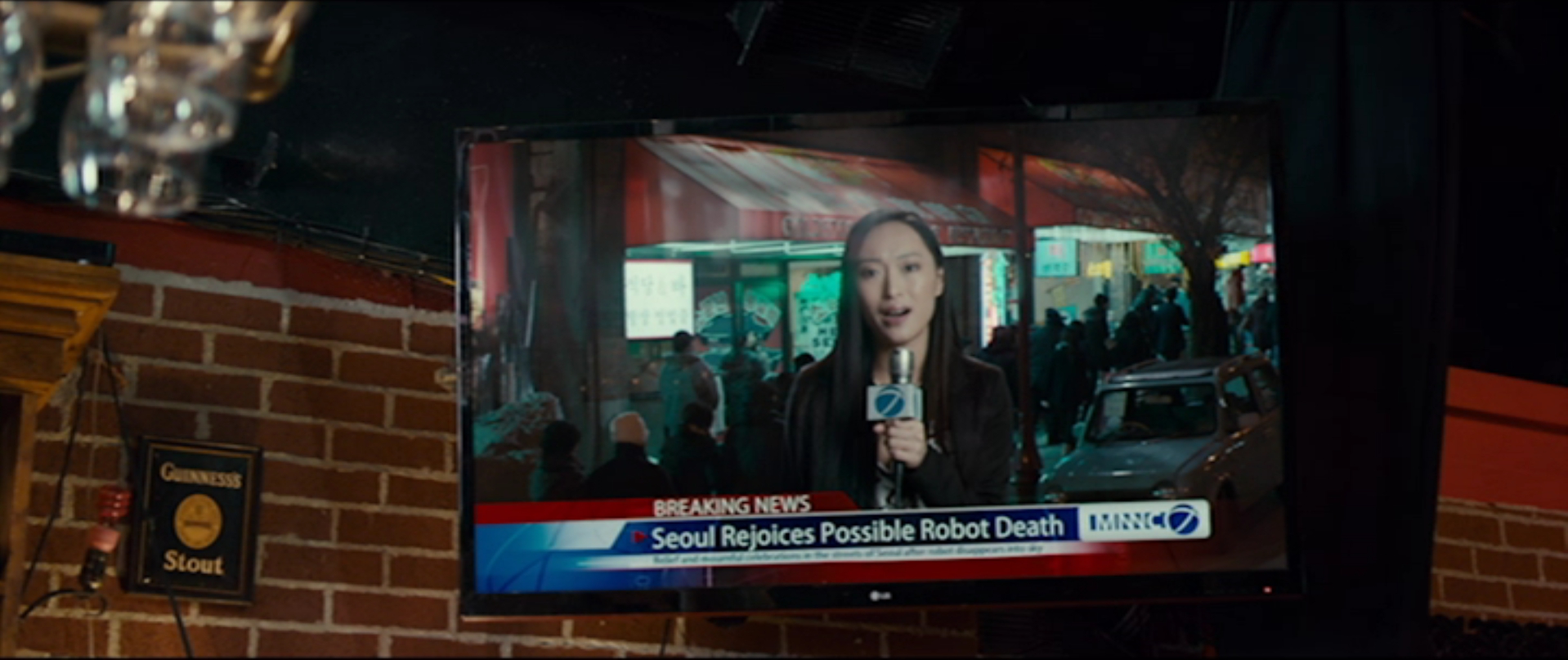
Ultimately, despite the well-written creepiness of the antagonist, the film is about Gloria walking away from self-destructive behavior (magnified by the kaiju) and discovering her inner power (also magnified by the kaiju). Unfortunately, the film really doesn't address the fact that she has caused millions in damage and killed people. She gets her happy ending, walking anonymously through the Seoul she wrecked and then apologized to. There might be a little 2014 Godzilla in that. Godzilla is called the 'savior of the city' despite having done a lot of damage itself. Once she apologizes, the film gives her a pass. She doesn't even bear the burden of Oscar's death. He sails off into the sunset, but we don't see him land, and the only reference to it is a TV crawl about the possible death of the robot.


This is something the film shared with Cloverfield. While the characters are better drawn in Colossal, but there's not much that happens outside the frame. Further, at no time are the police ever called. Even when Oscar is driving off drunk and Gloria needs to stop him. The film is an insulated microcosm, and only when Gloria goes to Seoul do we break out of the very small feel of the film.


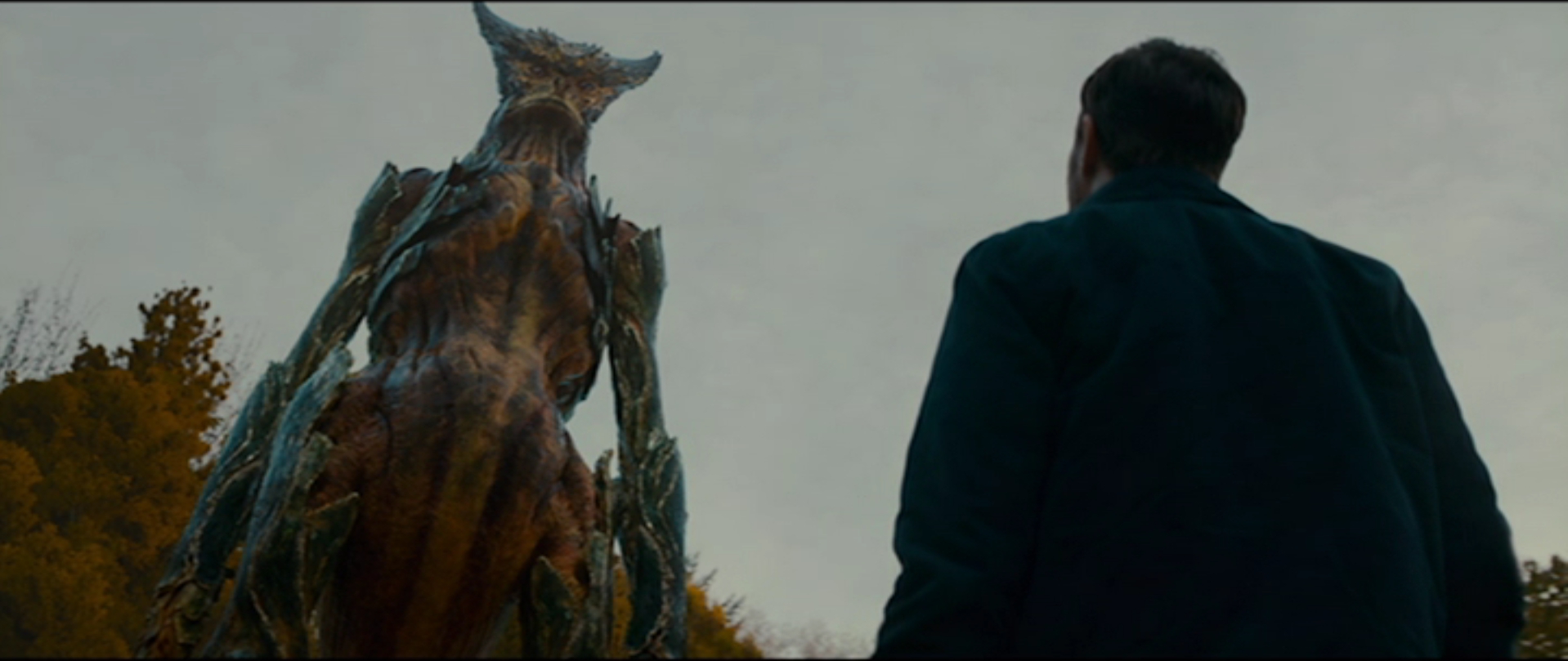
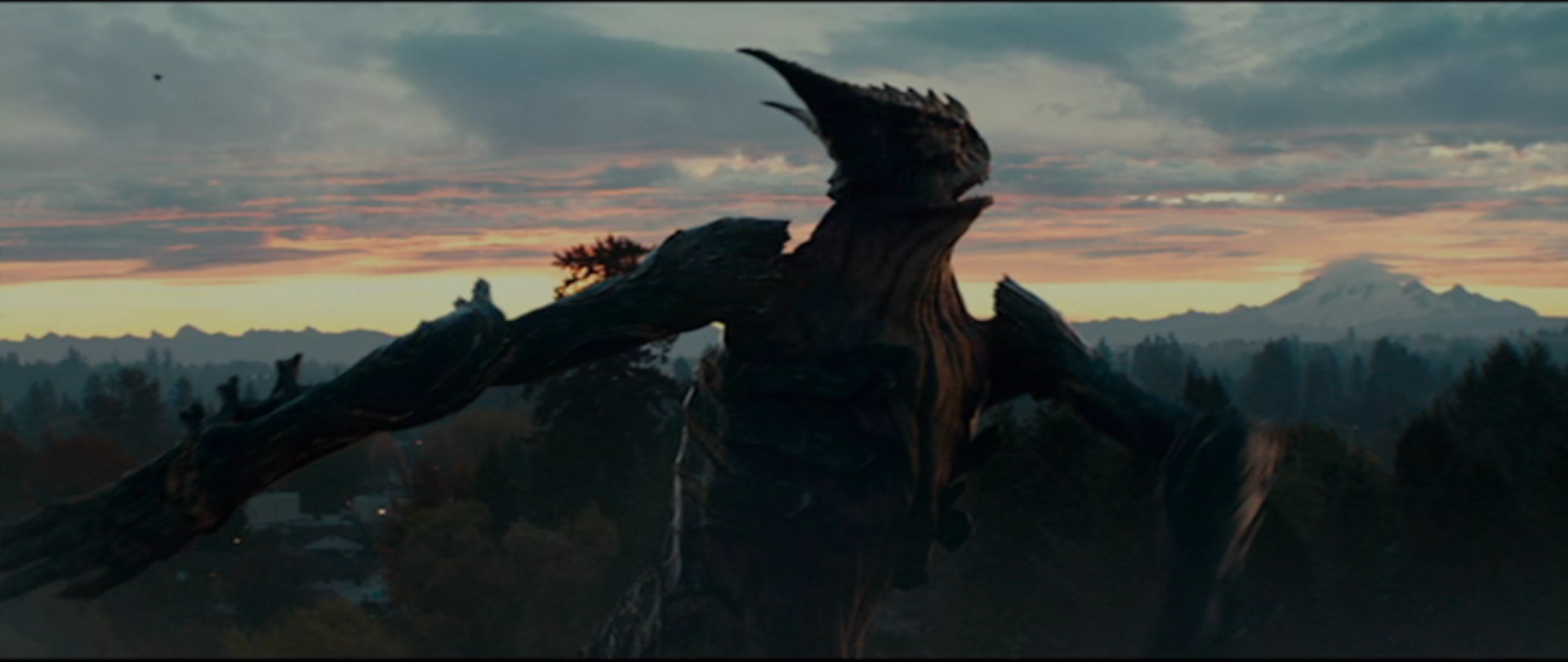
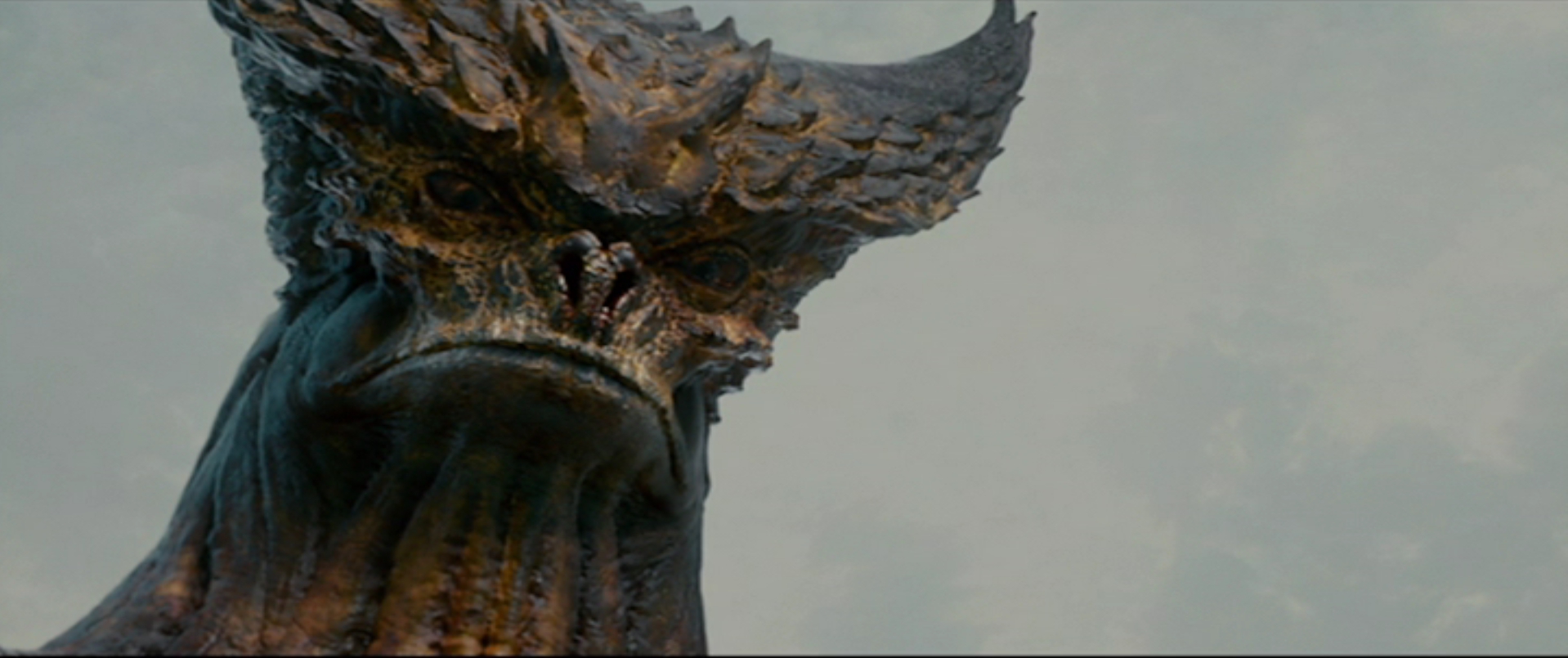
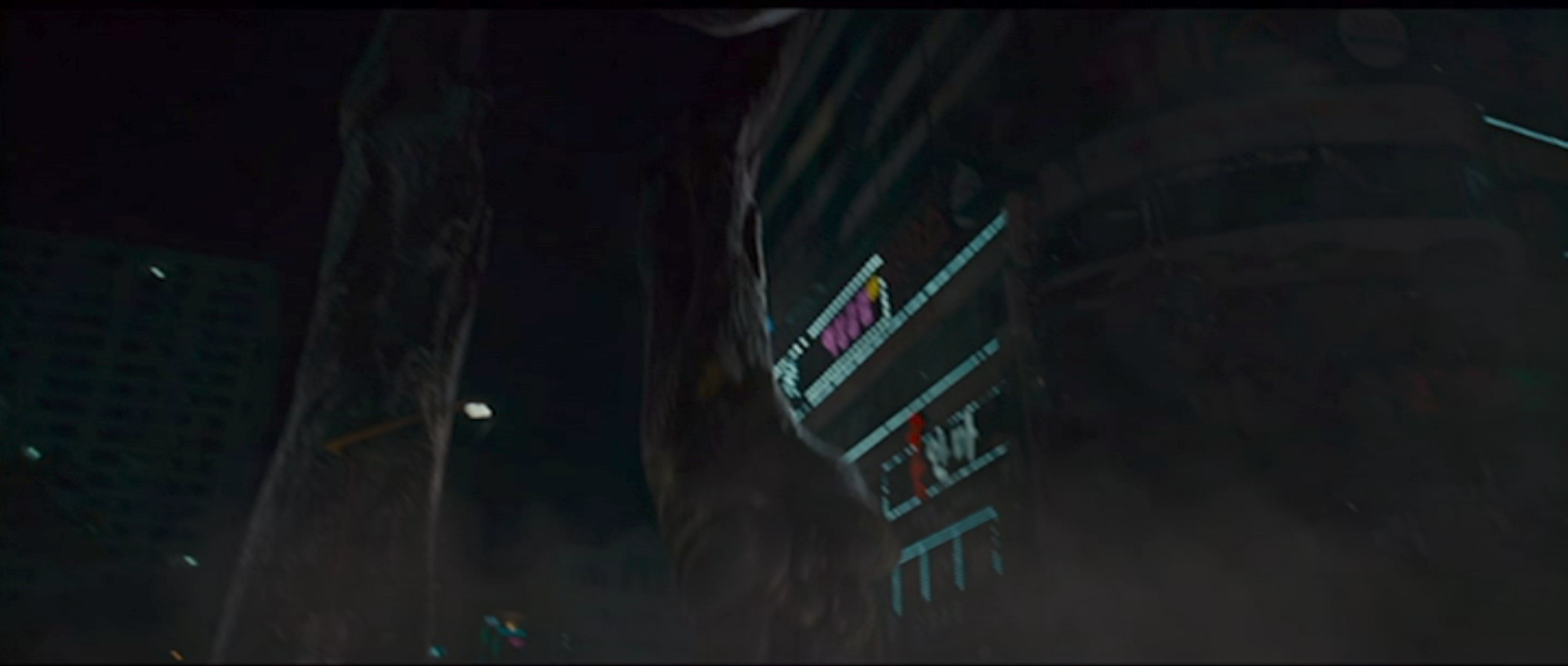
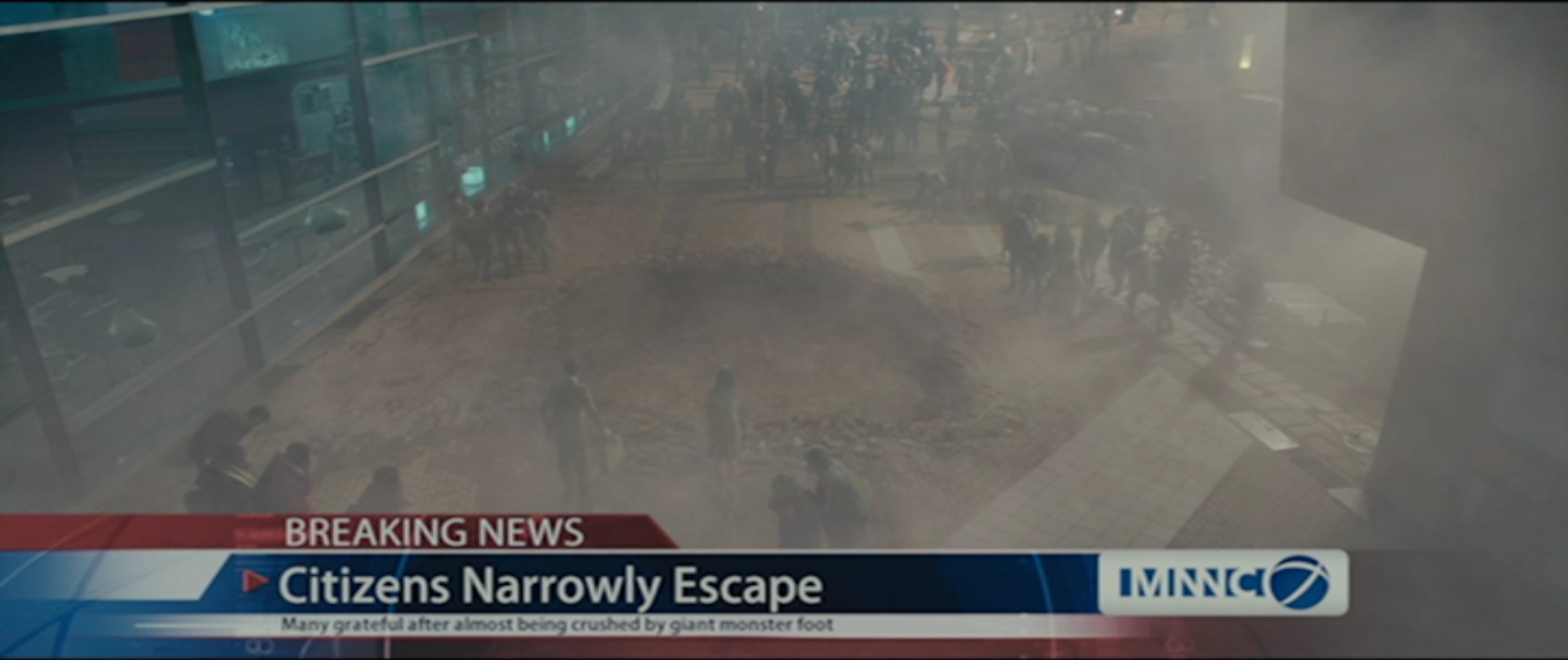
The kaiju design is quite interesting. Her monster seems sort of woody, as if it were derived from trees. His is a giant robot. The forms are revealed to come from the toys they are carrying when the strange lightning strikes them and apparently links the location with Seoul. Unfortunately, the majority of the screen time the Gloria kaiju has is screen within screen. We only see it directly a few times. But it's very slender, as opposed to the thickness that has characterized kaiju form when they were men in suits. The feet are unique, especially, with downward-facing toes that might have suckers or expandable toes to make the footstep more steady. That's quite unique. The vast majority of the kaiju footage involves people watching television, which is very modern. However, it leads to a difficulty in the clarity of the images. Only at the end do we get clear looks at her kaiju, but we never get a non-dark, non-rainy look at the robot. And that's likely due to a combination of budgetary savings and the empowerment metaphor.


And although I criticized Vigalondo for his ignorance earlier, he does have enough background in the genre to give us the footprint trope. But so many things fell by the wayside, possibly because of budgetary concerns. Military helicopters attack the kaiju once, but the military otherwise never gets involved. No tanks, no artillery, no fighters or bombers. Apparently the military of South Korea is content to let their major city get stomped on.


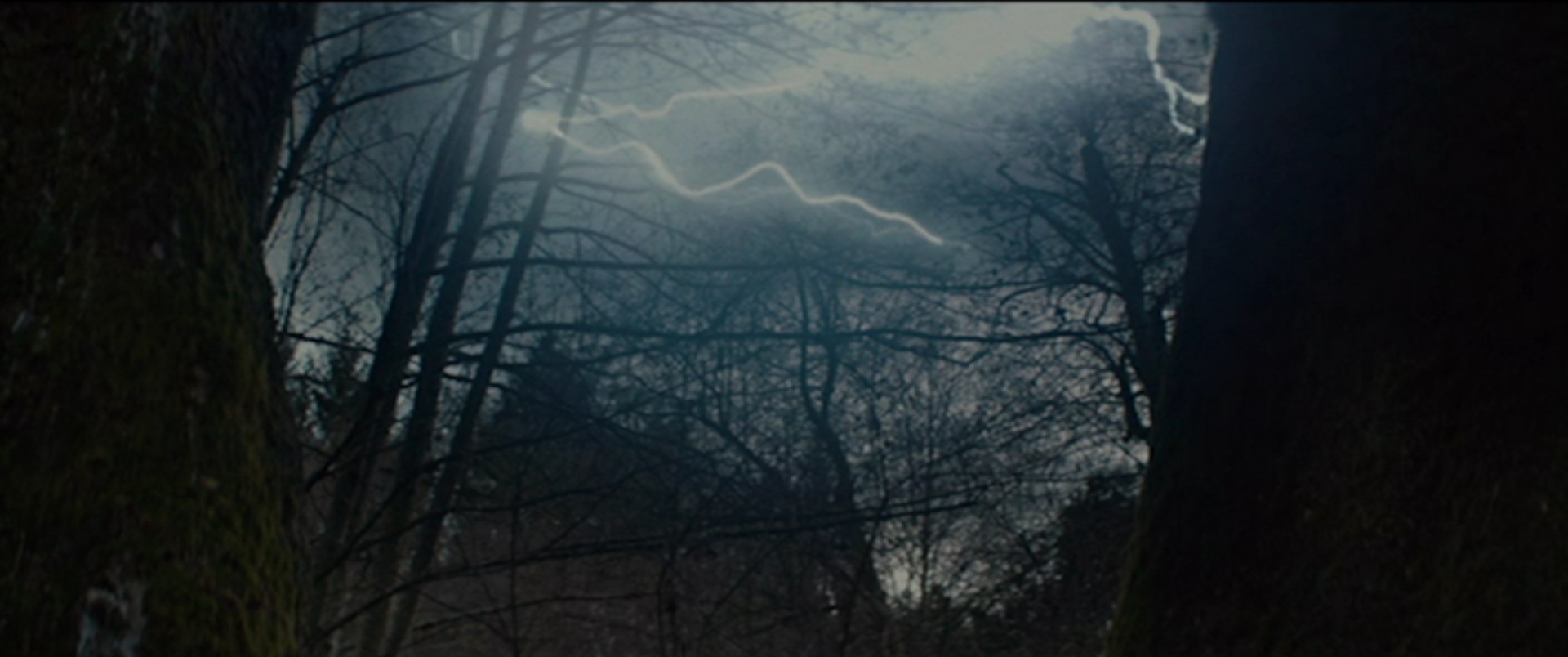
The appearance and disappearance of the kaiju and giant robot through a zig-zaggy lightning bears a resemblance to the Breach from Pacific Rim, which led me to briefly wonder if Oscar and Gloria are drift compatible.


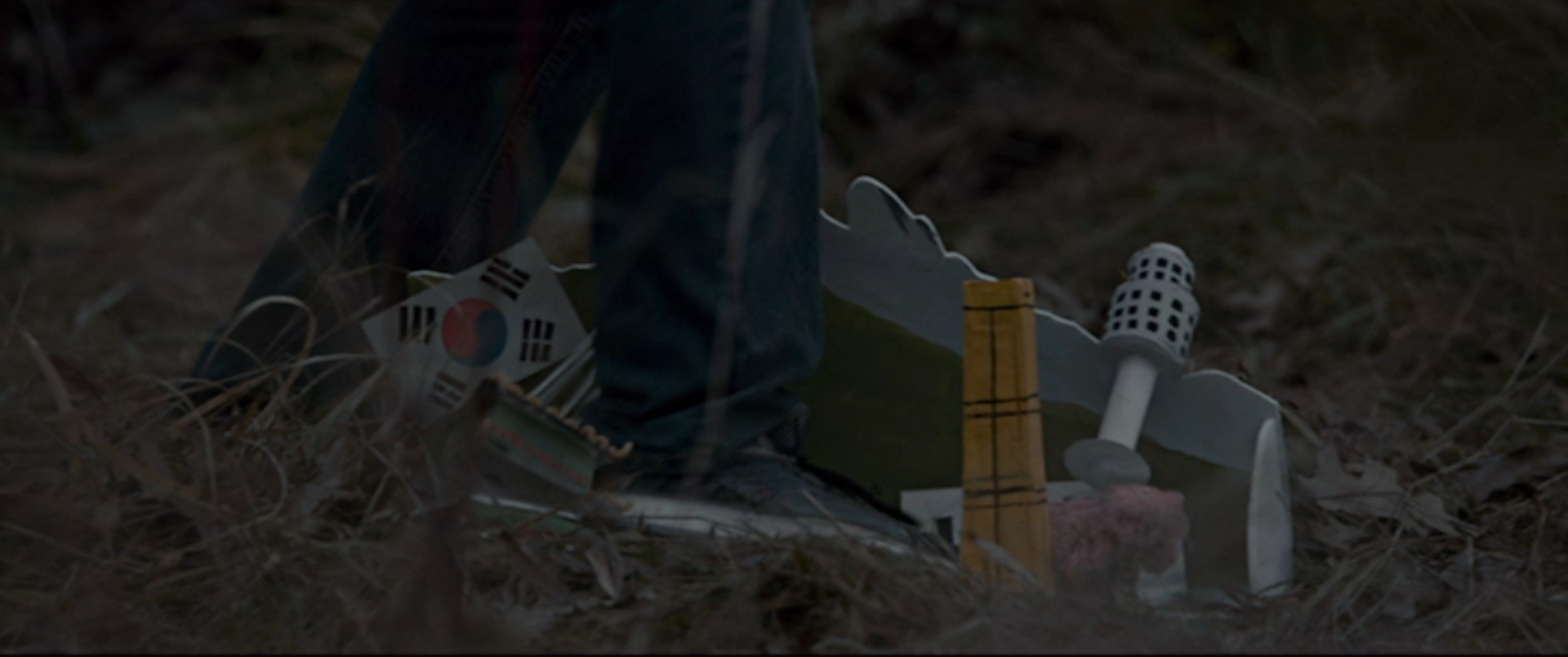
But even as we learn the origin of the kaiju and robot forms, we don't know why it happened. There's a metaphoric leap but no reason that the magic happened. Twenty-five years ago, Gloria was bringing her diorama of South Korea to school, when it was blown into a vacant lot. Young Oscar climbs a fence for her, finds it, and stomps on it, like a traditional kaiju does. So there's a link, but we still don't know why these particular people, why this particular time. The script needed another draft, another piece of exposition to at least hint as to why this happened.


This is not helped by the fact that the 'first incident' clearly shows Gloria's kaiju walking, but she doesn't walk in that incident. After she is struck by the magic lightning, the only crouches, stands, and then falls over. No walking. And the film has several of these logic-defying moments which pull me out of the film. Gloria can't really afford food, so how is it she has her passport and can afford not just a flight to Seoul, but the taxi ride to the airport? Why does the house have no furniture and at the same time the electricity is on? These all feed into the metaphorical statement of the film, but it should work as a story as well as a metaphor. Some of the writing is excellent, and the idea is close to brilliant, but it's not supported by a consistent commitment to detail. There's also a dissonance between the dark scripting and the lack of focus on the destruction and death that the kaiju and robot cause. What destruction does happen is only framed in regards to how it affects the distant protagonists, not the people of Seoul. Cloverfield at least created a sense of the world around them. Instead, Gloria and Oscar have their little drama in suburban America, well-insulated from the consequences of their giant avatars' actions.