Showing posts with label Super X. Show all posts

Thursday, November 27, 2014

Another Thanksgiving Turkey: Godzilla vs Megaguirus

With Godzilla 2000 a success, and Godzilla 1998 fading in the rear view mirror, Toho decided to embark on a third distinct Godzilla series. In the Milennium series, each film inhabited its own continuity, although each one refers back to the 1954 Godzilla. In fact, Godzilla vs Megaguirus goes so far as to replicate several of the rampage scenes with the new suit, apparently to let the viewer know that Godzilla 1954 happened, but at the same time, apparently Dr. Serizawa didn't manage to kill the monster with his oxygen destroyer. And so the monster returned in 1966 to destroy Japan's first nuclear power plant. So while this film, like Godzilla 2000 acknowledges the original source, it differs in that it doesn't acknowledge the entire film.

Godzilla vs Megaguirus recreates Godzilla 1954 with virtually the same technology

Despite this, the antagonist monster comes from Rodan. Did Rodan happen in this continuity? It's possible, since both Rodans die in the volcanic eruption. When discussing Godzilla and continuity, it's really best not to look too deeply for consistency.

In a secondary piece of back story, the Godzilla attack on Osaka in 1996 is shown. Again, the military is valorized, brave men and women who stand between Godzilla and ordinary society. In 1996, they are ineffective, but by 2001, they have created the G-Grasper unit, again an elite unit that the rest of the military aspires to be part of. And they have cool jackets, aviator glasses, a baseball caps.
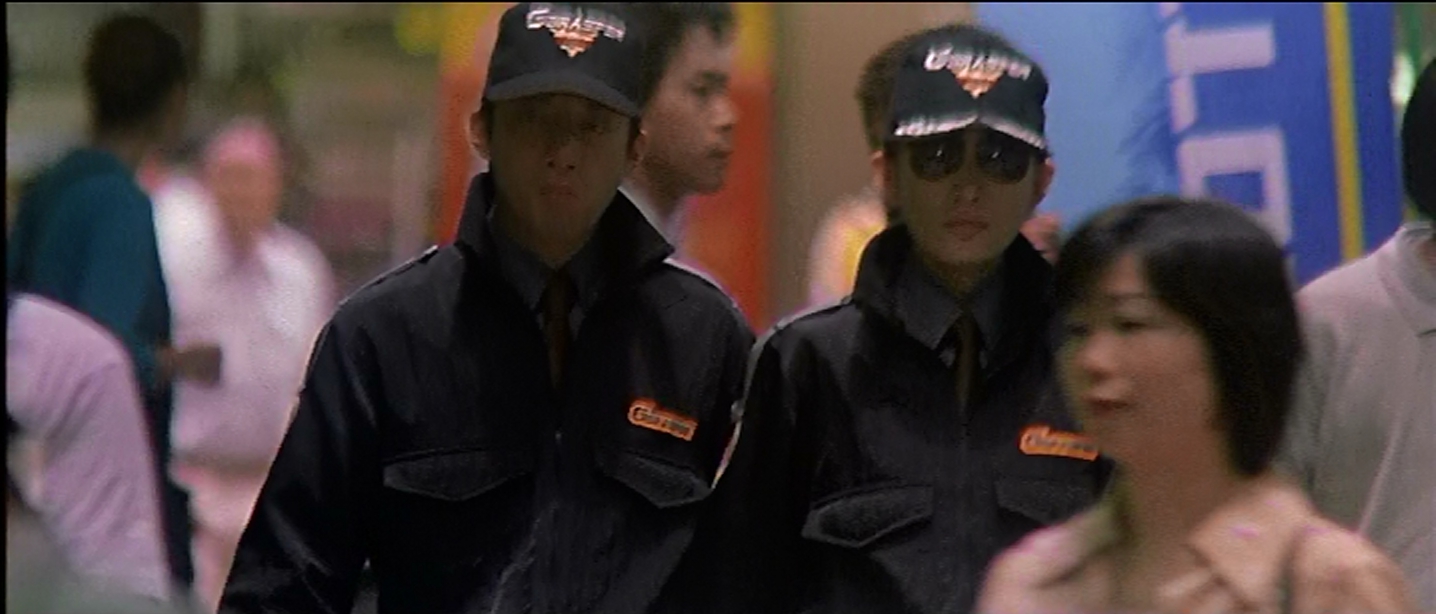
Fighter Pilots got that swagger.

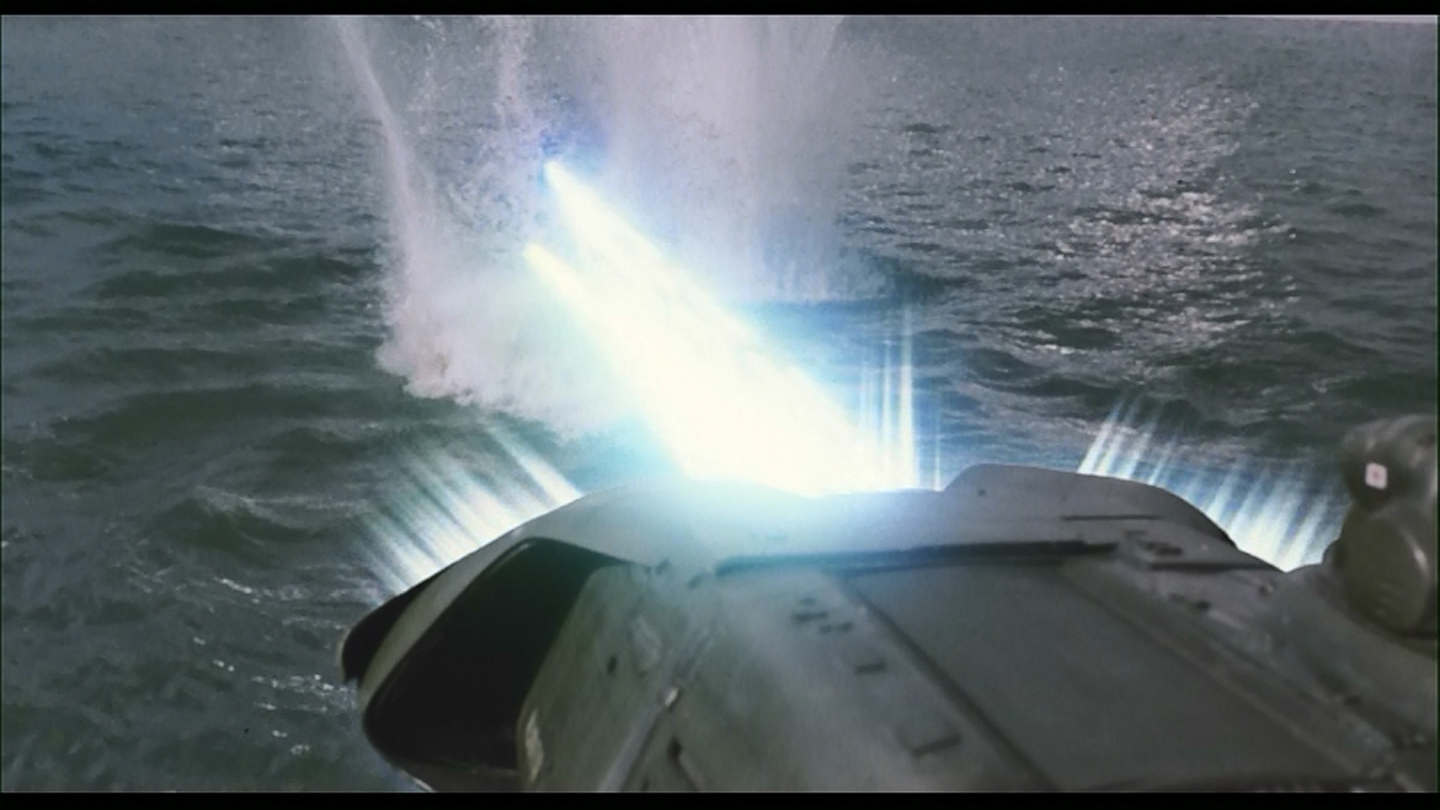
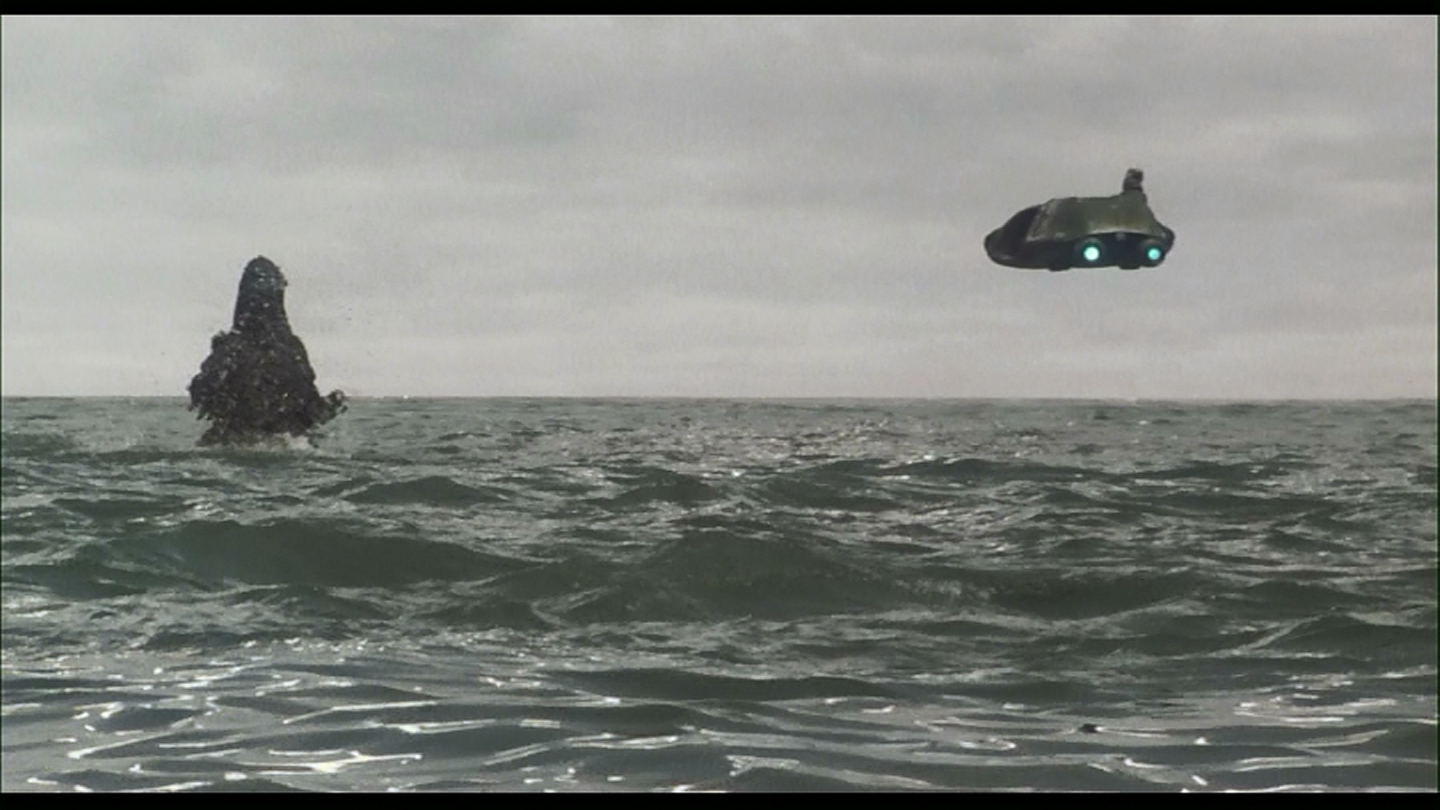
G-Grasper also has a version of the Super X, the Griffon, a large vector-thrust aircraft. Unlike previous Super X versions, it is not designed to take on Godzilla directly. It has no fire mirror or armor, relying on agility. It does have some pretty potent photon guns, however, certainly enough to get Godzilla's attention.
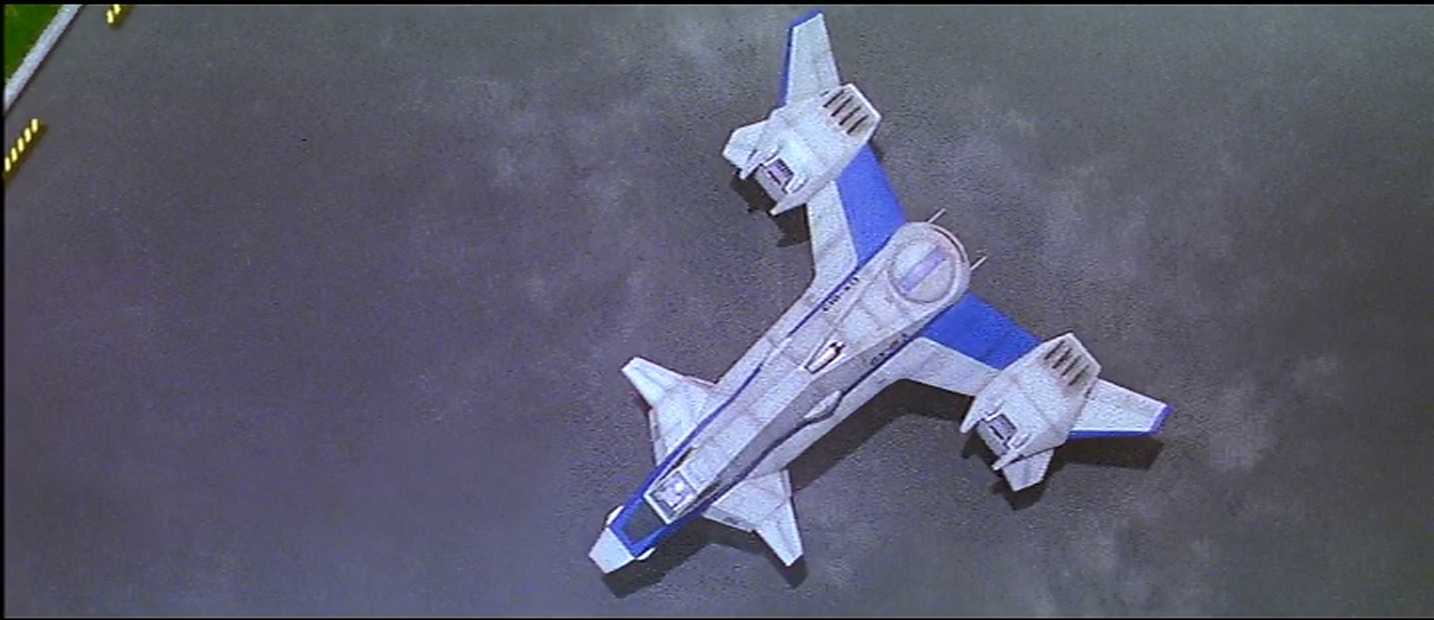
The Griffon, Super X Mark IV or so

But the military still does best with civilian contractors. And the military needs an inventor, who also serves as the audience's intermediary so the military can explain what it's doing. This Godzilla, for example, is predictable. It only comes when there's a radioactive energy source. Japan has been surviving on clean solar, wind, and other clean energies.
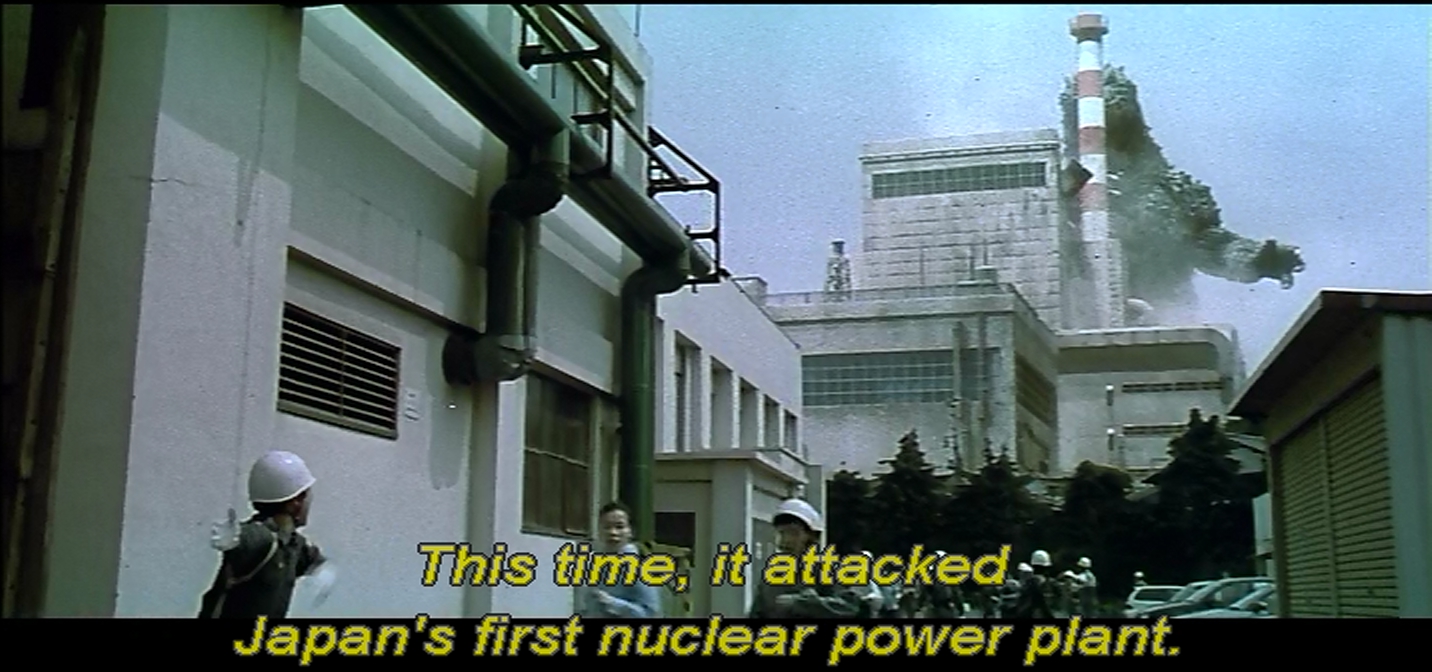
Godzilla is a proactive demonstrator against nuclear energy

The weapon to take care of Godzilla this time around is the Dimensional Tide, a teeny-weenie black hole designed to be deployed by a satellite. On a test shot, it opens a dimensional hole to the past. A meganulon flies through the hole, deposits its egg, and then chucks off back into the past.
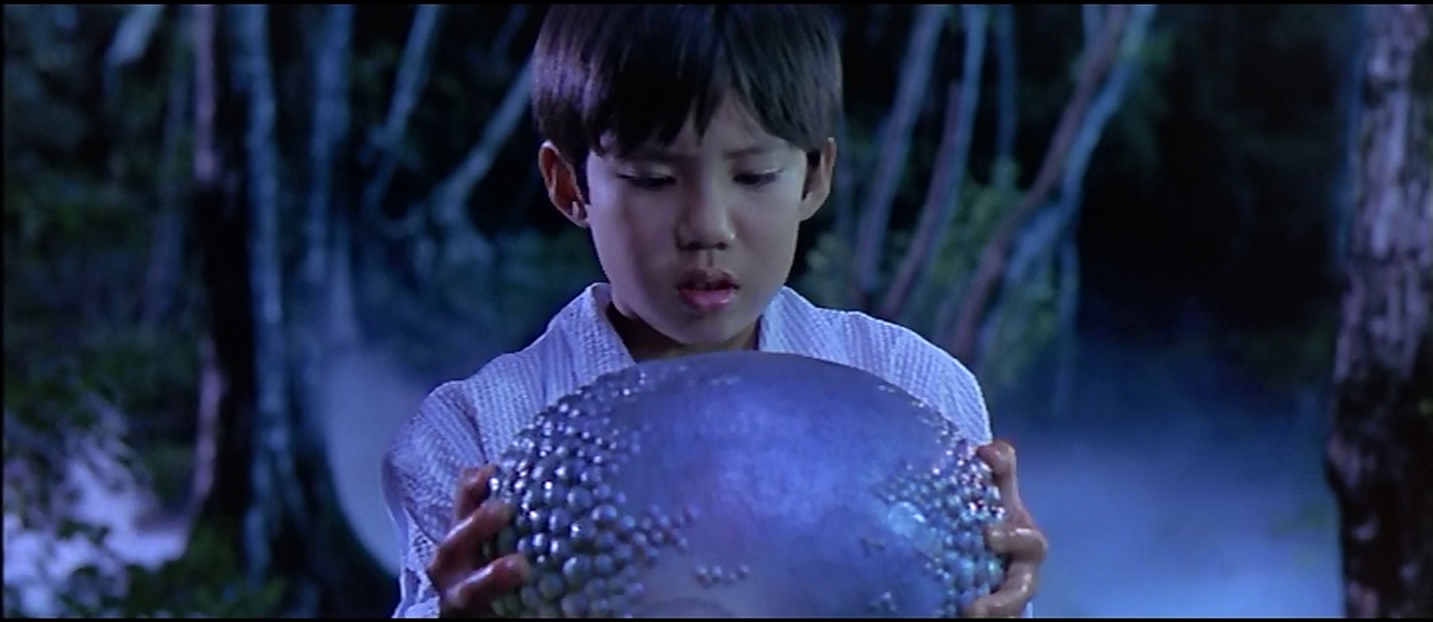
200 million year old football, or something that'll flood Tokyo?

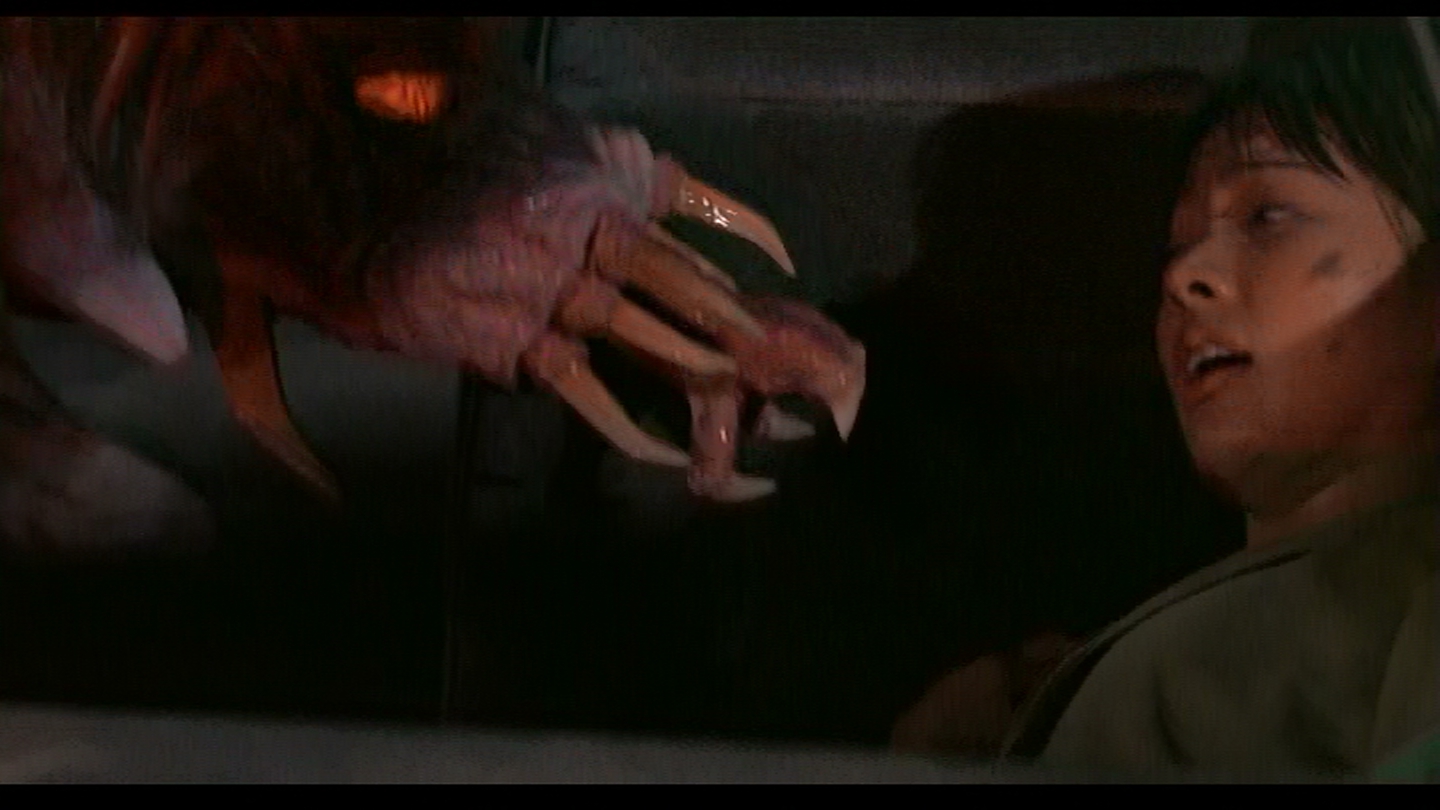
Later, a huge collection of the smaller dragonflies molt on a vertical surface as soldiers shoot at them. Wait, a mass of human-sized insectoid monsters and a larger, primary monster? Where have I seen this before? Oh yes, Gamera: Attack of the Legion.
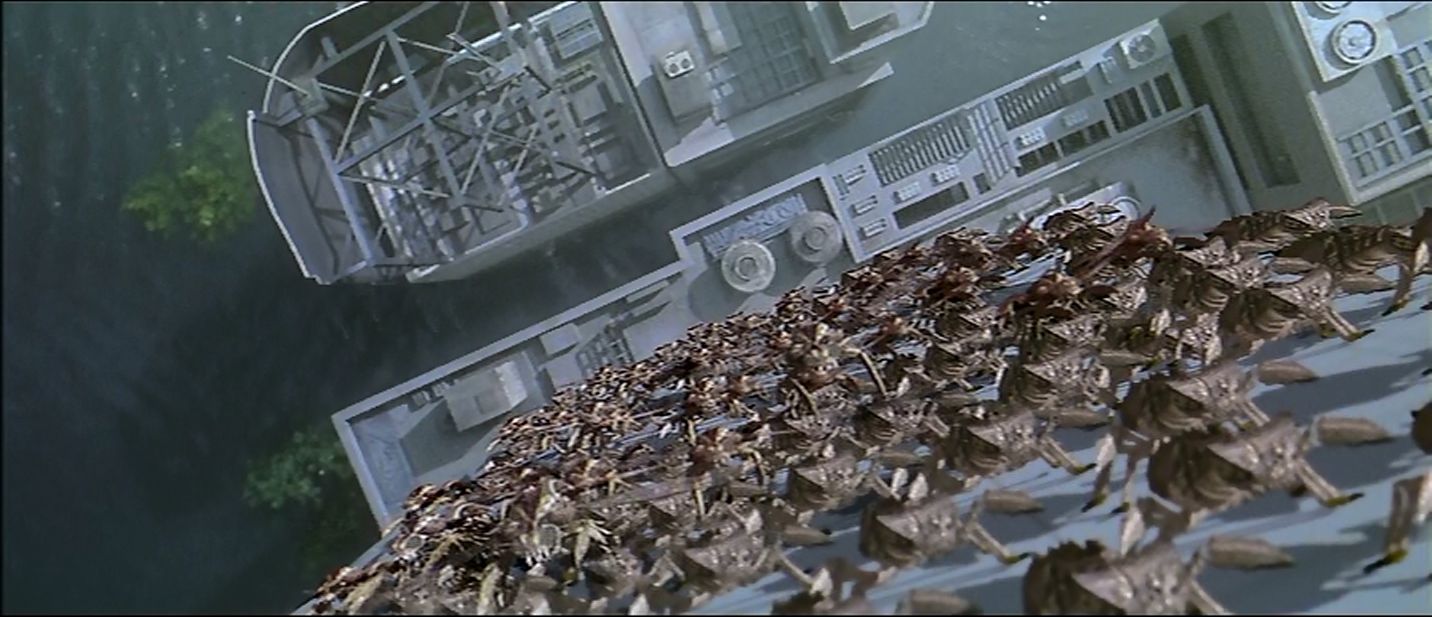
Godzilla vs Megaguirus recreates Godzilla 1954 with virtually the same technology

When they reach Godzilla, they attack, and begin to drain him of vital energy. At the same time, the cloud of giant insects prevents the Dimensional tide from locking onto Godzilla. But they take the shot, and Godzilla takes a small black hole to the face. And then gets back up.
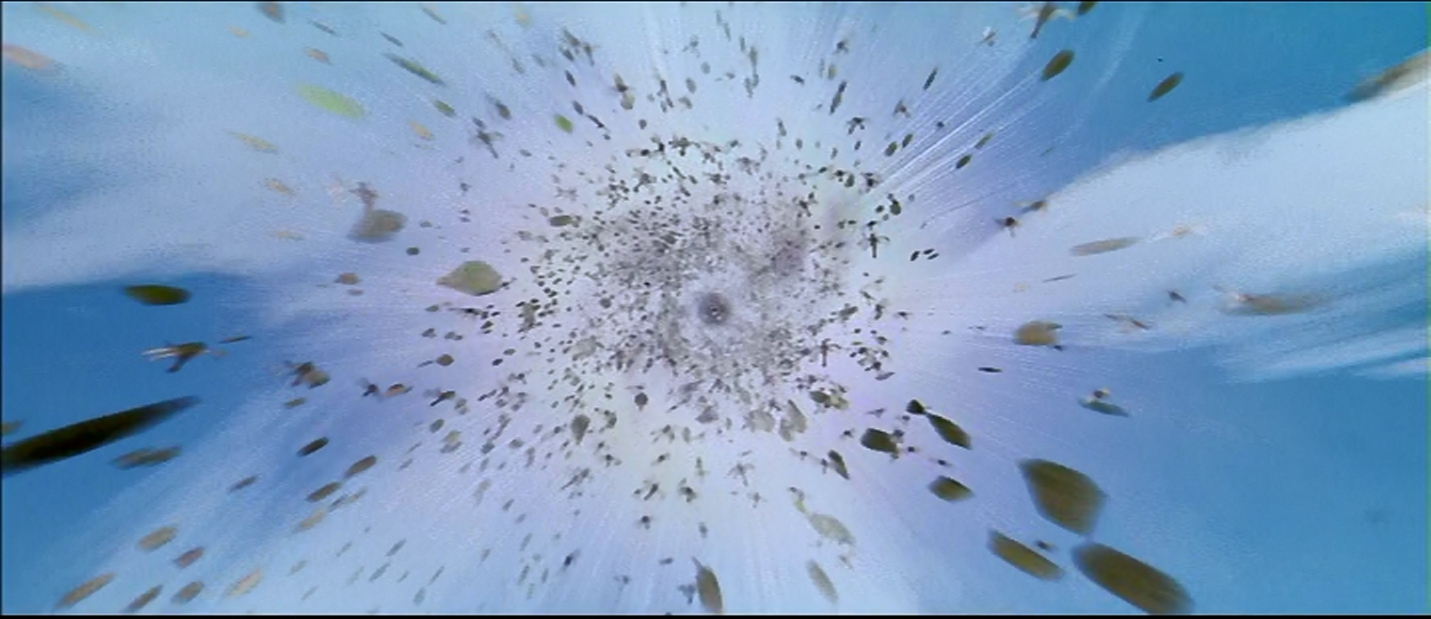
Black Hole Incoming!

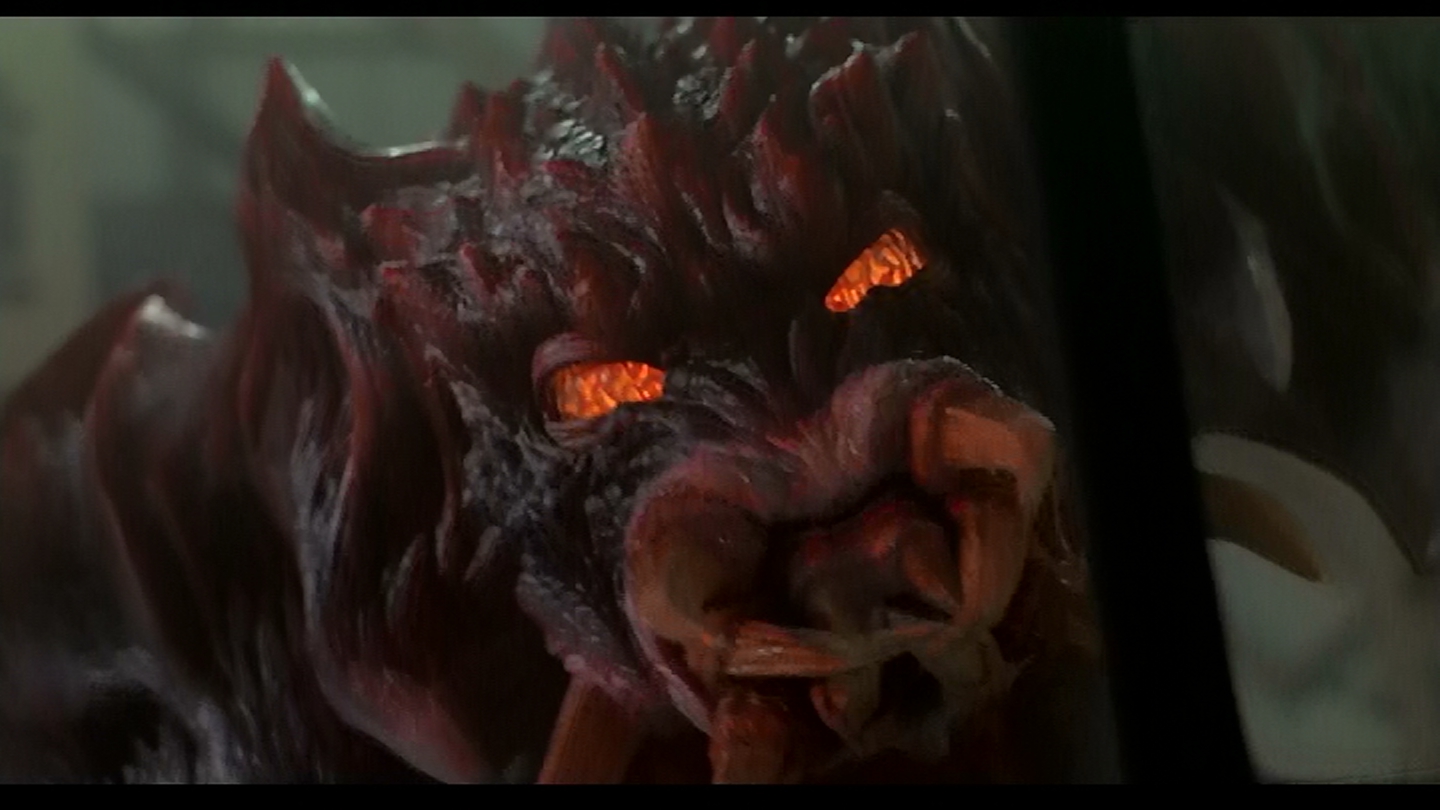
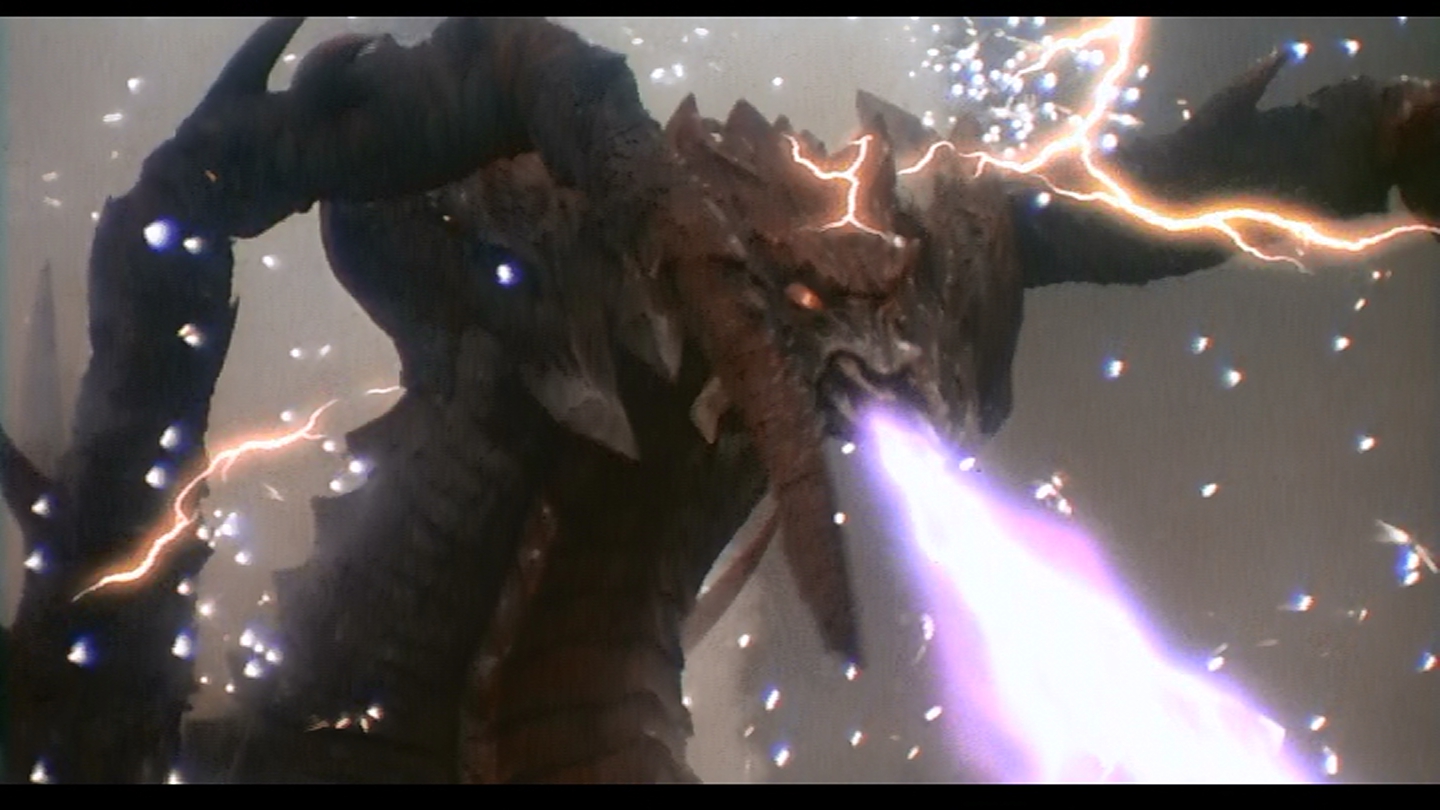
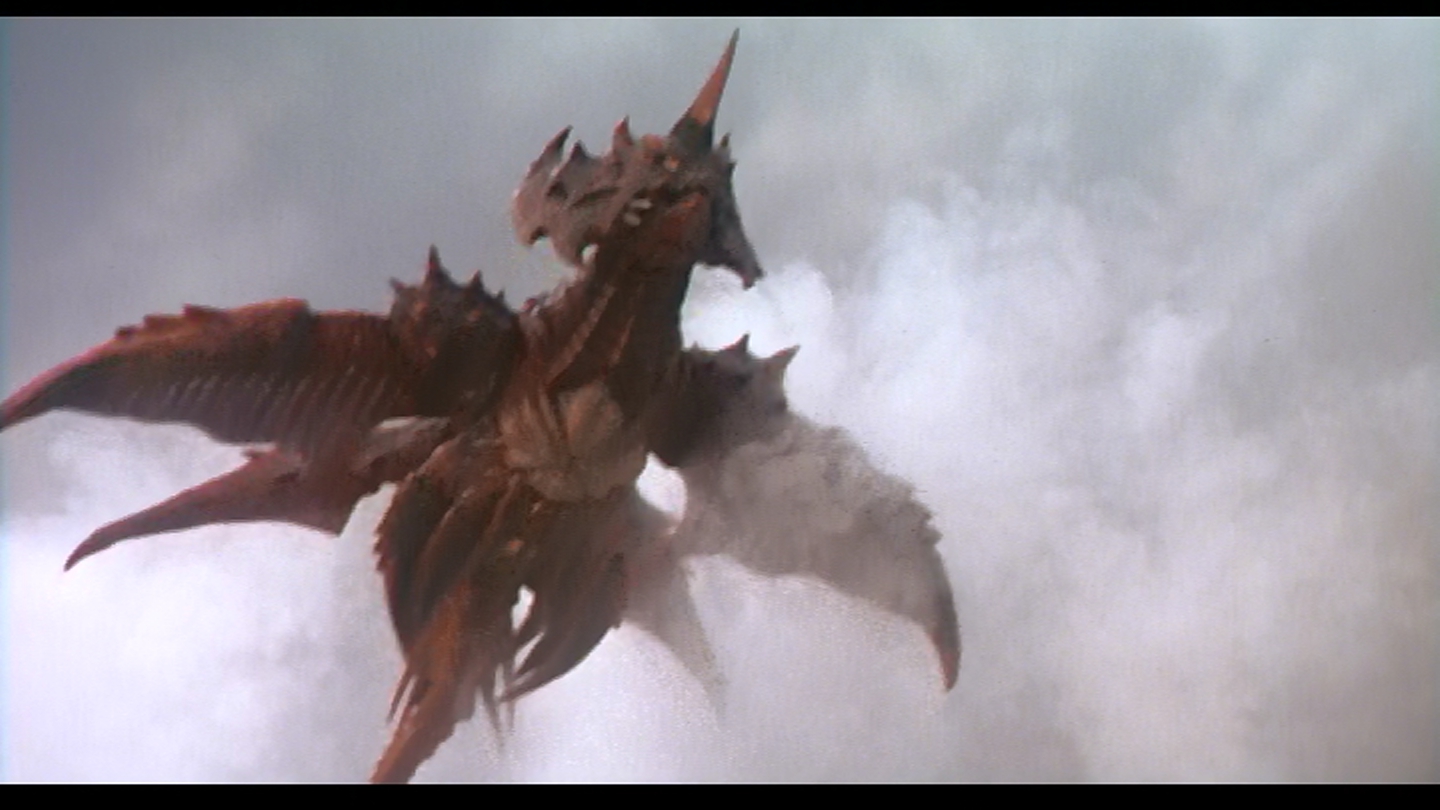
When the giant Megaguirus finally shows up, it's an interesting monster. A huge, spike-covered dragonfly. It can vibrate its wings and create cutting waves, and like the smaller versions of itself, it can take energy from a target with its stinger. The cry is uninspired, and the combat with Godzilla is dull. Kaiju fighting draws heavily on sumo wrestling. Without this, the combat is often very unsatisfying. Even Ishiro Honda didn't do particularly well in Godzilla vs Mothra, although he brought in some innovations, such as Mothra dragging Godzilla along the ground. Here we have no such creative spirit.
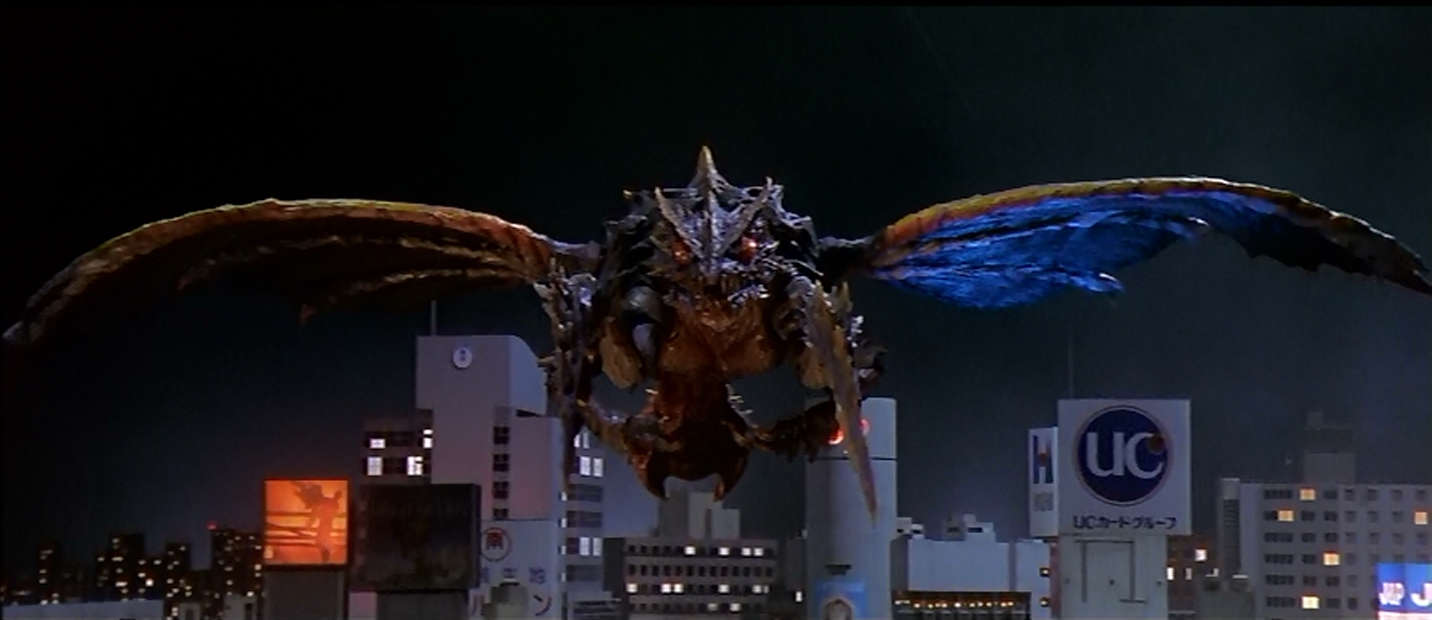
Not just Guirus, MEGAguirus

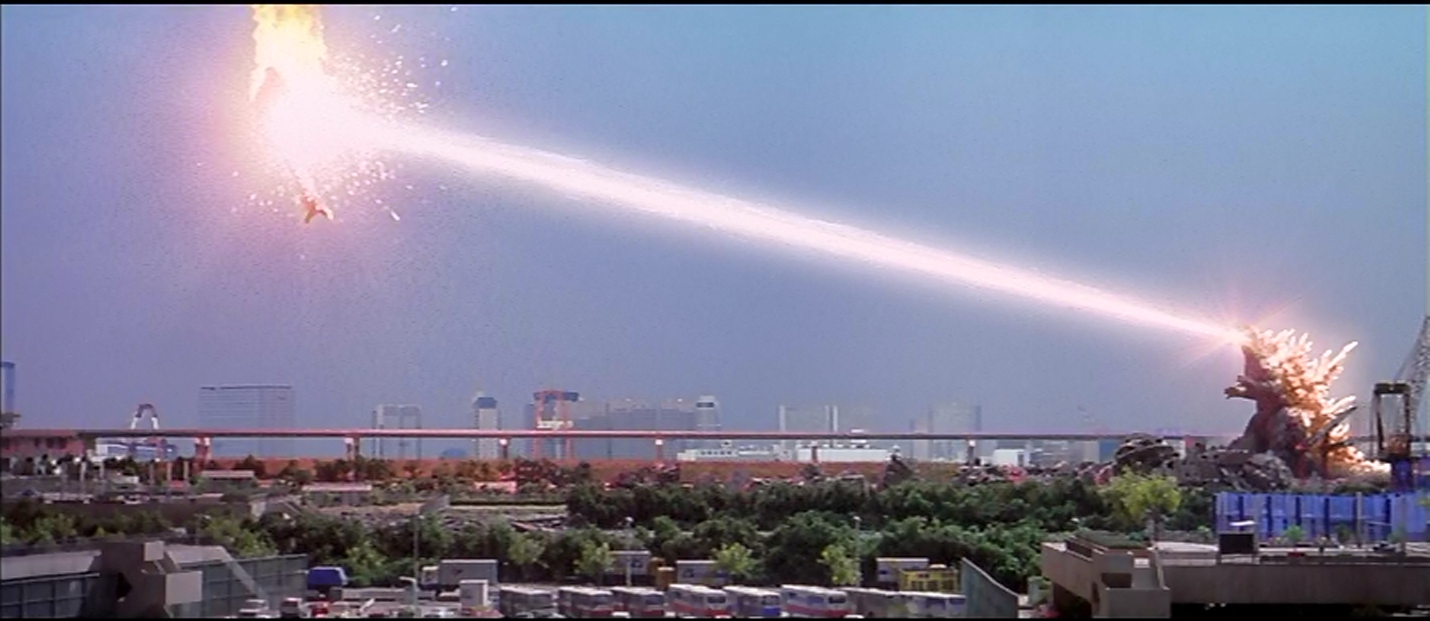
And that's how you get ride of a giant dragonfly

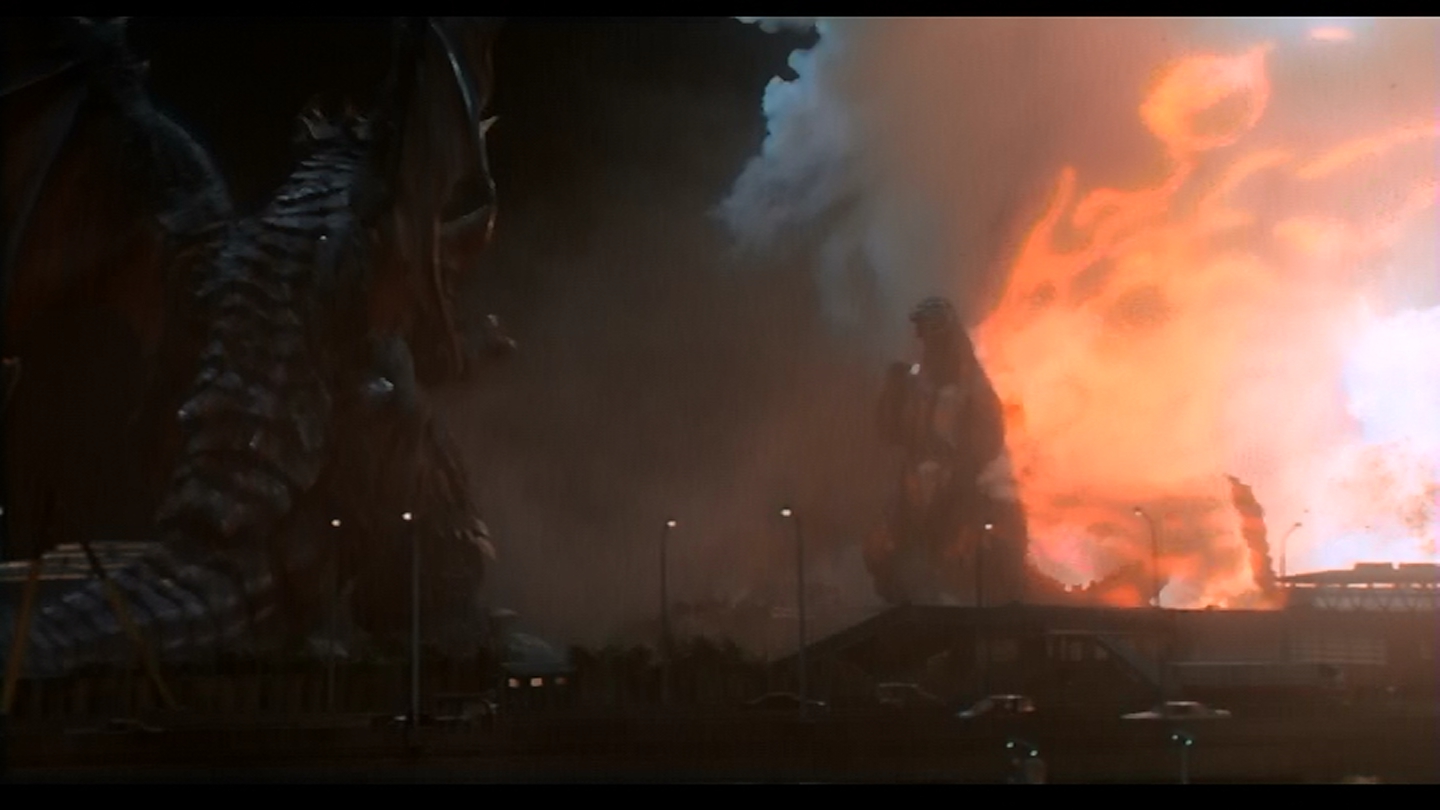
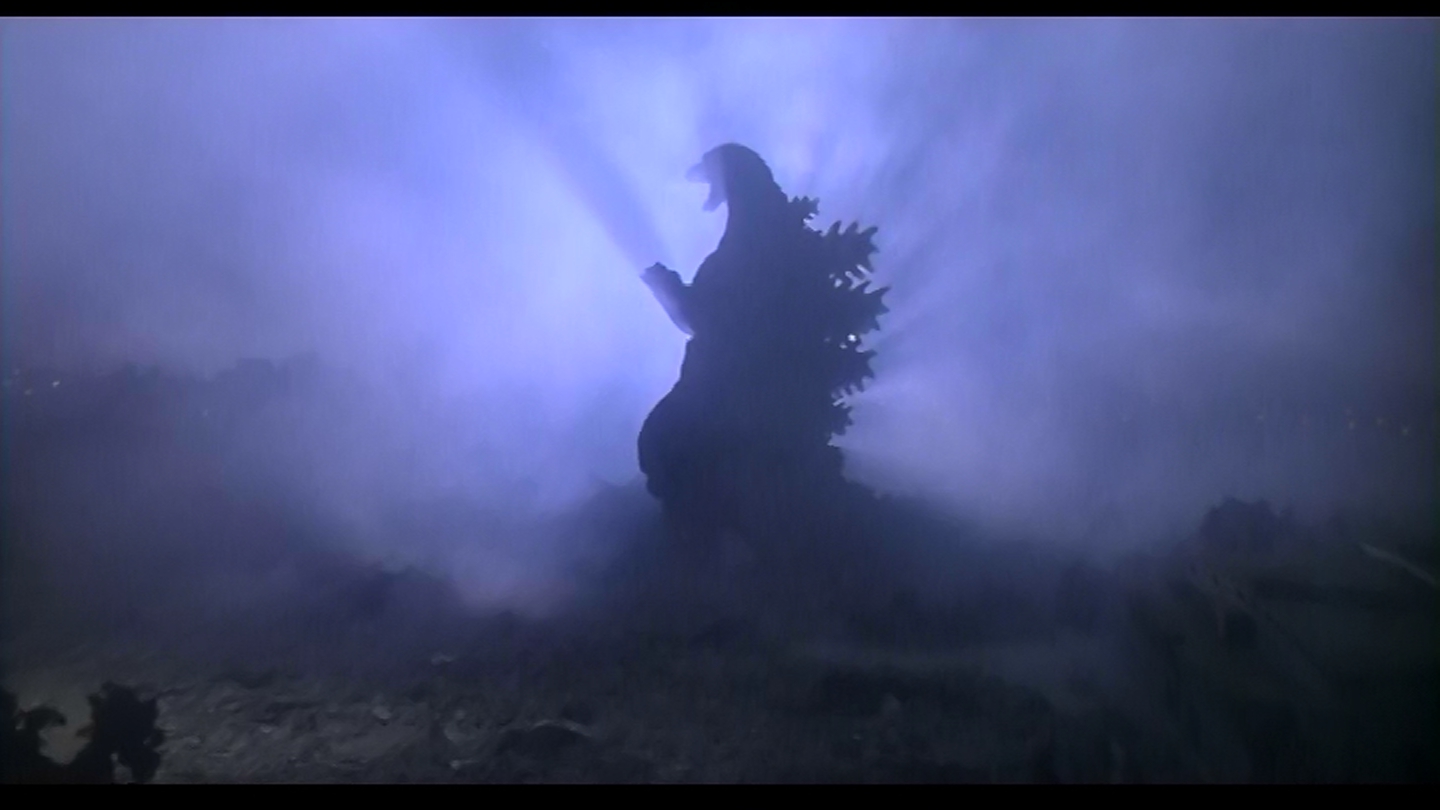
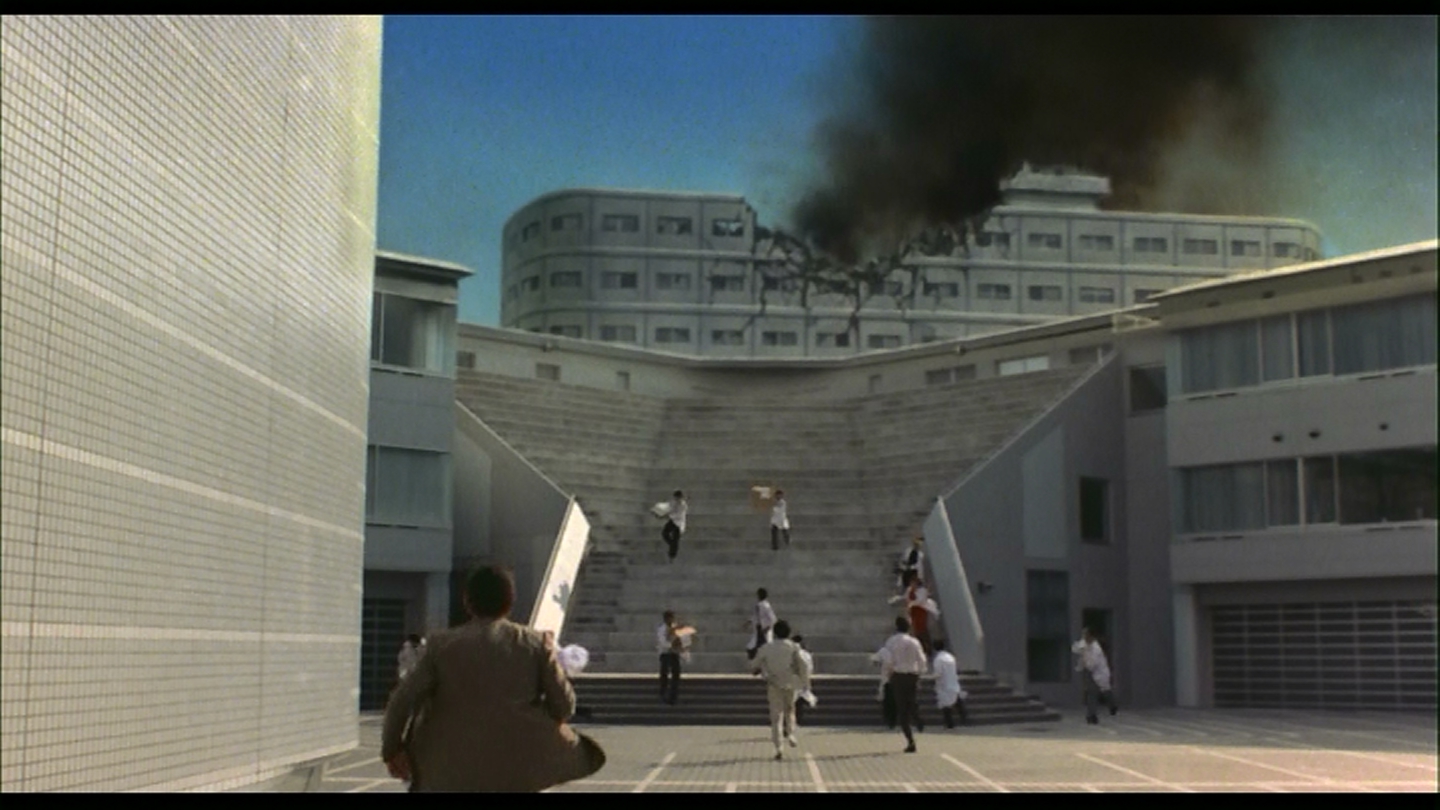
After surprisingly uninspiring fight, Godzilla destroys Megaguirus the way we want him to--a blast of his atomic heat ray. The Big G then goes on a rampage across Tokyo, heading for the Science Institute. It turns out Government minister/industrialist kept the plasma energy secret, even after it was banned in 1996. They fire the Dimension Tide again, and Godzilla seems to get annihilated by the black hole, and Tokyo has a gigantic crater in its center. Which is kind of odd. Godzilla had headed straight for one building to destroy the Plasma generator. Clearly the Dimensional Tide leveled a lot more than Godzilla already had, and possibly more than he would have. So the military, as with Godzilla 1998, causes more damage than Godzilla does.
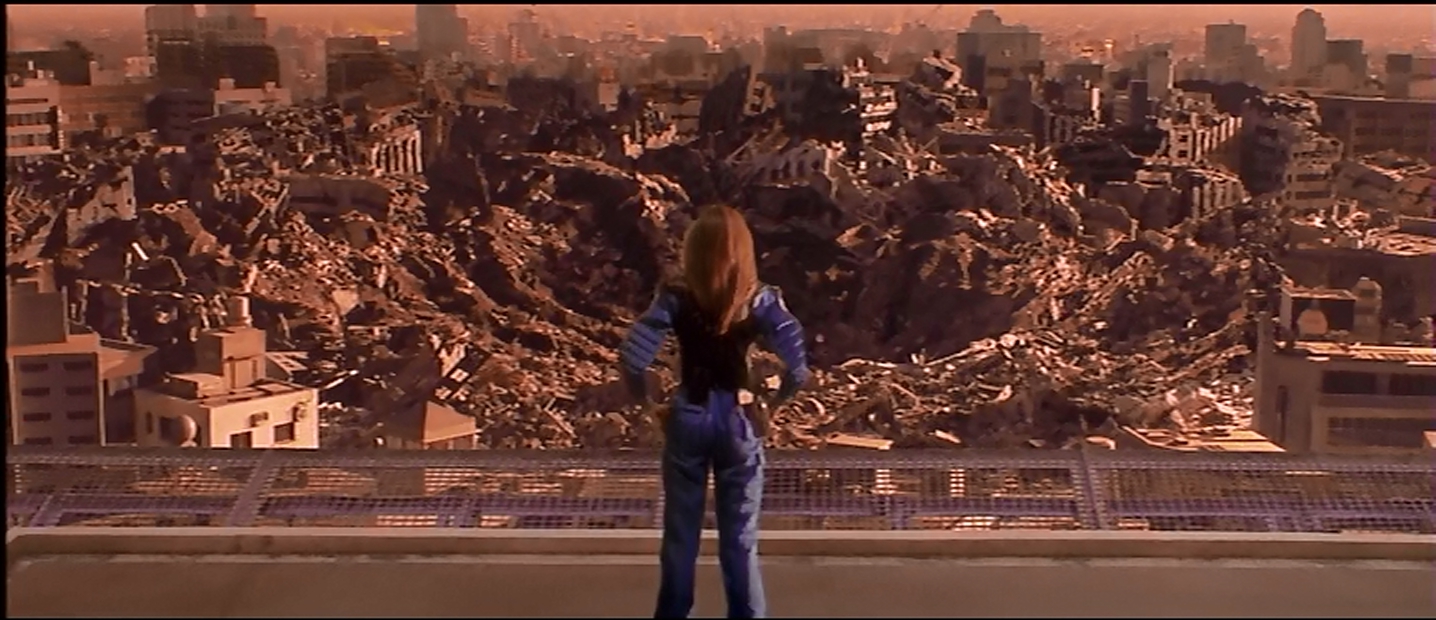
Again, this is primarily the military's fault. Godzilla was just after one building

Despite some interesting ideas, the film plods. Until the frenetic pointlessness of Godzilla: Final Wars, this will be a low point, financially and artistically, of the Millennium series. Often, when Godzilla's on screen, he's in close-up as if it were an actor, rather than far shots that make the monster feel large and powerful. There isn't a lot of Godzilla smashing stuff, and the fight with Megaguirus, as noted, is uninspired. These factors, combined with the uninteresting human plotline, lead to a weak film.
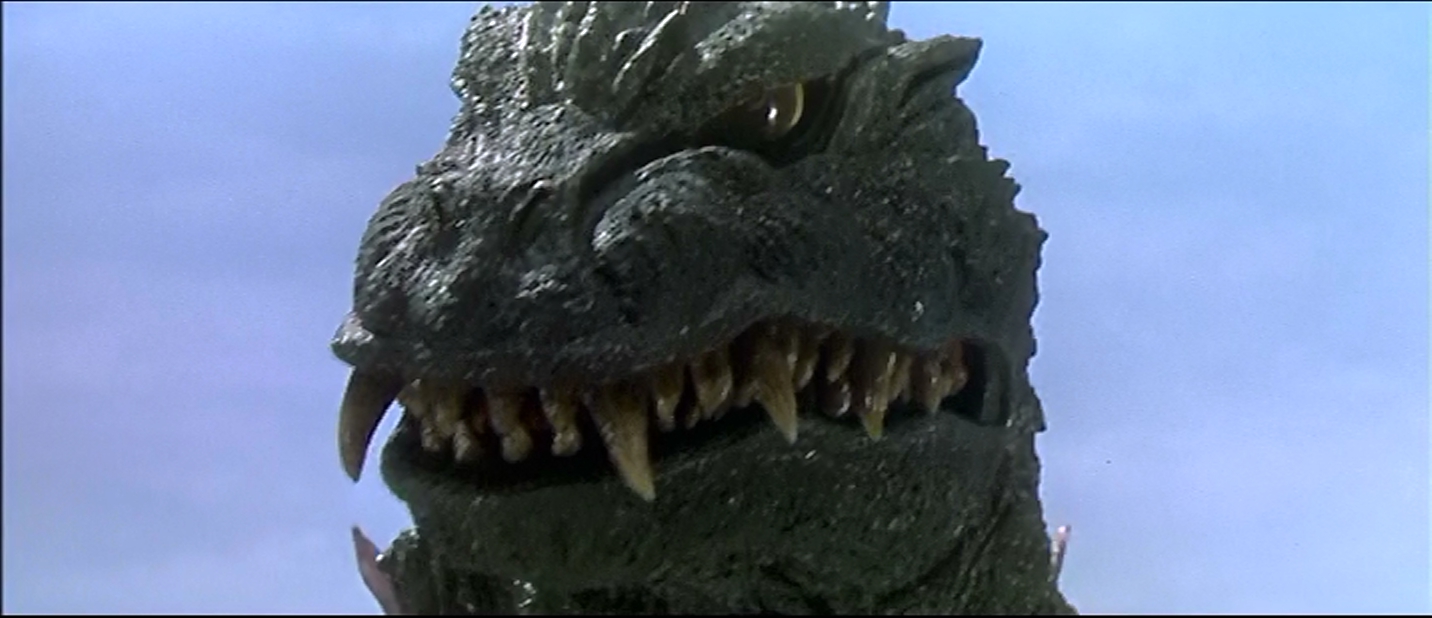
Kinda too close to Godzilla

It does have one enormously redeeming feature, however. Godzilla has long been in the shadow of Ikiru Ifukube's iconic music. Films of the franchise that have tried other styles and have usually come off as weak, or quickly dated. Michiru Ôshima is the first composer to successfully strike out on her own, creating a drum-heavy, ominous heart-beat like, followed by somber brass, a sufficiently resonant theme for Godzilla. While her music here is good, her scores for Godzilla vs Mechagodzilla III and Tokyo SOS are excellent.

Next up, if you can't beat them, recruit them.

Thursday, August 7, 2014

Killin' it Old School: Godzilla vs Destoroyah

In many ways, this is the 40th anniversary film that Godzilla vs Space Godzilla was not. Momoko Kôchi returns as Emiko Yamane from the original Godzilla. Destoroyah is born of the Oxygen Destroyer from that film. Akira Ifukube has returned one last time to score the film. In many ways, this film is the acknowledgment of the end of an era. Which it was. Toho was about to turning the franchise over to Tri-Star, for their big budget American version of the character. The death of Godzilla here is in preparation for his metamorphosis into something else.

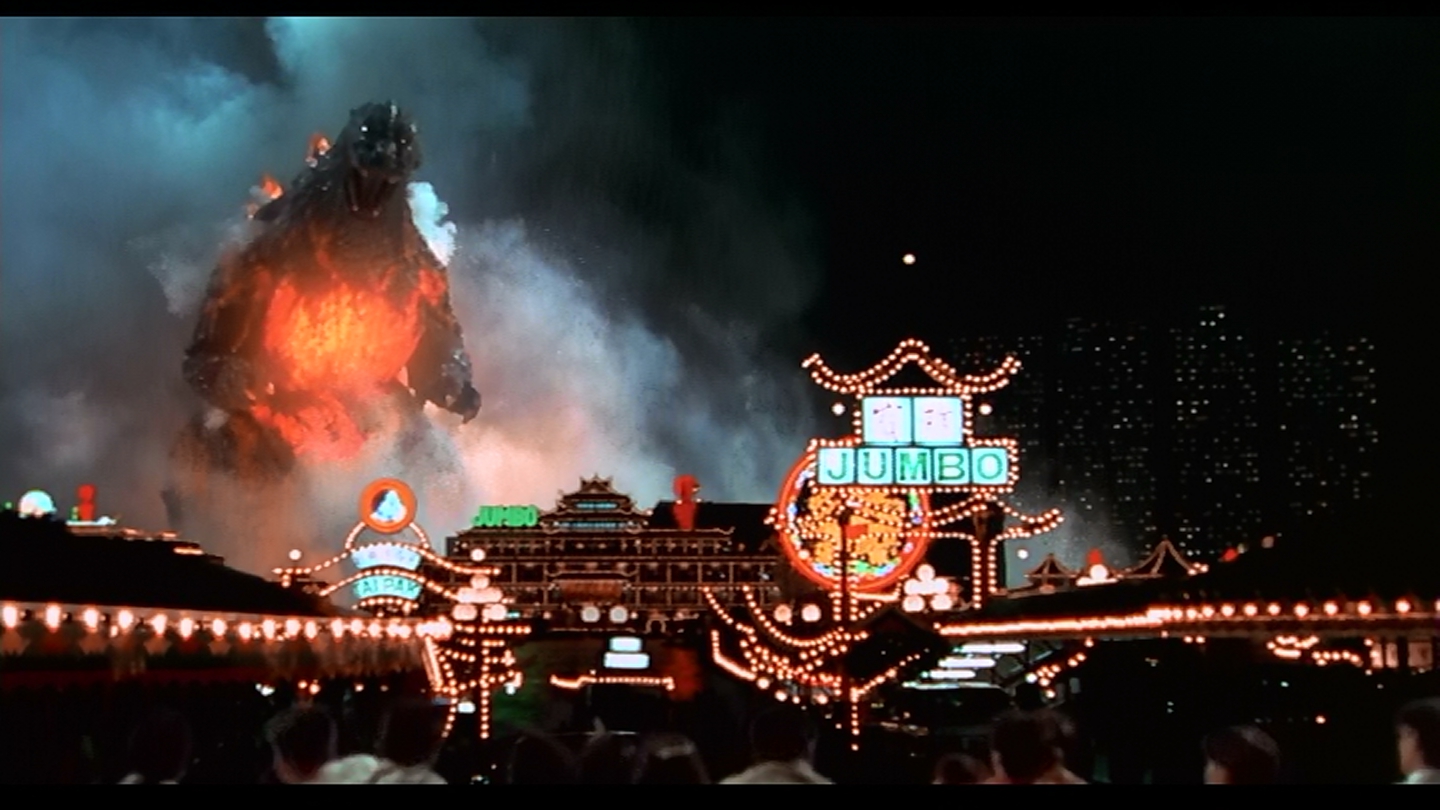
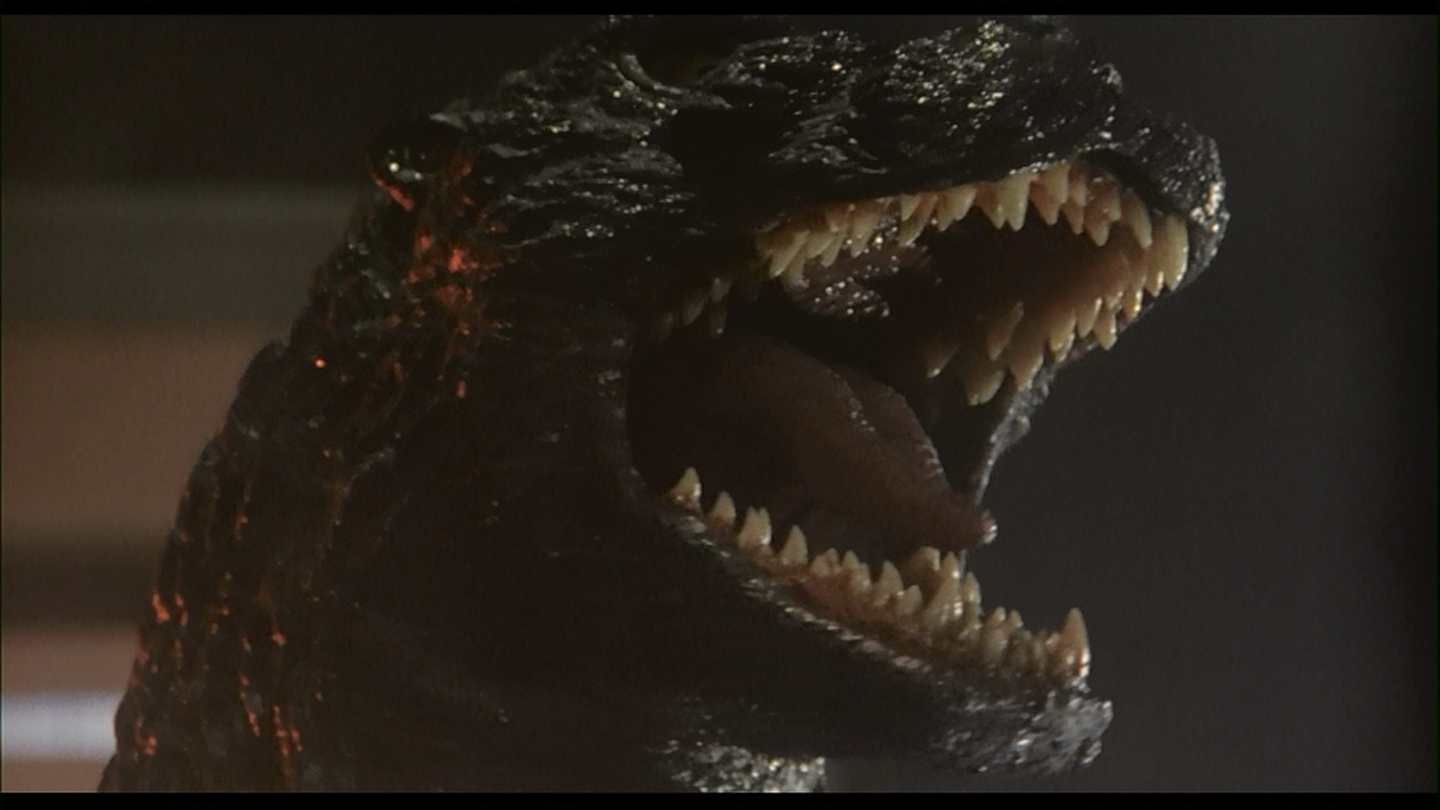
Even at first glance, the audience knows this film will be different. Godzilla shows up right away, two and a half minutes into the film, and he's glowing and smoking. There's a mass of glowing, pulsing red tissue on Godzilla's chest, and his spines now glow all the time. Something has changed, Godzilla looks more threatening than ever.

Godzilla gets heartburn, and everyone is screwed

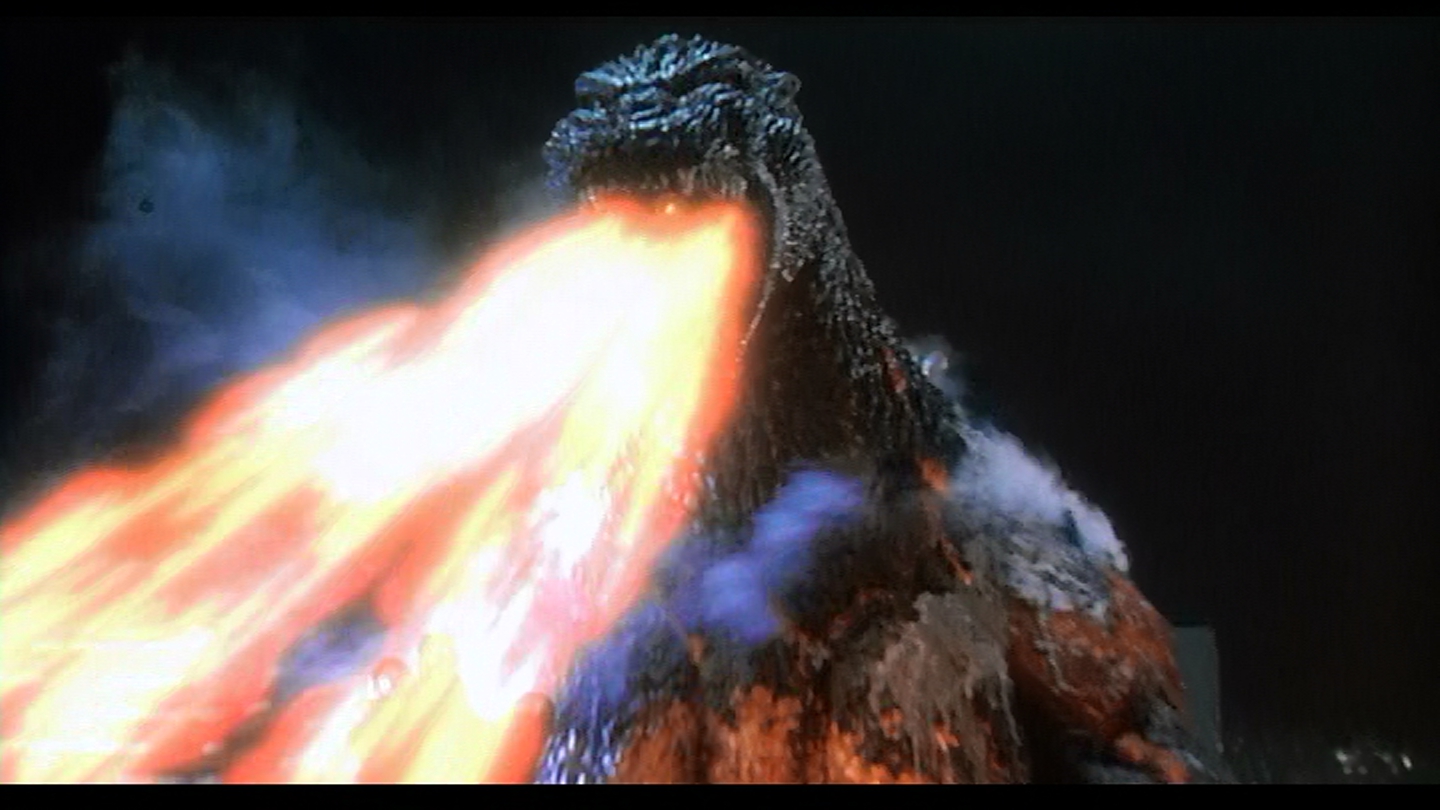
Godzilla's heat ray has not changed permanently to the more powerful red spiral, as acquired when resurrected by Rodan in Godzilla vs Mechagodzilla II. Godzilla used the red ray at the climax of the fight against Space Godzilla. In the latter film, it appeared to be an ability to be used at will. Now it seems to be the default.

Godzilla's upgrades heat ray

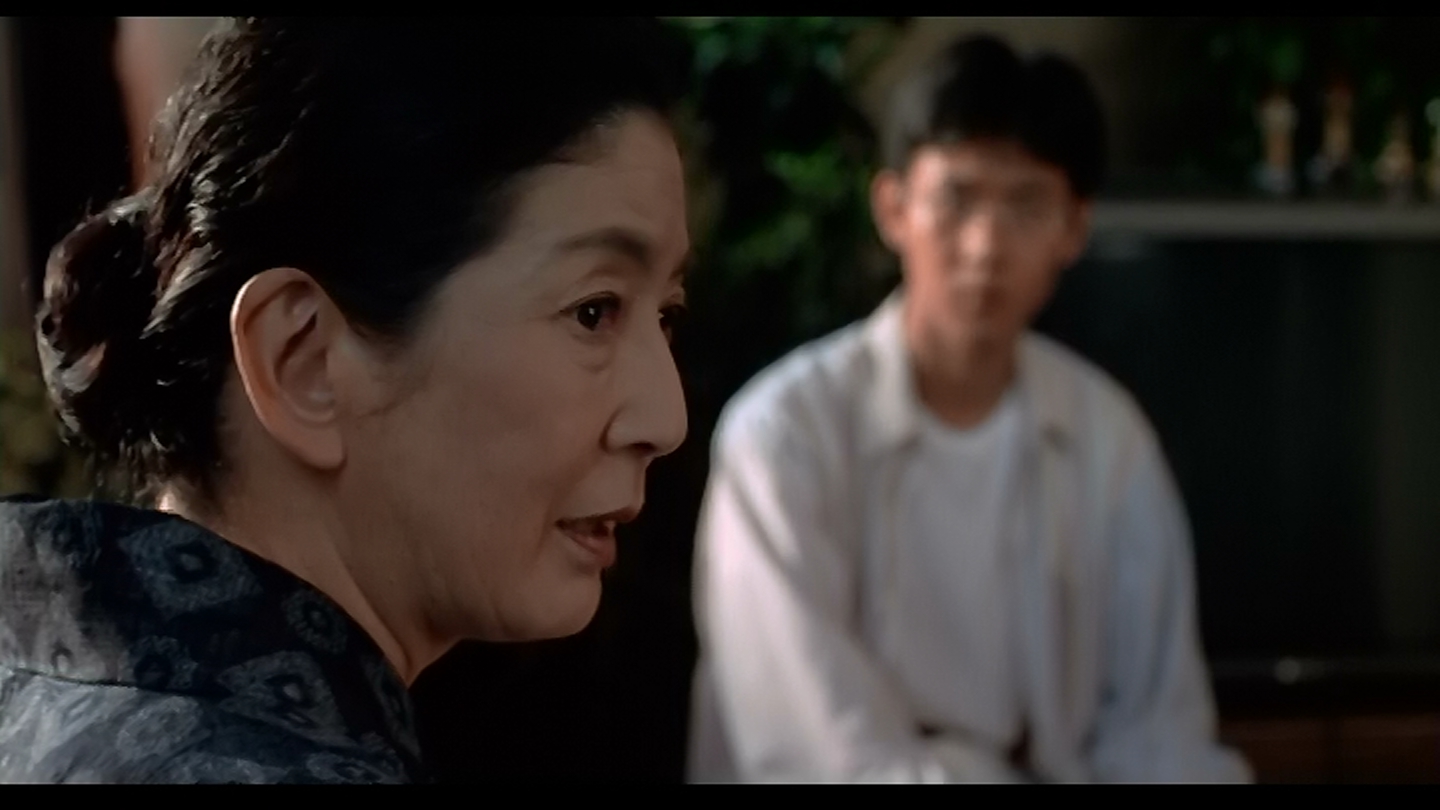
Our protagonists, Yukari Yamane and Kenichi Yamane are the children of Dr. Yamane's adopted son, tying us firmly to the original Godzilla in a way that no film has done previously, through the human characters. We finally get to learn about the aftermath of the film, from the human perspective, and it wasn't a happy ending. Emiko never did marry the handsome Ogata. She has become the Yamane childrens' aunt, too traumatized to marry, and still wakes up from terrible dreams of Serizawa's suicide.

Emiko Yamane, played with strength by Momoko Kôchi.

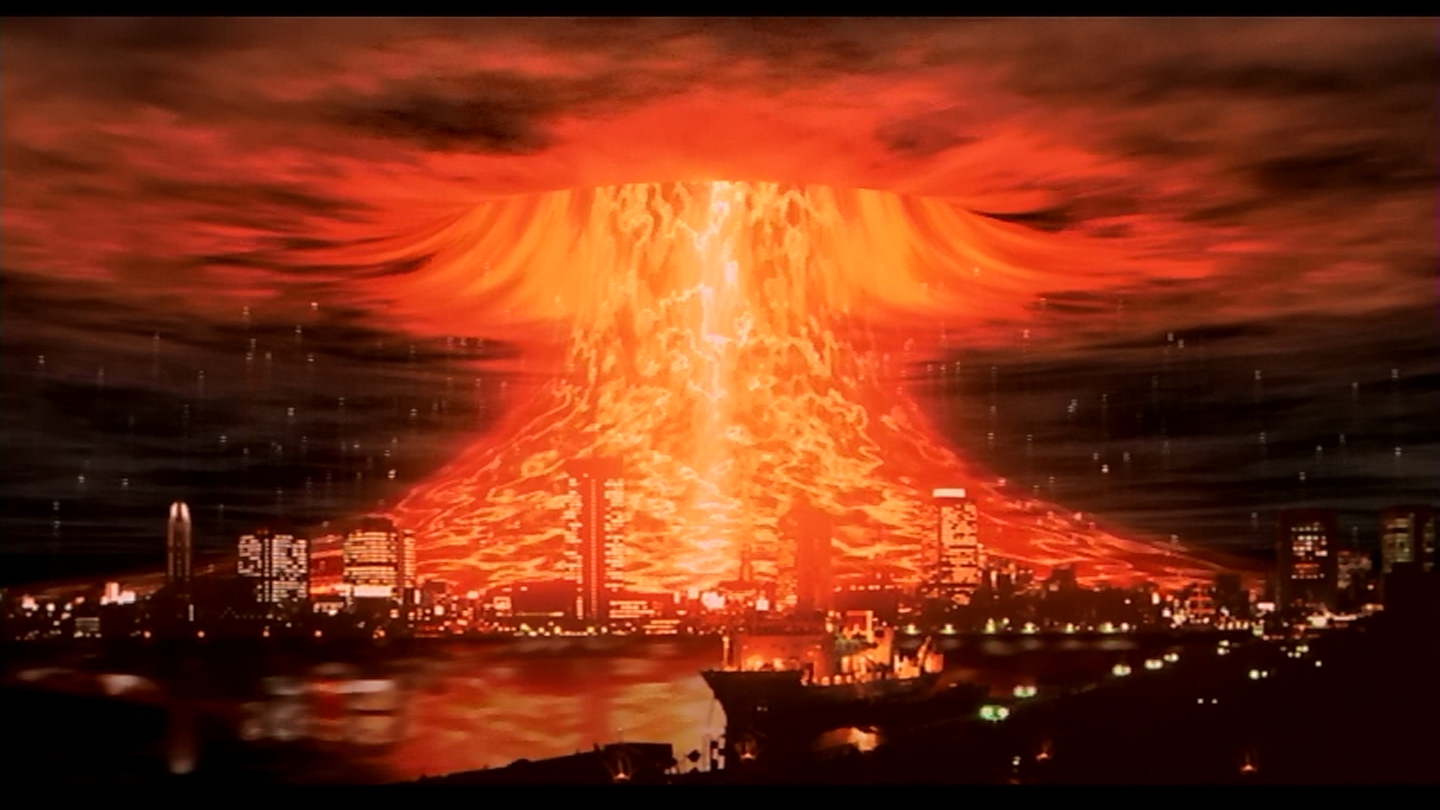
It's been some time since Godzilla stomped on a city that wasn't Japanese (probably Destroy All Monsters). This foreshadows Godzilla's identity as a potential global disaster, not just something Japan has to deal with, since the licence for the character was about to be shipped overseas. This is the first film in the Heisei series, and possibly since the first Godzilla vs Mothra, that looks at Godzilla's identity as nuclear metaphor. Sure, Godzilla has eaten nuclear reactors, but the link to the bombings in Hiroshima and Nagasaki: this film was released in the fiftieth anniversary of the bombings. This gives the film, for me, a more serious tone, and a sense of tragedy, at least when the dubbing doesn't get in the way. Godzilla's roar over the title credits is from the original film, a more raw sound than the audience is used to in the Heisei series.

the King of the Monsters becomes the King of Explosions.

Like Hedorah, Destoroyah has multiple forms. It begins as a swarm of car-sized critters. They have a flared head and a long neck, on top of a eight-legged crab-like body. The color scheme, charcoal with red highlights, is very reiminscent of Battra. Part of what gives it extra menace is that we don't know its powers. At the end of the initial confrontation, one of the creatures is hit bvy the flamethrower, and it just burns. It doesn't scream or thrash, but bits of burining material drip off it, and the audience is shown the flames touching the ground. What does the thing know something we don't? This sort of unanswered question is quite rare in kaiju film.

Do you have time to hear about your lord and destroyer Destoroyah?

Remember when I said that many of the Heisei films make homage to a Western blockbuster? This time it's James Cameron's Aliens. When the military goes in to investigate the initial outbreak of multiple car-sized Destoroyahs, the aurience is shown a tankless flamethrower that is supported by a boar belt, like Aliens' smart guns. That also have the motion detector. Later, the mini Destoroyahs deploy that second set of inner jaws that made the Aliens so menacing.

HR Geiger would be proud. If he got paid.

Second-stage Destoroyah looks much like the smaller versions, crab-like lower body, long neck, and a massive, shielded head on top. But it's the size of a building. Its legs are longer, and there appear to be some upper limbs. They mostly just wave around, however.

the King of the Monsters becomes the King of Explosions.

Third-stage Destoroyah has wings, again reminiscent of Herodah's recapitulation of phylogeny. It doesn't use this form to fight, but to move from one location to another.

Fly away, little bird.

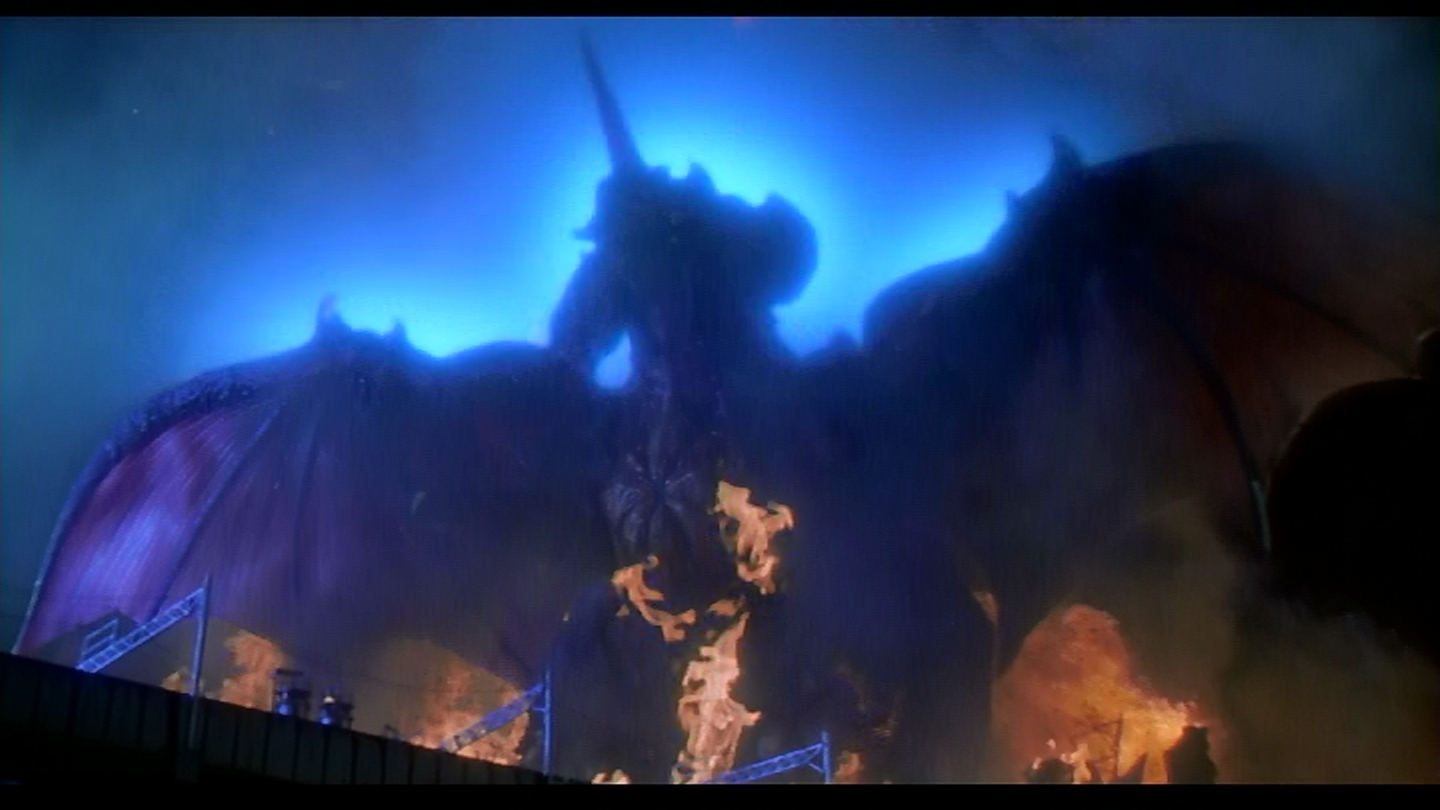
Fourth-stare Destoroyah is a massive, perfect match for overpowered Godzilla. Finally walking erect, and also with wings, it looks the most demonic of all Godzilla's foes.

The Mountain that walks like a man.

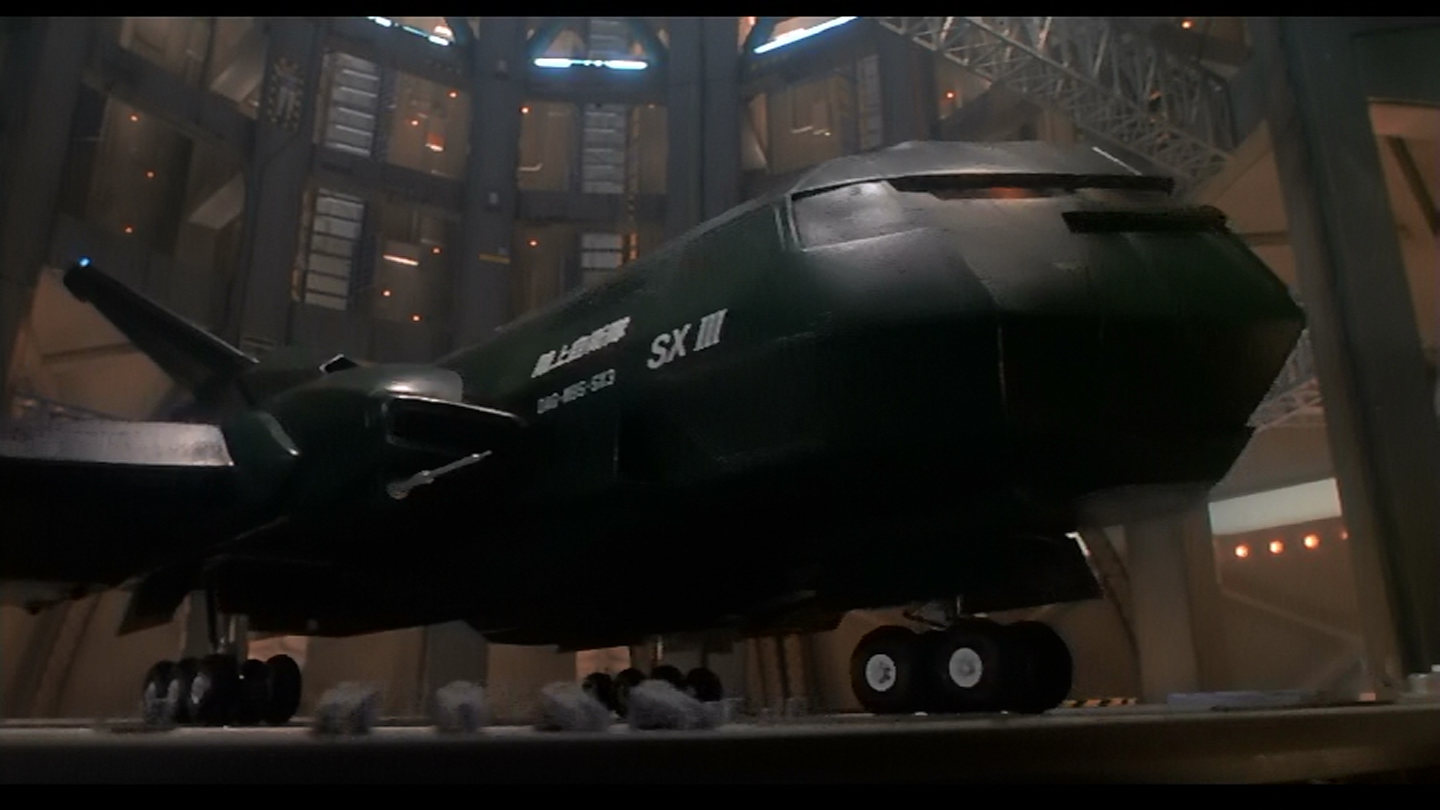
The Super X III doesn't look like the previous iterations. it has wings, for one. The design seems to have been influenced by the F-1217 Nighthawk, as it's black and blocky, with a pair of tail fins. It is once again equipped with cadmium missiles, which we haven't seen since The Return of Godzilla. All the weapons on the Super X III are low-temperature, so they will help cool Godzilla down. Despite this, the victory is Phyrric. Even the Super X III can't keep Godzilla on ice forever.

Stealthy. Or maybe just blocky.

The next piece of the plot is Godzilla Junior. It has lost the cuteness it had of Godzilla vs Space Godzilla, and it's not missed. Junior appears to be more adolescent, looking angular, like a smaller, slimmer version of Godzilla senior. Junior is also green, which ins interesting, since Godzilla is often presented in American promotional material as green, but has always been a charcoal grey. Initially, Junior's role is to lead Godzilla to Destoroyah, but it serves several ends. Junior being on the receiving end of a curbstomp battle gives the audience a sympathetic note not usually found in Godzilla films as Godzilla mourns its offspring.

A nice walk on the beat with Godzilla Jr.

In the climactic fight, Junior is gravely inuured, and the movie makes this touching. Between the Afukube music, and reaction of Miki Sagusa, who has come to sympathize with Godzilla and family, the scene has an emotional impact unlike most other kaiju films. It's reinforced when Godzilla itself comes to look at its fallen offspring. When Junior closes its eyes, Godzilla thrashes around in inchoate rage, and I feel its loss. For orchestrating this genuinely touching moment with a creature that has been primarily an engine of destruction, this film stands out among the Toho ouvre.

Godzilla has a tender moment. Yeah, read that again.

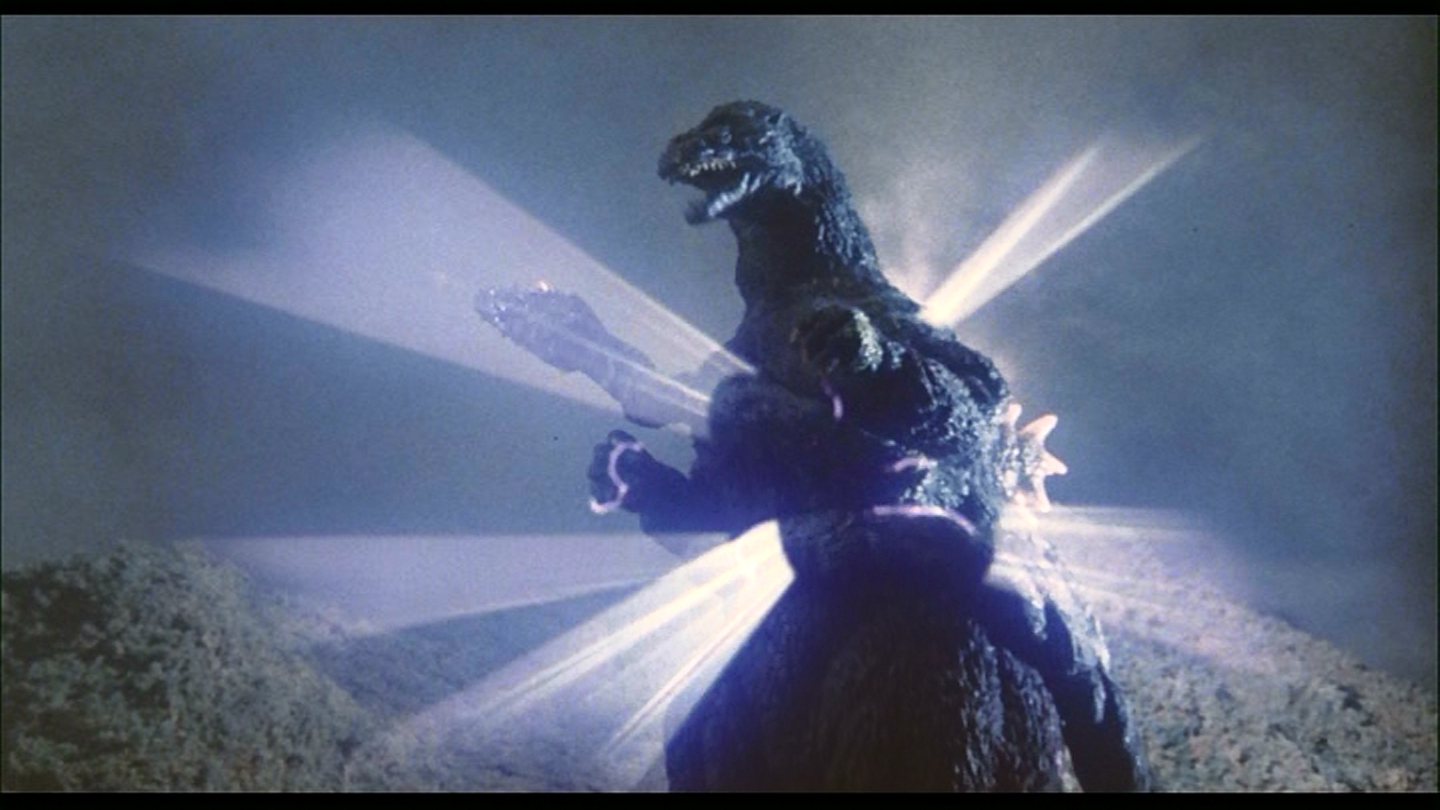
Godzilla's temperature continues to rise, and the special effects crew has done an excellent job of showing us how much this is a problem. Godzilla's spines begin to melt. It begins throwing off waves of light from its back.

We're screwed, aren't we?

Destoroyah is rather summarily dispatched, leaving us with the final problem of Godzilla's impending meltdown. Again, the effects crew, combined with Ifukube's music, convey the tragedy that is unfolding. The sounds of the missiles and lasers are muted, and we are left with the beautiful and sad music as Godzilla's flesh begins to melt off its bones. Godzilla's death theme is a combination of the original "Prayer for Peace" from the original film, as well as a light rework of the Godzilla march, and it's beautiful. The scene is not a triumph for humanity, but the sad passing of a creature the audience has admired, like a great warrior.

And now, it walks like a man.

This sadness is mitigated by the re-emergence of Godzilla Junior, not a full adult, absorbing the old Godzilla's radiation and preventing Tokyo from becoming a permanent ghost city. After all, what is Godzilla without Tokyo to destroy?

Godzilla Junior all grown up.

Godzilla vs Destoroyah is a favorite of mine, because of the careful handling of the near-death of Godzilla Junior. The editing in the final fight is very much off, Destoroyah drops from the sky and dies with little acknowledgment. And ultuiamtely, monster fights are passable, but the first time since Godzilla Strikes Again, the monster fight isn't the point. Getting emotionally involved with Godzilla and Junior is. It's not a particularly well put-together film, and I know that part of that is the dubbing, which occasionally strays very far from the original script. Looking forward, again, to the subtitled Blu-Ray. But the impac of the film rests in the last half an hour, and I'm willing to forgive a multitude of sins for that.

Next up, a miracle. Someone takes Gamera seriously.

Thursday, June 26, 2014

Terrorism, Espionage, Godzilla! Godzilla vs Biollante

The Return of Godzilla sold enough tickets to warrant a sequel, but Toho was no longer the powerhouse it had been. The studi that had produced forty films in the sixties, made half as many films in the sixties, and only seventeen films in the eighties, two of them animated co-productions with Studio Ghibli. The studio would rebound in the next decades, producing progressively more and more films, but Toho was not in top financial shape. So the sequel to The Return of Godzilla took some time to produce.

Traditional Godzilla violence

When Godzilla vs Biollante appeared in 1989, there is a brief remember when sequence, so the viewer can ermember whan happened in the previous film, since the two are closely connected. Mostly, this consists of special effects shots of Godzilla and the Super X.

That said, this film stands quite apart from the Showa era films, and Ishiro Honda's idealism. Honda, a survivor of World War Two, saw science as the potential savior of humanity, and that an unspoken international brotherhood exised between all scientists. Nationalism was an ill concept in a country that had lost a war at great cost. The script, a contest winner heavily revised by director Kazuki Ohmori, shows both patriotism and a morally grey approach to science. This change of perspective reflects the times in which the film and script were created. As with the next film, Godzilla vs King Ghidorah, non-Japanese characters are always self-interested, if not outright evil, and Japan develops the military might to not just slow Godzilla down, but appears to have a shot at taking the Big Guy down.

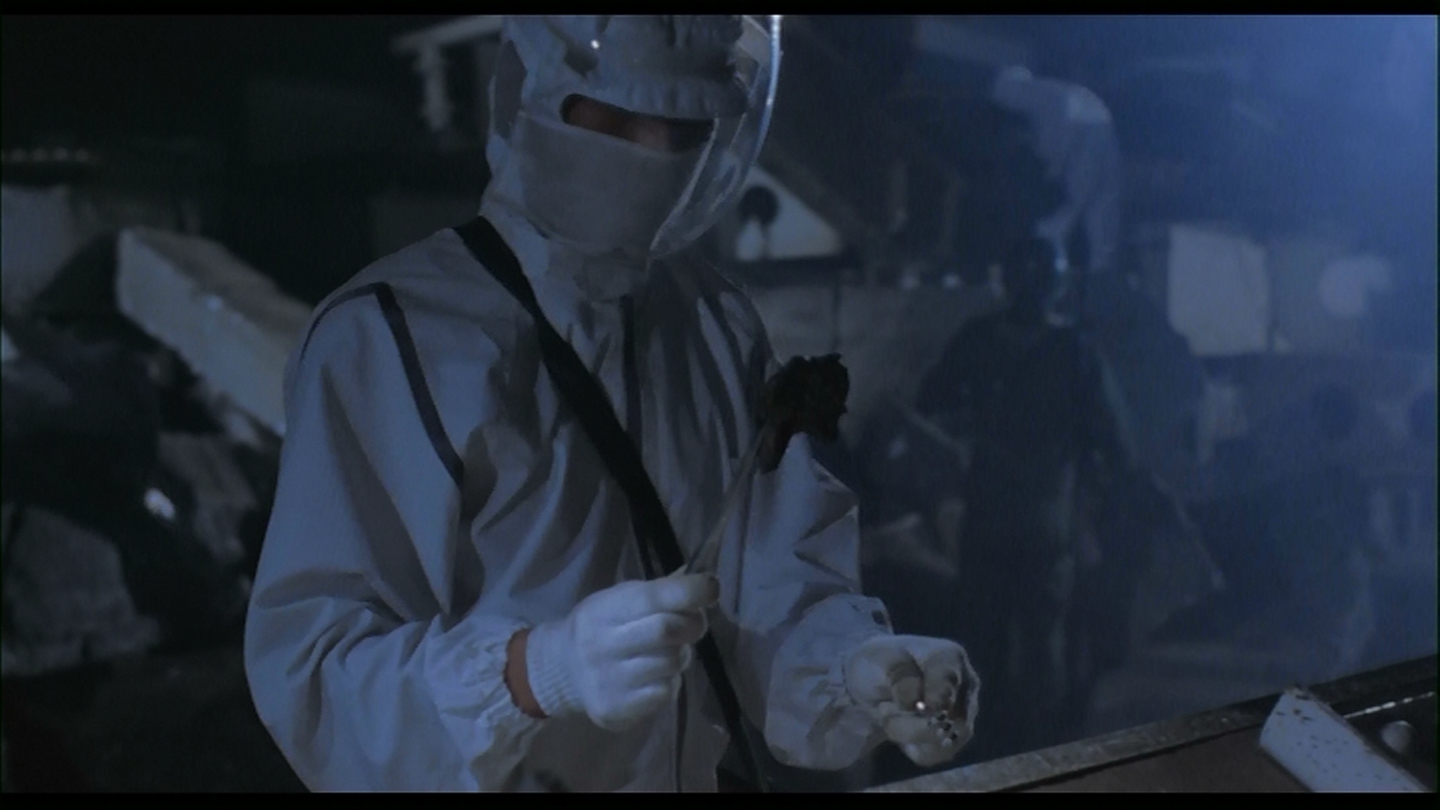
After the introduction, we watch the clean-up of Japan in the wake of Godzilla's 1984 attack. In the clean-up, some of Godzilla's cells are recovered. The discoverers are gunned down by Australians, or possibly Americans who are after the same thing. After a chase, these men are gunned down by the Agent, a superspy who will be intimately involved in the rest of the film. An agent for the middle-eastern country of Saradia, his presence and actions lend a James Bond feel to the film. And where Godzilla has followed James Bond before, in Godzilla vs Mechagodzilla, the conflict here is more grim, and there are a lot more bodies.

Hm. Godzilla bits.

Saradia is where the requisite scientist, Dr. Shiragami, works, and his daughter is in the lab when it is blown up, later revealed thew actions of the American company BioMajor, which plans to monopolize genetic research. This gives Shiragami the impetus to retuern to Japan, and his grief leads him to include his daughter's remains in his genetic engineering experiments, mingling her, in some off-screen way, with her beloved roses. The film also introduces us to Miki Sagusa, who will be a series regular through Godzilla vs Destroyah. As a psychic, her role varies greatly, but she is most demonstrably useful here. Importantly, she is a woman present on her own merits. She is not someone's daughter or girlfriend.

Traditional Godzilla violence

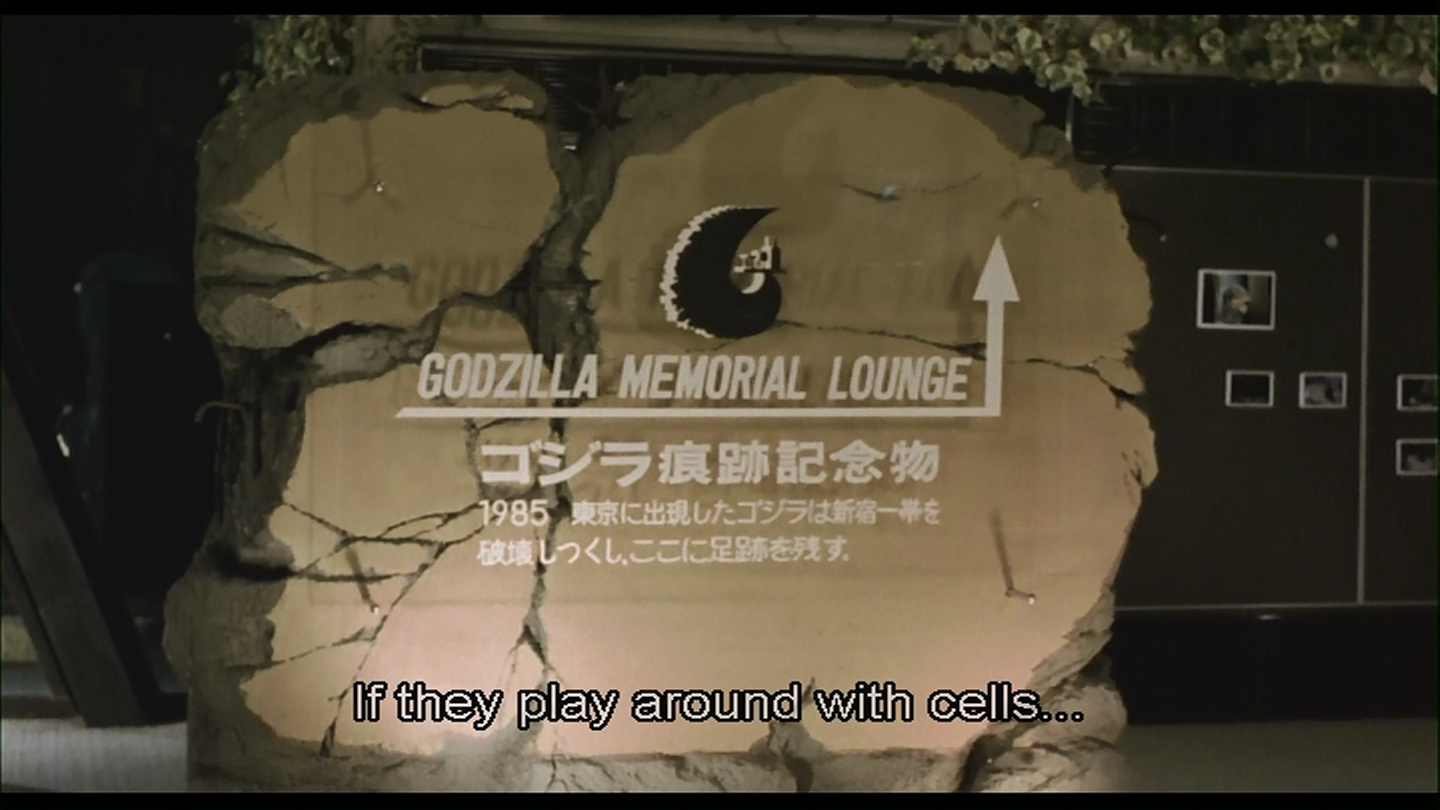
And although the tone of the film is usually grim, there are touches of subtle humor. Research Scientist Kirishima and his girlfrind Asuka discuss their future in the Godzilla Memorial Lounge, which has a skylight the shape of Godzilla's footprint, apparently inflicted during the 1984 rampage. It even has a cute logo.

Because Godzilla lounge

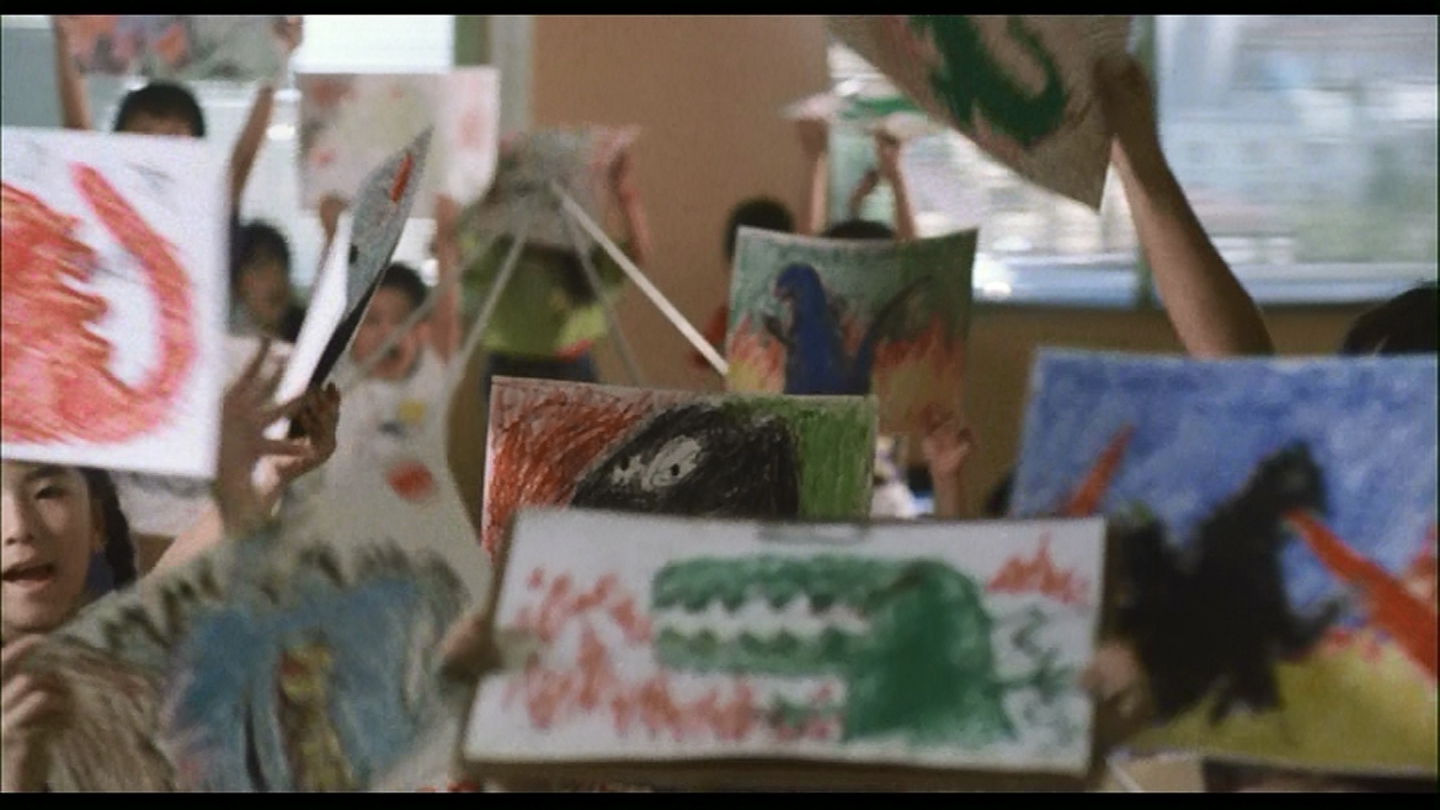
There's a beautiful and sinister reveal when a classtroom of psychic children reveal their drawings of a future to come, and all of them show a crayon drawing of Godzilla. Cue Ishiro Honda's ominous Godzilla march. It's interesting to note that several of the drawings are green, which Godzilla hadn't been at that time, except in American promotional materials.

Kids know what's coming

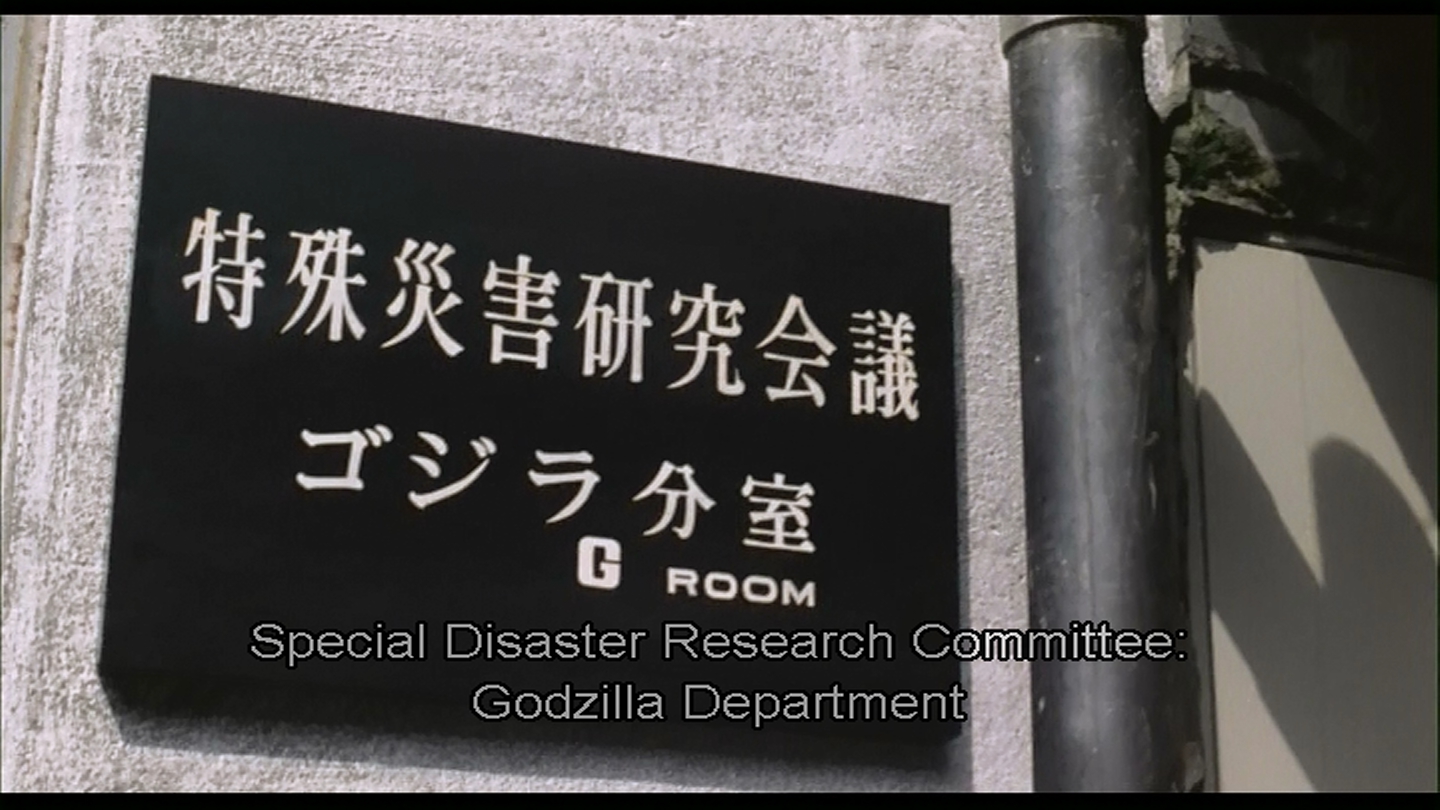
Japan has set up its first (of many) dedicated anti-Godzilla forces. Lt. Gondo is in charge, a bluff military guy who whishes, early on in the fil, that Godzilla would show up just so he will have something to do.

The first of many such agencies

The MacGuffin of the film is the Anti-Nuclear Bacteria, which consumes nuclear material. As with the previous film, Godilla is known to consume nuclear material, an attribute passed onto the MUTOs in the 2014 film. The American corporation is trying to get their hands on it, and the Agent is keeping them from doing so. because the bacteria have to be incubated in Godzilla's cells, this is the first film in the narrative trend that posits that the only thing that might be able to defeat Godzilla is another form of Godzilla. This film doubles down on the idea, as Biollante and the bacteria are made from G cells.

The Super X has been refitted, and nowe has a mirror, made of diamonds, to reflect Godzilla's heat ray. This is a more scienc-y version of King Seesar's energy-reflecting ability, again from Godzilla vs Mechagodzilla. Unlike the previous Super X, Super X-2 is an unmanned drone.

Super X-2 takes a pounding

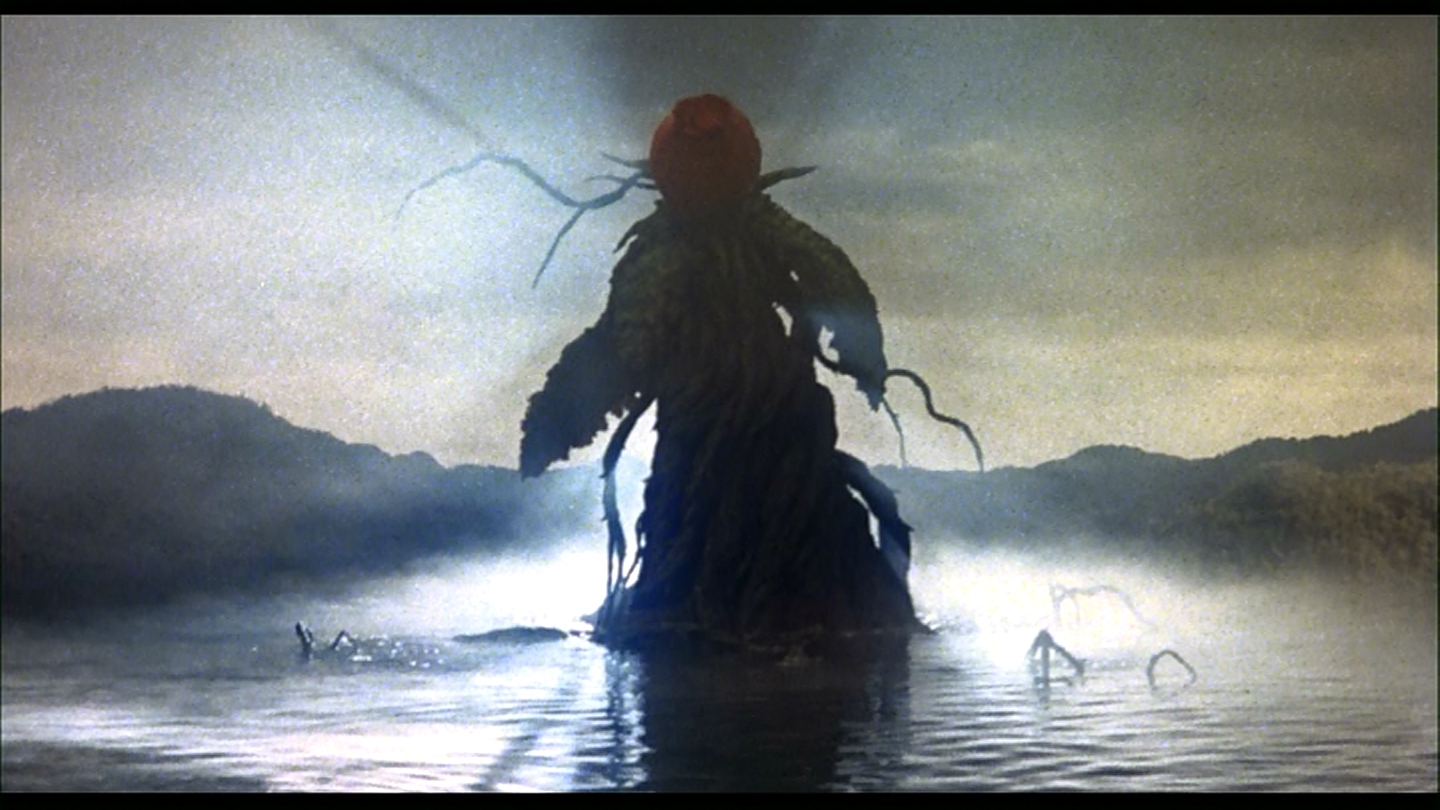
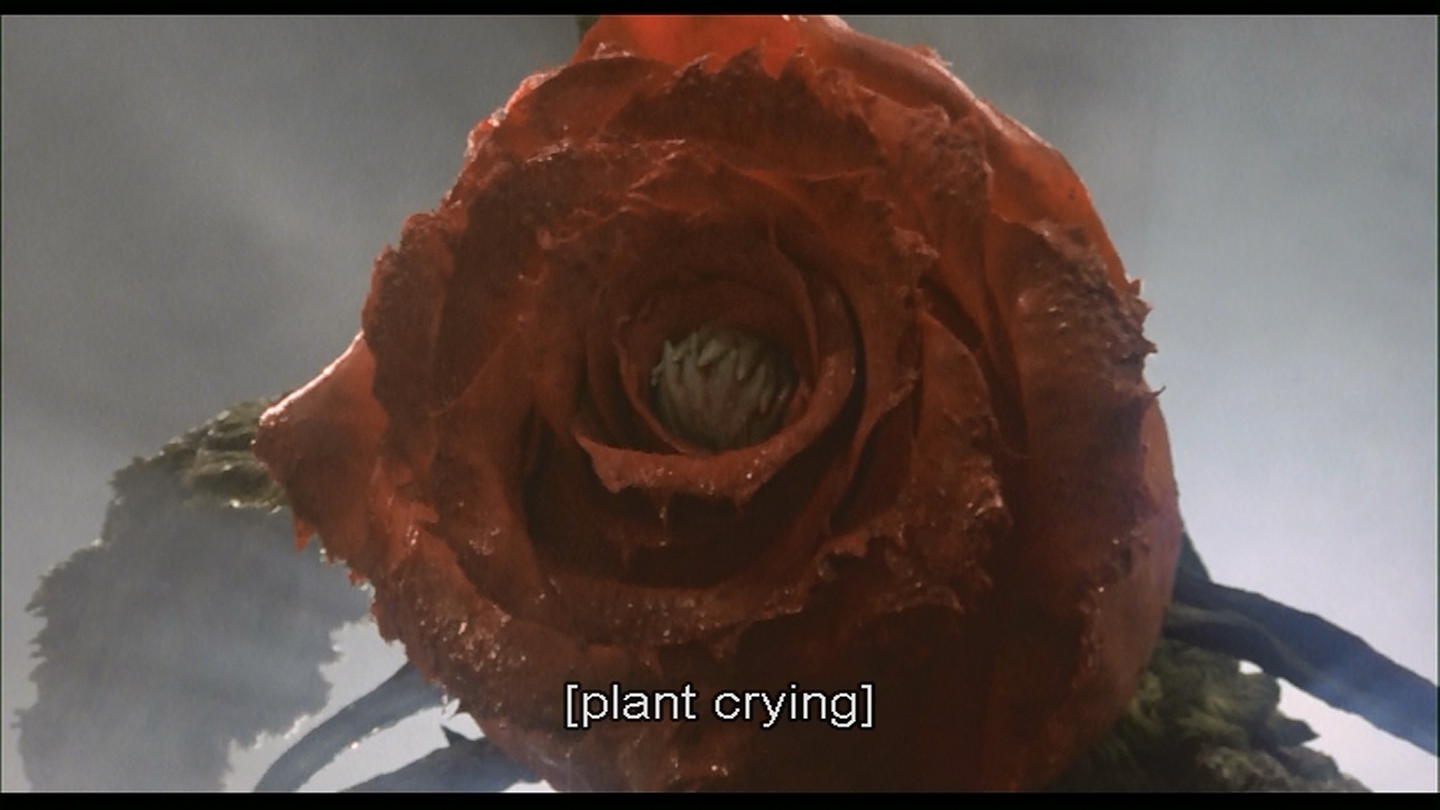
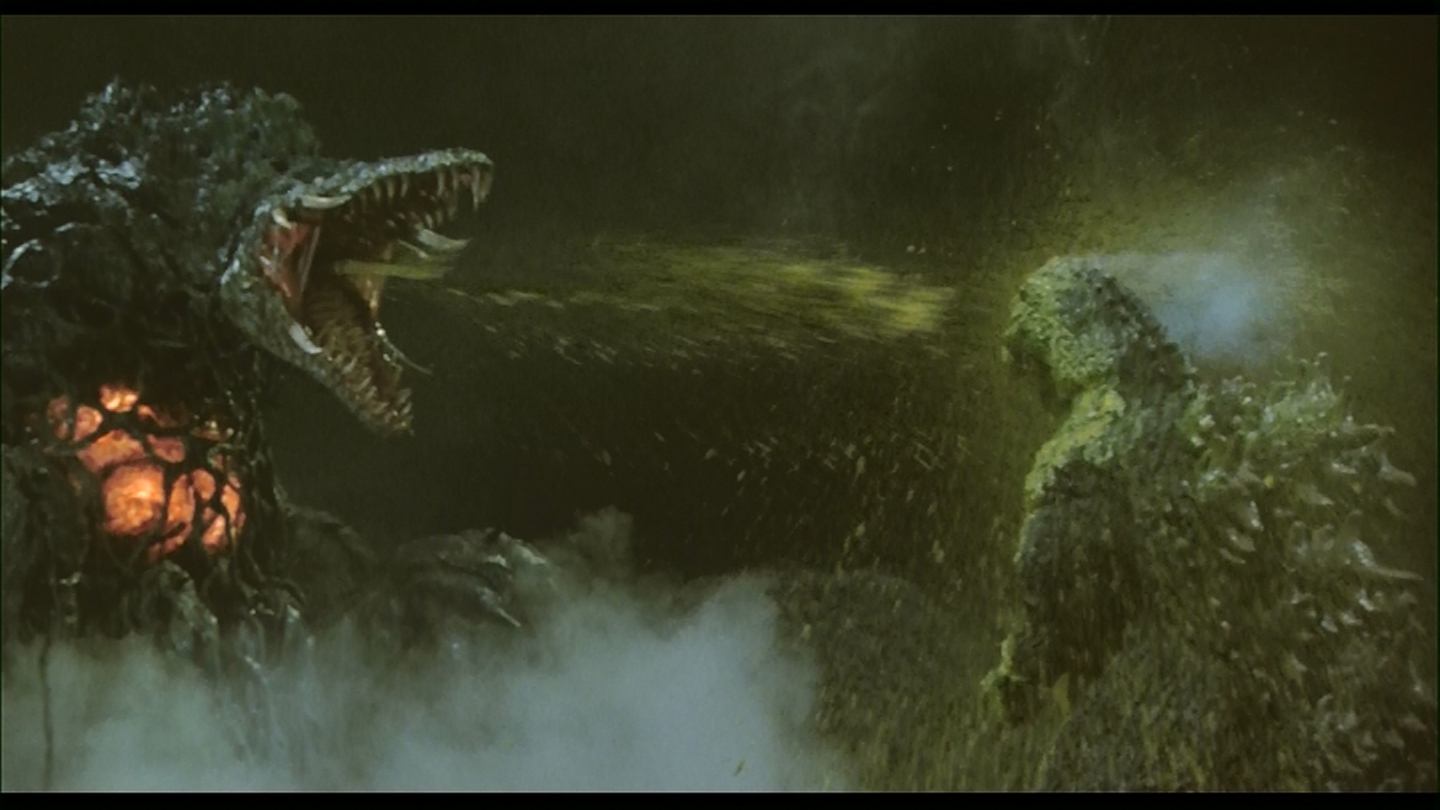
Like Hedorah, Biollante changes form. It begins as a gigantic rose, reminiscent of a triffid. The details are intriguing. Initially, it is rooted in a lake, its rose-petal head has a center of sharp teeth. It has its own breath weapon, an acidic spraty, again similar to Hedorah's.

A rose is a rose... until it's crossed with Godzilla

Little tiny teeth

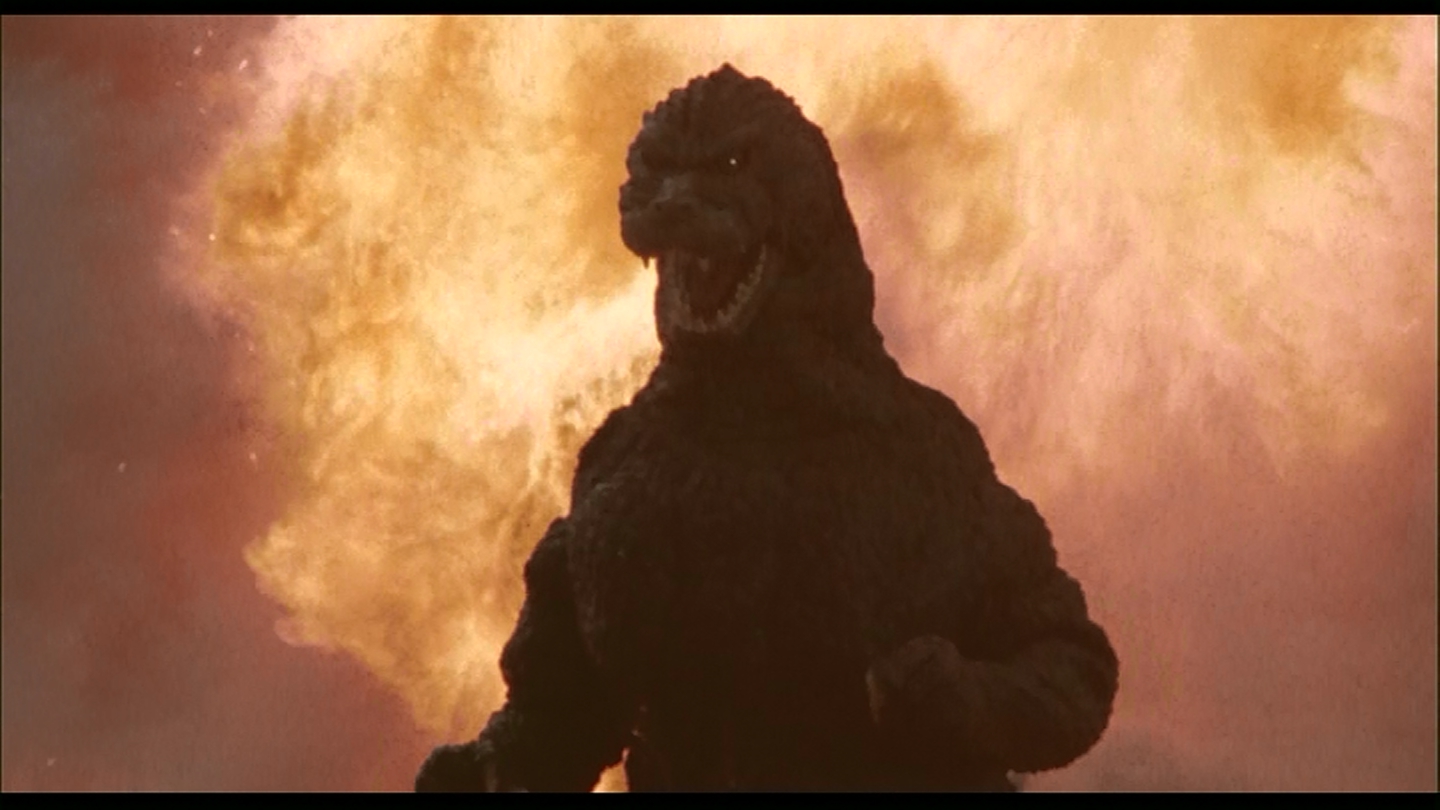
Forty minutes into the film, Godzilla emerges from Mount Mihara, where he fell four years ago. The suit is very good, one of my favorites. This is also the first to have practical lights in the spines.

No volcano can hold Godzilla

As in The Return of Godzilla, the confrontation with the Super X-2 actually manages to fend Godzilla off, rather than just slow him down while providing a show. We hear nothing about the cadmium missiles which were so effective four years ago, unfortuantely. And while Super X-2 manages to reflect a lot of Godzilla's heat ray, the miror develops a fault after taking a lot of abuse from Godzilla.

Flying Tank and Gigantic Monster

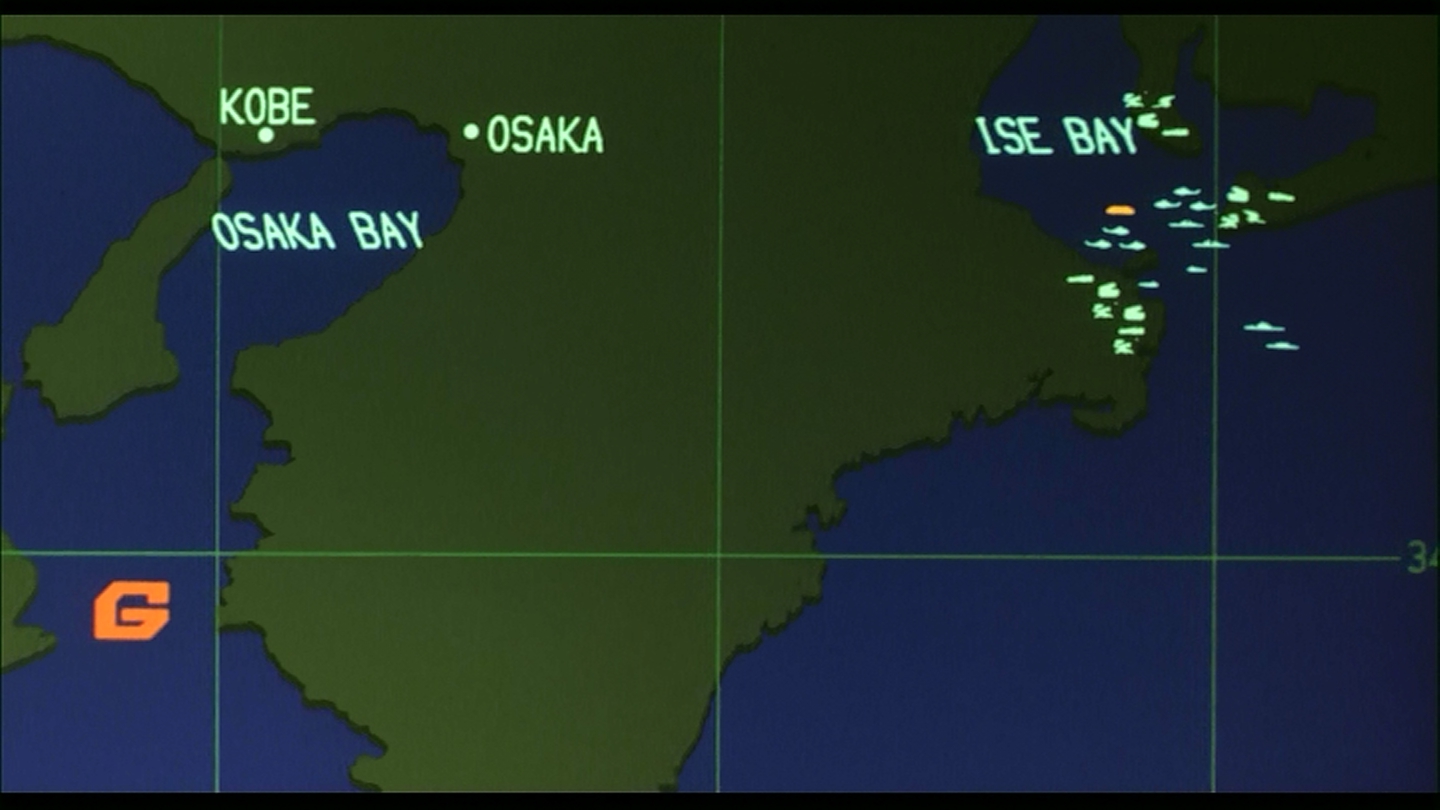
The military has a very differnt bearing, here. They make mistakes, they are presetned with setbacks, but they contonually reorganize, replan, and re-engage. In one embarassing error, the anti-Godzilla forces mass at Ise Bay, only to discover that Godzilla has emerged at Osaka Bay. Psychic Miki Sagusa is deployed, and manages to deflect Godzilla for a little while. Godzilla then stomps his way through Osaka. This is a stark contrast to the are way the military is portrayed in Godzilla vs Hedorah.

Wait, he's WHERE?

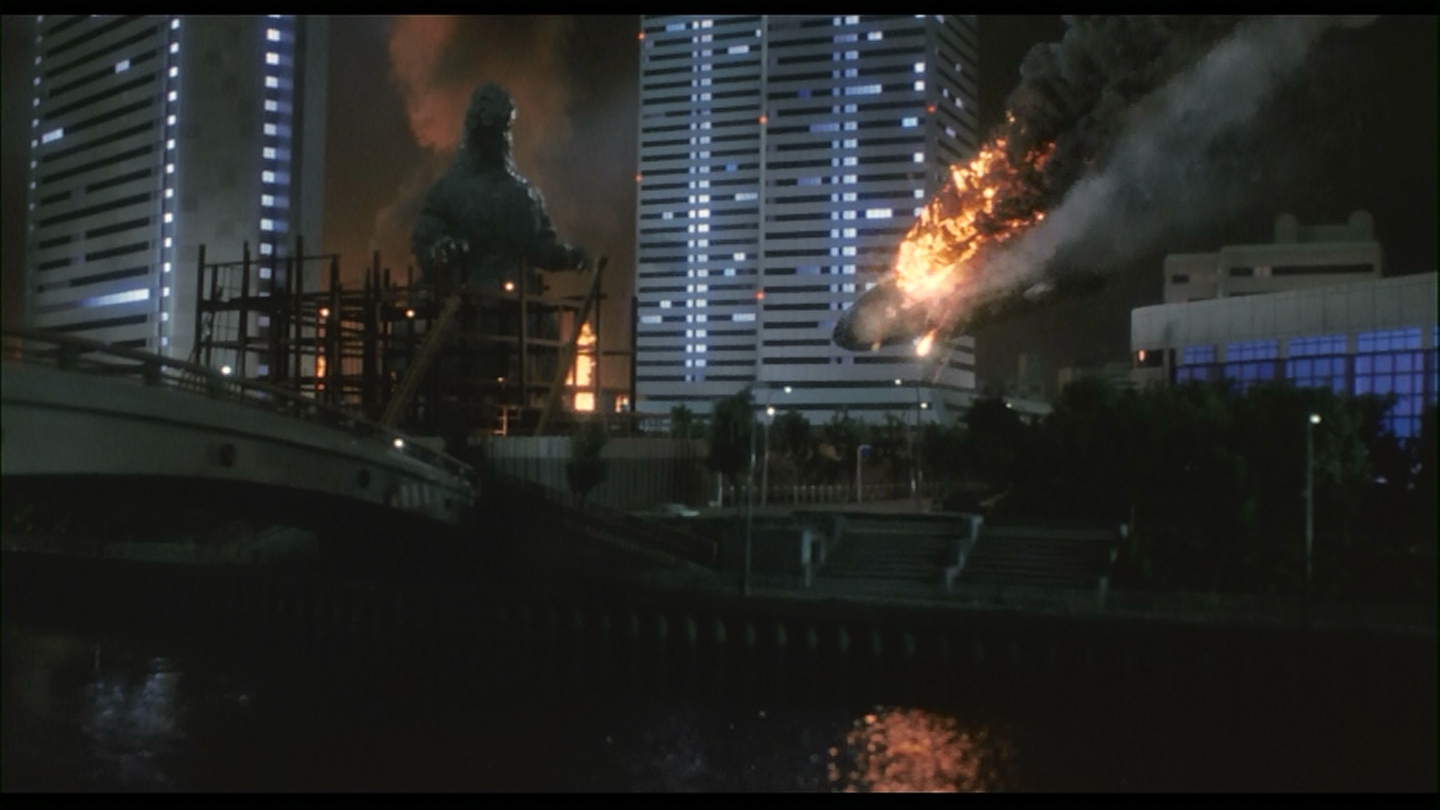
In the absence of the main military force, Super X-2 must engage Godzilla while five men with anti-nuclear bacteria set up. This does not go well for Super X-2, which cannot stand up to the repeated punishment of Godzilla's heat ray. So while the military can go toe-to-toe with Godzilla now, they cannot do so in a sustained fight. Yet.

Well, looks like another refit is coming

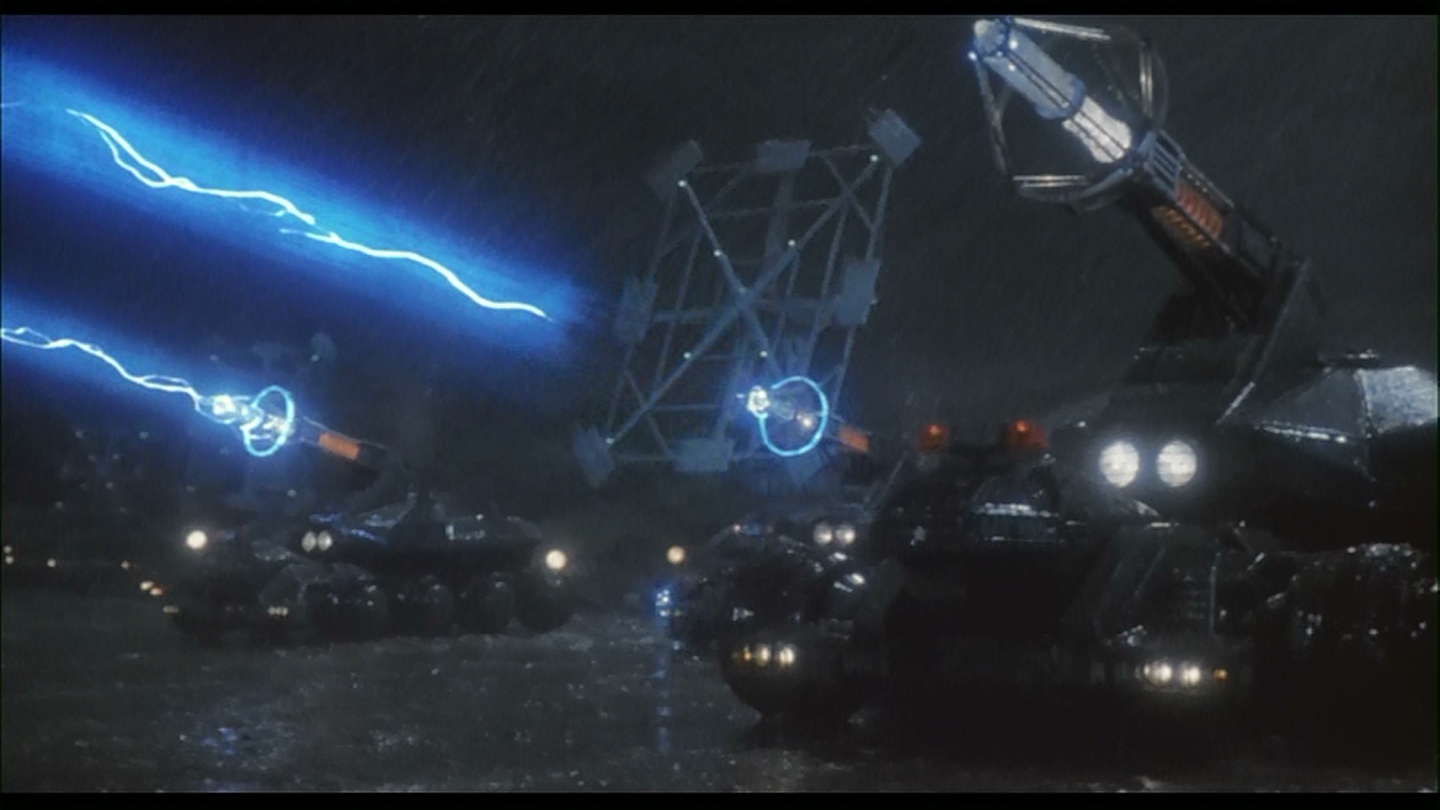
But the soldiers to manage to get some of the bacteria into Godzilla. It doesn't work as well as expected, because of Godzilla's low body temperature. Like all effective anti-Godzilla measures, this is never brought up in another film. The military is forced to bring another experiemental project, the Thunder Control System, into play. Lightning strikes, they reasonm, will bring up Godzilla's temperature. Lightning has been used on Godzilla before, to wake him up in Ebirah, Horror of the Deep, and to power him up in Godzilla vs Mechagodzilla. It revived him in The Return of Godzilla. Now it will heat him up. Masder tanks also return, a welcome callback after the more unsatisfying laser tanks from Return of Godzilla.

Little tiny teeth

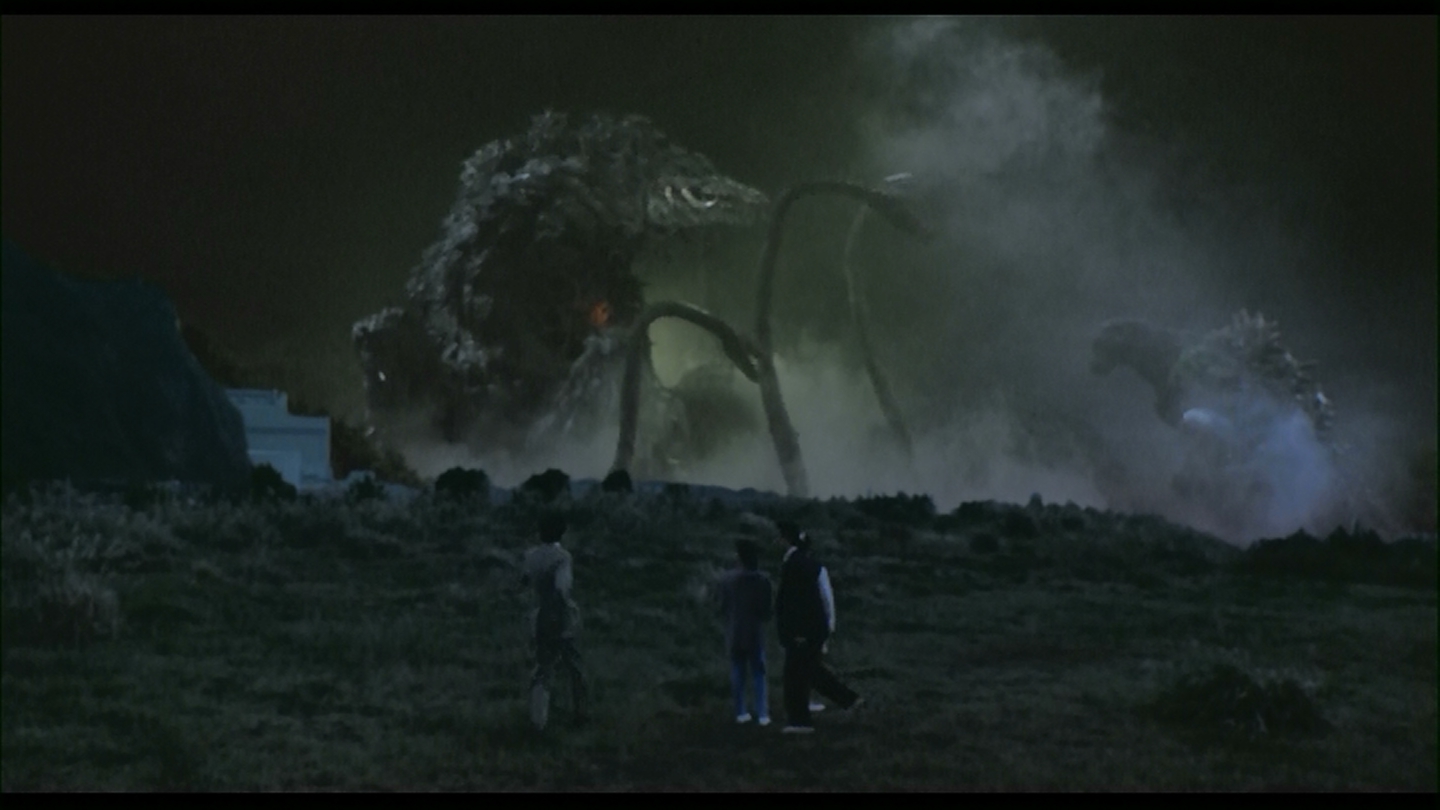
In the midst of this, the final form of Biollante appears, a monstrous plant/Godzilla hybrid with dozens of fang-mouthed vines. I think Biollante is the largest of Godzilla's adversaries, towering over the Big Guy.

Titans

Godzilla demonstrates a new power in the fight against Biollante. It seems to swallow its heat ray, and sends out a pulse that clears everything off its skin. It's a good new power, and one that is used about once a film for the rest of the Hisei series. It's more plausible than the magnetic power displayed in Godzilla vs Mechagodzilla.

Nuclear Pulse!

The fight is short but intense. It ends when Godzilla, overheated, stumbles away, and faceplants in the ocean. Biollante, essentially a benevolent monster, turns into a golden mist and ascends to the sky.

Nuclear Plant Breath!

The human drama comes to a close as Dr. Shiragami is assassinated by the Agent. Like Serizawa from the original Godzilla, he takes the secrets of his research to the grave. Godzilla then wakens and returns to the sea, apparently no longer interested in trashing Japan.

And I'm off!

What's refreshing about Godzilla vs Biollante is the complexity of the plot. There's a lot going on, and many characters with their own agendas. Certainly the script and direction label many individuals as evil, especially those that run countries or large corporations, but tightly intertwined nature of the complex narrative is unlike the often-flabby human stories in many previous Godzilla films. And overall, the dynamic nature of the monster fights combined with the strange nature of Biollante makes wacthing this film a pleasure. The film did not do well at the Japanese box office, leading Toho to believe that the unfamiliarity of Biollante was the reason. The next three Godzilla films would feature familiar foes from the Showa era.

The King

Next up, the Godzilla film with the most famous metatext. Godzilla vs King Ghidorah

Thursday, June 5, 2014

The Big Guy's Back: The Return of Godzilla

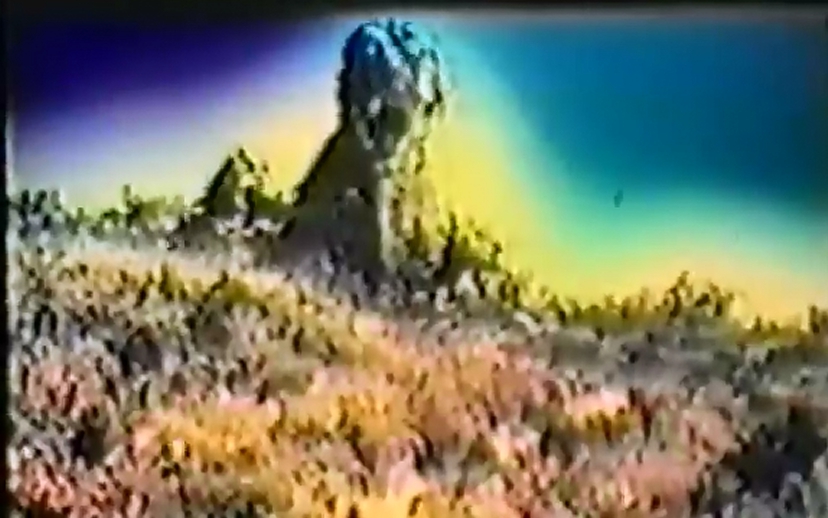
Although it's only been several posts since I wrote about Godzilla, the franchise had been asleep since 1975's Terror of Mechagodzilla. There had been a Hannah-Barbara cartoon, which I'm just not interested in watching. Also, in 1977, Luigi Cozzi recut the American cut of Godzilla, King of the Monsters, adding footage from Godzilla Raids Again, The Day the Earth Caught Fire, and most disturbing, newsreel footage of the devastation from World War II. It's also colored with gels, giving the film a sort of meltingly psychadelic look. This version has finally found its way onto youtube. It's worth a look, if you're into strange seventies cinema.

Drugs and Godzilla, not a good combination.

But Toho wasn't making new Godzilla films. This wasn't an offcial hiatus, just that no proposal seemed able to get off the ground. The interruption does make a difference in flavor of the Godzilla films, and divides the franchise into three rather neat eras. Films had gotten more grim, and from a 2014 perspective, more realistic. John Carpenter's 1982 masterpiece The Thing is extraordinarily different from the 1951 Howard Hawks film it remade. But after eight years, Godzilla came back to the screen with the Return of Godzilla.

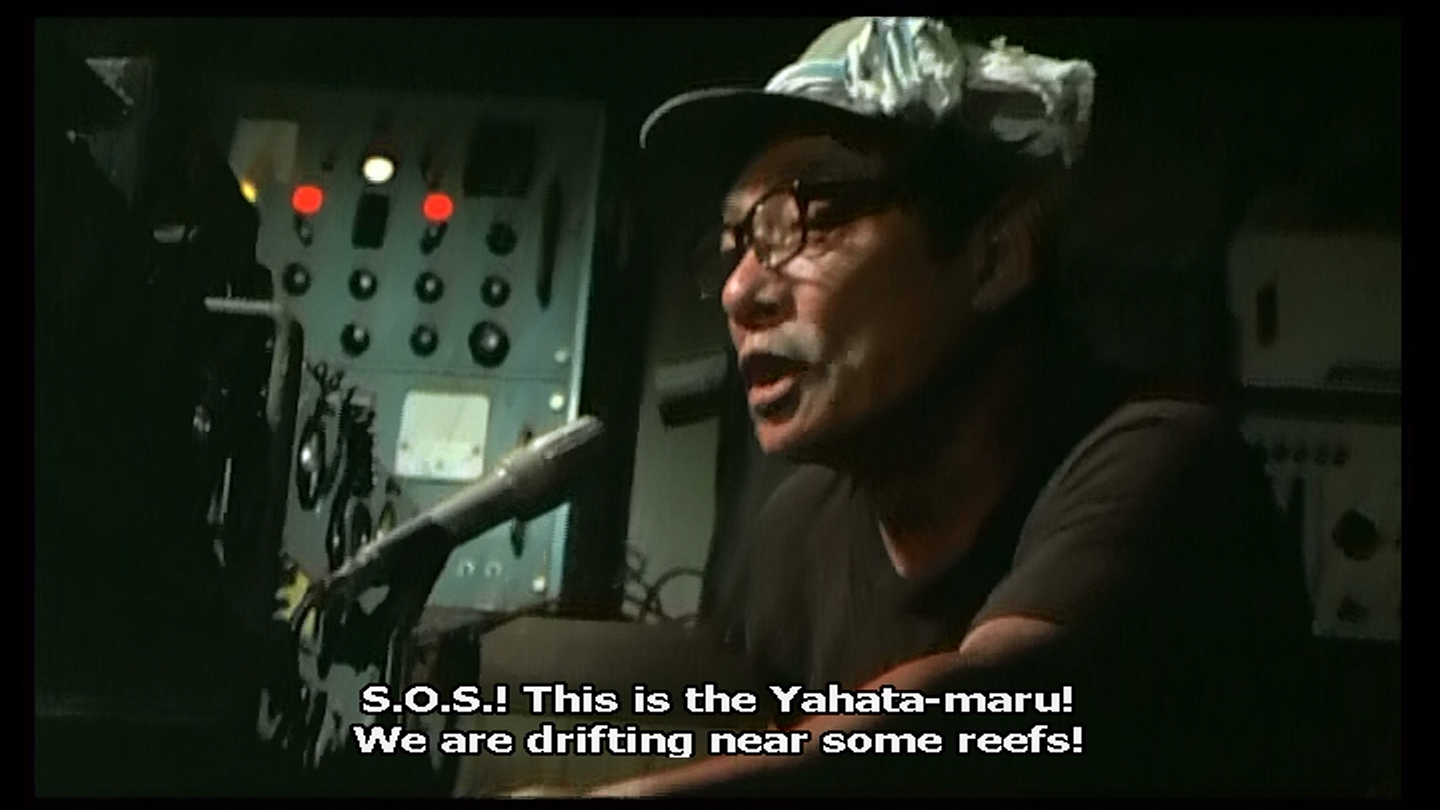
If you live in a kaju-infested universe and want to meet a kaiju, become a fisherman. Because of the Daigo Fukuryū Maru incdent, which influenced the original Godzilla. And The Return of Godzilla wants very much to be seen as similar to, comparable to, the first film. All continuity after the first film was discarded. Godzilla had come to Japan in 1954, and had never been seen again. So it establishes itself the same way the original does, with luckless fishmermen.

Dammit, we drifted into a kaiju film!

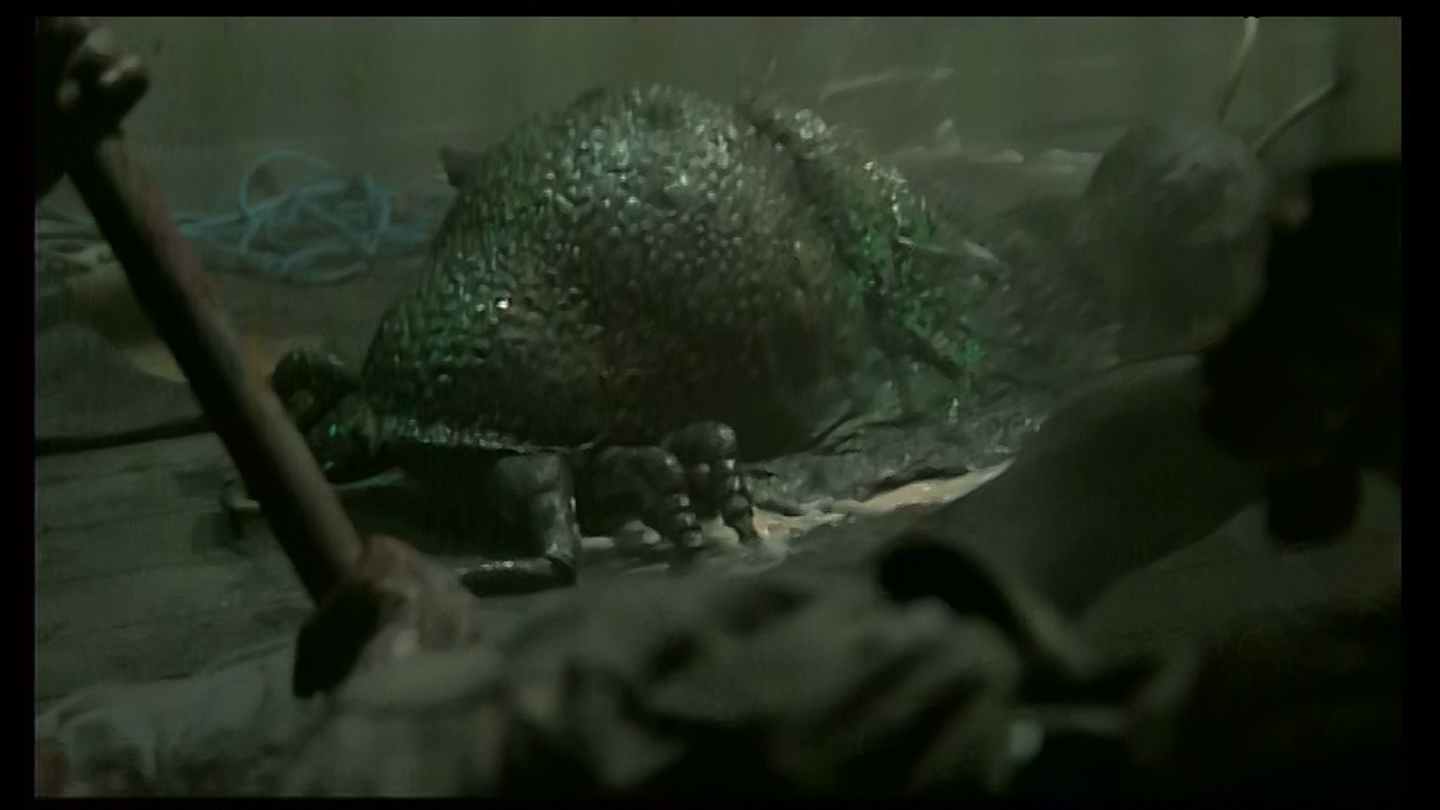
The abandoned ship is investigated by a pleasure-yachter, who discovers that the ship is infested with giant sea-lice, called Shokilas. The idea of the giant parasite is carried forward both Cloverfield and Pacific Rim. One fishermantrmains alive, and is able handed pictures of the original Godzilla which he identifies as the monster he saw before the mutated sea louse killed everyone.

Well, spiders will never bother me again.

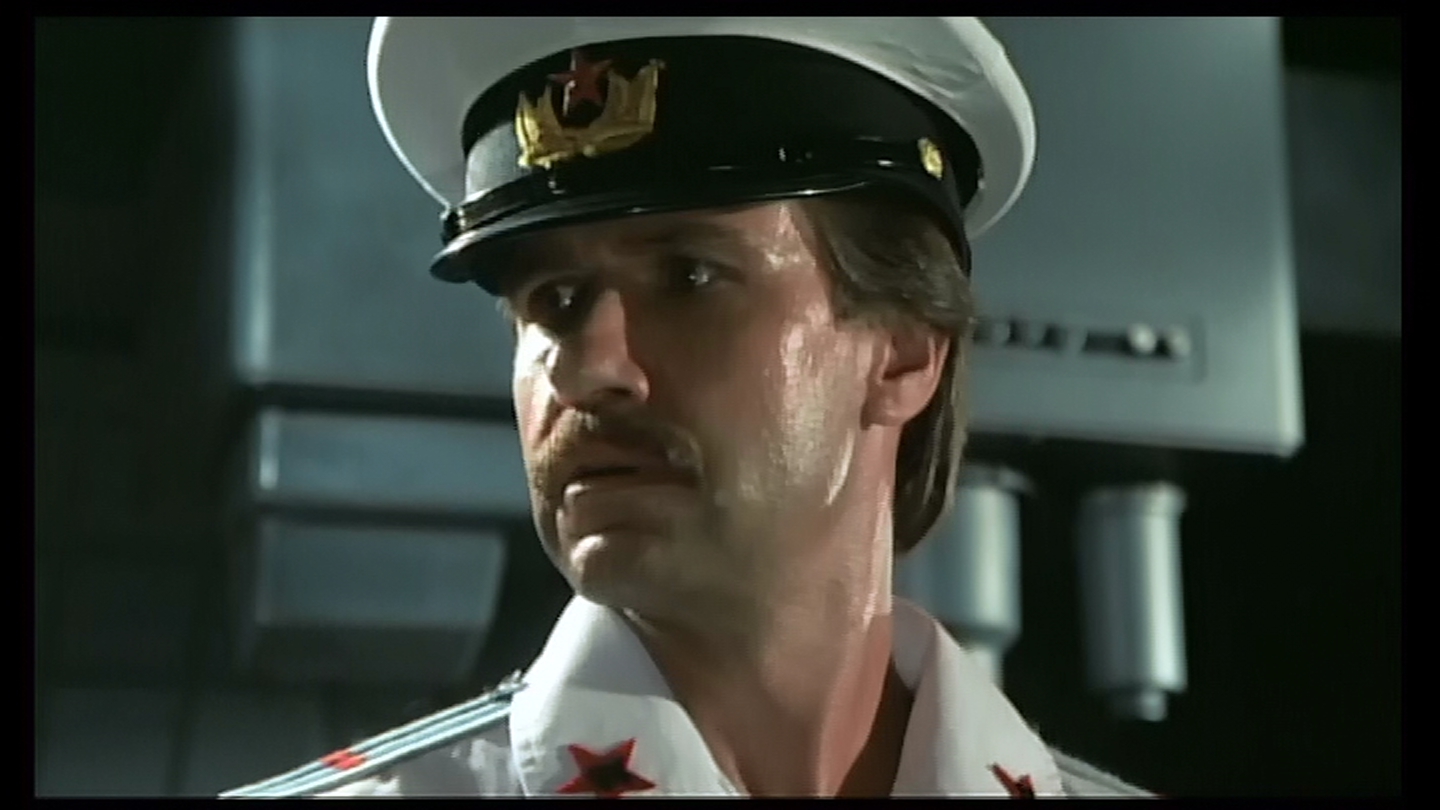
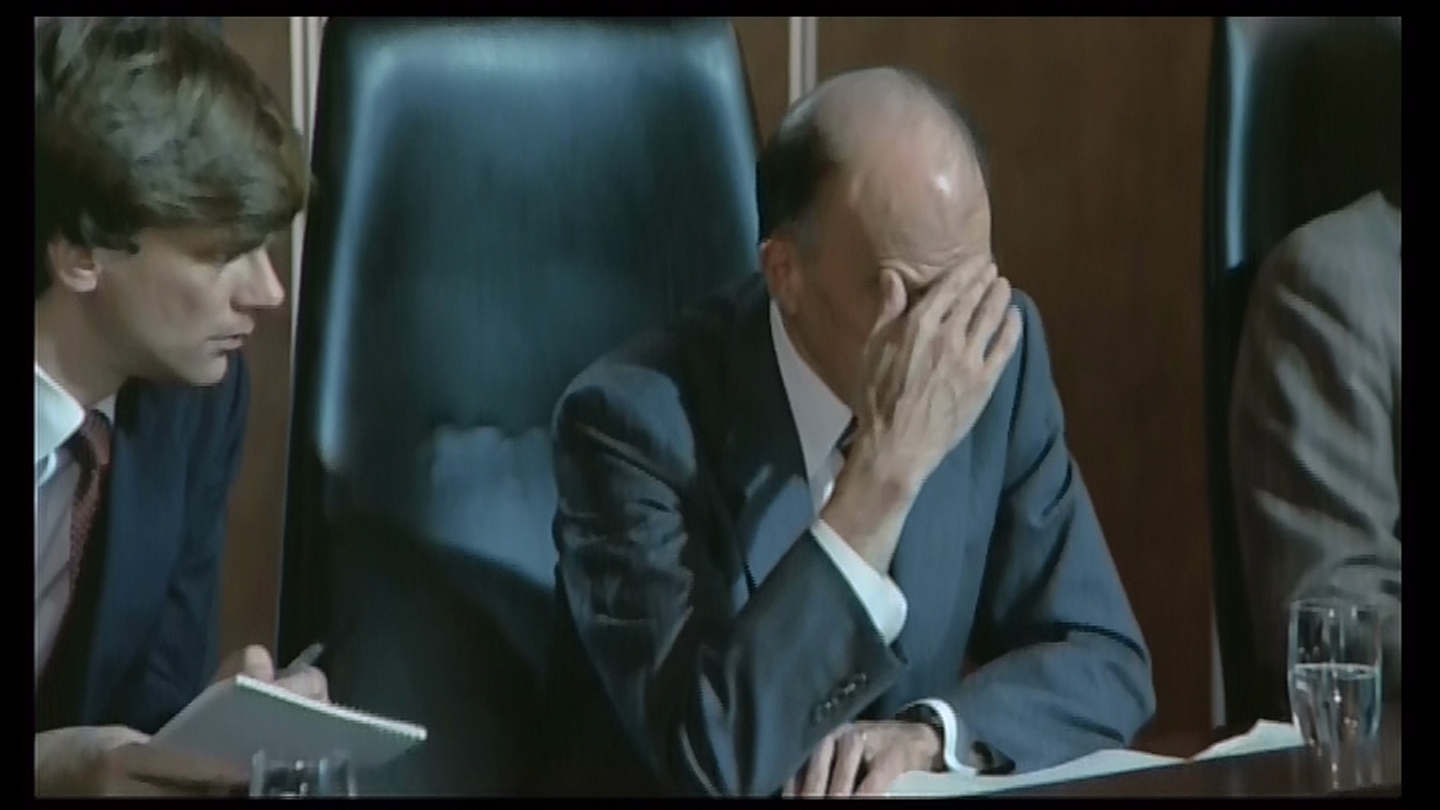
As in the most recent Godzilla, a Soviet submarine is involved. Godzilla consumes radioactive material, it seems, and the nuclear-powered submarine is a necessary snack. However, the Soviet Union believes the desruction of the sub is an act of American aggression, which the Americans deny. The tensions escalate quickly. It's a frightening piece of theater that the revelation that Godzilla may have returned is an act intended to defuse tensions between the Nuclear Superpowers.

That's a Soviet sub captian looking worried.

For the first time, Japan establishes a Godzilla Emergency Counter-Measure Headquarters. In many subsequent films, a military, and even a civilian response team will form a sort of support network for protagonists.

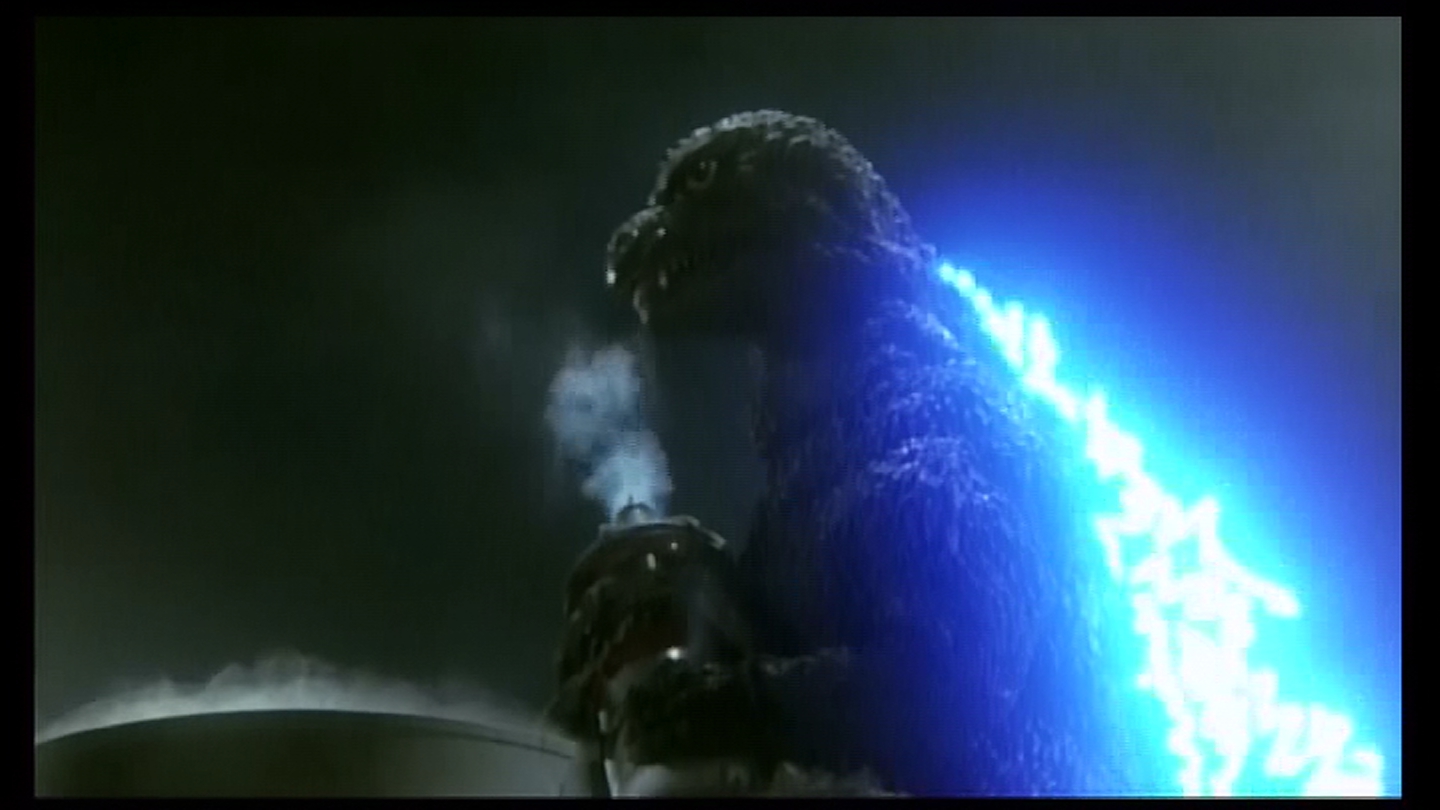
Further demonstrating that Godzilla is consuming nuclear fuel for energy, the Big Guy shows up at the Ihama nuclear power plant in Shizuoka prefecture. He doesn't eat the power, rather holding it to himself and letting to charge him. His back fins light up so the viewer can tell it's working. But as he is finshing a flock of birds flies past, and Godzilla follows them. This becomes the science answer, Godzilla can be led with bird calls.
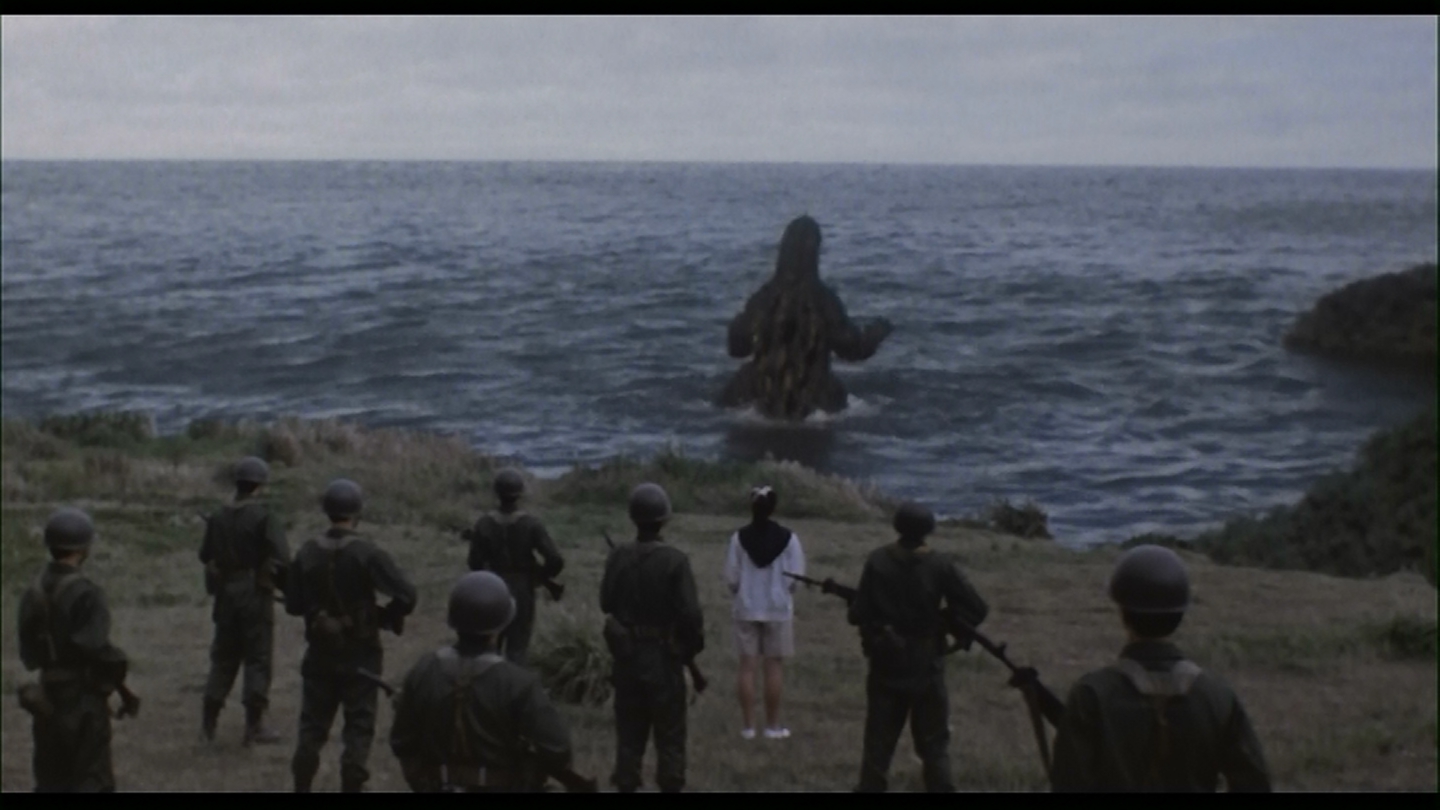
POWER UP!

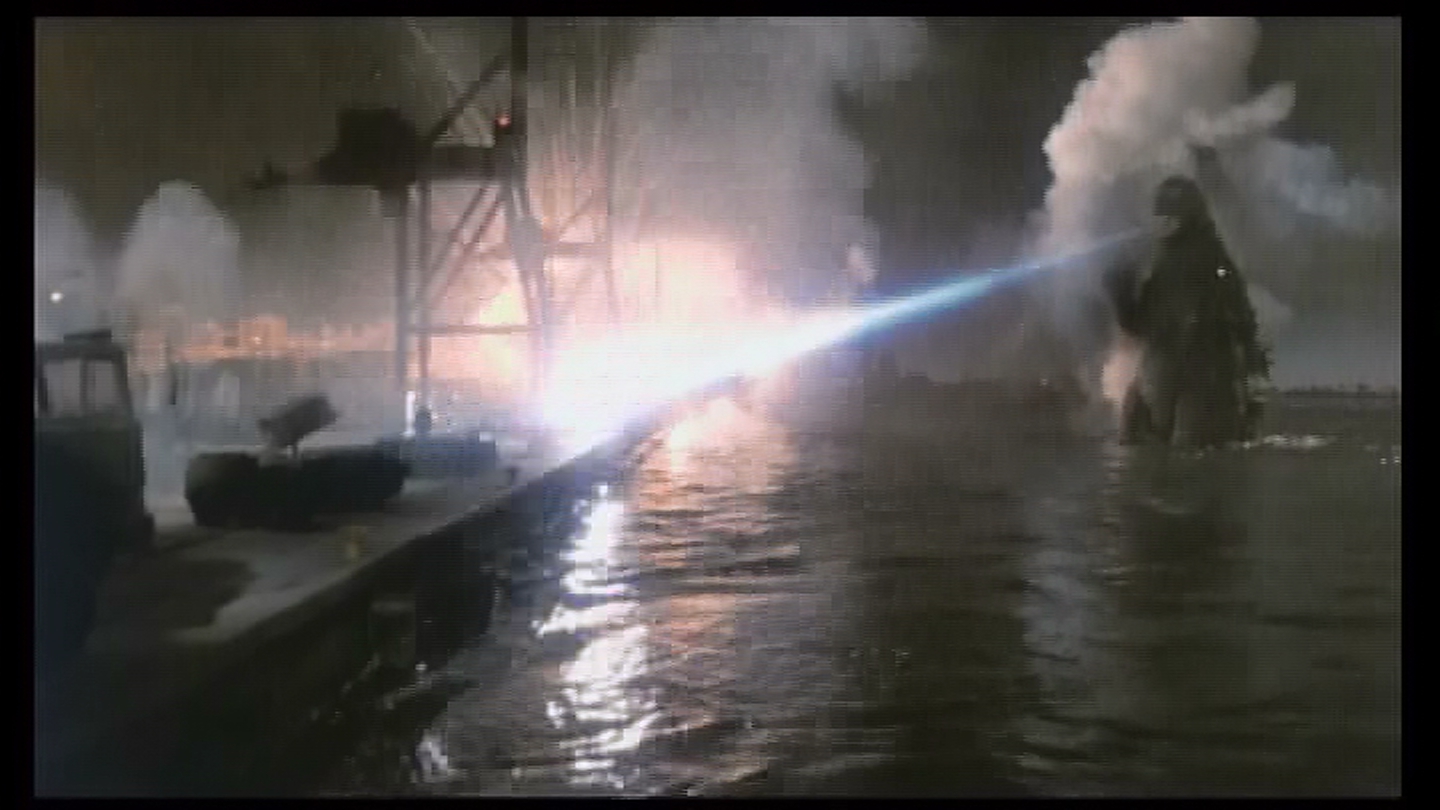
Although conventional weapons are useless against Godzilla, Japane's native invension, the Super X, has been developed in secret. This is a combination of using fantasy science to confront the monster, along with a growing feeling in the series that the military isn't quite to useless after all. Super X has weapons specifically designed cadmium ordinance to counter Godzilla.

Godzilla cleans up the waterfront.

In an interesting twist, especially for someone who has soaked in Hollywood films in whch politicians are portrayed as corrupt or weak, Prime Minister Mitamura is sympathetic. Although he stomps on our truth-seeking reporter's story concerning Godzilla, he reveals the story to reduce tensions between the US and the Soviet Union. When the Soviet Union and the United States both declare that they have to use nuclear weapons to destroy Godzilla, he very calmly refuses, citing Japan's "Three principles": non production, non-posession, non-introduction of nuclear weapons into Japan. In the face of some very ardent arguments, Mitamura remains adamant, and both the camera and script praise him for doing so. This is the heart of The Return of Godzilla, the protest against nuclear weapons and the mounting fear that was the Cold War.

What kind of idiot won't let us drop a nuke on a major city?

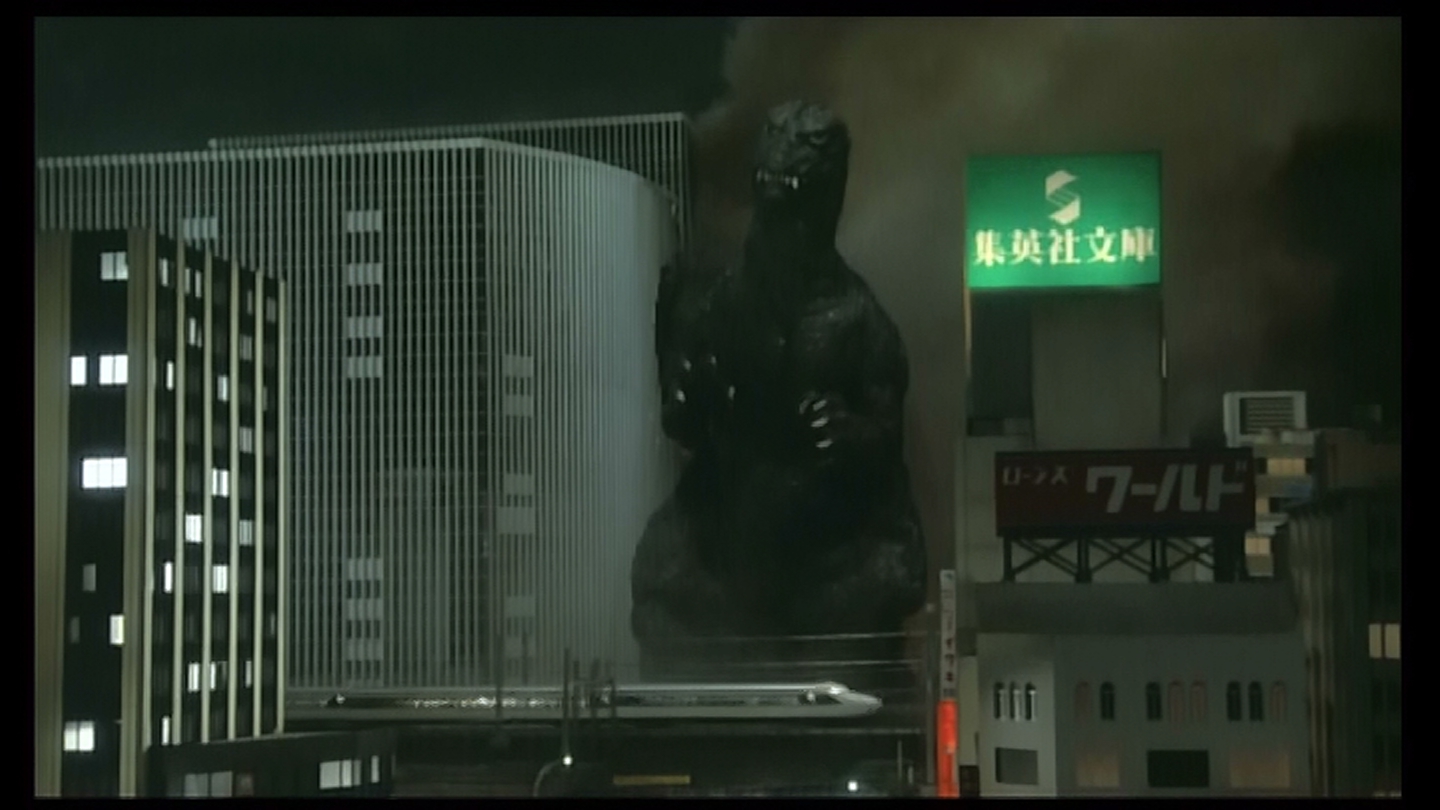
Like a moth to a flame, Godzilla is drawn to Tokyo. The military sends everything they have against him, but with a single sweep of his atomic heat rat, Godzilla destroys the Defense Forces. Godzilla is larger than he was previously, eighty meters tall, and he's lost his heroic side. Godzilla is in Tokyo to destroy, and spends a lot of time doing so.

A train? I love trains!

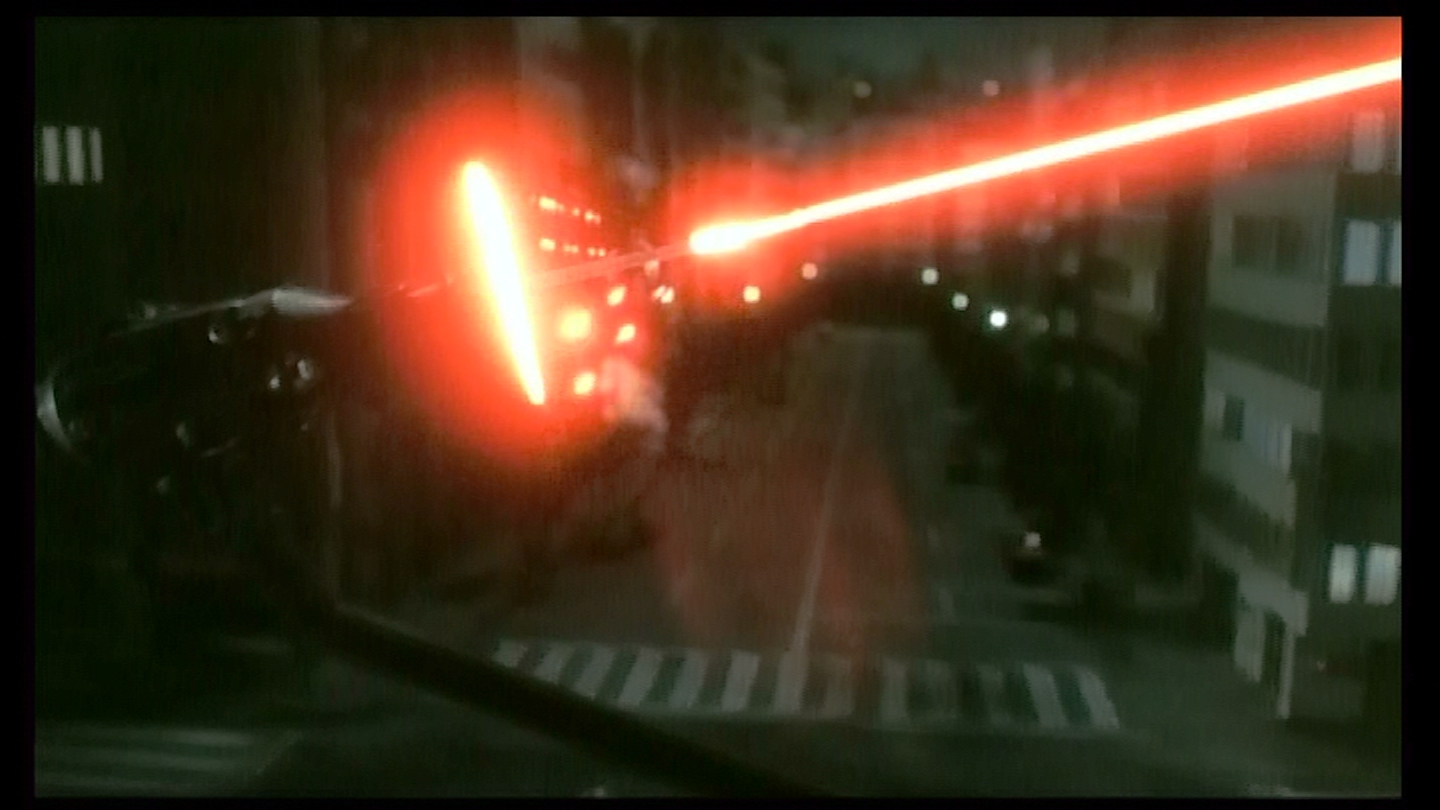
Although this takes place outside of the post 1954 Showa continuity, there are small nods to it. As Tokyo awaits the arrival of the Super X, laser, or perhaps maser tanks engage Godzilla. These look like updates of the tanks which first appeared in Mothra and War of the Gargantuas. These are weak, however. They don't even irritate Godzilla.

POWER UP!

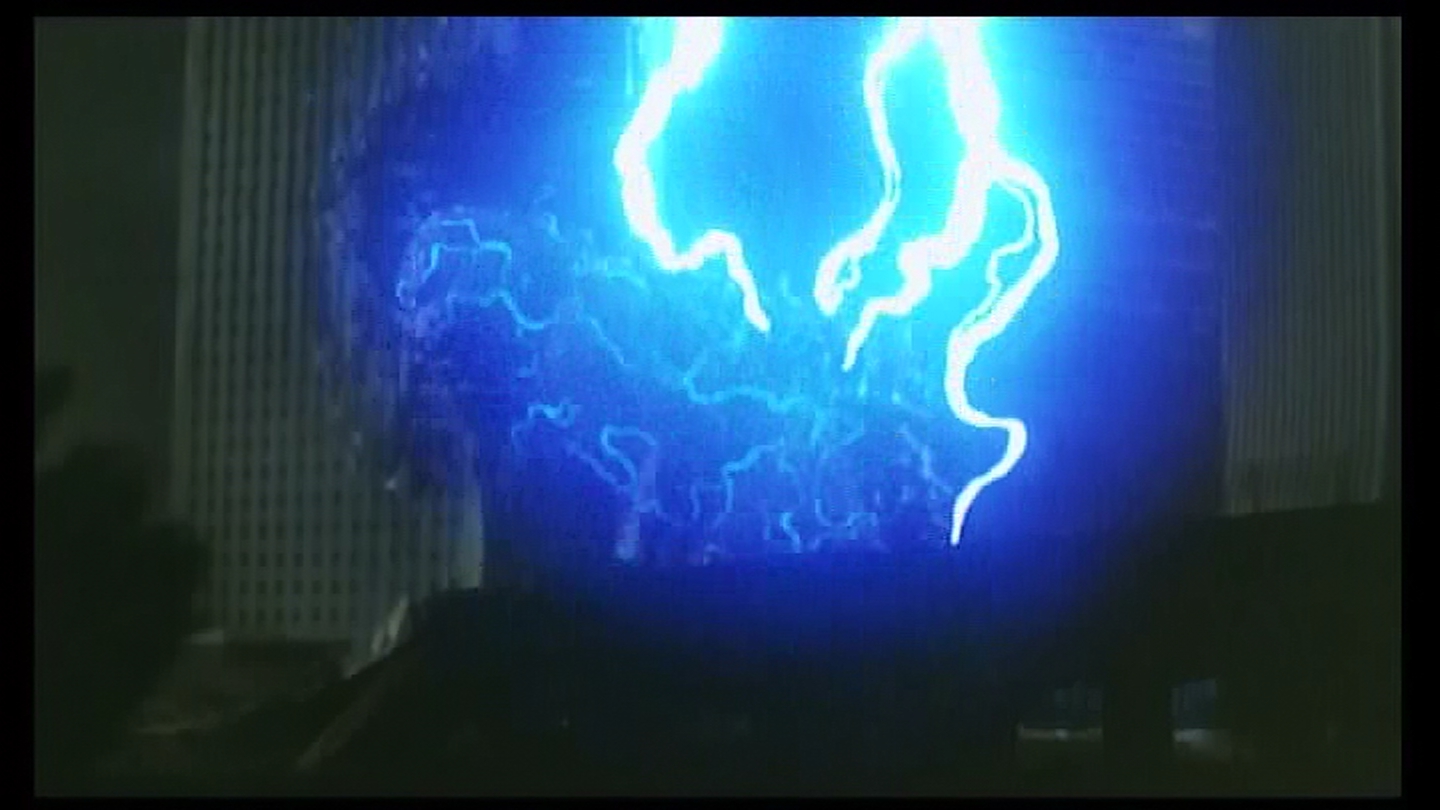
Of course, saying no to nuclear weapons isn't as easy as just sayng no. The Soviets have a back-up nuke ready, and Godzilla's destructive wake causes a launch. Oops. The Americans agree intercept the missile, which makes his a high-altitude airburst rather than a ground burst. Still, this causes lightning which is attracted to Godzilla, and wakes him up again, in a callback to Godzilla vs Mechagodzilla. This energizes Godzilla enough to recover from the cadmium shells.

That's what those are for!

The Super X is in essence a flying tank. It's heavily armored, hovers and flies by use of directional jets. It's blocky and unaerodynamic. But it is as effective a response as Japan will get before building Mechagodzilla. Three cadmium shells fires into Godzilla's mouth knock the Big Guy down. Of course, this effective defense, like high-voltage wires, is never used again. Godzilla then drops a building on trhe Super X.

POWER UP!

Fortunately, science is there to take up the military's slack. Godzilla is lured to Mt. Mihara, an active volcano. There, the cliffside he's shanding on is detonated, and Godzilla plunges into the laval below. And although he's trashed Tokyo and a nuclear power plant, the music is sad, and Prime Minster Mitamura looks sad as he watches Godzilla falling into the crater.

Godzilla vs the Volcano

While the Godzilla work on The Return of Godzilla is good, the majority of the human drama is weak. The characters are pretty thin, and they are there mostly to witness the plot, rather than contribute to it. They do little to interact with Godzilla. The most powerful scenes involve the confrontation between the American and Soviet Special Emissaries, with the Prime Minister caught in between. But these scenes are sadly brief. But the film was enough to restart and energize the franchise, bringing Godzilla into a modern idiom.
Next up, the Godzilla team goes to North Korea to make a film according to Kim Jong-il's cnematic principles. Yes really.