Swamp Thing hadn’t completely disappeared from the DC universe, but he was scarce enough to be legendary. As mentioned in the previous Swamp Thing entry, he guest starred in Challengers of the Unknown, written by Gerry Conway, the writer of the first Man-Thing story. This was followed by an appearance in The Brave and the Bold 122 (October 1975) when he again teamed up with Batman to defeat a super plant that threatened to take over Gotham. Alan Moore would use a similar plot, only with Swamp Thing as Batman’s antagonist instigating the plant growth. In DC Comics Presents #8, (April,1979) the Swamp Thing assisted Superman in defeating some sixty Solomon Grundies in a more superhero than horror story Steve Englehardt. Compared to Man-Thing, or any second-tier superhero, four years without an appearance is virtual character death.
I have, perhaps arbitrarily decided to mark the beginning of Swamp Thing volume 2 with The Brave and the Bold issue 176, from July 1981. It’s written by Martin Pasko, who would, one year later, take on the recrudescence of the Swamp Thing in May 1982. Before this story, Swamp Thing hadn’t been seen for two years.
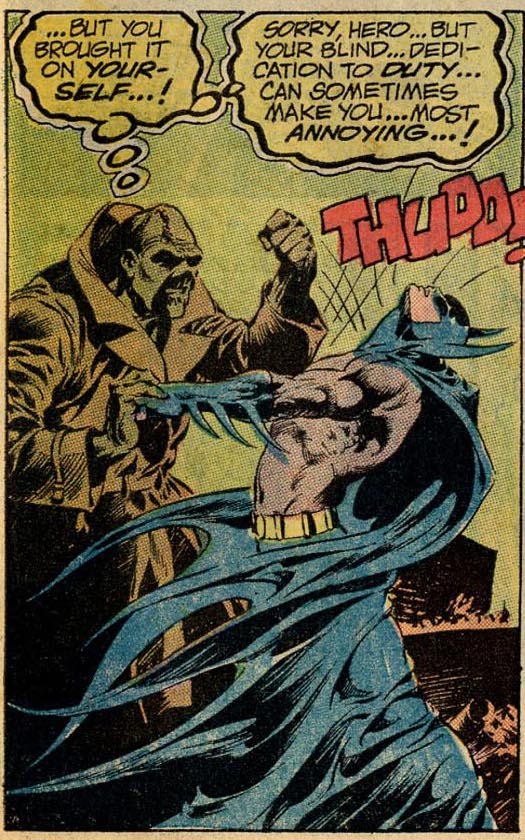
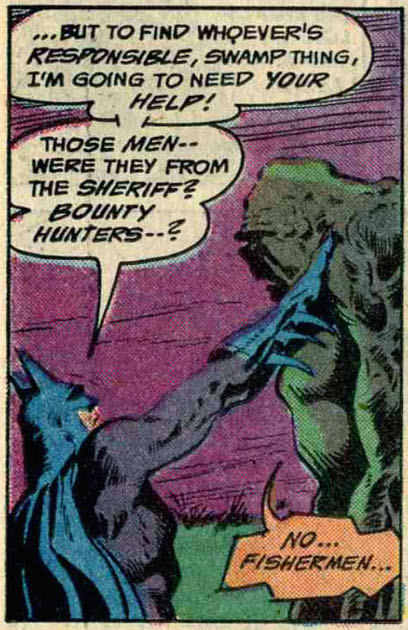 Pasko’s “The Delta Connection” is a straightforward Batman story from the early eighties; more Darknight Detective than Batgod, involving no other superpowered individuals. A man is murdered, and the search for the culprit takes Batman into the swamps of Louisiana. The Swamp Thing is coincidentally present, and a random shotgun blast allows the two to meet. Again. More likely to attract a Batman fan than a Swamp Thing fan, the story includes a one-page recapitulation of the Swamp Thing’s origin, and Pasko references their two previous encounters. In keeping with the Gothic atmosphere, and the resurgence of the weird in the eighties, Swamp Thing is given a vital but mysterious clue by a ghost. Later, the Swamp Thing concocts a rational explanation for this, but there’s definitely room to believe either way. Which is the strength of Pasko’s writing. The two solve the mystery and the criminals are brought to justice. It’s an atmospheric mystery, everything wrapped up. Pasko’s writing sets an excellent mood for the piece, and legendary Batman artist Jim Aparo artist does an excellent job with the swampy setting so distant from Gotham’s concrete jungles.
I don’t know if Pasko was handed the Swamp Thing assignment because of this story, but it’s more than a coincidence that he was chosen to write the new Swamp Thing book.
The paradigm shifted slightly when Swamp Thing got its own series again. Pasko’s ideas were now very divorced from the mainstream DC Universe. No superheroes, not even Batman appear during his tenure. Only the Phantom Stranger, a mystical hero, appears, and those two stories are fill-ins written by Dan Mishkin. But there was a good reason for not including superheroes. Pasko set out to not write a kids’ book. His tenure on Swamp Thing deals with some very heavy psychological issues and current events, in the more or less direct way that Steve Gerber did in Man-Thing. This for-mature-readers approach was one of the stepping stones that eventually led DC to ditch the Comics Code Authority. Pasko deals with demons, child murder, Nazis, fanaticism, Vietnam, the aftereffects of electroconvulsive therapy, shady governmental-corporate partnerships, and the coming of the antichrist. It’s a heavy for a comic, especially one from the early eighties.
Len Wein was chosen as the editor. It must have been a strange sensation, editing another writer’s take on a character he had created. Even stranger to see Pakso update the character from Wein’s classic Gothic stories to neo-noir.
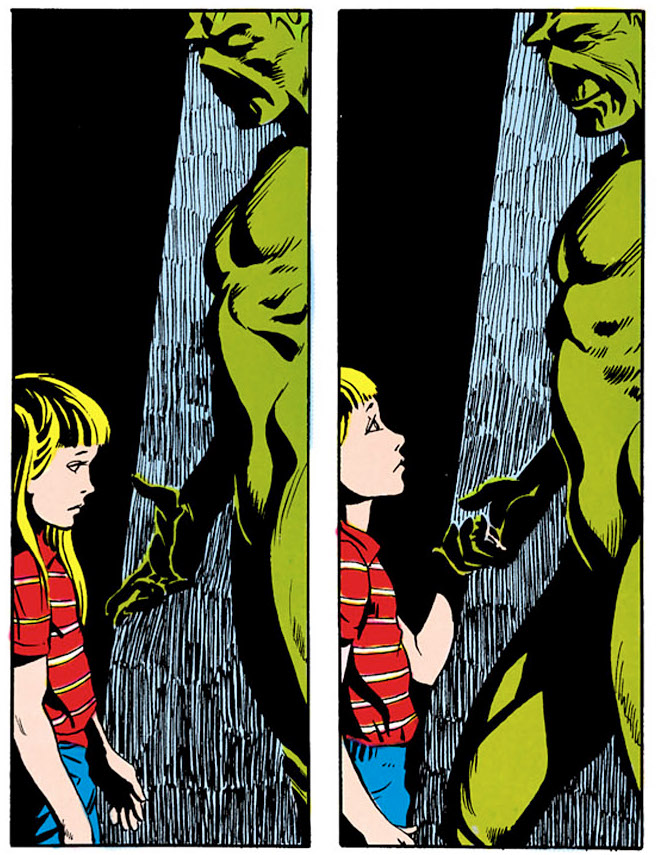 In the first issue, Swamp Thing rescues a mute girl in an act of kindness. Although young, she later proves to be anything but innocent. Her character arc is a beautiful inversion of the usual rescue of a child. What harm could come from saving a young girl, Karen Clancy from a father who is about to shoot her because he thinks she is some sort of witch spawn? It’s a familiar story, two outcasts bonding with each other. Pakso slowly transforms that initial rescue into a fantastic inversion of the story the readers expected. The issue also introduces “Harry Kay” an agent for the Sunderland Corporation. Kay turns out to have a lot of layers. Nobody is wholly good in Pasko’s Swamp Thing. And nobody is completely devoid of sympathetic qualities, either.
In the very next issue the Swamp Thing and Karen are separated. They will never manage to truly get together again until the last two issues of the story arc, allowing for a diversity of stories as each character can be the protagonist on their own. When these other characters are the focus of a story, the Swamp Thing often plays the role the Heap did in the Hillman comics: arriving at the end to resolve the story. Pasko is too savvy to have the Swamp Thing administer justice, because there is no justice in these stories. The status quo is too flawed for anyone to desire a return to it.
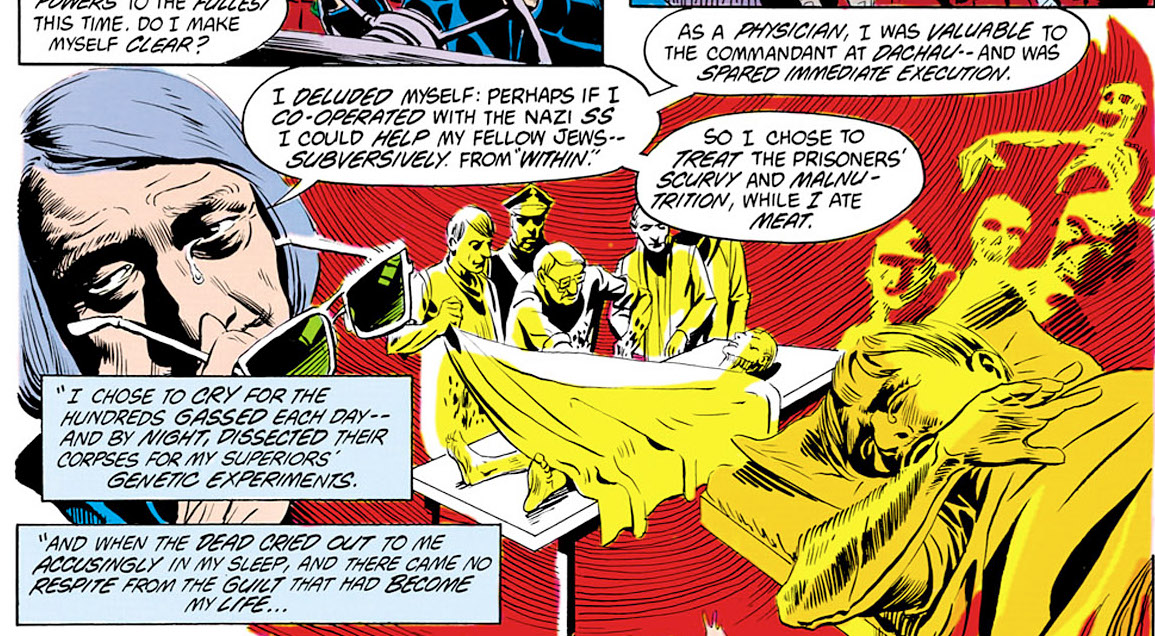 Other characters, often initially antagonistic to Swamp Thing or at odds with the rest of the cast, filter in. Liz Tremayne appears, a tough, no-nonsense reporter fighting for recognition as well as justice in the stories she reports. Helmut “Harry Kay” Kripptmann, a Jewish doctor and former Nazi collaborator, is morally ambiguous. Dr. Barclay starts as a naive “psychic” healer who doesn’t know he is the conduit transferring wounds from people onto captive clones. They are not heroes, but rather people with checkered pasts, attempting do to what is right by what they know. The frisson between the well-rounded characters makes the stories complex and interesting, and slowly layer after layer of the onion peels away until each character is exposed in all their complexity.
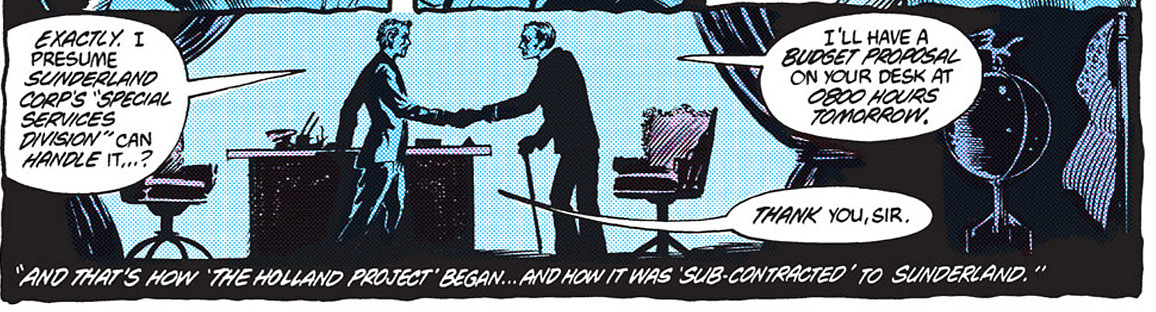 In the background looms Sunderland Corporation. Sunderland would be a standard evil corporation, similar to OCP, Weyland-Utani, Umbrella Corporation, or Abstergo, but these stories were written before any of these other companies were invented. Sunderland is always a shadowy presence with its filthy fingers in a large number of very dirty pies. In the Reagan/Thatcher area, Pasko also made sure that he reader knew that Sunderland had government ties, allowing it access to information and material it might not otherwise. The revelation that many large companies had government contacts was a shock to us in the eighties. It is understood to be a matter of course now.
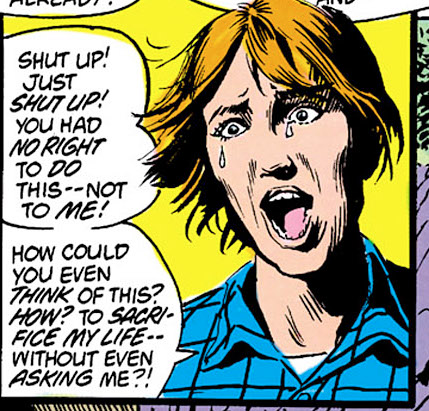 Issue three introduces us to Rosewood, Illinois. The town has been taken over by vampires, and only a desperate family is left to resist them. But those who fight evil are not necessarily good people. Larry Childress blows up a local dam to flood the town, dissolving the vampires under running water. But he does so taking his son with him, where he could have left the boy out of harm’s way. His nihilism is not praised.
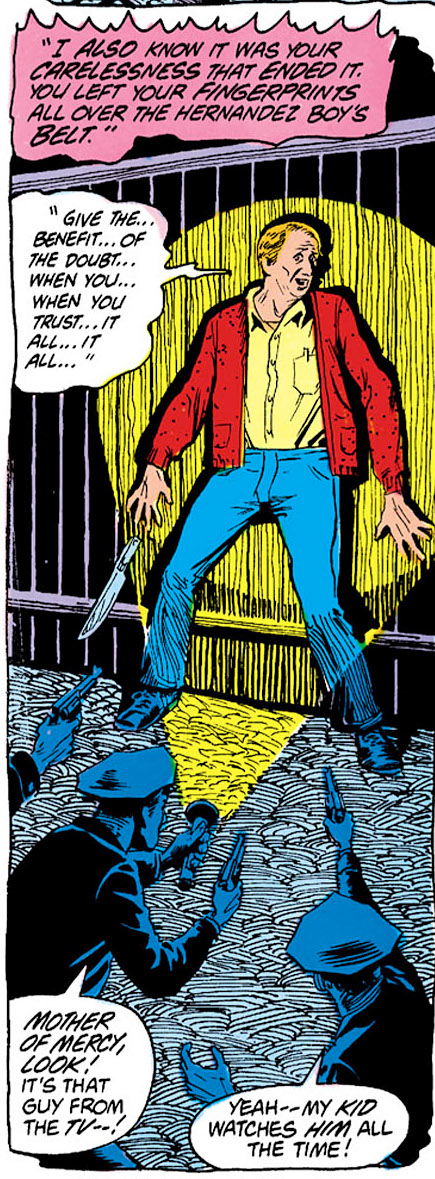 Issue four, “In the White Room” presents us with another complex situation. “Uncle Barney” a local kids TV show host, has been caught murdering children. His show’s catchy song “Give the benefit of the doubt/When you trust it all works out” is implied to have contributed to the murders, since kids trust Uncle Barney. That said, Barney made a pact with demons, which brought out his murderous desires. The demon escapes Barney and finds other hosts, Liz Tremayne is caught in the middle of the supernatural struggle. And though the demon is defeated, by the end of the issue, Uncle Barney has been replaced with “Aunt Polly” who has the same catchy tune about trust. Pineboro hasn’t learned anything.
Issue Five “The Screams of Hungry Flesh” brings us Dennis Barclay, a doctor who is part of Sunderland. He’s a naive psychic healer working with Kripptmann. He discovers that he’s just transferring wounds onto semiconscious clones. Once the truth is revealed, he flees Sunderland and his clinic, adding another character to the Swamp Thing and Liz Tremayne party.
The next story, a two parter “Sins on the Water” and “I Have Seen the Splintered Timbers of a Hundred Shattered Hulls” is the most bizarre and comic-book story yet, starting with an alien invasion on a Sunderland corporate cruise, and ending up with isolated psychically-enhanced Vietnam vets who can alter reality. At its heart, “Here’s Looking at You, Kid” has a back and forth discussion about the treatment of those veterans. Pasko is canny enough not to let the story take sides. In the background, Casey is seen to be more dangerous, and Kripptmann is unable to apprehend her.
With issue nine, "Prelude to Holocaust", the series now shifts full-time to the Karen Clancy story. I suppose there’s a little bit of Stephen King’s Carrie in the little psychic girl, but Karen isn’t an innocent cursed with psychic abilities she can’t control. The little girl the Swamp Thing saved is the herald of the Antichrist. She’s an evil person, growing and developing her psychic powers, using them get what she wants. And to make sure we know she’s evil, Pasko shows her looting a Nazi collector’s stash for a particular item. Kripptmann is shown to have a larger agenda, using what resources he can glean from Sunderland to pursue Karen. And he is ruthless, even murdering Sunderland employees to get what he needs. He is not a good person, even though he stands opposed to both Sunderland and Clancy.
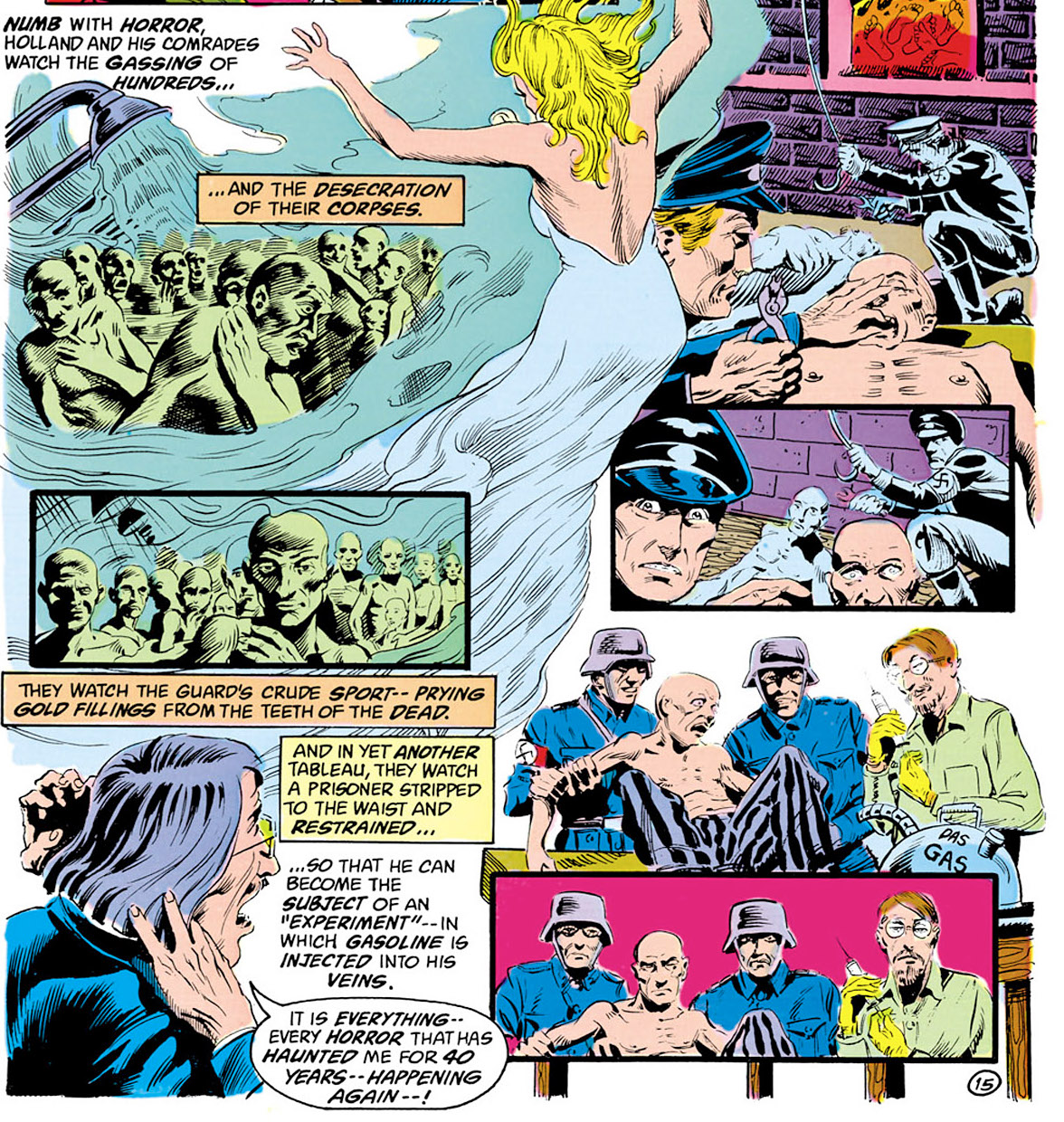 The coming of the Antichrist is very similar to the Nazi Holocaust. In fact, the Holocaust was a prelude to what Karen and the Antichrist are going to bring about. Neither Pasko or artist Tom Yeates sugar coat this. When Karen pulls the memories of an extermination camp out of Kripptmann’s head, we see Nazis pulling the gold fillings out of dead prisoners, Nazi doctors about to inject gasoline in a hapless prisoner’s veins. They are absolutely not fucking around with this story line. This is the motivation behind Kripptmann, and these two pages of terrible memories hammer home the reason he seeks personal redemption for his previous actions. It’s a fascinating drive for the character.
 The Swamp Thing is ultimately the agent that foils Hell's plan. Not the religious, not the powerful, but the swamp man who was once intervened to save a young girl, using power siphoned from Clancy. Even Kripptmann finds some measure of redemption by killing the man who would be the Antichrist. After the build-up, it’s a little unsatisfying, but the journey was well worth pursuing.
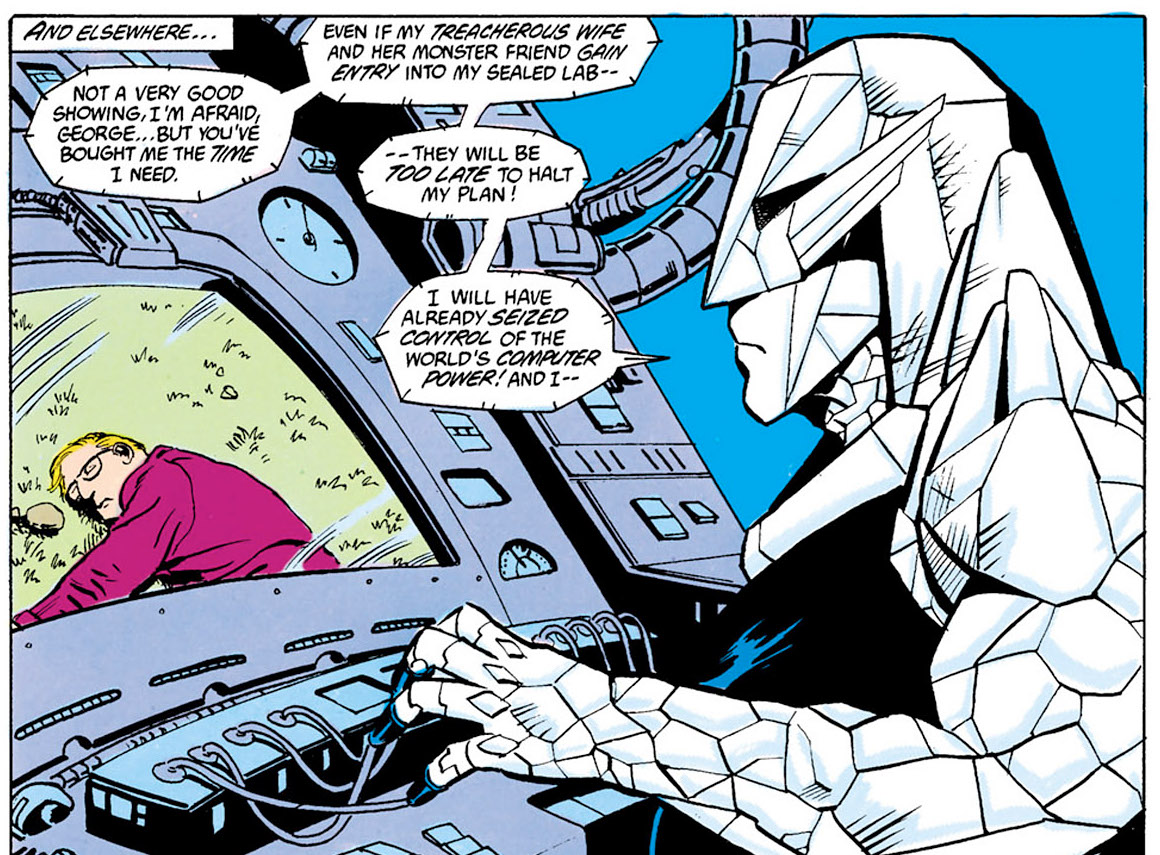 After this are two fill-in issues from Dan Mishkin, crossing over with the Phantom Stranger. It’s an mediocre, comic-booky technothriller, in which Nat Broder turns himself into pure silicon. Initially he goes on a rampage, turning many things, including Swamp Thing, into crystalline versions of themselves. Swamp Thing, fortunately, is still soaked with the bio-restorative formula, so he able to re-convert back to his mucky self. Broder turns out to also have power over computers, and in a few moments, takes over the world's computers. Eventually he is stopped by the combined forces of the Swamp Thing and the Stranger.
Issue sixteen “Stopover In a Place of Secret Truths” introduces a few changes to the book. Abby Arcane from the original series returns. The story is a bit of a Twilight Zone style stand-alone, about a community that wears masks to hide hideous deformities. It also adds Kripptmann to the Swamp Thing’s traveling cast.
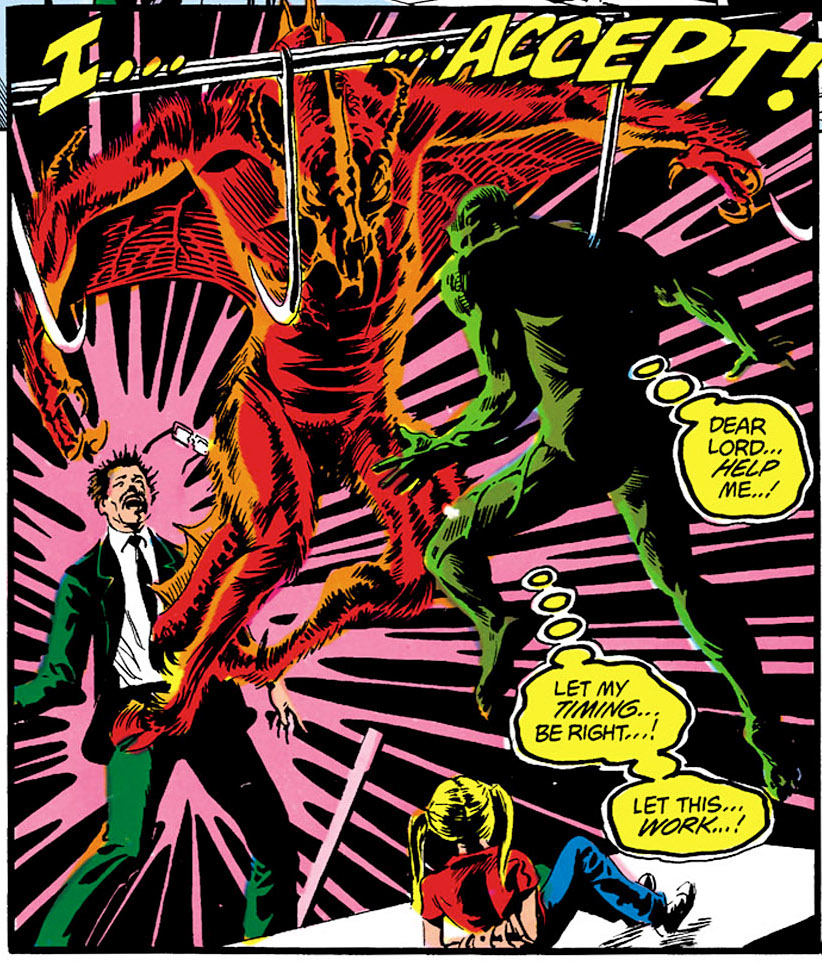 But more importantly, this is the first issue with John Totleben and Steve Bissette as artists. Now Tom Yeates is an amazing artist, and I should have talked about his work before. His work is very clean, nuanced, and full of unexpected little details. Yeates drew grotesque and the weird of the Swamp Thing series extraordinarily well. His art is strong, and developed amazingly as the series progressed. The climax of the Karen Clancy storyline would have been much weaker in the hands of a less-talented artist.
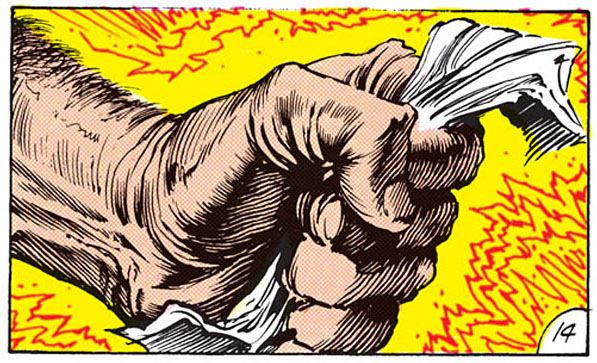 This new team of Totleben and Bissette gave a frenetic, intricately detailed line art to the Swamp Thing that I fell in love with the instant I saw it. I love Bernie Wrightson’s art, but the Bissette/Totleben Swamp Thing art remains my favorite. The new team broke the art molds. No longer was the action confined to tidy boxes. Panels could be crystal-like shards that slashed diagonally across the page, sound effects could be reinforced with art, rather than being cartoonishly splashed across the page. In some ways, this is the punk element that appealed to me. While Yeates’ art is excellent the new team had a wild, uncontained, and unpredictable style. It didn’t march in staid array across the page but drew the eye in unexpected directions. This confrontational art style served Pasko's scripts very well, creating the atmosphere in which the words had more impact.
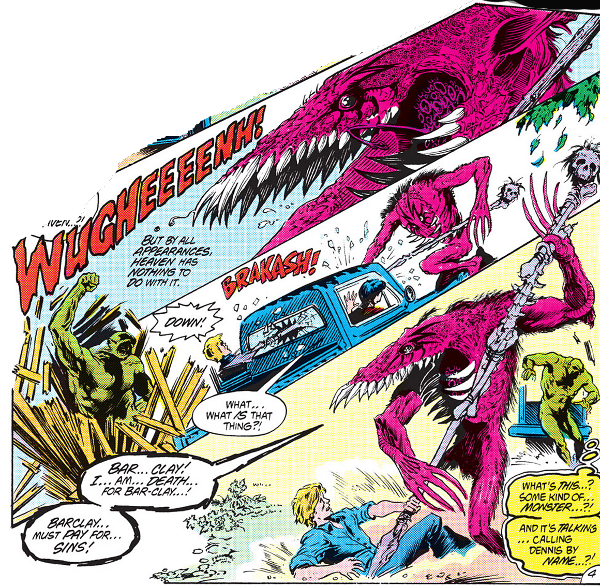 There is also a level of grotesquerie to Bissette and Totleben’s work that outstrips anything else I have seen in comics. Their monsters are carefully and patently impossible, with teeth that could never fit into their mouths. And they’re glorious. Art like this makes comics more effective than pure text, only a visual/text hybrid like comics could produce something that startling. Thankfully, we will get to see more of their art in Moore’s run.
With Abbey reestablished, issue seventeen brings Matthew Cable back. And he’s a mess. A drunk, suffering from the aftereffects of electroconvulsive therapy, his life has been burned to the ground. But somehoe he has managed to gain some sort of psychic power. Which is kind of interesting, since Abby had started to developing powers in the original series. This is also the re-introduction of Anton Arcane. His is powerful and creepy, and this return cemented his place as Swamp Thing’s best recurring villain.
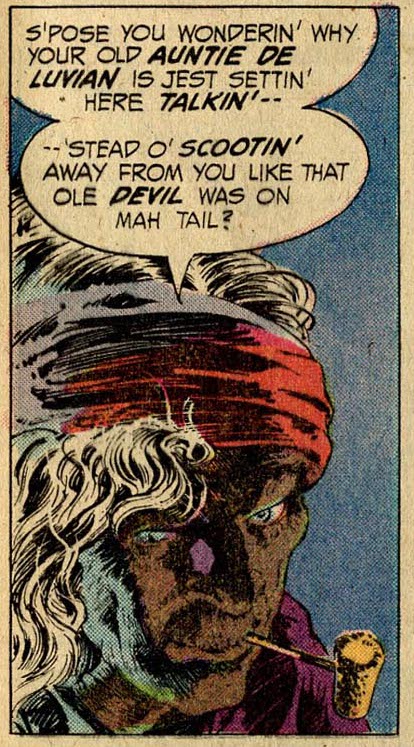
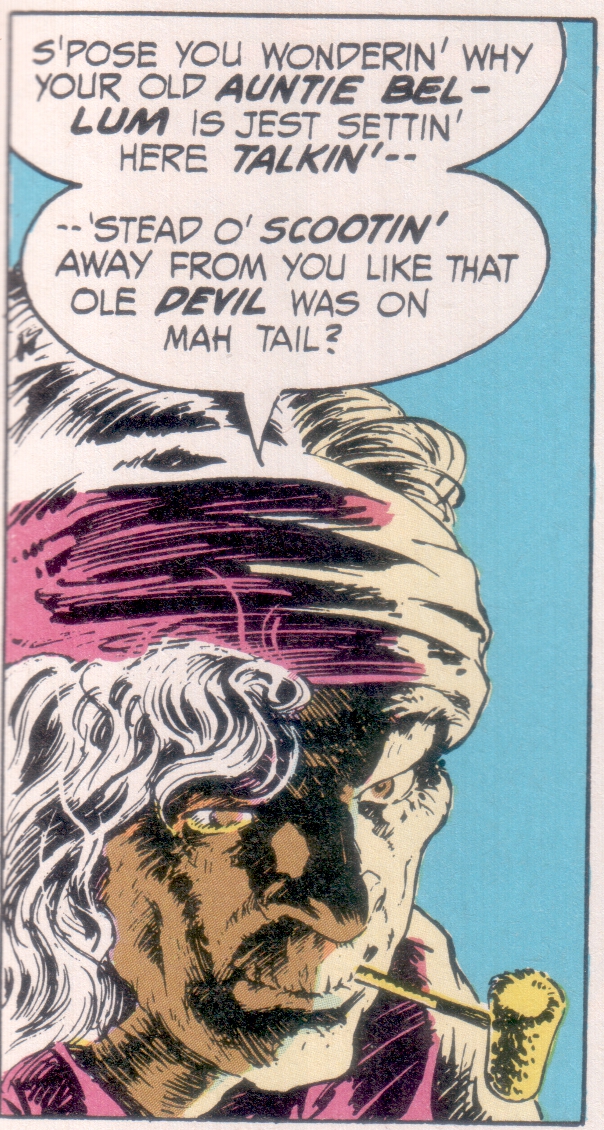
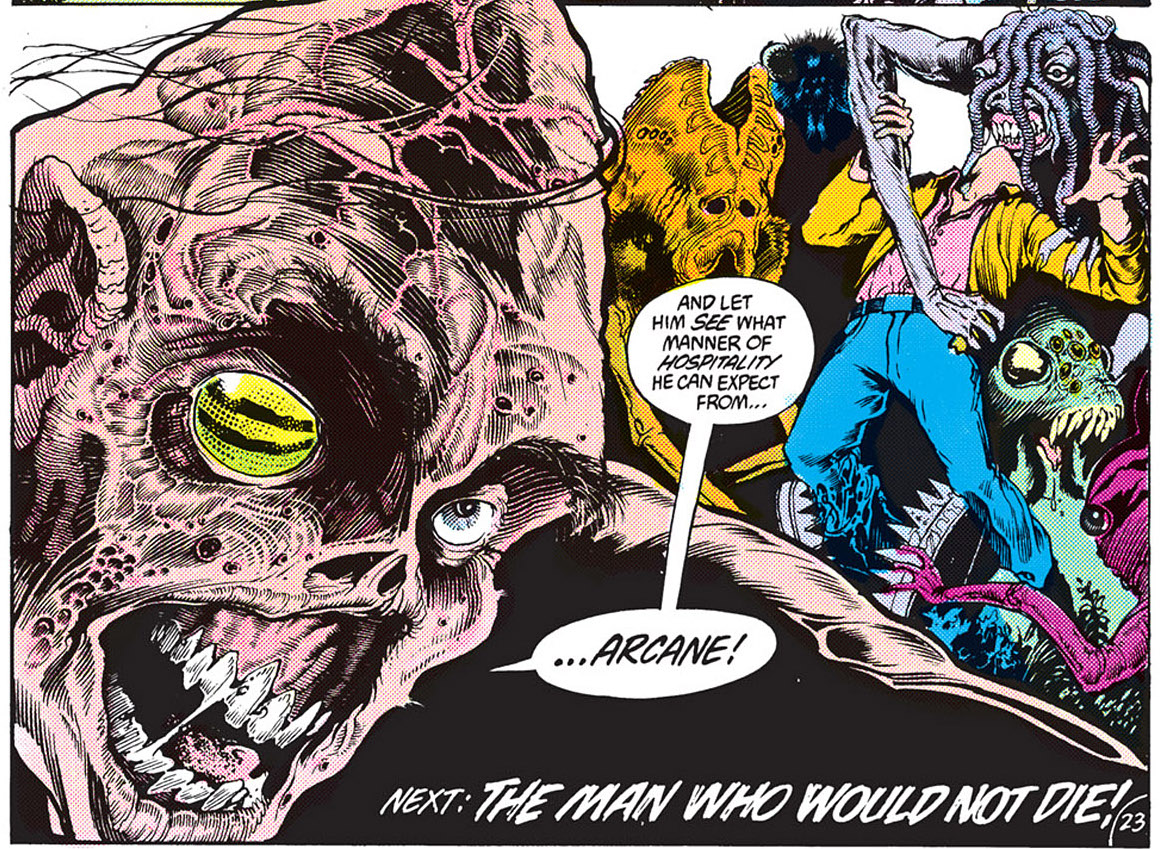 Issue eighteen “The Man Who Would Not Die” is a few new pages bookending the original resurrection of Anton Arcane, from back in the original Swamp Thing #9, and recolored. This is the first time I’ve seen the “Auntie Bellum” change to the script, and this has remained in every subsequent release.
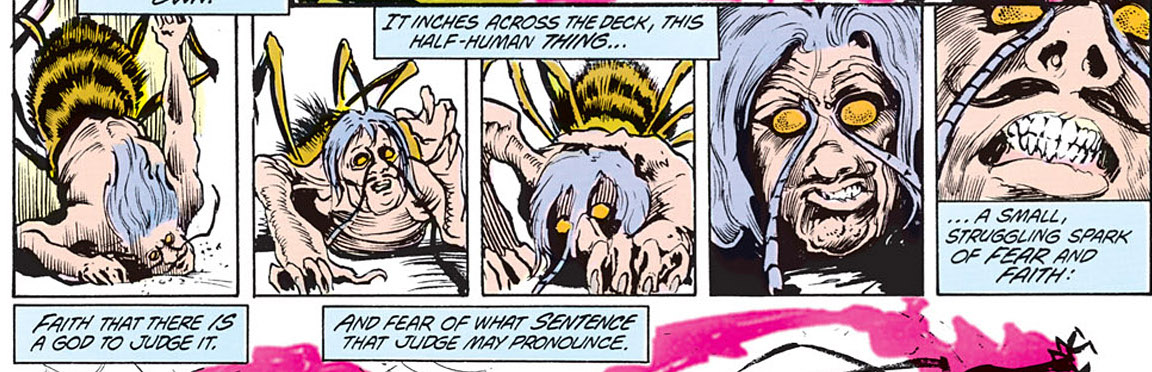
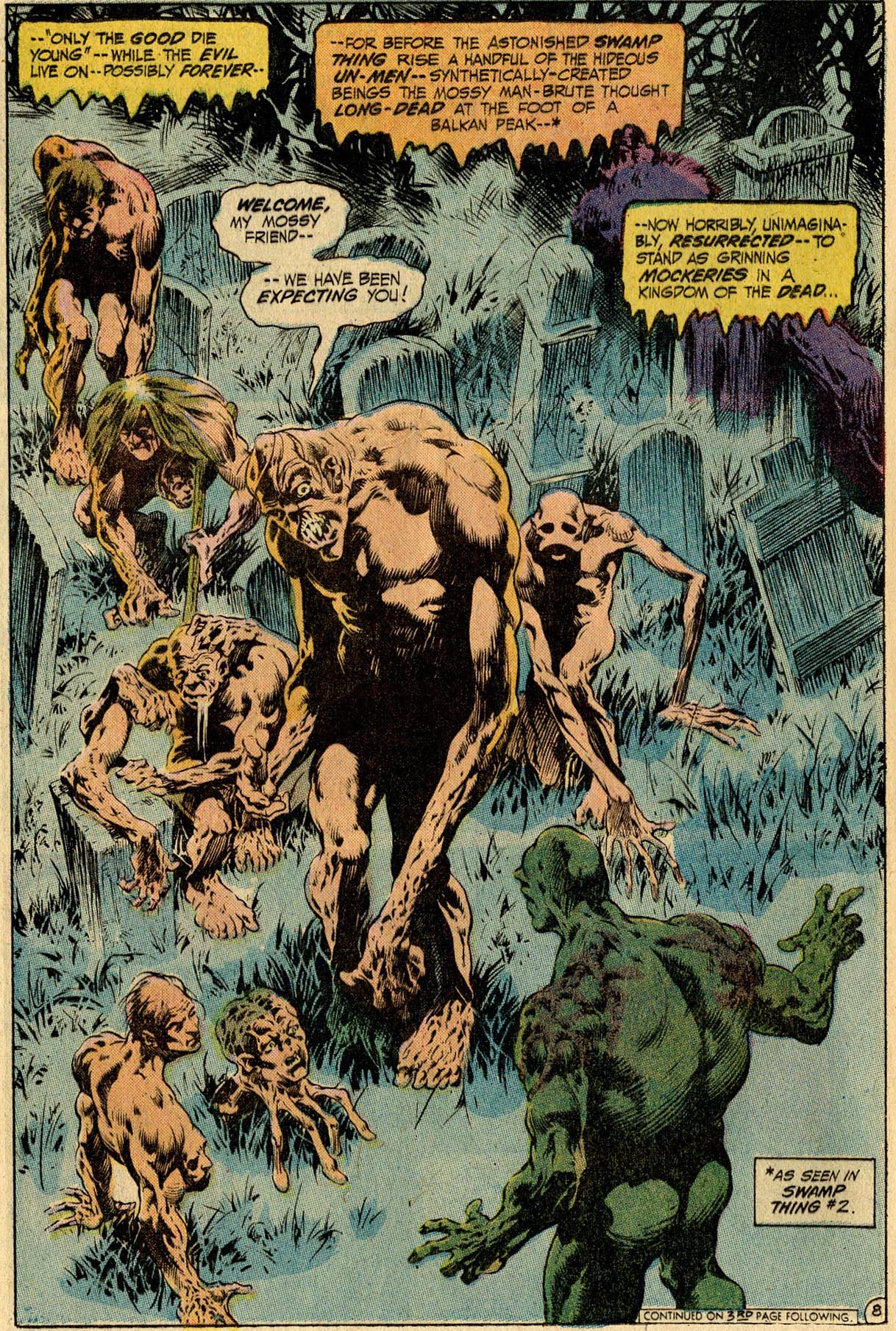
Issue nineteen “...And the Meek Shall Inherit...” is Pasko’s last, and it’s magnificent. Arcane and his un-men have taken on insect traits, making them even more grotesque than before. They capture Swamp Thing, Kripptmann, and Abby. Arcane still covets the Swamp Thing’s nearly-indestructable body. Kripptmann, a very gray and occasionally reprehensible character, redeems himself by destroying Arcane’s plans. At the cost of his life. His struggle, half-transformed into some sort of wasp or spider, is very small, but agonizingly illustrated by Totleben and Bissette. Pasko’s words are just right, giving the struggle a pathos seldom elicited in comics. With his sacrifice, Arcane is undone, and everyone separates. The stage is now set for Alan Moore’s tenure.
 Pasko’s work on Swamp Thing has gone unrecognized for more than thirty years, and that’s a shame. It’s certainly overshadowed by Moore’s years on the book, but these are excellent, creepy comics that pull the reader into a shadowy realm of modern horror. He literally draws the Swamp Thing out of the Gothic and comic-book trappings that defined the character in the initial series and presents us with fully modern horror. Going back over these comics is a pleasure, because Pasko’s writing is subtle and complex, different from what was being written then, and different from what’s being written now. It’s absolutely worth re-visiting for modern readers or horror, for its mood, its complex characters, and refusal to tie the end of the story up in a bow. Personally, I love the way the stories do not let the reader off the hook, but force us to look at issues and ideas from which the stories germinated. This is comics at their best. Telling stories that do not condescend to the reader.
Next up, Roy Thomas once again pays homage to his favorite character. Somewhere I never would have expected it. Thanks for your patience, and I’ll write more soon.


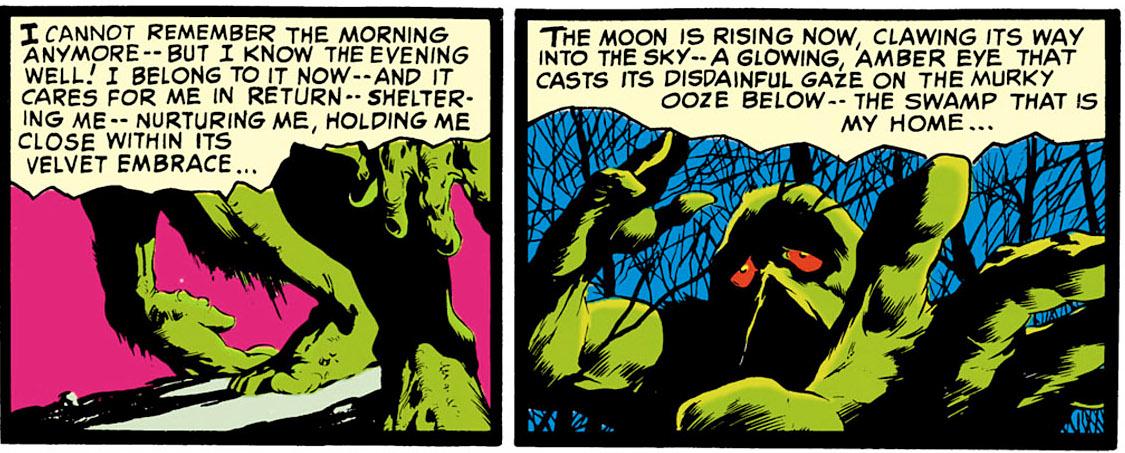
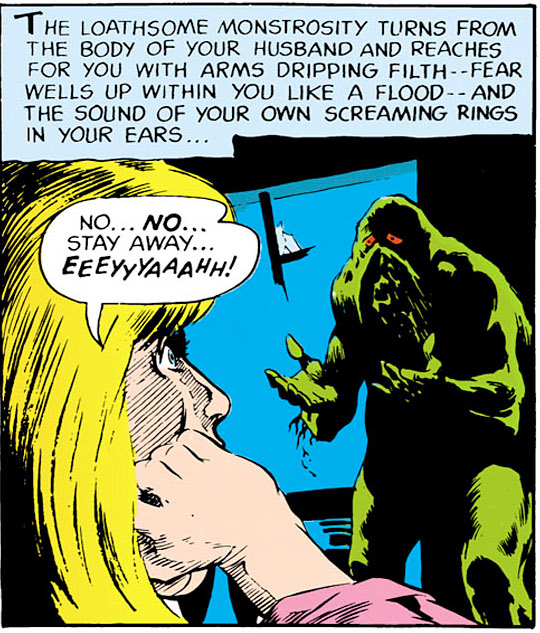
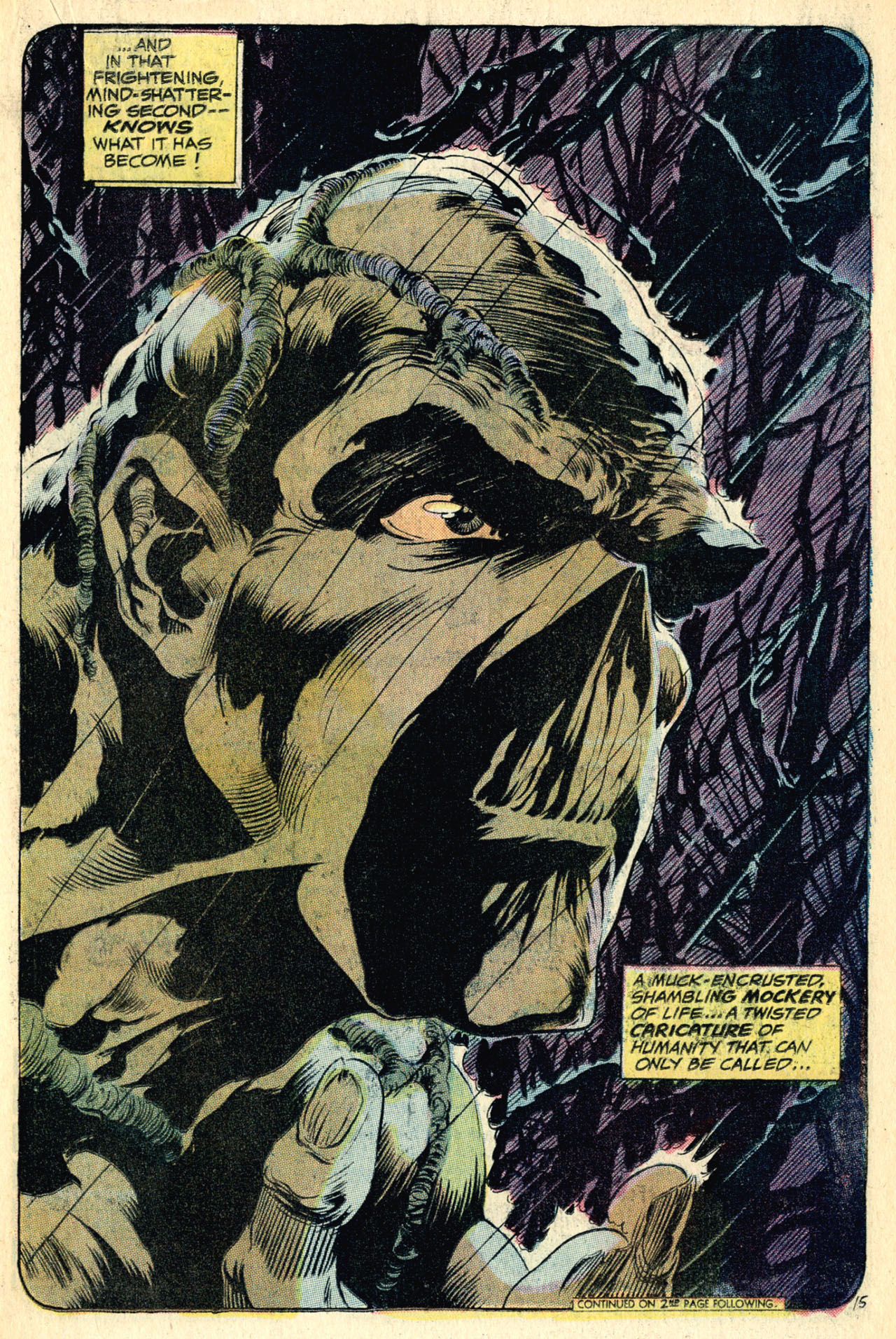 One year after House of Secrets 92, Wein and Wrightson brought the concept back, this time in a modern setting. They had been reluctant to do so, but were encouraged to do so by DC editor-in-chief Carmine Infanto, who had once been the illustrator for
  The Swamp Thing’s background cast is filled out with two people initially. Matt Cable was assigned to protect Alec Holland and now chases the Swamp Thing here and there across the globe. Cable is a bit generic, a down-on-his-luck government agent who hunts the monster that has ruined (in his opinion) his career. While on a trip to the Balkans, he picks up Abby Arcane, niece of recurring villain Anton Arcane. The two make a good team, although Abigail doesn’t have a lot of agency. They duo becomes a trio with Jefferson Bolt, a black man who was being held by the worms in issue eleven. Wein doesn't develop Bolt all that much, really only having two issues to do so. Bolt seems like he is there to provide conflict, or at least a different perspective that Abbey is unable to provide. The two (and then three) often provide a more human counterpoint to the Swamp Thing's stories, although occasionally (Issue 5 "Last of the Ravenwind Witches", and issue 10 "The Man Who Would Not Die") they don't show up at all. The supporting cast allowed Wein and Wrightson to approach stories from different perspectives. Issue 9, "The Stalker From Beyond" is an excellent example, switching perspective from Cable and the Abbey back to the Swamp Thing, moving the story forward through each character's perspective.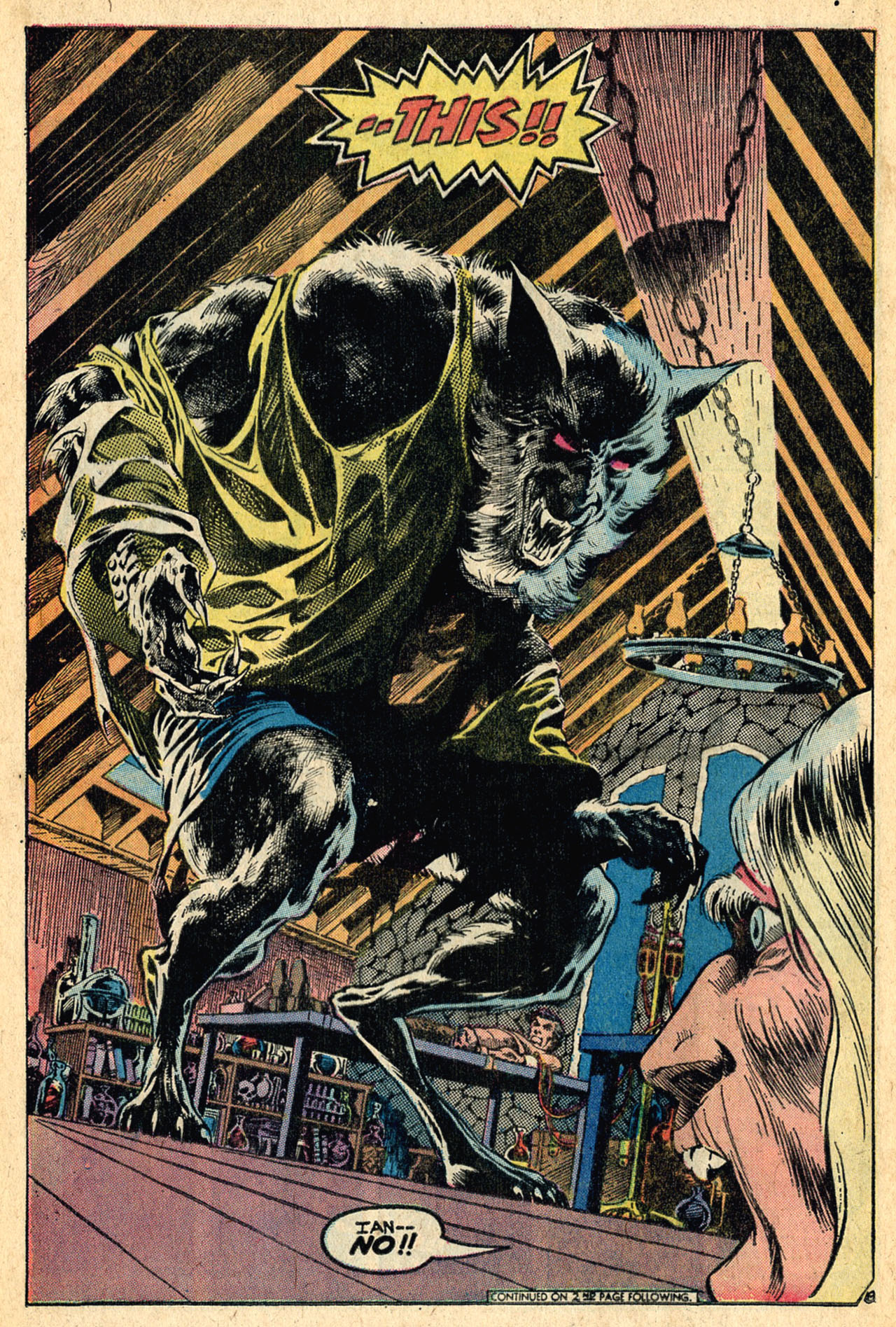
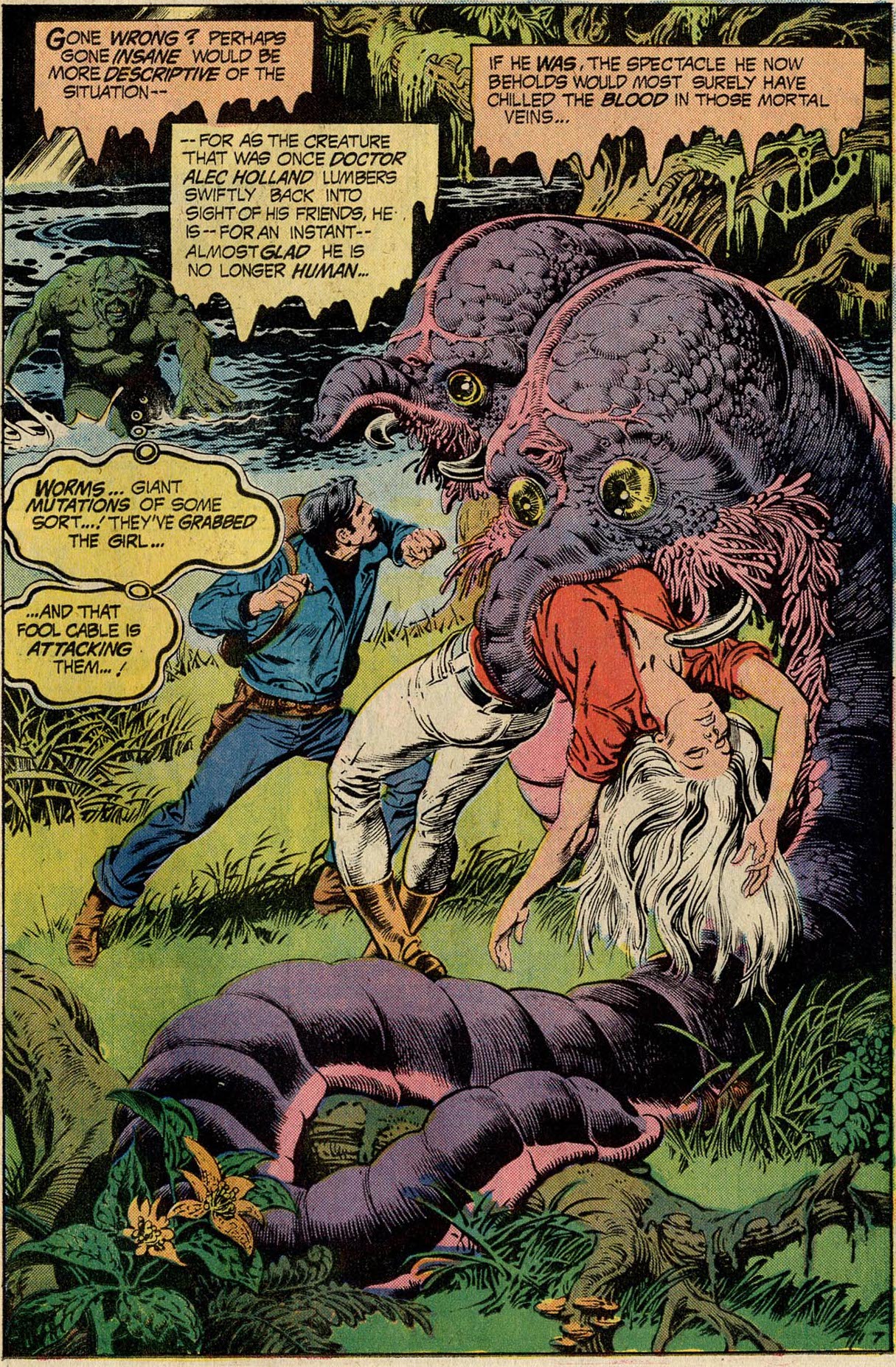
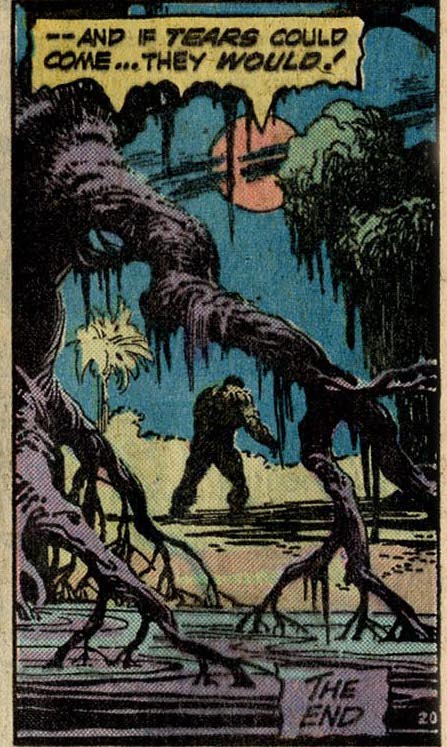 Wein wrote another three issues with artist Nestor Redondo made the comic his, and gave us very strong art. Unfortunately, virtually anything would have seemed pale after the masterwork Wrightson did. That said, Redondo's art is sharp and very well defined, although not as detailed or chaiscuro as Wrightson. Len Wein’s stories remained solid, addressing more novel concepts such as alien worms that wanted to keep humanity for food stock, time travel, allowing some wonderful illustrations of strange worms, a Tyrannosaurus Rex, and lions from the Roman arena. But the stories were pitched and broken differently. They were were no longer a collaboration, but fully scripted by Wein before being sent to Redondo. So they have a different feel. They're still good, but they lack the sense of the Gothic and the grotesque that was present in first ten issues. The only thing I can say is that they feel more like a standard comic-book. A little more 'gonzo' and a bit less personal. They're still worth reading, but it seems clear that Wein was winding down his time on the book. As a lovely farewell, Wein ended the series with the same line that ended the short story: “... And if tears could come, they would.”
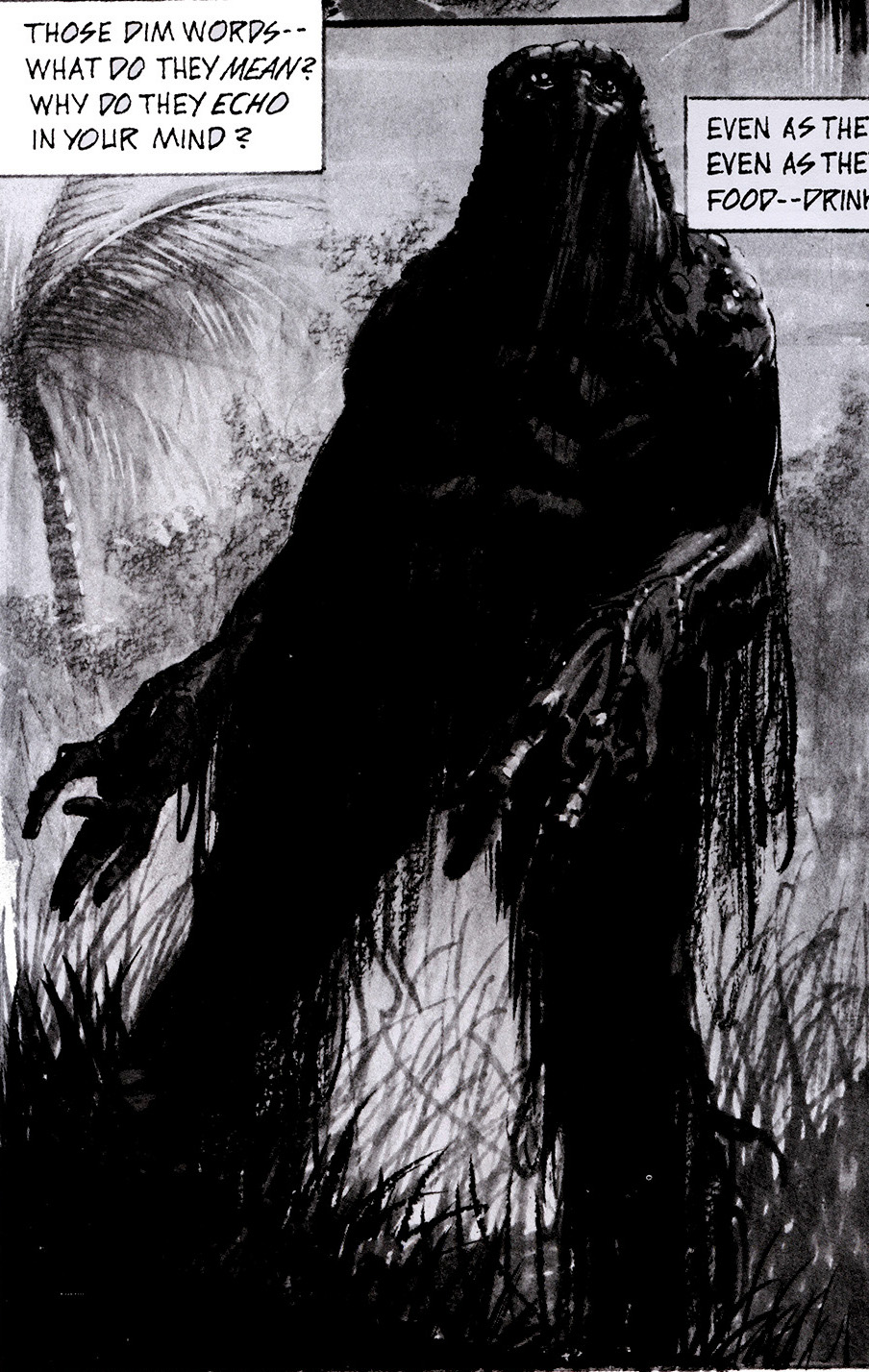 Although Man-Thing was not invented by Steve Gerber, it did attain popularity because of his brilliant and unconventional writing. So although this article will examine the early Man-Thing stories by other writers, the main thrust will be on the man who brought it to prominence. Man-Thing was originally conceived by Gerry Conway and Roy Thomas. As discussed in the Skywald Heap entry, this likely came about after the lunch Sol Brodsky and Thomas had in which Thomas suggested resurrecting the Hillman Heap. That Heap came out in March 1971, Man-Thing in May of the same year, the first Swamp Thing story in July.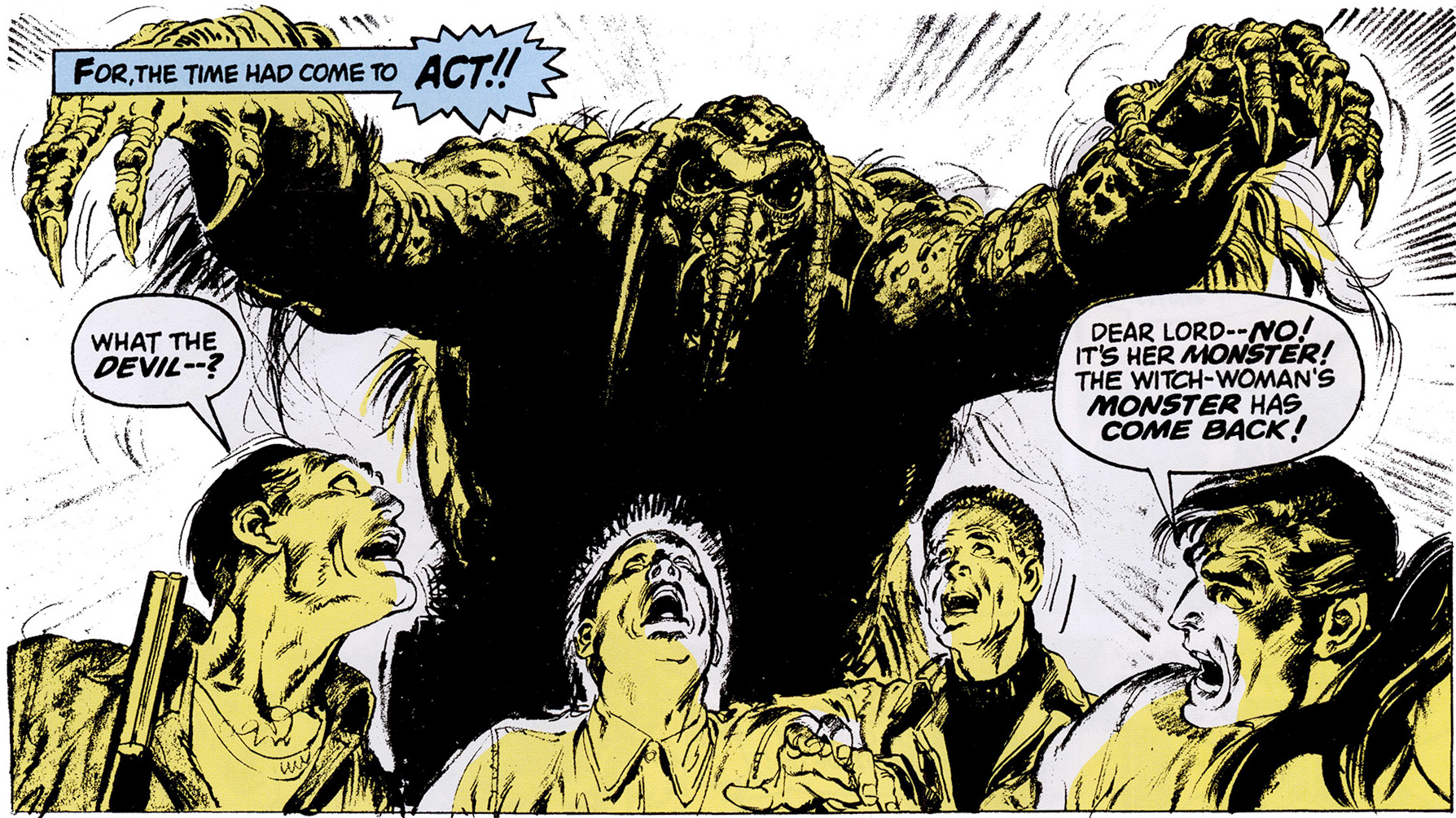
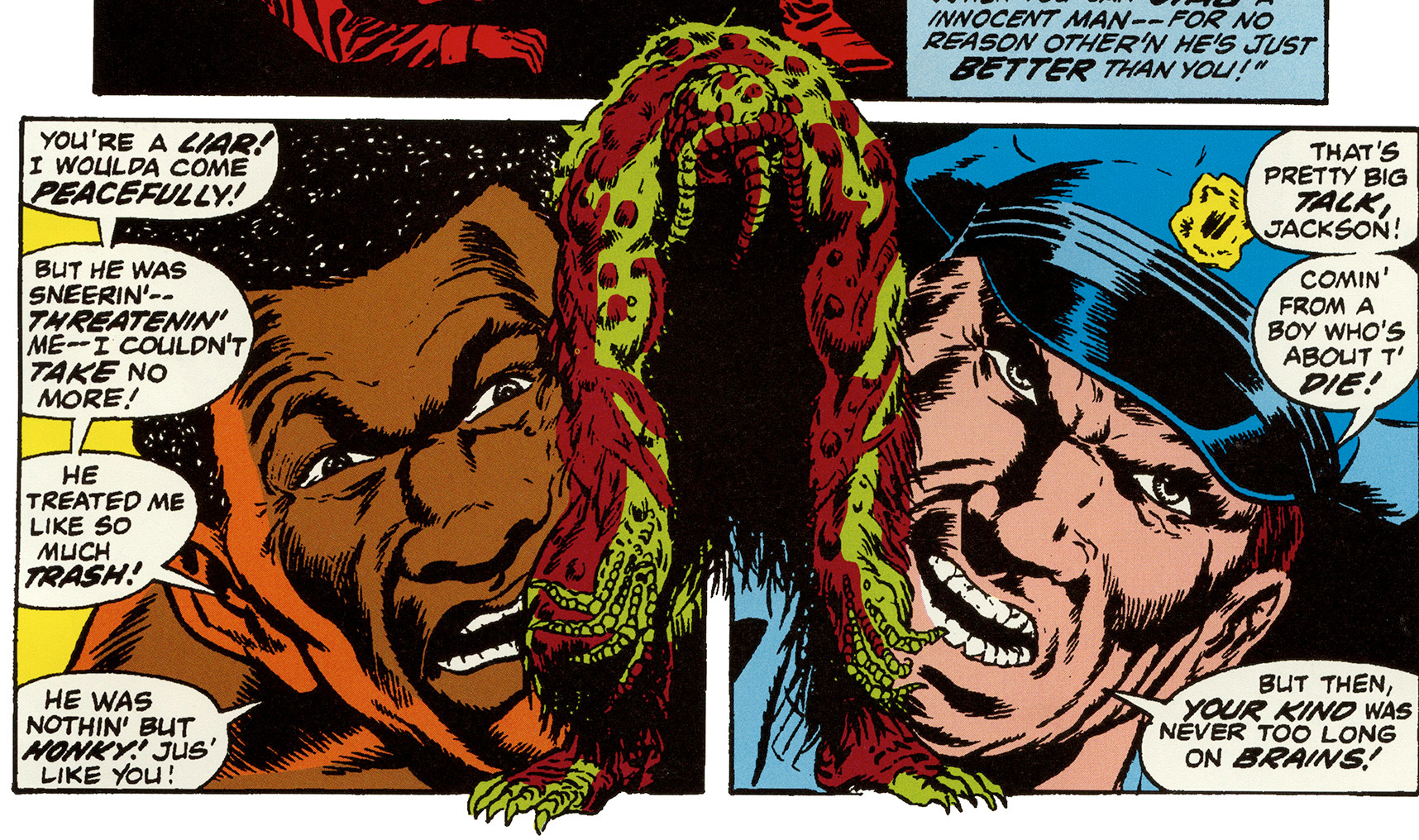 This is a story about very gray justice. Both men are guilty, both men hate and fear the other. The difference is that Corlee is armed, and when the Man-Thing withdraws his protection, Corlee shoots Jackson. Justice is not served. Each man is guilty, Corlee is clearly a racist of the worst stripe, and Jackson may be more justified in his loathing of Corlee, but that doesn’t justify his murder of the deputy. Both are consumed by hate, and rather than dictate a moral high ground, Gerber condemns both.
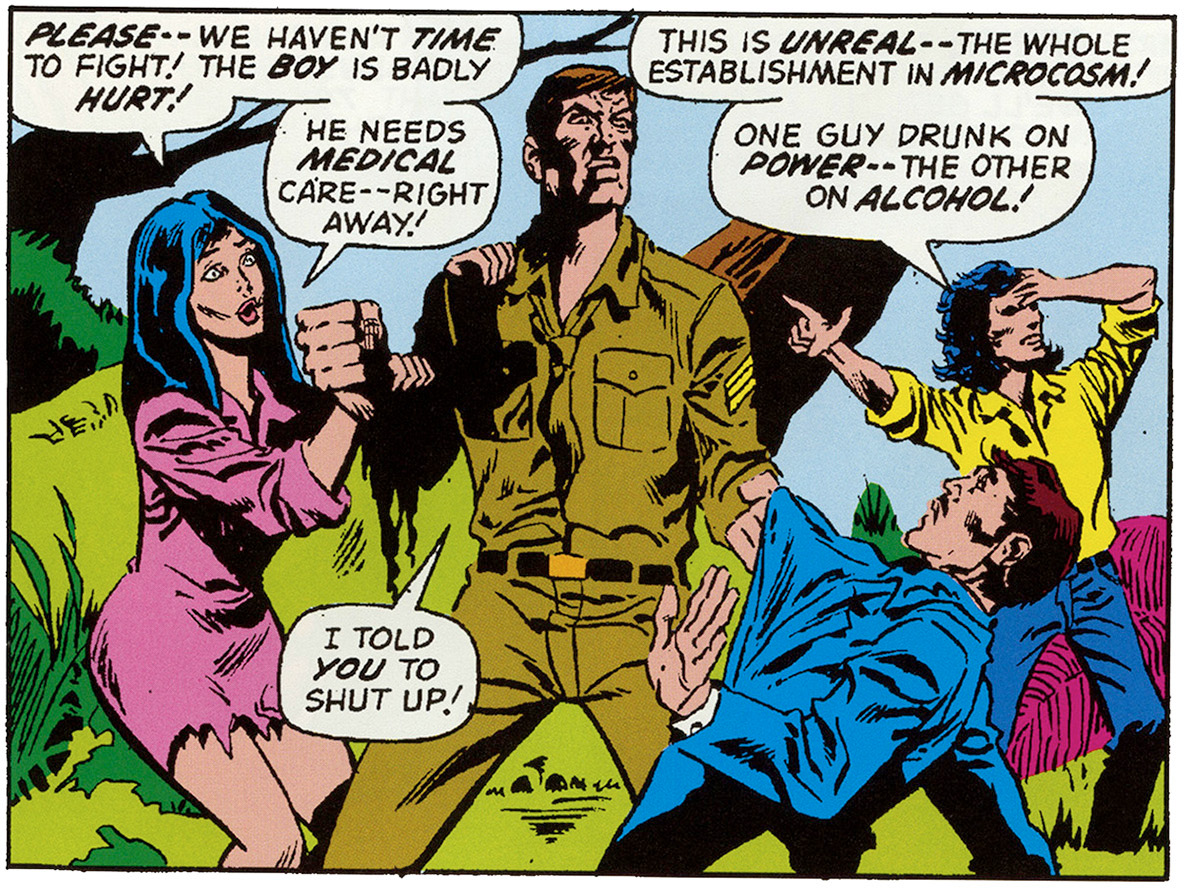 Which is not to say that industrialists were the only villains in his work. Gerber is also scornful when it comes to power. The Netherspawn speechifies about its power, but Gerber says in the narration that the Man-Thing is unimpressed, because it doesn’t understand the word. When shifty motorcycle gang leader Snake attacks the Man-Thing leaving his chain stuck in its mucky body. When it casually discards it, the chain strikes Snake in the head, possibly killing him. Ruth, a former associate of Snake’s, says that he used to call the chain his ‘power.’ “You envy my success, the wealth I’ve amassed!” says F. A. Schist in Man-Thing 8 “The Gift of Death.” “That’s why you want to destroy me!” The weird Cult of Entropy, a group of villains who pay lip service to living without illusion, but will kill anyone who lives in a way they don't approve of. Their leader, Yagzan, bears a suspicious, jowly resemblance to an aged Richard Nixon.
 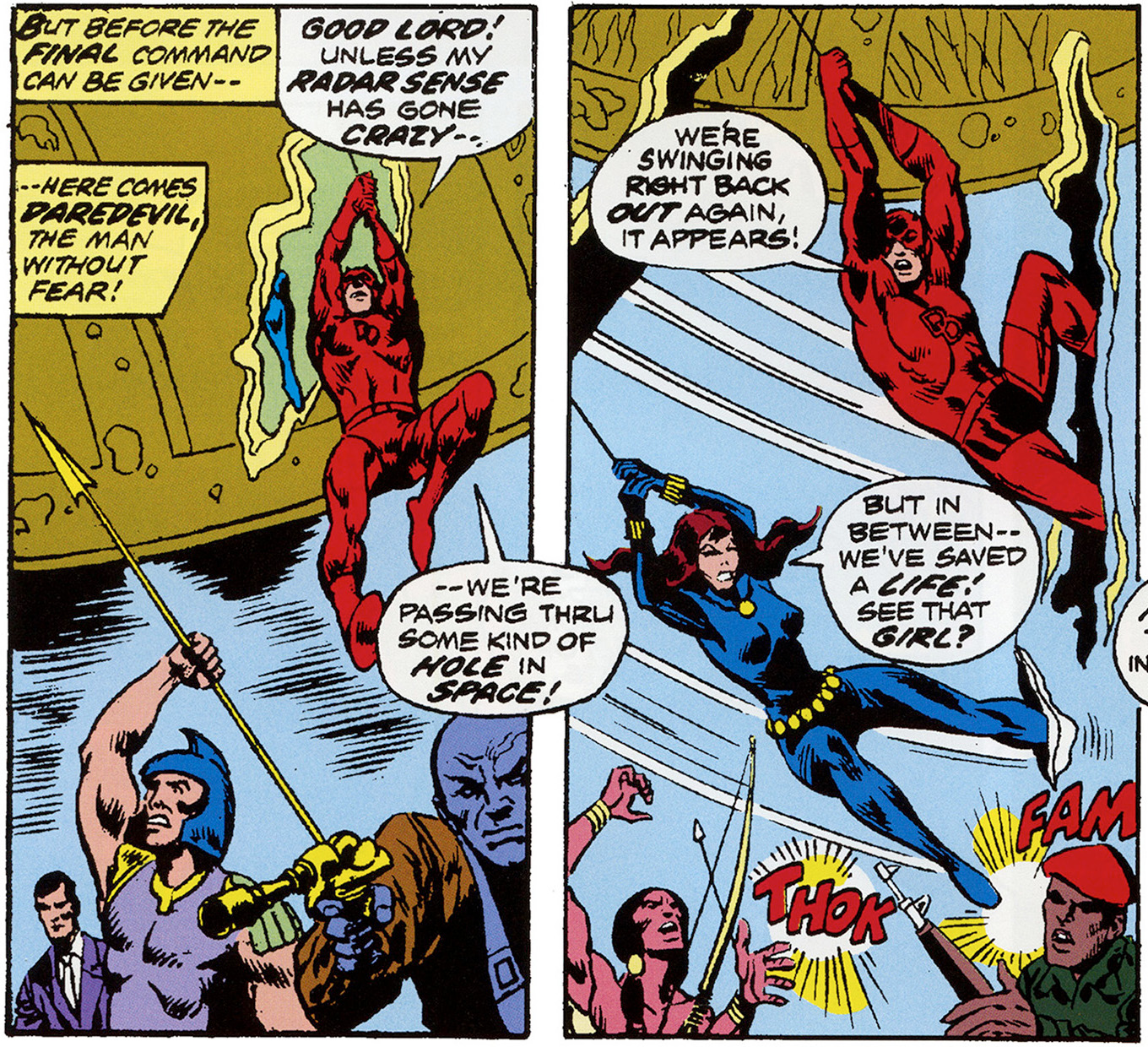 Gerber also wrote with a sly sense of humor that is tremendously appealing. In the very first issue of Man-Thing, Daredevil and Black Widow swing through a very chaotic scene. They don’t impact the story at all. But it’s quite funny to see the famous characters, who Gerber wrote, pop through in a time when most crossovers were serious affairs. Which isn’t to say that Man-Thing didn’t interact in a meaningful way with the rest of the marvel Universe. Just as Man-Thing was getting its own title, the swamp creature appeared in the Gerber-scripted Marvel Two In One 1, ‘Vengeance of the Molecule Man” in which Ben Grimm, the Thing, decides that the Man-Thing is stealing his moniker. The later team up to Molecule Man, who reverts both Thing and Man-Thing to Ben Grimm and Ted Sallis, respectively. Ultimately, the story is a clever retelling of the origin of the Man-Thing, available to those who might not have been reading Fear, and an attempt to hook in the Thing fans who might not have been aware of the Man-Thing.
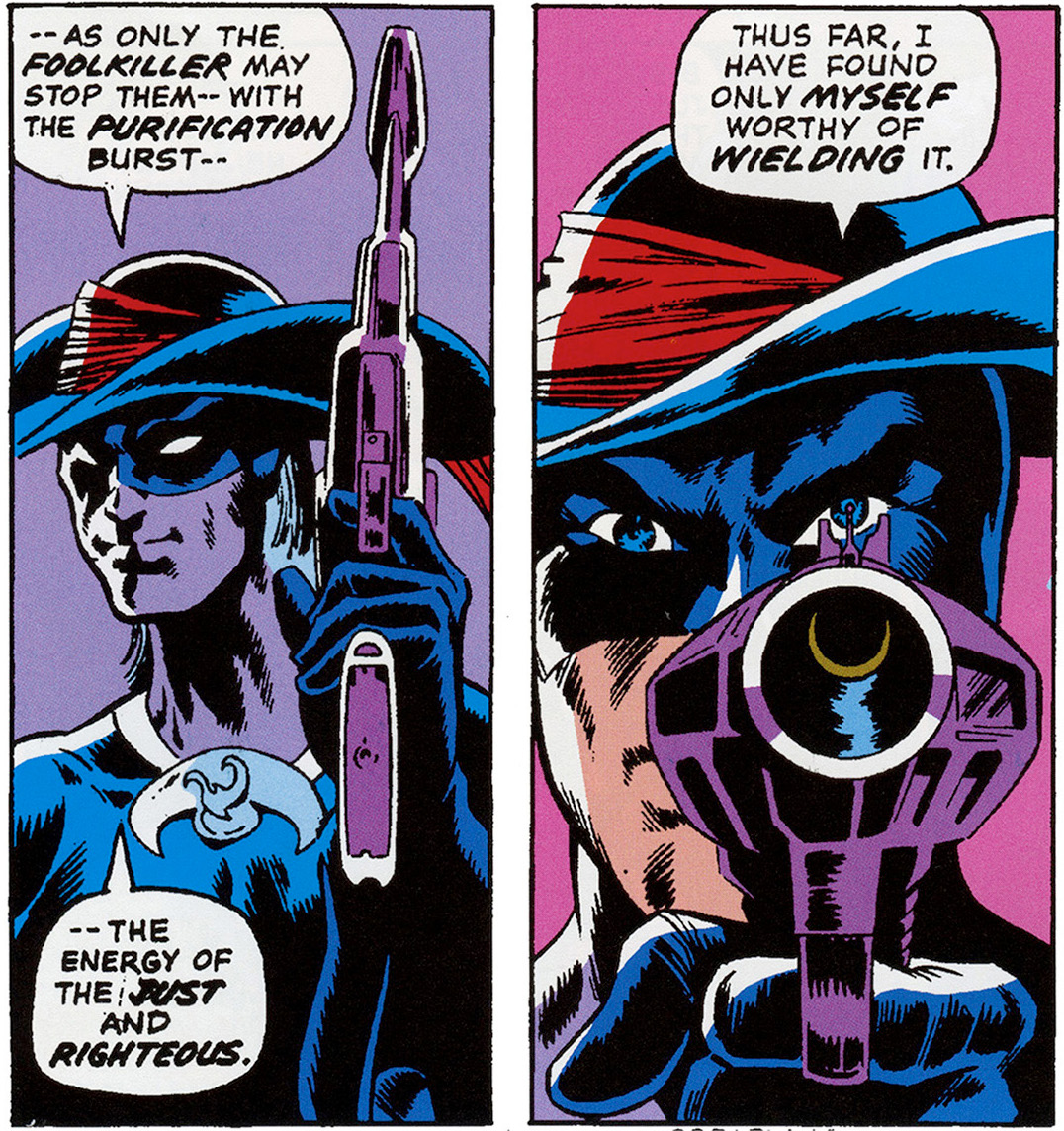 Gerber created many memorable characters, and trusted his creativity enough to discard them when their characters no longer fit his stories. The Foolkiller is a villain who is a parody of a superhero. Essentially the same as the Punisher, who emerged a few moths after the Foolkiller’s debut. The Foolkiller is unhinged, and and believes he knows who should live and who should die, and takes a more active hand in the process than most. He is a fanatic, and more importantly, a religious fanatic, believing he is guided by God. And although he has his targets, there are others who he doesn’t seem to mind killing. For defying him. Or merely scoffing at him. Gerber’s depiction of narcissistic megalomania is spot on, as the self-justifying Foolkiller murders victim after victim, assured of his own righteousness.
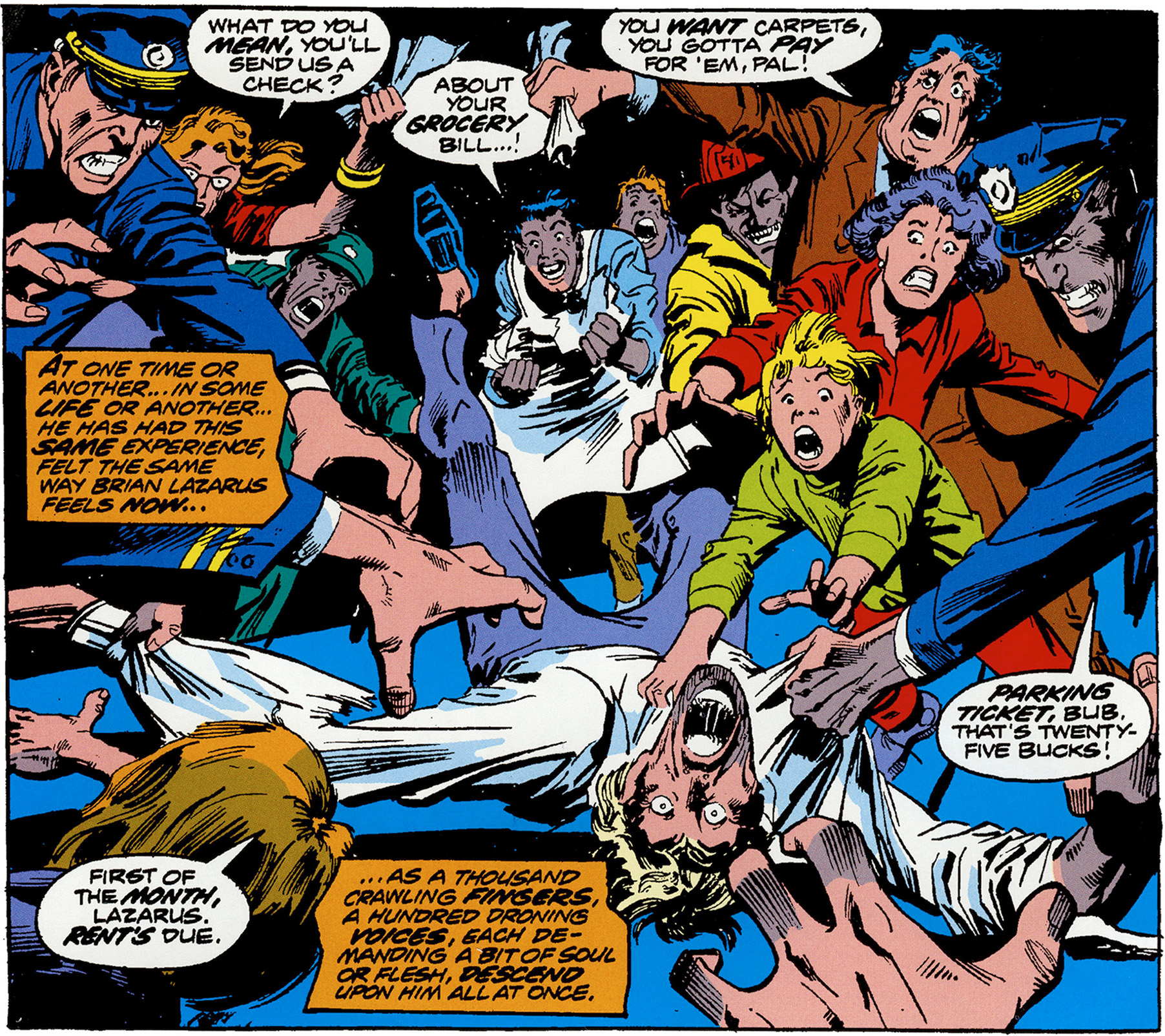 Again demonstrating his versatility, Man-Thing next encounters a ship of pirates, commanded by Captain Fate. Now, Skywald’s Heap had also encountered pirates, after stowing away on board a cargo ship, in issue 11, March of 1973, nearly two years before. Coincidence? Was Steve Gerber reading Psycho magazine, or was there something that both writers had read or seen that made them think classic Caribbean pirates would be a good antagonist for their swamp creature? But where the Psycho pirates turn out to be inspired by 18th century pirates, Gerber’s story instead involves a hundred year-old pact, reincarnation, a floating tower, and a sympathetic satyr. It may not have been his best story, but it certainly wasn’t a predictable one.
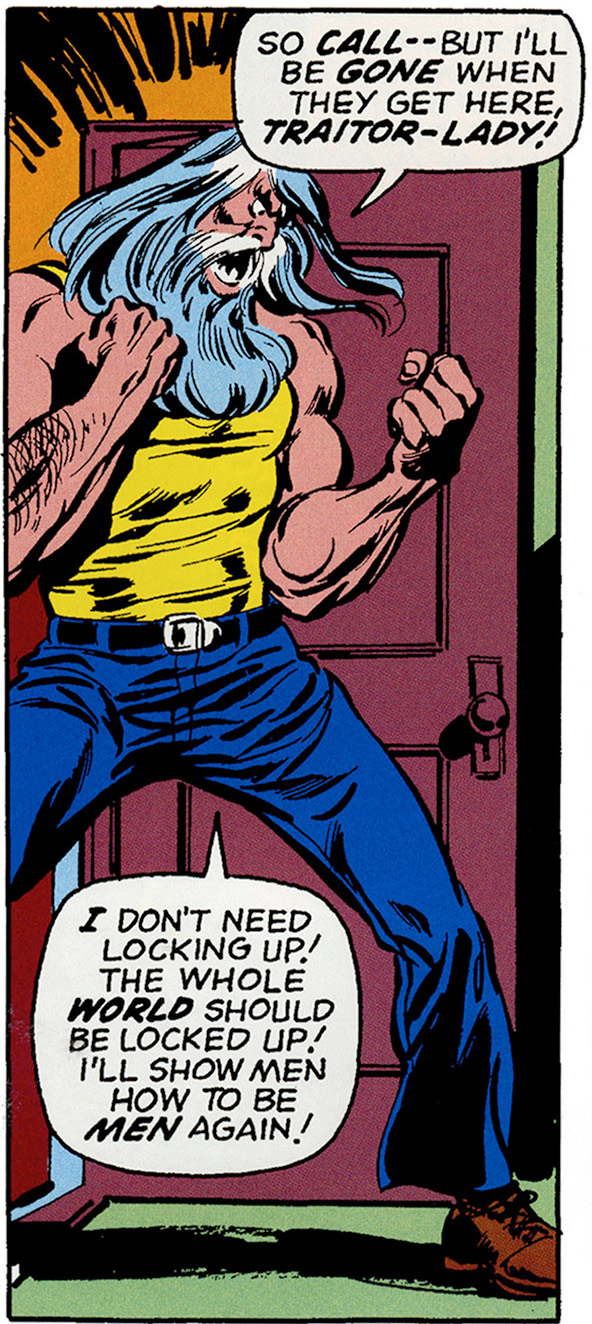 "Decay Meets the Mad Viking” in Man-Thing 16 again touches on some of Gerber’s favorite subjects. The establishment gone mad and inhuman. Josefsen is strong and able at sixty-five, and considers that men who are not strong are all weak, hippies, and wussies. Compared to his own remarkable self, of course. His loathing of weakness extends to far that he chases Astrid, his granddaughter, into the Man-Thing’s swamp, swinging a battle axe, screaming that she’s a traitor. He destroys the encampment of a nihilistic rock star, who had set up shop where Sallis was murdered, seeking inspiration from tragedy. Gerber writes some of his most truly nihilistic words in the end of the episode: "Then, the last traces of hope must be wiped out. The jaded young pale into insignificance while something unsoiled endures. Only the mad must be left to inherit the Earth.”
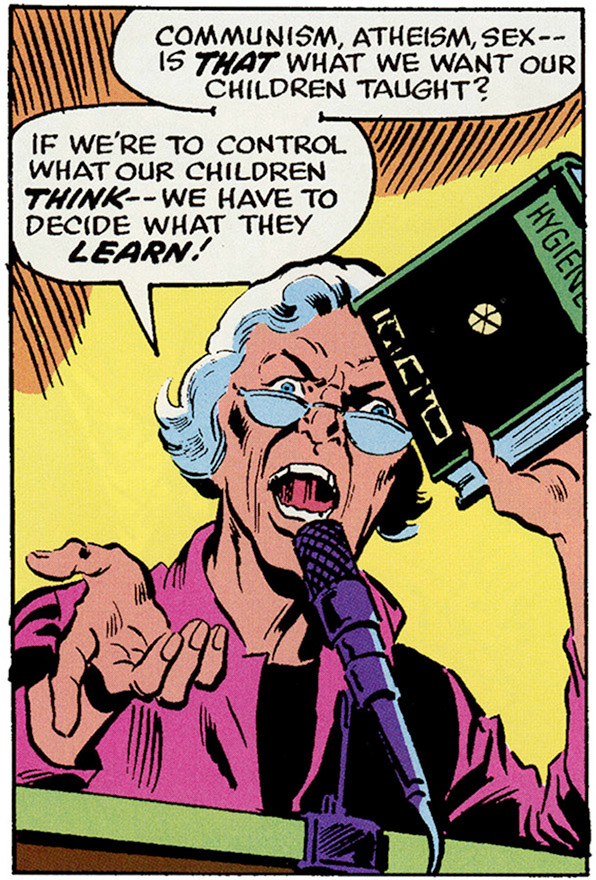 Gerber's stories could be daringly topical, also. He tackled high school suicide in Giant Sized Man-Thing 4, a controversial topic, but not one specifically banned by the Comics Code Authority, It is strange reading the comic so many years later and realizing how long it has taken for phrases like ‘fat-shaming’ and ‘toxic masculinity’ to come into our culture. He also takes on a moral panic, with a woman standing on the public stage waving a book about sexual hygiene screaming “Communism, atheism, sex – is that what we want out children taught? If we’re to control what out children think – we have to decide what they learn!” How little America has changed since 1974. I will also note that there is no supernatural ignition for the panic. Humanity cannot dodge responsibility, the villainy presented are all too human.
 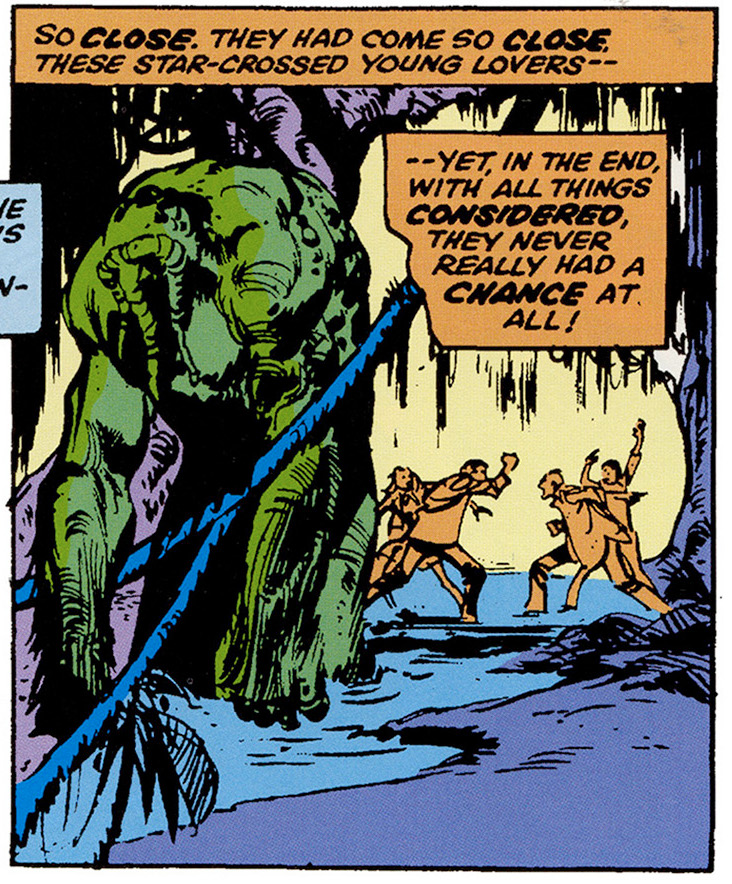 All things must come to an end. With sales dwindling, the decision was made to close down the Man-Thing book with issue 22. But Gerber knew that this was the end, and was able to write one of the most unusual endings to a comic.
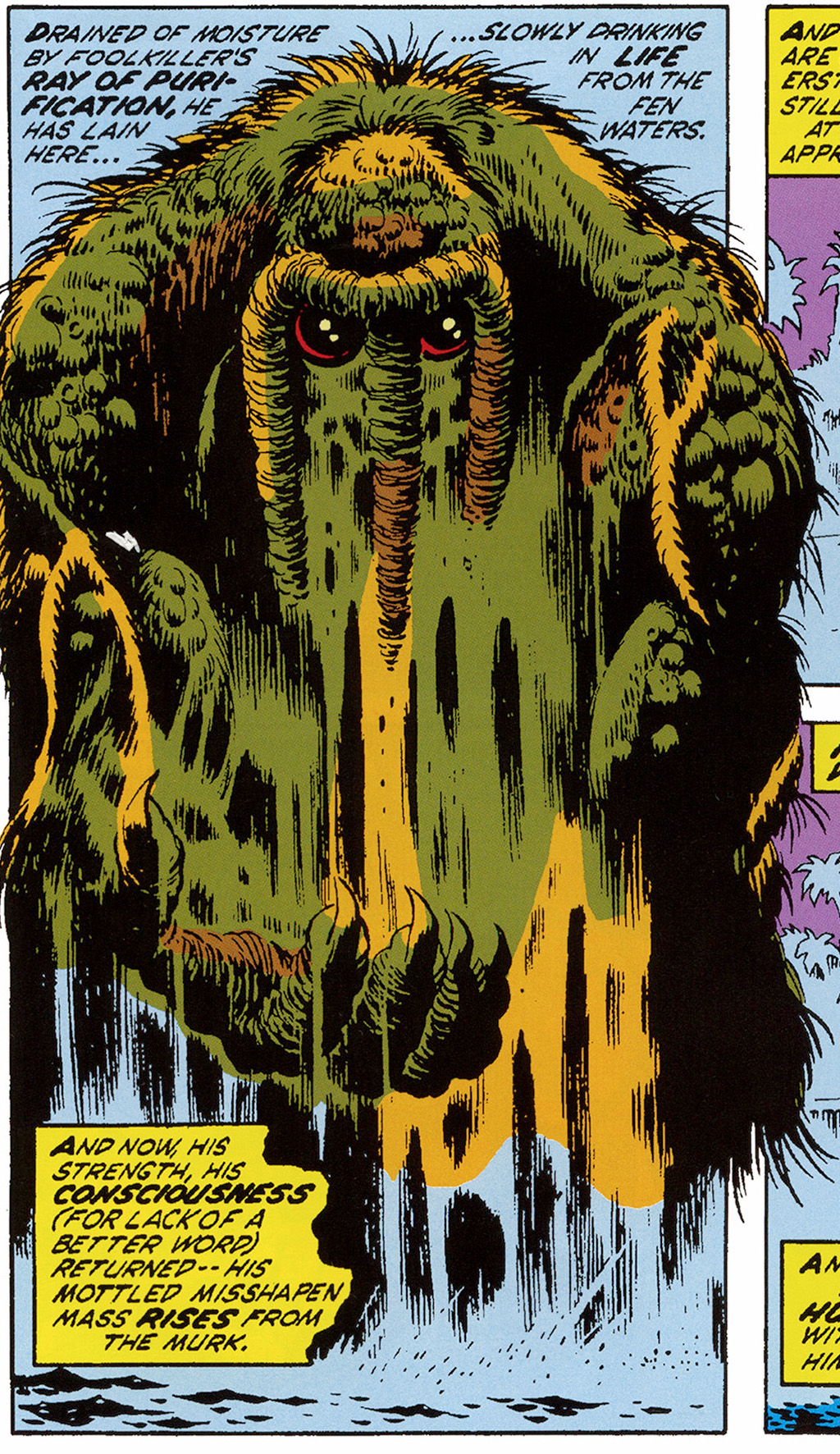 Gerber will show up a few more times as I move the timeline forward. Most notably, he had an indelible impact on the future of the Man-Thing, but he also wrote Sludge, a mucky character with a similar origin for Malibu comics during the early 90’s indie explosion. Most poignantly, he also left behind his final Man-Thing script, which later became the Infernal Man-Thing. And, of course, other writers used the Man-Thing in their stories, with some degree of success. The Man-Thing showed up
 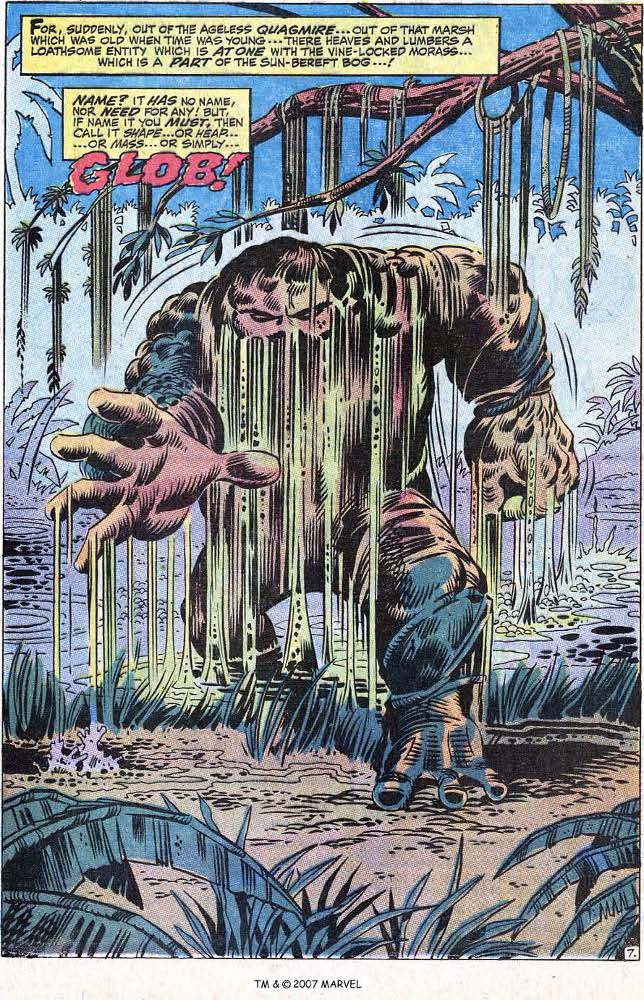 Roy Thomas has long been a champion of the Heap. His career has been entwined with it. In 1969, he created a one-off villain for the incredible Hulk to fight, called the Glob. It was his first full writing assignment. In The Incredible Hulk # 121 (“Within the Swamp There Stirs... A Glob” November, 1969), The Hulk throws radioactive barrels into a swamp, which inevitably leads to the resurrection of some thing in the swamp. Ladies and gentlemen, meet the Glob.
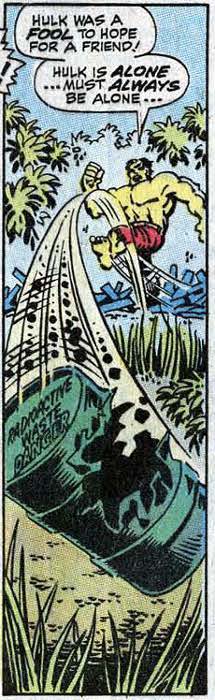 It's no longer sufficient for the dead man to have possessed unbreakable will, or get the help of the baby ghosts of Walcaw swamp: Heap offshoots often need an exterior catalyst to explain their transmogrification. For the Glob, it's the Hulk's destruction of a warehouse full of drums of radioactive waste. The stories being set in swamps, this is usually a liquid. Later muck men will be acted upon by experimental chemicals, the super soldier serum, biorestorative formulae, and necroplasm.
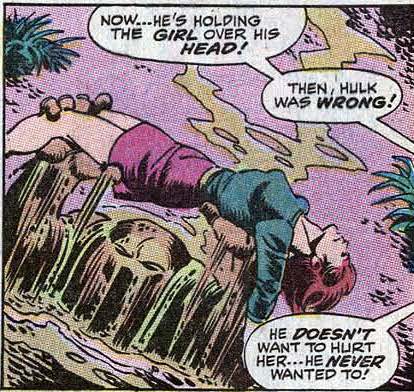 The Glob’s initial storyline is pretty by the numbers. The Hulk wanders into a swamp fleeing the military, and encounters the Glob. The Glob, acting on dim memories of a wife, is attempting to carry away a woman. When he begins to dissolve in a radioactive swamp, he holds the woman up, showing to the Hulk that killing her is not his aim. The hulk rescues her, and the Glob vanishes beneath the surface.
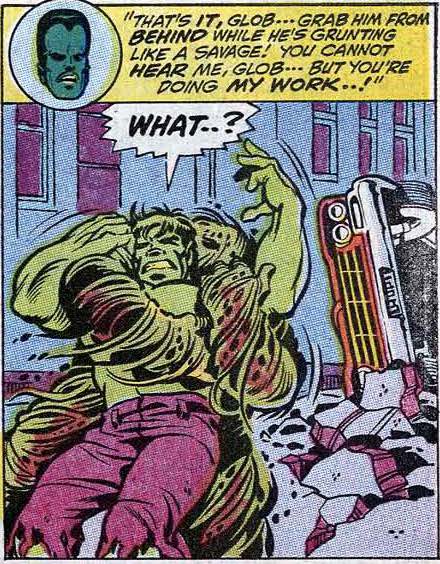 Less than a year later, the Glob was back, reconstituted by green supergenius The Leader. In Incredible Hulk #129 (“Again, the Glob”, July 1970) the Glob is little more than a determined pawn, mind-controlled into attacking the Hulk. This appearance doesn't show much about the Glob, since his personality is subsumed into the Leader's control. Nevertheless, he is a determined opponent that even the Incredible Hulk really can't damage. The Hulk eventually has to electrocute the Glob in order to stop its unstoppable attacks. Even so, the little bits of the Glob that are left begin to come together, and the comic leaves it there. It's not an issue that does a lot of development.
 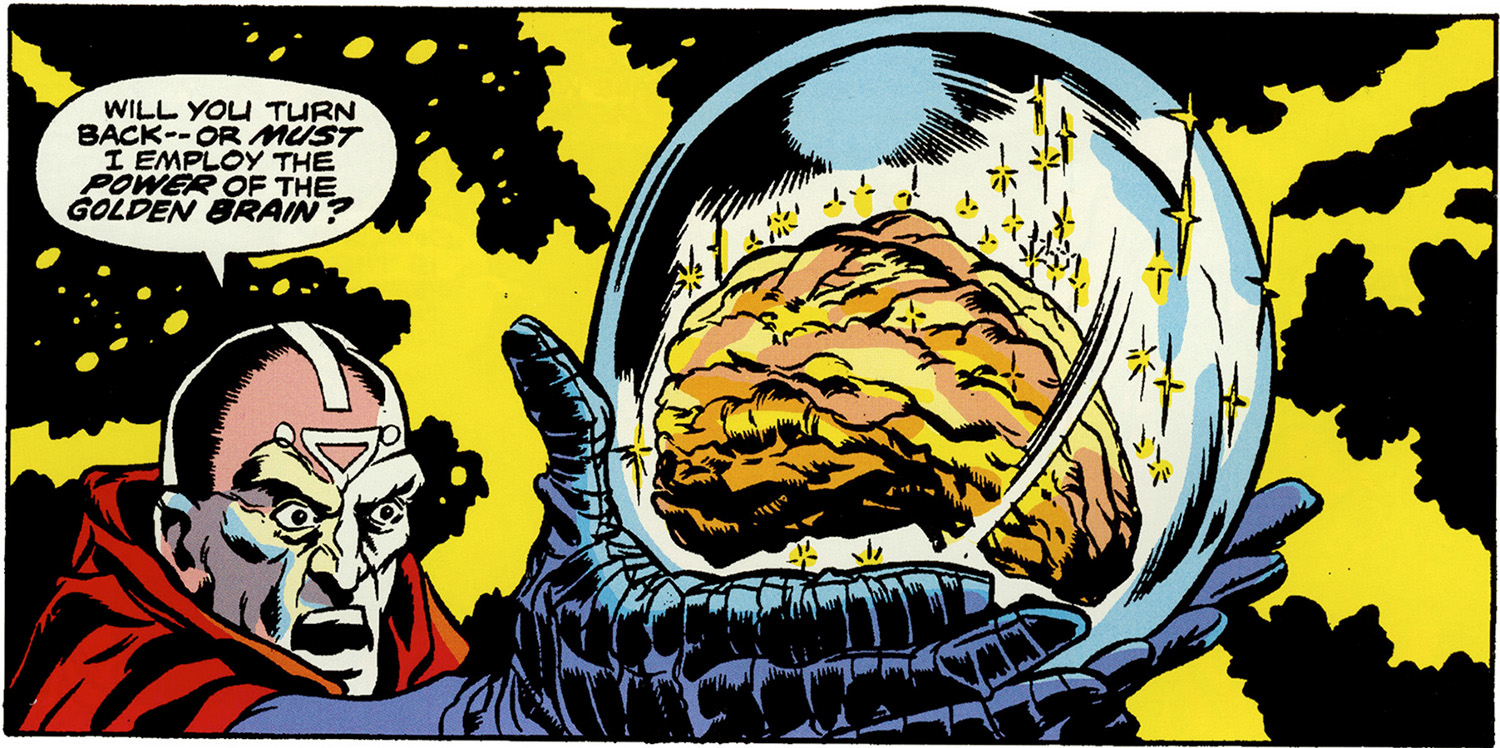 But this is Steve Gerber we're discussing. I'll write more, a lot more, on his work on Man-Thing pretty soon. Let me just say that Gerber had a brilliant writer with a constant and amazing stream of ideas. The Golden Brain builds itself a new, familiar body out of mud, Joe Timms, to be precise. But like the Glob and the Heap, he cannot speak. Simple and thoughtless, he it put to work until the leader of the Cult of Entropy forces him to become the Glob again. But now the Glob is mucky, rather than the shaggy creature. Once again mind-controlled, the Glob now attacks the Man-Thing.
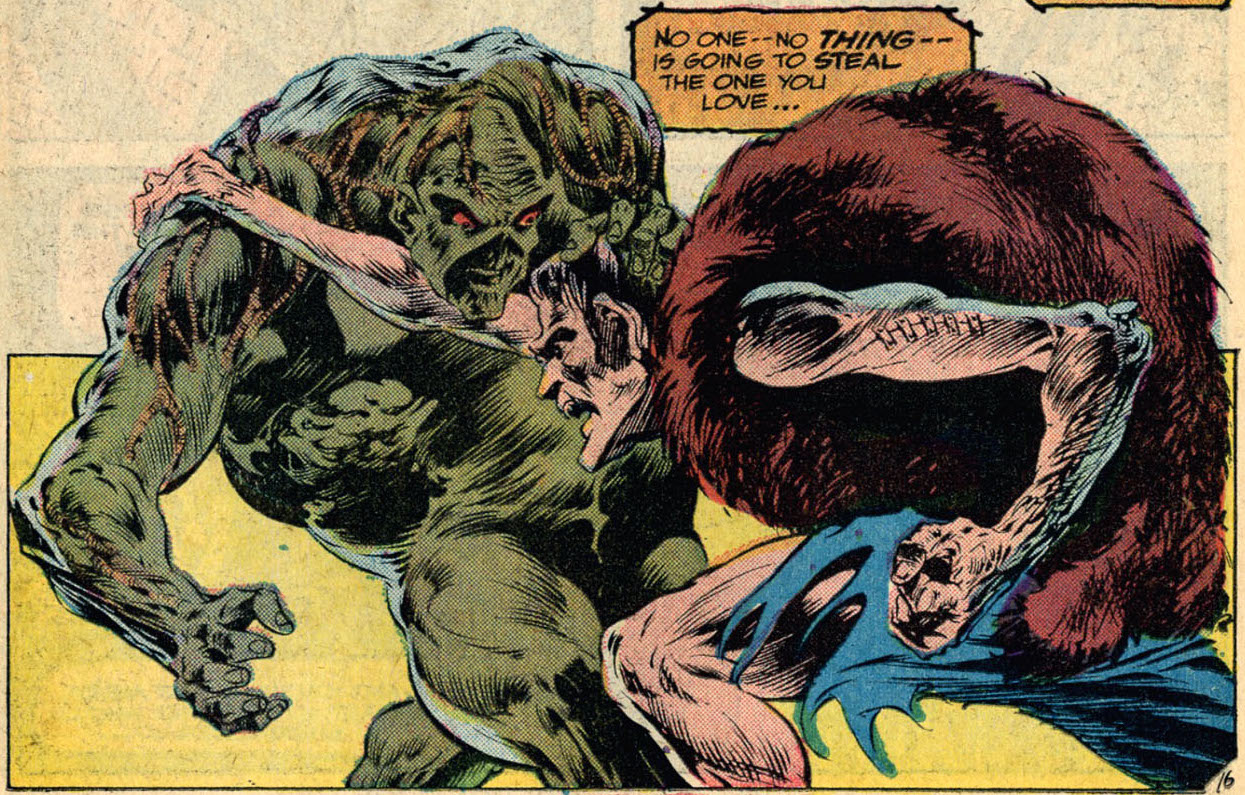
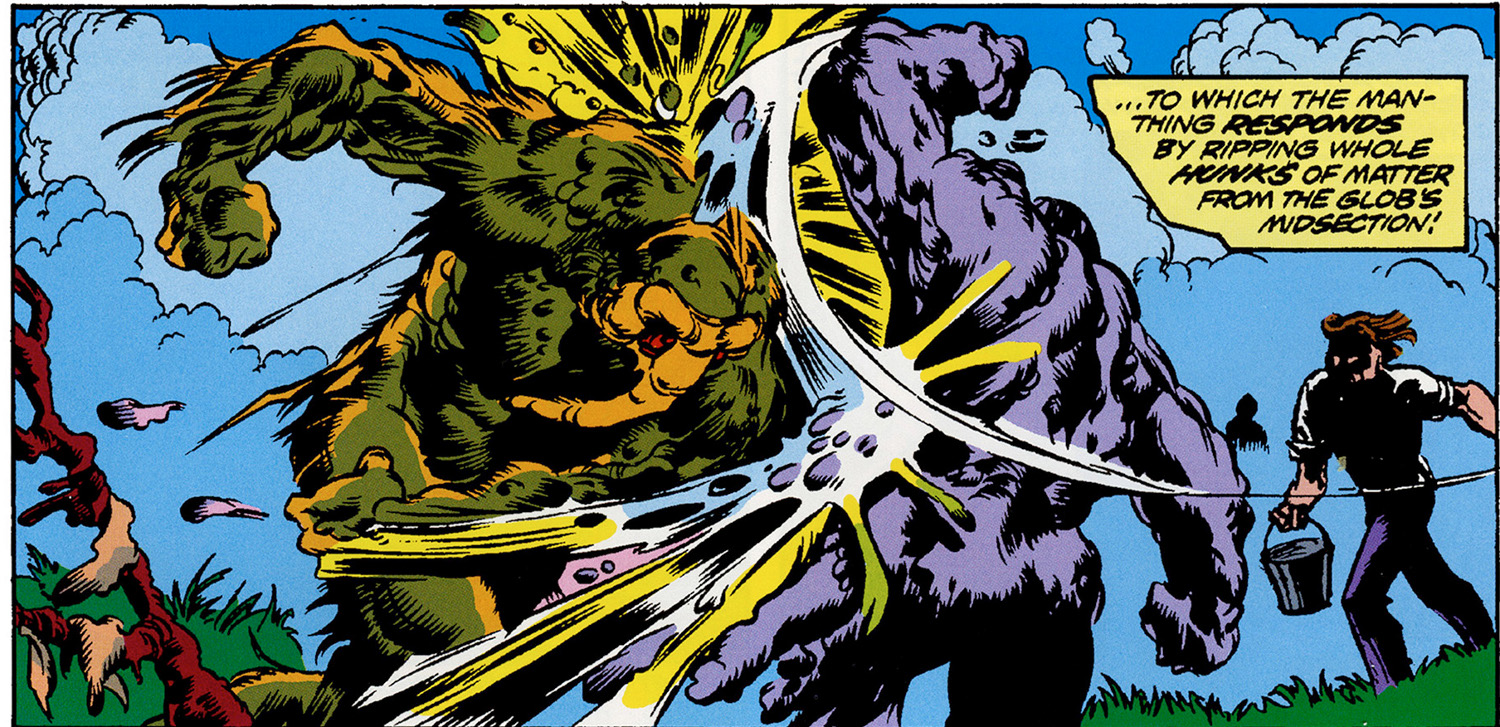 Poor Glob is once again subject to mind control when he reappears in Incredible Hulk 197 and 198 (“...And Man-Thing Makes Three” and “The Shangri-La Syndrome”, March and April 1976, respectively). The writer is notably Len Wein. Wein, perhaps best known to me as the creator of Swamp Thing, wrote that title until 1974. Two years later, he took another dip in the swamps in in two Hulk issues.
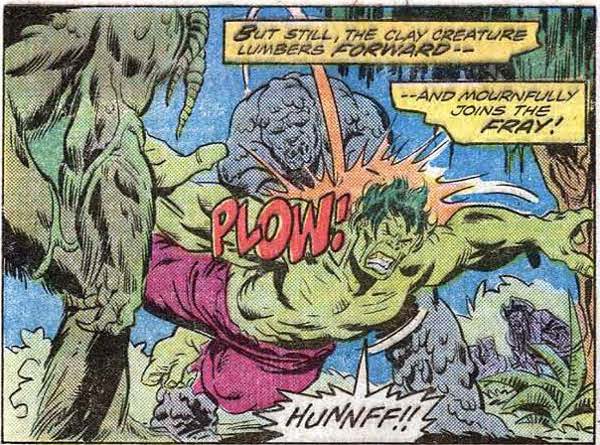 The Glob doesn't have much to do for the rest of the story. But it is part of the successful rebellion, and it is the Glob that attacks the Collector in the end of the story. Poor Glob is probably feeling ill-used, after being manipulated by the Leader, the Cult of Entropy, and now Collector. Small wonder he wants to take it out on his most recent tormentor.
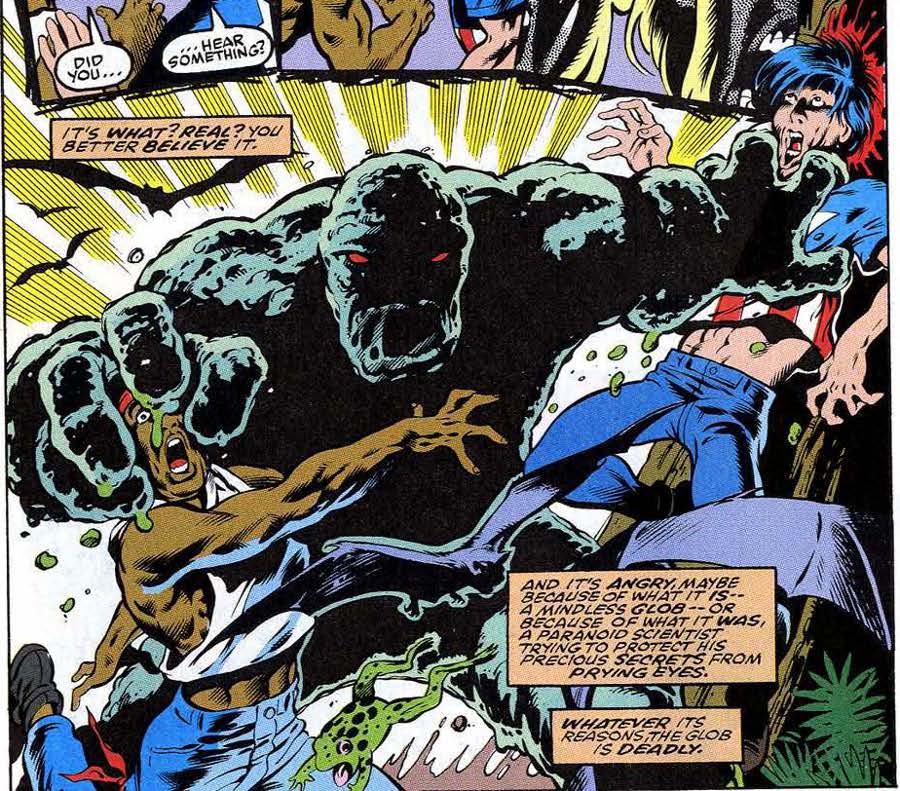 This time the Glob, which is not as noble as Timms, serves as a foil to Man-Thing. Although they are both hideous swamp creatures, the Man-Thing isn’t out to kill. The Glob is. And in contrast to the previous team-up, this time the Glob squares off against the Hulk and Man-Thing. Like many stories in which the Man-Thng guest stars, the fight ends with the Man-Thing burning whatever knows fear. In this case, the Glob lights up like a Christmas tree.
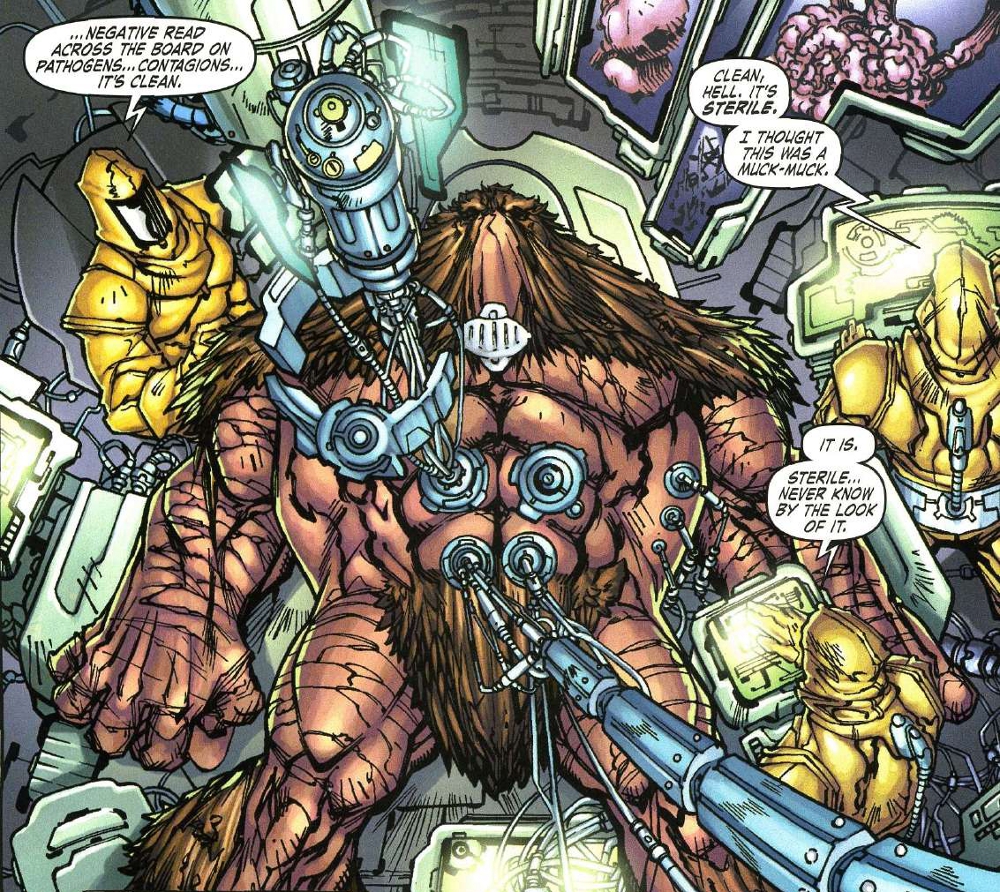 The Glob is also fitted with a communications device, so it can finally speak. This is not the mindless, mute Joe Timms that has been mentally controlled. With the speech device, it seems to be a perfectly normal human, even making jokes, under the streamers of swamp muck. But the Glob is not very taken over so many times. This is done for the Man-Thing much later. After this, he’s shuffled to the back of the pack. He only appears in a single panel of the final assault at the end of issue six.