Monday, May 7, 2012


Tuesday, May 1, 2012
Confessing Another Obsession
I've shared, or perhaps inflicted a number of my obsessions on this blog: Godzilla, Lovecraft, Ancient Egypt, necromancy, The Tomb of Horrors. These are the subjects that I return to again and again. I'm not sure why. I think everyone has these odd little things that they just like for reasons that are buried deep in their psyche.
If you've read my fiction, you'll notice that I have a thing for WWI flight. Open-cockpit flying, the time part of the danger of flight was that your plane might shed its wings. Biplane flight is beautiful. It doesn't isolate you from the fact that you're flying. I don't know where I picked up this particular twist in my psyche, but I've taken several rides in airplanes older than my parents, and loved each one. But that's expensive and inconvenient. When I want to get that feel of flight, I turn to WWI flight sims.
I'm lucky in my obsessions. They're pretty obscure. Whereas there will be several WWII or jet flight sims or games put out in a year, dedicated WWI flight sims tend to be few and far between. Because I obsess about this sort of stuff, I collect them. Old WWI flight sims, new WWI flight sims, the different editions of the same flight sim. I love cataloging them, writing about their differences, analyzing the way the genre has developed and changed.
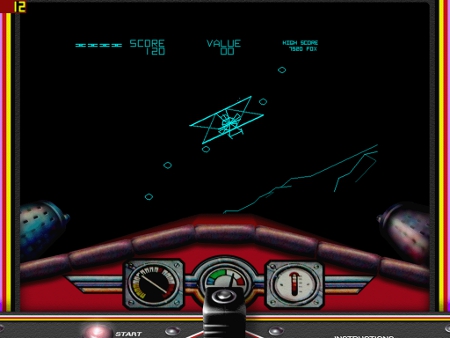
I was, for example, ecstatic when, in 2005, Atari released their early arcade games on PC. At last, I could play the original Red Baron again!
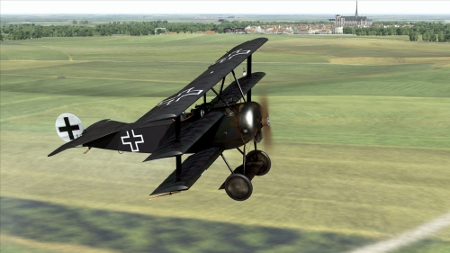
At the same time, I'm keeping up with the most recent WWI flight sims, such as 777 Studio's Rise of Flight, which is quite astonishing in its detail.
There have been a large number of these sims since 1981. I count about 70. Luckily, a lot of them are out of print or were unpopular, so for less than $20, I can acquire an older piece of software with what are often some very nice manuals. With DOSBOX, I can now play the majority of these. For example, I've acquired Cosmi's War Eagles, which is just about the oldest WWI game I can find for the PC. It came on a 5.25 inch diskette. Remember those?
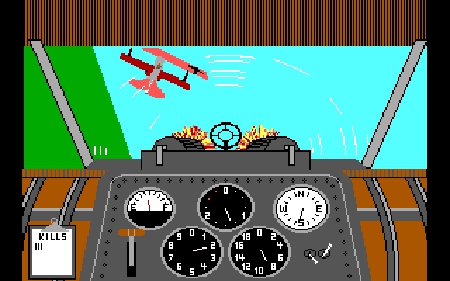
The internet, especially Ebay and Amazon, have been extremely helpful in discovering and locating these older games, especially the really weird and obscure titles like Manfred von Krashenbern’s Flying Circus. And it's really a chuckle to watch these bundles of polygons that the brain somehow translates into flying planes.
Everybody has their little quirks, and this is one of my perennials. Sometimes, I won't touch a flight sim for a year, but I've always come back to them. And I love them all, from the prmitive to the goofy (Red Baron Pizza included a free flight sim in some of their pizzas in 2004. It's hilarious!) to the unforgiving modern sim.
If you've read my fiction, you'll notice that I have a thing for WWI flight. Open-cockpit flying, the time part of the danger of flight was that your plane might shed its wings. Biplane flight is beautiful. It doesn't isolate you from the fact that you're flying. I don't know where I picked up this particular twist in my psyche, but I've taken several rides in airplanes older than my parents, and loved each one. But that's expensive and inconvenient. When I want to get that feel of flight, I turn to WWI flight sims.
I'm lucky in my obsessions. They're pretty obscure. Whereas there will be several WWII or jet flight sims or games put out in a year, dedicated WWI flight sims tend to be few and far between. Because I obsess about this sort of stuff, I collect them. Old WWI flight sims, new WWI flight sims, the different editions of the same flight sim. I love cataloging them, writing about their differences, analyzing the way the genre has developed and changed.
I was, for example, ecstatic when, in 2005, Atari released their early arcade games on PC. At last, I could play the original Red Baron again!
At the same time, I'm keeping up with the most recent WWI flight sims, such as 777 Studio's Rise of Flight, which is quite astonishing in its detail.
There have been a large number of these sims since 1981. I count about 70. Luckily, a lot of them are out of print or were unpopular, so for less than $20, I can acquire an older piece of software with what are often some very nice manuals. With DOSBOX, I can now play the majority of these. For example, I've acquired Cosmi's War Eagles, which is just about the oldest WWI game I can find for the PC. It came on a 5.25 inch diskette. Remember those?
The internet, especially Ebay and Amazon, have been extremely helpful in discovering and locating these older games, especially the really weird and obscure titles like Manfred von Krashenbern’s Flying Circus. And it's really a chuckle to watch these bundles of polygons that the brain somehow translates into flying planes.
Everybody has their little quirks, and this is one of my perennials. Sometimes, I won't touch a flight sim for a year, but I've always come back to them. And I love them all, from the prmitive to the goofy (Red Baron Pizza included a free flight sim in some of their pizzas in 2004. It's hilarious!) to the unforgiving modern sim.
Monday, April 23, 2012
Message Received by Battle Barge Glad of War, in service of the Rune Bearers chapter of the Adeptus Astartes;
My Lord Grettir;
Since my last missive, Splinter Fleet Mordiggian, once considered a small and worthy of little notice, has shown a cancerous growth, and many of the more frightening genus of Tyranid have spontaneously arisen within its ranks.
Thanks to Inquisitor Kryptmann’s gambit, this Splinter Fleet spends much of its time combating the Orks. Many clashes have been witness by out remote seers, and with the preponderance of the genestealer genus. While I do not favor either side, for both are xeno abominations which must be purged from the galaxy, it is frightening to report that many Orks have fallen to the genestealers claws, and that this causes me to worry that about wisdom of Kryptmann. If this splinter fleet unlocks the secrets of Ork fury or adds the Orks’ instinctive craftiness to the Tyranids already formidable combat arsenal, I fear for the existence of the Imperium, especially as the splinter fleet has begun the process of autologous diversification, as seen on the Anphelion base. A trygon has emerged where there was none before, as have tervigon specimens, which would account for the rapid increase in the number of termagants that the splinter fleet is able to bring to bear.
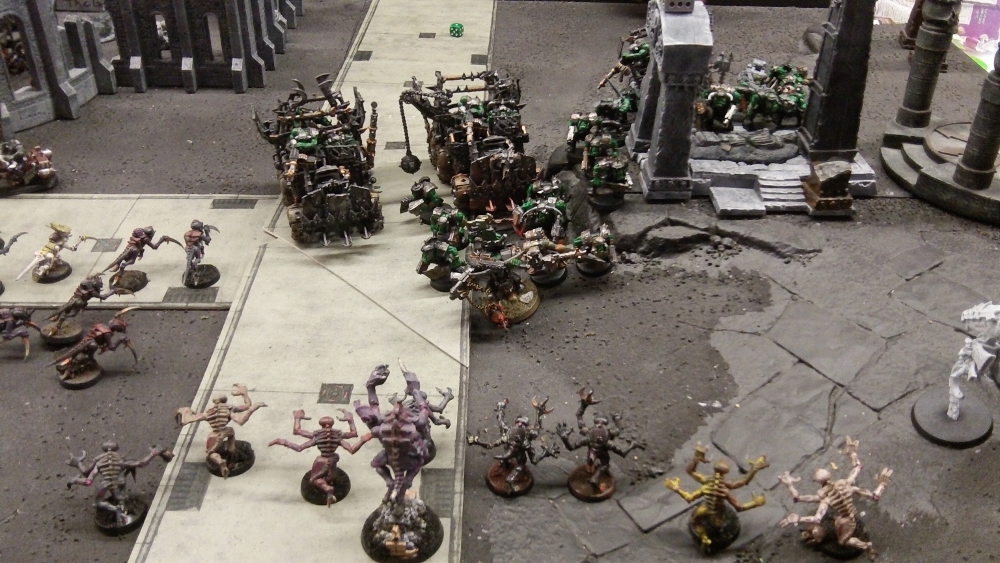
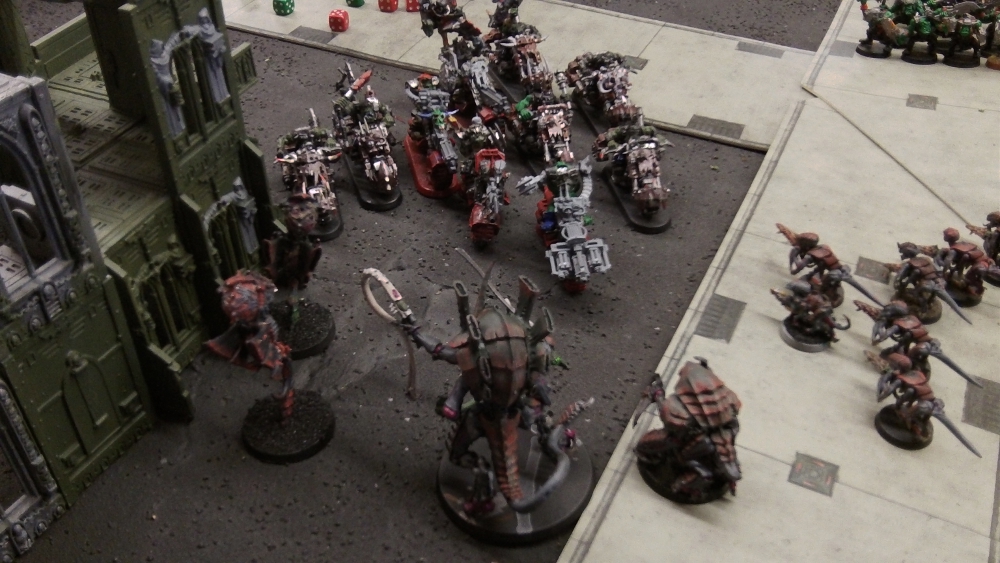
More disturbing it the emergence of Mordiggian’s first Hive Tyrant, seen here with a tyrant guard and zoanthrope just before it destroyed a large number of Ork nob bikers. The terrified astropath that viewed the emergence of the tyranid monstrosity died of fright after transmitting this picture. The terror and destruction that this horror brings with it cannot be underestimated.
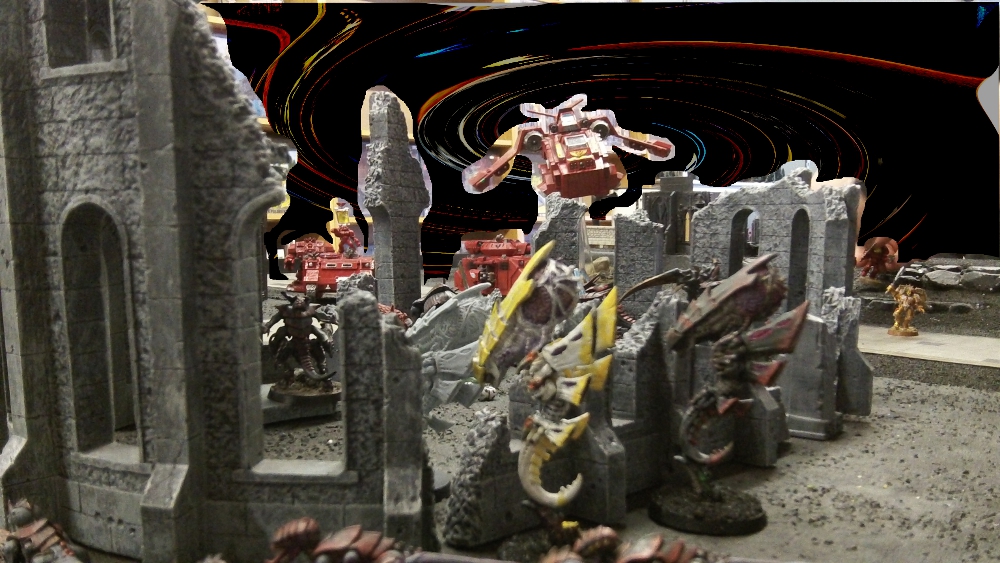
The greatest setback experienced by Mordiggian was an encounter with the Blood Angels, seen here as a brood of zoanthropes attempt to conceal themselves from the Blood Angel Thunderhawk under the strange and undoubtedly warp-tainted skies of skies of Stromsholt. Though defeated, the splinter fleet was not exterminated, and the menace has emerged again, like a disease or destructive weed, from another quarter.
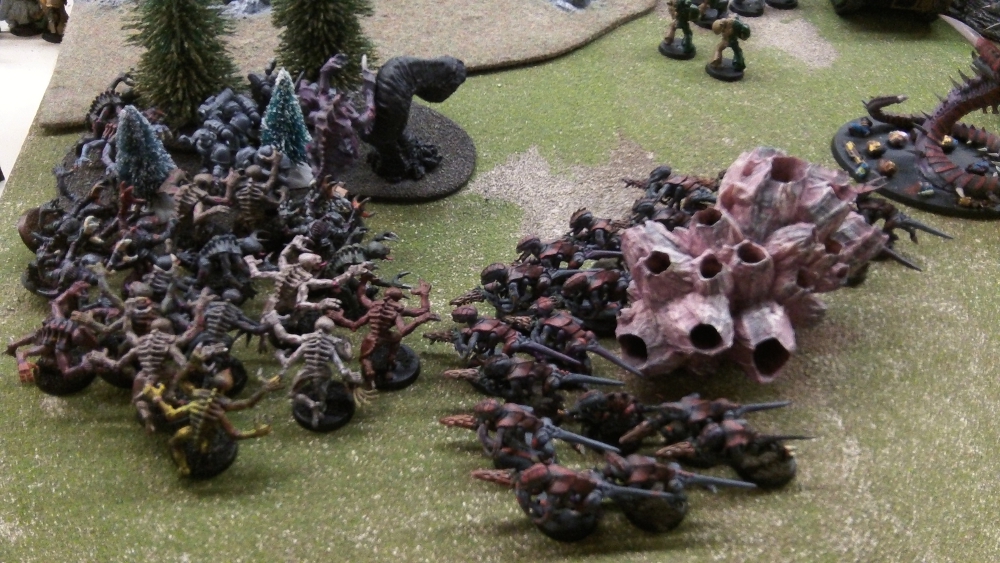
Most recently, the splinter fleet has been seen to use mycetic spores, living meteors which, once grounded, pour forth countless termagants, which in turn pour death into an unidentified Space Marine chapter seen here.
This hive grows at a frightening rate, and I have no wish to be present if it turns its attentions to Eorthscraef, or any of our sector. Once again I humbly beg that the Rune Bearers dispatch a contingent of their extraordinary warriors to exterminate this peril before the lives of more Imperial citizens are endangered, their property destroyed, and their usefulness to the Emperor crippled or eliminated altogether. We shall, of course, defer to whatever judgement your worthiness decrees.
May the Holy Emperor guide your hand in delivering us from this frightful menace,
Johann of Eorthscraef
Since my last missive, Splinter Fleet Mordiggian, once considered a small and worthy of little notice, has shown a cancerous growth, and many of the more frightening genus of Tyranid have spontaneously arisen within its ranks.
Thanks to Inquisitor Kryptmann’s gambit, this Splinter Fleet spends much of its time combating the Orks. Many clashes have been witness by out remote seers, and with the preponderance of the genestealer genus. While I do not favor either side, for both are xeno abominations which must be purged from the galaxy, it is frightening to report that many Orks have fallen to the genestealers claws, and that this causes me to worry that about wisdom of Kryptmann. If this splinter fleet unlocks the secrets of Ork fury or adds the Orks’ instinctive craftiness to the Tyranids already formidable combat arsenal, I fear for the existence of the Imperium, especially as the splinter fleet has begun the process of autologous diversification, as seen on the Anphelion base. A trygon has emerged where there was none before, as have tervigon specimens, which would account for the rapid increase in the number of termagants that the splinter fleet is able to bring to bear.
More disturbing it the emergence of Mordiggian’s first Hive Tyrant, seen here with a tyrant guard and zoanthrope just before it destroyed a large number of Ork nob bikers. The terrified astropath that viewed the emergence of the tyranid monstrosity died of fright after transmitting this picture. The terror and destruction that this horror brings with it cannot be underestimated.
The greatest setback experienced by Mordiggian was an encounter with the Blood Angels, seen here as a brood of zoanthropes attempt to conceal themselves from the Blood Angel Thunderhawk under the strange and undoubtedly warp-tainted skies of skies of Stromsholt. Though defeated, the splinter fleet was not exterminated, and the menace has emerged again, like a disease or destructive weed, from another quarter.
Most recently, the splinter fleet has been seen to use mycetic spores, living meteors which, once grounded, pour forth countless termagants, which in turn pour death into an unidentified Space Marine chapter seen here.
This hive grows at a frightening rate, and I have no wish to be present if it turns its attentions to Eorthscraef, or any of our sector. Once again I humbly beg that the Rune Bearers dispatch a contingent of their extraordinary warriors to exterminate this peril before the lives of more Imperial citizens are endangered, their property destroyed, and their usefulness to the Emperor crippled or eliminated altogether. We shall, of course, defer to whatever judgement your worthiness decrees.
May the Holy Emperor guide your hand in delivering us from this frightful menace,
Johann of Eorthscraef
Monday, April 16, 2012
On The Need to Write Quickly (With Name-Dropping)
I've been solving one short story for about two and a half months. It's been a difficult struggle, but I finally put the first draft to bed last week. I have to write faster. Part of the reason I'm updating this blog more regularly (which is to say, regularly) is that I need to write every day, even on the days that I don't peck away at a story.
Because I have changed. I'm not the same person I was in February when I started this story. Allowing the process of the story to drag on so long means that the story will likely be weakened, thematically. I will no longer have the same passion for the plot and the themes that I did when it was fresh in my head. I have stared at it and been sick of it because I've been thinking and reading the same damn thing for the past two months.
Robert Asperin once said "I'm not a slow writer, and I'm not a fast writer. I'm a half-fast writer." And I have to avoid that. I'm not going to support myself with short stories, even if I write one a week. Because even at professional rates, that's (.05 x 5,000=$250 per story x 52 weeks=) $13,000 a year. Which is not liveable. But if I can learn to hammer out the prose with the short stories, I'll be able to sustain my attention for longer when I'm writing a novel. After my current story, "Tribute Band", I'm back to my novel. Which will be finished by NECON so I can ask James Moore (because hey! James Moore!) to read it, and then I'll move on to my next novel as I'm passing the current one around for publication.
A working mid-list novelist needs to sell at least two novels a year. The advance on the average mid-list novel is less than $10,000, so two novels a year is pretty well required unless I'm going to bet that I'm going to be huge. And while I can hope I'm going to be huge, I'm smart enough that I don't think I'm going to bet on it.
I've set the first draft deadline for the latest short story at the 27th. I need to get faster about my stories, because I need to ace deadlines when I'm asked to write something. Being early, and even better, getting a reputation for being early, can be an enormous asset when editors are thinking about who to invite into their anthology.
Special Thanks to Brian Keene and Walter Jon Williams for some hard truths that made this post possible.
Because I have changed. I'm not the same person I was in February when I started this story. Allowing the process of the story to drag on so long means that the story will likely be weakened, thematically. I will no longer have the same passion for the plot and the themes that I did when it was fresh in my head. I have stared at it and been sick of it because I've been thinking and reading the same damn thing for the past two months.
Robert Asperin once said "I'm not a slow writer, and I'm not a fast writer. I'm a half-fast writer." And I have to avoid that. I'm not going to support myself with short stories, even if I write one a week. Because even at professional rates, that's (.05 x 5,000=$250 per story x 52 weeks=) $13,000 a year. Which is not liveable. But if I can learn to hammer out the prose with the short stories, I'll be able to sustain my attention for longer when I'm writing a novel. After my current story, "Tribute Band", I'm back to my novel. Which will be finished by NECON so I can ask James Moore (because hey! James Moore!) to read it, and then I'll move on to my next novel as I'm passing the current one around for publication.
A working mid-list novelist needs to sell at least two novels a year. The advance on the average mid-list novel is less than $10,000, so two novels a year is pretty well required unless I'm going to bet that I'm going to be huge. And while I can hope I'm going to be huge, I'm smart enough that I don't think I'm going to bet on it.
I've set the first draft deadline for the latest short story at the 27th. I need to get faster about my stories, because I need to ace deadlines when I'm asked to write something. Being early, and even better, getting a reputation for being early, can be an enormous asset when editors are thinking about who to invite into their anthology.
Special Thanks to Brian Keene and Walter Jon Williams for some hard truths that made this post possible.
Friday, April 13, 2012
What Do You See?
What do you see when you look at someone? The neat hair, the cared-for, well moisturized skin, a quick smile? Do you see their skin color? The shape of their teeth?
I look at people a lot. Make assumptions about them from their appearance, the way they speak, how they present themselves. See the contradicitons. Neat hair with dirty nails, well cared-for skin and black stumps of teeth. I find that like stars, most people fall into a main sequence. They fall on a broad political spectrum, as well as a broad social spectrum. But generally speaking, their appearance and speech reflect this. Other details will emerge, and sometimes it's even possible to guess of someone was an only child, what sort of relationship they had with their parents. It's not a difficult skill to acquire. Just be ready to ask someone some slightly over the line personal questions to test your assumptions.
The people who don't fall into that main sequence? They tend to be more interesting. They have changed in some way, come to a life-altering apiphany, or perhaps they were raised on different assumptions than the majority of Americans. These people are often interesting to talk to, because they have a different point of view. And these people are often fodder as a protagonist.
And this sort of sociopathic picking apart of people is what my latest story “The Neighbors Upstairs” is about. Is it possible to pick someone apart using just conversation? How much of ourselves do we reveal when we talk to strangers? How are people strange, and how can our own assumptions and our frame of mind interfere with the way we view someone else?
“The Neighbors Upstairs” is available in Urban Cthulhu, Nightmare Cities, edited by Henrik Harkesn.

I look at people a lot. Make assumptions about them from their appearance, the way they speak, how they present themselves. See the contradicitons. Neat hair with dirty nails, well cared-for skin and black stumps of teeth. I find that like stars, most people fall into a main sequence. They fall on a broad political spectrum, as well as a broad social spectrum. But generally speaking, their appearance and speech reflect this. Other details will emerge, and sometimes it's even possible to guess of someone was an only child, what sort of relationship they had with their parents. It's not a difficult skill to acquire. Just be ready to ask someone some slightly over the line personal questions to test your assumptions.
The people who don't fall into that main sequence? They tend to be more interesting. They have changed in some way, come to a life-altering apiphany, or perhaps they were raised on different assumptions than the majority of Americans. These people are often interesting to talk to, because they have a different point of view. And these people are often fodder as a protagonist.
And this sort of sociopathic picking apart of people is what my latest story “The Neighbors Upstairs” is about. Is it possible to pick someone apart using just conversation? How much of ourselves do we reveal when we talk to strangers? How are people strange, and how can our own assumptions and our frame of mind interfere with the way we view someone else?
“The Neighbors Upstairs” is available in Urban Cthulhu, Nightmare Cities, edited by Henrik Harkesn.
Monday, April 9, 2012
Ooohhhhhhhmmmmmmmmm
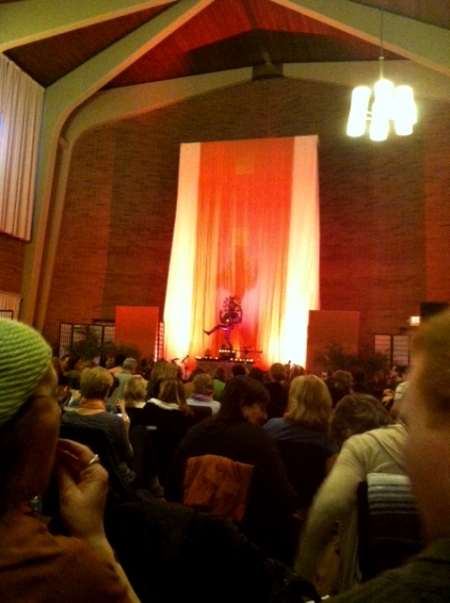
Last week, some friends and I went to a locak Yoga center top see Kirshna Das in concert. Not because I am a Hindu, or even because I have ever wanted to chant the Hare Krishna, but because kirtan involves common singing. I like singing. I am, however, aware that I'm only a small step up from those tuneless bastards that grab the microphone at Guitar Hero sessions, but that gets lost when there are a couple of hundred people singing. In the same way that a mass of votes is supposed to pull wisdom from the common people, common singing pulls a bearable tune out of people who are at best mediocre singers.
But communal singing is also powerfully human. Virtually every religion on Earth practices communal singing, because it appeals to us in a social level. When we sing together, we are all part of the tribe. Our differences disappear, because we are all singing the same thing, contributing parts to a whole.
It helps that Krishna Das sings from a different tradition than the one I grew up in, so I wasn't expecting lyrics that had emotional baggage, or even a language I understood. Krishna Das performs his own aspect on the kirtan, the Hindu chanting, in a call and response fashion, the names of god, and he mixes the traditional with more familiar Western tunes and styles. This makes it more accessible to the average American.
It was a popular event, so we waited in a hallway for about forty-five minutes, watching the people who were taking their yoga classes. And I began to write the scene in my head, and then started writing it as other writers. How would Brian Keene have evoked the scene? Nick Mamatas would have used the phrase "Cultural appropriation" at the very least, and probably a couple of times. Especially after Krishna Das played "Jesus on the Main Line."
But I wasn't seeking a religious experience. I wanted to sing and ohhhm with a bunch of people. And I have to say, I had a good time doing it.
Monday, April 2, 2012
What Does My Creativity Look Like?
Where do the ideas come from? For me, the ideas tend to come when I'm in some sort of enforced not doing anytghing else period. Long car trips and the 20 minute walk to work, as well as showers, these are the times that I tend to be my most creative. Because I'm not distracted. I don't have access to all the distracting fun I have at home; playing games, reading something, watching something, Internet arguing, blogging. All of these have their place, but they're not what I want to be doing when I'm coming up with a plot, character, or twist.
So I often scribble notes down, so I can remember the ideas I had when it wasn't appropriate to sit down and write them up. As a result, my desk, and occasionally other flat surfaces, are covered with little pieces of paper that appears to have cuneiform writing on them. For example, these are the notes for my next story, provisionally titled "Tribute Band" written somewhere between Rutland and Randolph:
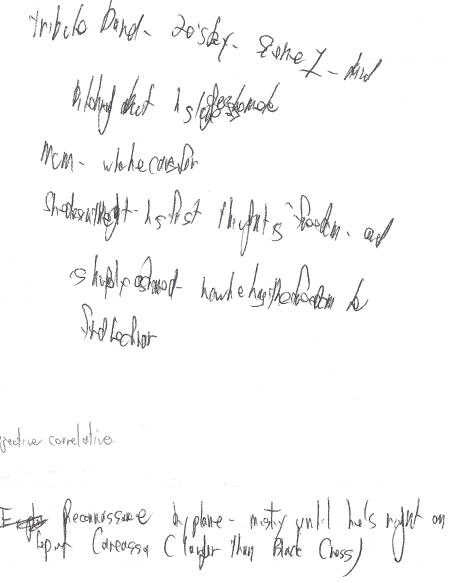
Which first of all says why I should never text and drive. But those scribbles will probably come out to about 1,500 words when expanded, and define the emotional heart of the story. So there it is, what my creativity looks like. A messy beginning, the 10% inspiration that leads to the 90% perspiration.
So I often scribble notes down, so I can remember the ideas I had when it wasn't appropriate to sit down and write them up. As a result, my desk, and occasionally other flat surfaces, are covered with little pieces of paper that appears to have cuneiform writing on them. For example, these are the notes for my next story, provisionally titled "Tribute Band" written somewhere between Rutland and Randolph:
Which first of all says why I should never text and drive. But those scribbles will probably come out to about 1,500 words when expanded, and define the emotional heart of the story. So there it is, what my creativity looks like. A messy beginning, the 10% inspiration that leads to the 90% perspiration.
Thursday, March 29, 2012
The What of Where?
I understand. Vermont is a small state, and we've got something of a reputation for being a pleasant place with loads of pretty untouched scenery to look at. Which is somewhat true (most of the pretty trees are second growth after many of the less-productive farms were abandoned post Civil War and WWII). But I've noticed a trend in film where Vermont is portrayed with wild inaccuracy.
I suppose I shouldn't pick on Sucker Punch for accuracy. After all, if I had a Brazil-like psychotic break and imagined the "asylum for the mentally insane" I was imprsoned in was a Moulon Rouge-style dance club/whorehouse, I probably wouldn't imagine that it was in Brattleboro.
However, the film's conceit means that the audience has to believe that this is the mayor of Brattleboro, the population of which has never exceeded 15,000.
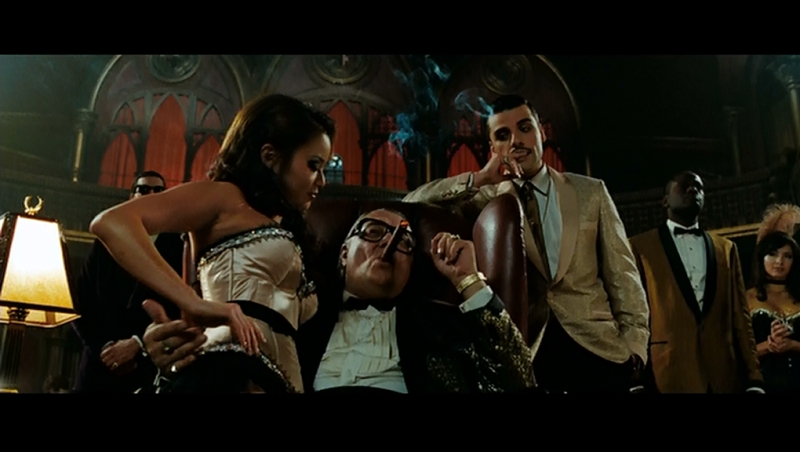
Those of us with access to Wikipedia know that Brattleboro doesn't even have a mayor. Like a lot of towns in Vermont, it has a town manager. Not that any of the scriptwriters bothered to look it up.
Is it reasonable to expect psychotic-break girl to understand this? No. Not in a Zack Snyder film, which is all about flashy CG, explosions, and slow-motion shots, and not so much about the research. But if Zack Snyder was expecting me, or apparently audiences in general, to be shocked that the second layer of 'reality' was the 'Sucker Punch' the tag line boasted that we were unprepared for, he thinks audiences are a lot dumber than they are. Brazil prepared me. And a surprising number of people have read Ambrose Bierce's "An Occurrence at Owl Creek Bridge." If you haven't you can read it here.
Unlike Sucker Punch, the short story is worth your time.
I suppose I shouldn't pick on Sucker Punch for accuracy. After all, if I had a Brazil-like psychotic break and imagined the "asylum for the mentally insane" I was imprsoned in was a Moulon Rouge-style dance club/whorehouse, I probably wouldn't imagine that it was in Brattleboro.
However, the film's conceit means that the audience has to believe that this is the mayor of Brattleboro, the population of which has never exceeded 15,000.
Those of us with access to Wikipedia know that Brattleboro doesn't even have a mayor. Like a lot of towns in Vermont, it has a town manager. Not that any of the scriptwriters bothered to look it up.
Is it reasonable to expect psychotic-break girl to understand this? No. Not in a Zack Snyder film, which is all about flashy CG, explosions, and slow-motion shots, and not so much about the research. But if Zack Snyder was expecting me, or apparently audiences in general, to be shocked that the second layer of 'reality' was the 'Sucker Punch' the tag line boasted that we were unprepared for, he thinks audiences are a lot dumber than they are. Brazil prepared me. And a surprising number of people have read Ambrose Bierce's "An Occurrence at Owl Creek Bridge." If you haven't you can read it here.
Unlike Sucker Punch, the short story is worth your time.
Monday, March 26, 2012
Weekend, with Bernie
Generally speaking, I don't have much time for professional politicians. They get a lot of attention and make hay out of the crisis of the moment, and most will say any damn thing to get themselves into a position of power. Worse, America's two-party system (that's only one more than the Soviet style one-party system) means that in order to have any clout, said politician needs to cleave to the dogma of either the Democratic or Republican party, subsuming their own values and wishes to those of the party.

Bernie Sanders is America's only socialist Congressman. Do I support him? Let's start out by saying I find him less odious than most political creatures I've met. I believe America would be stronger if we had a broader variety of opinions represented in Congress, more parties that represented more than just the two major parties. Currently, the political parties are wagging the dog, telling people what their opinions are, rather than the other way around. This is an enormous problem.
Overall, Bernie Sanders puts on a good show. The Senator speaks well, is funny when he tries to be, and carries authority in his speech. I didn't keep notes, so I can't tell you if the numbers he quoted were accurate. But we agree on several key issues; the need for universal health care, the destruction of corporate personhood, LGBQT rights, the need to improve education, and the need for governmental protection of the environment.
I voted for Mr. Sanders in the last election, because his opponent was a knucklehead who thought Vermont was easily bought. Unless I get a compelling reason not to, I'm likely to vote for Sanders again this year. His stated values and voting record stand closer to my own values than the platforms of either major political party.
Bernie Sanders is America's only socialist Congressman. Do I support him? Let's start out by saying I find him less odious than most political creatures I've met. I believe America would be stronger if we had a broader variety of opinions represented in Congress, more parties that represented more than just the two major parties. Currently, the political parties are wagging the dog, telling people what their opinions are, rather than the other way around. This is an enormous problem.
Overall, Bernie Sanders puts on a good show. The Senator speaks well, is funny when he tries to be, and carries authority in his speech. I didn't keep notes, so I can't tell you if the numbers he quoted were accurate. But we agree on several key issues; the need for universal health care, the destruction of corporate personhood, LGBQT rights, the need to improve education, and the need for governmental protection of the environment.
I voted for Mr. Sanders in the last election, because his opponent was a knucklehead who thought Vermont was easily bought. Unless I get a compelling reason not to, I'm likely to vote for Sanders again this year. His stated values and voting record stand closer to my own values than the platforms of either major political party.
Friday, March 23, 2012
Comics and Superheroes
I am pretty selective about the comics I read. I've got eleven long boxes full of comics, and in going through them I've noticed something. I don't like superhero comics.
In fact, I don't like superheroes at all.
The difference between a auperhero and a regular hero is that the superhero is born with their difference from the rest of humanity. They were born special, and often the book is about using that specialness in a non-selfish fashion. But you can't aspire to be Superman. No one was born on Krypton, so no matter how hard you try, you can't fly. Even if you wear the cape.
The comics I have read tend to have more human. Grimjack, Hellblazer, Bone, Castle Waiting, Grendel and Jonah Hex. All of these feature protagonsts who are normal, but not average, humans.
There are exceptions, of course. I've got Mage, Swamp Thing, Hellboy, Girl Genius, and the occasional Batman trade. You don't think Batman was born with powers beyond that or mere mortals? Where would he be without Wayne Enterprises? WOuld Batman be half as effective if he was not ridiculously wealthy and able to afford the Batwing, the Batmobile, and all those other gadgets?
But when I look at patterns, especially in myself, I wonder about the exceptions. Despite the above sentence, Batman is often closer to being a hero than a superhero. When he is being written as the Darknight Detective and investgating crimes, I'm a lot more interested.
But what about Hellboy attracts me? Alan Moore's Swamp Thing and Phil Foglio's Girl Genius are both brilliantly written, transcending the usual tropes of the superhero genre, and Mage is a rather tasty modernization of the Arthur stories, which I've long enjoyed.
So why Hellboy?
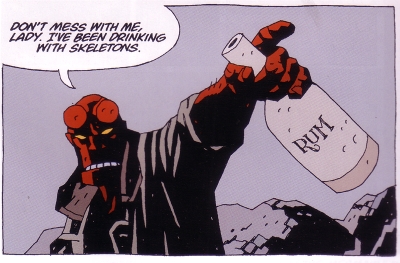
The short answer is because it's awesome.
Hellboy is an exception to the usual superhero tropes. Yes, he's stronger and tougher than the average human, but it's important to note that he was born to destroy the world. Think about that for a moment. He was born to bring about the death of everyone he knows, to split the world and open the way for the apocalypse. That's kind of heavy.
What makes Hellboy such a good character is that as he becomes aware of his "birthright," he intensifies his fight against it. He will not be defined by his birth. He will be himself, not play the role that someone else handed him. The underlying thrust of the series, shot through with stories of killing Nazis, dragons, and trolls, is the growung realization that he is defying his so-called desting and taking his own path. That journey, the personal one, is worth more of my time than a hundred pages of beating up supervillains.
In fact, I don't like superheroes at all.
The difference between a auperhero and a regular hero is that the superhero is born with their difference from the rest of humanity. They were born special, and often the book is about using that specialness in a non-selfish fashion. But you can't aspire to be Superman. No one was born on Krypton, so no matter how hard you try, you can't fly. Even if you wear the cape.
The comics I have read tend to have more human. Grimjack, Hellblazer, Bone, Castle Waiting, Grendel and Jonah Hex. All of these feature protagonsts who are normal, but not average, humans.
There are exceptions, of course. I've got Mage, Swamp Thing, Hellboy, Girl Genius, and the occasional Batman trade. You don't think Batman was born with powers beyond that or mere mortals? Where would he be without Wayne Enterprises? WOuld Batman be half as effective if he was not ridiculously wealthy and able to afford the Batwing, the Batmobile, and all those other gadgets?
But when I look at patterns, especially in myself, I wonder about the exceptions. Despite the above sentence, Batman is often closer to being a hero than a superhero. When he is being written as the Darknight Detective and investgating crimes, I'm a lot more interested.
But what about Hellboy attracts me? Alan Moore's Swamp Thing and Phil Foglio's Girl Genius are both brilliantly written, transcending the usual tropes of the superhero genre, and Mage is a rather tasty modernization of the Arthur stories, which I've long enjoyed.
So why Hellboy?
The short answer is because it's awesome.
Hellboy is an exception to the usual superhero tropes. Yes, he's stronger and tougher than the average human, but it's important to note that he was born to destroy the world. Think about that for a moment. He was born to bring about the death of everyone he knows, to split the world and open the way for the apocalypse. That's kind of heavy.
What makes Hellboy such a good character is that as he becomes aware of his "birthright," he intensifies his fight against it. He will not be defined by his birth. He will be himself, not play the role that someone else handed him. The underlying thrust of the series, shot through with stories of killing Nazis, dragons, and trolls, is the growung realization that he is defying his so-called desting and taking his own path. That journey, the personal one, is worth more of my time than a hundred pages of beating up supervillains.
Subscribe to:
Posts (Atom)