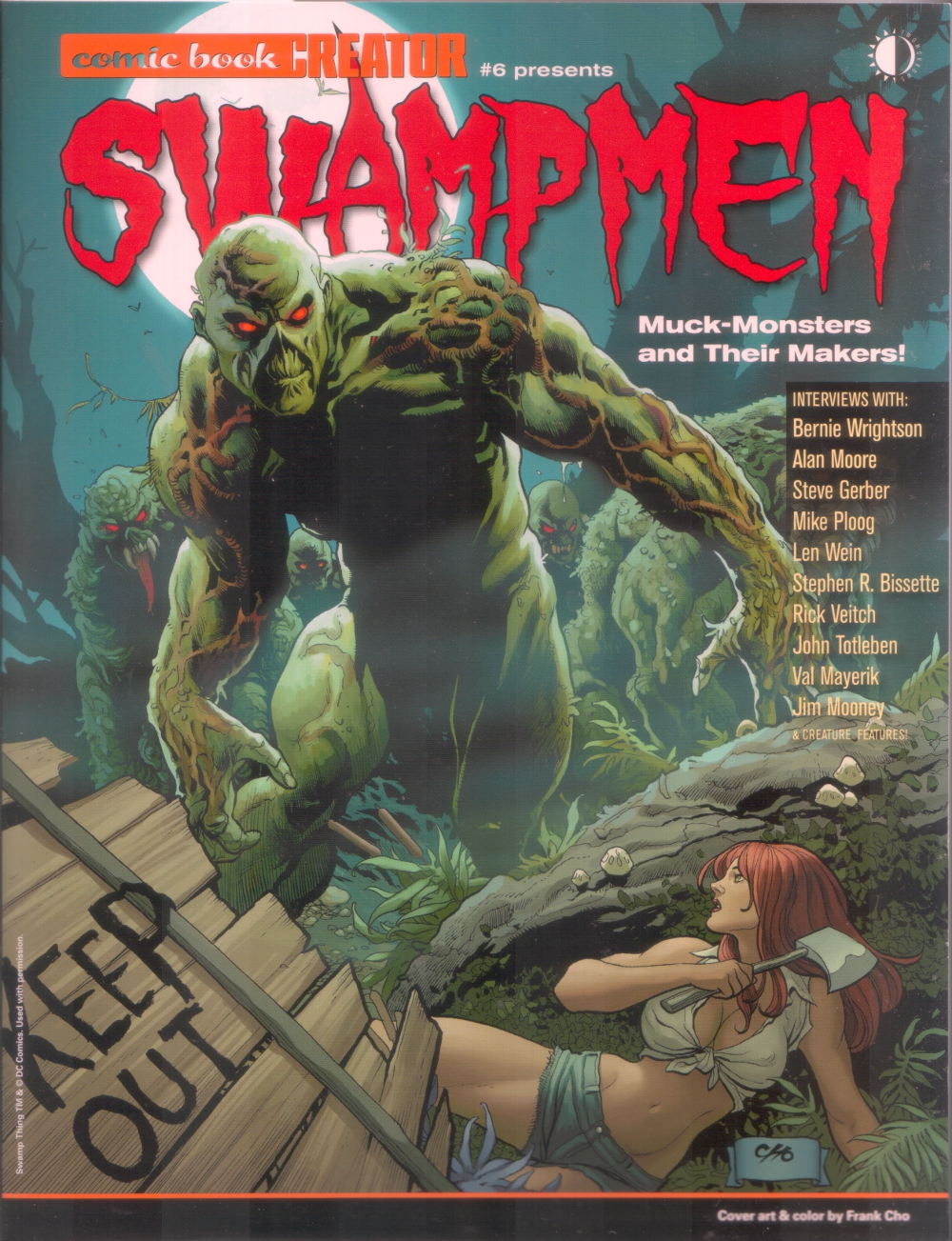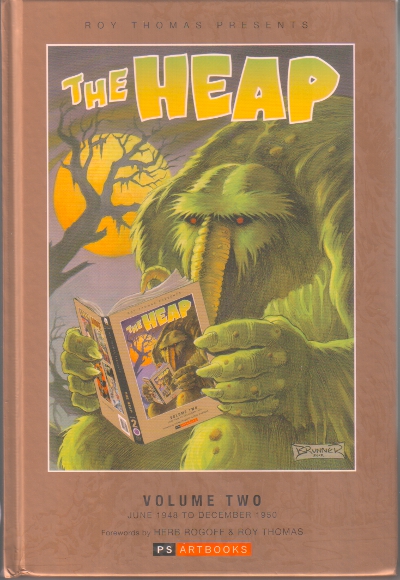
Welcome back to my Muck Monsters series. This time, I'll be looking at the second volume of PS Publishing's wonderful collection of the Heap.
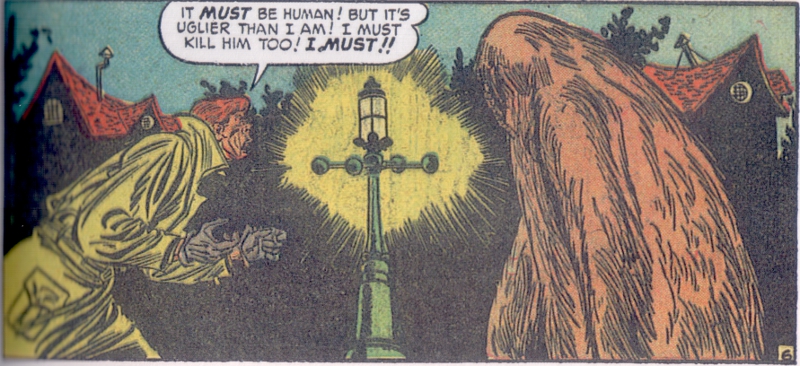
The second volume of Roy Thomas's Heap is a time of transition. It begins as a crime comic, with dangerous broads and guns and surprisingly frequent murder. But the stories are starting to move into 'weird menace territory. Gangsters are slowly being replaced by serial murderers, murderous molls. In the second story in the book, from Airboy Comics V5#6, July 1948, the ugly and deranged Henri kills people because they are ugly, uglier than he is. Henri attempt to kill the Heap with his bare hands, with the inevitable results. The Heap itself remains the only unnatural figure in these tales, but the story structure, in which the heap is the catalyst for justice rather than the protagonist, has been well established. Of particular note are two stories with deceitful women, who shoot people who get in their way and get their comeuppance through the actions of the Heap. And, because this is still Airboy Comics, the occasional touch on von Emmelman's flying past. There's a club that reveres him, a man who stole his medals, and his bosom friend (who we have never seen before).
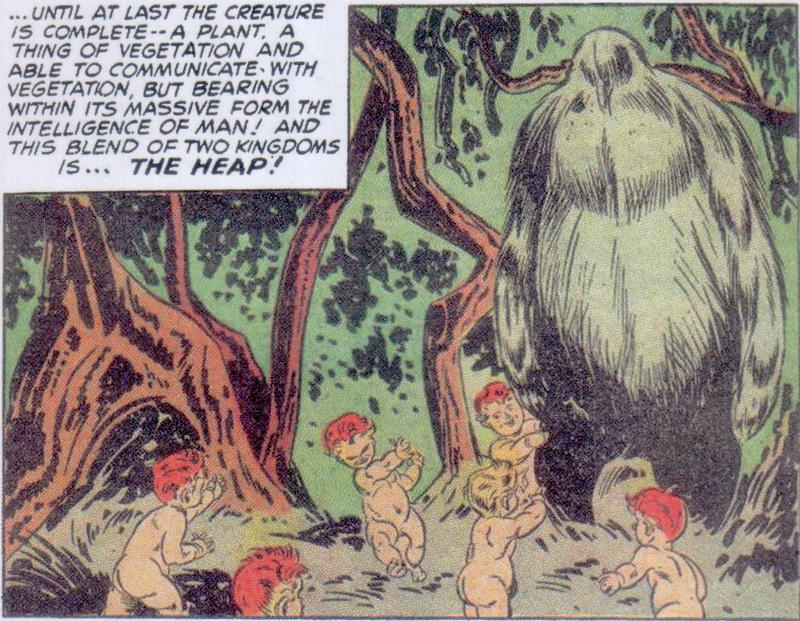 The supernatural begins to creep in with the sixth story in this volume, called "The Iron Duke of Galicia" (November 1948). In it, we are introduced to the ghost babies of Wasau, children murdered during the Iron Duke's merciless rampage. Why they have chosen von Emmelmann, and what sort of power they have to create something both human and plant, we really aren't privy to. We never see the ghost babies again, but Mother Nature takes their place as the Heap's sponsor, a Charlie to his Angels.
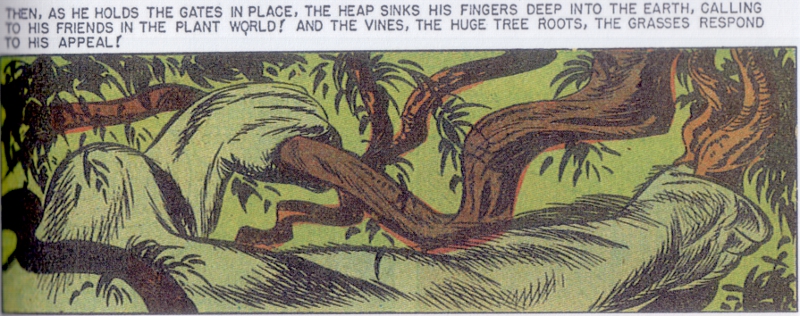
Mother Nature is very reminiscent of Ceres, who appeared for three stories in the first volume. Her hair is dark where Ceres was redheaded. Like Ceres, Nature uses the Heap very specifically against men who destroy and make war. This more generalized conflict and magical agency seemed to work better, since it stuck around longer. Rather than opposing Ares as the godly personification of war, Nature directs the Heap against cruelty and destruction. Nature also has her own powers. In the first story, she calls on the trees to grow their roots and break down a castle. This seems like the first true precursor to Alan Moore's Swamp Thing, linking the Heap to a larger force of nature, and giving it power of the local plants. Later, the Heap itself commands the roots and grasses, without the intervention of Mother Nature. Moore, as is his wont, expands on this, taking it to a fantastic but logical end. But the exploration of that is for a future blog post.
A bit later, we come across a pair of stories that are different, but not quite contradictory accounts of why von Emmelmann became the Heap. In the first, it turns out that the Belled Goose grants wishes, and in his last moments, von Emmelmann wishes to live forever. After Emmelmann's crash, the goose flies the cell of Captain Bocke, who is being held for jamming von Emmelmann's guns. He also wishes to live forever. Facing down a firing squad, he discovers that he can no longer be killed. The story ends on a melancholy note, with the two immortals, Bocke and Emmelmann, wandering away from each other attempting to capture the elusive belled goose. A year later, we revisit Bocke and von Emmelmann in a connected three-part story. While alive, von Emmelmann was working on the secret of Egyptian alchemy. Bocke drinks von Emmalmann's formula, and it is this that renders him unkillable. However, the alchemical immortality has a loophole: Bocke can be killed if he returns to the scene of his crimes. The Heap pursued the immportal Bocke across the landscape, and eventually he falls into a crocodile swamp. It Bocke truly immortal? Can he come back from being eaten? The story leaves this question unanswered, Bocke ready for his role as a recurring villain. Which didn't happen.
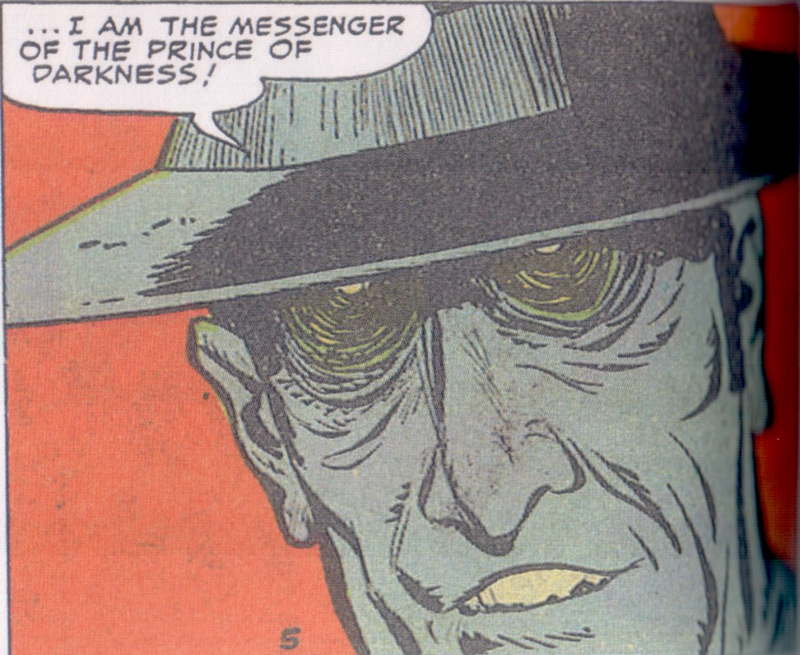 The Heap runs across all kinds of strange entities, including the messenger of the Prince of Darkness. The stories become more and more weird. But whatever he faces, whether it's a messenger from the Prince of Darkness, the ghost of a ship, a mummy, a werewolf, gigantic white seal, or even inbred degenerate Roman soldiers, the Heap triumphs over evil or brutality with a few swipes of its paws, or its inhuman strength and the occasional vine. The stories are pretty formula, but it's a good formula. There's enough unexpected weirdness happening that it carries the story. The Heapo also has an advantage in tghat it does not speak, and it only rarely has thought balloons. So its motivations are not laid out for us. It only communicates through its actions, a trait shared with Man-Thing as well as the first incarnation of Swamp Thing. In many ways, this is the character's saving grace. In a medium that is very over-written, the lack of direct information about the Heap and its motivations is welcome.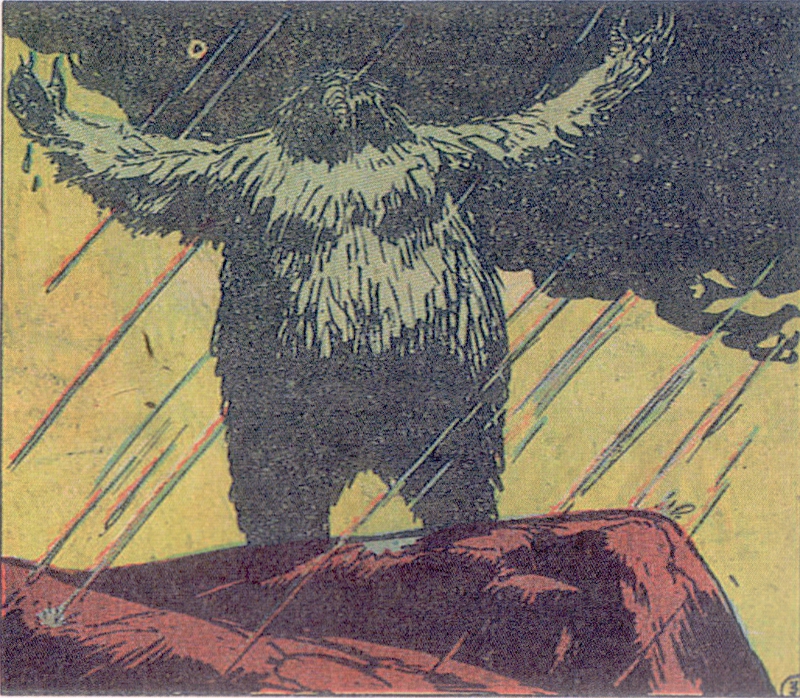
The Heap also exhibits some classic images that are later used in some comics. In the Ernest Schroeder's first issue, there is a panel of the Heap, arms raised, framed slightly from below. This may have influenced Steve Bissette's classic splash page which closed issue 24 of Saga of the Swamp Thing, forty years later. Of course, Bissette could work in a lot more detail, with more room and a better printing process at his disposal.
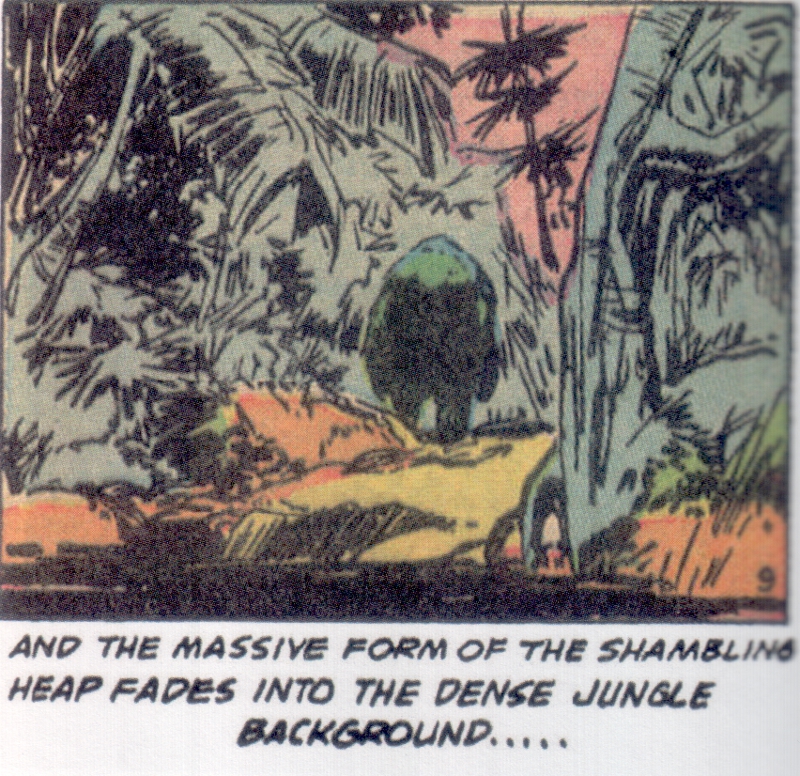
Further, there is an image at the end of "The Book of the Dead" (August 1950) that bears a pronounced similarity to the iconic last frame of the original Swamp Thing story (House of Secrets #92) as the mute swamp creature that was once Alec Olsen returns to the swamp.
The second volume of The Heap really finds the book hitting on all cylinders. The variety of strange situations is very good, lending the stories a sense of unpredictability. The Heap had found its niche, and it remained a regular fixture in Airboy Comics until the title was shut down by Hillman Publication's transition out of comics. It's an excellent and informative prototype for the many swamp creatures we know and love today. But even read not as history but for themselves, the stories are pretty good. Although sometimes overwritten, with characters making speeches designed to hammer home what's going on, the plots move at a good clip. At eight or nine pages, there's little room for filler. There's a reason the Heap has been resurrected and imitated so many times.




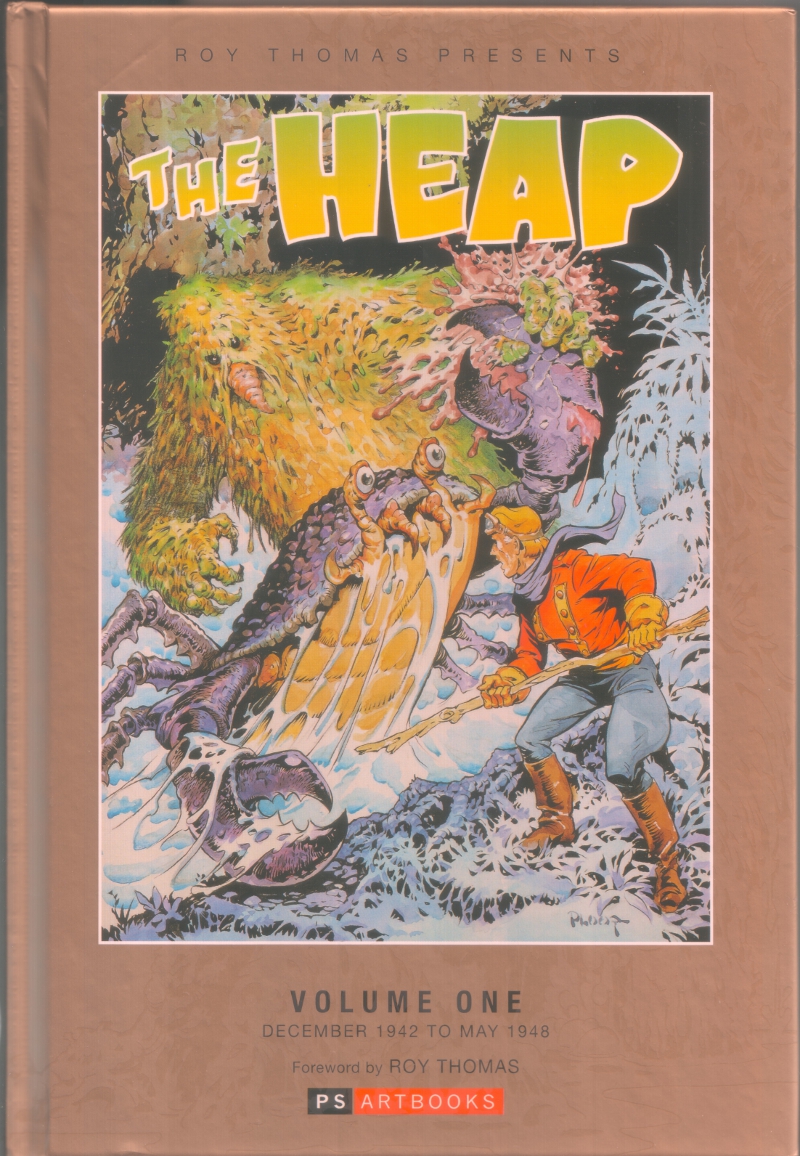 For convenience, I'll be breaking this discussion of the Heap into three sections, each one concerning each of the three volumes. Although the tenor of the stories does not change precisely with each volume, it breaks the stories down into more digestible chunks.
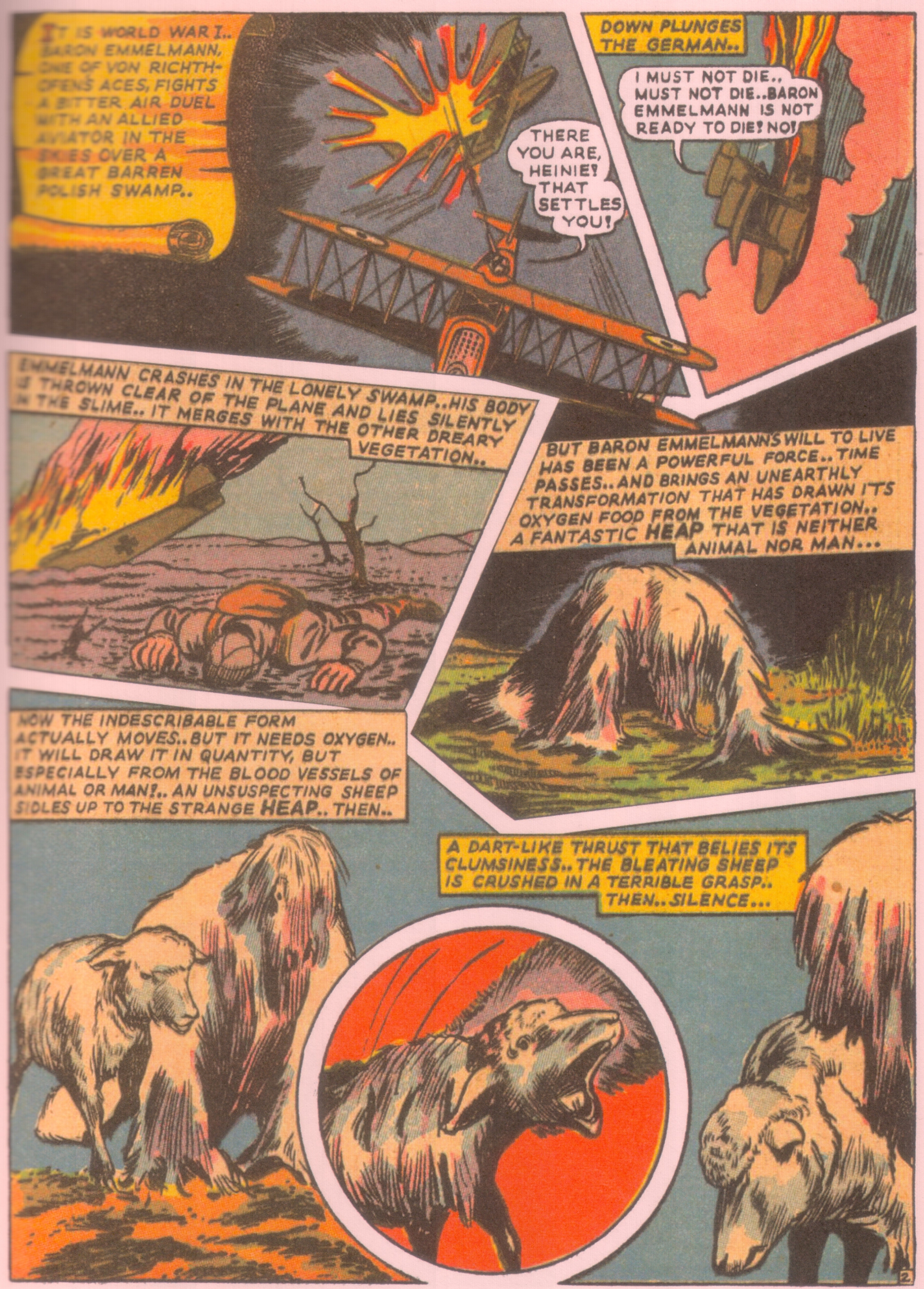 The first Heap story, from the third issue of Air Fighter Comics also contains the Heap's origin story, told in four brief panels, of a WWI German pilot. Baron von Emmelmann is shot down over a Polish swamp. His incredible will to live does not let him die, so for unexplained reasons, he becomes a man-shaped plant. Unlike the later Swamp Things, the Heap cannot speak, and only barely remembers its past as von Emmelmann. The amount any given muck monster remembers of its past life varied. This origin is recounted many times, even in this volume of twenty-four initial stories. And a WWI flight nerd notices that Emmelmann is flying a different plane every time the story is recounted, or wonder what a German flier is doing engaging an Eastern-front plane over Poland. Still, this origin remains consistent, and the character is well-defined at this origin. The Heap is inhumanly strong, immune to bullets, and although it cannot think, it has emotional reactions to things from its past. Initially, it is said to get oxygen by sucking the blood of animals, but this falls by the wayside fairly quickly, as do its fangs.
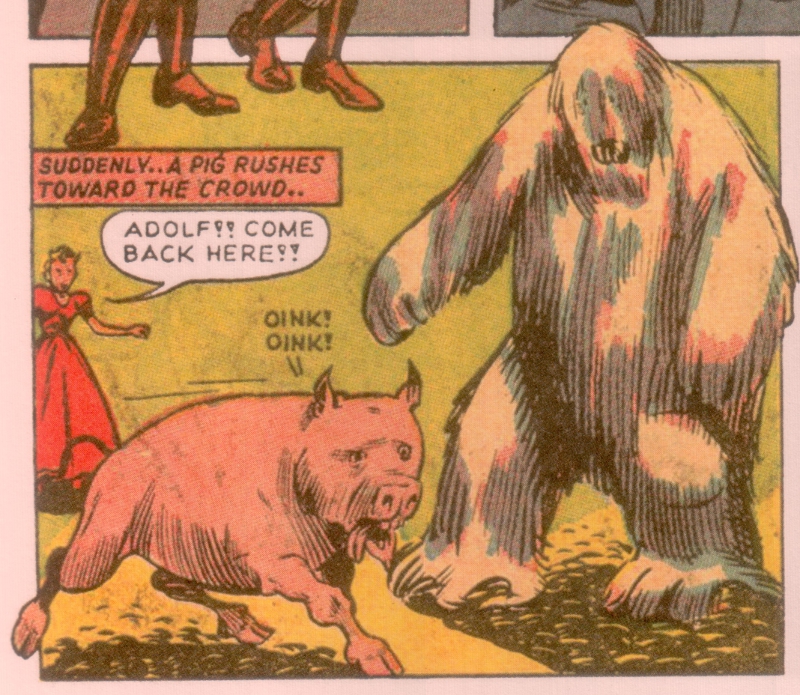 The initial four stories, published between December 1942 and May 1946, ostensibly star Sky Wolf, a rogue Allied flier who flies against the Nazis, and at least once, against the Japanese. The first three stories are war stories, while the fourth seems like a calculated transition to get the Heap to America. After this, Airboy Comics (which changed its name from Air Fighter Comics to reflect its breakout star in December, 1945) would publish one Heap story every issue. These initial stories are less than stellar. The Heap interferes with Iron Ace's plans to capture Sky Wolf, allowing Sky Wolf to escape the Nazi's nefarious clutches. Aside from the Heap, it's a pretty by-the-numbers plot. The second story, from Air Fighter Stories #9 is more less generic. The Heap begins stealing and flying aircraft all over the front, wrecking both Allies and Nazi airbases. Sky Wolf must take care of the problem. But it's strange to see the Heap flying planes.
 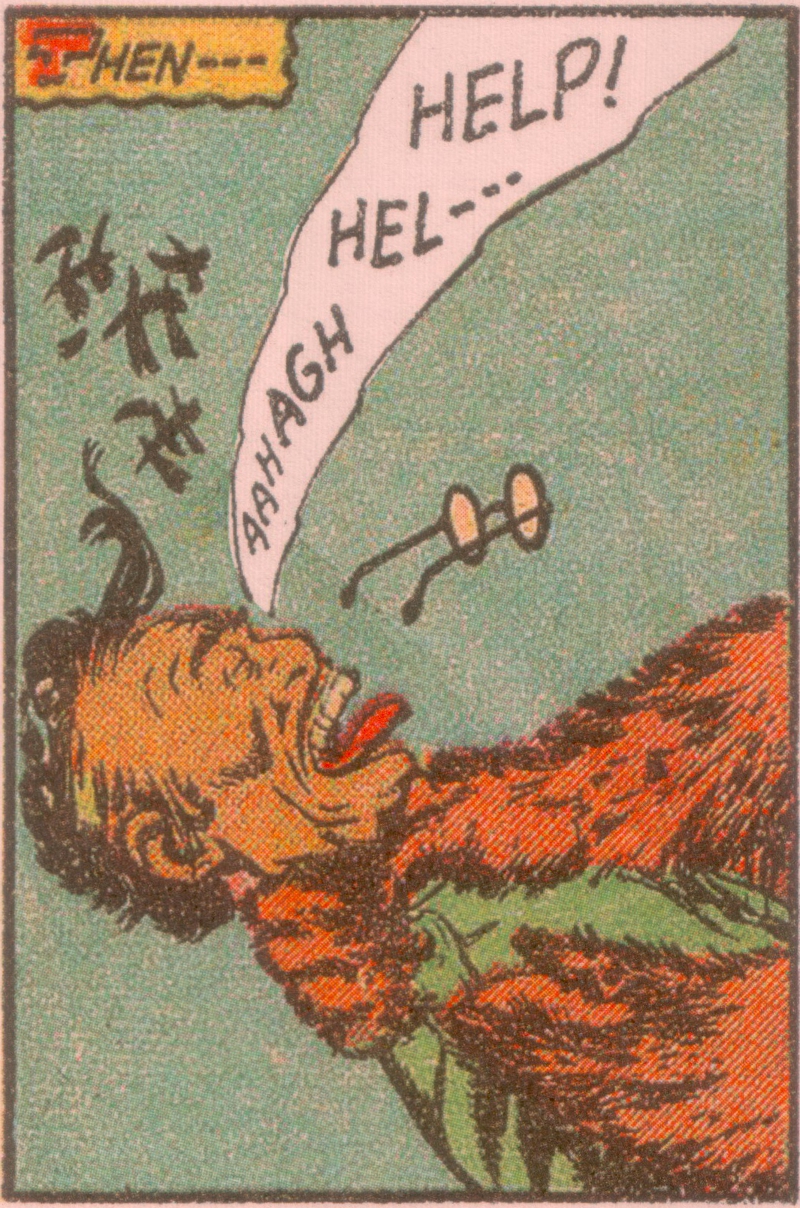 Air Fighter Comics V. 2 #10 contains the third, and perhaps most interesting of the Sky Wolf and Heap stories. The Heap finds its way to occupied China, the art is pretty 1940's racist. The Heap is also brown, for some unknown reason, where it had been white before. With one exception, it would remain brown until 1948, when he would unexpectedly shift to green. There's also a surprising amount of killing. The Heap strangles the evil Japanese commander right before our eyes. Killings would become more commonplace in the Heap, and are still surprising to someone who grew up reading comics that had to be approved by the Comics Code Authority.
 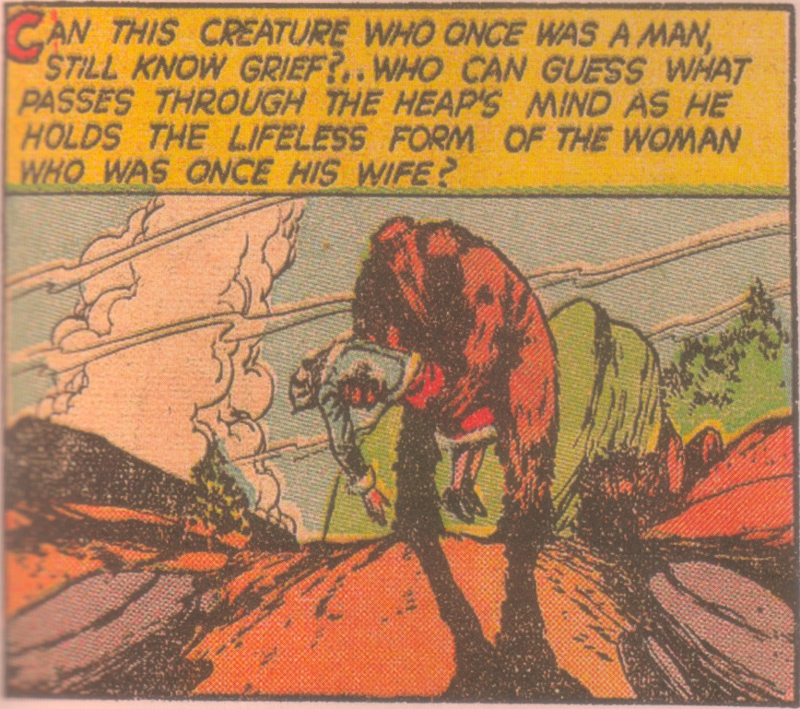 But this story also provides us with our first real taste of pathos. His wife, the Baroness von Emmelman, has been providing humanitarian aid to the Chinese. As is inevitable in this sort of plot, the Heap attempts to protect her, but a bullet intended for him kills her. This is echoed in Len Wein and Bernie Wrightson's Swamp Thing # 1. And for the first time, a story keys in on the theme that later swamp creatures like Man-Thing and Swamp Thing will possess in abundance, the pathos of loneliness and loss. Similar themes have kept Mary Shelley's Frankenstein in print for nearly two hundred years.
 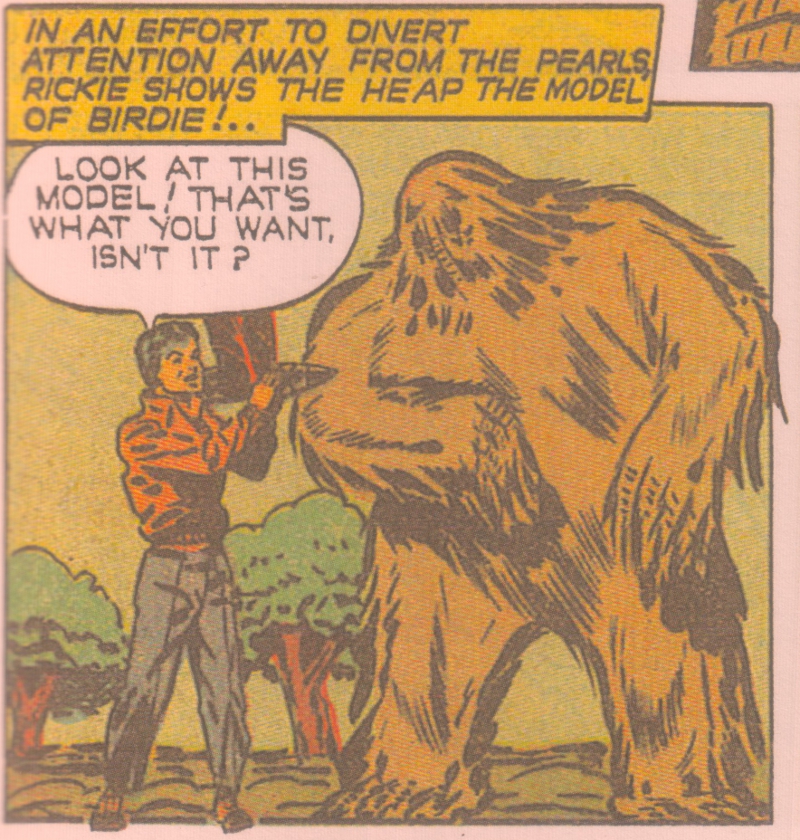 The Rickie Wood stories quickly become the sort of crime comics that proliferated in the forties and fifties, until Wertham and the Comics Code Authority decided comic books should only be used for moral instruction. Gangsters attempt to steal fortunes or murder people, and it always comes down to Ricki and the Heap to set things right. The Heap acts as the avenging hand of God, or the writer's moral sensibility, giving the bad guy his just desserts at the end of the story. The Heap is usually just a little-seen presence in his own story. The crime stories owes a lot to the hard-boiled genre, and contain less of the weird horror sensibility that the character would later display. There are plenty of fedora-wearing gangsters shooting people, and a lot of dames with impressive builds and bare midriffs.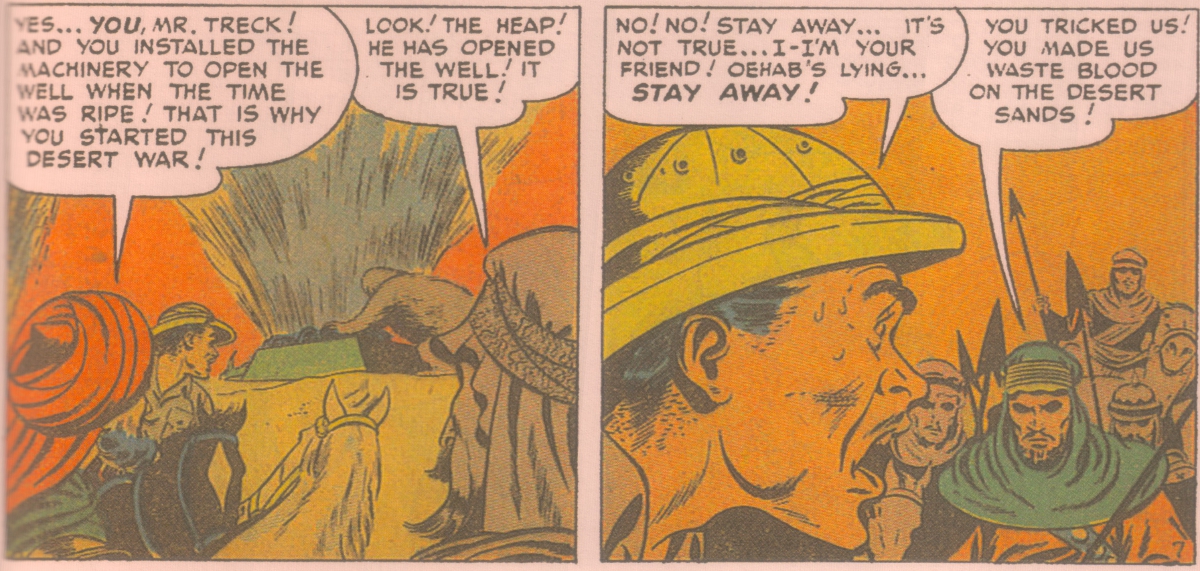
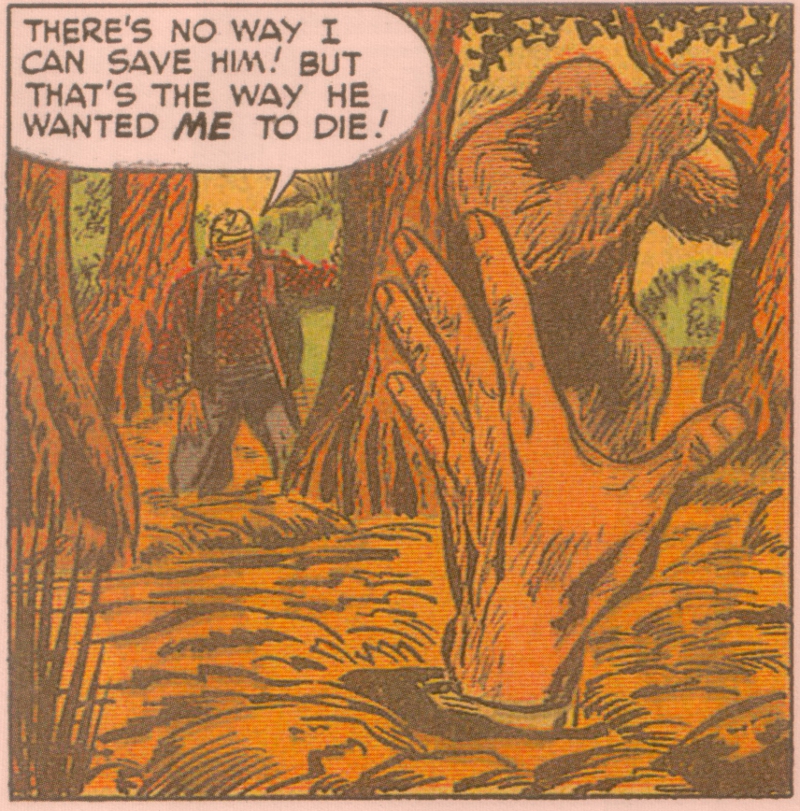 Apparently, these stories did not prove to be popular, because they only lasted three issues. The next stage of the Heap's narrative development kept the world-traveling, but dropped the overtly supernatural figures of Ceres and Ares. These, the last five stories in Volume One, return to the crime themes and ideas of the Rickie Wood era. But they are more interesting. First of all, they lack Rickie Wood, and the bland suburban America that he as a narrative device is tied to. The exotic settings mean that the stories have more freedom to introduce fantastic elements, such as man-eating plants. And again, the Heap does not serve as the violence of justice being served, but instead is more of a plot element that allows the ending to happen in a satisfactory way. This is the approach that Steve Gerber very successfully took when writing Man-Thing. It's a radical and inventive way to tell a comic story, since the Heap is not the protagonist of the story. Instead, it is a catalyst.