
When I started my Pathfinder campaign, I wanted three things. I wanted to involve a lot of undead, I wanted killer dungeons, and I wanted an Egyptian theme to the campaign. Luckily, the first two go hand in hand. And when I discovered that Pathfinder's default setting of Golarion has an Egyptian-analogue called Osirion, it was suddenly much easier to set up.
My superobjective (an actor's thing) was that I wanted to have people in the house. A lot of middle-aged men suffer from loneliness and depression because they do not socialize enough. Having gamers in to laugh, kill things, and generally goof around forces me to be social once a week. I have noticed my depression has visited less often since I started the group.
I fused together Pathfinder's Osirion and Green Ronin's fantastic Hamunaptra for background. I didn’t have the time to write my own adventures, but I have a lot of deathtrap dungeons already, and it was easy to fill in with other adventures that fit the theme. I think it worked reasonably well.
The adventures were:
Hive of Villany: from Dungeon Crawl Classics #29, The Adventure Begins (Goodman Games)
The characters started out as prisoners, their sentences commuted by the Temple of Set in return for doing some dirty jobs. Their first assignment was to find out why the temple's bees weren’t producing honey. This properly set the campaign tone as not entirely serious.
Malice of the Medusa: Dungeon Crawl Classics #45 (Goodman Games)
The first actual tomb-raiding. This is a fun low-level adventure with good background, several small tombs, and an entertaining plot.
Forgotten King’s Tomb: (Kobold Press)
I hate to call this disappointing, but it’s a bit simple. I made this a more interesting adventure by allowing the adventurers to negotiate with the involved mummy.
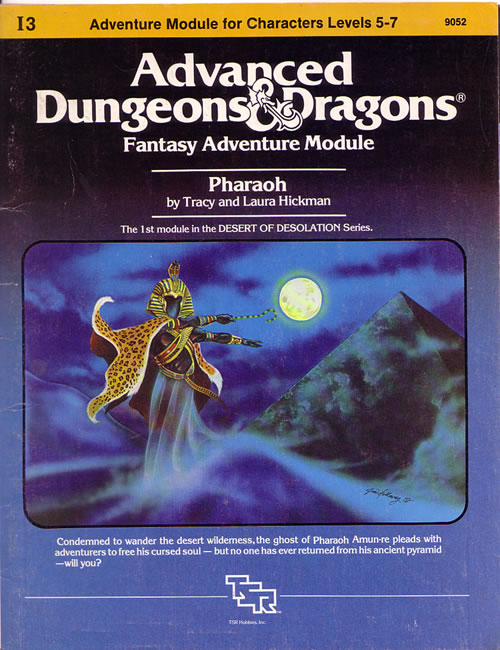 Pharaoh: I3 (TSR)
I bought this 1st edition adventure back when it first came out. I’ve carried it through many moves for more than thirty years, and finally got to run it. A wonderful adventure, a pseudoegyptian dungeon crawl set in a pyramid with a lot of creativity, plenty of strangeness, and a surprising amount of humor. The backstory provides a good hook that the players can figure out and interact with.
The Rebel's Ransom: Pathfinder Society 02-03 (Paizo)
A particularly good Pathfinder adventure, involving a certain amount of tomb-robbing, but with a twist. A combination of interesting characters, clever traps, and an enjoyable progression make this a great adventure.
Tomb of the Blind God: Dungeon Crawl Classics C9 (Goodman Games)
This was a side-quest that first touched on my own campaign arc. They are initially sent because a girl is kidnapped, and golly, there's grells, grimlocks, and more information about the past than they thought was going to be there.
The Scorpion Queen from In Search of Adventure (Goodman Games)
Maybe not the most inspired adventure. Still, a few puzzles, a little combat. The players didn’t seem to mind.
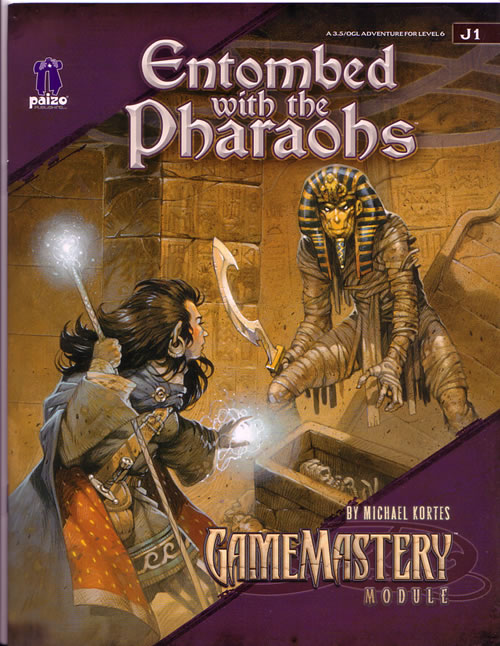 Imprisoned with the Pharaohs: J1 (Paizo)
One of the adventures that made me realize that a 3rd edition Egyptian-style campaign was possible. A fine adventure in a pyramid with mummies and all the Egyptian trappings I could want. Also the introduction to the mystery of Aucturn.
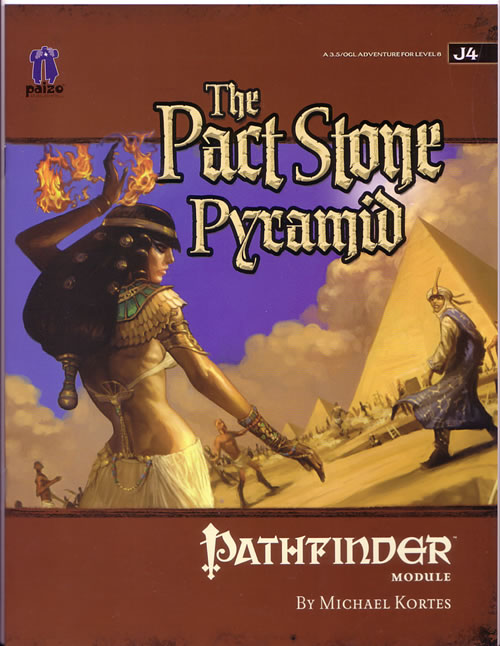 The Pact Stone Pyramid: J3 (Paizo)
Following on from the previous pyramid adventure, this was another pyramid dungeon crawl, and had its own contribution to the mystery of Aucturn. I provided my own answer to the mystery, and just about the time we were playing this, Paizo came out with their own. I liked mine better. Nevertheless, this was another fun pyramid adventure from the people at Paizo.
Wrath of the Accursed: Pathfinder Society 2-20 (Paizo)
A city-based intrigue adventure from Paizo. It made for a nice change of pace, giving the characters a chance to do some negotiation, and run through the streets of the city.
The Dog Pharaoh's Tomb: Pathfinder Society 3-12 (Paizo)
A smaller adventure than J1 and J3 above. Still, this was a good, rich adventure with interesting tomb traps, undead to destroy, and links to the future of the campaign.
Caves of the Crawling Lord: Dungeon Crawl Classics #37 (Goodman Games)
This was the adventure where the whole plot basically came out. And the characters learned that leaving the alchemist alone in front of the undead antipaladin was a mistake. Here the players found out about the Dynasty of Jackals, a line of corrupt and demon-consulting pharaohs whose names had been eliminated from official history. They discovered the mummified remains of the majority of the line, but not the ultimate resting place of the Dark Undying One, the last and most terrible of the Dynasty of Jackals. He was so evil that merely speaking his name would bring damage upon the utterer.
 Tomb of Horrors: (3rd ed version) (WOTC)
Acererak was the court wizard of the Dark Undying One. The mechanics of Pathfinder mean that the adventure cannot be as deadly as it was originally intended to be. Still, the three pit traps puzzle is something you can't roll dice for, and it got the players, both here and in Necropolis. Good fun. This signaled the beginning of the serious trapped tombs adventures: the next three tombs were tributes to this classic.
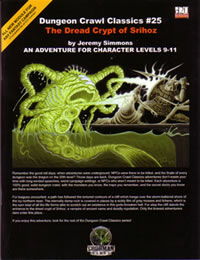 Dread Crypt of Srihoz: Dungeon Crawl Classics 25 (Goodman Games)
Srihoz was the chief of the Navy under the Dark Undying One. This turned out to be more deadly than the infamous meat-grinder Tomb of Horrors. While the Tomb was first, the designers of the Dread Crypt also had some very dirty tricks to lay on the characters.
Lost Tomb of Kruk-Ma-Kali: (Kenzerco)
The tomb of the Dark Undying One’s mightiest general. Wonderful tribute to the Tomb of Horrors. But another instance where the extensive magics involved would have been much more expensive than a resurrection spell. But shush, because this one is really good, even though I ignored the wilderness adventure getting there.
The Mud Sorcerer's Tomb: Dungeon #138 (Paizo)
The individual entombed here was the tomb architect of the Dark Undying One’s court. And had directions to the tomb of Mrs. Dark Undying One. An update of a great 2nd edition adventure, also from Dragon magazine. A sly, thoughtful tribute to Tomb of Horrors, which fit easily with the campaign’s theme of tombs and deadly traps.
The Rolling Tomb: Dungeon #215 (WOTC)
An interruption of the main quest with a delightfully insane premise. The hook is "a full-sized pyramid on rollers is going to squash Pharaoh's favorite oasis. You will do something about this immediately."
StarHaunt Dungeon #207(WOTC)
StarHaunt was a bit of an emergency insertion. I'd made The Rolling Tomb too difficult. But replacing the meteor with an undead god-fetus made this adventure wonderfully macabre. Seriously. Look up "atropal scion" and tell me that isn't creepy.
 Crypt of the Devil-Lich: Dungeon Crawl Classics #13 (Goodman)
After a couple of less trappy-deathy adventures, this was back to the meat grinders I love. Lots of traps, and traps within traps. There was a wonderful moment with the hellwasp swarms when everyone was helpless except the Fire Oracle. Who cashed in his chips later this adventure.
Necropolis: Necromancer Games
Sort of Gygax's adventure to top Tomb of Horrors, this is as gonzo and weird as you might expect. Wonderful, and one of the adventures the campaign was constructed to lead up to. Well converted by the people at Necromancer Games, and delightful fun for the players. They destroyed the Dark Undyng One, and the beacon that was drawing Aucturn close, amplifying necromantic spell effects. But that wasn’t the end of it all. Turns out the court wizard, Acererak also had a few lingering threats to the well-being of the world.
Prisoner of Castle Perilous: Dungeon #153 (WOTC)
The players learned that Acererak wasn’t quite as destroyed as they thought he’d been. And he’s mucking about with something in the Negative Energy Plane. Good adventure, and the beginning of the campaign’s endgame.
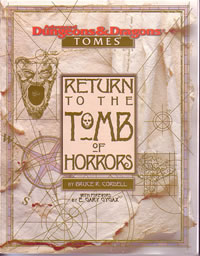 Return to the Tomb of Horrors: (TSR)
I didn't use the introductory adventure, but the rest was pretty darn entertaining, if a little weird to convert to Pathfnder. Still, this is a solid, puzzling sprawl of a mega-adventure, and I’m quite happy that I finally got to run it.
Tomb of Horrors: 4th ed (WOTC)
This was the third and final Acererak the party faced. I’m a little sad I wasn’t able to reconcile the initial parts of the adventure with my campaign, instead only using the final adventure. Still, I liked this. Unfortunately, the party acted with a little haste before they learned what was going on, and managed to doom themselves. Ah well, such is giving control of the story over to the players. And there’s a lot of potential to having a new Devouring God.
There are a few adventures I wanted to run but couldn't find a way to slip in. Grimtooth's Dungeons of Death, Mayfair's Undead, and the Tomb of Iuchiban from Alderac. But they either didn’t fit the structure of the campaign, or mechanically would have lost too much when converted to Pathfinder. But now we’re onto a new campaign, one starting with zero level characters with random backgrounds and straight 3d6 characteristics. Let’s hope might oaks from small acorns grow.
I want to thank everyone who was part of the campaign, and made it the successful fun it was. Chris, John, Tristan, John, Diane, Shannon, Tara, Alex, Dave, and Nick: thank you all very much. I hope you had as much fun as I did.


 Eerie was a Warren Publications magazine, which, in the seventies, was clinging to the format EC had been forced out of. Their flagship publications included Creepy, Famous Monsters of Filmland, and Vampriella. In format, Eerie is similar to
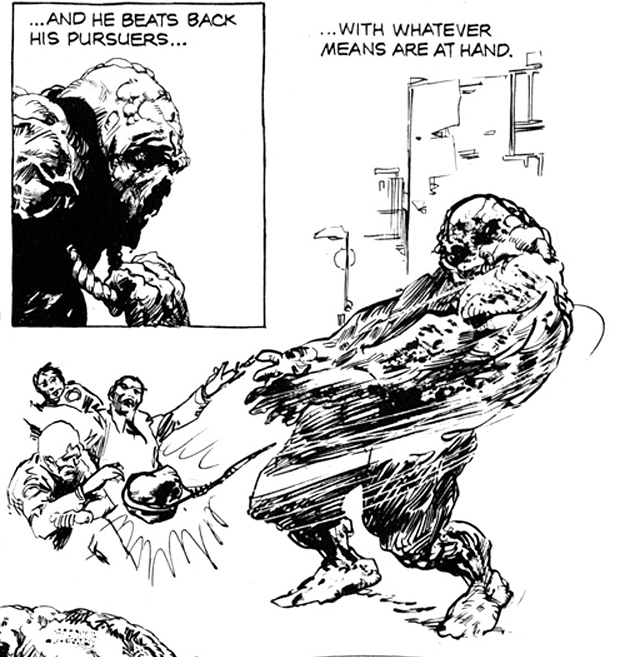
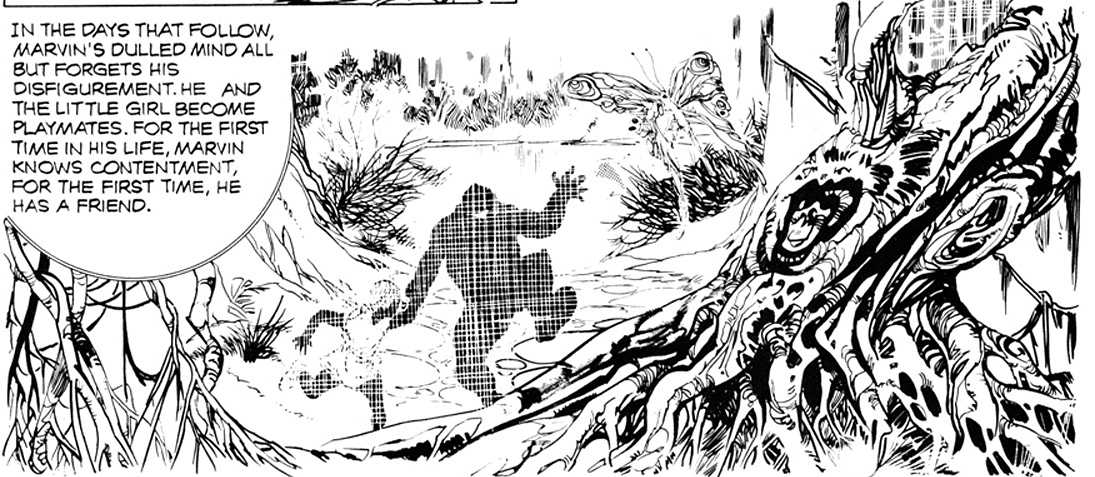 Marvin the Dead Thing is in many ways a distillation of the Swamp Monster trope. Marvin Kanfer, we are told in the first panel, had always been alone. Six panels later, he kills himself by throwing himself in a polluted river. The pollution from ‘several factories’ serves as the catalyst (like Ted Sallis’s Super Soldier Serum, Dr. Holland’s bio-restorative formula, or the executed babies in the Heap’s Wausau Swamp). The results, inevitable. Marvin returns as a swamp monster without knowing it (similar to Sallis in his first Man-Thing story). The police get involved, and Marvin gets to demonstrate his strength and his invulnerability to bullets. He is more sentient than the
 This is the first time that the genre has mined the idea of family for the swamp monster. Previously, the monster had been a lonely presence without attachments, only friends and enemies. The transformation into the swamp monster got rid of the individual’s previous life. However, Marvin is a different sort of person. In a story that perhaps draws from the classic 1931 James Whale Frankenstein, Marvin is befriended by a young girl who is not put off by the way he looks. But a mob (literally, a torch-waving mob) comes into the swamp to hunt Marvin down. Instead of killing him, however, they kill little Susie. Unwilling to accept the death of the little girl who had been his playmate, Marvin places her body in the same toxic sludge that brought about his transformation. After weeks of waiting, he is rewarded with her sludgy resurrection. The two then bond, and presumably, live happily ever after as man and child, free of the restraints of society. The story is similar to a
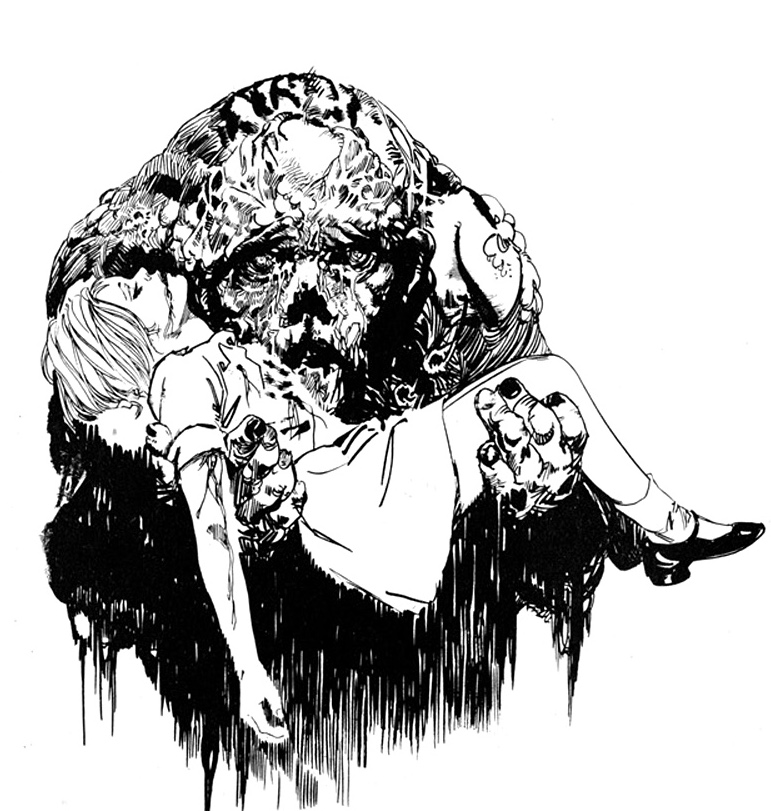 Esteban Maroto’s work is never more poignant as the image of Marvin holding his playmate in his arms. The despair and sadness on Marvin’s disfigured face is palpable, and really makes the point of the story.
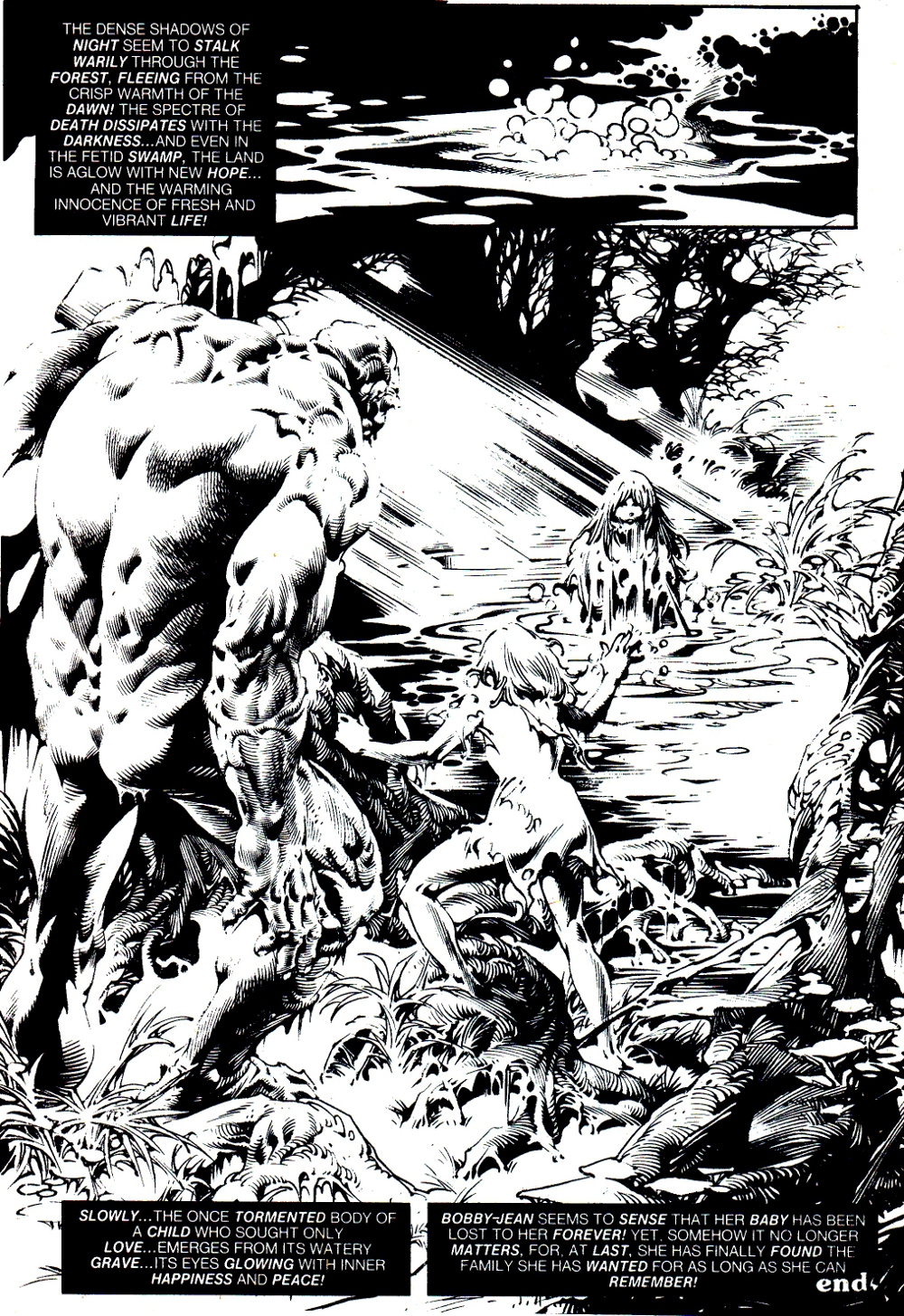
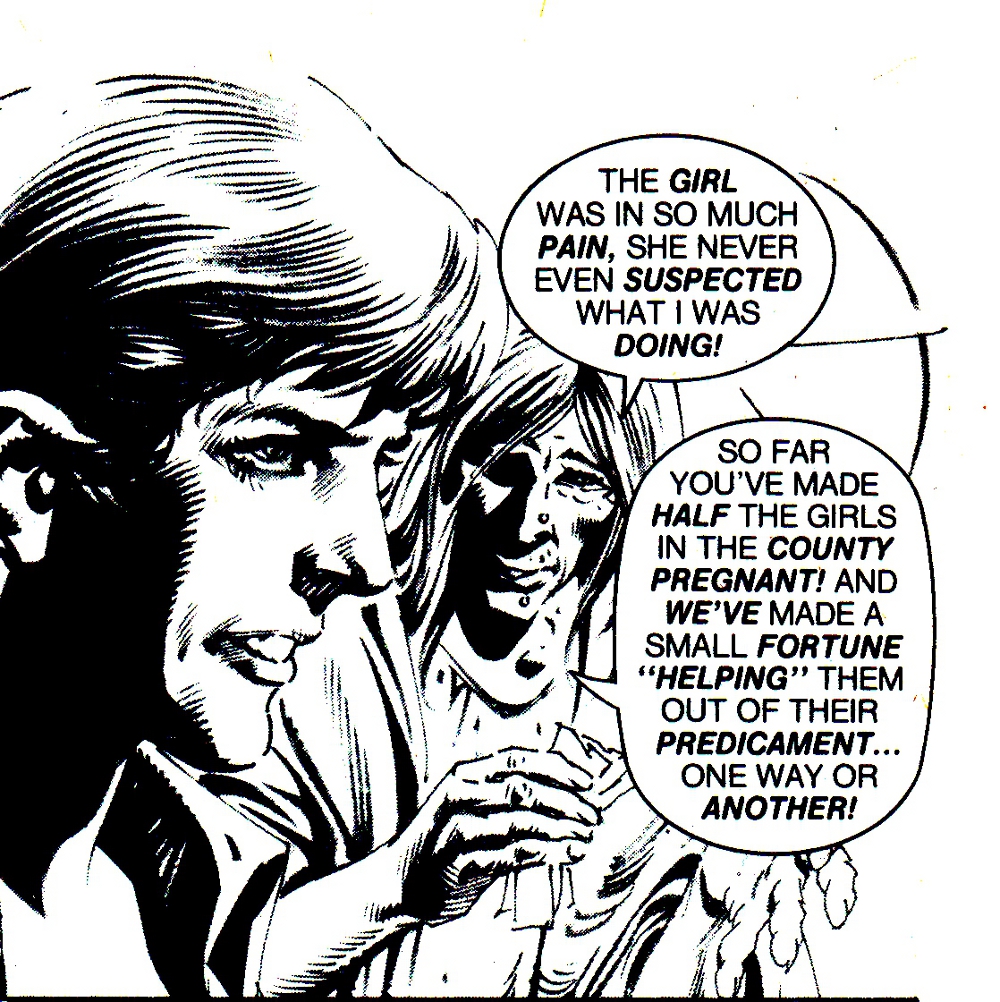 This story is less straightforward. Marvin watches a young couple dump their stillborn baby into the polluted waters that transformed Marvin into the swamp creature he is. Bobby-Jean and Billy are a troubled couple. Billy said he’d marry Bobby-Jean, but he most take care of his grandmother. But Billy is apparently a serial impregnator, and his supposedly sick grandmother is someone who takes care of unplanned pregnancies. The two of them have a business together, him taking advantage of inexperienced girls, his grandmother getting paid well to deal with the pregnancies.
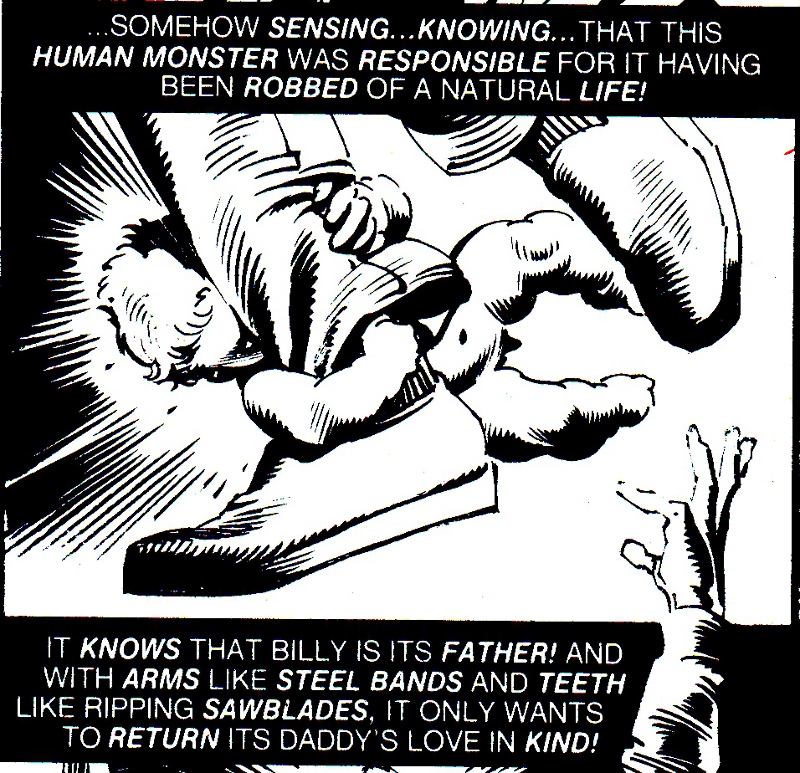 The stillborn babe returns to life, thanks to the polluted waters, and immediately goes out to seek its father. Bobbie-Jean, hemmorhaging, tries to escape into the swamp, and the baby finds Billy, killing him. It also kills his grandmother. Bobby-Jean, dying, is taken by Marvin to the swamp, and the three of them turn into a kind of happy swampy family.
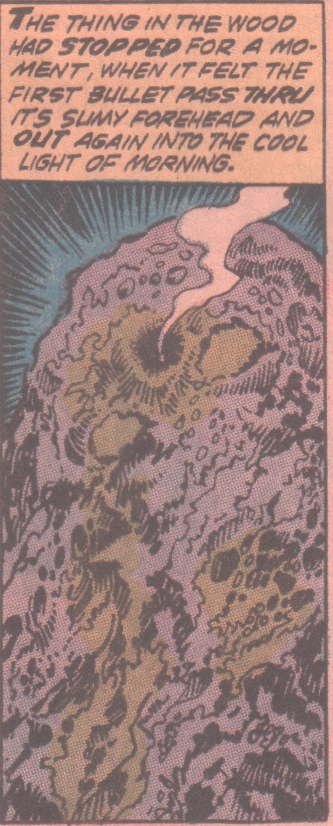 In 1972, Marvel handed a new magazine, Supernatural Thrillers to Roy Thomas. The new magazine, which ran 15 issues, started as an attempt to capture the new macabre movement in comics. With the loosening of the CCA rules, Marvel thought they could now adapt classic weird short stories into comics, giving the medium more legitimacy. This plan lasted four issues, adapting Sturgeon's “It”, The Invisible Man, Robert E. Howard's “Valley of the Worm” and finally Dr. Jekyll and Mr Hyde before the original creation N'Kantu, the Living Mummy came to dominate the title.
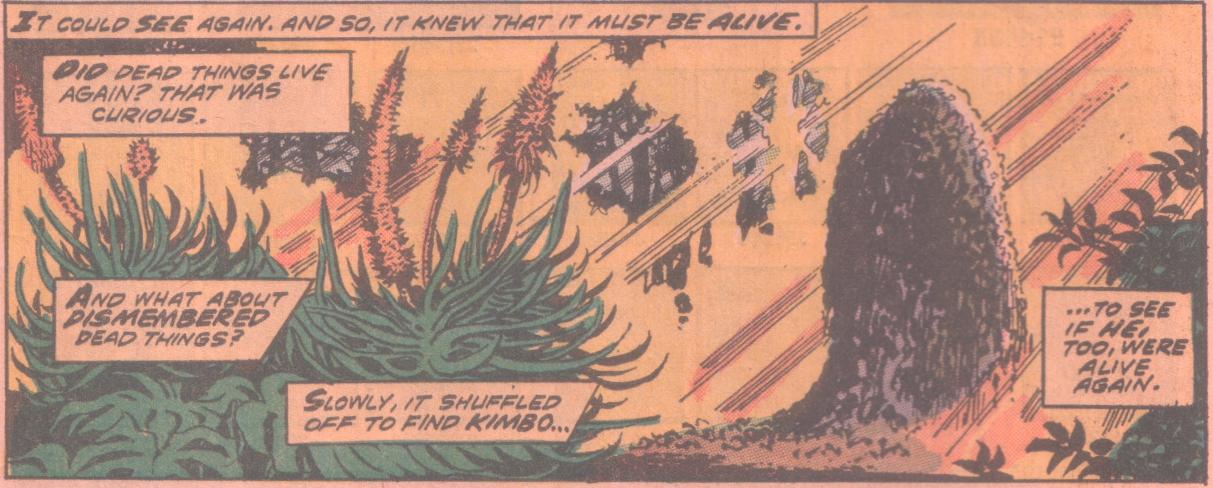 The art is good. Not as moody as Wrightson, Bissette, or Mayrik, but the faces are expressive, and the emotional content of the story is conveyed well. Penciler Marie Severin would illustrate more than a hundred and sixty issues for Marvel. Especially effective is the panel
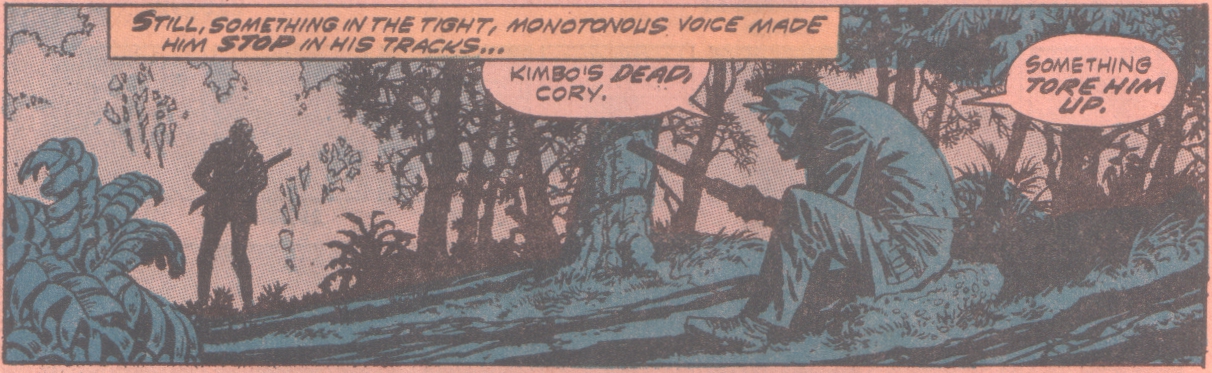
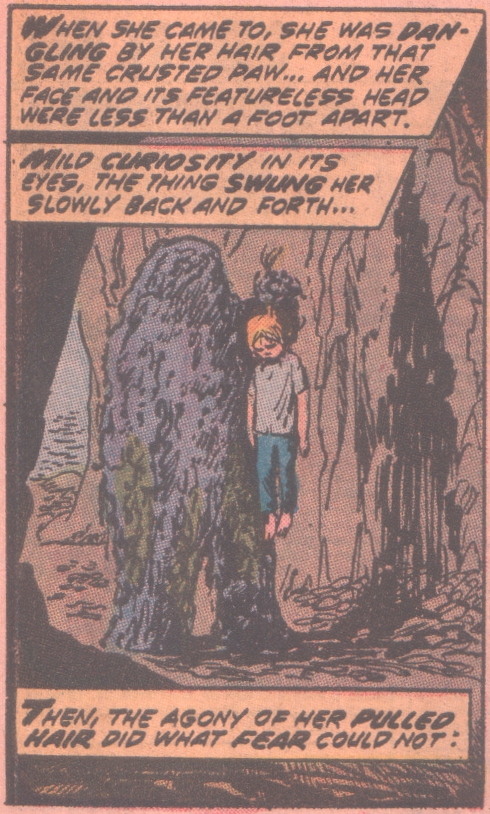 The creature itself is painted in a combination of green and gray, and is not as distinct from the background as Swamp Thing and Man Thing would be. Which is a bit of a shame since it’s difficult to see exactly what It looks like. The coloring, however, emphasizes the fact that it is made of the swamp stuff that surrounds it. Although it is human-shaped, It does not have a recognizable face. It has eyes, but they are usually brushed over in the same color as the rest of the creature. Other swamp monsters have red eyes, which helps to separate them from the rest of the creature, but that’s not the case here. As a result, I find it difficult to figure out which direction the creature is ‘facing.’ This and the coloration leads to a certain amount of cognitive dissonance, which is not entirely unwelcome in a thriller/horror comic.
 The Lurker is subtle twist on the now-standard Muck Man short story, in this case written by Don Glut and illustrated by artist Jesse Santos (nether of whom are credited in the digest itself). Bank Robber Martin Kraz returns home after a ten year stint, only to find that his buried loot is guarded by the swamp monster. Like the early Hillman
 That said, there are several key differences that make the story stand out. One, the Lurker in the Swamp is not immune to bullets. So while the usual revenge (this time between two robbers) serves as the (apparent) climax of the story, Glut’s twist is that the Lurker dies, and the man who murdered it becomes the new Lurker. This idea of of the serial identity, that the swamp monster is not unique but an identity to be assumed, would not be picked up again until Alan Moore’s stint on Swamp Thing. Another twist on the tale is that the catalyst that changes the human into the Lurker is not pseudo-science, but supernatural. Haunted Swamp was where the local constabulary dumped the bodies of witches.

 One of Glut's strengths is his in-depth knowledge of the genre, so he can anticipate where the reader believes the story is going. So the story is not a simple monster hunt, it has a good twist in the end. The Lurker has also changed a bit in the four years between its appearances. The Lurker Dr. Spektor encountered doesn't appear to be animated by the spirit of the criminal Martin Kraz. It is now immune to bullets, where the initial appearance was not. It also showed a new power, a command over plants. This once showed up in the Heap comic, and Glut says he had read several Heap comics, although it's difficult to say which ones exactly. Control over plants was a rare power among the Muck Monsters, or was until Alan Moore took the ability to the terrifying extreme with Swamp Thing. Post Moore, many swamp creatures would be able to control plants.

 It's a good and surprisingly complex story. And Glut was savvy enough to show the mucky hand of the Lurker rising from the depths. Obviously, there's life in the old monster yet.
 I had the good fortune to stumble on a lesser-known literary descendant of

 As the name implies, O Morto regards himself a dead person. His immunity to bullets seems to back this up. It isn’t until 1985, nearly two decades after O Morto’s first appearance, that his origin his even hinted at. In "Bodies Without Heads Do Not Speak," a legend is recounted that O Morto was once a judge who was dragged to the wetlands and killed with an ax. His subsequent resurrection is left as a mystery, but this explains some of the moral yet harsh nature of his justice, and his territoriality. Despite this new understanding of the character's background, he solves his problems in the the same way, an axe-blow to someone's head.
 Unlike Dr. Ted Sallis who became the Man-Thing, Dr. Alec Holland who became the Swamp Thing, or Baron von Immelmann, O Morto does not seem to be highly educated. Judges of this period in Brazil were not required to have a law background, merely to pass a test on the local laws. He’s a bit more down to earth than the previous lives of other of the Heap’s literary descendants. In this way, O Morto seems to presage such slasher fare such as Jason Voorhees. But where Jason varied his implements and tended to merely start with the immoral youths and move on to their friends, O Morto just goes after the bad people. With a huge axe. He occasionally meets people who are not reprehensible, Sílvia in “Little Sílvia” as well as Bernardo in ”Bad Smell.” He does not kill indiscriminately. Only those he believes are bad. As such, his stories tend to follow the mid to late Heap style of story. A bad person goes into the swamp, only to be violently foiled. O Morto is also the only supernatural element in the these stories. Everything else is strictly noir or crime.
 "A coisa melhor do mundo e o lodo. Lodo e o podridao como estes dois! Ervas malditas, Mosquitos, pernilongos, oh! Que sinfonia harmoniosa! Tudo isso enche sde satisfacao minha sensibilidade de poeta, bem no fundo de minha alma! Ah Ah Ah! Embora eu nao tenha "fundo" E muito menos alma!"
 What makes these black and white stories stand out so much is the life, if you’ll pardon me, and energy that Eugênio Colonnese imparts to his creation. The swamp is lit like a noir film, dark and white, with no grey tones. Although I suspect this is a necessity of the printing process originally used, Colonnese’s art makes fantastic use of the medium. The line work is reminiscent of both Bernie Wrightson and Steve Bissette, fine and frenetic in places, other times using broad gestures to suggest more than is actually present on the page. Colonnese has a fine eye for the grotesque, and constantly creates memorable images.
 I was extraordinarily pleased to come across O Morto do Pântono, because I love the all the permutations of Hillman’s The Heap. O Morto is another very entertaining, unique offshoot from the Heap’s fecund trunk. There’s a charm to the stories, and Colonnese’s art is stunning. Hopefully, and perhaps this article will help, the character will get more of the exposure that it deserves. I would love to read the rest of O Morto’s stories.
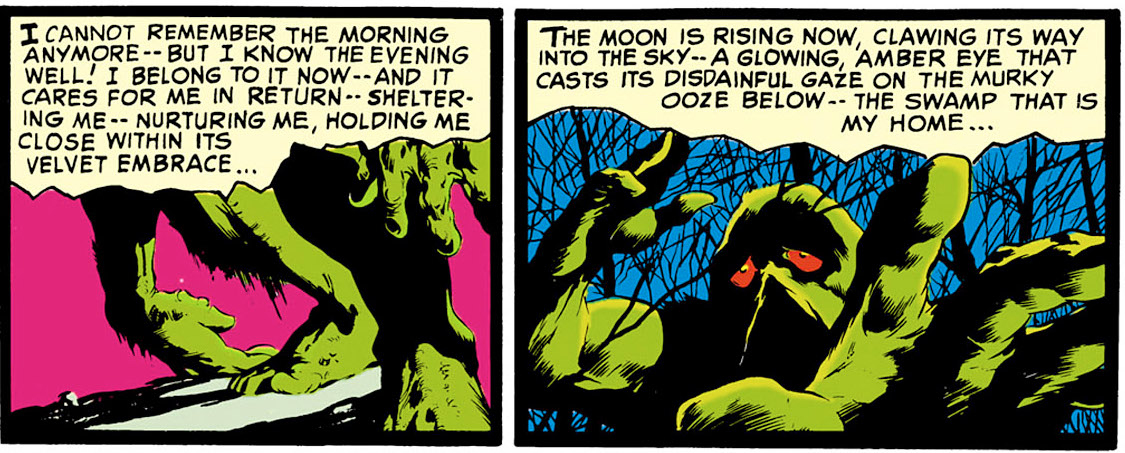
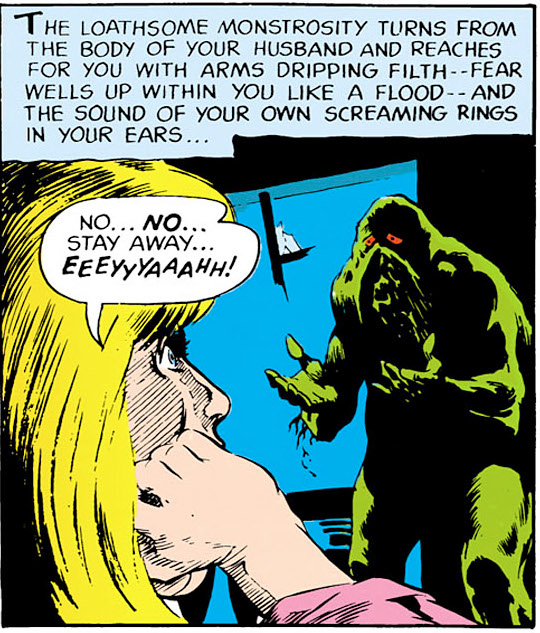
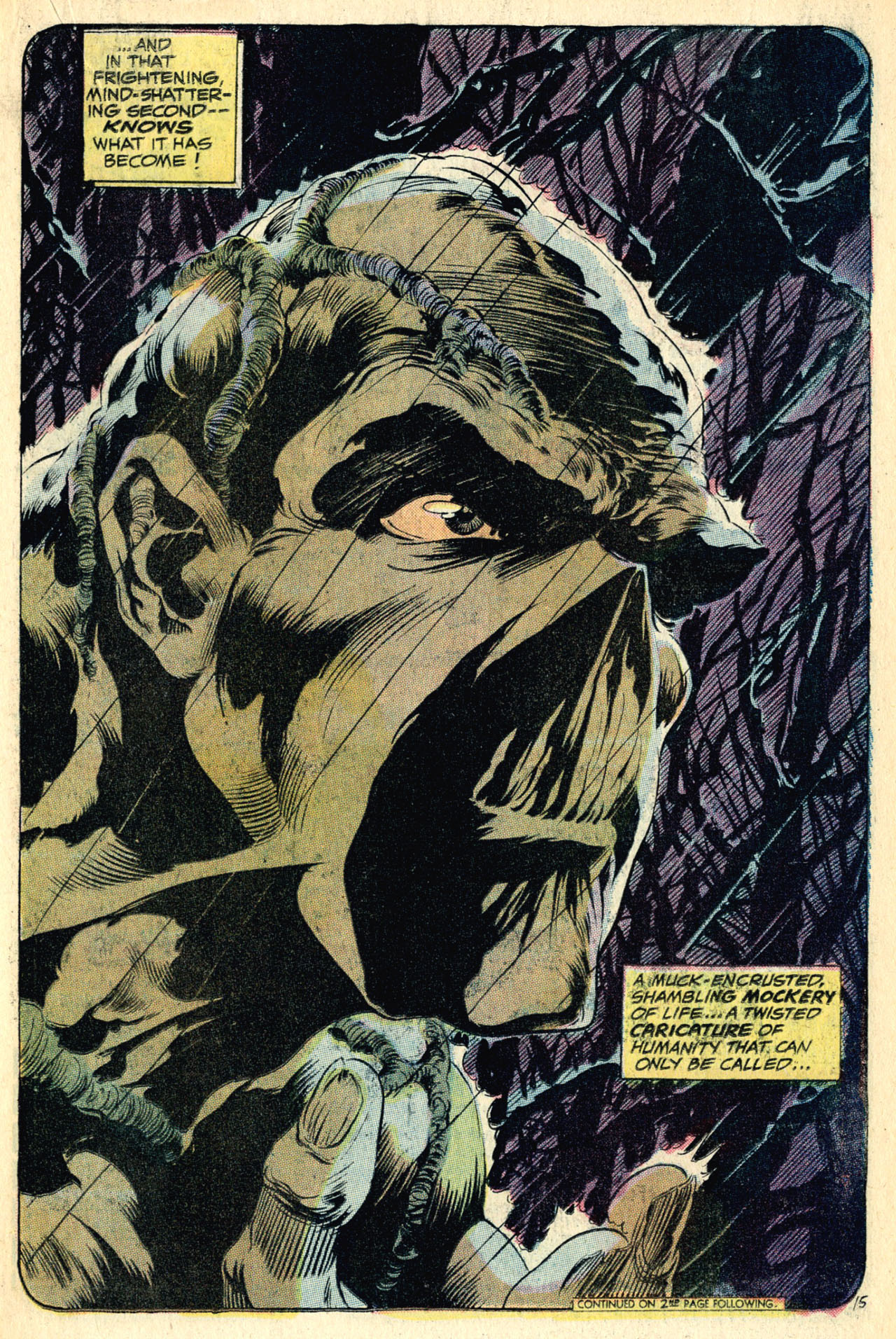 One year after House of Secrets 92, Wein and Wrightson brought the concept back, this time in a modern setting. They had been reluctant to do so, but were encouraged to do so by DC editor-in-chief Carmine Infanto, who had once been the illustrator for
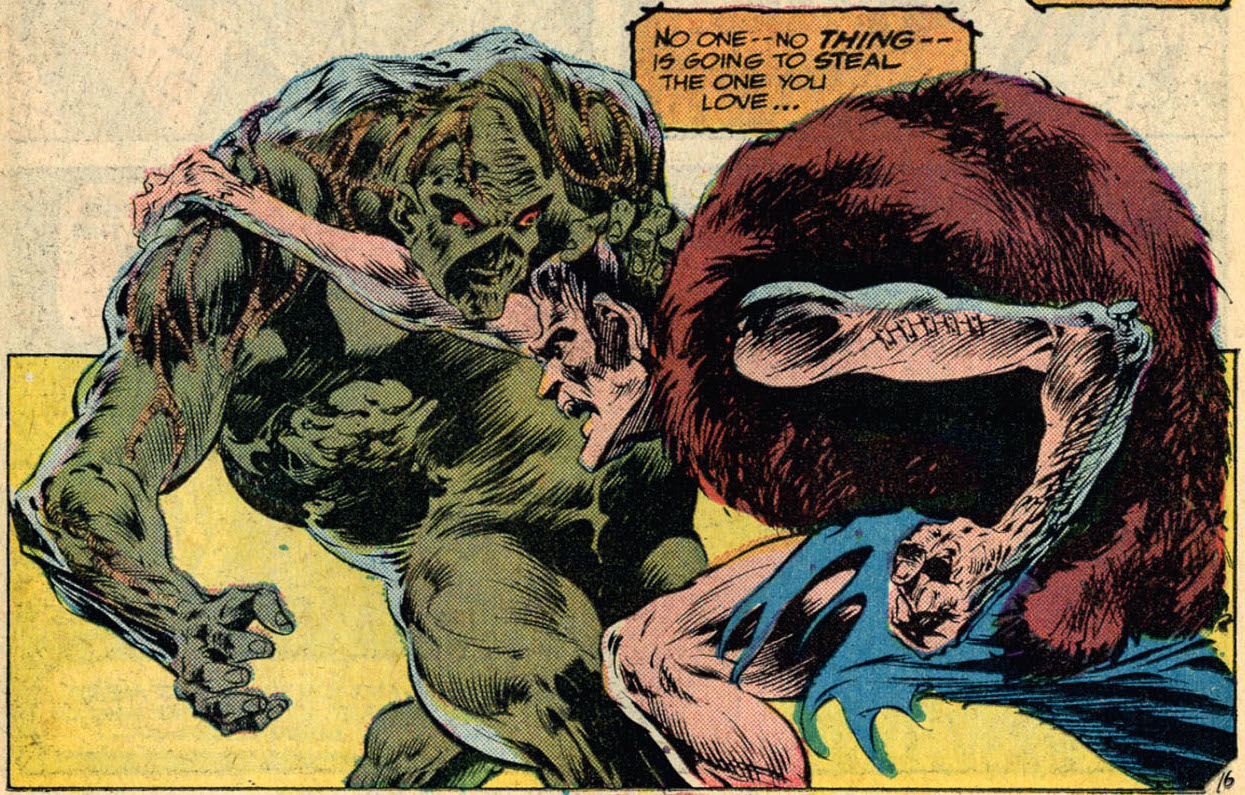 The Swamp Thing’s background cast is filled out with two people initially. Matt Cable was assigned to protect Alec Holland and now chases the Swamp Thing here and there across the globe. Cable is a bit generic, a down-on-his-luck government agent who hunts the monster that has ruined (in his opinion) his career. While on a trip to the Balkans, he picks up Abby Arcane, niece of recurring villain Anton Arcane. The two make a good team, although Abigail doesn’t have a lot of agency. They duo becomes a trio with Jefferson Bolt, a black man who was being held by the worms in issue eleven. Wein doesn't develop Bolt all that much, really only having two issues to do so. Bolt seems like he is there to provide conflict, or at least a different perspective that Abbey is unable to provide. The two (and then three) often provide a more human counterpoint to the Swamp Thing's stories, although occasionally (Issue 5 "Last of the Ravenwind Witches", and issue 10 "The Man Who Would Not Die") they don't show up at all. The supporting cast allowed Wein and Wrightson to approach stories from different perspectives. Issue 9, "The Stalker From Beyond" is an excellent example, switching perspective from Cable and the Abbey back to the Swamp Thing, moving the story forward through each character's perspective.
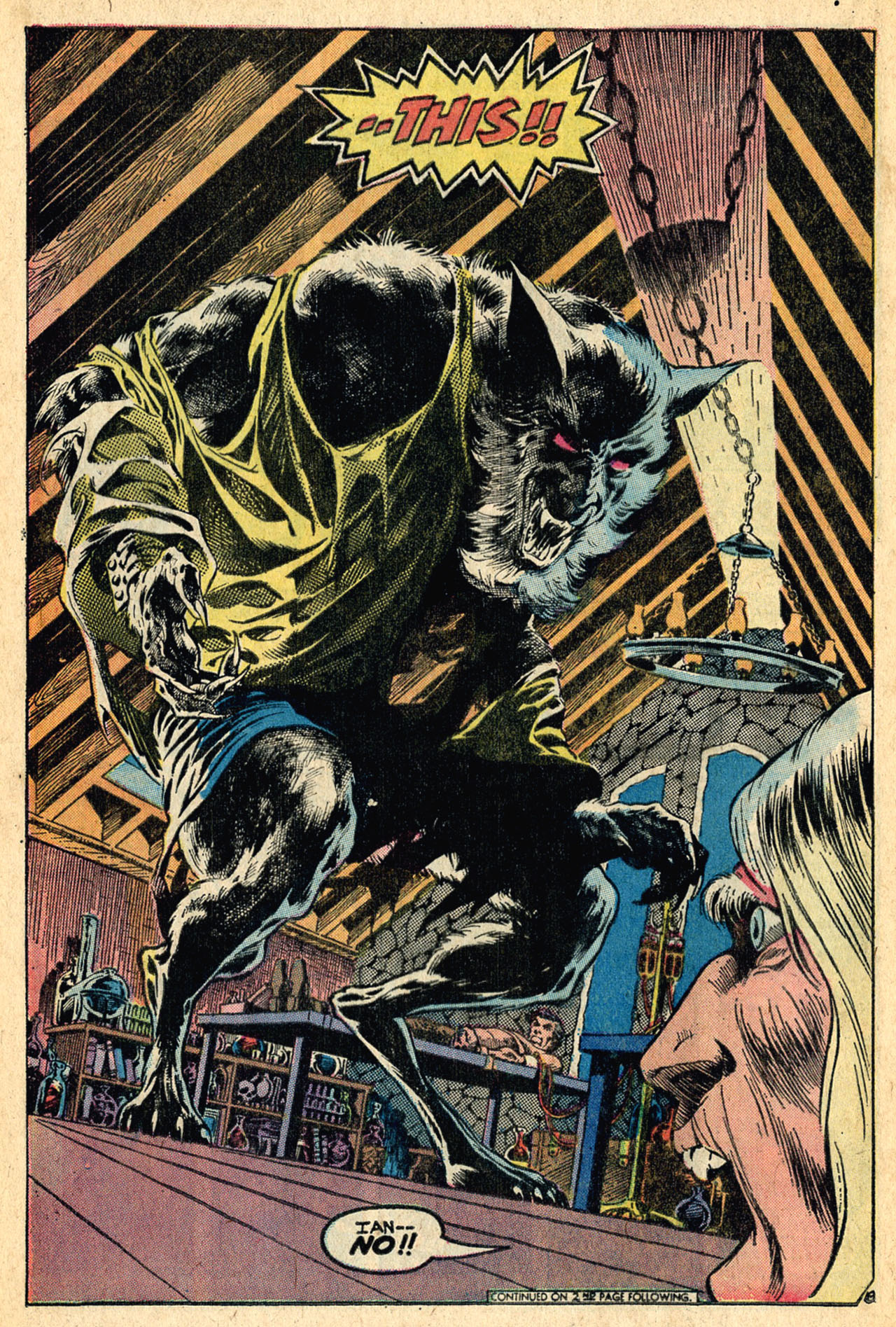
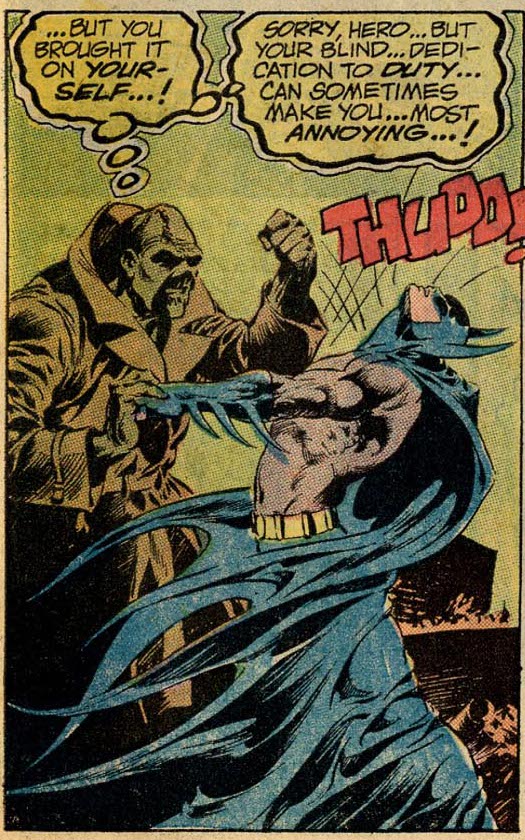
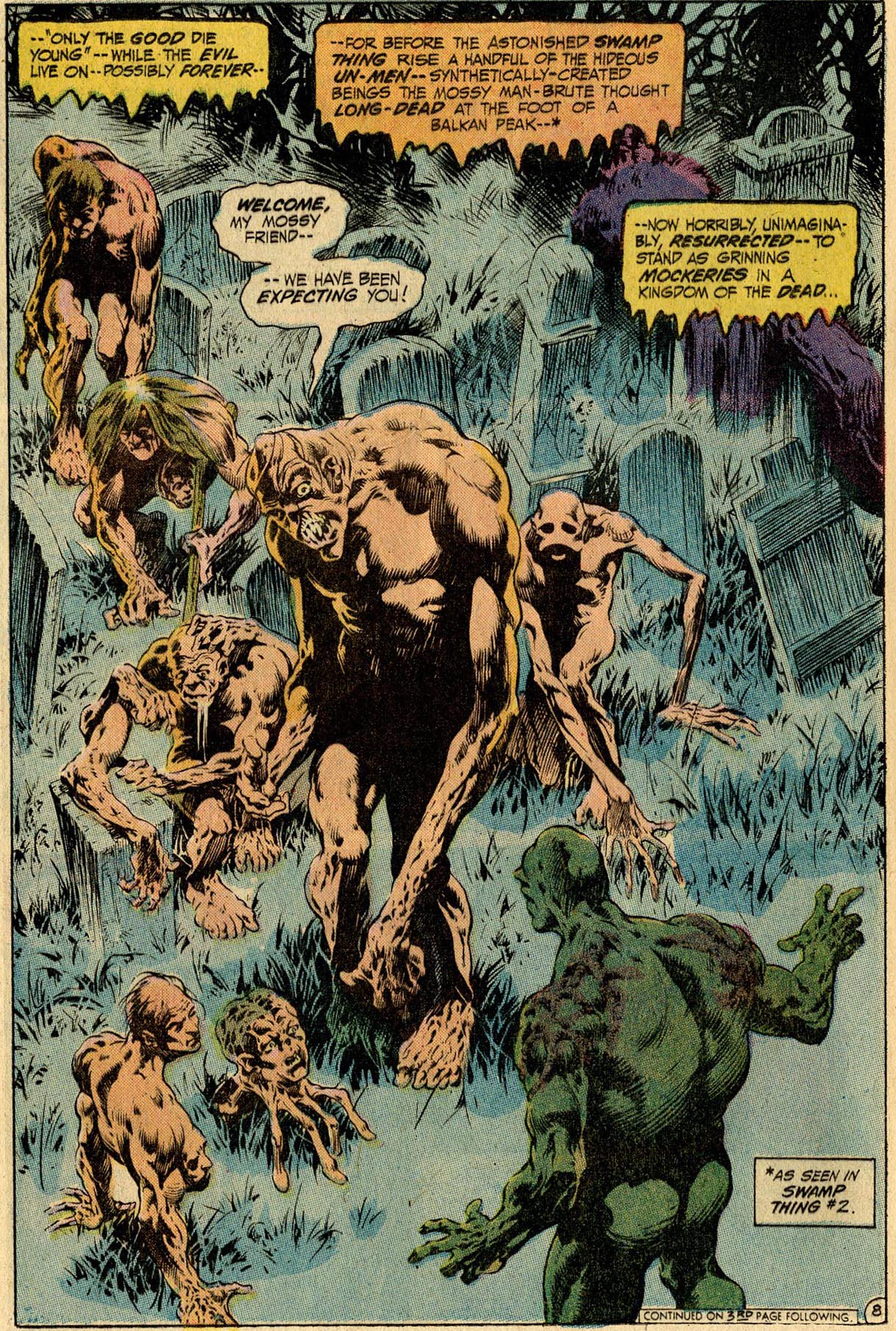
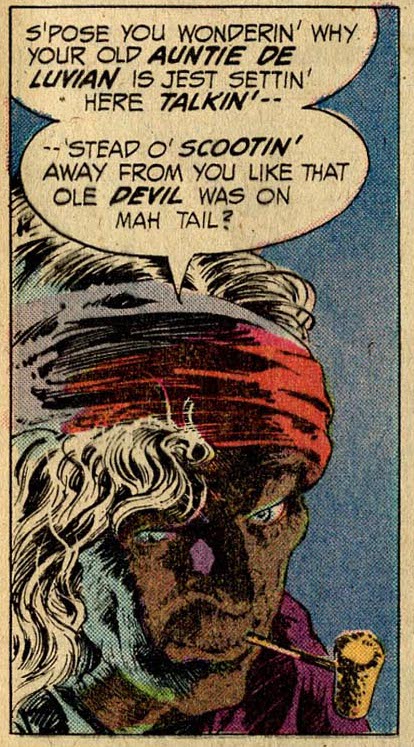
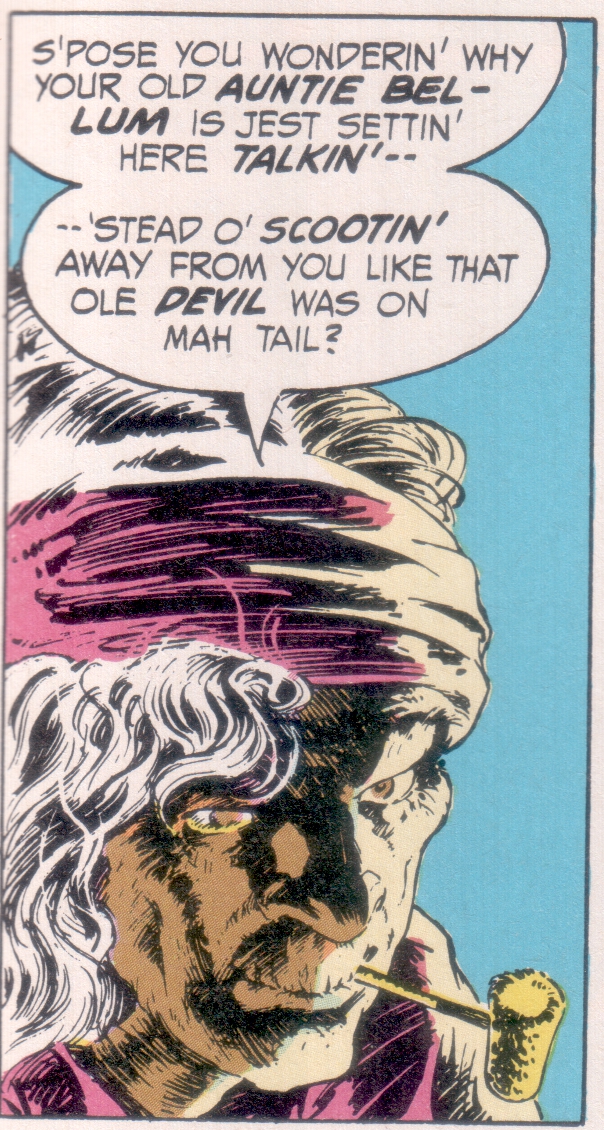
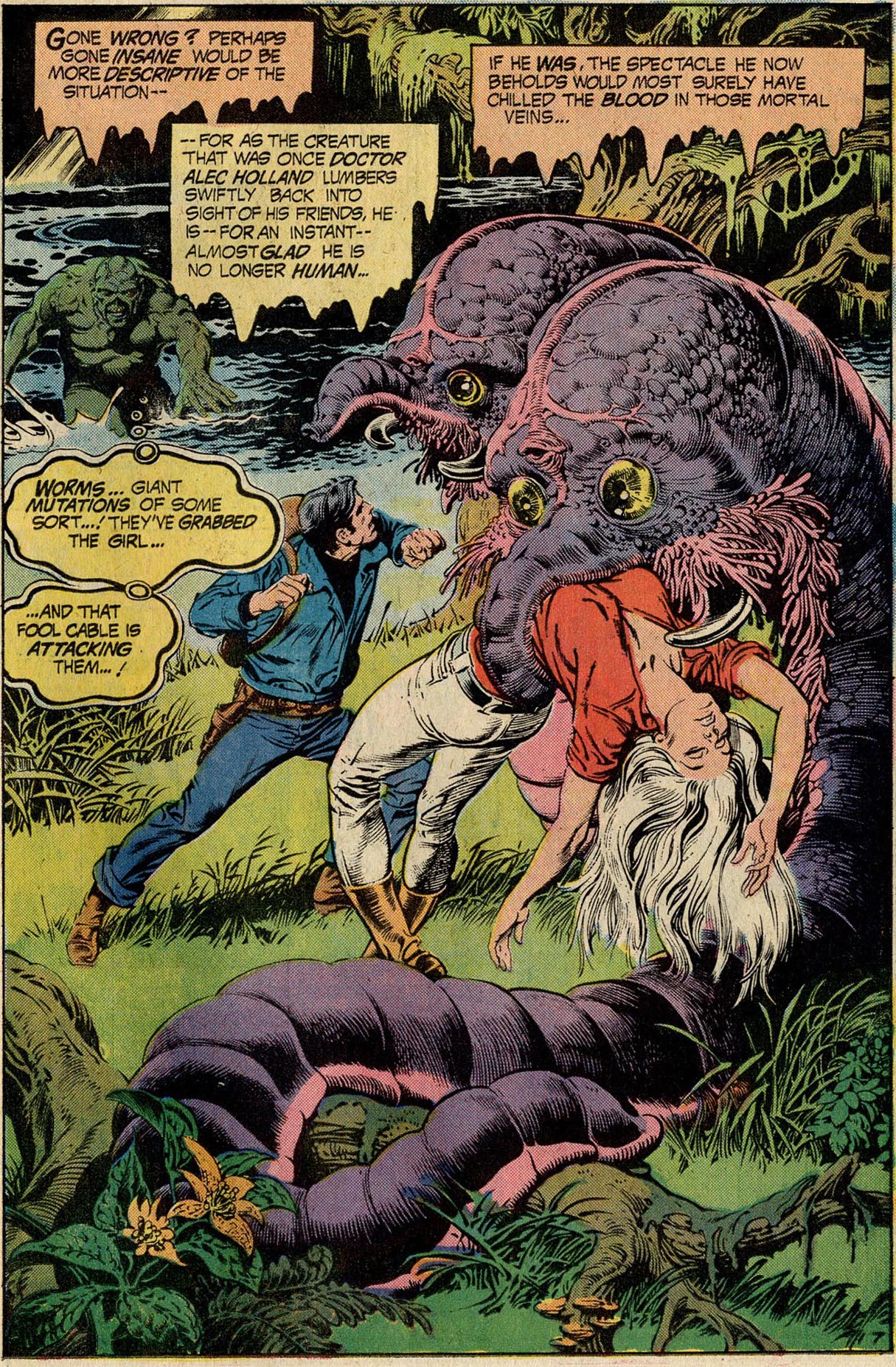
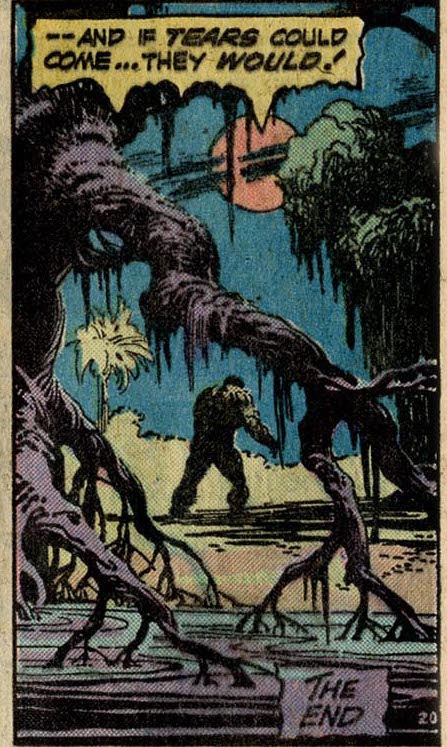 Wein wrote another three issues with artist Nestor Redondo made the comic his, and gave us very strong art. Unfortunately, virtually anything would have seemed pale after the masterwork Wrightson did. That said, Redondo's art is sharp and very well defined, although not as detailed or chaiscuro as Wrightson. Len Wein’s stories remained solid, addressing more novel concepts such as alien worms that wanted to keep humanity for food stock, time travel, allowing some wonderful illustrations of strange worms, a Tyrannosaurus Rex, and lions from the Roman arena. But the stories were pitched and broken differently. They were were no longer a collaboration, but fully scripted by Wein before being sent to Redondo. So they have a different feel. They're still good, but they lack the sense of the Gothic and the grotesque that was present in first ten issues. The only thing I can say is that they feel more like a standard comic-book. A little more 'gonzo' and a bit less personal. They're still worth reading, but it seems clear that Wein was winding down his time on the book. As a lovely farewell, Wein ended the series with the same line that ended the short story: “... And if tears could come, they would.”